
Early Signs of Psychosis in College Students: Los Angeles Recovery Resources 2026
What if the unusual behavior your student is exhibiting isn't just the result of a sleepless finals week, but the first whisper of a serious mental health condition? It's terrifying to watch a high-achieving young adult withdraw from friends or start speaking in confusing fragments. You probably feel caught between the desire to respect their independence and the urgent need to intervene before their academic career is derailed. Identifying the early signs of psychosis in college students Los Angeles families often witness is the first step toward a successful intervention.
We understand that recovery is the expectation, not the exception. This guide will help you distinguish between typical university stress and a clinical crisis. You'll discover how specialized California OnTrack programs provide a lifeline for students at elite local institutions. We'll preview the specific symptoms of First Episode Psychosis and introduce an "Augmented" Coordinated Specialty Care model that treats academic participation as a vital sign. By the end of this article, you'll have a clear plan to access the specialized clinical resources necessary to ensure both personal and educational recovery.
Key Takeaways
- Learn to identify the prodromal phase and specific academic red flags, such as sudden GPA drops or irrational fears, that distinguish a clinical crisis from typical university stress.
- Discover the specialized clinical resources and early signs of psychosis in college students Los Angeles families can leverage to secure a timely and effective intervention.
- Understand why Coordinated Specialty Care (CSC) is the clinical gold standard, offering a comprehensive approach that far exceeds the scope of standard university counseling centers.
- Explore how the California OnTrack Work-Study Program and the SEE curriculum enable students to remain in school while achieving a 6% rehospitalization rate.
- Gain a clear roadmap for recovery that prioritizes academic success, allowing students at elite Los Angeles universities to maintain their educational trajectory during treatment.
Recognizing Early Signs of Psychosis in College Students
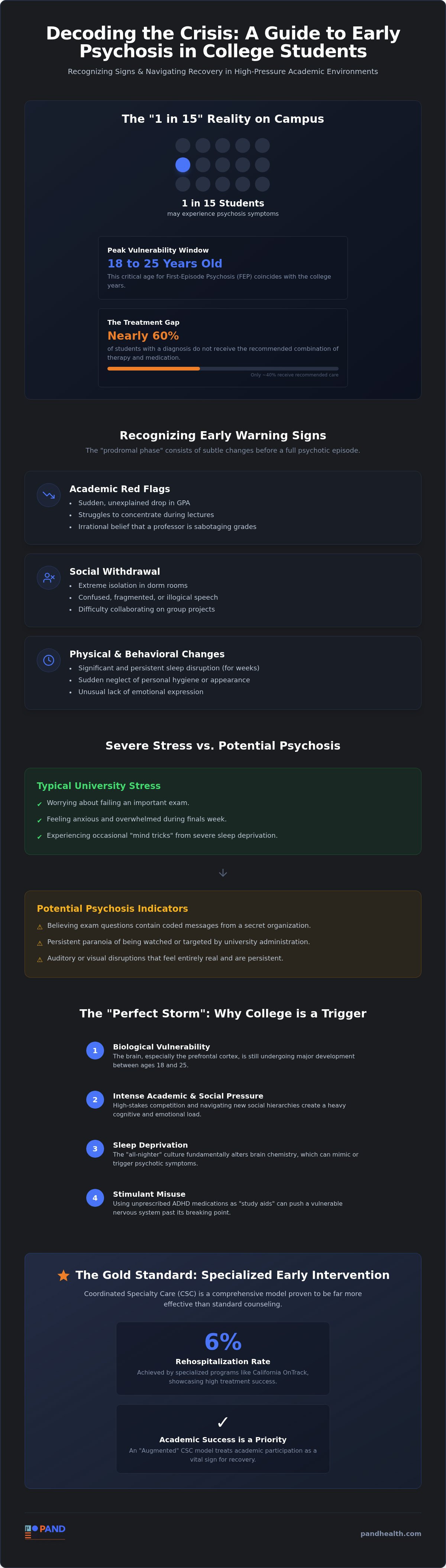
Identifying the early signs of psychosis in college students Los Angeles families notice often starts with the "prodromal phase." This period consists of subtle, non-specific changes that occur before a full psychotic break. It's not a sudden snap. Instead, it's a slow drift away from reality. In the high-pressure environments of Southern California universities, these shifts are frequently dismissed as simple burnout. However, recognizing them early is the key to preserving a student's academic future and personal well-being.
- Academic Red Flags: You might notice a sudden, unexplained drop in GPA. The student may struggle to concentrate during lectures or develop an irrational belief that a professor is intentionally sabotaging their grades.
- Social Withdrawal: Extreme isolation in dorm rooms is a common indicator. During group projects, they may exhibit "confused speech," where their sentences don't quite connect or their logic feels fragmented.
- Physical Warning Signs: Significant sleep disruption that lasts for weeks is often a precursor. You may also notice a sudden neglect of personal hygiene or a lack of concern for their physical appearance.
The Difference Between Severe Stress and Psychosis
University life is inherently stressful. It's normal to feel anxious during finals week, but Psychosis involves a fundamental break from shared reality. While a stressed student might worry about failing an exam, a student experiencing psychosis might believe the exam questions are coded messages from a clandestine organization. Occasional "mind tricks" under extreme sleep deprivation are common; persistent auditory or visual disruptions that feel entirely real are not. Paranoia often manifests as a feeling of being "targeted" by the university administration or watched by peers through dorm walls.
The "1 in 15" Reality on Modern Campuses
Recent data suggests that approximately 1 in 15 college students may experience some form of psychosis symptoms. The late-teen to mid-20s window is the biological peak for first-episode psychosis (FEP). This timing coincides perfectly with the transition to independent living, making it a critical period for monitoring the early signs of psychosis in college students Los Angeles families might overlook. Because nearly 60% of students with a diagnosis don't receive the recommended combination of therapy and medication, immediate clinical evaluation is vital. If you notice these shifts, reaching out for a professional psychiatric evaluation can change the entire trajectory of their recovery.
Why the College Environment Triggers First Episode Psychosis (FEP)
The transition to university life often acts as a catalyst for latent mental health conditions. Between the ages of 18 and 25, the human brain is still undergoing significant structural development, particularly in the prefrontal cortex. This biological vulnerability meets a "perfect storm" of environmental stressors on campus. In the competitive landscape of Los Angeles higher education, students often sacrifice stability for achievement, creating an environment where the early signs of psychosis in college students Los Angeles families observe can quickly escalate into a crisis.
Social interaction stress adds another layer of complexity. Navigating new social hierarchies and the pressure to "fit in" at elite institutions carries a heavy cognitive load. When a student's processing power is already stretched thin by academic demands, these social stressors can lead to sensory overload or feelings of intense paranoia. It's during these periods of high friction that subtle behavioral shifts often first appear.
The Impact of Sleep Deprivation and Stimulants
For young women, these behavioral shifts can sometimes be influenced by underlying biological factors. In these instances, Women’s Mental Health Specialist offers virtual, hormone-informed care that can serve as an essential component of a holistic recovery plan.
Consistent sleep hygiene acts as a frontline defense against symptom escalation. Unfortunately, the "all-nighter" culture is a badge of honor for many students. Chronic sleep deprivation doesn't just cause fatigue; it fundamentally alters brain chemistry, sometimes mimicking or even triggering psychotic symptoms like hallucinations. The misuse of ADHD medications as study aids further complicates the clinical picture. These stimulants can push a vulnerable nervous system past its breaking point, leading to a loss of contact with reality that requires immediate intervention. To better understand the psychological cycles of dependency and recovery, resources from Recovery Unlimited Inc can help families grasp complex concepts like the opponent-process theory.
There is a dangerous misconception that cannabis is a harmless way to manage university stress. In the California market, high-potency THC products are ubiquitous, yet they pose a severe risk to those with a genetic predisposition to thought disorders. A "bad trip" characterized by acute paranoia doesn't always end when the substance leaves the system. For some, it marks the beginning of a persistent episode. Recognizing these early warning signs of psychosis is essential for preventing long-term disability.
If a student's drug use has led to a break from reality, specialized cannabis-induced psychosis rehab is often the most effective path forward. Pand Health provides a sophisticated, data-driven approach to these complex cases, ensuring that the intersection of substance use and mental health is addressed with clinical precision. If you're concerned about a student's recent behavior, a professional psychiatric evaluation can provide the clarity needed to protect their academic trajectory.
Evaluating Support Options: Los Angeles Mental Health Resources
Navigating the mental health landscape in Southern California can feel overwhelming, especially when you're already managing the stress of a student's declining health. Most families first turn to University Counseling Centers (CAPS) for help. While these centers are excellent for managing general anxiety or depression, they often lack the specialized infrastructure required to treat the early signs of psychosis in college students Los Angeles campuses are seeing more frequently. As of July 2026, California’s Behavioral Health Services Act (BHSA) has streamlined public funding and accountability, but private, specialized care remains the most direct route to intensive, individualized support.
Coordinated Specialty Care (CSC) is the clinical gold standard for First Episode Psychosis (FEP). It is a team-based approach that combines psychotherapy, low-dose medication management, and family support. According to the National Institute of Mental Health, identifying behavioral warning signs for psychosis early is the most critical factor in preventing long-term disability and ensuring a return to normalcy. Unlike standard outpatient programs, CSC treats the family as a vital part of the recovery team, providing the psychoeducation needed to create a supportive environment at home.
Standard Therapy vs. Augmented CSC Models
Traditional "talk therapy" often falls short because it doesn't address the underlying cognitive deficits—such as memory and attention issues—that frequently accompany psychosis. For those managing similar executive function challenges, Collins Psychology provides structured, evidence-based therapy for adults with ADHD. An "Augmented" CSC model includes psychosocial rehabilitation and psychiatric evaluation alongside therapy. Pand Health is currently the only outpatient program in Southern California providing APA-recommended cognitive remediation. This rigorous, data-driven approach is why our participants see an 85% education and employment participation rate after just six months of treatment. We don't just aim for stability; we aim for the restoration of the student's full potential.
When interviewing potential providers in the Los Angeles area, you should look for evidence-based outcomes rather than vague promises. It's essential to understand how a program bridges the gap between the clinic and the classroom. You should ask:
- Does the program offer clinical social skills training to help my student navigate dormitory life and group projects?
- How does the clinical team coordinate with university disability services to secure necessary academic accommodations?
- What is your documented rehospitalization rate? At Pand Health, our rehospitalization rate is just 6%, significantly lower than the 10% industry average.
If you're ready to move beyond general counseling and explore a specialized recovery path, you can reach out to our clinical team for a confidential evaluation. We provide the steady hand and niche expertise required to guide your family through this storm.
The Roadmap to Recovery: Staying in School During Treatment
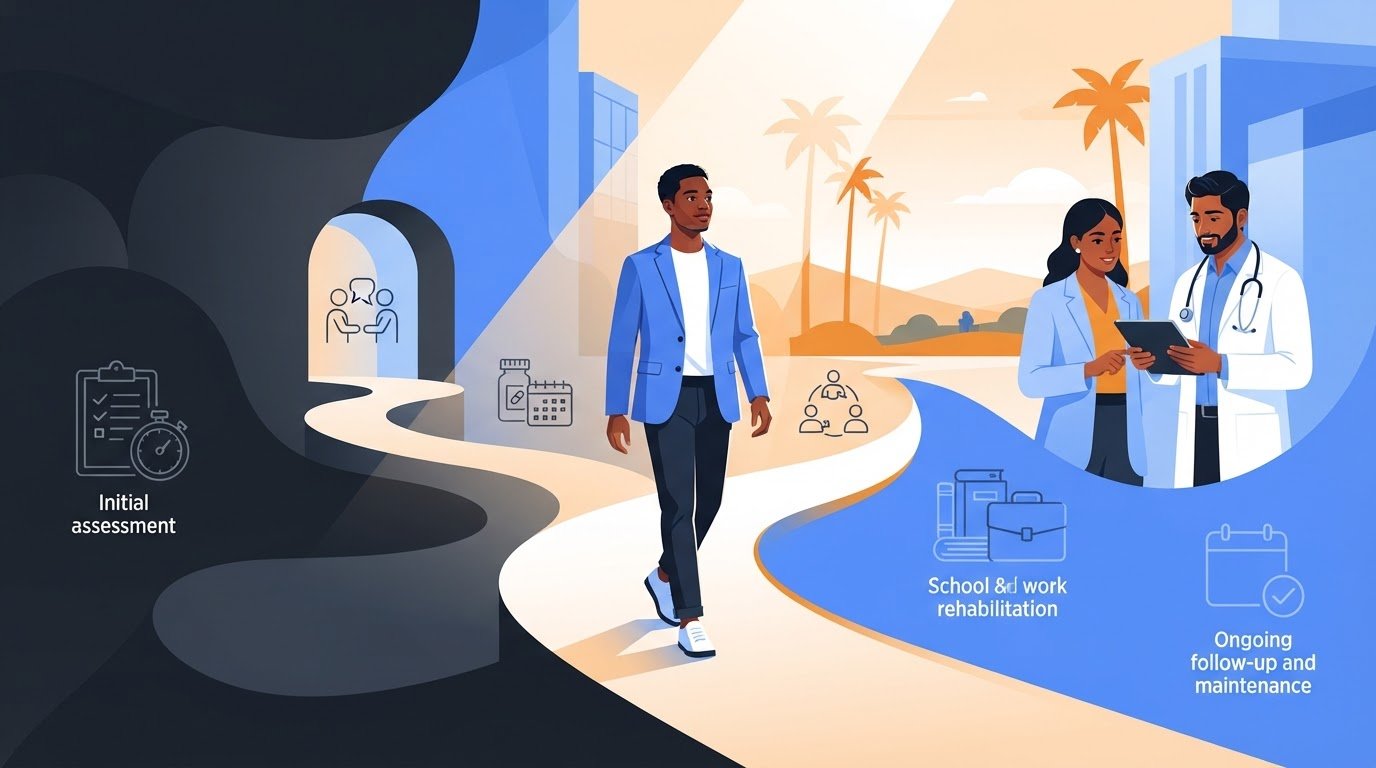
Many families assume a medical leave of absence is the only path after noticing the early signs of psychosis in college students Los Angeles universities often overlook. This is a common misconception that can sometimes hinder long-term progress. Staying connected to the university community often acts as a powerful clinical "vital sign." Just as maintaining a visible status is crucial for student health, businesses prioritize transparency during service disruptions; for example, you can discover StatusPulse to see how public status pages keep stakeholders informed. The Supported Education & Employment (SEE) curriculum is designed specifically to bridge the gap between the clinic and the lecture hall, ensuring that a diagnosis doesn't mean the end of an academic career.
Social skills training provides the practical tools needed to manage the subtle nuances of group work and peer interactions that can otherwise trigger sensory overload. Our clinicians work directly with students to role-play academic scenarios, reducing the anxiety of returning to campus. Simultaneously, case managers assist in navigating the Americans with Disabilities Act (ADA) and university disability services. This ensures that students receive legal protections and educational modifications, such as flexible attendance or note-taking assistance, without compromising their privacy or academic standing.
The LA Work-Study Guide for Mental Health Recovery provides a structured framework for balancing 24 to 32 hours of intensive treatment with a student's academic schedule. Case managers act as dedicated school advocates, ensuring that educational modifications are not just requested but implemented correctly by university administrators. This integrated approach allows students at elite Los Angeles institutions to maintain their trajectory as learners while receiving the highest standard of clinical intervention. Recovery is treated as a collaborative effort between the student, the family, and the school.
Restoring Cognitive Function for Academic Success
Psychosis often leaves behind a "brain fog" that impacts memory, processing speed, and executive function. Restoring academic performance requires more than just symptom management; it requires active brain training. We utilize computer-assisted cognitive remediation to target these specific deficits. High-intensity fitness coaching is also integrated into our program to boost neuroplasticity, which significantly accelerates the effects of the cognitive training. Pand Health's specialized methodology is designed to move students from the 33rd to the 50th percentile in cognitive performance.
If you want to see your student return to their full academic potential and stay on track for graduation, you can schedule a consultation for our California OnTrack program. We provide the expertise to ensure that a mental health crisis is a temporary detour rather than a permanent stop.
Pand Health: Specialized Early Intervention in Los Angeles
Pand Health stands as a beacon of specialized care, offering the only outpatient Coordinated Specialty Care (CSC) program in Southern California that integrates APA-recommended cognitive remediation. Our approach is fundamentally different because we operate under a single, powerful conviction: recovery is the expectation, not the exception. For families navigating the early signs of psychosis in college students Los Angeles presents a complex medical environment, but our facility at 11500 W. Olympic Blvd., Suite 399, provides a centrally located Westside lifeline. We focus on dismantling the stigma that often follows a first episode, replacing it with a data-driven path toward the restoration of normalcy.
Initiating a comprehensive thought disorder assessment is the critical first step in this journey. Our evaluations go beyond surface-level symptoms to understand the unique neurobiological and social profile of the student. By identifying the early signs of psychosis in college students Los Angeles clinicians can address, we create a bespoke intervention plan that prioritizes their academic identity. We believe that a student's potential isn't erased by a diagnosis; it's simply waiting for the right clinical support to resurface.
Proven Outcomes for Young Adults
Our results speak to the efficacy of the California OnTrack augmented model. While the industry average for rehospitalization sits at 10%, Pand Health maintains a 6% rehospitalization rate. This means our students stay in their dorms and classrooms rather than in hospital wards. After six months of our intensive outpatient treatment, 85% of our participants are actively engaged in education or employment. These results are driven by our unique status as the only program in the region with certified MCT instructors, ensuring that our cognitive remediation is delivered with the highest level of expertise.
Next Steps for Families and Students
If your student is struggling, the time to act is now. You can schedule a psychiatric evaluation for first-episode psychosis by reaching out to our clinical intake team. We also encourage families to explore Family Psychoeducation in LA. This resource helps parents and siblings build a sophisticated support system at home, which is essential for facilitating long-term stability.
For a confidential consultation, you can contact our team at info@pandhealth.com. We're here to provide the clinical authority and profound empathy your family deserves during this challenging transition. Your student's future is too important to leave to chance, and we're ready to act as your dedicated guide through the recovery process.
Securing Your Student’s Academic Future
Watching a student struggle with a mental health crisis is daunting, but your proactive response can change everything. Identifying the early signs of psychosis in college students Los Angeles campuses encounter allows for a swift transition into specialized care. By choosing an augmented Coordinated Specialty Care model, you ensure that academic participation remains a priority. We've seen that recovery is most effective when it's integrated into the student's existing life and goals.
Pand Health is the only Southern California program featuring certified Metacognitive Training (MCT) instructors. This specialized expertise contributes to our 85% education and employment success rate. Located at 11500 W. Olympic Blvd., our team provides the niche clinical intervention and school advocacy required to navigate the complexities of university life. We believe that with the right support, your student's potential remains limitless.
If you're ready to move from uncertainty to a structured recovery plan, Schedule a Comprehensive Evaluation for Your Student today. You don't have to navigate this storm alone. We're here to act as your steady guide, ensuring that your student doesn't just recover, but thrives in their personal and educational journey.
Frequently Asked Questions
Can a college student stay in school while being treated for psychosis?
Yes, and it's often clinically recommended. Using the SEE curriculum and ADA accommodations, students can maintain their academic trajectory. Pand Health's model treats school participation as a vital sign. This integrated approach helps students stay connected to their community while receiving intensive treatment. It avoids the isolation of a medical leave, which can sometimes complicate the eventual return to campus life. We provide the advocacy needed to ensure the university supports their recovery.
What are the first warning signs of psychosis in young adults?
The early signs of psychosis in college students Los Angeles families notice are often subtle behavioral shifts. These include social withdrawal, a sudden drop in academic performance, and disrupted sleep patterns. You might also observe confused speech or fragmented logic during conversations. Physical signs like neglecting personal hygiene or a lack of emotional response are also common indicators. It is also important to ensure the student's living environment is not contributing to their physical or mental strain; for those concerned about hidden environmental factors like mold in older dormitories, My Pure Environment SF provides professional inspection and testing services. Early detection during this prodromal phase is essential for securing a high-functioning recovery and preventing long-term disability.
How is cannabis-induced psychosis different from schizophrenia?
Cannabis-induced psychosis is triggered specifically by substance use, whereas schizophrenia is a chronic neurodevelopmental disorder. In some cases, the psychotic symptoms resolve once the THC leaves the system. However, for individuals with a genetic predisposition, high-potency cannabis can act as the catalyst for a persistent psychotic disorder. Clinical evaluation is necessary to determine if the episode was a temporary reaction or the onset of a long-term condition requiring ongoing management and specialized intervention. To understand the contrast between unregulated use and supervised medical protocols, you can check out AnandaMed for an example of how professional cannabis therapy is conducted via telemedicine.
For those in the United States seeking a similar level of professional oversight, CMed provides online medical evaluations to help patients navigate medical marijuana access through a structured and clinically-informed process.
California OnTrack is a Coordinated Specialty Care model specifically designed for individuals aged 13 to 40 experiencing their first episode of psychosis. It includes individualized therapy, low-dose medication management, and family psychoeducation. The program also features a specialized Work-Study framework that acts as a bridge between clinical care and the classroom. This comprehensive approach ensures that the student’s educational goals remain central to their clinical recovery plan, leading to an 85% success rate.
Does insurance cover intensive psychosis treatment in Los Angeles?
Most private insurance plans and Medi-Cal cover various components of intensive psychosis treatment, including psychiatric evaluations and individual therapy. The implementation of the Behavioral Health Services Act in 2026 has increased accountability for treating the early signs of psychosis in college students Los Angeles families encounter. Families should verify their specific benefits with their provider. Pand Health works with families to navigate these networks, ensuring that financial barriers don't prevent access to high-standard, specialized intervention.
What is the difference between a nervous breakdown and a psychotic episode?
A nervous breakdown is a non-clinical term often used to describe a period of intense emotional distress or inability to function due to stress. In contrast, a psychotic episode involves a clear break from shared reality. This includes hallucinations, delusions, or severely disorganized thinking. While both require professional support, a psychotic episode necessitates specialized clinical intervention to address the neurobiological changes occurring in the brain and to prevent future occurrences or long-term disability.
How can parents support a student who is experiencing paranoia or hearing voices?
Validating the student's feelings without necessarily agreeing with their delusions is the most supportive approach. Avoid arguing about the reality of their experiences, as this can increase their paranoia. Instead, focus on the distress the experiences are causing. Encourage them to participate in a professional psychiatric evaluation. Participating in family psychoeducation can also provide you with the specific communication tools needed to maintain a safe and stable environment at home. Furthermore, for students who would benefit from 1:1 mentorship in maintaining a healthy, substance-free lifestyle, Courtney Recovered provides personalized sobriety coaching and a supportive community.
Pand Health is located at 11500 W. Olympic Blvd., Suite 399, Los Angeles. This Westside location is conveniently accessible for students attending major universities across the city. Our facility provides a professional and supportive environment for outpatient treatment, allowing students to receive intensive care without the need for hospitalization. This central location ensures that families and students can easily integrate clinical appointments into their daily academic and personal schedules while maintaining their educational goals.
In addition to specialized intervention, maintaining general health is vital; HealthWorksPros provides a comprehensive suite of medical and psychiatric services to support students throughout their recovery journey.
In addition to local clinical support, digital health resources like MayaMD offer a cloud-based clinical AI platform that supports patients with chronic conditions, helping them manage their health journey from anywhere.
For healthcare providers looking to optimize their clinical operations and digital security, meditil.com provides a strategic guide on managed IT services designed for the medical sector.
Disclaimer
This article is for information and educational purposes only, and can NEVER replace a proper medical evaluation. If you or a loved one may be suffering from psychosis or the prodomal symptoms of psychosis, get evaluated by a professional as soon as possible. Early diagnosis and treatment can be life-saving.