Coordinated Specialty Care for Teens 13–17
A team approach to emerging psychosis and thought-disorder symptoms, built around school, family, and a real adolescent life, not built to replace it.

CSC ≠ IOP
We're often called an IOP. We're not.
Augmented Coordinated Specialty Care looks different from a traditional intensive outpatient programs. There is no rigid schedule that forces a teen out of class or off their team. The whole point is to keep them in school, in activities, and in their lives, while quietly building specialty care around them.
Built around school
Sessions, psychiatry, and groups scheduled around classes, sports, and afterschool, not the other way around.
Infinitely personalized
Each teen's plan flexes to their week, their family, and their goals. No two schedules look the same.
More life, not less
Our goal is for teens to have more outside of treatment, friendships, hobbies, milestones, not to sit in a clinic all day.
A team, not a building
Psychiatry, therapy, groups, social skills, and peer support move with your teen, in person and via secure telehealth.
Teens and families typically begin with an Early Assessment and then step into the California OnTrack for Teens program with the same team, two of several award-winning California OnTrack programs we run under one roof. We supplement your teen's existing care team, pediatrician, school, therapist, psychiatrist, and add the specialty expertise that early psychosis care actually requires. We don't replace anyone. We make the team around your teen stronger.
One team. A family of California OnTrack programs.
What to look for
Psychosis can show up as changes in how a teen thinks, feels, or experiences the world, confusion, hearing or seeing things others don't, withdrawing from friends, or thoughts that feel jumbled or frightening.
Not an identity
Psychosis doesn't define who your teen is. It's a signal that something needs care and attention, and with the right team, most young people recover and keep building the life they want.
Many possible causes
Stress, trauma, sleep loss, cannabis and other substances, or an underlying condition can all play a role. Early, expert evaluation makes the path forward much clearer.
"Pand built a schedule around our daughter's high school, not the other way around. She kept her friends. She kept her semester. And she got the care she actually needed."
, Pand Health parent
Teen Services
Eight specialty interventions, delivered on a schedule that works for a teenager who still needs to be a teenager.
- Individual and group therapy
- Medication management / psychiatry
- Peer support & mentoring
- Supported education & employment
- Case management
- Cognitive remediation
- Family behavioral therapy
- Social skills
Not sure if what you're seeing is early psychosis?
Many families start with a confidential early assessment that helps you and your clinician flag early warning signs.
Confidential. A clinician responds within one business day.
Breaking Barriers to Access
We welcome and support teens and families from all backgrounds and life experiences, including BIPOC, LGBTQIAS+, and justice-involved communities. Our team provides inclusive, culturally responsive care.
Frequently Asked Questions
What are the early signs of psychosis in teens?
Early warning signs can appear gradually and are often mistaken for typical teenage behavior: withdrawing from friends or family, decline in school performance, trouble focusing, strong suspicions or beliefs that don't match reality, hearing or seeing things others don't, and intense changes in mood or sleep.
How is psychosis treated in young people?
Best treated with coordinated specialty care (CSC): individual and small group therapy, cognitive remediation, psychiatry and medication management, family education, school and IEP coordination, and case management.
What if my teen refuses treatment?
Refusal is common early in psychosis, schizophrenia, autism, or OCD. Our family guide offers practical ways to preserve trust, reduce conflict, and keep the door open to care.
How long does treatment take?
The first two years after a first episode are critical for long-term recovery. Pand Health treatment plans are customized and may last several months to multiple years depending on individual needs.
Can psychosis be fully managed?
While there is no single cure, early intervention makes recovery possible. Many young people treated early go on to live meaningful, independent lives with strong symptom management.
LISTEN TO OUR PODCAST
Adolescent thought disorders, in our clinicians' own words.
Two short clips from The Mind Exposed, the same clinicians work with your teen.
Early warning signs
What families notice first
From the featured episode
Clinical context families can use
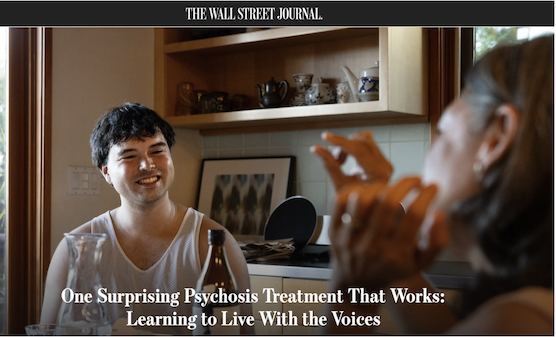
Read about us in The Wall Street Journal.
WSJ covered our successful outcomes in a lengthy front-page feature story.
Read the article →Keep reading
All programs & care pages →- Programs & careSummer camp for teensA structured summer program for teens 13–17.For families
- Understanding psychosisAt-risk mental stateIntervening before a first episode: clinical high risk explained.For everyone
- Programs & careAdult psychosis programCalifornia OnTrack coordinated specialty care for adults.For families
- Programs & careWhat is coordinated specialty care?The CSC model, what CSCplus adds, and the unmet needs it addresses.For everyone
- Get startedAdmissionsHow to start care with California OnTrack.For families