Brain Training Improves Mental Health
Cognitive impairments, which include difficulties with memory, processing speed, and reading social cues, are often the most challenging aspects of living with schizophrenia. To learn more about how cognition is altered by psychosis see our visual tutorial or continue reading below to find out more about our innovative program and the science behind it.
Overview
While it can be frustrating that standard antipsychotic medications are highly effective for symptoms like hallucinations but do little to improve cognition, the good news is that specialized, evidence-based therapies have proven incredibly effective at returning brain function. We have created an optimized multimodal brain restoration program for individuals experiencing psychosis. The four component that comprise this program are 1. Neurocognitive remediation, 2. Social-cognitive remediation, Compensatory social and neurocognitive remediation, and high-intensity exercise, which has been shown to potentiate learning and cognitive repair. Read below for an introduction to the the science behind our program.
The Dual Landscape of Impairment
Cognitive deficits are the most robust predictors of long-term outcomes in schizophrenia. Impairments typically range from 1 to 2 standard deviations below the healthy mean, affecting both the fundamental mechanics of processing and the ability to navigate social complexities.
Neurocognition
The "hardware" of the brain. Affects attention, memory, and reasoning. Essential for school and work.
Social Cognition
The "software" of interaction. Affects emotion recognition and theory of mind. Predicts community integration.
This chart compares average cognitive performance across key MATRICS domains against the healthy population mean (0.0 SD).
What is Cognitive Remediation?
Cognitive Remediation Therapy (CRT) is currently the gold-standard treatment for improving foundational neurocognition, which includes attention, working memory, and executive function. It relies on the brain's neuroplasticity to strengthen cognitive pathways. Therer are two basic approaches: restorative and compensatory Restorative Training: This involves structured, often computerized, "drill-and-practice" exercises designed to repeatedly stimulate and rebuild basic cognitive functions. Compensatory Training: Rather than trying to fix the deficit directly, this approach teaches practical strategies to bypass cognitive hurdles. Patients learn to rely on environmental cues, planners, alarms, and mnemonic devices to successfully manage daily tasks. Cognitive remediation when done right is a structured, behavior-based training that uses repeated practice, adaptive computerized exercises, strategy coaching, and real-world bridging to improve thinking skills. It is delivered by trained clinicians, not just an app, and works best when integrated with therapy, psychiatry, and vocational or educational support.
Restorative: The NEAR Model
The NEAR (Neuropsychological Educational Approach to Remediation) model is one of the most widely implemented and extensively researched forms of Cognitive Remediation Therapy (CRT). Unlike older models of CRT that relied heavily on rote "drill-and-practice" tasks, NEAR approaches cognitive remediation fundamentally as a learning activity. It operates on the premise that you cannot improve a patient's cognition without actively engaging their motivation to learn. NEAR intentionally designs tasks to satisfy a patient's psychological needs for autonomy (choice in tasks), competence (feeling capable of success), and relatedness (social connection). It focuses on intrinsic motivation and "Bridging Groups" to ensure digital gains transfer to real-world success.
Compensatory: The CCT Model
"If you can't repair the circuit, bypass it." Compensatory Cognitive Training (CCT), also known as Cognitive Symptom Management and Rehabilitation Therapy (CogSMART) accepts that some cognitive deficits may not fully recover. Instead, it teaches individuals how to "work around" these limitations by leaning on their cognitive strengths, using different brain areas, and employing external aids and mental strategies. The primary goal of CCT is habit formation to bypass deficits. The CCT curriculum imparts strategies focusing on four key areas of cognition that are essential for independent living, social functioning, and employment. By repeatedly practicing these strategies, they eventually become automatic, greatly reducing the cognitive load required to navigate daily life. Rather than fixing the brain, CCT focuses it provides the tools (calendars, checklists, 6-step problem solving) to navigate life immediately.
SCIT: Navigating the Social World
Social Cognition and Interaction Training (SCIT) targets the mental biases that derail integration. It moves from basic perception to the complexities of real-world conflict resolution.
Emotion Perception
Identifying facial micro-expressions and vocal prosody accurately to read social cues.
Theory of Mind
Inferring mental states and intentions. Dismantling "Hostile Attribution Bias" using Fact vs. Guess thinking.
Integration
Role-playing interpersonal scenarios and practically checking assumptions in everyday life.
Evidence of Efficacy
Comprehensive meta-analyses show that cognitive remediation impacts more than just test scores, it fundamentally transforms psychosocial functioning and daily living capacity.
Efficacy Across Domains
Effect sizes (Cohen's d) for global cognition and functional outcomes. 0.4+ is clinically significant.
Durability
Gains are not temporary practice effects. Follow-up studies confirm that improvements in attention and memory persist long after therapy ends.
Adjunctive Synergy
The effect size jumps from 0.42 to 0.59 when CR is paired with vocational or social support programs.
The Synergy of Movement & Training
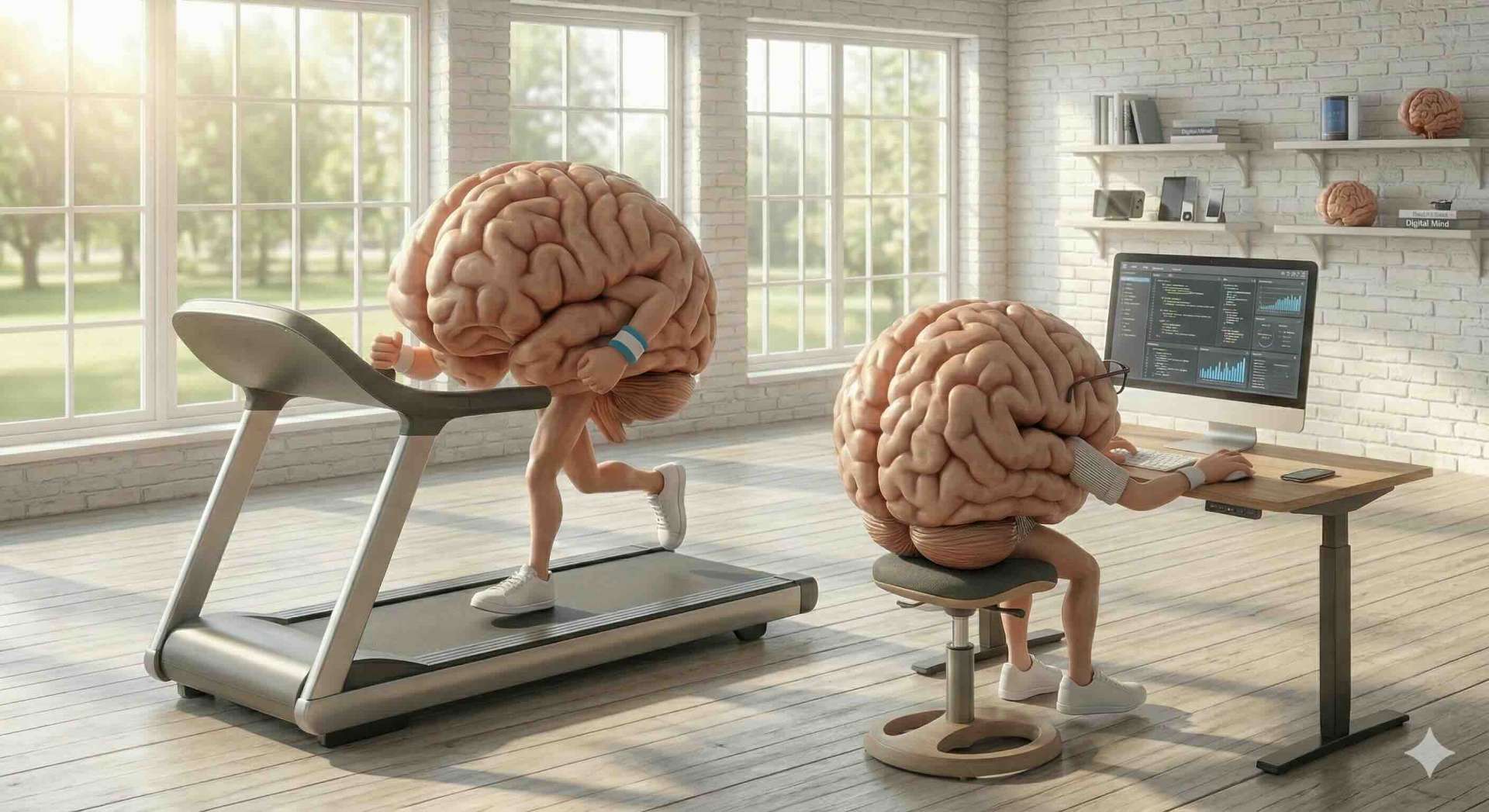
Brain neuroplasticity that allows for functional restoration requires the release of cellular growth factors, which act like fertilizer for the brain. The best way to stimulate their production and release is through vigorous exercise. By combining 150 minutes per week of aerobic exercise with computerized cognitive training (CT&E), the pivotal UCLA study demonstrated significantly faster and more profound cognitive improvements compared to training alone (CT).
Exercise acts as a neurotrophic stimulus, "priming" the brain's cellular architecture for learning.
MRI data showed increased cortical thickness in the Anterior Cingulate Cortex for the combined group.
Illustration based on UCLA CT&E protocol data: Combined exercise and cognitive training shows superior MATRICS composite recovery.
Pand...Brain Health Program: cognitive domains targeted
Attention & Vigilance
Sustaining focus, filtering distractions, and staying on task long enough to complete school, work, or daily activities.
Working Memory
Holding and manipulating information in mind, following multi-step instructions, mental math, or keeping track of a conversation.
Processing Speed
How quickly the brain takes in and responds to information. Slowed processing is one of the most common and disabling cognitive symptoms in schizophrenia.
Verbal Learning & Memory
Encoding and recalling spoken or written information, a strong predictor of school and vocational outcomes.
Visual Learning & Memory
Remembering faces, routes, diagrams, and other visual information.
Reasoning & Problem-Solving
Planning ahead, flexibly shifting strategies, and solving novel problems (executive function).
Social Cognition
Reading facial expressions, tone, and intent; understanding others' perspectives; navigating relationships.
Prospective Memory
Remembering to carry out future intentions, taking medication, attending appointments, completing assignments, or keeping plans.
Executive function
Coordinating multiple cognitive skills at once: initiating tasks, inhibiting distractions, shifting focus, and organizing steps toward goals.
Our Approach at Pand Health
- Computerized drill-and-practice exercises that target attention, memory, and processing speed
- Strategy coaching to translate cognitive gains into real-world tasks (school, work, relationships)
- Bridging groups that link exercises to daily goals
- Integration with therapy, psychiatry, family work, and vocational support
- Progress tracking with standardized neurocognitive measures
What the Evidence Shows
- Meta-analyses show moderate, durable improvements in cognition and functioning when CR is paired with rehabilitation.
- Effects are largest when CR is delivered alongside supported employment, education, or skills training, not as a standalone app.
- Gains persist months after treatment ends and are associated with better work, school, and social outcomes.
Who Benefits?
Cognitive remediation is appropriate for teens and young adults with schizophrenia, schizoaffective disorder, bipolar disorder with psychotic features, and those at clinical high risk. It is especially helpful when cognitive symptoms are getting in the way of returning to school, holding a job, or maintaining relationships, even after positive symptoms have stabilized.
Ready to strengthen cognition alongside recovery?
Talk with our team about integrating cognitive remediation into your care plan.
Keep reading
All programs & care pages →- Research & librarySchizophrenia: the cognitive architectureHow cognition changes in schizophrenia, domain by domain.For clinicians
- Clinician toolsDysexecutive syndromeExecutive dysfunction explained, with an SAS simulator.For everyone
- Clinician toolsPand testingInteractive cognitive and social-cognitive tasks.For clinicians
- Programs & carePsychosocial interventionsThe therapies that make up modern psychosis care.For everyone
- Programs & careWhat we treatEvery condition we treat, with a dedicated page for each.For families