Why the Prodromal Phase Matters
Research has shown that individuals are at ultra-high risk (UHR) of developing psychosis if they fall into one of three categories:
(1) Attenuated Psychotic Symptoms (APS): Milder or less frequent forms of delusions, hallucinations, or disorganized speech that do not reach full psychotic intensity.
(2) Brief Limited Intermittent Psychotic Symptoms (BLIPS): Full-blown psychotic episodes that appear briefly and go away on their own in less than a week.
(3) Genetic Risk and Deterioration (GRD): Having a direct family history of a psychotic disorder combined with a significant drop in personal or social functioning over the past year.
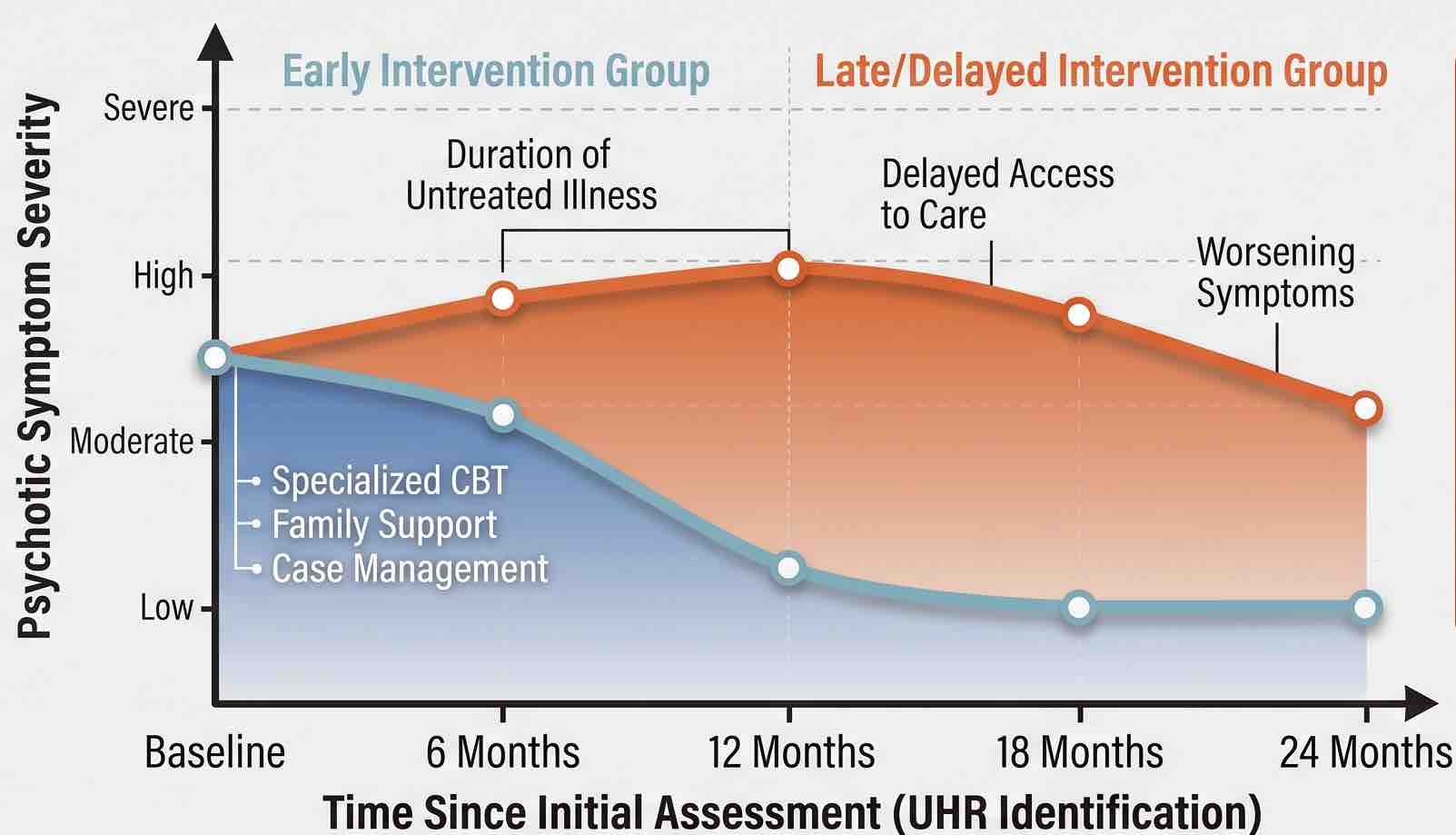
Not everyone at ultra-high risk of developing full blown psychosis will, but the prodromal period represents one of the few opportunities in psychiatry where prevention and modification of illness course are genuinely possible. Early intervention can dramatically reduce future symptoms and improve quality of life, for the rest of their lives.
Families who want the full plain-language explainer should read our guide to prodromal schizophrenia: early symptoms, stages, and treatment, which covers the prodromal phase and its early symptoms in detail. If you are unsure what you are seeing, start with what psychosis actually is, then review the first questions to ask and how to start the conversation. If symptoms have already crossed threshold, see our Early Psychosis program. Families often find the case examples the fastest way to recognize a pattern.
Beginning care
We offer a stepped care approach, integrated within our CSC model, that is optimized for individuals in the psychosis prodrome, often referred to as Clinical High Risk for Psychosis (CHR-P) or At-Risk Mental State (ARMS). Our goals are to alleviate current distress, prevent or delay the onset of a first episode of psychosis (FEP), and improve social and occupational functioning.
Step 1: Early identification and assessment. Accurately identifying the UHR state is critical to avoid unnecessary stigma or over-medicalization, while ensuring those at risk get the help they need. This process has three parts (1) Screening begins by administering a panel of standardized instruments that include validated clinical interviews like the Structured Interview for Psychosis-Risk Syndromes (SIPS or mini-SIPS) or the Comprehensive Assessment of At-Risk Mental States (CAARMS); see our screening questionnaires for the self-report tools that often precede a formal interview. (2) We assess comorbid psychiatric issues like depression, anxiety, substance use, and trauma, which are highly prevalent in the CHR-P population and often the primary drivers of distress. (3) We administer a brief neuropsychological battery to identify neurocognition or social cognition deficits like reduced processing speed, memory, and executive functioning, reduced theory of mind, as doing so informs functional interventions. Learn more about how we rebuild these skills in Cognitive Health and cognitive remediation and the dysexecutive syndrome.
Step 2. Treatment of symptoms and comorbidities. We offer a diverse and comprehensive array of psychological treatment that include Metacognitive Training for psychosis (MCTp), CBTp, DBT-plus, Social Cognition and Interaction Training (SCIT) and Positive Affect Training (PAT), combined with and psychosocial Interventions like Social Skills Training (SST), Supported Education & Employment (SEE) and Behavioral Family Therapy. In a comprehensive program like ours, these modalities are never delivered in silos, which is the essence of Coordinated Specialty Care. For example, the clinical team might use DBT skills first to stabilize acute distress and self-harm risk, use CBTp and MCT as the core weekly therapy to manage attenuated positive symptoms and cognitive biases, and integrate SCIT and PAT in group formats to build social functioning and combat negative symptoms. Ultimately, rapidly initiating this treatment program helps to prevent the social withdrawal and functional drop-off characteristic of the prodrome.
Of note, medications usually play a minor role in the clinical treatment of UHR individuals. Medication should primarily target comorbid conditions (e.g. Selective Serotonin Reuptake Inhibitors (SSRIs) for the depression and anxiety that frequently accompany the prodromal phase.) In contrast, routine antipsychotic prescribing is generally not recommended for individuals in the prodromal phase due to metabolic side effects and the fact that many in the CHR-P group will never develop full psychosis. Antipsychotics should only be considered if psychological interventions have failed, attenuated symptoms are rapidly worsening into full threshold psychosis, or the individual is experiencing extreme distress with an imminent risk of self-harm. In such cases, low-dose, second-generation antipsychotics (e.g., aripiprazole, lurasidone) are preferred.
Step 3. Monitoring and Transition Management. The clinical trajectory of the prodrome is highly unpredictable, requiring ongoing monitoring using a combination of formalized assessment tools and direct feedback from sessions. These frequent check-ins monitor the severity of attenuated positive symptoms and functional status. This facilitates creating a detailed wellness recovery 7 action plan (aka WRAP crisis plan) with the individual and their family, identifying early warning signs of a full psychotic break and outlining exactly who to contact. If a transition to a first episode of psychosis (FEP) does occur then we can seamlessly adjust treatment plans and rapidly begin pharmacologic intervention, which has been shown to reduce long-term disability.

Coordinated Specialty Care, Delivered with Fidelity
Pand Health strictly adheres to Coordinated Specialty Care (CSC), the evidence-based standard of care for psychosis-spectrum conditions established by the NIMH RAISE initiative and operationalized in the NAVIGATE model. CSC is a team-based, recovery-oriented approach that integrates psychiatry and medication management, individual resilience-focused therapy, family education and support, supported employment and education, and case management into a single coordinated plan. Decades of research, including the landmark RAISE-ETP trial, show that CSC produces measurably better outcomes than treatment-as-usual: more time in school and work, stronger relationships, fewer hospitalizations, and a faster path to functional recovery.
Ready to talk through prodromal psychosis care?
Our clinical team is here to listen. A member will reach out within one business day.