

Relapse Prevention Plan for Psychosis: Triggers and Support
A relapse prevention plan for psychosis brings together personal warning signs, possible triggers, treatment supports, and next steps before symptoms escalate. It can help the person and those close to them recognize changes early and know whom to contact. The plan works best as part of ongoing care, including when things feel stable.
It’s understandable to want practical ways to protect progress without putting the full responsibility on one person. Therapy, family support, attention to sleep and stress, and avoiding drugs and alcohol can all contribute to a supportive plan.
This article explains how to identify personal warning signs and triggers, involve family or trusted supporters, and coordinate care with mental health professionals. It also looks at how psychological and social support can strengthen relapse prevention, and what to consider if symptoms begin to return.
Key Takeaways
- Notice personal changes in sleep, stress, behavior, thoughts, or feelings, and describe warning signs in clear, observable terms.
- Include trusted family members or friends in the plan so they can help recognize changes and know how to respond.
- Therapy and psychoeducation can build coping skills, while treatment decisions and medication strategies should be coordinated with care professionals.
- A network meta-analysis of psychosocial and psychological interventions for relapse prevention in schizophrenia included 72 studies with 10 364 participants, according to the Authors of the network meta-analysis.
- Protect stability with supportive routines, including sufficient sleep, regular activity, balanced meals, and avoiding drugs and alcohol.
Psychoeducation and cognitive behavioral therapy
Psychoeducation gives a person and their supporters a shared understanding of psychosis. It can explain how hallucinations, delusions, and changes in thinking may affect daily life. In a relapse prevention plan, this knowledge helps connect symptoms with practical responses. For example, someone might learn to tell their clinician when a familiar voice returns or concentration becomes difficult. Naming the change can make it easier to discuss what support may help.
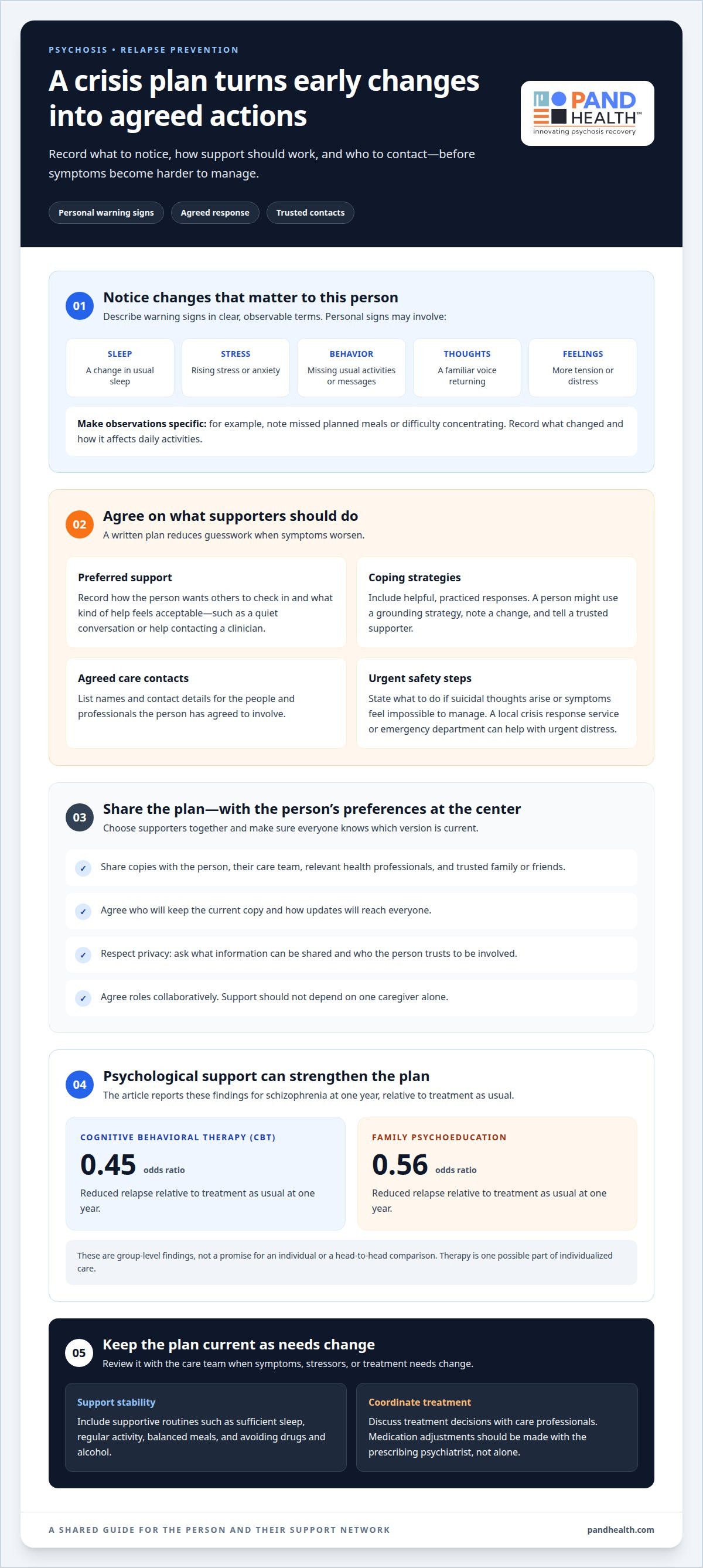
Cognitive behavioral therapy (CBT) focuses on how thoughts, feelings, and actions interact. A therapist may help someone notice a distressing thought, consider other interpretations, and choose a grounding response. In schizophrenia, CBT reduced relapse relative to treatment as usual at 1 year, with an odds ratio of 0·45. The finding supports CBT as one possible part of care, not a replacement for an individualized treatment plan. Regular appointments also give the person space to raise concerns before they become harder to manage.
CBT skills are most useful when they lead to specific actions. A person who notices rising anxiety after poor sleep might record the change, use a practiced calming strategy, and tell a trusted supporter. A clinician can help distinguish a stress response from a change that needs prompt attention. The plan should name whom to contact and what to share, such as when the change began and how it affects daily activities.
Individual Resiliency Therapy (IRT) offers another structured approach to supporting recovery in early psychosis. Sessions can address personal goals, coping strategies, and how a person makes sense of difficult experiences. For example, someone returning to classes might identify crowded settings as stressful and plan a quieter break. Connecting that goal with coping tools keeps recovery focused on the person’s life, not only on symptoms.
Family therapy can help relatives communicate more calmly about symptoms, treatment, and stress. A session might help a family replace repeated arguments about medication with a focused conversation about side effects and concerns. Family psychoeducation can also clarify which changes to share with the care team. The person remains central to these discussions, with their privacy and preferences guiding who participates.
In the United States, community mental health services may provide evaluation, therapy, and ongoing support. For urgent distress, a local crisis response service or emergency department can help. The plan should state whom to contact if someone feels unsafe or unable to cope.
Keep the plan concrete: record personal warning signs, helpful coping strategies, and agreed contacts. Review it with the care team when symptoms, stressors, or treatment needs change. If medication adjustments are considered, make them with the prescribing psychiatrist rather than changing medication alone.
Family and caregiver involvement
A crisis plan should list warning signs, response steps, key contacts, and emergency actions. Share copies with the person, their care team, relevant health professionals, and trusted family or friends.
Crisis Plan Contents
A psychosis crisis plan is a written guide to what supporters can do when symptoms worsen. Include the person’s early warning signs, preferred ways to offer support, and names and contact details for agreed care contacts. Add steps to take if suicidal thoughts arise or symptoms feel impossible to manage. Clear instructions reduce guesswork during a difficult moment.
Sharing the Crisis Plan
Sharing the plan gives relevant supporters and professionals access to the same agreed response. The person’s early psychosis intervention team, other health professionals, and close family or friends should have a copy. Agree on who will keep the current version and how updates will reach everyone. Choose supporters together, respecting the person’s preferences and privacy.
Family and friends may notice a change before the person does. One relative might see that someone has stopped answering messages or attending usual activities. Another may notice more tension during conversations. Record specific observations, then compare them with the person’s known warning signs. This keeps concerns grounded in behavior rather than assumptions or blame.
Supportive conversations work best when they are calm and specific. Instead of saying, “You’re acting strangely,” a family member might say, “You’ve missed two planned meals, and I’m concerned.” Ask what kind of help feels acceptable. The person may prefer a quiet check-in, help calling a clinician, or time to discuss a concern privately.
Family psychoeducation can help relatives understand symptoms and respond more constructively. In schizophrenia, family psychoeducation reduced relapse relative to treatment as usual at 1 year, with an odds ratio of 0·56. This finding describes a group-level result, not a promise for an individual. It supports learning together about communication, symptoms, and ways to reduce avoidable stress.
Make the plan collaborative rather than assigning monitoring duties to one caregiver. Agree who will notice changes, who can offer practical help, and whom to contact if concerns increase. For example, one trusted person might accompany someone to an appointment, while another shares an observed change with the care team. Review these roles when circumstances or relationships change.
Family involvement should preserve the person’s voice. Ask what information they want shared, which supporters they trust, and what responses feel helpful. During a family discussion, record agreed actions separately from unresolved concerns. This can prevent disagreement from being mistaken for a symptom and help the care team understand the person’s priorities.
New Journeys recommends that family and friends identify early warning signs, take part in the relapse plan, and discuss relapse early with consumers and their families. Friends, family, and support groups can offer emotional and practical support during psychosis.
Recognizing personal triggers and warning signs
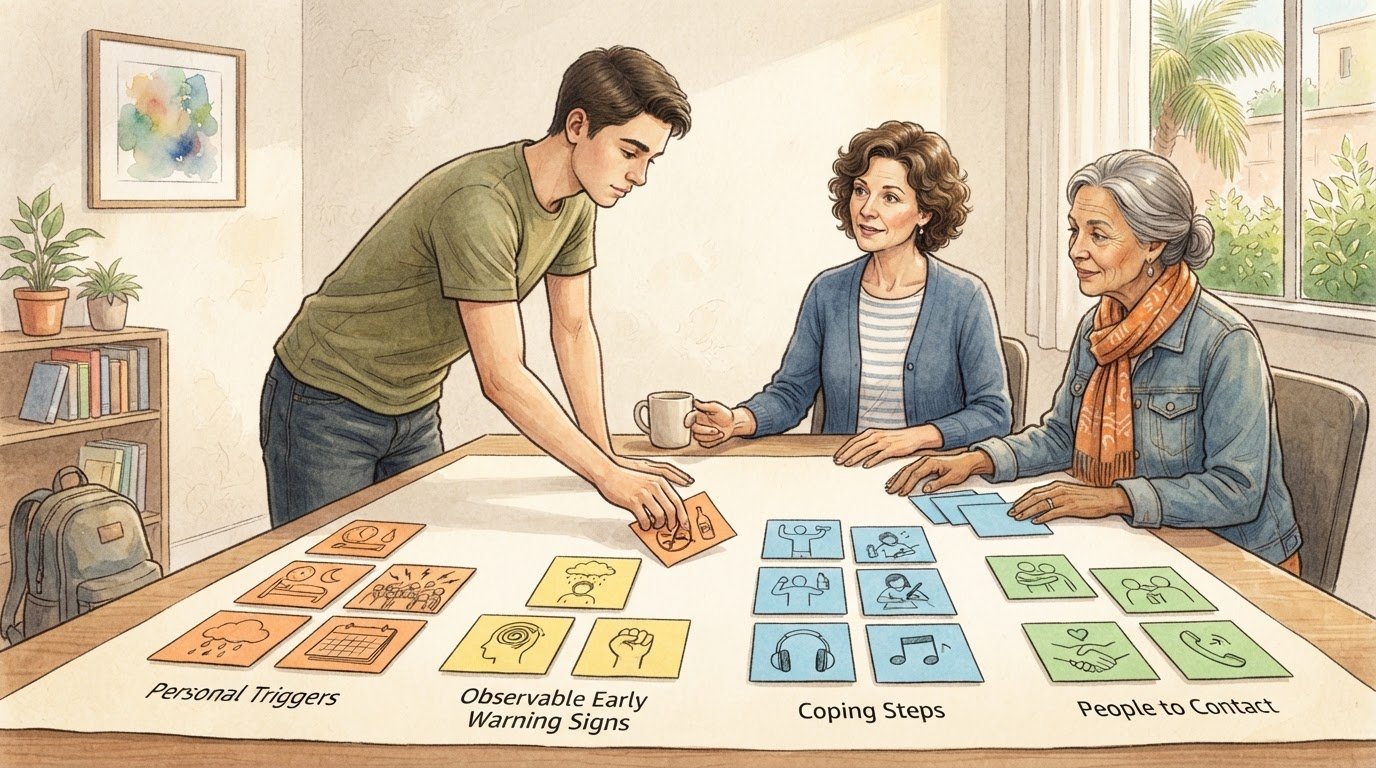
Triggers are experiences or conditions that may raise the risk of symptoms worsening. Warning signs are observable changes that can appear before psychosis symptoms intensify. Stress, street drug use, and poor sleep can increase risk. Patterns differ from person to person, so a useful plan connects a specific trigger with a specific response. For example, after several nights of poor sleep, someone might notice more difficulty concentrating and contact their care team.
Look for changes in behavior, thoughts, or feelings rather than relying on broad labels. “Feeling off” can be hard for others to recognize. “Crying every day for three days in a row” gives a clearer signal. Other examples might include withdrawing from a usual activity, speaking less than usual, or finding everyday tasks harder. These changes can also reflect ordinary stress, so record what happened and consider the context.
A clinician can help someone create a personalized relapse prevention plan for psychosis by reviewing previous episodes, current stressors, and changes noticed by the person or trusted supporters. Ask people who were present before an earlier episode what they observed. Then describe warning signs in plain, observable language and note whom to contact if they return. Include the person’s own perspective, since they may recognize internal changes others cannot see.
When early warning signs appear, follow the agreed plan: reduce avoidable stress, tell a trusted supporter, and contact the mental health clinician. Share specific observations, such as when sleep changed or a familiar activity stopped feeling manageable. Don’t change medication doses independently. Discuss medication concerns and possible adjustments with the prescribing psychiatrist.
Urgent help is needed if someone has suicidal thoughts, feels unable to cope with symptoms, or may be in immediate danger. Follow the emergency steps in the person’s plan, and seek emergency care when safety cannot be maintained. A return of psychosis symptoms also calls for prompt treatment, which can reduce the relapse’s duration and impact.
Build the plan around patterns, not assumptions. A brief record can note the date, the observed change, what was happening beforehand, and what response helped. For example, if work pressure repeatedly disrupts sleep, the person and clinician can discuss ways to reduce stress and protect rest. Review the record together and update triggers, warning signs, and contacts as circumstances change.
Some early signs may be ordinary responses to stress, not proof that psychosis is returning. A practical response is to notice the change, reduce stress where possible, and consult agreed care contacts if it persists or worsens. This measured approach helps the person act early without treating every difficult day as a crisis.
Avoiding drugs and alcohol
Street drug use can increase the risk of psychosis, and substance use can undermine stability. Alcohol can also disrupt routines that support recovery, such as sleeping well and keeping appointments. Avoiding drugs and alcohol is therefore a practical part of prevention. The aim isn’t blame; it’s to identify situations where use may occur and plan support before they become difficult.
Make the plan specific to the person’s routine. For example, note whether substance use is more likely after conflict, during unstructured evenings, or in particular social settings. Then identify an alternative, such as leaving with a trusted person, choosing a substance-free activity, or contacting someone supportive. A clear option is easier to use than a general intention to avoid risk.
Discuss substance use openly with a mental health professional. Share what substances are involved, when use tends to happen, and whether it seems connected to sleep, mood, or changes in thinking. These details help the care team understand the person’s circumstances and coordinate support. If avoiding substances feels difficult, say so directly; that concern belongs in the care conversation, not outside it.
Keep the plan practical for social situations. A person might arrange a ride home, tell a trusted friend they’re avoiding alcohol, or prepare a brief response if offered drugs. If a gathering feels stressful, plan a quiet break or an early exit. There’s no need to explain private health details to everyone. These steps create choices before pressure or discomfort makes decisions harder.
Build daily routines that support stability alongside avoiding substances. Regular physical activity, balanced meals, and sufficient sleep are recommended for people managing psychosis. A simple routine might include a regular bedtime, a planned meal, and a walk during the day. If poor sleep or stress increases, use the support plan and contact the care team when needed.
If substance use has occurred, respond with honest information rather than shame. Record what happened, note any changes in sleep or symptoms, and tell the clinician. Don’t change medication alone. If psychosis symptoms return or the person feels unable to cope, follow the crisis plan’s instructions to get prompt help. Early, clear communication gives the care team useful context.
Review this part of the plan as circumstances change. A new social group, a stressful transition, or a shift in daily routine may bring different challenges. The person and clinician can update practical alternatives, supportive contacts, and next steps together. Keeping these details current makes avoiding substances a supported part of care, rather than something the person must manage alone.
Psychosocial and psychological interventions for relapse prevention
Psychosocial care combines psychological support with practical help in daily life. Medication and therapy can work together: medication should be taken as prescribed, while therapy builds coping skills and helps address stressors. If side effects or effectiveness raise concerns, discuss them with the prescribing clinician rather than changing medication independently.
The evidence supports considering several approaches, not relying on one intervention alone. A network meta-analysis of psychosocial and psychological interventions for relapse prevention in schizophrenia included 72 studies with 10 364 participants, according to the Authors of the network meta-analysis. The analysis compared different approaches with treatment as usual and found that some psychosocial interventions were associated with lower relapse odds.
At 1 year, relapse prevention programmes had an odds ratio of 0·33 relative to treatment as usual. Integrated interventions had an odds ratio of 0·62, while patient psychoeducation had an odds ratio of 0·63. These findings help explain why care may combine education, psychological support, and coordinated services. An odds ratio describes a comparison between groups, not a personal prediction.
The findings also need careful interpretation. Confidence in estimates for these interventions ranged from moderate to very low. The studies offer useful evidence, but they don’t show that every approach works equally well for everyone. A clinician considers symptoms, treatment history, preferences, daily needs, and available support when shaping care. For example, someone struggling with isolation may need practical social support alongside individual therapy.
Medication and therapy address different parts of relapse prevention. Taking medication as prescribed is part of the treatment plan; therapy can help someone recognize stressors, practice coping strategies, and communicate concerns early. Regular appointments give the person and clinician a chance to review progress and discuss emerging difficulties. Any medication strategy, including a dose change, should be planned with the prescribing psychiatrist.
Psychosocial care is more useful when its goals are clear. A person might work on managing stress, staying connected with supportive people, or returning to a meaningful activity. The care team can review what is helping and adjust the plan as needs change. This makes relapse prevention an ongoing process, not a document written once and forgotten.
For support with psychosis-related care, discuss psychosis treatment options with the care team.
The randomized controlled trials compared 20 psychological interventions, mainly provided as add-ons to antipsychotics. In schizophrenia, family interventions reduced relapse relative to treatment as usual at 1 year, with an odds ratio of 0·35. This group-level result can support discussion of family involvement as one option within a broader care plan, rather than a guarantee of an individual outcome.
Maintaining stability can also involve taking medication as prescribed, managing stress, and drawing on support systems. Work with the early psychosis intervention clinician to create a relapse prevention plan and discuss medication strategies with the prescribing psychiatrist. Review the plan regularly to update triggers and early warning signs and revise it as needed. These check-ins offer a practical opportunity to consider changing needs and agree on responses, while keeping medication decisions within clinical care.
Pand Health
Pand Health supports people navigating psychosis with care that considers personal recovery and family needs. For someone working toward stability, psychological and social rehabilitation can complement clinical care by supporting everyday functioning and social connection. Family psychoeducation can help loved ones better understand psychosis and take part in supportive conversations. In Los Angeles, these services can be a helpful next step when you need support understanding treatment options, strengthening family understanding, or addressing challenges in daily life.
If you’d like to discuss support for psychosis, contact Pand Health.
Make Your Next Step Part of the Plan
A relapse prevention plan for psychosis can guide decisions, but it should reflect the person’s changing needs and goals. Bring questions about symptoms, daily routines, or support needs to a mental health professional. A clear next step can be as simple as deciding which concern to address first.
Pand Health offers psychological and social rehabilitation, social skills training, and evaluation for thought disorders and autism. These services can support people seeking help with functioning, social connection, or understanding their symptoms. Choosing support is a personal decision, and the right conversation can help clarify what would be useful now.
Contact Pand Health for support and discuss a next step that fits your needs. Progress can begin with one thoughtful conversation.
Frequently Asked Questions
What is a relapse prevention plan for psychosis?
A relapse prevention plan for psychosis is a shared guide for responding to changes in symptoms and support needs. It records what the person wants others to do, which clinician or supporter to contact, and what steps to take if safety becomes a concern. Creating it during a stable period can make preferences easier to discuss. Review it after a treatment change or major life transition.
What early warning signs can signal a psychosis relapse?
Warning signs are personal changes that may signal worsening symptoms, such as a noticeable shift in communication, daily habits, or the ability to manage familiar responsibilities. One change alone doesn’t establish that relapse is occurring. Compare it with the person’s usual pattern and note when it began. If changes persist, intensify, or feel concerning, share those observations with the care team.
How can family or caregivers support relapse prevention?
Family members can offer steady, agreed support without taking control away from the person. For example, ask whether they’d like company during a call with a clinician or help keeping an appointment. If several people are involved, agree who will share updates and use the current plan. This can reduce conflicting messages while keeping the person’s preferences central.
What triggers can increase the risk of psychosis relapse, such as stress, sleep loss, or substance use?
Stress, poor sleep, and substance use can increase the risk of psychosis, and their effects may overlap. For instance, a stressful change in routine may disrupt sleep, while substance use can make supportive routines harder to maintain. Notice patterns without assuming one event caused symptoms. Share relevant changes with the clinician so the care plan can address the person’s circumstances.
Disclaimer
This article is for information and educational purposes only, and can NEVER replace a proper medical evaluation. If you or a loved one may be suffering from psychosis or the prodomal symptoms of psychosis, get evaluated by a professional as soon as possible. Early diagnosis and treatment can be life-saving.