

Holistic Approach to Psychosis Recovery: Support Across Life
Psychosis recovery is broader than managing symptoms alone. A holistic approach to psychosis recovery brings clinical treatment together with mindfulness, ongoing treatment adjustments, community programs, and social support, with care shaped around the individual. These approaches complement professional treatment rather than replace it.
It’s understandable to seek support that addresses more than one part of life. Distressing symptoms can affect routines, relationships, and a person’s sense of connection, while families may be unsure how to help. Recovery looks different for everyone and can mean building stability and a fulfilling life, even when challenges remain.
This article explains how mindfulness may support coping, why treatment plans need ongoing attention, and how community-based programs can build practical skills and social connection. It also covers family education and support, helping individuals and loved ones understand options and take a more informed next step.
Key Takeaways
- Use mindfulness practices as potential supports for managing stress and responding to distressing symptoms, alongside professional treatment.
- Keep treatment responsive to changing needs by monitoring symptoms, medication effects, and side effects with a psychiatrist.
- Consider community-based programs that build practical life skills and support greater independence.
- Strengthen recovery through social connection, education, and family support that encourages understanding and communication.
- Pand Health offers family psychoeducation, social skills training, and psychological and social rehabilitation to support individuals and families.
1. Mindfulness and distressing symptoms
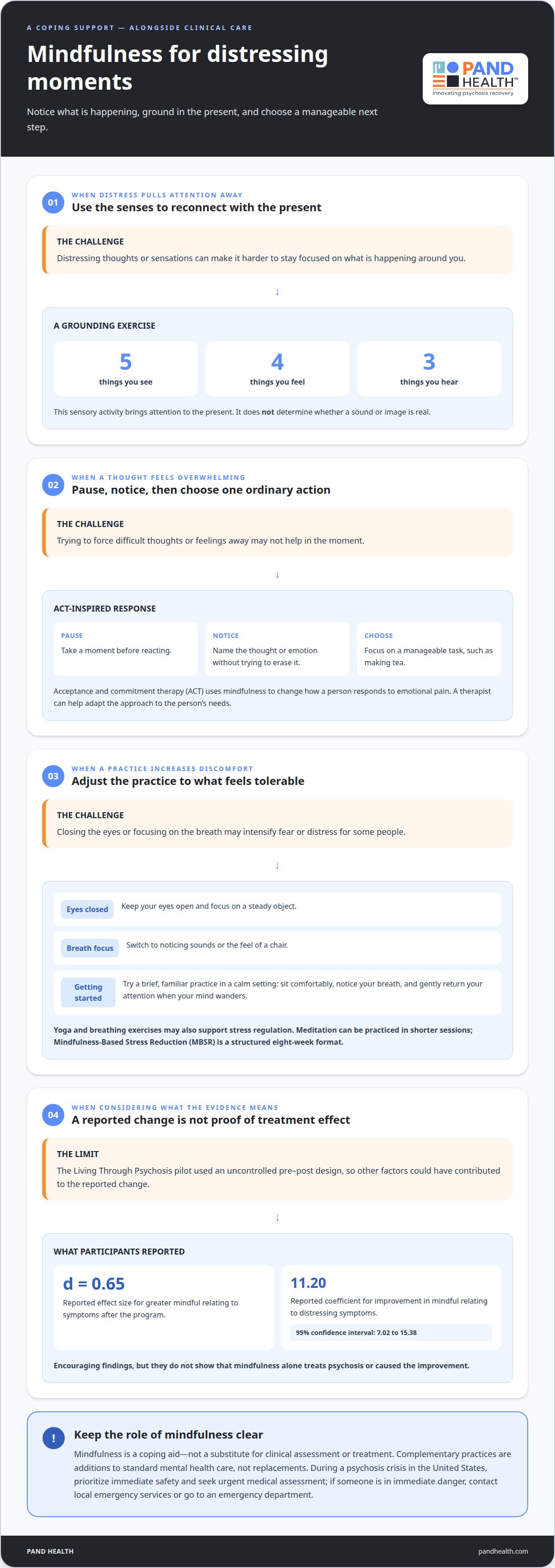
Mindfulness can help someone notice distress without reacting immediately. In a grounding exercise, they might name five things they see, four things they feel, and three things they hear. This sensory activity brings attention to the present; it does not establish whether a sound or image is real. For hallucinations or frightening thoughts, mindfulness is a coping aid, not a substitute for clinical assessment and treatment.
Acceptance and commitment therapy (ACT) uses mindfulness to change how a person responds to emotional pain. The aim is not to force symptoms away, but to notice thoughts and feelings while choosing a manageable next action. For example, someone overwhelmed by a distressing thought might pause, identify the emotion, and focus on an ordinary task, such as making tea. A therapist can help adapt this approach to the person’s needs.
For stress management, try a brief, familiar practice in a calm setting: sit comfortably, notice your breath, and gently return your attention when your mind wanders. Yoga and breathing exercises may also support stress regulation. Mindfulness-Based Stress Reduction (MBSR) is a structured eight-week format, while meditation can be practiced in shorter sessions. The National Center for Complementary and Integrative Health describes complementary practices as additions to standard mental health care, not substitutes. Evidence for specific effects remains limited in some areas.
During a psychosis crisis in the United States, prioritize immediate safety and seek urgent medical assessment. If someone is in immediate danger, contact local emergency services or go to an emergency department; mindfulness is not crisis care.
Mindfulness may also help a person relate differently to distressing symptoms, including hallucinations. In the Living Through Psychosis pilot, participants reported greater mindful relating to symptoms after the program, with an uncontrolled within-participant effect size of d = 0.65. The study’s uncontrolled pre-post design means other factors could have contributed to the reported change. The result is encouraging, but it does not show that mindfulness alone treats psychosis.
Choose a practice that feels tolerable and useful, then discuss it with the treatment team. If closing the eyes increases fear, keep them open and focus on a steady object. If breath-focused meditation intensifies distress, switch to noticing sounds or the feel of a chair. These adjustments make the activity more responsive to the person while preserving its purpose: noticing the present without judgment and choosing a grounded next step.
These practices may support self-awareness and emotional regulation while helping reduce stress. Mindfulness, meditation, yoga, and breathing exercises can be used as stress-management approaches, since stress can trigger or worsen psychosis symptoms. The National Center for Complementary and Integrative Health reports some evidence that yoga and mindfulness-based interventions may help with depression and anxiety symptoms, while noting that more research is needed for many specific claims.
In the Living Through Psychosis pilot, participants’ mindful relating to distressing symptoms improved by a coefficient of 11.20, with a reported 95% confidence interval of 7.02 to 15.38. This additional finding complements the reported change, but does not establish that mindfulness alone caused improvement.
2. Ongoing monitoring and treatment adjustment
A holistic approach to psychosis recovery combines clinical treatment with practical support for daily functioning. It can include antipsychotic medication, therapy, family involvement, and community-based rehabilitation. The right mix depends on symptoms, health needs, substance use, and personal goals. Each component should work alongside the others, not replace clinical care.
Evidence-based care can include antipsychotic medication and cognitive behavioral therapy for psychosis. CBT for psychosis can help people examine distressing interpretations and develop coping strategies. A psychiatrist can assess symptoms, health history, treatment response, and side effects when considering medication. The aim is to reduce and manage symptoms while supporting the person’s everyday functioning.
Antipsychotic medications can help reduce and manage psychosis symptoms. Their benefits and unwanted effects vary, so regular review matters. A psychiatrist can discuss changes in symptoms, daily functioning, and side effects, then consider whether the current medication remains suitable. Never stop or change a prescribed dose without clinical guidance; sudden changes can disrupt treatment.
Monitoring is most useful when it captures changes that affect everyday life. For example, someone might note whether sleep, concentration, or school attendance has become more difficult. They can also share changes in hallucinations, distress, or medication effects at appointments. The treatment team can use this information to assess progress and adjust the plan as needs change. Family observations can add context, while respecting the person’s involvement and privacy.
Residential treatment is a different level of care from outpatient support. It may be considered when someone needs a more structured setting than outpatient appointments provide. Dual diagnosis care addresses psychosis alongside substance-related concerns. Cannabis can trigger or worsen psychotic symptoms, so an assessment should consider substance use as well as mental health. The appropriate setting depends on safety, symptoms, functioning, and available support.
Costs depend on the care setting, treatment components, and insurance benefits; coverage can differ for evaluations, therapy, medication, and coordinated specialty care. Service fees are provided after a quote request, with the specific care requested and insurance arrangements affecting the estimate.
A personalized plan should identify the person’s priorities, current challenges, and signs that treatment needs review. For example, if returning to classes is a goal, the plan can track concentration, attendance, and symptom impact alongside clinical progress. Families seeking help understanding treatment options can discuss an evaluation with Pand Health as a next step.
Antipsychotic medications can lessen psychosis symptoms and support everyday functioning. Effects and side effects vary, so a psychiatrist should review each person’s response and any unwanted effects.
3. Community-based recovery programs
Community-based programs connect treatment with the everyday settings where recovery takes shape. A person might practice planning a morning routine, preparing a meal, or using public transportation with support. These activities develop practical skills and help identify challenges that still affect independent living. Progress can be discussed through specific goals, such as completing a grocery list or attending an appointment.
Life skills training can address personal hygiene, time management, and meal preparation. For example, someone who loses track of appointments might use a calendar and reminders, then review what worked with a support professional. Meal planning can break a complex task into choosing a recipe, making a shopping list, and preparing food. Practicing each step connects treatment goals with daily functioning.
Some community programs also support education, work, and social participation. Someone returning to classes might build a schedule that includes appointments, rest, and coursework. Work preparation can include practicing how to ask for clarification or manage a task list. These examples focus on strengths and personal goals, rather than defining someone by symptoms or diagnosis.
Sleep, physical activity, and nutrition can support overall wellbeing, while cannabis and hallucinogens may trigger or worsen psychotic symptoms. A steady sleep routine, manageable movement, and balanced meals can complement clinical care, with substance use included in treatment discussions.
For a first episode, begin with a clinical evaluation and describe changes in thoughts, daily function, and safety. Early intervention in psychosis services are intended to support young people aged 14-35, and coordinated specialty care brings treatment and practical support together. A useful program connects clinical care with the person’s goals, such as returning to school or rebuilding routines.
Community support can also help people respond to distressing experiences without treating every thought as fact. If delusions or confusing thoughts make errands difficult, a planned outing with a trusted support person may help the individual practice a manageable activity. The purpose is not to argue about beliefs, but to reduce isolation and support safe participation in daily life.
Families can offer useful observations about changes in sleep, routines, or social activity. With the individual’s consent, relatives and professionals can agree on practical steps, such as who will support transportation to appointments. Clear roles can prevent mixed messages and help the person retain choice. Family involvement should support autonomy, not take over decisions the person can make.
To assess whether a community program is helping, review goals with the care team and note concrete changes. Examples include attending a scheduled activity, preparing a meal, or returning to a class. If symptoms or barriers change, the plan can be adjusted to current needs. Community programs work best as part of coordinated care, with clinical treatment remaining central.
4. Education, employment, and social connection
Education, work, and relationships give recovery meaningful roles beyond managing a disorder. Psychosis can affect concentration, confidence, or communication, making familiar settings feel difficult. A gradual return might begin with one manageable commitment, such as attending a study group or meeting a colleague for lunch. These steps help someone rebuild participation and identify which supports make activities more accessible.
Supported employment can help someone pursue work while receiving guidance with practical challenges. For example, a job coach might help break a task into clear steps or plan how to request instructions. The aim is not to lower expectations, but to create conditions for skills to develop. Work may also support independence, daily structure, and a stronger sense of contribution.
Education can be adapted to a person’s current mental health needs. A student might use written instructions, a quieter place to study, or regular check-ins with a trusted advisor. These strategies can reduce avoidable pressure while the student continues building knowledge and confidence. Returning to learning does not require a fixed pace; the person’s priorities and capacity should guide decisions.
Social isolation can worsen psychosis symptoms, while supportive relationships create opportunities for connection and shared activity. Peer support groups offer a place to discuss lived experience without explaining every detail. Someone who feels hesitant could begin by listening, then decide whether to share. A trusted friend can also make social plans more manageable by choosing a familiar place and agreeing on a clear way to leave.
Group therapy can help participants practice communication and explore how they respond to social situations. Someone might rehearse setting a boundary, asking for clarification, or handling a disagreement. These skills can carry into friendships, family life, and workplace conversations. Group participation should feel respectful; sharing personal details remains a choice, not a condition for belonging.
Trauma can affect trust and comfort in relationships, so social goals should respect a person’s boundaries. Someone who finds crowded spaces overwhelming, for instance, might choose a quiet walk with one supportive person. This builds connection without treating discomfort as unwillingness. Care teams can help distinguish symptoms, stress responses, and practical barriers, then shape support around the individual.
Families and friends can help by offering specific, nonjudgmental invitations. “Would you like to walk together after lunch?” offers a clearer choice than repeated pressure to socialize. Notice what helps, such as a familiar setting or shorter visits, and respect a declined invitation. Social skills training and psychological and social rehabilitation can also help people strengthen communication and community participation as their recovery goals evolve.
5. Effects on individuals and families
Psychosis can affect emotional wellbeing, relationships, and everyday functioning. Difficulty concentrating, for example, may disrupt work or school; distressing symptoms can also make routine conversations feel demanding. Families may feel worried or unsure how to respond. Naming these effects helps people describe the support they need, such as help maintaining routines or communicating during stressful moments.
Therapy, family support, and peer support can each contribute to recovery in different ways. Therapy helps individuals develop coping strategies and work toward personal goals. Family psychoeducation can help relatives understand symptoms and respond supportively, while peer groups offer connection with people who share lived experience. Together, these supports can reduce isolation and encourage more understanding communication within families.
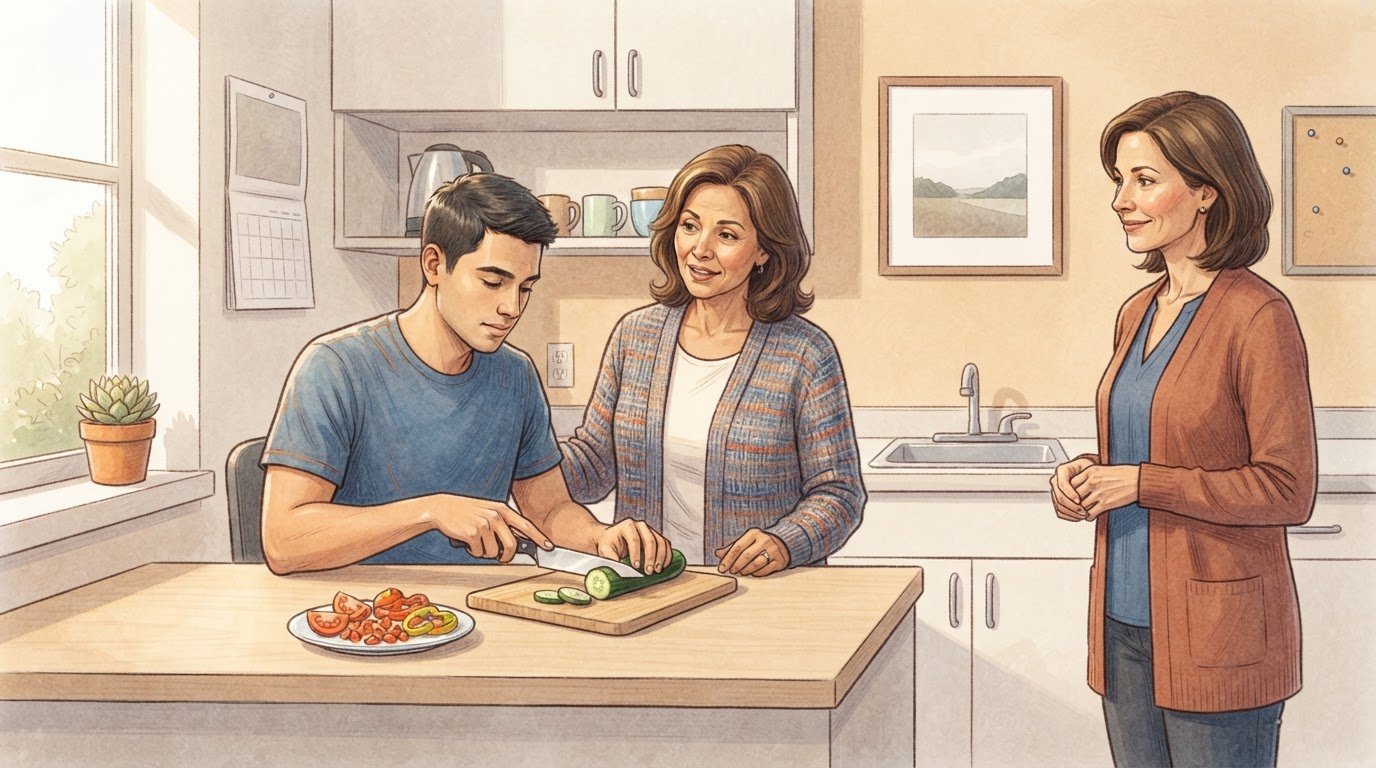
For relatives, practical communication matters. A calm question such as, “Would you like company while we make dinner?” offers support without taking control. Families can agree on how to discuss concerns, respect privacy, and share observations with the treatment team. Family therapy provides a structured setting to address relationship difficulties and practice clearer communication.
Recovery outcomes and timelines differ from person to person. Progress may mean fewer or less distressing symptoms, renewed participation in daily activities, or a stable and fulfilling life, rather than complete symptom elimination. A treatment plan can track meaningful goals, such as returning to a class, reconnecting with a friend, or managing appointments more independently.
Families can support progress by noticing specific changes instead of expecting a straight path. For example, someone may resume cooking while still needing help with social plans. Tracking sleep, emotional wellbeing, and daily tasks can help the individual and care team discuss what is changing. Exercise and other supportive practices may fit into a broader plan guided by the person’s preferences and clinical needs.
Support matters for relatives, too. A family member who feels overwhelmed can identify a trusted person to talk with and set realistic caregiving boundaries. Sharing responsibilities, such as coordinating transportation or preparing meals, can make support more sustainable. These steps help families stay involved without making one person solely responsible for recovery.
When family communication feels strained, structured support can help individuals and relatives work through concerns together. Pand Health offers family therapy and psychoeducation to support communication, understanding, and recovery.
Emotional distress, relationship difficulties, and challenges with daily functioning can occur with psychosis, so families may benefit from practical guidance as well as understanding. Family therapy and psychoeducation can help relatives develop supportive communication and learn about psychosis. Understanding early signs can help families seek timely support, rather than waiting until difficulties become more disruptive.
In the Living Through Psychosis pilot, participants reported reduced difficulty with emotional regulation from before to after the programme, with an uncontrolled within-participant effect size of d = 0.29. Participants also reported improvements in recovery dimensions, with an uncontrolled within-participant effect size of d = 0.42. Early intervention for psychosis can reduce the risk of a young person taking their own life from 15% to 1%. These findings describe possible benefits, not a guarantee of the same experience for every individual or family.
Pand Health
Pand Health helps individuals and families connect recovery goals with practical, ongoing support in Los Angeles. Social skills training and psychological and social rehabilitation can address challenges with communication, routines, and community participation. Family psychoeducation helps relatives build understanding and supportive responses. When questions arise about thought disorders or autism, a comprehensive evaluation can provide a clearer basis for discussing care needs.
These services may be relevant when symptoms are affecting relationships, daily activities, or a person’s ability to take part in school or community life. Support can include the individual’s goals and family perspective while remaining connected to clinical care. To discuss support for your situation, contact Pand Health.
Choose a Next Step That Fits
A useful next step is to identify one recovery priority that matters to the individual now. It might be returning to a valued activity, strengthening a relationship, or understanding symptoms more clearly. Bring that priority to a conversation with the care team so support can connect clinical needs with personal goals. A holistic approach to psychosis recovery is most meaningful when it respects individual choices and allows progress at a manageable pace.
Pand Health offers social skills training, psychological and social rehabilitation, and evaluations for thought disorders and autism. These services can help individuals and families explore support for social connection, daily participation, or questions about assessment. Contact Pand Health for support and discuss a next step that feels appropriate for your situation.
Frequently Asked Questions
What Are Holistic Approaches to Mental Health?
Holistic approaches consider clinical care alongside a person’s daily routines, relationships, and goals. For psychosis, that might mean coordinating treatment with a practical plan for returning to a class, maintaining supportive connections, and discussing changes with the care team. These supports complement clinical treatment; they don’t replace it. A useful plan reflects what the individual values and identifies which parts of daily life need support now.
What are early warning signs of psychosis relapse, and how can a relapse prevention plan help?
Early warning signs can include changes from a person’s usual pattern, such as worsening sleep, concentration, social engagement, or psychosis symptoms. A relapse prevention plan records the individual’s early changes, who to tell, and what steps to take, such as contacting the treatment team and reviewing the care plan. Agreeing on these actions in advance can help families respond calmly and share relevant observations.
Disclaimer
This article is for information and educational purposes only, and can NEVER replace a proper medical evaluation. If you or a loved one may be suffering from psychosis or the prodomal symptoms of psychosis, get evaluated by a professional as soon as possible. Early diagnosis and treatment can be life-saving.