


Will My Son With Schizophrenia Be Normal? Understanding Life and Hope
Your son can build a meaningful life with schizophrenia, even if his path differs from what you once imagined. If you’re wondering whether your son with schizophrenia will ever be normal, the honest answer is that symptoms can be managed, and life can include relationships, education, work, and growing independence.
It’s understandable to want a clear picture of what the future may hold. Schizophrenia can affect daily routines, motivation, emotions, memory, and social connection, but a diagnosis doesn’t define your son or rule out progress. For children and teens, symptoms may emerge gradually, and early support can help families understand what’s changing and what care may help.
This article explains how schizophrenia can shape everyday life, how childhood-onset symptoms may differ, and how treatment and family support can contribute to stability and hope. It also shares one son’s experience with schizophrenia, psychosis, and autism spectrum disorder, offering a personal perspective alongside practical guidance for the road ahead.
Key Takeaways
- Understand how symptom management can support daily functioning and leave room for meaningful goals.
- Learn how schizophrenia that begins in childhood may affect development and differ in how symptoms appear.
- Recognize how disorganized speech and behavior can interfere with everyday activities and communication.
- Explore what one family’s experience reveals about the challenges and possibilities of living with schizophrenia, psychosis, and autism.
- See how antipsychotic medication may help manage symptoms and why treatment decisions also consider possible side effects.
Managing symptoms and building hope for the future
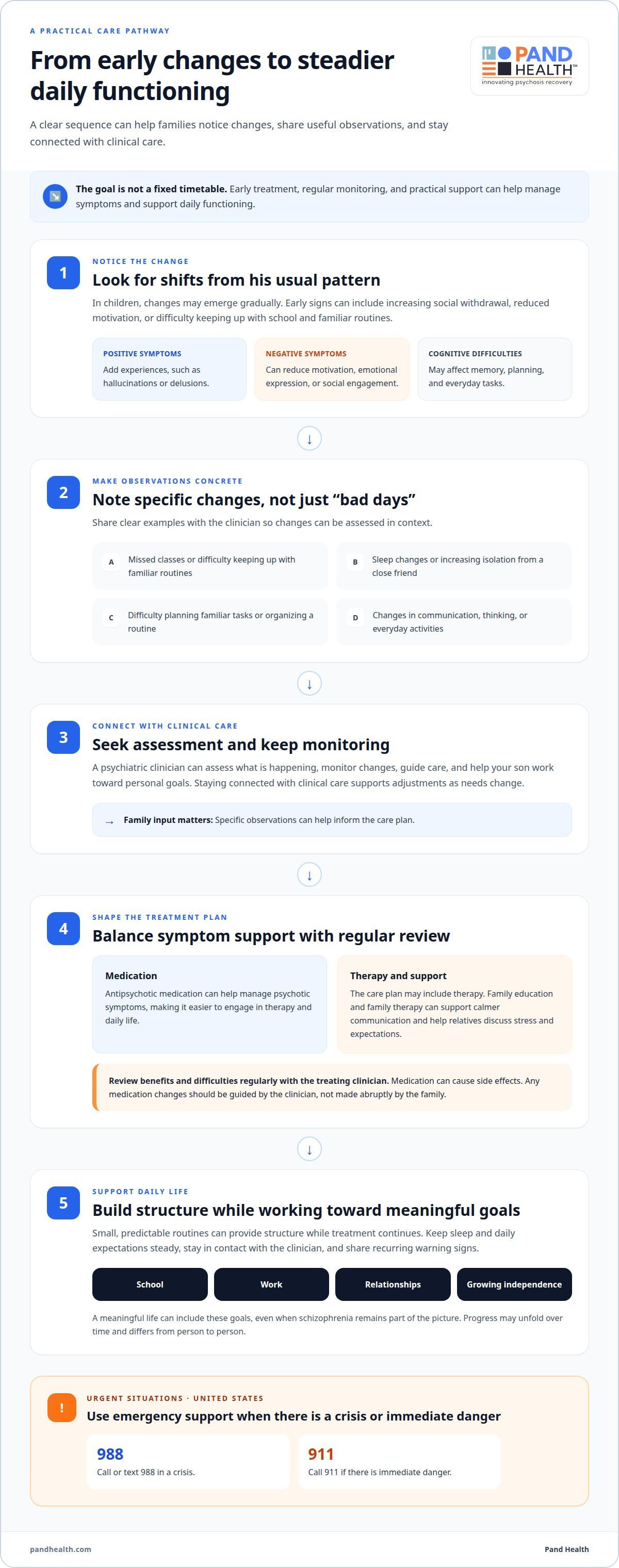
Early treatment can help manage symptoms and support daily functioning. A psychiatric clinician can monitor changes, guide care, and help your son work toward personal goals.
Positive and Negative Symptom Patterns
Positive symptoms add experiences, such as hallucinations or delusions, while negative symptoms can reduce motivation, emotional expression, or social engagement. Cognitive difficulties may affect memory and planning. These patterns matter because someone may struggle with everyday tasks even when psychosis is less visible. For example, difficulty organizing a morning routine may call for practical support alongside care focused on symptoms.
Recognizing Early and Later Changes
Early changes may include increasing social withdrawal, reduced motivation, or difficulty keeping up with school and familiar routines. Symptoms can emerge gradually in children rather than appearing suddenly. Later signs may include hallucinations, delusions, or disorganized thinking and behavior that disrupt daily life. Noticing a clear change in your son’s usual communication or activities can help a clinician assess what is happening.
Antipsychotic Benefits and Risks
Antipsychotic medication can help manage psychotic symptoms, making it easier to engage in therapy and daily life. One family described finding medication that reduced their son’s symptoms and helped him become stable enough to focus on therapy. Medication can also cause side effects, so discuss benefits and difficulties regularly with the treating clinician. Any changes should be guided by that clinician, not made abruptly by the family.
Effects of Early Treatment
Early treatment means seeking an assessment when concerning symptoms first emerge, then staying connected with clinical care and regular monitoring. Treatment can help manage symptoms and support daily functioning. The care plan may include medication and therapy, with adjustments as needs change. Families can share specific observations, such as missed classes, sleep changes, or increasing isolation, to inform care.
Small, predictable routines can give your son structure while treatment continues. Keeping sleep and daily expectations steady, and staying in contact with his clinician, may help the family respond to changes before they become a crisis. Track specific shifts, such as withdrawing from a close friend or struggling to plan familiar tasks, rather than treating every difficult day as a sign of deterioration.
If someone in the United States is in crisis, they can call or text 988, according to the Substance Abuse and Mental Health Services Administration. If there is immediate danger, call 911, according to the National 911 Program. These steps are for urgent situations; ongoing symptom management still calls for regular care with a psychiatric clinician.
Can Someone With Schizophrenia Live a Normal Life?
A meaningful life can include school, work, relationships, and growing independence, even when schizophrenia remains part of the picture. One family’s account shows how progress may unfold over time and why relatives also need support and a plan for difficult periods.
A Family’s Experience With Schizophrenia
A family’s experience can show how treatment and everyday support affect a son’s path through schizophrenia. In one account, their son developed the condition in his late teens and began a long treatment process just after turning 20. After a few weeks in treatment, his family noticed improvements. That experience offers a concrete example of progress, not a timetable for every person.
Family Education and Caregiver Support
Family education helps relatives understand symptoms, communicate more calmly, and offer practical support. For example, learning that withdrawal can be a symptom may help a parent avoid interpreting a son’s silence as rejection. Family therapy gives relatives a structured place to discuss conflict, emotional strain, and shared expectations.
Caregivers need support, too. Burnout can affect the person they’re supporting, so families can divide responsibilities, protect time for rest, and discuss stress during therapy. Education can help relatives distinguish supportive boundaries from blame. It can also clarify what the family can manage at home and what concerns to share with the treating clinician.
Family Support and Early Warning Signs
Family support can help identify warning signs that tend to recur for a particular person. Your son might begin sleeping poorly, withdrawing from a close friend, or struggling to keep up with school. Noting these changes and sharing them with his clinician can help the family respond before distress escalates. Predictable routines, especially around sleep, may also provide steadier structure.
Symptoms may be worsening when familiar warning signs intensify, such as increasing isolation, disorganized behavior, or difficulty managing everyday tasks. If the change creates immediate danger, treat it as urgent and seek emergency help.
If your son refuses treatment, approach him calmly, ask what concerns him, and share specific observations with his clinician. Avoid turning every conversation into an argument. A trusted relative may help keep communication open.
Past frightening episodes can leave families feeling guarded or emotionally exhausted. Family therapy can help relatives discuss those experiences, identify sources of conflict, and agree on ways to communicate during stressful moments. It can be a useful next step when these conversations feel difficult to manage alone.
In the United States, people in crisis can call or text 988, according to the Substance Abuse and Mental Health Services Administration. If there is immediate danger, call 911, according to the National 911 Program.
Disorganized speech and behavior
Schizophrenia can disrupt how a person organizes thoughts, communicates, and acts. Your son may start answering one question, shift to another subject, and struggle to explain the connection. He may also behave in ways that make familiar tasks harder to complete. These changes can interfere with school, relationships, and other parts of daily life.
Disorganized speech isn’t simply unusual wording or an awkward conversation. The concern is a pattern that makes it difficult to follow what someone means. For example, your son may move between ideas so quickly that a discussion about class becomes hard to understand. A relative can note changes from his usual communication and bring specific examples to a psychiatric evaluation.
Disorganized behavior can also affect ordinary routines. Your son might have trouble arranging the steps for getting ready, keeping track of belongings, or finishing a familiar task. The behavior may seem confusing, but it can reflect difficulty organizing thoughts rather than deliberate defiance. Describe what happened, when it occurred, and how it affected his functioning. Concrete details help clinicians understand the concern.
Hallucinations and delusions can occur alongside disorganized thinking or behavior. For instance, a son experiencing a hallucination may respond to something others don’t perceive, while a delusion may shape how he interprets a conversation. These examples don’t establish a diagnosis on their own. The pattern, its impact, and the broader mental health picture all matter during an assessment.
A diagnosis involves more than identifying one confusing conversation or unusual action. A clinician considers symptoms together and how they affect everyday life. Thought disorders and autism can also involve communication or behavioral differences, so careful evaluation helps clarify what may be contributing. Families can share examples across settings, such as changes at home and difficulties reported at school.
During a difficult conversation, try short, direct statements and focus on one topic at a time. If your son loses the thread, calmly restate the immediate point instead of challenging every detail. For example, “Let’s focus on getting ready for class” gives a clear next step. This approach can make communication more manageable without dismissing his experience or reinforcing delusions.
Keep a brief record of observable changes, such as a conversation becoming hard to follow or a routine he can no longer complete. Include what happened before and after, without labeling his motives. Share these examples during a psychiatric assessment. If disorganized behavior creates immediate danger, seek urgent help. Otherwise, consistent observations can help clarify changes in symptoms and their effect on daily functioning.
A son's experience with schizophrenia, psychosis, and autism spectrum disorder
Patryk’s story shows how schizophrenia, psychosis, and autism spectrum disorder can make one person’s mental health situation complex. His mother described his experience when he was 22, including a psychiatric hospital stay and treatment over time. The useful takeaway is not a forecast for every son. It is a reminder that symptoms, developmental needs, and support must be understood together.
Patryk’s first psychiatric hospital stay lasted almost two months. His family was told he needed treatment for two years for his brain to return to what doctors called normal. That language reflects what his family heard at the time, not a universal recovery timeline or guarantee. For parents, the account illustrates how frightening and confusing psychosis can feel, especially when a son’s behavior changes sharply.
Schizophrenia can involve hallucinations, delusions, and disordered thinking or behavior that interfere with daily function. Autism spectrum disorder can also shape communication and development, so overlapping concerns call for careful assessment rather than assumptions based on one symptom. Some research has estimated that psychosis among people with autism spectrum disorder could be as widespread as almost 35%. That estimate describes a possible overlap, not Patryk’s individual diagnosis or outcome.
Patryk later attended the Military Technical Academy. After he had attended for two years, his doctors began reducing his medication dosage. This detail shows why treatment decisions belong within ongoing clinical care: his doctors made changes in the context of his progress. A family can help by sharing specific observations, such as changes in sleep, communication, school participation, or hallucinations, rather than trying to adjust medication independently.
Patryk also went away for a few days without taking his medication. That episode highlights a practical issue families may face: routines can be disrupted by travel, changing schedules, or a young person’s wish for independence. A calm conversation with the treating clinician can help address medication questions and plan for transitions. The account doesn’t establish what happened afterward, so it shouldn’t be used to predict the effect of missed medication for someone else.
For a parent, the central lesson is to see the person beyond the diagnosis. Patryk’s school experience, family relationships, treatment, and autism-related needs each shaped his situation. Ask the care team to explain how each diagnosis relates to observed symptoms and daily challenges. This keeps the focus on an individual plan, rather than treating one family’s experience as a standard path to recovery.
How do antipsychotic medications help, and what are their risks and side effects?
Antipsychotic medication can help reduce psychotic symptoms, including hallucinations and delusions. For some people, easing these symptoms can make daily activities and therapy more manageable. Medication doesn’t erase a person’s identity or determine his future. It is one part of a care plan, with goals such as greater stability, improved functioning, and room to pursue school, relationships, or work.
Assess the effects by looking at changes that matter in your son’s life. A family might discuss whether he is experiencing fewer distressing psychotic symptoms, communicating more easily, or returning to a familiar routine. These observations give the prescribing clinician useful context. A medication plan is not judged only by symptom reduction; its impact on daily life and your son’s experience matters, too.
Antipsychotic medications can cause side effects, and those risks belong in the treatment conversation from the start. Specific effects and their impact vary between individuals, so the clinician needs to know what your son experiences. Clearly describe changes in how he feels, behaves, or manages daily activities. Avoid assuming a new difficulty is unrelated to medication, or changing treatment without clinical guidance.
To prepare for a medication review, note the concern, when it began, and how it affects a routine. For example, record whether a new problem makes it harder to attend school, sleep, or take part in family activities. Bring questions about benefits, possible side effects, and how they will be monitored. Specific examples can make the discussion clearer than a general report that medication feels difficult.
Your son’s preferences matter. If he says a medication is uncomfortable or interferes with something important, listen without dismissing his concern. Then share his words with the prescriber and discuss options together. A collaborative conversation can help the clinician weigh symptom control against tolerability and consider whether the plan needs adjustment. The family’s role is to support communication, not change a dose independently.
Medication decisions may change as symptoms and needs change. Regular follow-up lets the clinician review progress, emerging concerns, and whether the current approach remains suitable. A family can support this process by sharing factual observations and encouraging honest discussion. If psychotic symptoms return or become more disruptive, report the change promptly rather than waiting for the next routine appointment.
If your family needs help making sense of psychosis symptoms and next steps in care, request a psychiatric evaluation. A focused evaluation can help clarify concerns to discuss with your son’s treating clinician.
Pand Health
Pand Health helps families make sense of psychosis-related concerns and identify support suited to their son’s needs. An evaluation for thought disorders and autism can help clarify symptoms when communication, behavior, or development raises questions. Family psychoeducation offers relatives guidance on understanding the condition and supporting care. Social skills training and psychological and social rehabilitation can address practical challenges in relationships and daily functioning.
These supports may be relevant when symptoms are affecting family life, school, or social connection, or when you need help understanding the next steps. Care can focus on your son’s needs while also giving family members a clearer role in supporting progress. If you’d like to discuss support for your family, contact Pand Health.
Let the Next Step Reflect Your Son’s Needs
If you’re still asking, “Will my son with schizophrenia ever be normal?” consider what matters in his life now. The question can feel urgent, but “normal” has no single definition. Your son’s priorities offer a more useful way to think about progress. He might want to reconnect with a friend, manage a daily routine, or return to school.
Pand Health can help families consider support suited to their son’s needs. An evaluation for thought disorders and autism can help clarify complex symptoms. Social skills training and psychological and social rehabilitation can support connection and everyday functioning. Asking whether your son with schizophrenia will ever be normal may also open a conversation about meaningful goals he wants to pursue, rather than a fixed expectation for his future.
When you’re ready to discuss support for your family, contact Pand Health. Your son’s future is more than his hardest moments, and thoughtful support can help make room for the goals that matter to him.
Frequently Asked Questions
Was emotional trauma the trigger for everything to come?
It isn’t possible to conclude that emotional trauma alone caused your son’s schizophrenia. The exact cause is unknown, and schizophrenia may develop through a combination of genetic, brain chemistry, and environmental factors. A painful experience can be important context for understanding his wellbeing, but timing alone doesn’t establish cause. Share relevant experiences with his clinician so they can consider them alongside symptoms, development, and other health factors.
Can people with schizophrenia recover or live fulfilling lives?
Yes, people with schizophrenia can make progress and build lives that feel meaningful to them. Recovery may involve managing symptoms while pursuing personal priorities, such as maintaining relationships, education, work, or greater independence. The path differs from person to person, and progress may include setbacks as well as gains. Focus conversations with your son on goals he values, rather than expecting his life to match someone else’s definition of normal.
What does recovery from schizophrenia mean, and how common is it?
Recovery can mean more than the absence of symptoms. The American Psychological Association describes it in terms of good health, a stable home, meaningful work, and participation in the community. About 60% of people with schizophrenia achieve a level of recovery that allows them to lead productive lives. That figure describes a broad outcome, not a prediction for an individual; your son’s goals and day-to-day functioning help make recovery personally meaningful.
What factors affect the long-term outlook for schizophrenia?
The outlook depends on how symptoms affect functioning, how treatment helps, and what support is available over time. A clinician considers the pattern of psychosis, difficulties with motivation or memory, and whether another condition complicates assessment. For example, a son who struggles mainly with planning may need different daily support than one whose symptoms make communication difficult. Changes in school, relationships, or self-care can show where additional support may be needed.
What treatments besides medication help schizophrenia, such as therapy and coordinated specialty care?
Psychotherapy, family support, social skills practice, and help with education or employment can complement medication. Coordinated specialty care brings relevant supports together around a person’s goals. In Los Angeles, Pand Health’s California OnTrack programs serve individuals ages 13-35 and supplement existing care teams rather than replacing them. Families can ask how a proposed approach addresses their son’s priorities, such as communicating with peers, returning to study, or building daily routines.
How can parents support an adult son with schizophrenia while respecting his independence?
Offer practical help while letting your son make choices wherever possible. Ask before stepping into tasks such as scheduling appointments, and agree together on what support he wants, such as a reminder or a ride. Discuss privacy before sharing personal information with relatives or clinicians. If he declines help, keep communication open and revisit the conversation calmly. This approach respects his autonomy while leaving room for support when he wants it.
Disclaimer
This article is for information and educational purposes only, and can NEVER replace a proper medical evaluation. If you or a loved one may be suffering from psychosis or the prodomal symptoms of psychosis, get evaluated by a professional as soon as possible. Early diagnosis and treatment can be life-saving.