
I'm Scared of My Child's Mental Illness: How to Find Help
A diagnosis can help explain what your child is experiencing, but it doesn’t define who they are. Mental illness refers to conditions that affect a child’s thoughts, emotions, or behavior and can make everyday life harder. If you’re thinking, “I'm scared of my child's mental illness,” that fear is understandable. You don’t have to work out what’s happening alone.
It can be hard to tell the difference between a passing struggle and a sign that your child needs support. Changes in mood, sleep, behavior, or relationships deserve attention when they persist or interfere with daily life. Listening without blame and seeking a professional evaluation are constructive first steps.
This article explains what mental illness can mean for a child, which signs may call for professional help, and how an evaluation can clarify what’s happening. You’ll also learn about possible treatments, ways to support your child while navigating care, and how to approach the experience without blaming yourself.
Key Takeaways
- Start by sharing your concerns with your child’s healthcare professional and noting changes in mood, sleep, behavior, or daily routines.
- Look at how long symptoms last and whether they affect your child’s schoolwork, friendships, family relationships, or enjoyment of life.
- Professional support may include psychotherapy, medication, or both, depending on your child’s needs.
- Listen without judgment, validate your child’s feelings, and make space for them to talk at their own pace.
- Accessing care can take persistence; understanding practical barriers can help you identify a manageable next step.
What should I do if I suspect that my child has a mental health condition?
Start with a calm conversation and arrange an appointment with your child’s healthcare professional. Describe specific changes you’ve noticed, such as disrupted sleep, withdrawing from friends, or difficulty managing schoolwork.
Building a Supportive Home
A supportive home offers predictable care, respectful listening, and room for your child to describe distress without blame. These everyday signals can make it easier for them to share challenges and accept help. Try a regular check-in during a quiet moment, such as on a walk or over dinner. Keep meal and sleep routines steady where possible, and respond to difficult behavior with curiosity rather than punishment.
Talking About Mental Illness
Talk about mental health in clear, age-appropriate language, and invite your child to share at their own pace. Open conversations don’t cause mental or behavioral health symptoms, and they can reduce fear and stigma around seeking care. You might say, “I’ve noticed you seem worried after school. Do you want me to listen, or help think through next steps?” Avoid comparisons or assumptions about what caused the distress.
Supporting the Child and Family
Supporting your child and family means listening, seeking clinical guidance, and protecting your child’s privacy. Privacy and parental-consent rules vary by state, the child’s age, and the care setting. Before an appointment, ask the clinician who may consent, what information stays private, and when safety concerns must be shared. A pediatrician can assess physical concerns, discuss mental health changes, and refer your child for specialist care.
Prepare for the conversation with specific observations rather than a diagnosis. Note changes in your child’s behavior, appetite, sleep, social activity, and commitments. For example, record when your child stopped attending soccer or began waking repeatedly. Share what you’ve tried and what seemed to help. A primary care provider can address mental health alongside physical health and help identify appropriate referrals.
At home, offer choices that preserve your child’s agency. Ask whether they want company, quiet time, or help contacting a professional. Invite them to a simple shared activity, such as watching a movie or taking a short walk, without treating participation as a test of progress. You can also seek support from someone you trust, sharing only what’s needed to protect your child’s privacy.
If you think your child might hurt themselves, call 988 for the Suicide and Crisis Lifeline, according to the Substance Abuse and Mental Health Services Administration. If your child is in immediate danger, call 911. Take statements about self-harm seriously, stay present, and share the concern with your child’s healthcare professional or established mental health team.
Psychotherapy and medication
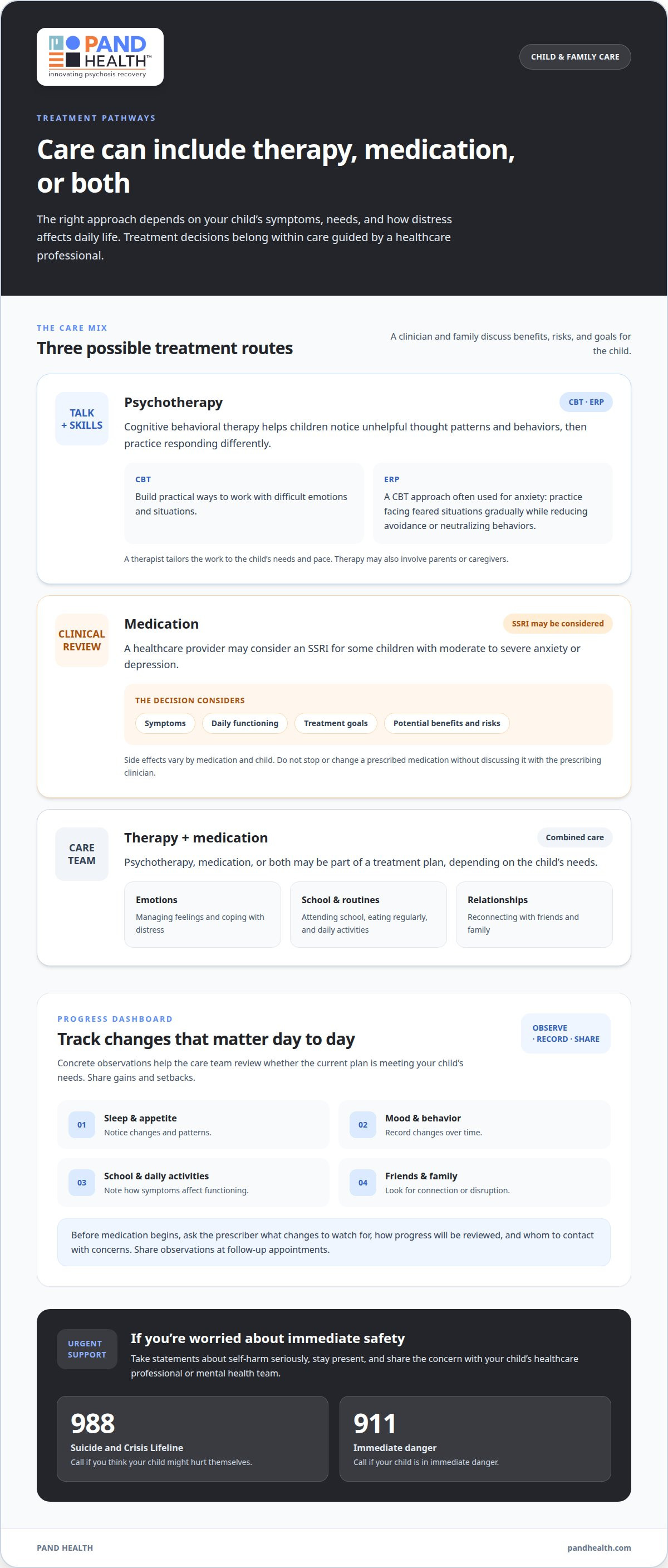
Treatment for a child’s mental health condition may include psychotherapy, medication, or both. The right approach depends on the child’s symptoms, needs, and how distress affects daily life. Cognitive behavioral therapy (CBT) helps children notice and change unhelpful thought patterns and behaviors. A healthcare provider may recommend medication, such as a selective serotonin reuptake inhibitor (SSRI), for some children with moderate to severe anxiety or depression. The care team discusses each treatment’s potential benefits and risks with the family.
CBT gives children practical ways to work with difficult emotions and respond differently to situations. For example, a therapist may help a child identify a thought that makes school feel overwhelming, then practice a more balanced response. Exposure and Response Prevention (ERP), a form of CBT often used for anxiety, supports gradual practice facing a feared situation while reducing behaviors used to avoid or neutralize distress. A therapist tailors this work to the child’s needs and pace.
Medication isn’t a single treatment for every disorder. A clinician may consider an SSRI for a child with moderate to severe anxiety or depression, while weighing symptoms, functioning, and treatment goals. The aim is to support improvement in areas such as managing emotions, attending school, eating regularly, or spending time with friends. Medication decisions belong within clinical care, rather than being based on another child’s experience or a family’s assumptions about a condition.
Side effects vary by medication and child. Before treatment begins, ask the prescriber what changes to watch for, how progress will be reviewed, and whom to contact with concerns. Keep a brief record of changes in sleep, appetite, behavior, mood, and daily activities, then share those observations at follow-up appointments. Don’t stop or change a prescribed medication without discussing it with the prescribing clinician; treatment plans need appropriate clinical guidance.
Therapy can also involve parents or caregivers. Family therapy may help relatives understand a child’s challenges, communicate more constructively, and respond consistently at home. It can be useful when conflict, misunderstanding, or stress affects family relationships. Ask how sessions involve the child and caregivers, and what goals the therapist is addressing. To explore support for family communication, ask about family therapy.
Assess progress through concrete changes, not a label alone. A care team may review whether the child is coping with school demands, reconnecting with friends, or experiencing less disruption from symptoms. Share both gains and setbacks. Clear observations help the clinician determine whether the current combination of psychotherapy and medication is meeting the child’s needs.
Signs that a child may need professional help
Look for changes that persist, intensify, or interfere with your child’s daily life. Sadness lasting two or more weeks is a warning sign, and childhood depression may show up as irritability rather than visible sadness. Anxiety can appear through physical complaints, sleep problems, avoidance, or behavior changes. A child who repeatedly reports stomachaches before school, for example, may be experiencing distress that deserves attention.
Consider how symptoms affect schoolwork, friendships, family relationships, and activities your child once enjoyed. Persistent, intense fears may warrant an evaluation when they disrupt daily routines. For example, a child who becomes very anxious months before a dentist visit may be caught in obsessive worrying, especially if the fear dominates family conversations or leads to repeated avoidance. The impact on your child’s functioning matters more than whether a fear seems understandable to an adult.
Arrange a professional evaluation when symptoms persist or make everyday responsibilities harder. Start with your child’s primary care provider, who can consider physical causes and refer your child to a mental health specialist. Bring specific examples, such as missed classes, withdrawal from friends, or repeated sleep disruption. A clear record helps the clinician understand what changed, when it began, and how your child responds in different settings.
A child mental health assessment gathers information about symptoms, development, daily functioning, and relevant medical or family history. The clinician may speak with the child and caregivers, then use diagnostic guidelines such as the DSM or ICD. A diagnosis can take time and may be adjusted as the child matures and more information emerges. Assessment helps guide treatment; it doesn’t reduce a young person to a label.
If your child talks about suicide or self-harm, take the saying seriously and contact the child’s established mental health team or healthcare professional promptly. If you think your child might hurt themselves, call 988 for the Suicide and Crisis Lifeline, according to the Substance Abuse and Mental Health Services Administration. Call 911 in an emergency, especially if your child cannot remain safely at home.
While arranging care, listen without judgment and ask what your child needs in that moment. Avoid arguing about whether the anxiety is “real” or comparing your child with friends. Instead, acknowledge their distress and offer a manageable choice, such as sitting together or contacting a trusted adult. Caregivers can share observations with the clinician while preserving the child’s privacy as much as possible.
Avoiding self-blame during difficult parenting moments
When symptoms appear, parents often look for a reason and turn the worry against themselves. A child’s mental health condition isn’t proof that a parent caused it. Having a mental health disorder doesn’t mean a child will develop the same condition. Genetics and learned behavior can influence development, but they aren’t the only factors. Replace “I caused this” with a more useful question: “What support does my child need today?”
Separate what you can influence from what you can’t control. You can offer a steady routine, listen when your child talks, and follow through on agreed care. You can’t remove every difficult feeling or prevent every symptom. If your child avoids a school activity, for example, acknowledge the worry before discussing a manageable next step. This keeps the focus on support rather than judging your parenting.
Children may pick up on a parent’s mood even when they don’t say so. If stress makes you speak sharply, acknowledge what happened and apologize: “I was frustrated, and I’m sorry I raised my voice.” Then tell your child the adult feeling wasn’t their fault. Repairing a strained moment models accountability better than pretending every interaction went well.
If a child shares a fear or talks about self-harm, don’t assume they’re trying to hurt or punish you. A child expressing suicidal thoughts may believe others would be better off without them. Listen calmly, take their words seriously, and connect with professional support. Your shock or fear matters, too, but don’t make the child responsible for comforting you.
You can seek support for yourself without sharing every detail of your child’s private life. Choose someone you trust and explain your own worries, such as feeling overwhelmed or unsure how to respond. Therapy, exercise, or meditation can help you maintain your own mental health practices. If you already manage anxiety or depression, use that awareness to notice changes in your child, not to assume their experience will match yours.
Perfection isn’t the goal. A practical goal is to notice a difficult moment, own your part, and try a more supportive response next time. If your child says, “You don’t understand,” resist insisting that you do. Try, “You’re right that I may not understand yet. I’m listening.” This leaves room for your child’s perspective and helps keep communication open as your family navigates treatment and daily challenges.
Barriers to getting care
Cost concerns, scheduling limits, stigma, and long waits can make care feel difficult to access. If you catch yourself thinking, “I'm scared of my child's mental illness,” taking practical steps may feel harder. In the United States, ask your child’s primary care provider and health insurance company about referrals. Ask the insurer which mental health services may be covered, what costs may apply, and whether a referral is needed. These questions can clarify next steps before you schedule an appointment.
Waitlists can delay an evaluation. Ask about joining community mental health provider waiting lists, and keep a note of whom you contacted and when. If a clinic gives you an estimated appointment window, record it and ask how families are notified about openings. While you wait, keep describing urgent changes to your child’s established healthcare professional, especially new or worsening symptoms.
It’s easier to assess affordability when you understand your plan’s specific terms. Contact the insurance company with a focused question, such as, “What mental health care for my child is covered under this plan?” Ask whether the answer differs for an evaluation, therapy, or medication visits. Write down the representative’s instructions and any reference number they provide, so you have a record if you need to call again.
Stigma can make parents hesitate, even when a child’s feelings or behavior interfere with daily life. Mental health concerns are health concerns, not evidence of poor parenting or a child’s failure. If “I'm scared of my child's mental illness” makes you reluctant to tell relatives, share only what’s necessary with someone you trust. You might say, “We’re arranging support for anxiety,” without discussing private details your child hasn’t agreed to share.
Time and transportation can complicate regular appointments. Before scheduling, explain constraints such as school hours, work shifts, or difficulty getting to a clinic. Ask the healthcare professional’s office about appointment arrangements for your child’s care. If missing class is a concern, discuss how to communicate with the school while protecting your child’s privacy and sharing only what’s needed for support.
When the process feels confusing, divide it into one manageable task at a time. On Monday, you might call the insurer; the next day, you could contact the primary care office with your concerns. Keep a short list of questions about access, coverage, and follow-up. This approach can help parents move forward without expecting themselves to solve every barrier at once.
Family support can help maintain momentum while appointments are pending. Choose a simple practice, such as a weekly check-in about feelings, school, and sleep. If your child experiences depression or intense distress, tell their healthcare professional rather than waiting for the next routine conversation. To discuss support for your family’s care needs, contact the care team.
Pand Health
Pand Health can help families seeking clinical guidance when a child’s mental health concerns need closer evaluation or ongoing support. Its services include evaluation for thought disorders and autism, family psychoeducation, social skills training, and psychological and social rehabilitation. These supports can help clarify a child’s needs and give families practical ways to understand and respond to challenges.
Consider reaching out when you’re unsure what your child’s symptoms mean or your family needs help understanding the next steps in care. Family psychoeducation can help caregivers build understanding, while social skills training and rehabilitation support everyday functioning. Contact Pand Health in Los Angeles to discuss your family’s concerns and care options.
Take the Next Step at Your Own Pace
When you’re thinking, “I’m scared of my child’s mental illness,” it can be hard to know what to do first. You don’t need every answer before taking a next step. Begin with the concern that feels most urgent, and include your child in the conversation in a way that suits their needs.
Care can involve understanding what your child is experiencing and finding support that fits. Bring your questions, concerns, and observations to a conversation with Pand Health. Asking for guidance is a meaningful step; you don’t need to have everything figured out today.
Contact Pand Health for support and share what’s concerning you. Your family can move forward one thoughtful step at a time.
Frequently Asked Questions
How soon after treatment will my child feel better?
Progress is tracked through changes in symptoms and everyday functioning, not a fixed timetable. A clinician may review whether your child is sleeping more consistently, attending school, or reconnecting with activities. Therapy skills also take practice between sessions. Keep brief notes about changes and bring them to follow-up appointments so the care team can see what is helping and where your child still needs support.
What are the complications of this condition?
Challenges can affect a child’s schoolwork, friendships, family relationships, sleep, and ability to enjoy daily activities. Severe depression can involve thoughts of self-harm or suicide, which need immediate professional attention. These effects aren’t inevitable for every child. Notice changes in functioning and share them with your child’s healthcare professional, especially if distress is increasing or safety becomes a concern.
What’s next?
Choose one practical next step: organize your observations, prepare questions for the clinician, or plan how to support your child between appointments. For example, note which situations feel hardest and what helps your child recover afterward. Agree on a simple check-in with your child, then revisit the plan as circumstances change. If immediate safety is at risk, seek emergency help rather than waiting for a routine appointment.
What are common signs of mental illness in children by age?
Signs vary by child, but age and development help put behavior in context. Separation anxiety commonly begins at 8 to 12 months and usually improves by preschool. Autism spectrum disorder often appears before age 3. According to the National Institute of Mental Health, schizophrenia is usually diagnosed between ages 16 and 30, after a first episode of psychosis. Persistent changes or impaired daily functioning warrant assessment at any age.
How can I tell if my child needs professional mental health help?
Seek an evaluation when emotional or behavioral changes persist, intensify, or disrupt everyday life. Look beyond one difficult day: consider whether your child is avoiding school, withdrawing from valued activities, or struggling to maintain relationships. A pattern across home and school can help clarify the concern. Record specific examples and discuss them with the child’s healthcare professional, who can consider possible physical causes and appropriate referrals.
Which child mental health professionals can diagnose and treat children?
Your child’s primary care provider can discuss mental health concerns, consider physical health factors, and refer your child to a specialist. Mental health professionals, including therapists, counselors, and psychiatrists, can contribute to assessment or care according to their training and role. Ask who will coordinate recommendations and how your child’s progress will be reviewed. A psychiatric evaluation can help clarify symptoms and inform a care plan.
How can parents support a child with mental illness at home and school?
Use predictable routines at home and coordinate with a trusted contact at school about practical support. For example, agree on a private way for your child to request a brief check-in or help understanding an assignment. Share only the information needed to support learning and safety. At home, choose a low-pressure shared activity, such as a walk or game night, and let your child help decide what feels manageable.
Disclaimer
This article is for information and educational purposes only, and can NEVER replace a proper medical evaluation. If you or a loved one may be suffering from psychosis or the prodomal symptoms of psychosis, get evaluated by a professional as soon as possible. Early diagnosis and treatment can be life-saving.