


Parent Support for Teen Psychosis: Talking About Diagnosis
The first conversation about a teen’s diagnosis should make room for their experience, not turn into an argument about what is real. Parent support for teen psychosis can begin with listening calmly, acknowledging that what your teen is experiencing feels real to them, and asking what would help them feel safe. During a crisis, avoid challenging hallucinations or delusions; focus instead on reassurance and getting appropriate help.
It’s understandable to feel unsure about what to say or how much to explain. You don’t need every answer to offer steady support. A calm, respectful conversation can help your teen feel heard while giving their care team space to explain the diagnosis and treatment.
This article covers how to discuss a diagnosis, seek coordinated care early, and create a more supportive home environment. You’ll find empathetic questions to ask about your teen’s experiences, along with practical ways to stay connected as they receive care.
Key Takeaways
- Start conversations by listening and acknowledging your teen’s experience without arguing about what they perceive.
- Seek early, coordinated care so assessment and support can address your teen’s needs across home, school, and treatment.
- Build a supportive home with predictable routines, practical reminders, and activities that help your teen feel safe and connected.
- Notice how unusual experiences affect your teen’s daily life, and share those observations with a qualified professional.
- Use calm, open-ended questions to understand what your teen is experiencing and what support feels helpful to them.
1. Early treatment and coordinated specialty care
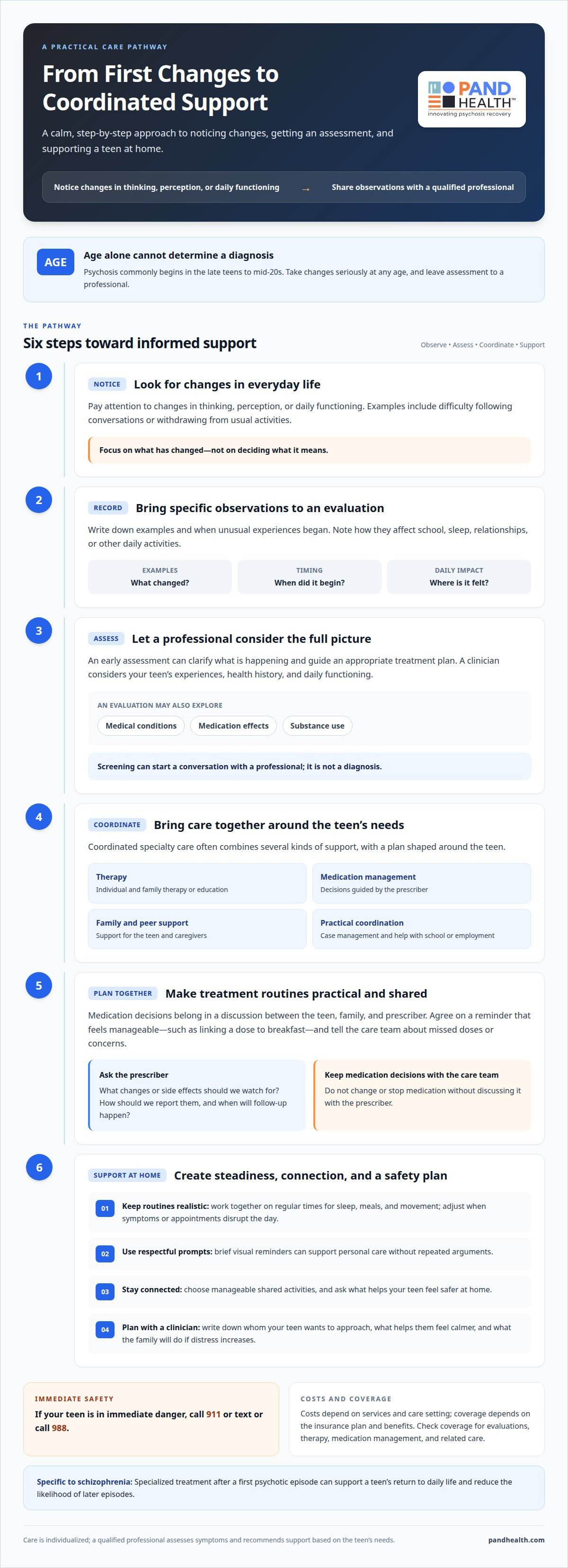
Psychosis commonly begins when a person is in their late teens to mid-20s, according to the National Institute of Mental Health. A teen’s age alone cannot determine a diagnosis, so take changes in thinking, perception, or daily functioning seriously. Write down specific examples, such as difficulty following conversations or withdrawing from usual activities, and share them during an evaluation.
An early assessment can help clarify what’s happening and guide an appropriate treatment plan. A clinician considers your teen’s experiences, health history, and daily functioning. The evaluation may also explore medical conditions, medication effects, or substance use as possible contributors. A screening can help start a conversation with a professional, but it isn’t a diagnosis. Before an appointment, note when unusual experiences began and how they affect school, sleep, or relationships.
How is psychosis diagnosed and treated in adolescents? A professional assesses symptoms and their effects, considers other possible causes, and recommends care based on the teen’s needs. Coordinated specialty care brings treatment together, often combining therapy, medication management, family support, case management, and help with school or employment.
What are the costs and insurance coverage for adolescent psychosis treatment in the U.S.? Costs depend on the services and care setting, while insurance coverage depends on the plan and benefits. Families can review coverage for evaluations, therapy, medication management, and related care with their insurer.
Medication decisions belong in a discussion between the teen, family, and prescriber. An estimated 2.9% of teenagers in the United States have bipolar disorder, according to the National Institute of Mental Health, but that figure does not identify the cause of any individual teen’s symptoms. What medications are used for teen psychosis, and what are their risks and side effects? Prescribers select medication according to the diagnosis and symptoms; possible risks and side effects differ by medication. Ask what changes to watch for, how to report them, and when follow-up will occur.
What therapy and family support help teens with psychosis? Care may include individual therapy, family therapy and education, peer support, and help with school or employment. Family involvement helps caregivers understand the treatment plan and support consistent care at home.
Medication routines should follow the prescriber’s directions. Agree with your teen on a practical reminder, such as linking a dose to breakfast, and tell the care team about missed doses or concerns. Don’t change or stop medication without discussing it with the prescriber. Ask your teen what feels manageable, then adjust reminders together.
For a teen with schizophrenia, specialized treatment after a first psychotic episode can support a return to daily life and reduce the likelihood of later episodes. Involve the teen in decisions by offering clear choices, such as which questions to raise at the next appointment. If they’re in immediate danger, call 911 or text or call 988, according to the Federal Communications Commission.
2. Creating a supportive home environment
Choose a shared activity that feels manageable, such as watching a movie, drawing, or playing a simple game. Ordinary moments can preserve connection without making every interaction about symptoms or treatment. Let your teen choose the activity, and offer an easy alternative if they get tired. For example, pause a film and sit quietly together rather than pressing them to explain how they feel. This kind of parent support for teen psychosis keeps connection at the center.
A predictable routine can make daily expectations easier to understand. Work with your teen to set regular times for sleep, meals, and movement, then keep the plan visible. If mornings feel difficult, agree on a short sequence, such as getting dressed, eating breakfast, and gathering school items. Keep the routine realistic, and adjust it together when symptoms or appointments disrupt the day.
Visual prompts can support personal care without turning reminders into repeated arguments. A note on the bathroom mirror might list showering, brushing teeth, and choosing clean clothes. Ask your teen which prompts feel helpful and where they’d prefer to see them. Keep the wording brief and respectful, so the reminder supports independence rather than making them feel watched.
Ask directly what helps your teen feel safer and more in control at home. They might prefer a quieter room, fewer visitors, or advance notice before plans change. Listen to their suggestions, then agree on specific adjustments the household can follow. If a request isn’t practical, explain why and work together on an alternative that addresses the same concern.
Help your teen identify personal strengths and connect them with coping strategies. If music helps them settle, they could choose a playlist for difficult moments. If they enjoy cooking, preparing a familiar snack together can offer a simple shared task. Focus on what they can do and what feels useful to them, rather than treating every challenge as a measure of progress.
For safety planning, involve a therapist, doctor, or case worker who knows your teen’s needs. Write down whom your teen wants to approach, what helps them feel calmer, and what steps the family will take if distress increases. Review the plan together when circumstances change. Family education can help caregivers respond consistently, understand each other’s concerns, and protect time for their own mental health. Parent support for teen psychosis can include making space for caregivers to seek support, too.
After a difficult day, keep expectations clear and manageable. Offer two concrete options, such as eating together or taking a quiet break, instead of asking your teen to solve everything at once. Notice small signs of engagement, such as joining a meal or choosing an activity, without demanding an explanation. A calm home is built through repeated, respectful actions.
3. Distinguishing psychosis from unusual childhood experiences
A striking comment or imaginative story, by itself, doesn’t establish psychosis. Consider the full pattern: what your teen reports, how often it happens, whether it feels frightening, and how it affects daily life. For example, distinguish a playful story about an imaginary character from repeatedly hearing a voice that feels outside your teen’s control. Share observations with a qualified professional rather than labeling the experience at home.
What are the early signs of psychosis in teenagers? Possible signs include hearing voices, holding disturbing or unrealistic beliefs, becoming confused, or struggling to communicate clearly. Changes in school participation, relationships, sleep, or self-care can provide important context. Record specific examples, such as missing class after a frightening experience, instead of relying on general descriptions like “acting differently.”
Consider how an experience affects your teen, not only whether it sounds unusual. Ask whether they can shift their attention from it, describe it consistently, or continue ordinary activities. A vivid dream discussed after waking differs from a voice that interrupts conversations while your teen is fully awake. These comparisons can help organize observations, but they don’t replace a professional assessment.
Keep a brief, private record of symptoms and their effects. Note what your teen said, what was happening beforehand, and what helped them feel calmer. Include relevant changes, such as difficulty completing homework or avoiding a trusted friend. Ask your teen what they want included, and explain that the notes are meant to help communicate clearly during an appointment, not to monitor or punish them.
What school accommodations and legal rights apply to teens with psychosis? Support can address a teen’s specific school difficulties, such as missed work, trouble concentrating, or needing help returning to class. Discuss options with school staff, including supported education or workload adjustments, and ask them to explain the eligibility process and protections relevant to your teen’s documented needs. Keep written records of requests and agreed steps.
Separate your observations from your interpretation when speaking with school staff. For instance, say, “They report hearing a voice during class and have left lessons,” rather than assigning a diagnosis. This gives educators practical information while leaving clinical conclusions to a qualified professional. Share only the details needed to plan support, and involve your teen in deciding what feels appropriate to disclose.
If your teen becomes suddenly confused, extremely agitated, unable to communicate clearly, or worsens quickly, treat the change as urgent. A young person who may hurt themselves or someone else needs immediate help. In the United States, call 911 or text or call 988 if your teen is in immediate danger. Keep your description factual, including what changed and when, to help responders understand the situation.
4. Open, empathetic communication
Choose a calm moment, then begin with one observation rather than a diagnosis. You might say, “I’ve noticed you seem worried after class. Would you like to talk?” This invites your teen to share without requiring an explanation. If they say no, let them know you’re available later. A quiet kitchen or car ride may feel easier than a formal family meeting.
Listen for the feeling behind your teen’s words. If they say classmates are watching them, you can reply, “That sounds frightening, and I can see you’re distressed.” This recognizes their fear without agreeing that the belief is true. Avoid statements like “That’s impossible” or “You’re imagining it,” which can make the conversation feel like an argument.
How can parents talk to a teen who is experiencing delusions or hallucinations? Stay calm, acknowledge that the experience feels real and distressing to them, and avoid arguing or confirming it as reality. Try, “I don’t hear the voice, but I believe you’re scared. Let’s find a quiet place and contact your doctor.”
During a difficult conversation, use short, clear sentences and give your teen time to respond. A pause is better than repeating a question or pressing for details. If they become overwhelmed, suggest a break and agree on when to return to the discussion. For example, say, “We can sit quietly now, then talk after dinner if you want.”
Keep your tone steady when your teen shares unusual thoughts. Don’t laugh, show alarm, or turn the conversation into a lecture about mental illness. Instead, thank them for telling you and ask what they need in that moment. If they want company, sit nearby; if they want space, agree on a way to reconnect.
Respectful communication also means being honest about your perspective. You can say, “I don’t experience what you’re describing, but I want to understand how it affects you.” This avoids pretending to share their perception while showing genuine concern. If you’re unsure what to say, tell your teen you’ll listen first and discuss next steps together.
For conversations about care, offer your teen a role in deciding what to share with the doctor. Ask whether they want you to describe a specific change, or whether they’d rather speak first. If words are difficult, they could write a note or use a message to explain their thoughts. This gives children and teens a practical way to stay involved.
After a tense exchange, repair the connection with a specific, gentle follow-up. You might say, “I’m sorry I interrupted. I want to hear what you were trying to tell me.” If safety concerns increase, focus on immediate support rather than continuing an argument about what is real. A calm response keeps communication open for the next conversation.
5. Questions to ask about a young person’s experiences
Choose a quiet moment and ask one question at a time. A gentle check-in might begin, “How have things felt since we talked yesterday?” If your teen shares an experience, acknowledge the emotion without confirming their perception as real. For example, say, “That sounds frightening,” then ask what would help right now. Pause after asking and let them decide how much to share.
Open questions can help you understand the experience without leading your teen toward an answer. Ask what happened, when it tends to happen, and how it affects their day. If they mention hearing a voice, you could ask, “What’s that like for you?” or “Does it make it hard to focus in class?” Avoid rapid follow-ups. One thoughtful question is more useful than a string of questions that feels like an interview.
- “What was happening just before you noticed it?”
- “How do you feel when that happens?”
- “What helps you feel safer or less stressed?”
- “Is there someone you’d like to tell about this?”
Questions about emotions and impact can reveal what support feels useful. If your teen says a thought is upsetting, ask whether they want company, quiet, or help contacting someone they trust. If they’re unsure, offer two options rather than demanding an immediate decision. For example, ask, “Would you rather sit together or take a short break?” Then respect their choice when it’s safe to do so.
Check in regularly, but agree on a rhythm that doesn’t feel intrusive. You might ask how your teen is coping during a walk or after dinner, then give them room to decline. If they say, “I don’t want to talk now,” respond, “Okay. Would later today feel better?” Following through shows you’ll remain available without making every conversation about symptoms.
With your teen’s permission, note their words and examples for a conversation with their care team. Record what they experienced, what was happening around them, and whether it affected sleep, school, or relationships. Avoid writing interpretations as facts. For instance, write “They said the hallway felt threatening,” rather than deciding what caused the feeling. This gives a professional clearer context while respecting your teen’s perspective.
To discuss what your teen is experiencing, talk with their care team about an appropriate next step.
Pand Health: Social skills training
Pand Health offers social skills training for teens who want support with communication and everyday interactions. When psychosis affects relationships, school participation, or confidence in social settings, this training can complement care by giving teens structured opportunities to practice skills. Psychological and social rehabilitation can support development in daily and community life, while family psychoeducation helps caregivers understand how to provide support.
If unusual thoughts or experiences need assessment, an evaluation for thought disorders and autism can help clarify what may be contributing to a teen’s difficulties. This evaluation can be considered alongside the teen’s existing care and family conversations.
To discuss support for your teen, contact Pand Health.
Choose a next step that keeps your teen involved
The next conversation doesn’t need to resolve every concern. Choose one manageable step with your teen, such as writing down what they want a care professional to understand or agreeing on what support feels useful today. Their voice belongs in decisions about care, and your steady presence can help them feel less alone as those decisions take shape.
Parent support for teen psychosis can include support for the family and everyday social connection. Pand Health offers social skills training, psychological and social rehabilitation, and evaluation for thought disorders and autism. These services can inform a family’s next conversation about care, based on the needs they want to address.
When you’re ready to discuss possible support, contact Pand Health. A thoughtful next step can begin with a conversation, and your family can take it one step at a time.
Frequently Asked Questions
How Can I Talk to My Teen About Their Diagnosis?
Start by asking what your teen understands about the diagnosis and what they’re wondering. Correct misunderstandings gently, without reducing them to a label. You might say, “A diagnosis helps your care team describe what you’re experiencing; it doesn’t define who you are.” If a question is difficult to answer, write it down and bring it to the next appointment so your teen can hear an explanation directly.
How To Build a Supportive Home Environment to Help with Teen Psychosis?
Agree on a simple household plan that protects privacy and reduces avoidable surprises. For example, tell your teen before visitors arrive and decide together which family members may discuss their care. Give each person a clear role, such as one caregiver coordinating appointments and another helping with school communication. Review the plan together when needs change, so support doesn’t become a set of rules imposed without your teen’s input.
Does an unusual experience always mean psychosis?
No. An unusual experience alone doesn’t establish psychosis; its context, persistence, distress, and effect on daily life matter. A vivid dream, for example, differs from an experience that continues during the day and disrupts school or relationships. Note what changed from your teen’s usual behavior and share concrete examples with a qualified professional. Avoid diagnosing from a single comment or trying to settle the cause through family debate.
How Can I Help My Teen Maintain Friendships and Social Connections?
Let your teen choose which friendships to maintain and how much to share. They might invite one trusted friend for a short, familiar activity, such as listening to music together. Agree on a discreet way to leave if the visit becomes stressful, and don’t explain your teen’s diagnosis without permission. If social situations feel difficult, discuss gradual practice with their care team and follow your teen’s pace.
How Can I Help My Teen Stay on Track With Medication?
Ask what makes medication difficult rather than assuming your teen is forgetting or refusing. A reminder linked to an existing activity, such as breakfast, may fit their routine; your teen can choose the method. Keep a shared note of questions or unwanted changes to discuss with the prescriber. Follow the prescription, and don’t change the dose or schedule without guidance from the prescribing clinician.
How Can I Manage My Own Emotions as a Parent?
Name what you’re feeling and choose one small way to care for yourself that day. A short walk, a quiet meal, or time with someone you trust can create space to regroup. If worry affects your sleep or ability to support your teen, consider speaking with a therapist or asking the care team about family support. Your needs matter, too, and caring for yourself can help you respond more steadily.
What Are Some Coping Mechanisms For Dealing With Hallucinations or Delusions?
Ask your teen which calming strategies feel useful, then agree on a few options before distress rises. They might move to a quieter room, listen to familiar music, or sit near someone they trust. A simple grounding prompt, such as naming objects in the room, may help shift attention. Don’t argue about the experience or affirm it as fact. If safety becomes an immediate concern, seek urgent help.
What Are Some Resources Available for Families of Teens with Psychosis?
Families can draw on the teen’s care team, school support, family therapy, and psychoeducation to better understand needs and coordinate practical help. In Los Angeles, Pand Health offers family psychoeducation and family therapy, alongside evaluations for thought disorders and autism. Ask the teen which supports they’re comfortable involving, and bring questions about family roles or school coordination to a care discussion. If immediate danger arises, call or text 988.
Disclaimer
This article is for information and educational purposes only, and can NEVER replace a proper medical evaluation. If you or a loved one may be suffering from psychosis or the prodomal symptoms of psychosis, get evaluated by a professional as soon as possible. Early diagnosis and treatment can be life-saving.