


How to Regain Trust After Psychosis Through Healing and Self-Trust
Trust after psychosis is rebuilt gradually, through patience, self-kindness, treatment, and small experiences that help confidence grow again. Learning how to regain trust after psychosis isn’t about forcing yourself to feel as you did before; it’s about recognizing what you need now and taking steady steps toward it.
If you’re questioning your judgment or feeling unsettled by how life has changed, those reactions can be part of a difficult recovery. Emotional healing takes time, and your path may not look exactly like life before psychosis. Medication and counseling can support recovery, while supportive relationships and sharing what you’re feeling can help others understand your experience.
This article explores practical ways to care for yourself emotionally, rebuild confidence through everyday experiences, and make room for a new normal. It also looks at living with stigma and remembering that psychosis is a medical condition, not a character flaw. Progress doesn’t require feeling completely healed before you can begin to enjoy life again.
Key Takeaways
- Give emotional recovery time, and use patience and self-kindness rather than judging progress against a fixed timeline.
- Build confidence through small, manageable experiences and notice what they show you about your abilities.
- Make room for a new normal while identifying routines, relationships, and supports that help you feel connected.
- Talk about your experience with people you trust; sharing your perspective can help them understand what support feels helpful.
- Remember that psychosis is a medical condition, not a character flaw, and explore social skills training if reconnecting with others feels difficult.
1. Emotional recovery after psychosis
Emotional recovery after psychosis can involve grief, fear, relief, and uncertainty, sometimes arriving together. A diagnosis may become part of your story, but it doesn’t erase your interests, relationships, or values. Try one identity-reclaiming step: write down what mattered to you before the episode, such as music, friendship, or study, then choose one small way to reconnect with it. Recovery is not a test of returning to exactly who you were.
Taking recovery one step at a time makes progress easier to notice. Choose a manageable daily action, such as preparing breakfast, taking a short walk, or replying to one trusted person. At the end of the day, note what you tried and how it felt. If a plan proves too demanding, adjust it rather than treating the change as failure. These small steps can help you recognize what supports your emotional well-being.
How long can it take to regain trust after a psychotic episode? There’s no single timeline: emotional recovery is personal, and Sarah Merritt Ryan has described needing years of consistent medication use and counseling before feeling completely out of the woods. Her experience isn’t a deadline or a measure of anyone else’s progress. Focus on what helps you recover steadily, and discuss changes or concerns with your mental health professional.
Decisions can feel difficult when your confidence is shaken. Break a choice into steps: name the decision, write down your options, consider what matters to you, and talk it through with someone you trust. For example, you might decide what feels manageable about returning to a social activity before committing to a larger gathering. Treatment decisions should reflect your needs and preferences, not pressure or stigma from others.
How can you create a relapse prevention plan with a mental health professional? Work together to document changes you notice, actions that help you feel grounded, current treatment details, and whom you want involved. Include how you’ll raise concerns, who to contact, and what support you prefer. Keep the plan accessible, and revisit it with your professional as your needs or circumstances change.
What are warning signs of psychosis returning, and when should you seek urgent help? Warning signs can be personal, so identify changes in your experience with your mental health professional and note what differs from your usual pattern. Reach out promptly when you notice concerning changes; seek urgent help if you or someone else faces immediate danger.
Self-love during recovery is a practice, not a demand to feel positive. When a day goes poorly, try replacing self-blame with a specific, compassionate response: “Today was difficult, and I can revisit this tomorrow.” Sarah Merritt Ryan has also described meditation, self-help books, supportive relationships, and expressing her feelings as helpful parts of recovery. Choose what feels useful to you, and let your next step be small.
2. Rebuilding self-trust after psychosis
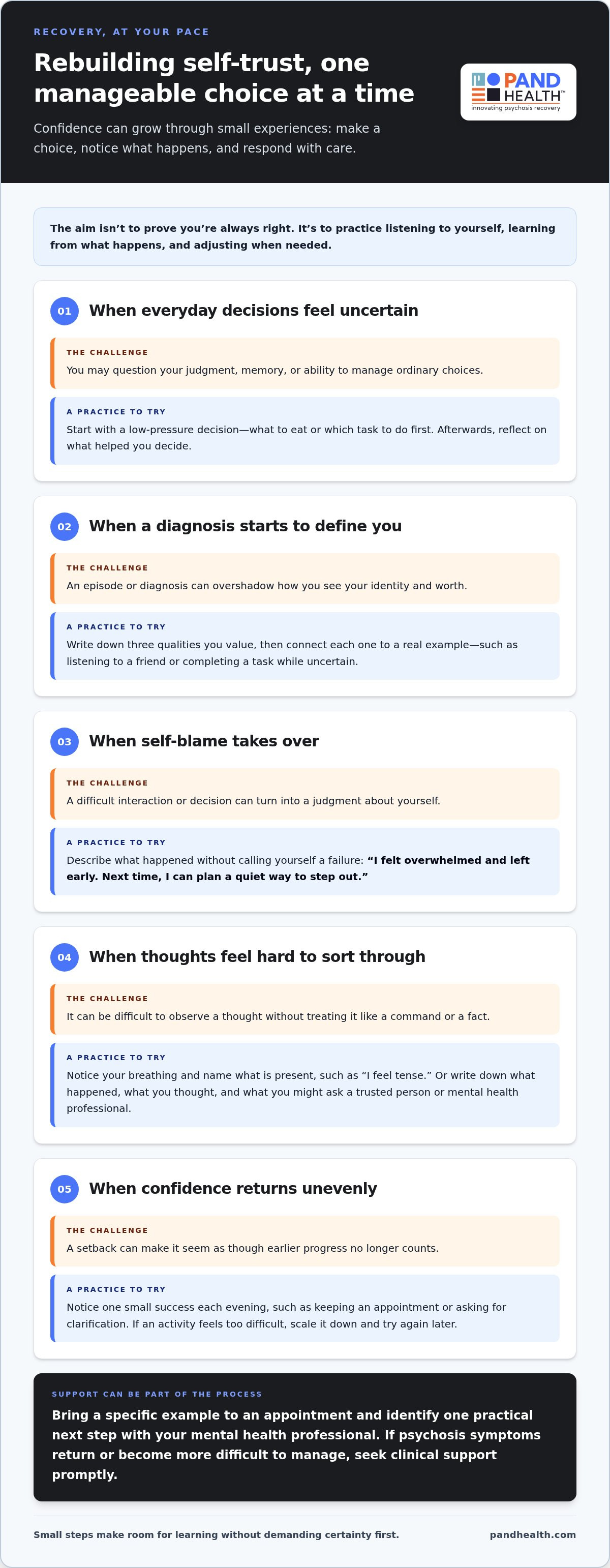
After a psychotic break, you may question your judgment, memory, or ability to manage ordinary decisions. Self-trust grows through experiences that show you can make choices, notice what happens, and respond with care. Start with a low-pressure decision, such as choosing what to eat or which task to do first. Afterwards, reflect on what helped you decide. This isn’t about proving you’re always right. It’s practice in listening to yourself and adjusting when needed.
Protecting self-worth means separating your identity from an episode or diagnosis. Write down three qualities you value, such as being thoughtful, persistent, or creative. Then connect each quality to a real example: perhaps you listened to a friend or completed a task despite feeling uncertain. These examples ground hope in lived experience. A difficult day doesn’t erase them, and needing treatment doesn’t make you less capable or deserving of respect.
Self-compassion can interrupt the cycle of blaming yourself for symptoms or decisions made during a psychotic break. If an interaction goes badly, describe what happened without labeling yourself a failure. For example: “I felt overwhelmed and left early. Next time, I can plan a quiet way to step out.” One person reported still blaming and shaming herself eleven years after her last psychotic break. Her experience shows why compassionate habits matter throughout recovery.
Meditation and self-reflection can help you observe thoughts without treating every thought as a command. Choose a quiet moment, notice your breathing, and name what is present: “I feel tense,” or “I’m worried about tomorrow.” If sitting quietly feels uncomfortable, write a few lines instead. A journal can help separate a feeling from a fact. Record what happened, what you thought, and what you might ask a trusted person or mental health professional.
Patience matters because confidence may not return at the same pace as other parts of recovery. The brain needs time to heal, and one setback doesn’t cancel earlier progress. Try reviewing a small success each evening, such as keeping an appointment or asking for clarification. If an activity feels too difficult, scale it down and try again later. This approach makes room for learning without demanding certainty before you take part in life.
Treatment can also provide a structured place to discuss fears about judgment, decisions, and returning responsibilities. Bring a specific example to an appointment, then identify one practical next step with your mental health professional. If psychosis symptoms return or become more difficult to manage, seek clinical support promptly. For people who need structured care for psychosis, information about intensive psychosis treatment can help clarify a possible next step.
3. Accepting a new normal
Life after psychosis may not follow the timeline or take the shape you expected. Accepting a new normal doesn’t mean giving up on plans; it means making room for current needs while moving forward. Sarah Merritt Ryan described securing a full-time job two years after her last psychotic break. Her experience is one person’s story, not a schedule to match. Your milestones might include returning to a class, enjoying a meal with family, or finding confidence in a steady routine.
Some people may need ongoing medication or support as part of life with mental illness. If that possibility feels difficult, bring your concern to your prescribing professional and discuss what treatment is intended to support. You can also name what you want life to include beyond managing symptoms, such as creative work, friendships, or time outdoors. Accepting support and setting personal goals can happen together.
Loved ones can help by offering practical, respectful support. Be specific: ask a sibling to attend an appointment, or invite a trusted friend for a quiet walk. Explain what feels helpful and what doesn’t, such as listening without pressing for details. If a family member is unsure how to respond, a planned conversation with a mental health professional can help clarify needs and boundaries.
What should you say to apologize for behavior during psychosis? Keep the apology honest and focused: “I’m sorry my actions hurt you. I was unwell, and I understand that rebuilding trust takes time.” Acknowledge the impact without demanding immediate forgiveness, then ask what respectful communication would look like now.
What should you do if someone still does not trust you after psychosis? Give them space to set boundaries, and show consistency through actions rather than repeated promises. You can say, “I understand you need time; I’ll respect that,” then follow through on agreed plans and continue your care.
Where can people in the United States find psychosis support groups and crisis help? Ask your mental health professional, clinic, or local community mental health organization about peer support groups and family groups in your area. If there’s immediate danger, contact local emergency services or go to an emergency department.
A new normal can include pleasure before every difficulty has disappeared. Ryan has described marrying five years after her last psychotic break and giving birth seven years after it. Those personal milestones don’t predict anyone else’s future; they illustrate that life can hold meaningful experiences alongside recovery. Choose one forward-looking activity that feels manageable, then adapt it with support as your needs change.
4. Rebuilding trust in yourself
After psychosis, you may wonder whether you can rely on your perceptions, choices, or memory. People often ask how to regain trust after psychosis when ordinary decisions suddenly feel loaded with doubt. Begin by separating confidence from certainty. You don’t need complete certainty to make a considered choice; identify what you know, what remains unclear, and what support could help you decide.
For a decision with several parts, write down the options and why each matters to you. If you’re considering returning to a familiar activity, note what would make it manageable, such as a quieter setting or a shorter visit. Afterwards, reflect on what you learned. This process treats your judgment as something you can use and refine, rather than something that must be perfect every time.
It can also help to keep a personal record of decisions that went as intended. Be specific: “I asked for more information before agreeing,” or “I changed my plan when I felt overwhelmed.” These examples show how you respond to new information. They offer a balanced view of your abilities, rather than letting one difficult moment represent your whole capacity.
A practical way to explore how to regain trust after psychosis is to notice which situations intensify self-doubt. Is it a rushed conversation, a complicated task, or conflicting advice? Describe the circumstances without judging yourself. Then choose one adjustment, such as asking someone to repeat a detail or taking time before responding. Discuss persistent concerns with a mental health professional.
Other people’s perspectives can be useful, but you can still take part in decisions about your life. When asking for input, be clear about the help you want: “Can you help me compare these options?” or “Would you listen while I talk this through?” That keeps support collaborative. If opinions differ, write down the points of disagreement and revisit them when you feel ready, rather than forcing an immediate answer.
Trust also means knowing when to pause. If fatigue or stress makes a choice harder, consider whether it can wait, be divided into smaller decisions, or requires more information. A mental health professional can help you think through recurring concerns and identify useful supports. Over time, thoughtful choices, honest reflection, and appropriate help can make self-trust feel more grounded and personal.
Building trust in yourself after psychosis can mean allowing positive experiences to accumulate and strengthen confidence. These experiences need not be dramatic: noticing that you made a choice, followed through, or adjusted when needed gives you something to reflect on. Let them build at a manageable pace, rather than treating confidence as something you must prove all at once.
One respondent said she journaled every day to remind herself that a frightening character she perceived was fictional. If writing feels useful to you, a private record could help you revisit what you were trying to remember and what supported you in the moment. Choose a form that suits you, and bring anything that remains unsettling to a mental health professional.
5. Living with stigma
Stigma can appear as unfair assumptions from others or as shame you begin directing toward yourself. Psychosis is a medical condition, not a character flaw. That distinction matters when someone treats an episode as proof that you’re unreliable or incapable. You can remind yourself, “I experienced an illness; it doesn’t define my values or every choice I make.” Write that sentence somewhere private and reread it after a difficult conversation.
Deciding what to share is personal. You don’t owe every colleague, friend, or relative details about your diagnosis. Before disclosing, consider what you want the person to understand and what response you need. For example, you might tell a trusted manager, “I’m managing a health condition and may need flexibility for appointments.” You can share less, pause the conversation, or choose someone else if the exchange feels unsafe.
A clear boundary can help when someone uses stigmatizing language. Name the comment and the change you want: “Please don’t describe me as dangerous. If you’re concerned, ask me how I’m doing.” If the person continues, end the conversation or involve someone you trust. A boundary doesn’t require you to persuade everyone; it clarifies what respectful contact looks like for you.
Self-stigma can also shape how you interpret everyday setbacks. If you miss an appointment, for instance, avoid turning one event into “I can’t manage my life.” Describe the facts instead: “I forgot the appointment, so I’ll add the next one to my calendar.” This specific response takes responsibility without adding shame. Share recurring self-critical thoughts with a mental health professional, especially if they interfere with treatment or relationships.
Supportive people can help you feel seen beyond a diagnosis. Tell a friend what support looks like in practice, such as listening without asking for a full account or joining you for a familiar activity. If relatives need guidance, a planned conversation can help you explain your preferences and correct misunderstandings. Choose the setting and people carefully; you can stop or reschedule if the discussion becomes overwhelming.
For your next stigmatizing interaction, prepare a brief response in advance. You might say, “That assumption doesn’t describe my experience,” then redirect the conversation. Afterwards, write down what happened, how you felt, and what you want to do next. This reflection can help separate another person’s judgment from your own view of yourself. If stigma makes it harder to seek care or stay connected, reach out to discuss support.
Pand Health: Social skills training
Pand Health offers social skills training for people seeking support with communication and connection during recovery. Practicing how to start a conversation, express a need, or respond in a social setting can make everyday interactions feel more manageable. Psychological and social rehabilitation can support participation in daily life, while family psychoeducation helps loved ones better understand psychosis and recovery.
Consider these supports if rebuilding relationships or navigating social situations feels difficult, or if your family wants guidance on offering helpful support. The focus can be on practical needs, such as preparing for a conversation or identifying ways to communicate boundaries. To explore support options, contact Pand Health.
Take the next step at your own pace
Learning how to regain trust after psychosis can continue through choices that reflect your needs today, not pressure to meet someone else’s timeline. Consider what would make the next step manageable: discussing a concern with a mental health professional, reconnecting with someone you trust, or seeking clarity about an evaluation. You can move forward without having every answer first.
If questions about a thought disorder or autism are part of your care journey, Pand Health offers evaluations for thought disorders and autism. A conversation about your needs can help you consider what support may fit your next step.
Contact Pand Health for support, and take the next step when you feel ready. Recovery can keep making room for confidence, connection, and a life that feels more like your own.
Frequently Asked Questions
How can someone rebuild trust with family and friends after psychosis?
Rebuild trust through small, shared commitments that feel realistic to both people. Agree on a specific plan, such as having coffee together or calling after an appointment, then discuss how it went. If plans change, communicate as soon as you can and suggest another option. A trusted person can also ask what topics feel comfortable, helping conversations develop without pressure to explain every part of your experience.
How can family members support someone recovering from psychosis while maintaining boundaries?
Offer support you can sustain, and be clear about what you can and can’t take on. For example, a family member might help organize appointment notes but be unable to provide daily transportation. Ask the person what kind of help they want before stepping in, and preserve their role in decisions. Families can also make time for their own routines and seek guidance to manage stress and communicate effectively.
How can someone address stigma and fear after psychosis?
Start by identifying where fear appears, such as avoiding a social event or worrying about workplace judgment. Decide what information, if any, you want to share, and rehearse a brief response with someone you trust. For example: “I’m working through a health issue and prefer to keep the details private.” A therapist can help you examine shame or frightening assumptions, while supportive communities can offer connection without requiring disclosure.
Disclaimer
This article is for information and educational purposes only, and can NEVER replace a proper medical evaluation. If you or a loved one may be suffering from psychosis or the prodomal symptoms of psychosis, get evaluated by a professional as soon as possible. Early diagnosis and treatment can be life-saving.