


Life After a Psychosis Diagnosis: Recovery and Next Steps
A psychosis diagnosis is serious, but it doesn’t define a person’s future. Psychosis can affect how someone interprets reality, including their thoughts, perceptions, or beliefs. Life after a psychosis diagnosis can involve treatment and support, with recovery unfolding at a different pace for each person.
It’s understandable to feel unsettled after a diagnosis, especially when the next steps aren’t clear. A diagnosis can raise difficult questions, but it can also help explain what’s been happening and guide care.
This article explains what psychosis means, how recovery may unfold, and how treatment, supportive relationships, and steady routines can help. It also explores returning to work, school, and social activities at a manageable pace, without expecting recovery to happen all at once.
Key Takeaways
- Psychosis can affect thoughts, perceptions, and beliefs; a diagnosis is a starting point for understanding symptoms and planning care.
- Recovery often unfolds in phases, from immediate support and stabilization to longer-term progress, with a pace that varies from person to person.
- Treatment planning can address symptom changes, medication, stress, and early signs that extra support may be needed.
- Returning to work, school, and social activities can happen gradually, with manageable goals helping build confidence and routine.
- Family support, social connection, and rehabilitation can help a person strengthen skills and move toward meaningful goals.
Cognitive rumination, self-disclosure, and social support
After a psychosis episode, trusted people can help someone feel less alone and stay connected to recovery. Questions about the cost of care matter too, especially when support feels urgent.
In the United States, treatment costs depend on the services and care setting. Insurance coverage and financial assistance depend on plan benefits and eligibility, so review your behavioral health benefits and ask about available assistance.
Support from Loved Ones
Support from loved ones means accepting practical and emotional help from people a person trusts. It can make daily demands feel more manageable and encourage continued recovery. A relative might help organize appointments, while a friend could accompany someone to a class. Family involvement in psychosis care is associated with better recovery rates, and feeling loved can motivate someone through difficult periods.
Make a small, specific request rather than expecting loved ones to guess what would help. For example, ask a sibling to help prepare questions for an appointment, or ask a friend to check in after a stressful social event. A support network can include relatives, close friends, and other trusted people. The person recovering should decide what to share and what kind of help feels useful.
Rumination can keep a troubling thought going long after an episode has passed. Writing it down, naming the feeling, and discussing it with someone trusted can help distinguish the worry from what is happening now. If a memory feels connected to trauma, the person can choose when and with whom to discuss it. They don’t owe everyone a full explanation.
Self-disclosure means sharing selected information about a diagnosis or experience. Someone might tell a trusted coworker, “I’m managing a health condition and may need flexibility for appointments.” A brief, purposeful explanation can protect privacy while making a needed request. Before sharing, consider the goal, the listener’s role, and which details can remain personal.
Psychotherapy and Family Support
Psychotherapy offers a structured space to explore experiences, feelings, and coping strategies with a mental health professional. Family support can complement that work by helping relatives respond calmly and communicate more effectively. Family therapy or psychoeducation can help loved ones understand what support is useful, discuss boundaries, and reduce misunderstandings without making them solely responsible for the person’s recovery.
For immediate safety concerns, distinguish suicide risk from an immediate threat. When there is no immediate threat of harm but suicide is a risk factor, call 988, the National Suicide & Crisis Lifeline, according to the Substance Abuse and Mental Health Services Administration. In life-threatening situations in the United States, call 911, according to the National 911 Program, U.S. Department of Transportation.
Social support can also make returning to education or employment feel more achievable. A student might start by discussing workload adjustments with a school support contact; an employee could plan a gradual return with a trusted supervisor. Supported education and employment focus on a person’s goals, strengths, and practical barriers. Regular check-ins with a support person can help spot stress early and keep meaningful activities in view.
What Does the Psychosis Recovery Timeline Look Like?
Recovery doesn’t follow a set calendar. Symptoms, daily functioning, and personal goals can change at different rates.
Taking Recovery One Step at a Time
Taking recovery one step at a time means focusing on manageable changes rather than a fixed deadline. Progress can include setbacks, gradual gains, and periods when little seems different.
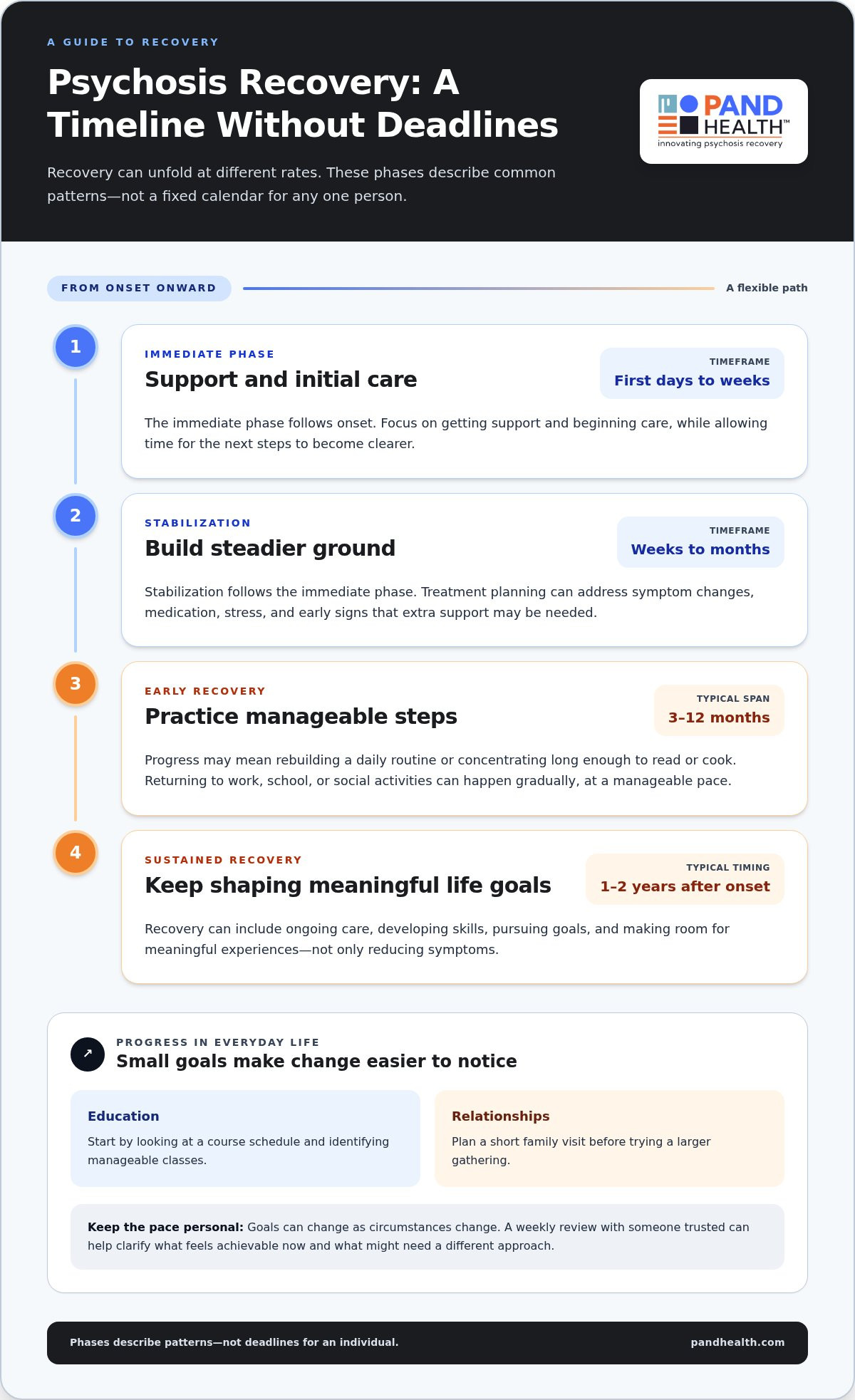
The immediate phase spans the first days to weeks after onset, followed by stabilization over weeks to months. Early recovery typically spans 3-12 months, while sustained recovery typically occurs 1-2 years after onset. These phases describe patterns, not deadlines for an individual.
Recovery from a first episode usually takes a number of months, although duration and functional improvement vary. One person might first rebuild a daily routine; another might focus on concentrating long enough to read or cook. Life after a psychosis diagnosis can take shape through these practical steps, even when larger goals still feel distant.
Personal Goals and Everyday Life
Personal goals connect recovery with activities that matter in everyday life. They can turn a broad hope, such as returning to education, into practical actions to review and adjust.
A student might start by opening a course schedule and identifying manageable classes. Someone hoping to reconnect with family could plan a short visit before attending a larger gathering. These goals aren’t tests of recovery. They provide direction and make progress easier to notice in everyday routines.
Goals can change as circumstances change. A weekly review with someone trusted can help identify what feels achievable now and what might need a different approach.
What Recovery Can Mean
Recovery can mean more than reducing symptoms. It can also involve regaining a sense of control, developing skills, pursuing goals, and making room for meaningful experiences. This broader perspective matters because wellbeing includes more than symptoms alone.
For someone experiencing delusions, progress might mean feeling safer in familiar settings or returning to a valued activity. Someone with schizophrenia may set goals around relationships, creative interests, or greater independence. A difficult period doesn’t erase progress already made, and people can find enjoyment before they feel completely well.
For many people, life after a psychosis diagnosis includes both ongoing care and personally meaningful plans. Recovery can continue as those plans take shape.
Recovery Narratives and Identity
A recovery narrative is how someone makes sense of their experiences and imagines what comes next. It matters because a diagnosis can be part of someone’s story without becoming their entire identity.
One person might describe recovery through returning to work; another might value reconnecting with friends or completing a course. Neither story sets a standard for anyone else. People can acknowledge difficult experiences while recognizing their relationships, interests, and strengths.
Sharing a recovery story is a personal choice. Someone might speak openly with a trusted friend, keep details private, or choose different words over time. Each option leaves room for a life shaped by more than a diagnosis.
Symptom stabilization and treatment planning
Care can combine symptom monitoring, professional support, and treatment decisions that reflect a person’s needs. A clear plan also helps the person and their support network respond when symptoms change.
Seeking Treatment and Staying with It
Seeking treatment and staying engaged means beginning professional care and reviewing whether it helps. This matters because psychosis symptoms can disrupt daily life, and early intervention can support stabilization. At appointments, describe what has changed, how symptoms affect sleep or routines, and which concerns feel most urgent.
Staying with care doesn’t mean ignoring difficulties. If treatment feels ineffective or hard to follow, raise that during an appointment. A brief record of symptoms, questions, and treatment effects between visits can make conversations more specific and help the care team consider adjustments instead of relying on memory alone.
Medication and Treatment Decisions
Medication and treatment decisions involve weighing symptom relief, unwanted effects, daily needs, and personal preferences. A plan should be understandable and workable, not simply written down. Discuss how medication affects concentration, energy, and routine, and ask which changes need prompt follow-up.
Don’t stop or change prescribed medication without discussing it with the prescriber. Adjustments may be needed to find a suitable medication and dose. A care plan can also address major stressors and routines that support mental wellness. Keeping the person involved helps preserve their voice and choices throughout treatment.
Available Treatments for Psychosis
Treatment can include antipsychotic medication, psychotherapy, and coordinated support for daily needs. The right combination depends on symptoms, goals, and response to care. Therapy can help someone make sense of experiences and build coping skills, while medication may form part of symptom stabilization.
Virtual intensive outpatient treatment is a remote format that provides structured care while someone remains in their community. Depending on the program, it may include scheduled clinical sessions and therapy. Ask how remote care handles appointments, communication, and changes in symptoms, then consider whether that format fits the person’s needs.
Early warning signs can include a return of experiences or behavior changes that previously came before a psychosis episode. Recognizing personal patterns and contacting the care team early can help address concerns before they escalate.
Diagnosis and Treatment Practices
Diagnosis and treatment involve assessing a person’s experiences and needs, then building a care plan with their participation. Because psychosis can arise in different contexts, treatment should address the person’s symptoms and circumstances.
A psychiatric evaluation can help clarify symptoms and guide next steps. Ask what the assessment means, which options are being considered, and how progress will be reviewed. Early psychosis care should center on the person’s needs and involvement. Family involvement can support communication when the person wants it.
Returning to work, school, and social activities
Work, education, creative projects, and relationships can all become part of recovery. A manageable return starts with the person’s current capacity, priorities, and support needs.
Returning to School or Work
Returning to school or work means re-entering a structured role at a pace that supports wellbeing. Meaningful activity can help restore routine, confidence, and connection. Someone might review a course schedule or discuss a reduced workload with a trusted contact before choosing a start date.
Break the larger goal into practical tasks: identify the most demanding parts of a shift or class, plan rest, and decide who can help if symptoms interrupt concentration. A student experiencing a psychotic episode may find lectures difficult at first; listening to one recorded lesson or completing one assignment can be a realistic starting point. Review the plan as needs change.
Creative work can also adapt to changing abilities. Susan Weiner initially set aside one day a week for poetry, then spent two years working on a children’s poetry book. Her example shows how a creative practice can begin in a small, defined space rather than requiring an immediate return to previous output. Someone who once wrote for hours might try a short session, then adjust based on focus and energy.
Work and study goals should reflect the person, not an imagined recovery schedule. Some people may need a gradual return; others might first rebuild daily skills or explore a different role. If voices or other symptoms make a task harder, note which settings or demands affect concentration. Discuss those patterns with the care team when considering the next step.
Resuming Social Activities
Resuming social activities means reconnecting with people and interests in manageable ways. Supportive friendships and enjoyable routines can bring connection back into daily life without making social performance another measure of success.
Choose a specific, low-pressure plan, such as meeting one friend for a short walk or attending part of a familiar activity. Decide beforehand how to leave or take a break. If conversation feels tiring, tell someone trusted, “I’d like to catch up, but I may keep this visit brief.” Clear expectations can reduce pressure for both people.
A mental health condition doesn’t erase someone’s interests or relationships. There’s no need to explain every detail of an episode before seeing friends. Someone can choose what to share, perhaps saying, “I’ve been managing a health issue and would rather talk about something else today.” That boundary protects privacy while allowing connection.
After an activity, notice what helped: a familiar location, a supportive friend, or a shorter visit. Use that information to shape the next plan. If a social setting brings distress or symptoms, pause and discuss the experience with someone trusted or a clinician before deciding how to approach it again.
Separating mental illness from character flaws
A mental illness is a health condition, not evidence of weak character or poor effort. This distinction matters after psychosis, when changes in perception, thoughts, or behavior can be mistaken for deliberate choices.
Psychosis can affect how a person experiences reality, including beliefs and perceptions. For example, someone may hold a delusion or hear a voice without choosing to. These experiences deserve clinical attention, not blame. A diagnosis describes health needs; it doesn’t define someone’s values, abilities, or capacity to build relationships.
Schizophrenia is a severe mental illness commonly associated with psychosis. About 1.2 percent of U.S. adults ages 18-65 are impacted by schizophrenia. That figure describes a health condition, not a person’s character. If someone struggles to complete a task during a period of symptoms, the difficulty shouldn’t automatically be interpreted as laziness or indifference.
Family members can help by separating the person from their symptoms. Instead of saying, “You’re being difficult,” they might name a specific concern: “It seems hard to follow this conversation right now.” This describes an observable moment without assigning blame and leaves room to discuss support, clinical care, and what the person is experiencing.
Psychosis can arise from a combination of genetic vulnerabilities and social or environmental stressors. There isn’t a simple character-based explanation for why someone experiences it. Stressful circumstances may matter, but experiencing symptoms isn’t a personal failure. A person and their family can focus on understanding patterns and addressing support needs rather than looking for someone to blame.
Daily habits can support mental health, but they don’t replace treatment for a mental illness. A steady routine, regular meals, rest, and time for enjoyable activities can give structure to the day. For example, someone might plan a quiet evening after a demanding appointment or set aside time for a familiar hobby. These choices can support wellbeing without treating lifestyle as a cure or a test of commitment.
Language also shapes how people understand recovery. Saying “a person living with schizophrenia” puts the person first; calling someone “a schizophrenic” reduces their identity to a diagnosis. Each person can decide what language feels right and what they choose to share. Friends and relatives can follow that preference, ask before discussing private health details, and recognize strengths alongside support needs.
Separating illness from character makes practical responses possible. If someone withdraws from a planned activity, consider whether symptoms, distress, or fatigue influenced that decision. A calm conversation can clarify what happened and what might help next time. Respectful support leaves room for accountability in everyday choices without treating mental illness as a moral failing.
Pand Health: Social skills training
In Los Angeles, Pand Health offers social skills training for people rebuilding confidence in everyday interactions after psychosis. Practicing communication and social situations can support goals such as reconnecting with friends or participating more comfortably in school and work.
Pand Health’s psychological and social rehabilitation supports practical skills and participation in daily life. Family psychoeducation can help relatives better understand psychosis and offer informed support. When questions about symptoms or diagnosis remain, evaluation for thought disorders and autism can help clarify care needs.
If you’re considering support with social confidence, daily skills, or family understanding, contact Pand Health to discuss next steps.
Choose a Next Step That Fits Your Needs
Moving forward doesn’t require having every answer today. A useful next step is identifying what would make daily life more manageable, then discussing that need with someone equipped to help. For one person, that might mean practicing conversations or rebuilding confidence in social settings. For another, it could involve strengthening daily routines or clarifying questions about a diagnosis.
In Los Angeles, Pand Health offers social skills training, psychological and social rehabilitation, and evaluation for thought disorders and autism. These services support people and families seeking guidance for specific recovery needs. Start with the concern that feels most important now, whether that’s social connection, everyday functioning, or understanding symptoms.
Life after a psychosis diagnosis can include new goals and a sense of possibility alongside ongoing care. Take the next step at a manageable pace and bring your questions into the conversation.
Contact Pand Health to discuss support options and consider what might help you move forward with greater clarity.
Frequently Asked Questions
What is psychosis?
Psychosis describes experiences that can affect how someone perceives or interprets reality. These may include hallucinations, such as hearing voices, or delusions, which are strongly held beliefs that others don’t share. The experience can feel real and distressing to the person. For example, they may hear a voice others cannot hear. Psychosis describes experiences, not someone’s character or entire identity.
How can I find help?
Start by contacting a mental health professional and describing the experiences, when they began, and how they affect daily life. A written list of symptoms, medications, and questions can focus the initial conversation. If you’re supporting a loved one, offer to help arrange an appointment or accompany them while respecting their choices. In Los Angeles, a psychiatric evaluation can help clarify symptoms and identify appropriate next steps.
What does Recovery mean?
Recovery means moving toward a life that feels meaningful and manageable, not meeting one fixed definition of being well. In life after a psychosis diagnosis, someone might focus on resuming a valued activity, reconnecting with another person, or making more independent choices. Goals can change as needs change. Tracking personally meaningful milestones can help someone recognize progress without comparing their experience with another person’s.
What happens when psychosis is left untreated?
Without treatment, psychotic symptoms can persist and interfere with relationships, self-care, education, or work. Psychotic symptoms commonly last more than a year before someone receives treatment, and people in the United States remain untreated for about 74 weeks on average. Seeking professional assessment matters because treatment for psychosis decreases the risk of violence and suicide. Ongoing symptoms deserve attention rather than being dismissed as a passing difficulty.
What does a psychosis diagnosis mean, and what conditions can cause psychosis?
A psychosis diagnosis means a clinician has assessed experiences involving changes in perception or beliefs; it doesn’t, by itself, identify every underlying cause. Psychosis may occur with conditions such as schizophrenia, bipolar I disorder, schizoaffective disorder, or cannabis-induced psychosis. Genetic vulnerabilities and social or environmental stressors can also contribute. An evaluation considers the person’s symptoms and circumstances to guide understanding and treatment planning.
Can people recover and live fulfilling lives after a psychosis diagnosis?
Yes. Life after a psychosis diagnosis can include relationships, education, work, and personally meaningful interests. Recovery may involve ongoing care, and symptoms don’t erase someone’s identity or aspirations. For example, a person might pursue a creative interest while working toward a larger goal, or maintain important relationships while continuing treatment. A fulfilling life is defined by the person’s own values, priorities, and hopes for the future.
How long does recovery from a first episode of psychosis usually take?
Recovery from a first episode usually takes a number of months, but duration and functional improvement vary from person to person. Progress may include changes, setbacks, or periods when improvement feels less noticeable. Rather than relying on a single deadline, consider how symptoms and daily activities are changing. Regular conversations with the care team can help determine whether the treatment plan addresses the person’s needs.
What are the benefits and risks of antipsychotic medications and their common side effects?
Antipsychotic medication can help reduce psychotic symptoms, while possible unwanted effects are also important to consider. Effects and side effects differ by medication and person, so one list won’t apply to everyone. Ask the prescriber what changes to monitor, how to report them, and how benefits will be reviewed. Don’t stop or adjust prescribed medication without discussing it with the prescriber.
Disclaimer
This article is for information and educational purposes only, and can NEVER replace a proper medical evaluation. If you or a loved one may be suffering from psychosis or the prodomal symptoms of psychosis, get evaluated by a professional as soon as possible. Early diagnosis and treatment can be life-saving.