


Same-Day Psychosis Evaluation and Outpatient Care in Los Angeles
A sudden shift in a person’s sense of reality, thinking, or behavior is serious enough to seek psychiatric assessment. Hearing things others can’t hear, intense suspicion, difficulty organizing thoughts, or beliefs that feel real but aren’t shared by others can signal psychosis. A same-day psychosis evaluation in Los Angeles can help clarify what’s happening and identify appropriate outpatient care. If there’s immediate danger, call 911; the 988 Suicide & Crisis Lifeline is available by call or text for crisis support.
It’s understandable to hope a troubling change will pass, especially when someone is still managing parts of daily life. But you don’t need to wait for a crisis or a diagnosis to take persistent or escalating symptoms seriously. Early assessment can help clarify what’s happening and guide care for someone experiencing psychosis.
This guide explains behavioral and mood changes that warrant attention, what to expect from an outpatient psychiatric evaluation, and how insurance coverage may affect access. It also explores first-episode psychosis assessment and the factors clinicians consider when planning care, so you can make a clearer, steadier next decision for yourself or someone you love.
Key Takeaways
- Recognize changes in thinking, behavior, or mood that may call for a psychiatric assessment, and understand what makes a situation urgent.
- Learn how insurance benefits, network status, and referral requirements can shape access to outpatient psychiatric care.
- Understand how clinicians assess psychosis and distinguish a first episode from other possible causes of symptoms.
- Explore what an early psychosis assessment and coordinated follow-up can contribute to a clearer care plan.
- See how social skills training, rehabilitation, and family psychoeducation can support recovery alongside clinical care.
Psychiatry and outpatient mental health care in Los Angeles
A psychiatric evaluation can help clarify changes in thinking, mood, or behavior and identify appropriate next steps. In Los Angeles, the right setting depends on immediate safety needs, symptom severity, and whether the person can participate in outpatient care.
When to Seek Psychiatric Care
Seek an evaluation when changes persist, intensify, or disrupt sleep, relationships, school, or work. Examples include hearing sounds others can’t hear, growing suspicion, or difficulty organizing thoughts. A clinician can assess symptoms and possible contributing factors, then discuss care options. If there are thoughts of suicide or violence, prioritize immediate support rather than waiting for a routine appointment.
Emergency, Crisis, and Outpatient Services
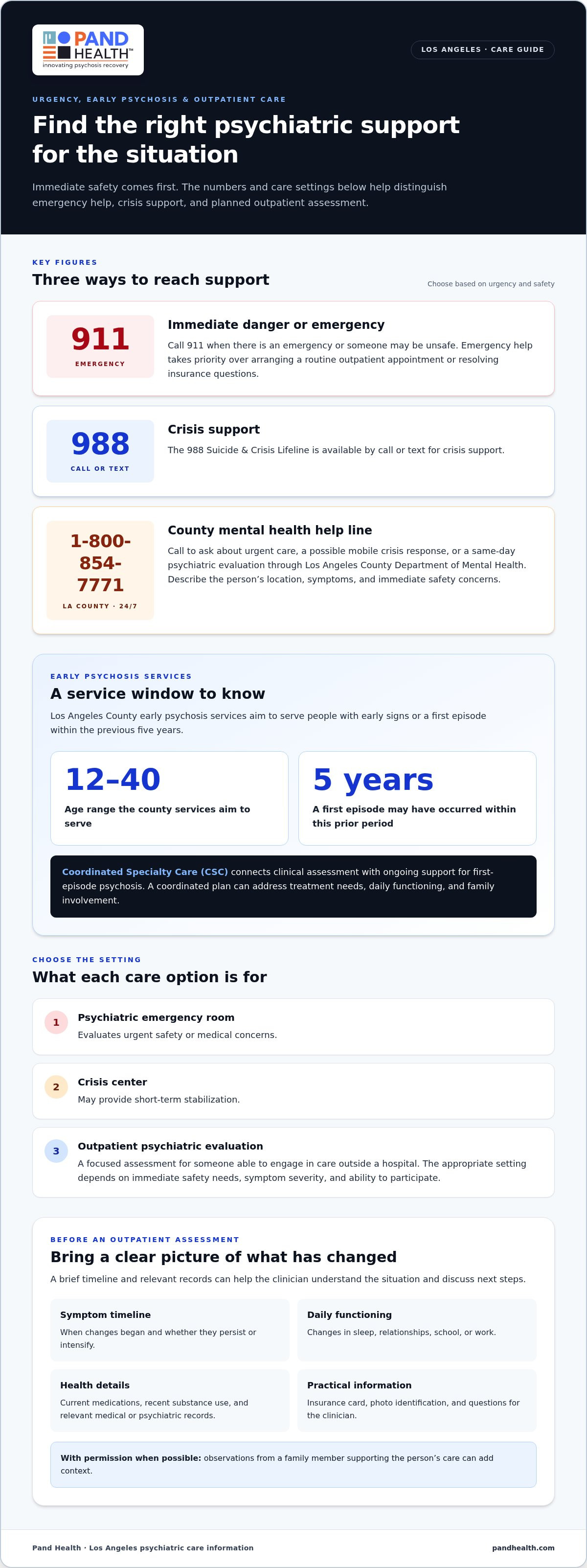
A psychiatric emergency room evaluates urgent safety or medical concerns, while a crisis center may provide short-term stabilization. An outpatient evaluation is a focused assessment for someone able to engage in care outside a hospital. Choose based on immediate risk and ability to remain safe. If there’s an emergency, call 911; outpatient care isn’t a substitute for emergency help.
The cost of an emergency or urgent psychiatric evaluation without insurance varies by setting, clinician involvement, and assessment needs. For planned outpatient care, costs depend on the evaluation and insurance benefits. Pand Health is an out-of-network provider and partners with most major commercial insurance carriers; out-of-pocket costs are outlined before treatment.
Los Angeles County lists mental health urgent care centers for short-term crisis stabilization. To ask about urgent care or a possible mobile crisis response, call the county’s 24/7 Help Line at 1-800-854-7771 and describe the person’s location, symptoms, and immediate safety concerns. The line can help identify an appropriate county service.
For crisis support, call or text 988, the 988 Suicide & Crisis Lifeline. Call 911 for an emergency. For a same-day psychiatric evaluation through Los Angeles County Department of Mental Health, call 1-800-854-7771 and explain the symptoms and urgency. County early psychosis services aim to serve people ages 12 to 40 with early signs or a first episode within the previous five years.
Coordinated Specialty Care (CSC) is an early-intervention approach for first-episode psychosis that connects clinical assessment with ongoing support. Ask about early psychosis services through the county line, especially when symptoms have recently emerged. A coordinated plan can address treatment needs while supporting the person’s daily functioning and family involvement.
In-person care allows direct conversation and observation in a clinical setting. Online appointments can offer another way to speak with a mental health professional when travel or scheduling is difficult. For either format, prepare a brief timeline of changes, current medications, substance use, and questions. These details help the clinician understand what has changed and what support is needed.
Insurance coverage and accepted plans
Insurance can affect where you receive a psychiatric evaluation and what services your plan helps pay for. Start with the insurance card and the member services number printed on it. Ask about outpatient psychiatric evaluations, mental health benefits, and the clinician’s network status. A plan’s behavioral health benefits may use different networks or processes from other medical care.
Coverage and Insurance Filters
Coverage depends on the plan, evaluation setting, and services recommended after assessment. An outpatient appointment and emergency department care, for example, may be processed differently. Ask your insurer whether out-of-network care requires a referral or prior authorization and what documentation is needed. These details can affect out-of-pocket costs and appointment options.
Insurance filters can narrow the available choices. A directory may show clinicians who accept a plan, but network participation can vary by location, appointment type, and plan version. Medicare and Medicare Advantage are distinct plan categories; people over 65 may have difficulty finding Los Angeles psychiatrists who accept them. If a directory produces few options, call the number on the card and ask about in-network outpatient psychiatry in your area.
Information to Bring to an Evaluation
Bring your insurance card, photo identification, current medication list, and relevant medical or psychiatric records. Prepare a brief timeline of symptoms, changes in sleep or daily functioning, and any recent substance use. If a family member supports the person’s care, their observations can add context, with the person’s permission when possible.
Use this sequence to clarify coverage before a planned outpatient visit:
- Read the plan name and member identification details from the insurance card.
- Call member services and ask about outpatient psychiatric evaluation benefits.
- Ask whether the clinician is in-network for that exact plan.
- Confirm referral or authorization steps and any applicable copay or deductible.
- Write down the representative’s guidance and the call reference, if provided.
For an urgent assessment, don’t let an insurance question delay emergency help when someone may be unsafe. Call 911 for an emergency. For a planned appointment, share the insurance details when arranging care and bring the card to the evaluation. Clear records help the clinician focus on the emotional, cognitive, and behavioral changes that prompted the visit, rather than relying on memory alone.
Coverage questions are separate from diagnosis. A suspected mental health condition does not, by itself, determine which benefits apply; the plan’s terms and the type of care matter. If therapy or follow-up is recommended, ask how those services are handled under your plan. To take the next clinical step, contact Pand Health about psychiatric evaluation services.
Conditions treated, including first-episode psychosis and schizophrenia
Psychosis describes symptoms that disrupt a person’s perception of reality. Hallucinations, such as hearing a voice others don’t hear, and delusions can occur during a psychotic episode. Psychosis is not a diagnosis on its own. An evaluation considers the symptoms, when they began, and possible contributing factors, including substance use, trauma, mood disorders, and neurological conditions.
Psychiatric care may assess first-episode psychosis, schizophrenia, bipolar disorder, severe depression, and substance-related symptoms. These conditions can overlap in their effects, so clinicians consider the full pattern rather than relying on one behavior alone. For example, they may ask whether changes in sleep, mood, thinking, or daily functioning appeared alongside unusual perceptions. Brief psychotic disorder often resolves within a month with appropriate treatment, while other conditions may need continuing care.
A treatment plan follows the assessment and may include psychiatric care, medication management, psychotherapy, family support, or rehabilitation. The plan depends on the symptoms, their effect on daily life, possible medical causes, and the person’s goals. If symptoms began after substance use, the timing and type of substance are important details. Starting treatment early can improve outcomes for people experiencing psychosis.
Psychotherapy can help people work through distress, strengthen coping strategies, and address related concerns such as depression or anxiety. Family therapy can help relatives understand changes and support communication during treatment. Progress is assessed through practical signs, such as improved daily functioning, clearer communication, and reduced distress. Recovery may involve ongoing care and adjustments as a person’s needs change.
Transcranial magnetic stimulation (TMS) is a separate treatment consideration, commonly discussed in relation to depression rather than psychosis. Research reports roughly a 50% response rate and a 33% remission rate among patients who haven’t responded to four or more antidepressant medications. Those figures concern that depression-treatment group, not people being evaluated for psychosis. TMS duration and appointment schedules depend on the treatment protocol, target condition, prior response, and the person’s circumstances. The psychosis assessment and treatment plan should remain focused on the symptoms and diagnosis being addressed.
Behavioral and mood changes may include suspicion, disorganized thoughts, or hearing sounds others cannot hear; Meadowglade says trauma, substance use, or neurological conditions can trigger psychosis.
First Episode Psychosis Assessment and Linkage Program
A first-episode assessment looks at new symptoms and connects the person with appropriate next steps. Los Angeles County early psychosis services aim to serve people ages 12 to 40 with early signs or symptoms, or a first episode within the previous five years. Psychosis often develops in early adulthood, but adolescents can also need timely assessment.
A psychosis risk assessment doesn’t predict that someone will develop a disorder. It examines current experiences, changes over time, and their effect on daily life. A psychiatrist, psychologist, or social worker may conduct a psychosocial assessment to support diagnosis. The clinician may ask about unusual perceptions, suspicion, sleep changes, stress, substance use, and difficulties at school, work, or home.
Age and context help shape the discussion. For an adolescent, caregivers may describe changes in school participation, friendships, or communication, while the young person shares their own experience. For an adult, examples may include difficulty maintaining work, managing responsibilities, or sustaining relationships. A careful assessment considers these details without assuming one behavior proves psychosis.
Early intervention connects assessment with care. Next steps may include further psychiatric evaluation, treatment planning, or support for the person and family. A useful discussion clarifies the main concerns, recommended route, and who will coordinate follow-up. Bring a symptom timeline and medication list to make the conversation more specific.
Families can prepare by noting when changes began, how often they occur, and what seems to make them better or worse. Include examples, such as withdrawing from friends, struggling to follow conversations, or reporting experiences others don’t share. This record can help the clinician distinguish a new pattern from a longstanding communication or developmental difference and understand effects on safety or daily functioning.
Adults and adolescents may describe the same event differently, so a compassionate assessment makes room for both perspectives. The clinician can explore the person’s understanding of reality while listening without judgment. Family observations add context, but they don’t replace the individual’s account. Clear communication can make assessment more collaborative and help identify practical priorities.
After evaluation, follow-up should support continuity of care, not leave a family with only a diagnostic label. Ask what the next appointment will address, which symptoms to track, and whom to contact if functioning changes. Early psychosis services can provide a path to assessment and ongoing support. If symptoms are emerging, an early assessment can help guide next steps.
Behavioral and mood changes
A noticeable shift in behavior, mood, or thinking can warrant psychiatric assessment, especially when it affects daily life. Psychosis can involve hallucinations or delusions that disrupt a person’s perception of reality. Someone might hear a voice others don’t hear, become intensely suspicious, or struggle to organize thoughts. These signs deserve attention, but one symptom alone doesn’t establish schizophrenia or another diagnosis.
Look for changes from the person’s usual pattern. Examples include withdrawing from friends, losing the ability to manage familiar tasks, or speaking in ways that are difficult to follow. Other possible warning signs include feeling that thoughts are out of control, hearing sounds others don’t hear, or seeing shadows or flashes in peripheral vision. Note when changes began and how they affect work, school, sleep, and relationships.
- Record specific examples, such as missed classes or difficulty following a conversation.
- Track whether suspicion or unusual perceptions are becoming more frequent or distressing.
- Notice changes in sleep, self-care, or the ability to complete everyday responsibilities.
- Share a timeline with the clinician, including medications and recent substance use.
Persistent sadness, worry, or fear that doesn’t improve over time is another reason to consider psychiatric care. A severe or worsening change needs attention sooner, particularly if the person can’t maintain daily routines or feels unsafe. The assessment considers the full picture, including mood, thinking, functioning, and possible contributing factors. It doesn’t rely on one observation to explain what’s happening.
Speak calmly and describe what you’ve observed instead of arguing about beliefs or perceptions. For example, say, “I’ve noticed you’re sleeping less and seem frightened,” rather than insisting an experience isn’t real. This approach can keep conversation open and help the person share concerns. When possible, write down their own words, especially changes in their sense of reality or ability to function.
Thoughts or feelings involving suicide or violence call for immediate attention. For an emergency, call 911. The 988 Suicide & Crisis Lifeline can be reached by calling or texting 988. If the person is not in immediate danger but symptoms are disrupting daily life, arrange a psychiatric assessment and bring your symptom notes.
If changes in behavior or mood are concerning, request a psychiatric evaluation to discuss the symptoms and appropriate next steps.
Pand Health: Social skills training
Pand Health offers social skills training for people working to strengthen communication and social confidence as part of their care. When psychosis-related challenges affect conversations, relationships, or everyday participation, this training supports practical skill development. Psychological and social rehabilitation can also help people work toward greater independence in daily life.
Families can explore family psychoeducation to better understand psychosis and support a loved one. For concerns involving thought disorders or autism, Pand Health’s evaluation services can help clarify needs and inform next steps. These services can complement a broader care plan, with support tailored to the individual’s circumstances.
Contact Pand Health to discuss which support may fit your needs.
Take the Next Step Toward Support
When changes in thinking or behavior raise concern, choosing a next step can feel difficult. You don’t need every answer before seeking guidance. A same-day psychosis evaluation in Los Angeles can help clarify what’s happening and guide consideration of appropriate care.
Pand Health offers social skills training, psychological and social rehabilitation, and evaluation for thought disorders and autism in Los Angeles. These services support people and families working toward stronger everyday functioning and a clearer understanding of their needs. The next step begins with an honest conversation about the changes you’ve noticed and the support you’re seeking.
Contact Pand Health about care to discuss support for yourself or someone close to you. Taking that first step can help make the path forward feel more manageable.
Frequently Asked Questions
How do I know if what I am experiencing is serious enough to see a psychiatrist?
Consider psychiatric care if changes interfere with work, study, sleep, or relationships. For example, note when unusual perceptions began and whether they affect daily decisions. A clinician can assess the pattern without you needing to identify a diagnosis first. If symptoms are escalating or include thoughts of suicide or violence, treat the situation as urgent and seek immediate help.
Where can someone get a same-day psychosis evaluation in Los Angeles?
A same-day psychosis evaluation in Los Angeles may be available through outpatient psychiatric services. Pand Health provides same or next day psychosis evaluation services for people ages 13 to 35. For early psychosis support through Los Angeles County, call its 24/7 Help Line at 1-800-854-7771 and ask about relevant services. Choose emergency support instead if the person faces immediate danger or needs urgent medical attention.
What should you do if someone experiencing psychosis may harm themselves or others in Los Angeles?
If there’s immediate danger, call 911 and clearly describe the safety concern and location. Stay nearby only if it’s safe, reduce access to potential hazards when possible, and avoid arguing about what the person perceives. For crisis support, call or text 988, the 988 Suicide & Crisis Lifeline. If danger isn’t immediate, Los Angeles County’s 24/7 Help Line, 1-800-854-7771, can help identify mental health support.
Does health insurance cover same-day psychosis evaluations in Los Angeles?
Coverage depends on your plan’s behavioral health benefits, network rules, and the type of evaluation. Pand Health is an out-of-network provider that partners with most major commercial insurance carriers. Before an appointment, ask your insurer about out-of-network psychiatric evaluations, reimbursement requirements, and any referral or authorization steps. Pand Health can assist with insurance verification, billing, and appeals, and may offer superbills or single-case agreements.
How long does a psychiatric emergency evaluation usually take, and what happens afterward?
The time required depends on the person’s safety needs, symptoms, medical concerns, and assessment needs. Staff may ask about recent changes, medications, substance use, and ability to function. After evaluation, the team explains recommended next steps, which may include outpatient follow-up or a higher level of care. Share a medication list and clear symptom timeline to support the discussion.
Disclaimer
This article is for information and educational purposes only, and can NEVER replace a proper medical evaluation. If you or a loved one may be suffering from psychosis or the prodomal symptoms of psychosis, get evaluated by a professional as soon as possible. Early diagnosis and treatment can be life-saving.