
Continuing Education for Therapists on Psychosis in Los Angeles
Psychosis-focused continuing education for therapists can combine practical treatment approaches with continuing education credit: a webinar on treating substance use and psychotic disorders offers 1.5 continuing education hours. For clinical practice, the Substance Abuse and Mental Health Services Administration recommends routine cognitive behavioral therapy for psychosis (CBTp) as the standard of care for people seeking treatment for psychosis. This makes continuing education for therapists on psychosis relevant both to clinical learning and professional development.
Supporting someone experiencing voices, paranoia, delusions, or changes in thinking takes compassion and sound clinical knowledge. Therapists also need to understand course requirements and whether continuing education credits apply to their license.
This article explains key approaches to psychosis, what CBTp training can cover, how continuing education credits are earned, and which behavioral health licensures may be eligible. It also considers how specialized training can support work with individuals and families across different stages of care.
Key Takeaways
- Explore how psychosis-focused care can address voices, paranoia, delusions, disorganization, and negative symptoms while keeping the person’s goals at the center.
- Learn how CBTp training can build practical skills for understanding distressing experiences and supporting recovery.
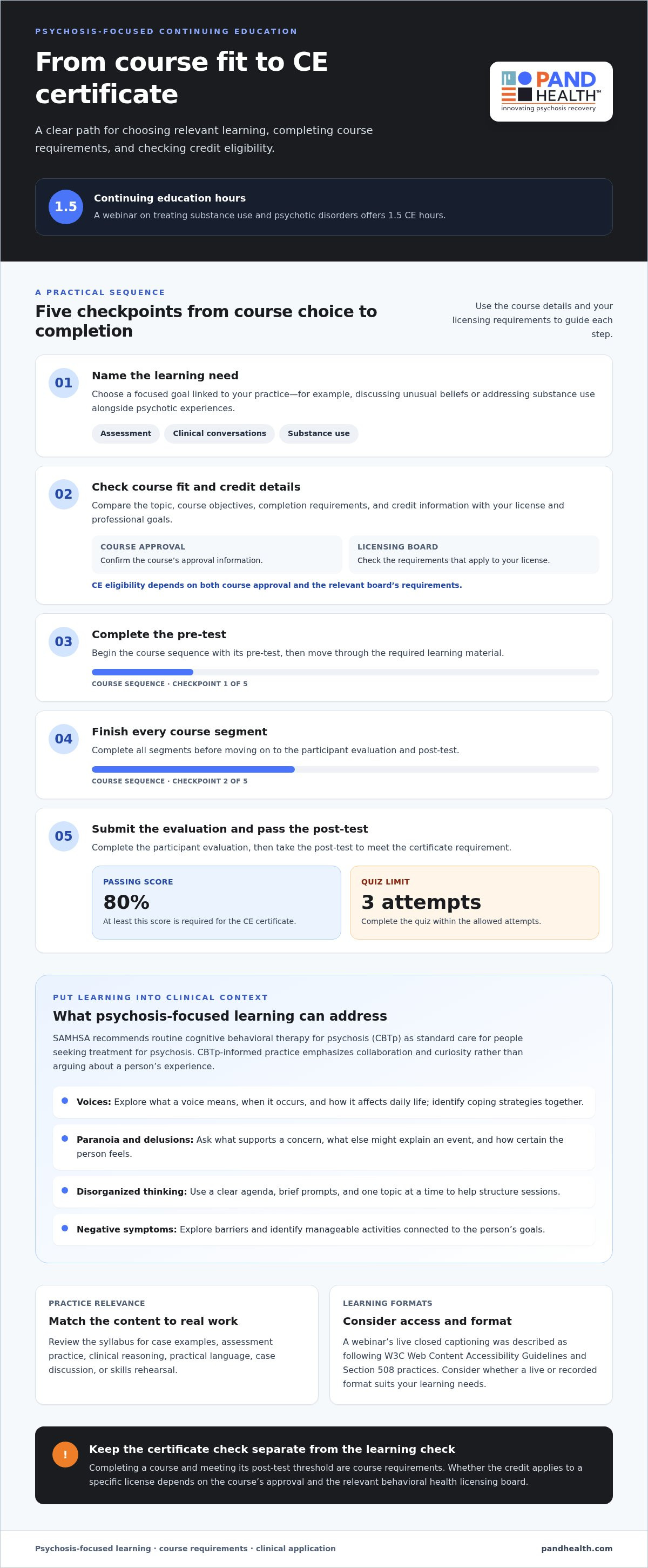
- Review course completion steps, including the pre-test, course segments, participant evaluation, and post-test; a score of at least 80% is required for the CE certificate, with the quiz completed within 3 attempts.
- Understand that CE eligibility depends on the course’s approval and the requirements of the relevant behavioral health licensing board.
- See how social skills training, psychological and social rehabilitation, and family psychoeducation can complement professional learning in psychosis care.
Approaches to voices, paranoia, delusions, disorganization, and negative symptoms
Psychosis-focused learning helps therapists respond to distressing experiences without reducing a person to a diagnosis. For schizophrenia spectrum disorders, cognitive behavioral therapy for psychosis (CBTp) is a treatment option. The Substance Abuse and Mental Health Services Administration recommends routine CBTp as standard care for people seeking psychosis treatment, in publication PEP20-03-09-001.
In practice, therapists can ask what a voice means to the person, when it occurs, and how it affects daily life. For example, a client might describe a voice as threatening during stressful situations. A CBTp-informed conversation can explore the client’s interpretation and identify coping strategies while respecting their experience. The goal is collaboration, not an argument about whether the experience is real.
Paranoia and delusions call for similarly careful, non-confrontational inquiry. A therapist might ask what supports a concern, what else could explain an event, and how certain the person feels. These questions make room for reflection without dismissing fear. When a person experiences disorganized thinking, a clear agenda, brief prompts, and one topic at a time can help structure sessions. For negative symptoms, such as reduced motivation or social withdrawal, clinicians can explore barriers and identify manageable activities connected to the person’s goals.
Psychosis education also needs to account for age and care transitions. The course page states that 50% of cases of mental illness begin by age 14, underscoring the value of understanding early presentations. Graduates of Coordinated Specialty Care programs often need ongoing maintenance-phase treatment after leaving these typically time-limited programs. Therapists can prepare by learning how to support continuity, revisit goals, and coordinate conversations about changing needs.
Co-occurring substance use and psychotic disorders require attention to both concerns. A webinar on treating these conditions was recorded on Wednesday, November 17, 2021. Training can help therapists consider how substance use relates to a person’s symptoms, functioning, and treatment priorities. A practical first step is to ask about the person’s experience without judgment, then connect that account to collaborative care planning.
To find free or low-cost psychosis CE courses, search for no-cost webinars, professional learning events, and employer-sponsored training. Before enrolling, compare the course topic, completion requirements, and credit information with your license and practice needs.
Course structure matters, too. One course requires a pre-test, completion of every segment, a participant evaluation, and a post-test. Learners need at least 80% on that post-test to obtain the CE certificate, and must complete the quiz within 3 attempts. Reviewing those steps beforehand helps therapists plan their learning time and determine whether a course fits their professional goals.
Continuing education for behavioral health professionals
Psychosis-focused continuing education can strengthen clinical judgment and support structured reflection. Useful learning connects concepts with decisions made during assessment and treatment. Start by identifying a specific learning need. For example, you might want to improve conversations about unusual beliefs or learn clearer ways to discuss substance use alongside psychotic experiences. A focused goal helps you compare course content with your daily responsibilities, rather than choosing by title alone.
What continuing education is available on psychosis assessment, suicide risk, and crisis response? Look for courses that teach these as distinct but connected skills. Review the syllabus for case examples, structured assessment practice, and guidance on documenting clinical reasoning. A useful exercise might ask participants to distinguish a person’s reported experience from their interpretation, then identify questions that clarify immediate concerns and support needs.
Course format also shapes how professionals can use the material. A webinar on treating substance use and psychotic disorders was recorded on Wednesday, November 17, 2021. Its live closed captioning was described as following practices in the W3C Web Content Accessibility Guidelines and Section 508 of the Rehabilitation Act. Such details can help learners consider accessibility and whether a recorded or live format suits their schedule and learning preferences.
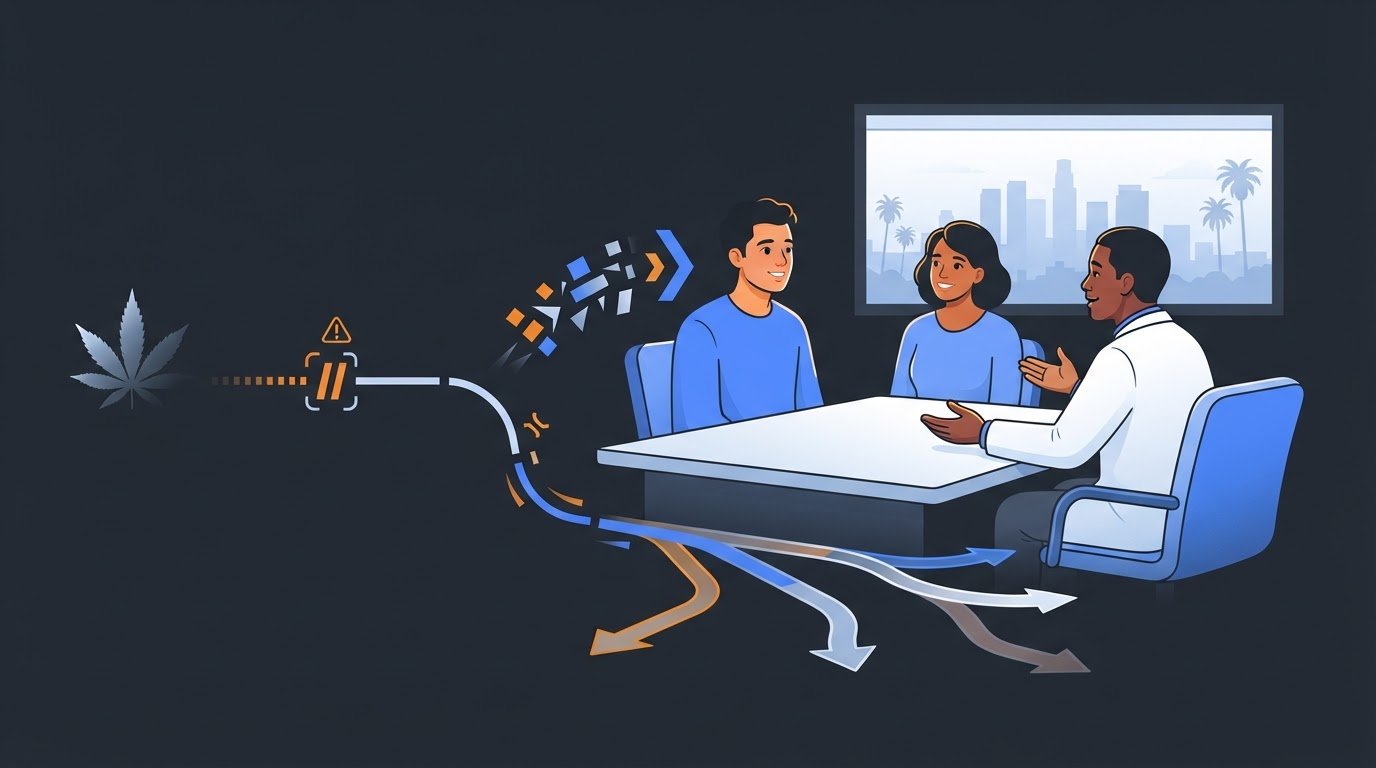
Before enrolling, compare the course objectives with a real practice scenario. For instance, a clinician working with someone who reports voices and cannabis use might look for content addressing both psychotic experiences and substance use. Check whether the course includes practical language, case discussion, or skills rehearsal. Then choose one technique to apply in supervision or a future session. This turns passive viewing into deliberate professional learning.
Continuing education for therapists on psychosis can support reflective practice across roles. Therapists, counselors, social workers, and other behavioral health professionals may have different responsibilities when working with the same presentation. A shared case discussion can clarify each role’s contribution, what information needs to be communicated, and where treatment priorities overlap. Keep a brief record of course objectives, completed activities, and key takeaways for your professional development files.
If you are ready to connect psychosis education with your practice goals, consider discussing your professional training needs with Pand Health.
CBTp training approaches
CBTp training applies cognitive behavioral therapy principles to practical work with psychosis. Strong courses connect theory, case formulation, collaborative goals, and skills practice.
Evidence-Based First-Episode Psychosis Training
For first-episode psychosis, prioritize training in CBTp and coordinated, person-centered care. The Substance Abuse and Mental Health Services Administration recommends routine CBTp as standard care for people seeking psychosis treatment. A useful course explains how to develop a shared formulation, identify distress, and agree on meaningful goals with each client.
Look for case-based practice, not theory alone. For example, a training exercise might ask clinicians to explore how a belief affects sleep, relationships, or school participation. Learners can practice asking open questions, identifying coping strategies, and reviewing progress collaboratively. Course objectives should describe these skills clearly and connect them to first-episode presentations.
Online, Virtual, and In-Person Training
Online courses allow self-paced review, while live virtual sessions make room for questions and guided case discussion. In-person workshops can support role-play and immediate feedback. Choose a format based on whether you need flexibility, instructor interaction, or direct practice with communication skills.
Compare the syllabus, learning activities, accessibility features, and assessment method before enrolling. A recorded webinar may suit focused review, while a live session can help you test questions and receive feedback. For instance, practicing how to explain a CBTp concept aloud can show where you may benefit from additional coaching.
For therapists working with adolescents or young adults, choose training that addresses developmental context, family involvement, and transitions in education or work. Case examples should reflect young people’s communication needs and support collaborative goals suited to their daily lives.
Courses also vary in how closely they address a clinician’s role. A therapist may need practice building a therapeutic alliance, while another professional may focus on coordinating care conversations. Review the intended audience and learning outcomes, then match them to situations you encounter in practice. A clear fit makes new skills easier to apply.
After a course, turn what you learned into a small practice plan. Select one skill, such as asking about the meaning of a distressing experience, and decide how to use it in a future session. Discuss your approach in supervision or peer consultation, then reflect on the client’s response. This connects course learning with thoughtful clinical practice.
Continuing education credits and eligible licensures
A psychosis course can offer valuable clinical learning, but its credit statement determines how learners document that education. One webinar on treating substance use and psychotic disorders offers 1.5 Continuing Education Hours. That figure describes the webinar’s credit, not a universal amount for psychosis training. For continuing education for therapists on psychosis, review the course’s credit details alongside your professional credential and learning needs.
Eligibility depends on the specific course and the credentials listed in its approval information. If you are a therapist in Los Angeles, compare the course’s eligible-license list with your California credential instead of assuming it applies to every behavioral health profession. The topic alone does not establish credit eligibility. Check the approving organization, the professions covered, and the completion documentation provided.
Use a straightforward review process before enrolling. First, identify the credential for which you need continuing education. Then find the course’s credit statement and compare its listed professions with your credential. Finally, review required activities and the certificate process. A course, for example, may require learners to complete every segment, an evaluation, and a passing post-test before issuing a CE certificate. These details help you assess whether the course fits your schedule and documentation needs.
For one course, learners must complete a pre-test, progress through all course segments, submit a participant evaluation, and pass a post-test. The passing score is at least 80%, and learners are expected to complete the quiz within 3 attempts. Keep the certificate and course details with your professional records. Recording the course title, credit hours, completion date, and certificate together can make later documentation easier to organize.
Credit hours and course completion are separate details. The 1.5-hour webinar credit describes the learning time recognized by that course. Its quiz and evaluation requirements describe what learners must do to earn its certificate. Neither detail should be confused with an individual license’s renewal requirements. Those requirements depend on the applicable credential and its governing rules, so use the relevant course approval statement and license guidance when planning your education.
Before choosing among psychosis courses, compare these points:
- Credit amount: Confirm the hours stated for that specific course.
- Eligible credentials: Match the listed professions to your license type.
- Completion steps: Note tests, evaluations, course segments, and certificate conditions.
- Recordkeeping: Save the certificate and course information together.
This process helps therapists choose relevant learning and understand how credits are documented. Distinguishing course credit from certificate completion and license requirements supports informed professional development without assuming one course meets every credential’s needs.
What continuing education courses on psychosis are available for therapists in the U.S?
U.S. therapists can look for psychosis courses focused on CBTp, schizophrenia spectrum disorders, or co-occurring substance use. One identified webinar addresses treating substance use and psychotic disorders. It was recorded on Wednesday, November 17, 2021, and offers 1.5 Continuing Education Hours. Its subject and credit make it a concrete option for clinicians exploring focused psychosis education.
Course topics vary, so start with a specific learning goal. If you want structured treatment skills, search for CBTp training. If you support clients with substance use, prioritize courses that address both concerns. For first-episode work, look for content on engagement, assessment, and continuity after specialized care. Compare learning objectives with situations you encounter, rather than relying on a broad course title.
The Substance Abuse and Mental Health Services Administration identifies its psychosis publication as Publication No. PEP20-03-09-001. Its recommendation for routine CBTp gives therapists a clear topic to explore in continuing education. A course focused on CBTp may address collaborative formulation, coping strategies, and treatment planning. Check the syllabus for practical examples, such as discussing how a distressing experience affects a client’s daily routines.
Format is another useful way to narrow options. Recorded webinars can be reviewed at a learner’s pace, while live sessions allow real-time questions. In-person workshops may offer opportunities to practice conversations and receive feedback. Before choosing, compare the course’s teaching activities, accessibility details, and stated credit. For example, the webinar’s live closed captioning follows practices described in the W3C Web Content Accessibility Guidelines and Section 508 of the Rehabilitation Act.
Use a short comparison process to assess each course:
- Topic: Match the subject to a clinical learning goal, such as CBTp or substance use.
- Format: Choose between recorded, live, or in-person learning based on your preferred study method.
- Credit: Review the stated hours and eligible professions for the specific course.
- Application: Identify one skill or case example you can discuss in supervision.
A focused search helps distinguish psychosis-specific learning from general behavioral health education. As you compare options, record each course’s title, subject, credit statement, and format. This makes it easier to identify programs that align with your clinical role and professional learning priorities.
To connect psychosis education with care and training priorities, contact the team about psychosis care.
Pand Health: Social skills training
Pand Health provides social skills training for people whose psychosis affects communication and everyday interactions. Psychological and social rehabilitation can support practical participation and functioning alongside clinical care. Evaluations for thought disorders and autism can clarify concerns relevant to treatment planning, while family psychoeducation helps families understand psychosis and support care.
Consider these services when an individual or family needs structured support alongside ongoing care. The focus is on the person’s needs and the role families can play in understanding and responding to challenges.
Contact Pand Health to discuss support options.
Turn Learning Into Thoughtful Support
Professional learning is most meaningful when it shapes how you listen, plan, and support each person’s goals. Let continuing education for therapists on psychosis inform your next steps, whether you want to deepen your clinical skills or connect someone with support beyond the therapy room.
Pand Health provides social skills training and psychological and social rehabilitation to support everyday functioning. Its evaluations for thought disorders and autism can help clarify concerns that inform care. These services can support individuals and families alongside therapeutic work.
Consider which next step best fits the needs in front of you, then contact Pand Health about training and support. Continued learning and compassionate care can work together to help people move toward greater connection and participation.
Frequently Asked Questions
Which psychosis CE courses are accredited by APA, ASWB, NBCC, or state boards?
Accreditation depends on the individual course, not simply its psychosis topic. For APA, ASWB, NBCC, or state-board credit, look for a course listing that identifies the relevant approval and eligible professions. Compare those details with your credential. A course certificate or general CE label alone may not establish whether credits apply to your license, so review the approval information before enrolling.
How many CE credits do psychosis training courses offer, and what are their formats?
Psychosis course credit and format vary by offering. The webinar on treating substance use and psychotic disorders provides 1.5 continuing education hours; it is a webinar with live closed captioning. Other training may use recorded lessons, live virtual sessions, or in-person instruction. Compare the learning activities as well as the stated credit, since a case discussion or skills practice may suit your goals better than a lecture alone.
What CE training covers CBT for psychosis, family interventions, and coordinated specialty care?
Look for course objectives that explicitly cover CBT for psychosis, family-centered interventions, or coordinated specialty care. If you are seeking family skills, prioritize content on communication and psychoeducation. If you want to learn about team-based care, look for material on connecting clinical and functional goals. Pand Health’s Professional Training Curriculum supports providers exploring psychosis-focused learning, while its family therapy and family psychoeducation support families.
What are the CE requirements for therapists in each state, and do psychosis courses count?
CE requirements vary by state and professional credential, so no single nationwide credit rule applies to every therapist. A psychosis course may count when its approval, subject, format, and documentation meet the relevant renewal criteria. Compare the course’s eligible professions and certificate details with your license’s renewal categories. Keep course records organized by credential, especially if you hold licenses in more than one state.
Disclaimer
This article is for information and educational purposes only, and can NEVER replace a proper medical evaluation. If you or a loved one may be suffering from psychosis or the prodomal symptoms of psychosis, get evaluated by a professional as soon as possible. Early diagnosis and treatment can be life-saving.