


How to Find Support for a Spouse with Psychosis in Los Angeles
In a psychotic crisis, focus on safety, listen calmly, and seek professional help rather than arguing about what’s real. If your spouse may be suicidal, ask directly whether they have a plan or have taken steps to carry it out; call 988 to reach trained mental health counselors in the United States.
It can be frightening to see someone you love experience delusions, hear voices, or struggle to communicate. You don’t have to dismiss their fears or agree with beliefs you don’t share. A calm, respectful response can help preserve trust while you focus on immediate safety and care.
This guide explains what to do during a crisis, how to communicate without increasing distress, and how professional treatment and family support can contribute to recovery. You’ll also find practical ways to build coping skills, recognize when urgent help is needed, and take the next step toward ongoing support in Los Angeles.
Key Takeaways
- Acknowledge your spouse’s fear without arguing about delusions or reinforcing beliefs you don’t share.
- Support recovery by encouraging professional assessment and treatment, while recognizing that progress can involve multiple forms of care.
- Use family counseling and psychoeducation to build shared understanding and more supportive communication.
- Identify possible triggers with your spouse and work with a professional to develop coping tools and a safety plan while things are stable.
- Explore social skills training and rehabilitation as ways to support everyday functioning and connection during recovery.
1. Responding calmly and compassionately during a crisis
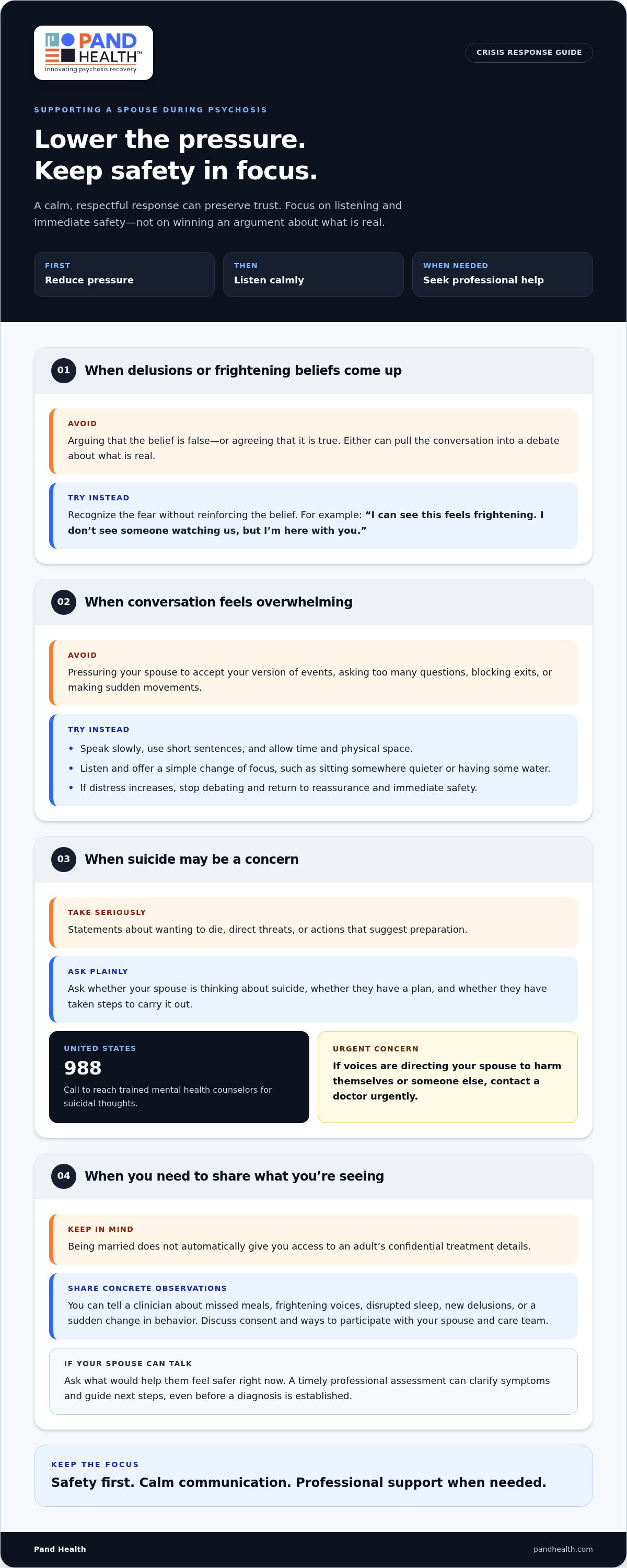
During a psychotic crisis, reduce pressure before trying to persuade your spouse. Speak slowly, use short sentences, and give them room to respond. If they believe a neighbor is watching them, don’t argue that the belief is false or agree that it’s true. You might say, “I can see this feels frightening. I don’t see someone watching us, but I’m here with you.” This recognizes their fear without reinforcing the delusion.
Offer a calm explanation or a simple change of focus when your spouse can engage. For example, invite them to sit somewhere quieter or have some water, rather than insisting they immediately accept your version of events. If they become more distressed, stop debating and return to listening, reassurance, and immediate safety. A severe episode can make conversation difficult, so fewer questions and less stimulation may help keep the interaction manageable.
Take possible suicide warning signs seriously, including statements about wanting to die, direct threats, or actions that suggest preparation. Ask plainly whether your spouse is thinking about suicide, whether they have a plan, and whether they have taken steps to carry it out. In the United States, people struggling with suicidal thoughts can call 988 to reach trained mental health counselors, according to the Substance Abuse and Mental Health Services Administration. If voices are directing your spouse to harm themselves or someone else, contact a doctor urgently.
For the California 5150 question, Section 5150 is the reference for grave disability or serious harm in the CARE Act criteria; those services may be needed to prevent relapse or deterioration likely to lead to either. California’s Lanterman-Petris-Short Act is the state’s civil mental health law, and an assessment should focus on the person’s condition and safety, not on winning an argument about a diagnosis.
To protect privacy, you can share observations with a clinician, such as missed meals, frightening voices, or a sudden change in behavior. Being married doesn’t automatically give you access to an adult’s confidential treatment details. Discuss consent and ways to participate with your spouse and care team.
Before a crisis escalates, keep your voice even, allow physical space, and avoid blocking exits or making sudden movements. If your spouse can talk, ask what would help them feel safer right now. Note specific changes, such as new delusions or disrupted sleep, so a clinician can understand what happened and assess whether an evaluation is needed. A timely professional assessment can clarify symptoms and guide next steps, even before a diagnosis is established.
2. Recovery and treatment for psychotic illnesses
Recovery can involve managing symptoms, rebuilding routines, and reconnecting with relationships or work. Early mental health treatment can improve outcomes for psychosis. A diagnosis helps the care team understand symptoms and plan treatment, but an assessment also considers sleep, daily functioning, medical history, and substance use. Share concrete observations, such as missed appointments, difficulty following conversations, or changes in behavior.
Treatment may combine antipsychotic medication, therapy, and other approaches. Medication is commonly used to reduce symptoms such as hallucinations and delusions. A psychiatrist can assess symptoms and discuss medication as part of an individualized plan. Therapy can help someone recognize distress, practice coping strategies, and work toward personal goals. Recovery isn’t always a straight line, so keep the care team informed if symptoms return or daily tasks become harder.
For Los Angeles psychosis treatment costs, Medi-Cal, other insurance, and sliding-scale arrangements may affect what a person pays. The deciding factors include coverage, the type of service, and household eligibility; clarify these details before planning ongoing care.
Adults seeking county mental health clinics or early psychosis programs can begin with a psychiatric evaluation or psychosocial assessment. A psychiatrist, psychologist, or social worker can help with diagnosis by reviewing symptoms and their effect on daily life. Bring a list of medications, recent changes, and questions about treatment so the appointment can address immediate needs and longer-term support.
Ask the care team to explain each part of the plan in plain language. For example, clarify which changes to track, how appointments support recovery, and what to do if symptoms worsen. If cannabis or another substance may be related to psychosis, share that information honestly; it can help clinicians assess symptoms and recommend appropriate care. A behavioral health plan should reflect the person’s circumstances, not just a diagnostic label.
Families can support progress without taking over. Agree on practical routines together, such as keeping appointments, preparing meals, or setting reminders for daily tasks. Notice specific improvements, like completing a planned activity or asking for help sooner, and acknowledge them without pressuring your spouse to recover on a schedule. If symptoms worsen, follow the care plan and tell the treatment team. Continued communication helps clinicians adjust support as needs evolve.
Schizophrenia & Psychosis Action Alliance (S&PAA) support group guidelines state that treatment is necessary, while paths to wellness and recovery through community can differ. The author attributes her recovery to family and friends, medication, talk therapy with a trusted mental health team, religious faith, and gratitude.
In the described partial hospitalization program, clients attend therapy and therapeutic activities during the day, then return home or to supportive housing in the evening. The described intensive outpatient program includes scheduled weekly therapy sessions focused on symptom management, coping strategies, and community reintegration.
4. Support groups, education, and professional counseling
A support group can help spouses feel less isolated and learn practical ways to respond to symptoms. The Schizophrenia & Psychosis Action Alliance (S&PAA) encourages participants to share personal experiences, exchange coping strategies, and ask permission before offering advice. Its guidelines also emphasize confidentiality, respectful discussion, and seeing each person as more than a diagnosis. These ground rules can make group conversations safer and more useful.
When looking for a psychiatrist or therapist in Los Angeles, consider experience with psychosis and ask how treatment addresses symptoms, daily functioning, and family involvement. A psychiatrist can assess mental health needs and discuss medication; a therapist can work with the person or family on communication and coping. In an initial conversation, describe what has changed, what support your spouse wants, and whether schizophrenia or another condition is being assessed.
Family counseling offers a place to practice conversations before conflict builds at home. For example, a therapist can help spouses discuss medication routines, sleep changes, or returning to work without treating every disagreement as a symptom. Family therapy can also help relatives understand schizophrenia and learn ways to support recovery. Continued support matters after a loved one is stable, because symptoms and family needs may continue to change.
Education can replace guesswork with useful context. Mental Health First Aid courses are taught across the United States, and some are free. Families can use training to learn how to recognize distress and respond with care. At home, keep a shared list of questions for appointments, such as what changes to report, how to respond when your spouse feels watched, and which coping steps have helped before.
Housing concerns and caregiver respite deserve direct discussion, not silence. Call 211 LA County for information and referrals, and ask specifically about housing support and respite options. Before calling, note the immediate concern: a risk of losing housing, difficulty managing daily needs, or a caregiver needing temporary relief. Clear details help explain what kind of support the family is seeking.
When choosing a group, consider whether its format feels respectful and members can speak openly without pressure to disclose more than they wish. S&PAA guidelines prohibit bullying and harassment and encourage participants to speak from personal experience. You can attend with a specific goal, such as learning how another family handles a difficult conversation, then decide which ideas fit your household. A trusted professional can help turn group insights into a plan that respects your spouse’s preferences.
S&PAA guidelines call for keeping group discussions confidential and ask participants to seek permission before offering advice or suggestions. They also encourage seeing each person as distinct from their symptoms or mental health condition.
5. Coping skills for psychosis
A coping plan turns broad intentions into specific actions your spouse can use during distress. Build it together when your spouse is stable, with a mental health professional involved. Write down which strategies feel helpful, which situations increase stress, and whom your spouse wants contacted. Keep the plan somewhere accessible, such as a phone note or a folder near appointment records. Your role is to support your spouse’s choices, not take control of every decision.
Notice patterns without treating every difficult day as a sign of relapse. With your spouse’s agreement, track changes in sleep, stress, routines, and troubling thoughts. Record what happened before symptoms intensified and what helped afterward. For example, note whether a crowded errand came before distress, or whether a quiet break helped your spouse feel steadier. This record gives your spouse and care team concrete details to discuss personal triggers and useful tools.
Agree on early warning signs and a response for each one. Your spouse might identify withdrawing from planned activities or feeling increasingly overwhelmed as reasons to pause and review the plan. Choose practical actions together, such as reducing demands, contacting someone trusted, or discussing the change with the treatment team. Warning signs vary, so base the plan on your spouse’s experience rather than assumptions about a diagnosis.
During distress, offer a few manageable choices. You might ask, “Would a quieter room or a short walk feel better?” If your spouse is overwhelmed, reduce noise and give them time to answer. Don’t insist that a coping strategy work immediately. A tool that helped before may not fit every situation, so make time to review what felt useful and what made the moment harder.
A personal safety plan is developed by the patient and a professional while the patient is stable to help prepare for future crises. Include your spouse’s preferred supports, warning signs, and steps for seeking help. Discuss what to do if symptoms become severe or safety concerns arise. Keep emergency contacts and relevant treatment information together, so you aren’t trying to organize details under pressure.
Your own boundaries belong in the plan, too. Decide what you can offer, such as attending an appointment or helping prepare meals, and identify another trusted person who can share the support. If a strategy seems to increase tension, pause and revisit it with your spouse and clinician. The aim is steady, respectful teamwork: your spouse remains central to decisions, while you contribute observations and practical help. Reviewing the plan together can keep it relevant as needs change.
5. How to get immediate psychiatric help in Los Angeles County for a spouse with psychosis
Start by matching your response to the immediate safety concern. If your spouse may harm themselves or someone else, or voices are directing harm, seek urgent professional help. The Los Angeles County Help Line for Mental Health & Substance Use Services is available daily, 24 hours a day, 7 days a week at (800) 854-7771, according to the Los Angeles County Department of Mental Health. Explain what is happening and ask what step to take next. For families seeking support for a spouse with psychosis in Los Angeles, this is one county resource for urgent mental health guidance.
If suicide is a concern, ask directly whether your spouse has a plan or has taken steps to carry it out. In the United States, call 988 to reach trained mental health counselors, according to the Substance Abuse and Mental Health Services Administration. If a hearing or speech disability makes a phone call difficult, call 711 and request an interpreter to connect with the county help line. Share the concern plainly, including any immediate danger and your spouse’s location.
When speaking with a professional, give observable details rather than debating a diagnosis. Describe what changed, when it began, whether your spouse can manage basic needs, and what safety risks you see. Mention relevant medication or substance use if known. Keep the information focused, then follow the guidance you receive. These details can help responders understand the situation and assess what support may be appropriate.
A psychotic crisis calls for care from doctors and mental health professionals. Describe the urgent symptoms and ask about a psychiatric assessment. If symptoms need prompt clinical attention, an evaluation can help clarify what is happening and guide next steps. Immediate danger requires emergency support, not a routine appointment. For spouse with psychosis support in Los Angeles, explain whether you’re facing a sudden crisis or seeking a prompt assessment.
For information and referrals beyond an immediate crisis, call 211 LA County at 211. State the need clearly, such as finding mental health services or guidance for a family member. Keep a brief record of whom you spoke with and any instructions, so you can share consistent details with the next professional. If your spouse has a care plan, keep it accessible and refer to its steps.
Before calling, move to a quieter place if doing so won’t increase risk. Avoid crowding your spouse, keep your voice calm, and ask someone trusted to help with practical tasks when appropriate. To discuss next steps, describe your situation and request guidance.
If your spouse may harm themselves or someone else, or voices are directing them to cause harm, seek urgent professional help. Describe the immediate danger and observable safety risks so professionals can assess what support may be appropriate.
For urgent mental health support, call 988 to reach trained mental health counselors or contact the Los Angeles County Help Line at (800) 854-7771. Explain the immediate danger and your spouse’s location, and ask what step to take next.
Pand Health: Social skills training
Pand Health can support ongoing recovery with social skills training for people living with psychosis. This may be a useful next step when immediate safety concerns have been addressed and your spouse is working on everyday communication, relationships, or community participation. Psychological and social rehabilitation can also support practical functioning, while family psychoeducation helps relatives better understand psychosis and respond with care.
If symptoms or changes in thinking need assessment, Pand Health also offers evaluation for thought disorders and autism. These services address different needs, so the appropriate next step depends on what your spouse is experiencing and the support they’re seeking. For details about support options, contact Pand Health.
Take the Next Step Toward Steady Support
Finding spouse with psychosis support in Los Angeles can be part of a longer process of rebuilding trust, confidence, and shared routines. A useful next step is to choose one goal your spouse feels ready to work on, such as practicing a conversation, reconnecting with a meaningful activity, or planning for a difficult day. Small, agreed-upon goals can give you both a clearer direction without turning recovery into a test of progress.
Pand Health offers social skills training and psychological and social rehabilitation to support practical skills and participation in daily life. Comprehensive evaluations for thought disorders and autism can help clarify concerns that may inform care planning. These services complement the support your spouse receives from their existing care team, while keeping their needs and preferences central.
If you’re ready to explore a next step, contact Pand Health for support. You don’t have to solve every challenge at once. A thoughtful conversation can help you identify a manageable place to begin, and consistent care can make room for continued progress.
For spouse with psychosis support in Los Angeles, the Los Angeles County Department of Mental Health Help Line is available 24 hours a day, 7 days a week at (800) 854-7771.
Frequently Asked Questions
What Los Angeles County mental health family education and caregiver support programs are available?
Los Angeles families can seek family psychoeducation and family therapy to learn about psychosis, improve communication, and plan supportive routines. At home, caregivers can bring specific concerns, such as difficulty coordinating appointments or uncertainty about how to discuss treatment, to a family session. The National Alliance on Mental Illness helpline at (800) 950-6264 can also provide mental health information and support. Choose support that includes the family while respecting your spouse’s privacy and preferences.
How can I support a spouse with psychosis safely at home, and when should I call emergency services?
At home, keep pathways clear, reduce noise, and agree on a calm place your spouse can use when feeling overwhelmed. Don’t handle weapons or other immediate hazards yourself if doing so could increase danger. Call emergency services if your spouse faces immediate risk of harming themselves or someone else. For urgent mental health guidance in Los Angeles County, call the county help line; for suicidal thoughts, call 988, according to the Substance Abuse and Mental Health Services Administration.
Disclaimer
This article is for information and educational purposes only, and can NEVER replace a proper medical evaluation. If you or a loved one may be suffering from psychosis or the prodomal symptoms of psychosis, get evaluated by a professional as soon as possible. Early diagnosis and treatment can be life-saving.