


How to Help a Sibling with Schizophrenia: A Compassionate Guide
What do you say when your sibling shares an experience that feels frightening or impossible to understand? If you’re wondering how to help a sibling with schizophrenia, it’s natural to worry that the wrong response could make things worse. You may fear that symptoms won’t improve, wonder whether your family is to blame, or feel pulled between caring for your sibling and meeting your own responsibilities. You don’t need perfect answers to be a steady source of support.
Support doesn’t mean arguing someone out of a distressing belief or taking on the role of a clinician. It means listening respectfully, acknowledging how your sibling feels, and encouraging professional care when needed, while protecting your own well-being. This guide offers practical ways to respond during difficult conversations, involve mental health professionals, and share concerns with family. It also explains how to make support sustainable, so caring for your sibling doesn’t mean neglecting yourself.
Key Takeaways
- Learn how to help a sibling with schizophrenia by responding with empathy, even when their experiences are difficult to understand.
- Recognize that signs of psychosis can have different causes and require professional assessment, not assumptions or a family diagnosis.
- Use calm, respectful language that acknowledges distress without agreeing with or arguing about a belief.
- Set realistic boundaries around your time, privacy, and emotional capacity, and make space for support of your own.
- Understand how family support can complement professional care, including coordinated early-psychosis services for eligible teens and adults in Los Angeles.
How schizophrenia can affect a sibling, and what support can realistically mean
Worry, grief, confusion, and frustration can all arise when a sibling seems changed or is struggling. You might miss the ease you once shared, feel unsure how to respond, or worry about what lies ahead. Those feelings don’t make you uncaring. They reflect the strain of seeing someone you love have a difficult time.
Schizophrenia is a mental health condition that affects how a person experiences and interprets reality, and it requires assessment by a qualified professional. Changes in someone’s behavior can be concerning, but they aren’t enough for a sibling to determine a diagnosis. A Schizophrenia Wikipedia article offers a broad overview, but an individual’s experiences and needs must be assessed in context.
Your role can be meaningful without becoming clinical. You can maintain connection, share specific concerns, and encourage professional support, but you can’t diagnose your sibling or control their recovery. A sibling can offer a steady presence, but clinical responsibility belongs with qualified professionals.
What changes might concern a sibling?
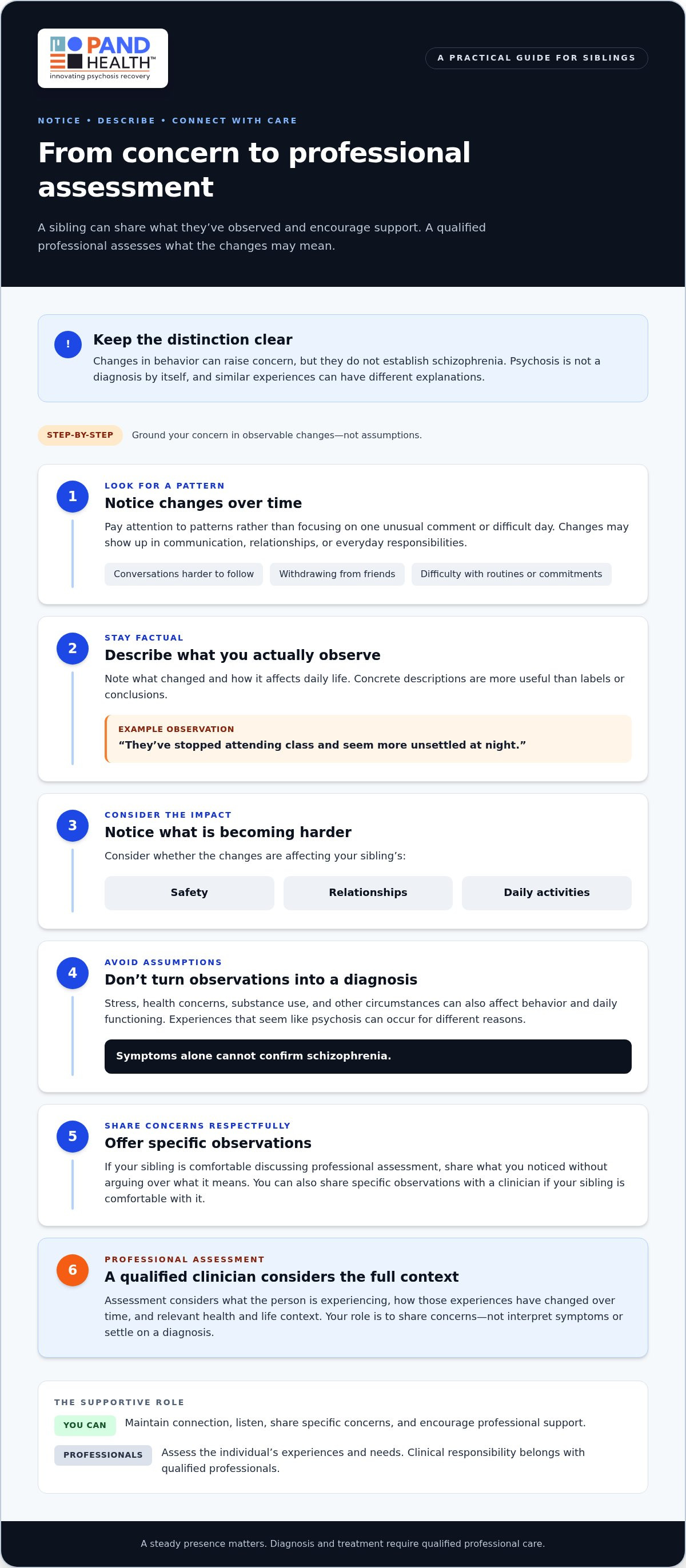
You may notice changes in how your sibling communicates, relates to others, or manages everyday responsibilities. Conversations may become harder to follow, they may withdraw from friends, or routines like attending school, going to work, and keeping appointments may become difficult. These changes can be distressing, especially if they develop over time.
None of these changes, on its own, establishes schizophrenia. Stress, health concerns, substance use, and other circumstances can also affect behavior and daily functioning. Rather than applying a label, pay attention to what has changed and how it affects your sibling’s life.
- Notice patterns over time rather than focusing on one unusual comment or difficult day.
- Describe observable changes, such as missed commitments or growing isolation, without assigning a diagnosis.
- Consider whether the change is affecting your sibling’s safety, relationships, or ability to manage daily activities.
These observations can help you explain your concerns clearly if your sibling is open to discussing professional assessment. They can also keep the conversation grounded in what you’ve noticed, rather than turning it into a debate about what the behavior means.
Is it your fault, or your responsibility to fix?
No. You didn’t cause your sibling’s condition, and you aren’t responsible for fixing it. Mental health conditions aren’t a verdict on a family’s love, effort, or character. Blaming yourself, your sibling, or another relative doesn’t create a path to care; it can add pain to an already difficult situation.
It’s understandable to replay past conversations and wonder whether you should have noticed something sooner or responded differently. But treatment doesn’t depend on you finding the perfect words. Your sibling may accept support at their own pace, and you can encourage professional care without making yourself accountable for their choices or outcomes.
A more realistic aim is to stay caring and connected while sharing concerns with appropriate professionals when needed. You can offer companionship, listen, and make room for your own limits. That is genuine support, even when you can’t make the uncertainty disappear.
Understanding psychosis helps you respond without assuming a diagnosis
Psychosis describes experiences that can affect how someone perceives or interprets reality. It isn’t a diagnosis by itself. These experiences can occur for different reasons, including schizophrenia and other mental health conditions. A family member’s observations can raise a concern, but they can’t establish what is causing it.
Symptoms alone cannot confirm schizophrenia; diagnosis requires professional assessment. Keeping that distinction in mind helps you approach your sibling with curiosity rather than a label. The NIMH information on schizophrenia describes symptoms and treatment, but only a qualified clinician can assess an individual’s circumstances and needs.
What might psychosis look like in everyday life?
Experiences vary. Someone might hear a voice others don’t hear, interpret an ordinary event as having a special meaning, or hold a belief that feels intensely real to them but is hard for others to understand. They may also find it difficult to organize their thoughts or follow a conversation. These examples can be unsettling, but they don’t tell you by themselves what condition, if any, is present.
Changes in sleep, school, work, or relationships may also occur. Your sibling might miss classes, struggle to keep up with tasks, or pull back from friends. Others may not show these changes. Psychosis doesn’t automatically mean someone is dangerous. Focus on what your sibling is experiencing and how it affects their life, rather than relying on frightening portrayals or assumptions.
Why assessment matters before naming the condition
Similar experiences can have different explanations, and the right next step depends on the individual. A clinician considers what the person is experiencing, how those experiences have changed over time, and relevant health and life context. Your role is not to interpret symptoms or settle on a diagnosis. If your sibling is comfortable with it, you can share specific observations with a clinician.
Keep your notes factual and respectful. Describe when you noticed a change, what you observed, and how it affected daily life: “They’ve stopped attending class and seem more unsettled at night.” Avoid conclusions such as “They’re schizophrenic.” Concrete observations give a clinician useful context without turning a family conversation into an informal diagnosis.
If you’re unsure how to raise your concern, say that you’ve noticed a change and ask whether your sibling would consider speaking with a professional. If they agree, offer to help them share their concerns or accompany them, if they want. For Los Angeles families seeking an assessment, Pand Health’s psychiatric evaluation services can be a starting point for discussing concerns with a professional.
Supporting a Sibling With Schizophrenia: What to Say
A calm, respectful conversation can help preserve trust, even when you and your sibling understand an experience differently. You don’t need a perfect response. Aim to show that you’re listening, take their distress seriously, and avoid turning the conversation into a contest over what is or isn’t true. This is a practical starting point for how to help a sibling with schizophrenia.
How can I talk with my sibling about difficult experiences?
Start with what you’ve noticed and how you feel, rather than using labels or accusations. Ask open questions, reflect the emotion you hear, and give your sibling time to answer. You can acknowledge fear or frustration without confirming a belief you can’t verify. Offer a choice to continue talking, pause, or consider support together.
- “That sounds frightening. I can see this is upsetting for you.”
- “I haven’t experienced it the same way, but I want to understand how it feels for you.”
- “Would you like me to listen, help think through what might feel useful, or give you some space?”
- “We don’t have to work this out right now. Would a break help?”
Listen without rushing to correct, reassure, or interrogate. A pause can be more helpful than filling every silence. Let your sibling set the pace, and ask whether they want you to stay nearby. If you’re unsure what to say, try reflecting the feeling: “You sound worried,” then leave room for them to respond.
Ridicule, threats, and prolonged arguments about a distressing belief can make someone feel dismissed or cornered, straining trust. That doesn’t mean you must agree. You can calmly say, “I see this feels real and important to you. I’m not able to confirm that, but I care about how you’re feeling.” If the conversation grows heated, suggest returning to it later.
Families can build confidence with guidance, rather than expecting one sibling to know what to do in every moment. Pand Health’s family psychoeducation guide explores how learning together can support communication and care.
How can siblings stay connected beyond the illness?
Your relationship can include more than symptoms or appointments. When your sibling welcomes it, make room for ordinary time together: share a meal, talk about a favorite show, or invite them to an activity they already enjoy. Offer plans without pressure, and respect a “no,” a change of mind, or a need for privacy. Small, comfortable moments can help protect your connection.
Social reconnection should follow your sibling’s preferences and pace. Pand Health’s social skills recovery guide explains how structured support can relate to connection, but it doesn’t replace individualized professional care. Pand Health also provides family therapy and psychoeducation for families who could benefit from clinical guidance.
Set Boundaries, Self-Care, and Crisis Planning
Supporting your sibling shouldn’t require giving up your privacy, financial stability, or health. A sustainable plan makes care more predictable for both of you. Decide what you can offer, what you can’t, and who else can share the load. These limits aren’t a measure of love. They help keep support manageable rather than leaving you exhausted or resentful.
How can you support your sibling without becoming their only support?
Make agreements specific and realistic. You might arrange a weekly call instead of being available at any hour, offer a ride to an appointment when you’re able, or agree on what financial help you can provide, if any. Be clear about privacy too: your sibling’s personal information deserves respect, while you can still seek confidential support for yourself.
Where possible, ask your sibling which trusted relatives or friends they’re comfortable involving. Share practical responsibilities with willing people rather than becoming the sole contact for every concern. You might say, “I care about you, and I can talk tonight for a little while. Let’s also think about who else you’d feel comfortable reaching out to.”
Protect your own capacity. Keep routines that help you rest, and talk with someone you trust or a family support group if worry is weighing on you. You can care deeply and still say no to a request you can’t safely or realistically meet. Boundaries are part of a lasting relationship, not a withdrawal of concern.
When should concern become an urgent safety response?
Most concerns are best discussed with your sibling and their care team, but immediate danger calls for a different response. If someone is in immediate danger, has a life-threatening medical emergency, or cannot maintain immediate safety, contact emergency services by calling 911. Follow the dispatcher’s instructions and share clear, factual information about what is happening.
In the United States, call or text 988 to reach the Suicide & Crisis Lifeline for mental health, suicide, or substance-use crisis support. It’s a separate resource from 911. Use 911 for immediate danger or a life-threatening emergency; 988 can offer crisis support when an emergency response isn’t required. If you’re uncertain and danger may be immediate, prioritize safety and call 911.
If it’s safe and your sibling is willing, discuss a crisis plan before a crisis occurs. Identify whom they want contacted, how they prefer you to approach them, and what signs mean it’s time to seek urgent help. Keep the plan simple and revisit it as needs change. Don’t put yourself in danger to manage a crisis alone.
For non-emergency clinical support involving psychosis, connect with Pand Health’s care team to discuss professional support that can complement family involvement.
How Los Angeles families can connect sibling support with professional care
Being present for your sibling can offer connection and reassurance, but family support isn’t a substitute for professional assessment or treatment. Clinical care can address needs that a sibling can’t manage alone, while family involvement can keep communication open and provide context about changes in everyday life. For families considering how to help a sibling with schizophrenia, both forms of support can have a place, with clear roles and respect for the person’s preferences.
In Los Angeles, Pand Health’s California OnTrack is an intensive outpatient Coordinated Specialty Care program for eligible teens and adults ages 13-40 experiencing early psychosis. The program provides 24-32 hours of care per client. Its coordinated approach brings different supports together rather than asking one family member to serve as the care provider.
What coordinated specialty care can bring together
California OnTrack combines psychiatric care with psychosocial rehabilitation and family-focused services. Family therapy and psychoeducation can help relatives better understand psychosis, communicate with care providers, and support their loved one while recognizing their own needs. These services are part of a broader clinical model, alongside individual care.
Care is shaped around the person, their goals, and their circumstances. A sibling may be involved in family-focused support when appropriate, while participation respects the individual’s wishes and clinical needs. Coordinated care can also include support for education, employment, and social functioning. The aim is to address more than symptoms alone, while recognizing that each person’s experience and progress are different.
Program data should be understood in context, not as a prediction for one person. Outcomes from a specific cohort describe that group over a stated period; they can’t guarantee what another participant will experience. An individualized assessment can help a clinician discuss the person’s needs and potential care options.
What Los Angeles siblings can do next
Choose a calm moment to ask whether your sibling would be open to learning about professional evaluation or support. You might say, “Would it feel helpful to talk with someone about what’s been happening?” If they’re hesitant, listen to what concerns them and avoid making the conversation an ultimatum. Share what you’ve noticed, offer to help them explore options, and keep the conversation open where possible.
Family members can also learn how to support someone without taking over their care. Pand Health’s family support and evaluation contact information can help Los Angeles families learn about professional assessment and family-focused care. California OnTrack is designed for eligible people in its stated age range who are experiencing early psychosis; an evaluation can help clarify individual needs.
Learning about Pand Health’s approach to psychosis care can be a starting point for a conversation, not a promise of a particular outcome. Your support matters, and you don’t have to carry the clinical role alone.
Take the next step with support that includes your family
You don’t have to wait until you feel certain about every answer before exploring support. A thoughtful next step might be writing down questions, discussing what kind of family involvement feels comfortable, or learning about care options together. Your sibling’s preferences matter, and so does your capacity to stay involved in a sustainable way.
Pand Health’s California OnTrack is based on the NIMH NAVIGATE framework. In its documented 2022-2024 cohort of 41 patients, education or employment participation rose from 6% at enrollment to 40% after three months and 85% after six months. These are program-level results, not a promise or prediction of what any individual will experience. They offer one example of progress a coordinated care model may support.
Learning how to help a sibling with schizophrenia doesn’t mean carrying their recovery alone. It means making room for connection, professional guidance, and your own well-being, one step at a time. Explore compassionate, coordinated psychosis care with Pand Health and consider what support could look like for your family. A steady, respectful approach can begin with a conversation.
Frequently Asked Questions
Can a person have schizophrenia without hallucinations?
Yes. Hallucinations aren’t present in every person with schizophrenia. People may experience other symptoms, such as strongly held beliefs that others don’t share, difficulty organizing thoughts, or reduced motivation and emotional expression. Symptoms can differ from person to person and may change over time. Their presence or absence can’t confirm or rule out a diagnosis by itself; a qualified clinician considers the person’s overall experience and history.
Does having a sibling with schizophrenia mean I will develop it too?
No. Having a sibling with schizophrenia may mean your likelihood is higher than for someone without that family history, but it doesn’t mean you’ll develop the condition. Schizophrenia is associated with a combination of factors, and family history alone can’t predict an individual’s future. If you’re worried about changes in your own thoughts, feelings, or daily functioning, discuss them with a health professional rather than trying to assess your risk on your own.
Should I tell my sibling that I think they have schizophrenia?
It’s usually more helpful to share what you’ve observed than to announce a diagnosis. You could say, “I’ve noticed you seem more unsettled lately, and I care about how you’re doing. Would you consider talking with someone?” This keeps the focus off a label and leaves room for your sibling’s perspective. If they’re open to it, offer to help arrange an assessment. A clinician can determine what may be contributing to the changes.
What can I do if my sibling refuses professional help?
If there’s no immediate safety emergency, keep the conversation respectful and avoid making support an ultimatum. Ask what worries them about getting help, then respond to that concern rather than debating. You might offer a small choice, such as helping them write questions or joining a first conversation if they want. Stay connected where possible, and seek guidance for yourself from a trusted professional or family support resource. If immediate danger arises, contact emergency services.
Can schizophrenia improve with treatment and ongoing support?
Yes, treatment and ongoing support can help people manage symptoms and work toward personal goals, although each person’s experience and progress differ. Care may involve psychiatric treatment alongside psychological and social supports, with adjustments as needs change. Improvement doesn’t always mean symptoms disappear completely, and no specific outcome can be promised. Families can contribute by encouraging continued care and recognizing progress in daily life, while leaving treatment decisions to the person and their clinical team.
How can I support a sibling with schizophrenia when we live far apart?
Agree on a routine that feels manageable to both of you, such as a regular call or a brief check-in by text. Ask what kind of contact they prefer, and don’t assume a delayed reply means something is wrong. With their permission, learn who nearby they trust and how to reach that person if concerns arise. You can also help them prepare questions for appointments or stay connected through shared interests, even from a distance.
What should I do if my sibling says they may hurt themselves or someone else?
Take the statement seriously and ask calmly whether they’re in immediate danger or have a plan to act. If danger is immediate, call 911 and follow the dispatcher’s directions; don’t put yourself at risk. If they’re in crisis but there’s no immediate danger, call or text 988 in the United States for crisis support. If you’re far away, find out where they are so you can give responders accurate information.
Disclaimer
This article is for information and educational purposes only, and can NEVER replace a proper medical evaluation. If you or a loved one may be suffering from psychosis or the prodomal symptoms of psychosis, get evaluated by a professional as soon as possible. Early diagnosis and treatment can be life-saving.