
Schizophrenia Family Counseling in Los Angeles: A Guide
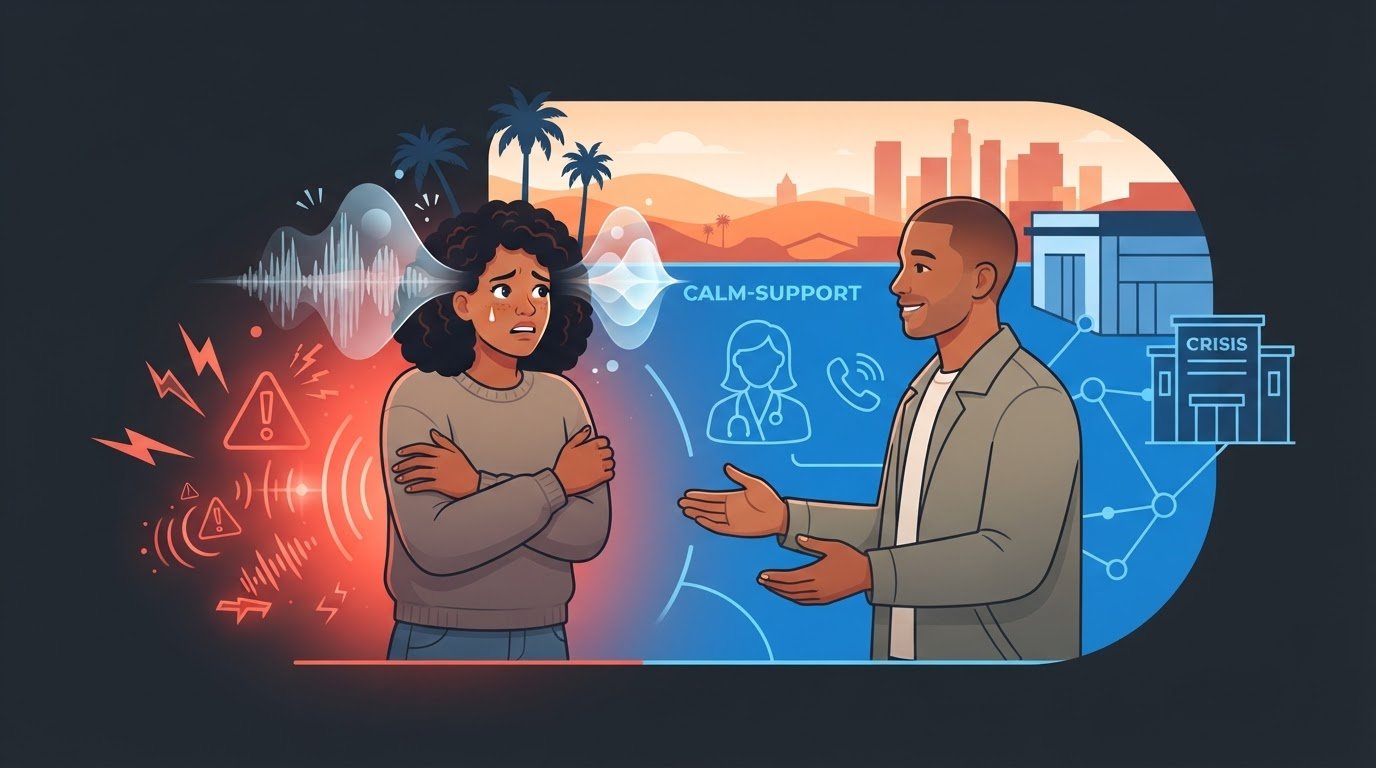
What if family support could lower the temperature at home rather than add another source of conflict? When a loved one is experiencing psychosis, it’s understandable to feel unsure what to say, how to respond, and where counseling fits alongside clinical care. If you’re searching “family counseling for schizophrenia Los Angeles,” you’re likely looking for practical guidance as well as compassionate support.
Family counseling can help relatives build understanding, communicate more effectively, and take part in recovery in ways that respect their loved one’s needs. It isn’t a substitute for psychiatric care, and it can’t guarantee a particular outcome. It is most useful as part of a broader treatment plan.
This guide explains what family counseling may involve, what it can and can’t do, and how family support can work alongside coordinated specialty care. You’ll also learn how Pand Health’s family therapy and psychoeducation fit within California OnTrack, which brings psychosocial support, medication management, and education or employment support together for eligible teens and adults. The aim is to help your family understand a practical, recovery-oriented path forward in Los Angeles.
Key Takeaways
- Family counseling can strengthen communication and coping alongside clinical treatment. Schizophrenia isn’t caused by family members.
- Coordinated specialty care brings different supports together, helping families understand how therapy, medication management, and rehabilitation address distinct needs.
- When exploring family counseling for schizophrenia Los Angeles, consider whether care includes clear goals and coordination with broader recovery supports.
- Prepare for counseling by noting observable changes, day-to-day challenges, your goals, and questions for the care team.
- California OnTrack serves people ages 13 to 40 with first-episode psychosis, schizophrenia-spectrum disorders, or clinical high risk for psychosis, with an intensive commitment of 24 to 32 hours per client.
What Family Counseling for Schizophrenia Can Offer Los Angeles Families
Family counseling offers relatives a supportive place to improve communication, work through shared challenges, and develop coping strategies alongside clinical care. It can help families respond more thoughtfully when symptoms affect everyday life, while recognizing that each person’s needs and recovery path are different.
Family counseling is a guided therapeutic process that helps relatives understand one another, communicate more constructively, and support recovery while the person receives appropriate clinical care. It doesn’t replace individual therapy, which focuses on the individual’s concerns, or psychiatric treatment, which may include assessment and medication management. Each approach addresses different needs and can complement the others in a broader plan.
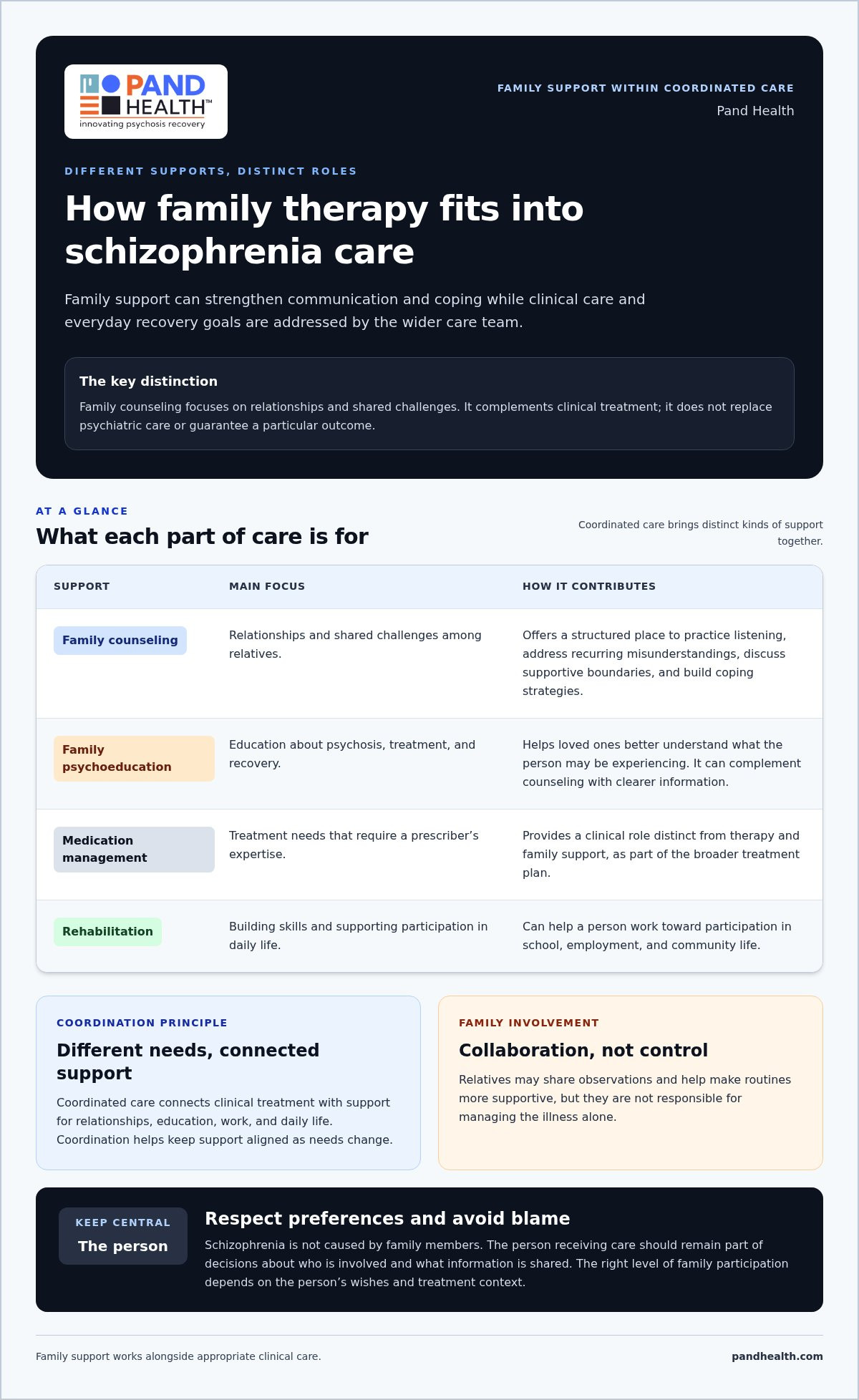
Schizophrenia isn’t caused by a person’s parents, partner, siblings, or family relationships. Relatives may still experience stress, uncertainty, and changes in routines, and they can benefit from support without being blamed for the condition. A respectful counseling process makes room for family members’ concerns while keeping the person’s dignity and recovery goals central. For a general overview of approaches and applications, see Family therapy.
How family counseling differs from family psychoeducation
Family counseling focuses on relationships and shared challenges. Sessions may help relatives practice listening, address recurring misunderstandings, or discuss supportive boundaries. Family psychoeducation has a more educational focus: it helps loved ones understand psychosis, treatment, and recovery. The approaches can complement each other, giving families both a space to work on communication and clearer information about what their loved one may be experiencing.
Who may benefit from family involvement in care?
Parents, partners, siblings, and other trusted relatives may have useful perspectives and need guidance of their own. The right level of involvement can differ for a teenager, a young adult beginning greater independence, or an adult with established preferences and responsibilities. Counseling should take the person’s wishes and treatment context into account, rather than assuming every relative should participate or that one family structure fits everyone.
Family involvement can be practical as well as emotional. Relatives may want to learn how to talk about changes they’ve noticed, reduce tension around daily routines, or coordinate support without taking over decisions. The person receiving care should remain part of discussions about who is involved and what information is shared, in a way that fits their treatment context.
For families exploring family counseling for schizophrenia Los Angeles, a useful starting point is to identify the shared challenge they hope to address. Is conversation becoming strained? Are relatives unsure how to offer support while respecting independence? Naming the concern can clarify whether the immediate need is therapeutic work on family interactions, education about psychosis, or a combination within coordinated care. Counseling isn’t about assigning fault; it’s about building understanding and finding more workable ways to support one another.
How Family Therapy Fits Into Coordinated Schizophrenia Care in Los Angeles
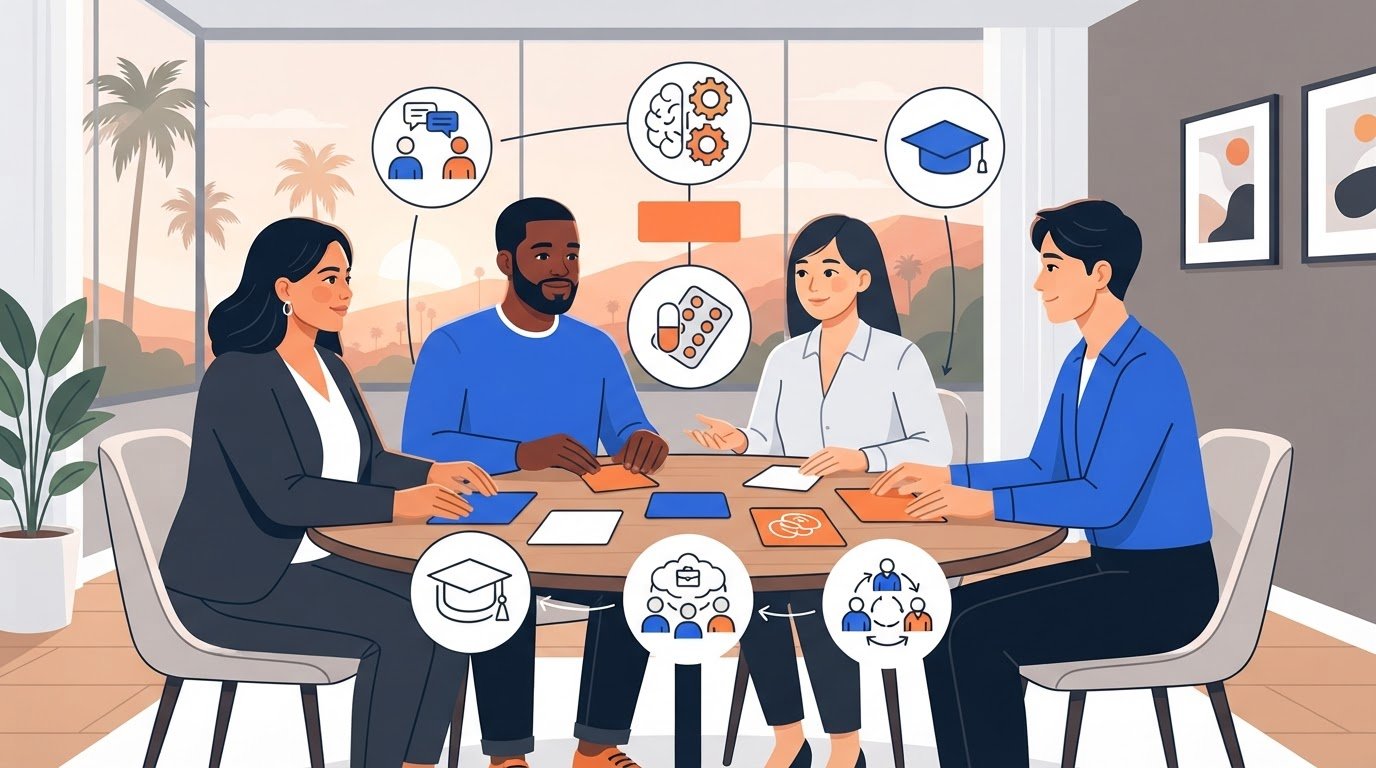
Family therapy has practical value when it’s connected to the person’s wider treatment plan. Coordinated Specialty Care (CSC) is a team-based approach that brings different forms of support together for people experiencing early psychosis. Rather than asking one clinician or family member to address every challenge, the care team can consider clinical needs alongside goals related to relationships, education, work, and daily life.
Coordinated care connects clinical treatment with everyday supports that help a person pursue recovery goals. Psychiatric medication management addresses treatment needs that require a prescriber’s expertise. Therapy supports emotional and relational concerns. Rehabilitation can help build skills and work toward participation in school, employment, and community life. These roles are distinct, and coordination helps keep support aligned as needs change.
Family participation is collaboration, not a duty to control symptoms or guarantee outcomes. Relatives may offer useful observations about day-to-day changes and help make routines more supportive, but they aren’t responsible for managing the illness on their own. The National Institute of Mental Health on Schizophrenia provides information about treatment and the value of family support. A care team can help put that involvement in context for the person and family.
What family therapy can address during recovery
Family sessions provide a structured place to identify shared concerns and consider responses together. For example, relatives may want to discuss how a change in routine is affecting the household, or how to coordinate support when expectations differ. A therapist can help the family explore these issues without treating relatives as the cause of psychosis or placing responsibility for recovery on one person. Family therapy complements psychiatric treatment, but it doesn’t replace medication management or address every symptom by itself.
Sessions can also help family members make sense of one another’s concerns. A relative might be focused on safety, while the person receiving care prioritizes independence. Naming those different perspectives can help the family and care team identify a shared, respectful way forward. The person’s preferences and treatment goals remain important to that conversation.
How California OnTrack connects family support with treatment
At Pand Health, California OnTrack is an augmented CSC model that connects family interventions with broader psychosocial and clinical support. Its interventions include behavioral family therapy and multi-family group therapy. These formats create opportunities to work on family concerns, while the wider program also integrates medication management and support related to education and employment.
This approach recognizes that progress may involve more than symptom care. Someone may also be working toward returning to classes, exploring employment, or strengthening social and daily living skills. Family therapy can help relatives understand how to support those goals while the treatment team addresses other needs. For families considering family counseling for schizophrenia Los Angeles, understanding how sessions connect with the rest of care can clarify what support is intended to do.
Pand Health’s coordinated psychosis care brings family therapy into a broader treatment approach.
How to Assess a Family Counseling Approach for Schizophrenia
Family counseling may be offered as a stand-alone service or as one part of coordinated specialty care. Neither format is automatically right for every family. Stand-alone counseling can focus closely on family relationships and shared concerns. Within a coordinated program, family sessions connect with other supports, such as psychiatric care and rehabilitation, so the team can consider how different needs relate.
As you assess an approach, look for understandable treatment goals, a clear role for family participation, and coordination among the disciplines involved. Goals might include helping relatives work through a shared concern or aligning family support with a person’s education or employment aims. The purpose isn’t to measure a family’s effort or promise recovery. It’s to understand what care is designed to address and how progress will be discussed.
What measurable outcomes can, and cannot, tell families
Pand Health reports outcomes from a 2022 to 2024 cohort of 41 patients. Employment or education participation was 6% at enrollment, 40% after three months, and 85% after six months. The same cohort had a reported rehospitalization rate of over 50% before enrollment and 6% after enrollment.
These figures describe group-level observations, not a prediction for any person or family. They don’t establish that a particular intervention caused an individual outcome, nor do they account for every difference in people’s circumstances and needs. Use them as context for understanding reported program outcomes, not as a promise of what will happen in your own situation.
What makes a coordinated model more than counseling alone
California OnTrack is based on the NIMH NAVIGATE Coordinated Specialty Care model and augmented with additional interventions. Alongside family therapy, the program includes cognitive remediation, certified Metacognitive Training (MCT), and Social Cognition and Interaction Training (SCIT). These components address different areas of support, rather than placing the full weight of recovery on family sessions.
The comparison below shows how family therapy relates to wider program supports. It isn’t a choice between family involvement and clinical care; the elements serve distinct, complementary purposes.
| Care element | Primary focus |
|---|---|
| Family therapy | Family relationships, shared concerns, and collaborative support |
| Psychiatric medication management | Clinical treatment needs addressed with a prescriber |
| Cognitive remediation | Support focused on cognitive skills |
| MCT and SCIT | Metacognitive skills and social cognition |
| Rehabilitation supports | Psychosocial needs and goals related to education or employment |
For families comparing family counseling for schizophrenia Los Angeles, this distinction can clarify whether they’re seeking focused relationship support, a broader coordinated structure, or both. A useful conversation with the care team can center on the goals being addressed, how disciplines coordinate, and how the person’s preferences shape family involvement.
Preparing for Family Counseling in Los Angeles: Practical Steps
It’s understandable to feel unsure what to bring to a first family counseling conversation. You don’t need to arrive with a diagnosis or a complete explanation of what’s happening. A few clear observations, concerns, and hopes can make the discussion more useful for your family and the care team.
Before the meeting, take a little time to consider:
- Main concerns: Identify the situations causing the most strain, such as disrupted routines, difficulty coordinating support, or uncertainty about how to respond to changes.
- Observable changes: Note what you’ve seen and when, using concrete descriptions rather than labels. For example, describe a change in sleep or attendance instead of trying to interpret its cause.
- Support people: Think about which relatives or trusted people the individual may want involved, and what each person could contribute.
- Goals and questions: Describe what useful progress might look like in daily life, then list questions about how family participation fits with the broader treatment plan.
What families can bring to an initial conversation
A short written note can help you stay focused if emotions run high. Include recent changes, current support needs, and one or two goals, such as making household routines feel more manageable or understanding how to support a return to school or work. You might ask how family sessions connect with other care, who coordinates those supports, and how your loved one’s preferences will guide participation.
Keep the account specific and nonjudgmental. “They’ve missed several classes this week” gives the team something concrete to discuss; “they’re being difficult” assigns motive without explaining what happened. Families don’t need to determine whether a change is a symptom. Share what you noticed and let qualified clinicians assess its meaning in context.
How to make family participation constructive
During sessions, listen for the individual’s perspective as well as your own. Use specific examples, speak from your experience, and allow time for different concerns to be heard. Family counseling isn’t a forum for forcing agreement or confronting someone into accepting a particular view. A more constructive aim is to understand where perspectives differ and identify a next step that fits the person’s care and goals.
It can also help to distinguish support from taking control. Relatives can share observations and discuss what assistance feels useful, while leaving clinical decisions and symptom assessment to the treatment team. If plans or expectations are unclear, bring that uncertainty into the conversation rather than trying to resolve everything at home.
Safety comes first. If someone faces immediate danger or needs urgent medical attention, seek emergency help by calling 911 or going to an emergency department. Family counseling is not an emergency response, and it shouldn’t delay urgent support.
Learn about Pand Health’s family therapy and coordinated care through the Pand Health contact page.
Family Counseling Through Pand Health’s California OnTrack Program
For families seeking coordinated support, Pand Health’s California OnTrack combines family interventions with clinical and psychosocial care. The program serves teens and adults ages 13 to 40 who are experiencing first-episode psychosis, schizophrenia-spectrum disorders, or clinical high risk for psychosis. It’s an intensive outpatient program, with a commitment of 24 to 32 hours per client.
This level of care brings several kinds of support into a connected treatment approach. Family therapy can help address shared concerns, while psychiatric medication management and other psychosocial interventions attend to different clinical and day-to-day needs. Family involvement is one part of this work, not a promise that relatives can control symptoms or determine recovery outcomes.
What families can expect from the wider OnTrack model
California OnTrack is an augmented Coordinated Specialty Care model based on the NIMH NAVIGATE framework. Alongside family therapy, the program includes behavioral family therapy and multi-family group therapy. These interventions give family support a place within a broader plan, rather than asking counseling alone to meet every need.
The wider model integrates clinical care with functional supports. Depending on a person’s needs and goals, the treatment approach can include medication management and psychosocial support connected to education, employment, social skills, and daily functioning. The California OnTrack Work-Study Program is part of the broader education and employment support; it is not a counseling service. Together, these elements connect care to goals beyond clinical treatment, without guaranteeing a specific result.
This broader structure can help families understand how support at home relates to other parts of a loved one’s life. For example, family sessions can focus on shared concerns while the wider care plan also considers participation in school or work. Priorities are shaped around the individual’s treatment context, rather than assuming every person or family needs the same combination of support.
Taking the next step with a Los Angeles care team
Pand Health is located at 11500 W. Olympic Blvd., Suite 399, Los Angeles, CA 90064. For families exploring family counseling for schizophrenia Los Angeles, learning how family therapy fits with the program’s clinical and functional supports can help clarify how the approach relates to their needs. A first conversation can focus on the person’s situation, the family’s questions, and the kinds of support that may be relevant.
You can explore Pand Health’s Los Angeles psychosis care program and learn about California OnTrack.
Take a Thoughtful Next Step for Your Family
Progress can begin with a conversation about what would make daily life feel more manageable, not with having every answer in place. Family counseling for schizophrenia Los Angeles families seek can be one part of a broader, person-centered path, with relatives contributing support while the individual’s needs and preferences remain central.
California OnTrack brings family interventions into an augmented Coordinated Specialty Care model. Pand Health also reports outcomes from a 2022 to 2024 cohort of 41 patients. These are group-level observations, not a forecast or guarantee for any individual. Every person’s circumstances are different, and care should be shaped around their situation.
If you’re ready to explore coordinated, recovery-oriented care for your family, learn about California OnTrack at Pand Health. A clearer path can start with asking questions together, one conversation at a time.
Frequently Asked Questions
Is family counseling effective for schizophrenia?
Family counseling can help relatives work toward practical goals, such as discussing a difficult concern with less tension or agreeing on a supportive response to a day-to-day challenge. It isn’t a standalone cure, and no specific symptom or recovery outcome is guaranteed. Families can discuss with the clinician what progress might look like for them and revisit those goals as circumstances change. The value of counseling depends on each person’s needs and care context.
Can family counseling help if the person with schizophrenia does not attend?
Yes, relatives may still use counseling to discuss their own concerns and consider how they want to respond at home. For example, a parent or partner could bring questions about supporting routines or managing their own stress. The session’s goals and format may differ if the person receiving care isn’t present. A clinician can explain how family involvement fits the individual’s situation, treatment plan, and preferences without assuming a particular arrangement.
Does family counseling replace medication or psychiatric care?
No. Family counseling can address shared concerns, while psychiatric care assesses clinical needs and oversees medication when appropriate. These forms of support serve different purposes and can be coordinated as part of care. If a relative is worried about side effects, missed doses, or a medication change, share that concern with the treating clinical team. Don’t start, stop, or adjust prescribed medication based on a family counseling discussion alone.
Is schizophrenia caused by family conflict?
No. Families should not be blamed for schizophrenia, and conflict does not mean relatives caused the condition. Counseling can focus on what the family is experiencing now, such as disagreements about routines or uncertainty about how to offer support, without searching for someone at fault. Keeping the conversation respectful can help relatives share concerns while recognizing that clinical assessment and treatment decisions belong with qualified clinicians.
How much does family counseling for schizophrenia cost in Los Angeles?
The cost depends on the program and the family’s coverage, so a general price range shouldn’t be taken as Pand Health’s fee or a guarantee of insurance payment. Families can use Pand Health’s contact page to discuss program details and practical next steps. Have your coverage information and questions about the care approach ready for that conversation.
Can family counseling prevent a schizophrenia relapse?
Family counseling cannot guarantee that relapse won’t occur. Families can use conversations with the treating team to understand which changes are relevant to report, how the person prefers relatives to respond, and what follow-up plan is appropriate. For instance, you might ask whom to contact if you notice a concerning shift in sleep, daily routines, or functioning. The clinical team can put observations into context and guide next steps.
Disclaimer
This article is for information and educational purposes only, and can NEVER replace a proper medical evaluation. If you or a loved one may be suffering from psychosis or the prodomal symptoms of psychosis, get evaluated by a professional as soon as possible. Early diagnosis and treatment can be life-saving.