AI Psychosis: Understanding the Concerns, Signs, and Support Options
A chatbot may shape or reinforce the content of someone’s unusual beliefs, but that doesn’t prove it caused psychosis. The phrase ai psychosis has drawn attention because people are understandably concerned when AI conversations seem to affirm distressing or unusual interpretations. Yet the term isn’t a formal diagnosis, and evidence about how AI interactions may affect mental health is still developing.
If you’re worried about yourself or someone close to you, conflicting headlines can make it hard to know what to take seriously. You don’t have to decide whether AI is “to blame” before seeking guidance. Changes in beliefs, perceptions, sleep, or daily functioning may warrant a professional assessment, whatever the cause.
This article explains what people mean by AI psychosis, what remains uncertain about AI’s role, and which signs may call for an evaluation. It also offers practical ways to respond without dismissing someone’s experience or reinforcing a distressing belief, and describes how a comprehensive assessment can help clarify the broader clinical picture and possible next steps.
Key Takeaways
- Learn why “ai psychosis” is an informal phrase, not a clinical diagnosis, and why an assessment considers the whole person and their circumstances.
- Understand how chatbot replies may become part of someone’s beliefs without proving that AI caused their symptoms.
- Consider timing alongside factors such as sleep, stress, substance use, health, and personal history rather than drawing conclusions from AI use alone.
- Respond with care by listening, asking what feels troubling, avoiding arguments over unusual beliefs, and considering a break from upsetting AI conversations.
- Explore how comprehensive evaluation and recovery-oriented California OnTrack care in Los Angeles may support individualized next steps.
What Does “AI Psychosis” Mean, and Is It a Clinical Diagnosis?
If someone is spending long hours talking with a chatbot, or believes it has a special connection with them, it can be difficult to know what the behavior means. The phrase ai psychosis is used in public discussion, but it is not a formal mental health diagnosis. It does not, by itself, explain what someone is experiencing or establish why those experiences began.
“AI psychosis” is an informal label for psychosis-like experiences that people associate with interactions with generative AI; it is not a clinical diagnosis or proof that AI caused those experiences. The phrase may describe a concern worth exploring, but a chatbot conversation cannot diagnose a person. The term is discussed in this AI-induced psychosis overview, while clinical terminology depends on a qualified assessment rather than a popular label.
Psychosis is not one specific experience or a conclusion drawn from unusual technology use. It refers to experiences that can affect how a person perceives things, interprets beliefs, or organizes thoughts. Someone might hear or see something others don’t, or feel certain about an explanation that people around them don’t share. These examples can signal a need for assessment, but none alone establishes a diagnosis.
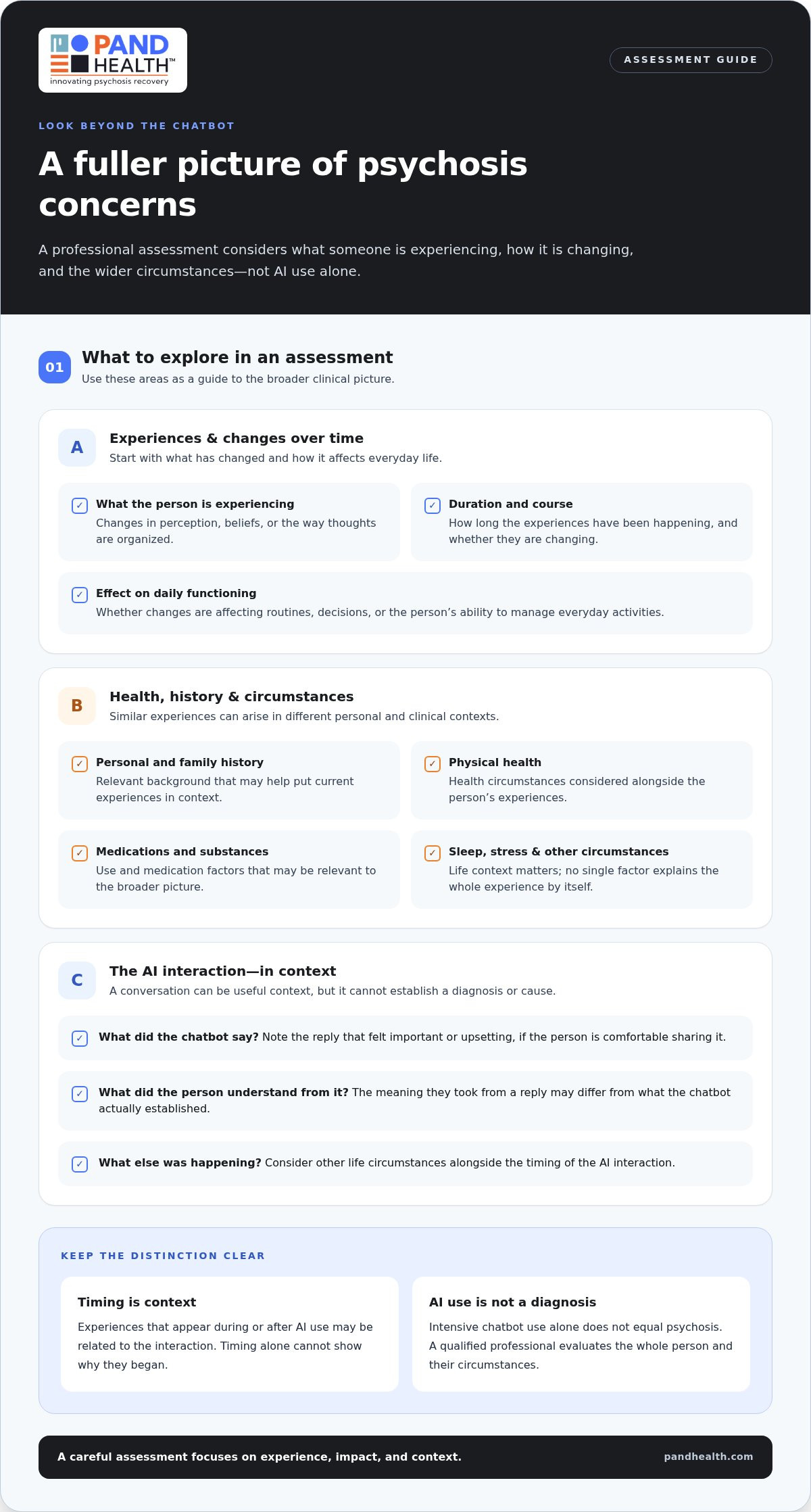
Clinicians look at the broader picture: what the person is experiencing, how long it has been happening, whether it is changing, and how it affects daily life. They may also consider personal and family history, physical health, medications or substances, sleep, stress, and other circumstances. The purpose is to understand the experience in context, not to assign a label based on one conversation or isolated behavior.
Why the phrase AI psychosis can be misleading
The word “AI” in the label can sound like a confirmed explanation. But a chatbot’s responses may be part of the story without proving that the technology created or caused symptoms. A person may already be experiencing changes, or other factors may be involved. Describing the situation without assuming a cause leaves room for a careful, more complete evaluation.
Intensive AI use alone does not equal psychosis. Someone may spend many hours chatting out of curiosity, work, or habit without experiencing changes in perception or beliefs. Conversely, a person’s distress deserves attention even if AI use is limited. Focus on what has changed and whether the person feels safe and able to manage everyday activities, rather than judging or ridiculing their use of a chatbot.
What clinicians mean by psychosis
Psychosis describes a set of experiences, not a single cause. Similar experiences can arise in different clinical and personal contexts, so assessment considers their course, impact, and surrounding factors. A list of possible signs can help someone decide to seek guidance, but it cannot determine what condition, if any, is present. A professional evaluation is the appropriate way to explore concerns and identify next steps.
How AI Conversations Might Intersect With Psychosis Experiences
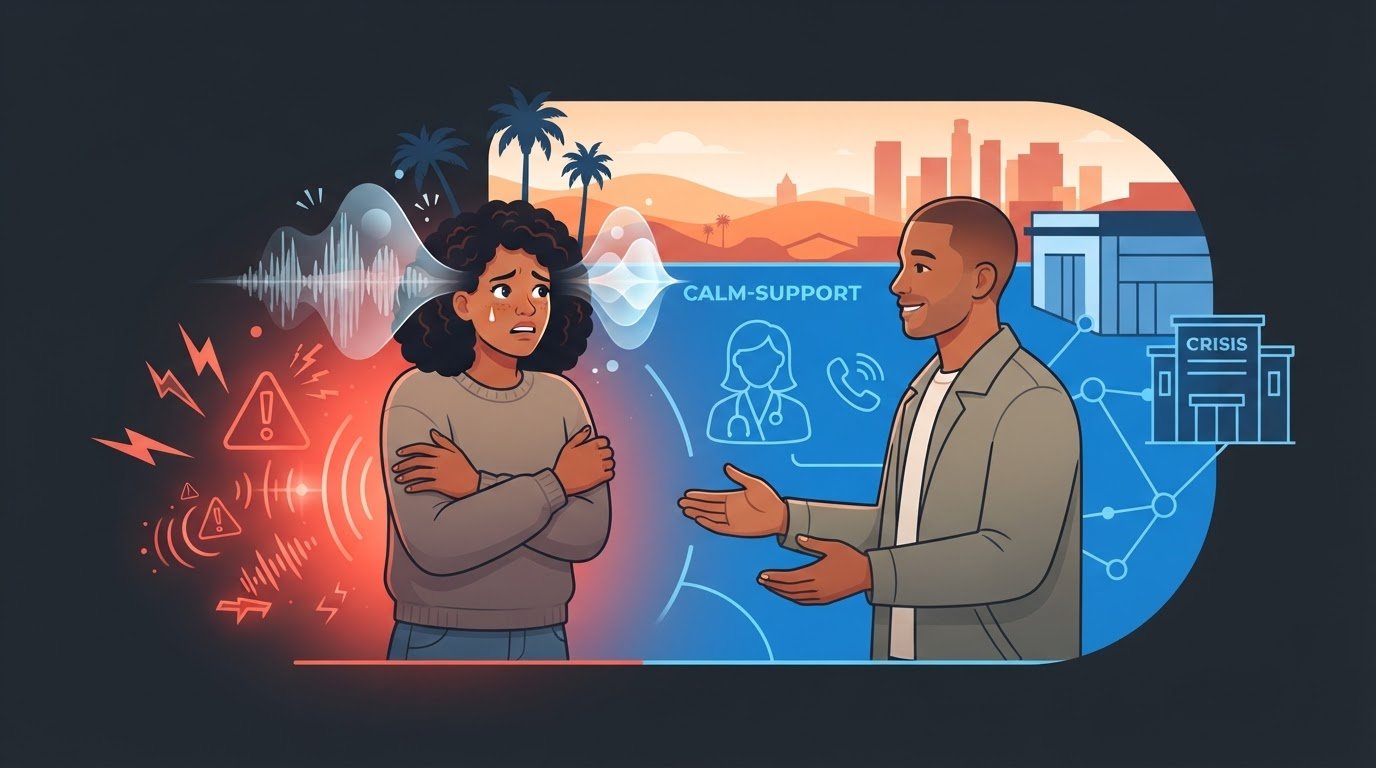
A chatbot’s reply can become part of how someone makes sense of an unsettling experience. For example, if a person is worried that ordinary events contain a hidden message, an agreeable response may feel like confirmation, even though the chatbot has no reliable way to verify that interpretation. This is one reason people discuss ai psychosis, but a conversation’s content is not evidence that the technology created a belief or caused a mental health condition.
Temporal overlap does not establish causation: symptoms that appear during or after AI use may be related to the interaction, but timing alone cannot show why they began. A careful understanding separates what the chatbot said, what the person understood from it, and what else was happening in their life. Each part matters, and none should be treated as the whole explanation.
When chatbot responses may reinforce a distressing interpretation
Generative AI can produce inaccurate information in a confident tone. Depending on the system and the conversation, a response may also sound supportive or agreeable. If someone is already distressed or strongly focused on a particular belief, that reply could feel like outside confirmation. But systems differ, and interactions vary; it would be inaccurate to say every chatbot responds alike or inevitably intensifies symptoms.
Repeated conversations can offer useful context for an assessment, especially if the person returns to the same concern, feels increasingly unsettled, or changes routines because of what the chatbot said. They don’t prove a diagnosis. If the person is comfortable, note what they found upsetting and how the interaction affected their sleep, mood, decisions, or daily activities. Keep the focus on their experience, not on blaming them for using AI.
What research can and cannot establish so far
Discussion of AI and psychosis is developing, and reports of concerning interactions should be interpreted carefully. Individual accounts or case reports can describe what happened to a particular person and prompt further questions. On their own, they cannot establish how often similar experiences occur, show that AI caused them, or predict what will happen to someone else. The limited evidence also doesn’t prove that these interactions are always harmless.
To make the situation clearer, separate three kinds of information:
- The interaction: What did the chatbot say, and how often did the person return to the conversation?
- The interpretation: What meaning did the person take from the response, and did that meaning feel frightening or compelling?
- The wider context: What changes occurred in wellbeing or daily functioning, and what other circumstances may be relevant?
This is a way to organize observations, not to diagnose. A comprehensive assessment can consider the interaction alongside the person’s experiences, history, functioning, and broader circumstances. If concerns are affecting someone’s wellbeing, a psychosis evaluation can help clarify the clinical picture without assuming that AI is the cause.
AI Use, Psychosis, and Other Factors: How to Think About the Difference
If distressing beliefs or changes in behavior appear around the same time as intensive AI use, it’s understandable to look for a connection. That timing can be useful to share during an evaluation, but it can’t identify the cause by itself. A clinician considers the person’s experiences alongside sleep, stress, substance use, health, personal history, and changes in daily functioning.
It may help to separate what you directly observe from what you think it means. For example, “They began sleeping less and using a chatbot late into the night” describes observations. “The chatbot caused psychosis” is a conclusion that requires clinical assessment. This distinction keeps the conversation grounded without dismissing a person’s concerns or assigning blame.
What to note about timing and daily functioning
Write down when the concern first appeared, what changed, and whether those changes seem to shift alongside AI use. Include practical details such as sleep patterns, school or work attendance, relationships, and everyday routines. Note other changes too, such as increased stress, substance use, illness, or medication changes, if known. Keep the notes factual and brief; they’re a conversation aid, not a way to diagnose someone at home.
| What you observe | Possible interpretation | What needs assessment |
|---|---|---|
| More time chatting late at night | AI use may be affecting routine or sleep | Sleep changes, distress, and other possible contributors |
| A new belief is discussed with a chatbot | The conversation may be part of how the belief is being explored | The person’s experience, conviction, wellbeing, and functioning |
| Changes in school, work, or relationships | Daily life may be affected, for a range of reasons | When the changes began and what circumstances may be involved |
Why one apparent trigger does not settle the cause
A trigger is something that may precede or bring on a change; a contributing factor may play a role alongside other circumstances. A confirmed cause is a stronger conclusion, and timing alone doesn’t establish it. AI interactions could be relevant context, but they shouldn’t eclipse other possibilities or become a reason to blame the person, their family, or the technology.
Sleep disruption, stress, substance use, physical or mental health factors, and existing vulnerabilities can all matter, and their relevance differs from person to person. A comprehensive evaluation considers how these details fit together rather than assuming one explanation. If experiences are distressing or disrupting daily life, share what you’ve noticed with a qualified clinician. The aim is to understand the full picture and identify appropriate support, not to prove a theory about ai psychosis.
What to Do When AI Use and Psychosis Concerns Overlap
When someone’s AI conversations seem connected to frightening or unusual experiences, a steady response can help reduce tension and make room for support. You don’t need to determine whether AI caused anything before taking the person’s distress seriously. Focus first on listening, understanding what feels troubling, and noticing whether their wellbeing or daily life has changed.
- Listen without rushing to correct or agree. Give the person space to describe what they’re experiencing. You might say, “That sounds frightening,” without confirming an explanation you can’t verify.
- Ask open, nonjudgmental questions. Try “What about the conversation has been worrying you?” or “How has this been affecting your sleep?” Avoid debating whether an unusual belief is true; an argument may increase distress rather than build trust.
- Consider a pause from upsetting conversations. If the person says AI interactions are making them feel more anxious or unsettled, suggest taking a temporary break and turning to a trusted person for support. Frame it as an option to reduce distress, not a punishment or proof that the chatbot caused a problem.
- Seek a professional assessment when needed. Arrange an evaluation if experiences are new, persistent, distressing, or affecting work, school, relationships, sleep, or daily routines. A clinician can consider the full context without requiring the person or family to accept an AI-based explanation.
If there’s immediate danger or the person can’t stay safe, call 911 or call or text 988 in the United States. Don’t leave someone alone if you believe there is an immediate safety risk and you can remain with them safely. If the situation is urgent, prioritize getting help over gathering notes or trying to resolve the meaning of an AI conversation.
How family members can respond without escalating distress
Try to acknowledge the emotion without endorsing an unverified belief: “I can see this is upsetting, and I want to understand what would help you feel safer.” Ask what support they want, whether they’ve been sleeping, and whether they would feel comfortable discussing the experience with a clinician. Structured family psychoeducation for psychosis recovery can help relatives build a more informed, supportive response.
What information can help during an assessment
A short, factual timeline can make an appointment more useful. Note when concerns began, changes in AI use or conversations, sleep patterns, substance use if relevant, and any effects on work, school, relationships, or routines. Include the person’s own questions and description of what feels distressing, not only family observations. The notes support discussion; they don’t need to prove a cause or diagnosis.
In Los Angeles, Pand Health offers comprehensive evaluations to help clarify the clinical picture and possible next steps, including same- or next-day psychosis evaluation services. You can request an evaluation without first deciding whether AI explains what’s happening.
How Early, Recovery-Oriented Psychosis Care Can Help in Los Angeles
When someone is experiencing significant changes in perception, beliefs, or thinking, a comprehensive evaluation can help clarify what support may be appropriate. It considers the person’s symptoms, health, history, daily functioning, and circumstances, including any concerns about AI conversations. The goal is to understand the whole clinical picture, not to assume a diagnosis or decide in advance what caused the changes.
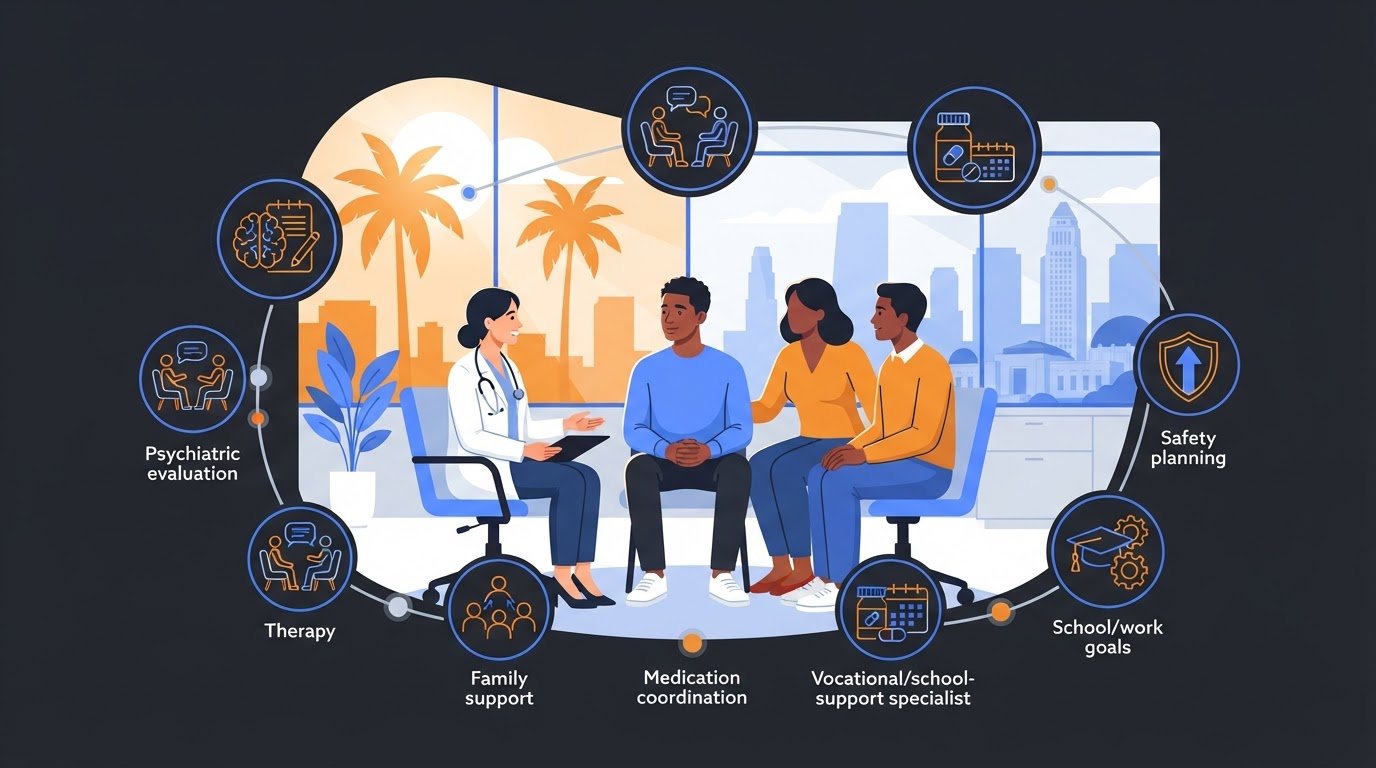
For teens and adults ages 13 to 40 who are experiencing first-episode psychosis, schizophrenia-spectrum disorders, or a high risk of psychosis, Pand Health offers California OnTrack in Los Angeles. This intensive outpatient Coordinated Specialty Care program follows an augmented model that combines clinical care with psychosocial support. Depending on the person’s needs, care may include psychotherapy, medication management, family support, and psychological and social rehabilitation.
What coordinated specialty care may include
Coordinated Specialty Care connects clinical treatment with practical support for a person’s goals and everyday life. Pand Health’s California OnTrack programs include supported education and employment services, with case-managed support for education and job goals. Social skills training, counseling, and workplace or school advocacy can help connect those goals with clinical care. The program also offers approaches such as Social Cognition and Interaction Training and Metacognitive Training. Rebuilding relationships and confidence in everyday interactions can be part of recovery; social skills training for recovery and reconnection is one example of support focused on those skills.
The approach recognizes that recovery involves more than symptom management. A person may also want help returning to school, maintaining work, or reconnecting with others. Care planning can take these priorities into account while addressing clinical needs, without assuming that everyone will follow the same path or have the same goals.
Finding a measured next step in Los Angeles
Evaluation and outpatient care can help people and families move from worry toward a clearer plan. Pand Health provides comprehensive evaluations and intensive outpatient psychosis care in Los Angeles. An assessment can explore concerns sometimes described as ai psychosis while considering other relevant factors. It does not require accepting AI as the cause or reaching a particular diagnosis before seeking guidance.
In a 2022-2024 cohort of 41 patients, Pand Health reported that employment or education participation rose from 6% at enrollment to 40% after three months and 85% after six months. The cohort’s rehospitalization rate was 6% after enrollment, compared with more than 50% before enrollment. Pand Health also reported a 19-point PANSS improvement and a 40% SANS reduction after nine months. These are cohort results, not guarantees or proof that a specific part of care caused the changes. Individual experiences and outcomes vary.
If an evaluation may help clarify concerns, you can contact Pand Health about an evaluation. This is not emergency care. If someone is in immediate danger or cannot stay safe, call 911 or call or text 988 in the United States.
Take the Next Step Toward Clarity and Support
Concern about ai psychosis can leave a person or family searching for a single explanation. A more useful next step is to focus on what’s changed, what feels difficult now, and what kind of support could help restore stability and connection. You don’t need to settle the cause before asking for an evaluation.
In Los Angeles, Pand Health’s California OnTrack offers intensive outpatient care through an augmented Coordinated Specialty Care model. A 2022-2024 cohort of 41 patients showed reported gains in education or employment participation and clinical measures. These cohort observations offer context, not a promise of what any individual will experience. A thoughtful evaluation can help clarify needs and guide a plan that reflects the person’s circumstances and goals.
To discuss concerns or explore an evaluation, contact Pand Health to discuss a psychosis evaluation. Pand Health’s Los Angeles team can help you take a next step focused on understanding, dignity, and recovery-oriented support.
Frequently Asked Questions
Is AI psychosis a recognized mental health diagnosis?
No. “AI psychosis” is an informal phrase, not a standalone clinical diagnosis. It may help someone describe a concern, but it can’t explain what is happening or establish that AI caused it. A clinician may ask what the person has noticed, how upsetting it feels, and whether it is affecting ordinary responsibilities. Use the phrase to open a thoughtful conversation, not as a label to apply to yourself or someone else.
Can talking to an AI chatbot cause psychosis?
Current evidence doesn’t establish that chatbot use alone causes psychosis. An AI conversation may be relevant context if someone becomes distressed or interprets replies in unusual ways, but the order of events doesn’t settle what caused the experience. For example, note when concerns began and what else changed around that time. Share those details with a qualified clinician rather than relying on a chatbot or online claim to explain them.
Can an AI chatbot diagnose psychosis?
No. A chatbot can’t provide a reliable clinical diagnosis or replace an individualized evaluation. It may produce an inaccurate answer in a confident tone, so don’t treat a label it offers as confirmation. If a response worries you, save or describe it and discuss why it felt significant with a qualified professional. A chatbot’s statements are not a diagnosis, proof of cause, or reliable direction about treatment.
What signs mean someone should get a psychosis evaluation?
Consider an evaluation if unusual perceptions or beliefs are new, continue over time, cause distress, or interfere with everyday life. Examples include missing school or work, withdrawing from relationships, or being unable to maintain usual routines. These changes can have different explanations, so they don’t confirm psychosis on their own. If someone may harm themselves or another person, or cannot stay safe, call 911 or call or text 988 in the United States.
Should someone stop using AI if it is making them feel worse?
If a conversation feels frightening or leaves someone more distressed, a temporary break is a reasonable way to reduce exposure to that upsetting interaction. Present it as a choice for comfort, not as treatment or proof that AI caused the problem. They might switch to a calming activity or talk with someone they trust instead. If distress persists or daily life is affected, bring the concern to a qualified clinician.
What should I do if a loved one believes an AI is sending them personal messages?
Stay calm and ask what the messages mean to them and how they’re feeling. You can say, “I can hear this is worrying you,” without agreeing that the AI is communicating personally. Avoid mocking them or trying to win a debate. Ask whether they feel safe and whether the experience is changing sleep or daily plans. If there’s immediate danger, call 911 or call or text 988 in the United States.
Can psychosis improve with treatment even if AI was part of the experience?
Recovery-focused care can address a person’s symptoms, everyday functioning, and support needs without settling on AI as the cause. Depending on the individual, care may include clinical treatment, psychosocial support, and family involvement. For example, a plan may consider both distressing experiences and a person’s goals for returning to school or reconnecting with others. In community and daily living settings, person-centred disability support providers such as Elleson Care similarly focus on individualized assistance to help people manage everyday routines and build independence. An individualized evaluation can help identify appropriate options, though no particular outcome is guaranteed.
Disclaimer
This article is for information and educational purposes only, and can NEVER replace a proper medical evaluation. If you or a loved one may be suffering from psychosis or the prodomal symptoms of psychosis, get evaluated by a professional as soon as possible. Early diagnosis and treatment can be life-saving.