

How to Manage Delusional Thinking With Care and Treatment
Arguing someone out of a delusion can deepen distress and weaken trust. Knowing how to manage delusional thinking starts with staying calm, acknowledging the person’s fear without agreeing with the belief, and seeking a professional assessment to understand what may be happening.
It can be hard to know what to say when someone you care about holds a belief that feels completely real to them. Delusions are not simply misunderstandings, and a person experiencing them may feel frightened, isolated, or suspicious. A steady, compassionate response can help preserve trust while making space for appropriate care.
This article explains delusional disorder and how it differs from other experiences involving psychosis. You’ll learn ways to support a loved one, how professional assessment and treatment may help, and when urgent help matters. With informed care, individuals and families can identify clearer next steps and find support that respects the person’s needs.
Key Takeaways
- Learn how delusions differ from hallucinations and why a professional assessment considers a person’s beliefs, experiences, and daily functioning.
- Use calm, compassionate communication that acknowledges distress without arguing about or reinforcing the belief.
- Understand how medication and therapy may work together to support symptom awareness, coping, and reality testing.
- Explore how mental health conditions, substance use, isolation, and life stressors may contribute to delusional thinking.
- Recognize when professional care is important and how family support can become part of a person’s care.
What Is Delusional Disorder?
Someone may remain convinced that neighbors are monitoring them, even when others see no supporting evidence. Understanding what this belief may signal can help families recognize when a professional assessment could clarify the next steps.
Delusions as Symptoms of Psychosis
A delusion is a fixed belief that feels real to the person and persists despite new evidence or explanations. It can be a symptom of psychosis, which involves changes in thinking or perception that affect a person’s sense of reality. “Positive” psychotic symptoms are experiences added to someone’s usual mental experience, not positive in the sense of being beneficial. This distinction matters because a firm belief alone does not establish a diagnosis; its context and effect on daily life matter too.
Signs, Symptoms, and Causes
Delusional disorder involves persistent delusions, while other areas of a person’s daily functioning may remain unaffected. A belief may be persecutory, such as feeling targeted, or jealous, somatic, erotomanic, or grandiose. Delusions differ from hallucinations: hallucinations are sensory perceptions without an external stimulus, while delusions are beliefs. Both can occur together, so describing specific symptoms can help clarify what is happening.
Delusional disorder is relatively rare and typically begins in adulthood. It affects approximately 0.05% to 0.1% of adults, and its average age of onset is 40 years. Delusions can also occur with conditions such as schizophrenia or bipolar disorder, including during manic or depressed periods. Biological factors, psychological vulnerabilities, stress, and unusual perceptual experiences may interact, so one sign alone cannot explain the cause.
Delusions of Grandeur
Delusions of grandeur involve a mistaken belief that someone has unusual power, importance, or abilities. A person might believe they have exceptional influence or a unique talent without supporting evidence. The belief can affect mood, behavior, and functioning, even if daily life remains steady in areas it does not affect. A professional assessment considers the belief’s strength, context, evidence, and practical impact rather than treating confidence alone as a symptom.
Professionals assess unusual beliefs in context. They consider how strongly a person holds a belief, whether it fits their cultural context, what evidence supports it, and how it affects relationships, work, or self-care. A clinical assessment can also help distinguish delusional disorder from schizophrenia and other mental health conditions. Bloodwork or imaging may help rule out other causes when appropriate.
Tracking symptoms can add useful detail to an assessment. A clinician may note when a belief began, how its intensity changes, and whether stress or anxiety worsens it. For example, recording increased suspicion during periods of poor sleep or conflict can help identify patterns to discuss in care. A psychiatrist may also consider medication: antipsychotic medication can help reduce psychotic symptoms and stabilize mood. Treatment choices depend on the symptoms and the broader clinical picture.
Supporting a loved one experiencing delusions
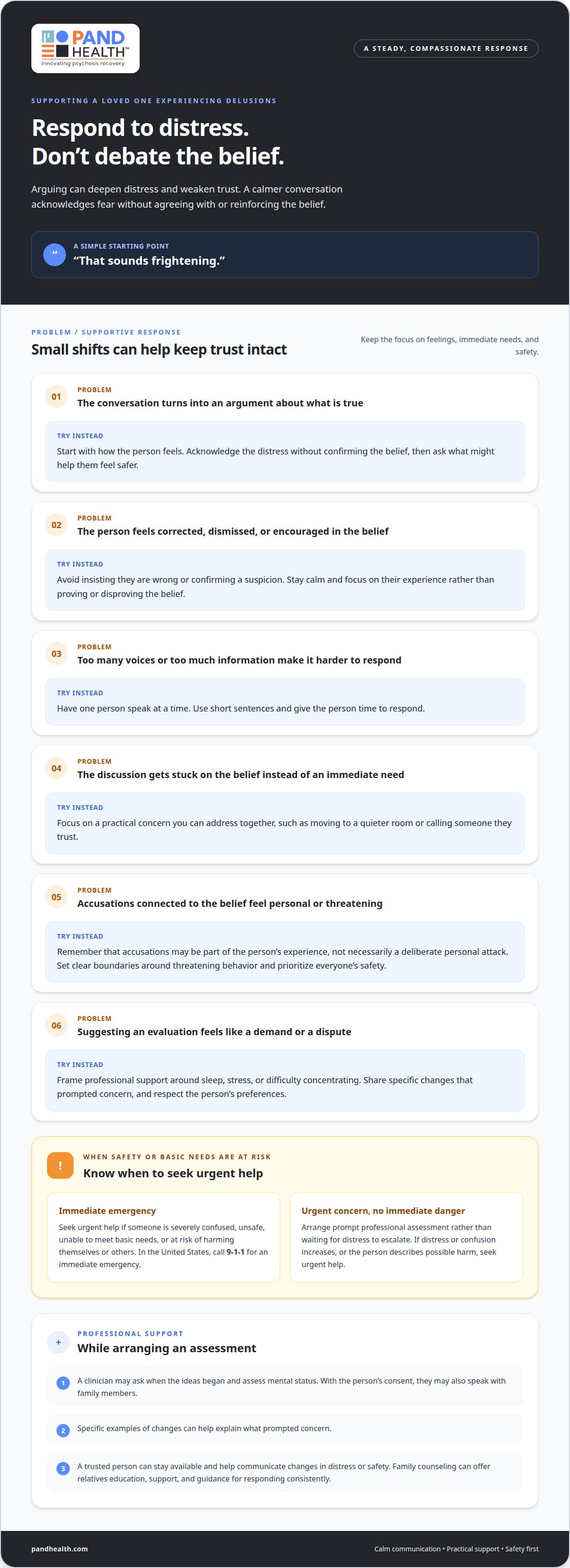
Seek urgent help if someone is severely confused, unsafe, unable to meet basic needs, or at risk of harming themselves or others. In the United States, call 9-1-1 for an immediate emergency. For urgent concerns without immediate danger, arrange prompt professional assessment rather than waiting for distress to escalate. A mental health professional can evaluate the person’s needs and discuss appropriate next steps.
For a non-emergency conversation, start with how the person feels instead of debating whether a belief is true. You might say, “That sounds frightening,” then ask what would help them feel safer. This acknowledges distress without confirming the belief or pretending to share it. If someone believes a neighbor is watching them, arguing may increase tension and weaken trust.
Keep communication steady and simple. Have one person speak at a time, use short sentences, and allow the person time to respond. Focus on practical concerns you can address together, such as moving to a quieter room or calling someone they trust. Avoid confirming a suspicion or insisting the person is wrong. A calm, specific offer can keep the conversation focused on immediate needs.
Delusions can contribute to suspicion, isolation, and strained relationships, so accusations may feel painful to relatives. Try to remember that accusations connected to the belief are part of the person’s experience, not necessarily a deliberate personal attack. Set clear boundaries around threatening behavior and prioritize everyone’s safety. If the person becomes increasingly distressed or confused, or describes possible harm, seek urgent help rather than continuing the discussion alone.
When encouraging an evaluation, frame it as support rather than a demand. You could suggest speaking with a professional about sleep, stress, or difficulty concentrating, without turning the conversation into a dispute over the belief. A clinician may ask when the ideas began, assess mental status, and, with the person’s consent, speak with family members. Specific examples of changes can help explain what prompted concern.
While waiting for an appointment, a trusted person can stay available and help communicate changes in distress or safety. Family counseling can offer relatives education, support, and guidance for responding consistently. In the United States, 9-1-1 is appropriate for an immediate emergency; otherwise, contact a mental health professional for timely assessment. If your loved one is willing, offer to help arrange the appointment or accompany them, while respecting their preferences and keeping safety in view.
Medication and cognitive behavioral therapy
Treatment may combine prescribed antipsychotic medication with Cognitive Behavioral Therapy for Psychosis (CBTp). These approaches address different aspects of a person’s needs. Medication can reduce psychotic symptoms, while therapy can help someone notice thought patterns and develop coping skills. A psychiatrist or psychologist considers symptoms, daily functioning, and treatment goals when planning care. For example, a plan may address both distressing beliefs and difficulty maintaining everyday routines.
Antipsychotic medication may help stabilize mood, reduce psychotic symptoms, and prevent future delusional episodes. Taking medication as prescribed is part of the treatment plan. If someone forgets doses or feels uncertain about continuing, they can raise those concerns with the prescriber rather than changing the regimen alone. The clinician can discuss what makes the plan difficult and review the person’s experience. Open communication helps the care team make informed decisions.
CBTp can help a person recognize a delusional thought before acting on it. A therapist may help them consider evidence, explore alternative explanations, and identify the emotions connected to the belief. For example, if a delayed letter prompts intense worry, therapy can help the person pause and examine what they know before deciding what to do. The aim is to build coping and reality-testing skills without ridicule or confrontation.
Recognizing early changes can also inform care. Someone might notice that thoughts become harder to manage during stress or that concentration shifts before symptoms intensify. Describing these patterns in therapy can help the person and clinician discuss suitable support. For people learning how to manage delusional thinking, this awareness can create a clearer opportunity to seek help before acting on a distressing belief.
Diagnosis guides treatment choices. A psychiatrist or psychologist assesses the beliefs, their context, the evidence involved, and their effect on daily functioning. The clinician may also consider when symptoms began and whether another condition better explains them. Bloodwork or imaging can help rule out other causes. A single grandiose belief, for instance, does not by itself establish schizophrenia or a personality disorder; professionals assess the overall pattern.
Medication adherence is a clinical concern, not a test of character. A prescriber can ask whether medication is being taken as directed, what changes the person notices, and what concerns affect the routine. Those observations help guide follow-up. Knowing how to manage delusional thinking also means raising treatment questions with the care team, so medication and psychological support can be reviewed together as needs change.
Possible causes and risk factors
Delusional thinking can arise from several interacting influences rather than one simple cause. Understanding these influences helps explain why similar beliefs can have different meanings for different people.
Potential Causes of Delusions
Delusions may occur with delusional disorder, schizophrenia, or bipolar disorder during manic or depressed periods. They can also develop as a person tries to make sense of confusing experiences, including hallucinations. For example, a frightening perception might lead someone to form a persecutory belief that others intend harm. That explanation can feel coherent to the person, even when outside evidence does not support it.
Biological factors, psychological vulnerabilities, and life stressors may interact. Substance use or misuse, including cannabis use, has been linked to a higher likelihood of psychotic symptoms. This connection does not establish the cause of an individual’s symptoms, but it makes substance history relevant to a professional assessment. Trauma or abuse may also contribute to delusions of grandeur for some people.
Risk Factors for Delusional Thinking
Risk factors are circumstances or characteristics associated with a greater likelihood of delusional thinking, not proof that someone will develop it. Genetics may contribute; people with family members who have delusional disorders or schizophrenia have a higher risk. Family history is useful clinical context, not a diagnosis or a prediction of what will happen.
Social isolation and low self-esteem may also contribute. Significant hearing loss or visual impairment can make it harder to interpret interactions, while language barriers may leave immigrants isolated. Seniors may also face risks related to isolation. These examples show why a professional needs to consider a person’s environment and access to connection, not just the content of their beliefs.
Other possible contributors include substance misuse and intense envy. Stress can intensify delusions, so changes during conflict or major life strain may be relevant to an assessment. A persecutory belief, for instance, may become more distressing when someone feels alone or under pressure. These patterns can help clinicians understand timing and context, but they do not establish a single cause.
Because risk factors can overlap, one factor rarely explains the whole picture. A clinician considers mental illness, substance use, stress, unusual perceptions, family history, and social circumstances together. For example, a family history of schizophrenia alongside recent cannabis use and growing isolation calls for careful assessment, not assumptions. This broader view helps distinguish contributing influences from symptoms and supports a more appropriate care plan.
Seeking professional mental health care
A professional assessment can clarify whether unusual thoughts reflect psychosis, another mental illness, or a different concern. A psychiatrist or psychologist considers the beliefs, their context, and their effects on daily life. For example, a clinician may explore whether suspicion is disrupting relationships, work, sleep, or self-care. This broader picture supports treatment decisions rather than relying on one statement or behavior.
An assessment often begins with a conversation about when the thoughts started and how they have changed. A physician may conduct a mental status examination and ask about mood, concentration, sleep, and functioning. With the person’s consent, family members can describe changes, such as reduced social contact or increasing distress. Cultural context also matters, because beliefs should be understood within the person’s background.
Medical evaluation can help rule out other explanations. Bloodwork or imaging may help identify causes beyond a primary mental health condition. The clinician may also ask about substance use, medications, stress, and unusual sensory experiences. These details provide context for understanding symptoms, but they do not establish a diagnosis by themselves.
Professional care can give individuals and families information about symptoms, treatment options, and communication. For families learning how to manage delusional thinking, a clinician can help identify supportive responses that respect the person’s experience without reinforcing a belief. Group therapy may also help someone recognize patterns by hearing others describe similar experiences and finding words for their own thoughts.
Seek immediate help if someone is severely distressed or confused, cannot meet basic needs, feels threatened, or may harm themselves or others. These changes call for urgent attention, not a routine appointment. In the United States, call 9-1-1 for an immediate emergency. If there is no immediate danger, arranging a prompt assessment can clarify concerns and guide next steps.
Preparing a clear account can make an evaluation more useful. Note when the thoughts began, what changes others have noticed, and whether stress or sleep seems connected. Include relevant medication or substance-use information and examples of changes in relationships or daily tasks. Knowing how to manage delusional thinking includes understanding which details can help a professional assess the situation accurately.
Care is most useful when concerns can be discussed without shame or pressure. A serious mental illness diagnosis is not a personal failure, and asking for help or accommodations is appropriate. If a loved one feels unsure, offer to attend an appointment or help describe specific changes. A calm, practical offer can make the first conversation easier.
Pand Health
Pand Health can help individuals and families take a professional next step when delusional thoughts affect daily life, relationships, or a sense of stability. An evaluation for thought disorders and autism can help clarify concerns, while family psychoeducation offers relatives guidance for responding with understanding and consistency.
Depending on a person’s needs, psychological and social rehabilitation or social skills training can support everyday functioning and connection with others. These services supplement existing care teams and do not replace them. They are not a substitute for emergency help when someone is in immediate danger.
If you’re ready to discuss support for yourself or a loved one, contact Pand Health.
Take the Next Step Toward Support
Learning how to manage delusional thinking can begin with a conversation focused on the person’s needs, priorities, and daily life. You do not need every answer before seeking professional guidance. An assessment can help clarify concerns and shape a path forward that respects the individual and the people who support them.
Pand Health offers evaluation for thought disorders and autism, along with social skills training and psychological and social rehabilitation in Los Angeles. These services can support assessment, connection, and everyday functioning alongside a person’s broader care team. To discuss the next step, call Pand Health and share what has been concerning you.
Contact Pand Health for support and take a considered step toward care. With the right professional guidance, you and your loved one can approach what comes next with greater clarity.
Frequently Asked Questions
What causes delusions?
Delusions can arise from mental health conditions, substance-related psychotic symptoms, and interactions among biological, psychological, and life factors. For example, a person may develop a belief to explain a confusing or frightening experience. Family history, isolation, and stress can also matter. A professional considers the timing of symptoms, the person’s health and circumstances, and whether the belief affects everyday functioning rather than assuming one cause.
Can someone have delusions and still function in daily life?
Yes. A person with a circumscribed delusion may continue managing parts of daily life that the belief does not affect. Someone might maintain work routines yet avoid a particular neighbor because of a persecutory belief. Functioning can vary across relationships, self-care, and responsibilities, so stability in one area does not rule out significant distress elsewhere. A professional assessment considers both the belief and its practical effects.
How should I respond if a loved one expresses delusional beliefs?
Respond to the emotion and immediate concern without confirming the belief or turning the conversation into a debate. If your loved one says a coworker is plotting against them, you might say, “I can see this feels frightening. What would help you feel safer right now?” Keep your voice calm, use clear language, and allow time to answer. If risk or distress rises, prioritize safety and seek urgent support.
What treatment approaches are most effective for delusions?
Care is tailored to the person’s symptoms and may combine prescribed antipsychotic medication with Cognitive Behavioral Therapy for Psychosis. Therapy can help someone notice changes in thoughts, consider evidence, and strengthen coping responses. Clinicians may also include education, counseling, and stress-management support. The treatment plan should address practical goals, such as reducing distress during conversations or maintaining daily routines, and be reviewed as the person’s needs change.
What’s the difference between a delusion and a strongly held belief?
A strong belief is not automatically a delusion. Professionals consider how firmly it is held, whether evidence supports it, its cultural context, and its effect on the person’s functioning. For instance, a belief shared within a cultural or religious community should not be labeled a delusion simply because it is unfamiliar to someone else. Assessment looks at the whole context, not just whether family members agree.
What is delusional thinking, and how is it different from strongly held beliefs?
Delusional thinking involves a fixed belief that feels real to the person and persists despite relevant evidence or alternative explanations. A strongly held belief may remain open to discussion or fit the person’s cultural context. For example, someone who revises an interpretation after learning new facts differs from someone whose conviction remains unchanged. Clinicians assess conviction, context, evidence, and impact rather than relying on a label alone.
What mental health conditions, medications, or substances can cause delusions?
Delusions may occur with delusional disorder, schizophrenia, or bipolar disorder, including during manic or depressed periods. Cannabis use has been linked to a higher likelihood of psychotic symptoms. Medication history is also relevant during assessment, especially if unusual thoughts begin after a treatment change. Do not stop or alter prescribed medication without medical guidance; describe the timing and changes to the prescribing clinician.
What should a person do to seek professional help for delusional thinking?
Arrange an assessment with a mental health professional and describe concrete changes, such as when the thoughts began, how they affect sleep or relationships, and whether daily tasks have become difficult. A trusted family member can help share observations with the person’s consent. If someone is in immediate danger or may harm themselves or another person, call 9-1-1 in the United States rather than waiting for a routine appointment.
Disclaimer
This article is for information and educational purposes only, and can NEVER replace a proper medical evaluation. If you or a loved one may be suffering from psychosis or the prodomal symptoms of psychosis, get evaluated by a professional as soon as possible. Early diagnosis and treatment can be life-saving.