
Cannabis-induced psychosis: how long symptoms may last
Fewer than 0.5% of people who use cannabis experience psychosis severe enough to require emergency treatment. Symptoms may ease within several hours to a few days after the effects of cannabis subside, but they can last for several days or weeks. The long-term effects of cannabis-induced psychosis can also vary, so a frightening episode deserves careful attention even when symptoms begin to improve.
It’s understandable to want a clear timeline and to know what this experience could mean for someone’s future mental health. This article explains how often cannabis-induced psychosis occurs, how symptoms may change over time, and what research says about recovery and longer-term risks. You’ll also learn why persistent or recurring symptoms call for clinical assessment, and how early support and stopping cannabis can be part of recovery.
Key Takeaways
- Symptoms may ease within hours or days, but some episodes persist for weeks. The timeline and symptom pattern help guide clinical assessment.
- A close link between cannabis use and symptom onset can help clinicians distinguish cannabis-induced psychosis from a primary psychotic disorder.
- Ongoing cannabis use may destabilize existing serious mental illness, while reducing or stopping use is often associated with improvement.
- Frequent use, high-potency cannabis, and younger age at first use are factors associated with greater psychosis risk.
- Recovery may include stopping cannabis, monitoring symptoms, and addressing co-occurring mental health needs.
How Common Is Cannabis‑Induced Psychosis - and How Long Does It Last?
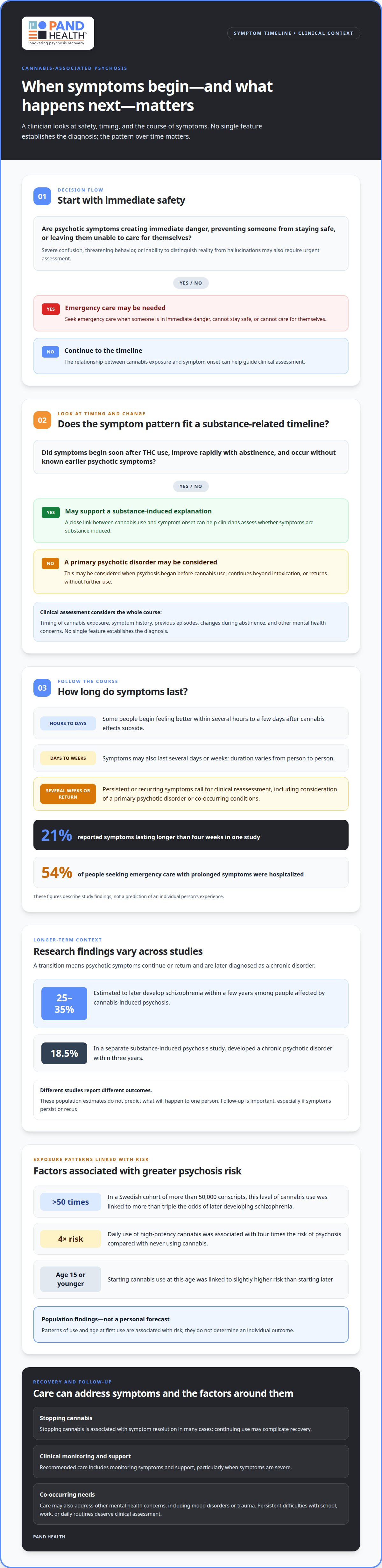
Fewer than 0.5% of cannabis users experience psychosis severe enough to require emergency treatment. A clear timeline between cannabis use and symptom onset can help clinicians assess whether symptoms are substance-induced or point to another disorder.
Seek emergency care if psychosis creates immediate danger, prevents someone from staying safe, or leaves them unable to care for themselves. Severe confusion, threatening behavior, or an inability to distinguish reality from hallucinations may require urgent assessment.
Transition to Chronic Psychotic Disorders
A transition occurs when psychotic symptoms continue or return and are later diagnosed as a chronic disorder, such as schizophrenia. Estimates vary across populations: about 25-35% of people affected by cannabis-induced psychosis later develop schizophrenia within a few years, while one substance-induced psychosis study found 18.5% developed a chronic psychotic disorder within three years. These outcomes make follow-up important, especially when symptoms persist or recur.
Factors Linked to Long-Term Effects
Patterns of cannabis exposure and age at first use can influence psychosis risk. A Swedish cohort of more than 50,000 conscripts found that people who had used cannabis more than 50 times had more than triple the odds of later developing schizophrenia. Daily use of high-potency cannabis was associated with four times the risk of psychosis compared with never using cannabis. Starting at age 15 or younger was also linked to slightly higher risk than starting later. These are population findings, not a prediction for one person.
Clinicians distinguish cannabis-induced psychosis from a primary psychotic disorder by examining timing, symptom history, and changes after cannabis use stops. Symptoms that begin soon after THC use, improve rapidly with abstinence, and occur without known earlier psychotic symptoms may support a substance-induced explanation. A primary disorder may be considered when psychosis began before cannabis use, continues beyond intoxication, or returns without further use. No single feature establishes the diagnosis; the pattern over time matters.
Research on dopamine-related brain activity offers one possible clue, not a diagnostic test. In a Canadian cohort of 61 participants, 25 had cannabis use disorder, with or without first-episode schizophrenia. Those with cannabis use disorder showed elevated neuromelanin-sensitive MRI signals in a dopamine-rich brain area associated with psychosis. The study did not establish that cannabis caused these changes, and its small group cannot settle how cannabis use relates to psychosis.
When symptoms persist for several weeks or more, clinicians typically reassess for a primary psychotic disorder or co-occurring conditions. They consider the timing of cannabis exposure, previous episodes, the course of symptoms during abstinence, and other mental health concerns. For families concerned about the long-term effects of cannabis-induced psychosis, reassessment can clarify what support and follow-up may be needed.
Duration and recovery from cannabis-induced psychotic symptoms
Cannabis-induced psychosis refers to psychotic symptoms associated with cannabis use, particularly THC exposure. Symptoms may resolve quickly, persist for weeks, or require further assessment if they continue.
Psychosis can affect how someone interprets reality, and mania may also occur alongside psychotic symptoms. A clinician considers symptom timing, cannabis exposure, and changes during abstinence rather than relying on one feature alone. The distinction matters: an episode may be substance-induced, or it may indicate an ongoing mental illness that needs continued care.
Duration varies. Some people begin feeling better within several hours to a few days after cannabis effects subside; symptoms may also last several days or weeks. In one study, 21% reported symptoms lasting longer than four weeks. Among people seeking emergency care, 54% of those with prolonged symptoms were hospitalized. Persistence calls for close clinical attention.
Lasting Cognitive and Functional Problems
Lasting cognitive or functional problems are difficulties with thinking or everyday activities that continue after the acute episode. Persistent cannabis use has been associated with neuropsychological decline from childhood to midlife, and stopping cannabis does not fully restore cognitive function in adolescents. These findings do not establish that psychosis itself caused lasting impairment. Ongoing difficulties with school, work, or daily routines deserve clinical assessment.
Recommended care includes stopping cannabis, clinical monitoring, and support, particularly when symptoms are severe. Treatment may also address co-occurring conditions, including mood disorders or trauma. A study followed 37 participants for one year, underscoring the value of observing recovery over time. If symptoms persist or return, reassessment can help identify whether another mental health condition needs attention.
Stopping cannabis is associated with symptom resolution in many cases, and prompt cessation can reduce the risk of progression to chronic illness. Continuing to use may complicate recovery, so abstinence is an important part of care. For persistent or severe symptoms, contact Pand Health about psychosis treatment and clinical support.
Relapse After Cannabis-Induced Psychosis
Relapse means psychotic symptoms return after improving or resolving. Its likelihood varies with cannabis use, recurring symptoms, and other mental health vulnerabilities, so one episode cannot predict an individual’s course. Recurrent symptoms or multiple risk factors call for long-term follow-up. Tracking symptom changes during abstinence gives clinicians useful context for assessing recovery and future support needs.
Cannabis-related psychotic symptoms may persist for several days or weeks, particularly with heavy use, high-potency products, or underlying psychiatric vulnerabilities. Cannabis-induced psychosis is often reversible, especially when recognized and treated early.
Effects of cannabis on existing serious mental illness
For someone living with schizophrenia, bipolar disorder, or another serious mental illness, cannabis can complicate symptom stability. Ongoing use, particularly of high-potency cannabis, can destabilize symptoms, increase relapse risk, and impair functioning. Changes may include worsening psychosis, mood instability, or greater difficulty managing work and daily responsibilities. Recognizing this pattern helps families and clinicians discuss cannabis as part of mental health care, rather than as a separate concern.
The connection matters during acute episodes, too. Among people seeking emergency care for cannabis-associated psychotic symptoms, hospitalization occurred in 76% of those with a history of psychosis. This figure describes people who sought emergency care, not everyone with a mental health diagnosis who uses cannabis. It does show why a previous psychotic episode is important clinical context when symptoms intensify after use.
THC exposure may affect an existing illness differently from one person to another. High-potency cannabis is a particular concern because ongoing use can contribute to symptom destabilization and relapse. For example, someone with schizophrenia may notice renewed paranoia or unusual beliefs after using cannabis, while someone with bipolar disorder may experience worsening mood symptoms. These examples are reasons to discuss changes with a medical professional, not a way to diagnose the cause on their own.
Reducing or stopping cannabis often leads to clinical improvement in people with schizophrenia, bipolar disorder, or another serious mental illness. When a person reports negative health effects connected with cannabis, physicians should encourage reduction or abstinence and refer them to addiction treatment when indicated. Addressing cannabis use can therefore be one part of mental health care, alongside attention to the person’s symptoms and treatment needs.
A practical clinical discussion covers the person’s cannabis use and the changes they have noticed. Product type, potency, frequency, and timing help describe the possible link between use and symptoms. For instance, a clinician can compare when cannabis was used with when paranoia, mood changes, or difficulties functioning appeared. This history supports a fuller assessment without assuming cannabis is the only cause of worsening symptoms.
Families can share observations that clarify day-to-day changes, such as increased withdrawal, disrupted routines, or renewed distress after cannabis use. These details can help a clinical team consider both substance use and underlying mental illness. If symptoms worsen, recur, or interfere with functioning, prompt medical assessment can guide next steps. The aim is to address immediate symptoms while supporting stability and recovery over time.
Limits of research on cannabis and psychosis causality
Research can identify a link between cannabis use and psychosis without proving that one directly causes the other. Psychotic illness is multifactorial, meaning several influences may contribute as symptoms develop. Cannabis may be one factor among them, alongside other vulnerabilities. This distinction matters when interpreting a study: an association across a group cannot, by itself, explain why one person became unwell.
The National Academies of Sciences, Engineering, and Medicine assessed more than 1,000 studies about marijuana’s health effects. That broad review reflects substantial investigation, but study findings still vary in design, population, and the questions researchers ask. Some examine cannabis exposure and later diagnoses; others assess symptoms or brain activity. Their results can illuminate patterns without giving a single answer for every person.
One longitudinal study included 800 European participants who received fMRI scans at ages 14 and 19. The findings did not establish that cannabis causes psychosis. Brain scans can show changes in activity or structure, but they cannot alone prove that cannabis produced those changes or that a participant will develop a psychotic disorder. Larger longitudinal studies could help clarify how cannabis use changes the dopamine system in psychosis over time.
Timing is another key issue. Researchers need to understand whether cannabis use preceded symptoms, followed early mental health changes, or occurred alongside other influences. For example, if frequent use and emerging symptoms appear together, that pattern is relevant but does not establish which came first. Repeated observations over time can help distinguish sequence from coincidence, though they may not isolate cannabis from every other factor.
Studies describe groups, while clinical decisions concern individuals. A population-level association may signal that an exposure deserves attention, but it cannot predict one person’s outcome. Clinicians consider the person’s symptom history, cannabis use, other health factors, and changes over time. This broader assessment helps avoid treating one research finding as a diagnosis or assuming every cannabis-related episode follows the same course.
When weighing claims about cannabis and psychosis, examine what each study actually measured. A study of diagnosis rates does not necessarily explain biological mechanisms, and a brain-imaging result does not prove a future illness. Check whether researchers followed participants over time and whether their conclusions distinguish association from cause. The National Academies’ review and the European imaging study illustrate how evidence can inform care while leaving important questions open.
What factors increase the risk of long-term effects after cannabis-induced psychosis?
Risk reflects more than one feature of cannabis use or a psychotic episode. Heavy use, prolonged exposure, and younger age at first exposure are associated with a higher risk of a first psychosis episode. After an episode, ongoing cannabis use and recurring symptoms also matter. These factors help clinicians identify who may need closer follow-up, but they cannot predict one person’s future with certainty.
Frequency is one part of the pattern. Daily cannabis use has been associated with a greater likelihood of psychosis than never using cannabis. Frequent exposure can make it harder to distinguish a short-lived reaction from symptoms that continue or recur. For example, a clinical history tracking cannabis use alongside changes in sleep, thinking, or behavior can help clarify how symptoms evolve over time.
Potency matters, too. High-potency cannabis has been linked with increased psychosis risk, and heavy exposure may raise concern after an episode. Product type, THC potency, amount, and frequency give clinicians useful context. A person who reports recurring symptoms while continuing to use high-THC cannabis presents a different pattern from someone whose symptoms resolved after stopping. That distinction can inform monitoring and treatment planning.
Age at first exposure is another relevant factor. Beginning cannabis use at a younger age has been associated with greater psychosis risk than starting later. This makes the onset of use important background for assessment, especially when symptoms begin during adolescence or young adulthood. Age alone does not establish why psychosis occurred, but it can help frame a person’s exposure history.
Symptoms that return, persist, or worsen deserve attention even after cannabis use stops. Recurring symptoms and multiple risk factors are reasons for long-term follow-up. Clinicians can assess whether symptoms occur during abstinence, whether functioning has changed, and whether another mental health condition may be present. These observations help distinguish ongoing recovery needs from a continuing or emerging psychotic disorder.
Early identification and promptly stopping THC use can reduce the risk of progression to chronic illness. A useful clinical discussion covers when cannabis use began, how often it occurs, the product’s potency, and how symptoms have changed. Families can support the assessment by sharing clear observations about recurring symptoms or daily functioning. Request a clinical evaluation to discuss psychosis symptoms and appropriate follow-up.
Pand Health: Cannabis induced psychosis rehab
Pand Health provides cannabis-induced psychosis rehabilitation for people who need focused support after cannabis-related psychotic symptoms. If symptoms persist, return, or disrupt daily functioning, intensive psychosis treatment can address clinical needs during recovery.
Care may also include psychological and social rehabilitation to support day-to-day functioning, alongside evaluation for thought disorders and autism when diagnostic questions remain. These services can help clarify support needs and address challenges beyond the acute episode, while keeping treatment focused on the person’s mental health and recovery.
If you’re considering support for cannabis-related psychosis, contact Pand Health.
Take the Next Step Toward Steadier Support
Understanding the long-term effects of cannabis-induced psychosis can help you make informed decisions, but the next step is to focus on the person’s current needs. Persistent changes in thinking, relationships, or everyday responsibilities deserve thoughtful attention. Support can address symptoms as well as the skills and routines that help someone reconnect with daily life.
Pand Health offers social skills training and psychological and social rehabilitation to support these areas. Evaluation for thought disorders and autism can also help clarify questions about diagnosis and appropriate care. Each person’s situation is different, and a careful clinical conversation can help identify the support that best fits their needs.
Taking that first step can feel difficult, especially after a frightening experience. You don’t have to have every answer before seeking guidance. Contact Pand Health for support and discuss a path forward with care. Recovery can move one thoughtful step at a time.
Frequently Asked Questions
Can pot use cause schizophrenia?
Cannabis use is linked with a higher risk of psychosis and later schizophrenia, but this does not mean everyone who uses cannabis will develop schizophrenia. Psychotic illness has multiple contributing factors, including cannabis exposure and individual vulnerability. A history of psychosis, recurring symptoms, or continued use can make clinical follow-up especially important. The link describes increased risk across groups, not a certain outcome for an individual.
What is cannabis-induced psychosis and how is it diagnosed?
Cannabis-induced psychosis is a psychotic episode associated with cannabis use, involving symptoms such as hallucinations or delusional beliefs. Diagnosis involves assessing when symptoms began in relation to cannabis use, whether they change after stopping, and whether psychosis occurred previously. Clinicians also consider other mental health conditions and substances. For example, symptoms that began before cannabis use may point to a different explanation that needs assessment.
How long do psychotic symptoms last after cannabis use stops?
Symptoms may improve after the effects of cannabis wear off, but the course varies from person to person. Some people feel better within several hours to a few days; others experience symptoms for days or weeks. Symptoms that continue for several weeks or return after stopping warrant clinical reassessment. A record of symptom changes and cannabis use can help describe the timeline during an appointment.
What percentage of people with cannabis-induced psychosis later develop schizophrenia or another psychotic disorder?
Estimates vary by study and outcome measured. About 25-35% of people affected by cannabis-induced psychosis later develop schizophrenia within a few years. In a study of people with substance-induced psychosis, 18.5% developed a chronic psychotic disorder within three years. These figures describe different groups and outcomes, so they should not be combined or treated as an individual prediction.
How do high-THC cannabis products affect psychosis risk and outcomes?
High-THC cannabis is associated with greater psychosis risk than never using cannabis. One set of findings associated high-potency use with almost twice the odds of psychosis, while daily use of high-potency cannabis was associated with four times the risk. These comparisons describe population-level associations, not a guaranteed effect. After symptoms occur, cannabis potency and frequency are useful details to discuss during clinical assessment.
What is the prognosis for cannabis-induced psychosis in adolescents and young adults?
Prognosis varies, and a young person’s symptoms should be assessed and followed over time. Cannabis-induced psychosis is most common in young adults, but it can occur across the lifespan. Starting cannabis at age 15 or younger has been linked with slightly higher psychosis risk than starting later. Persistent or recurring symptoms, changes in functioning, and continued cannabis use are important concerns to discuss with a clinician.
Disclaimer
This article is for information and educational purposes only, and can NEVER replace a proper medical evaluation. If you or a loved one may be suffering from psychosis or the prodomal symptoms of psychosis, get evaluated by a professional as soon as possible. Early diagnosis and treatment can be life-saving.