
When is Hallucinating an Emergency? Los Angeles Guide
If you’re asking when is hallucinating an emergency or crisis in los angeles, focus first on whether the person can stay safe and whether they need urgent medical attention. A hallucination can be frightening without automatically requiring an emergency response. The circumstances around it matter: the person’s behavior, physical condition, and immediate risk.
If there’s immediate danger, active violence, or a life-threatening injury, call 911. When there isn’t an immediate threat of violence with a weapon, Los Angeles County’s Mental Health Help Line at (800) 854-7771 can connect people with crisis support and mobile response. You can also call or text 988 for crisis counseling.
This guide covers warning signs that call for emergency help, ways to communicate calmly while seeking support, and how to choose a Los Angeles crisis resource. It also explains what may come next, including prompt psychosis evaluation and ongoing outpatient care after acute risk is addressed.
Key Takeaways
- Hallucinations can have different causes, and the experience alone doesn’t establish a diagnosis.
- To decide when is hallucinating an emergency or crisis in los angeles, focus on immediate safety, medical needs, and the level of risk.
- Respond calmly, give the person space, and share clear observations when seeking help.
- Choose a Los Angeles crisis resource based on the urgency of the situation and the kind of response needed.
- After immediate danger is addressed, a psychosis evaluation and ongoing outpatient care may help guide the next steps.
When do hallucinations become an emergency in Los Angeles?
Hearing that someone is hallucinating can feel alarming, especially if you’re unsure what they’re experiencing or how to respond. Hallucinations are perceptions, such as hearing a voice or seeing something, that occur without an external source. They are a symptom, not a diagnosis, and don’t by themselves show whether someone is in immediate danger.
To judge urgency, focus on the person’s safety, physical condition, level of distress, and ability to meet basic needs. Could they act on a command to hurt themselves or someone else? Are they severely confused, injured, or unable to care for themselves safely? These details matter more than the presence of a hallucination alone. A general overview of how urgent psychiatric conditions are handled is available in Emergency Psychiatry.
Signs that call for immediate emergency help
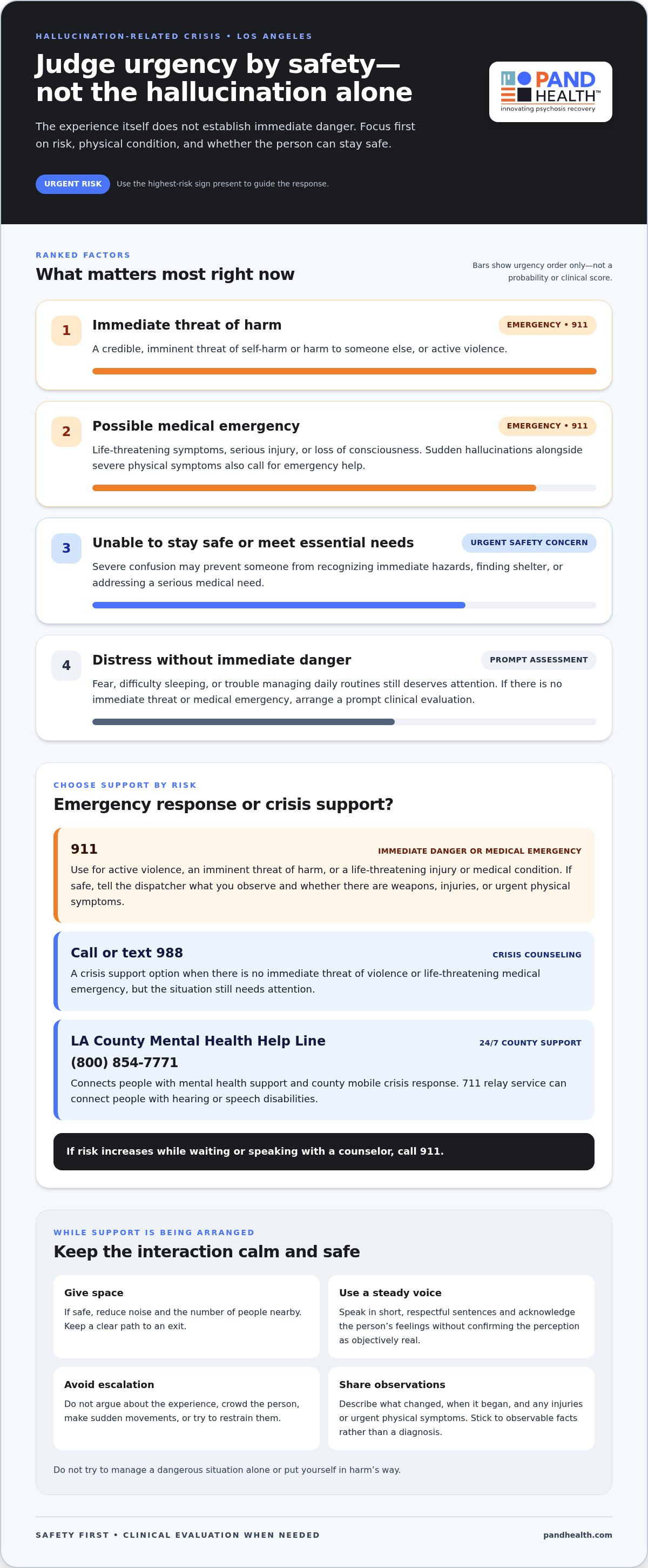
Hallucinations require emergency action when there is immediate danger or a suspected medical emergency. Call 911 if someone appears likely to harm themselves or another person, is actively violent, or has a life-threatening injury or medical condition. If you can do so safely, tell the dispatcher what you observe and whether there are weapons, injuries, or urgent physical symptoms.
Severe confusion can also make it impossible for someone to stay safe or respond to essential needs. For example, they may be unable to recognize immediate hazards, find shelter, or address a serious medical need. Don’t try to manage a dangerous situation alone or put yourself in harm’s way.
- There’s a credible, imminent threat of self-harm or harm to another person.
- The person’s confusion prevents them from staying safe or meeting essential needs.
- Hallucinations begin suddenly alongside severe physical symptoms, an injury, or loss of consciousness.
When hallucinations may need prompt assessment, not automatic emergency care
If the person is not in immediate danger and has no signs of a medical emergency, hallucinations may still call for timely professional assessment. They might be frightened, struggling to sleep, or finding it hard to manage daily routines without making an immediate threat. Take that distress seriously. A calm, brief conversation cannot establish the cause or reliably determine what care is needed.
Stay attentive to changes. Ask what would help the person feel safer, listen without arguing about whether the experience is real, and notice whether they can care for themselves and respond to their surroundings. If risk increases or their physical condition changes, seek emergency help. Otherwise, arrange a prompt clinical evaluation. Hallucinations can arise in different psychiatric, substance-related, medication-related, sleep-related, or medical contexts. A qualified clinician can assess possible causes and appropriate care.
If you’re weighing when is hallucinating an emergency or crisis in los angeles, use immediate safety and medical warning signs as your guide, not the symptom alone. The next step depends on the level of risk.
What should you do during a hallucination-related crisis?
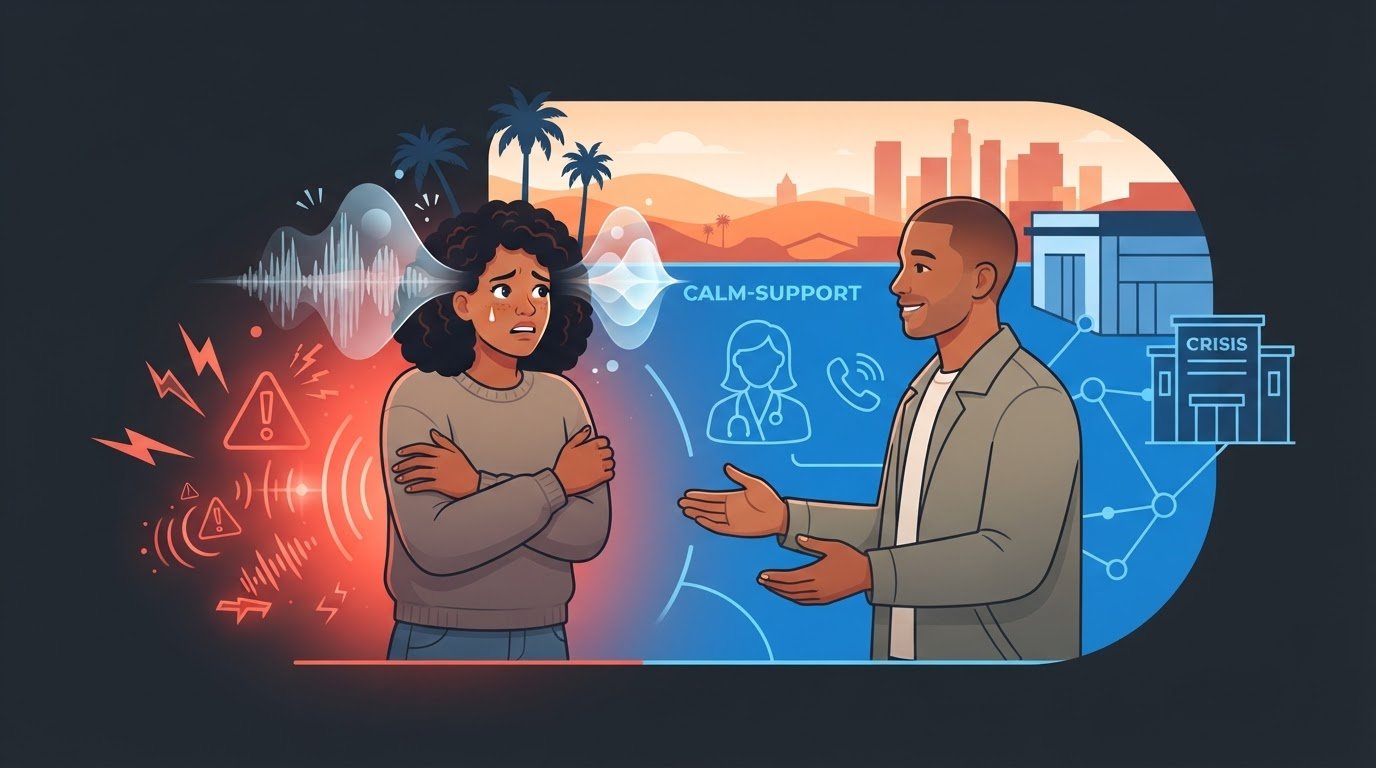
In a frightening moment, it can be hard to decide what to do first. Use these steps to protect safety, reduce pressure, and help responders understand what’s happening. You don’t need to determine the cause of the hallucinations before asking for help.
- Assess immediate danger. Look for an urgent threat to the person or someone nearby, a serious injury, loss of consciousness, or severe physical symptoms. If there’s immediate danger or a medical emergency, call 911. Don’t approach or intervene in a way that puts you at risk.
- Create space. If it’s safe, reduce noise and the number of people nearby. Keep a clear path to an exit, and move hazards out of reach only if you can do so safely. Give the person room and avoid blocking their movement.
- Contact appropriate help. If there’s no immediate threat of violence or life-threatening medical emergency, call or text 988 for crisis support. In Los Angeles County, you can also call the Department of Mental Health Help Line at (800) 854-7771 for mental health support and connection to county mobile crisis response. The county line is available 24/7; 711 relay service can connect people with hearing or speech disabilities.
- Share clear observations. Explain what you’ve seen or heard, what concerns you most, and what help you’re seeking. Stick to observable facts rather than trying to label or diagnose the experience.
911 is for immediate danger or medical emergencies; 988 and the LA County help line offer crisis support when there isn’t an immediate threat, but the situation still deserves attention. These options serve different needs. If the risk changes while you’re waiting or speaking with a counselor, call 911.
How to communicate calmly and support immediate safety
Use a steady voice and short, respectful sentences. You might say, “I can see this is frightening,” or “I’m here with you.” This recognizes the person’s feelings without confirming that what they perceive is objectively real. Avoid arguing about the experience, crowding them, making sudden movements, or trying to restrain them. The MedlinePlus guide to hallucinations also explains when professional medical help may be needed.
What information to share when calling for help
Give the responder the person’s location and a direct description of the immediate concern. Say what changed, when it began, and whether anyone is injured or you’ve noticed urgent physical symptoms. If relevant and safe to share, mention known substance use or medication changes. You don’t need to have every detail. Be honest about what you know and what remains uncertain.
Once immediate safety is being addressed, a professional assessment can help clarify next steps. Pand Health provides psychosis evaluations for people seeking non-emergency clinical assessment.
Which Los Angeles crisis resource fits the level of risk?
Choosing whom to call can feel difficult when someone is distressed. Start with the immediate need: emergency medical or safety response, crisis counseling, or help finding a local mental health response. Hallucinations alone don’t determine which resource is appropriate. Describe what is happening so the responder or counselor can help clarify next steps.
When to call 911, 988, or the LA County help line
Use this comparison to identify a starting point. If the person’s condition changes or danger increases, explain what has changed and seek a more urgent response.
| Resource | When it may fit | What to communicate | Limits to keep in mind |
|---|---|---|---|
| 911 | Immediate danger, active violence, a weapon-related threat, serious injury, or a suspected life-threatening medical emergency. | Give the exact location, describe the danger or medical symptoms, and say whether anyone is injured or a weapon is present. | Use for urgent safety or medical needs. It is not a substitute for ongoing psychiatric assessment or follow-up care. |
| 988 | Mental health, substance use, or suicidal crisis support when there isn’t an immediate threat requiring emergency response. Call or text 988, or use online chat. | Explain what the person is experiencing, what feels unsafe or distressing, and whether there are thoughts or actions involving self-harm. | A crisis counselor can offer support and help consider next steps, but a specific in-person response or outcome isn’t guaranteed. |
| LA County Department of Mental Health Help Line: (800) 854-7771 | County mental health support, resources, referrals, and connection to mobile crisis response when appropriate. The county lists the line as available 24/7. | Share the person’s location, current behavior, safety concerns, and any urgent medical needs. For hearing or speech disabilities, use 711 relay service. | Calling does not guarantee that a mobile team will be dispatched or that a particular service will be available. The response depends on the circumstances. |
The county help line is the dispatch point for its mobile crisis teams, but available resources and dispatch arrangements can vary. The Los Angeles County Mental Health Crisis Resources page and the broader LA County crisis resource hub provide official information about local support. Check those county resources for current guidance.
What to expect from crisis support
A call can help you explain the situation and understand possible next steps, but it can’t guarantee a particular service, response time, or outcome. Be direct about immediate safety concerns. You can ask what local options may be available and what to do if the person’s condition worsens while you’re on the call.
If you’re asking when is hallucinating an emergency or crisis in los angeles, use 911 for immediate danger or suspected medical emergencies. For support when danger isn’t immediate, 988 or the county help line may help you determine an appropriate next step. Neither replaces emergency medical care when it’s urgently needed.
What can cause hallucinations, and when is a clinical evaluation important?
Hallucinations can happen in different contexts, so an evaluation should explore more than what a person sees or hears. Possible factors include psychiatric conditions, substance use, medication effects, sleep disruption, and medical concerns. These are broad possibilities, not conclusions about any one person. The same experience can have different explanations, and more than one factor may be relevant.
A symptom alone can’t identify its cause or establish a diagnosis. A person describing a voice, image, or sensation that others don’t perceive does not automatically have schizophrenia or another specific psychotic disorder. The experience matters, but so do its timing, surrounding circumstances, other symptoms, and effect on daily life.
Why hallucinations need context, not assumptions
Perception can be affected by circumstances such as the transition into or out of sleep. Medication or substance-related factors and physical health concerns may also be relevant. That’s why it’s helpful to avoid labeling the experience before assessment. Notice when it occurs, whether it’s new or recurring, and whether anything else changed, without trying to diagnose the person yourself.
If hallucinations begin suddenly alongside severe physical symptoms, a serious injury, or loss of consciousness, treat the situation as a possible medical emergency and seek emergency help. For other situations, prompt professional assessment can help clarify what support is appropriate. The question of when is hallucinating an emergency or crisis in los angeles depends on immediate safety and medical needs, while clinical evaluation helps address the wider context.
What a timely psychosis evaluation can clarify
A qualified clinician can ask about the person’s symptom history, when the experiences began, how often they occur, and how distressing they feel. They may also explore changes in sleep, daily functioning, relationships, school or work, medications, substance use, and relevant health history. These details help build a fuller picture rather than treating one symptom as the whole story.
Assessment can guide individualized next steps, which may include psychiatric oversight, psychotherapy, family support, or rehabilitation. If a broader diagnosis is being considered, the clinician can explain how different symptoms fit together; psychosis can occur in more than one diagnostic context. For background on one such context, see our schizoaffective disorder treatment guide.
Once immediate danger has been addressed, a prompt psychosis evaluation may help the person and family understand follow-up care. Pand Health provides same- or next-day psychosis evaluation services. A non-emergency evaluation can help clarify clinical needs and possible next steps.
What support can follow a hallucination-related crisis in Los Angeles?
Emergency response and ongoing outpatient treatment address different needs. Emergency services focus on immediate safety, urgent medical concerns, and stabilizing a crisis. Once immediate danger has been addressed, follow-up care can help clarify what the person is experiencing and build support around treatment, daily life, and recovery. The transition may take more than one step, especially after emergency care.
How specialized outpatient psychosis care may support recovery
A psychosis evaluation can be a next step when hallucinations or other concerns need clinical attention but don’t require emergency response. Pand Health provides same- or next-day psychosis evaluation services. An evaluation can help identify treatment needs and guide an appropriate plan, rather than leaving the person and family to make sense of symptoms alone.
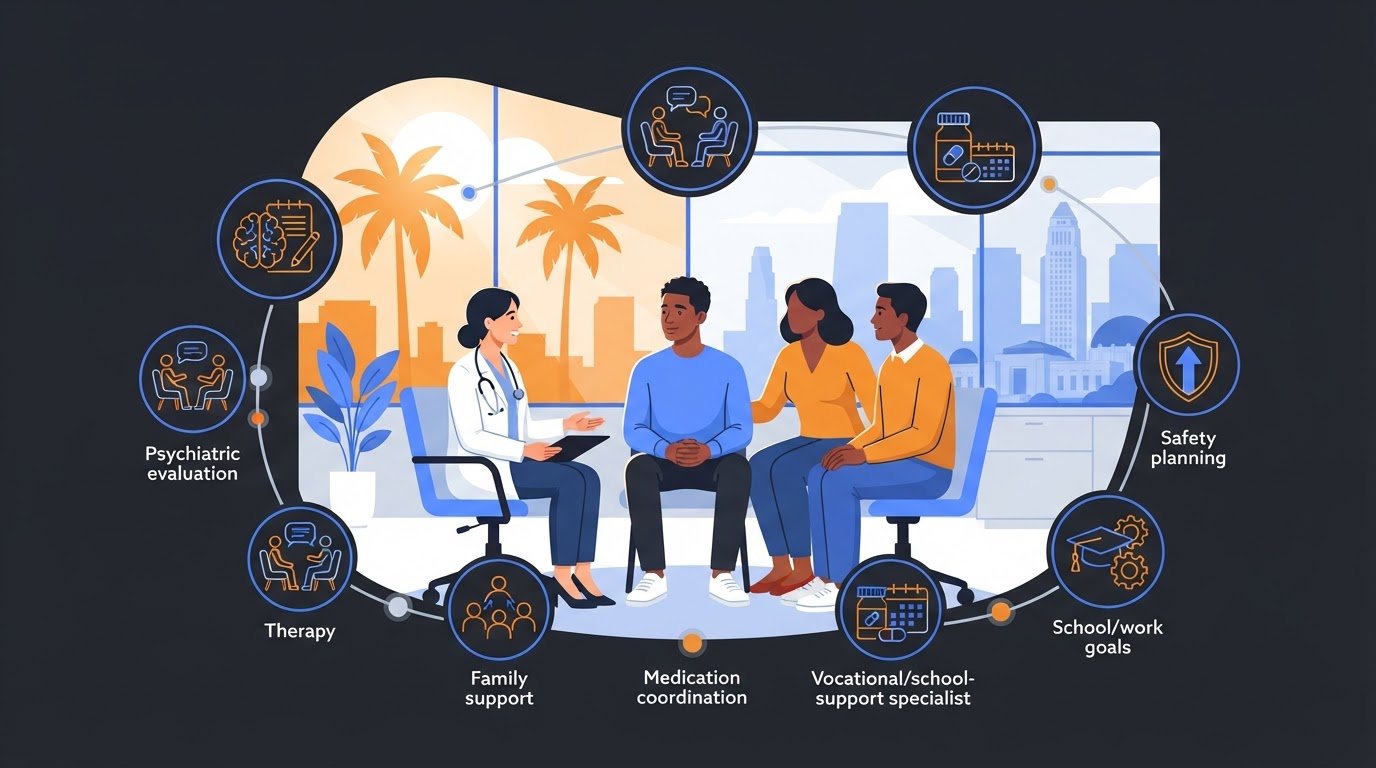
California OnTrack offers teens and adults an augmented Coordinated Specialty Care model based on the NIMH NAVIGATE framework. This outpatient approach brings different forms of support together. Care may include psychiatric oversight, psychotherapy, family support, and rehabilitation focused on social and everyday functioning. Family therapy and psychoeducation can help loved ones understand psychosis and respond in ways that support the person. Social skills training and rehabilitation can support progress toward meaningful routines and goals.
Results from one Pand Health cohort offer context, not a promise. Among 41 patients enrolled between 2022 and 2024, participation in education or employment increased from 6% at enrollment to 40% after three months and 85% after six months. The cohort also recorded a 6% rehospitalization rate after enrollment. These figures describe that group’s experience only. They don’t predict an individual’s progress or guarantee a particular result.
Choosing a next step after immediate safety is addressed
If immediate danger or medical urgency remains, use emergency services first. Outpatient evaluation isn’t a replacement for 911, an emergency department, or other emergency medical care. Once the immediate risk has been addressed, timely follow-up can help the person and family understand the next phase of support and whether specialized psychosis treatment may fit their needs.
For families asking when is hallucinating an emergency or crisis in los angeles, the distinction is important: emergency response addresses acute risk, while outpatient care supports assessment and ongoing recovery after that risk is managed. Pand Health’s psychosis evaluation and recovery-oriented care offer a non-emergency next step, with support guided by clinical needs rather than assumptions based on one symptom.
When is hallucinating an emergency or crisis in Los Angeles? Choosing the next step
After a frightening experience, the path forward doesn’t need to be mapped all at once. A practical first step is to write down what the person wants support with, what has changed in daily life, and what questions remain. This can give a clinician and family a clearer starting point while respecting the person’s voice and pace.
If you’re still wondering when is hallucinating an emergency or crisis in los angeles, seek emergency help if immediate danger or urgent medical symptoms arise. When concerns can be addressed outside an emergency, a professional evaluation can help turn uncertainty into a thoughtful plan for care.
Pand Health provides psychosis evaluation and recovery-oriented support for teens and adults. Contact Pand Health about a psychosis evaluation to discuss a path forward, with care tailored to the person’s needs.
Frequently Asked Questions
Do hallucinations always mean someone has psychosis?
No. Hallucinations can occur in different situations, and the experience alone doesn’t confirm psychosis or any particular diagnosis. For example, someone might notice unusual perceptions around sleep, after a medication change, or alongside a health concern. A clinician considers the pattern, other symptoms, and changes in everyday functioning before determining what the experience may mean and whether treatment is appropriate.
Can hallucinations be caused by a medical problem?
Yes. Some medical conditions, medication effects, or changes in physical health can affect perception. Sudden hallucinations with symptoms such as a serious injury, loss of consciousness, marked confusion, or severe physical illness need urgent attention. Share when the experience began and what else changed, including recent illness or medication changes. Don’t assume a new or unusual experience has a psychiatric cause without a clinical assessment.
Can I call 988 for someone else who is hallucinating?
Yes. You can call or text 988 to seek crisis support for someone else. Explain that you’re calling on their behalf, describe what you’ve observed, and say whether the person is with you or can speak with a counselor. Share any immediate safety concerns clearly. If there’s an immediate threat or urgent medical emergency, call 911 instead of relying on a crisis line to provide emergency response.
What should I say to someone who is hearing or seeing things?
Try a simple, supportive question such as, “That sounds upsetting. What would help you feel safer right now?” You can also ask whether they want you to stay nearby or call someone they trust. Keep your words focused on their feelings and needs rather than debating what they perceive. If they don’t want to talk, remain respectful, keep your own safety in mind, and seek support if risk increases.
Can cannabis or another substance trigger hallucinations?
Yes. Cannabis and other substances may trigger or worsen hallucinations for some people, though timing alone can’t prove what caused them. If you seek clinical advice, share what the person used, approximately when, and whether other substances or medications may be involved. Avoid guessing or withholding relevant details out of embarrassment. If substance use is followed by severe confusion, a dangerous reaction, or urgent physical symptoms, seek emergency medical help.
Should someone go to the emergency room for hallucinations?
Not every hallucination requires an emergency-room visit, but immediate danger or urgent physical symptoms do require emergency help. If you’re unsure when is hallucinating an emergency or crisis in los angeles, focus on whether the person can stay safe and whether they may need urgent medical attention. If the situation isn’t immediately dangerous, arrange timely clinical assessment. Don’t let uncertainty about the cause delay emergency care when someone is seriously unwell.
Can hallucinations happen while falling asleep or waking up?
Yes. Some people briefly hear or see things as they’re falling asleep or waking. These experiences are often described as sleep-transition hallucinations, and the timing is useful information to share with a clinician. Note whether they happen only near sleep or also during the day, and whether they’re becoming distressing or disrupting rest. A clinician can assess the full pattern rather than treating one feature as a diagnosis.
Disclaimer
This article is for information and educational purposes only, and can NEVER replace a proper medical evaluation. If you or a loved one may be suffering from psychosis or the prodomal symptoms of psychosis, get evaluated by a professional as soon as possible. Early diagnosis and treatment can be life-saving.