


Step-Down Psychosis Care in Los Angeles After Hospitalization
Leaving a psychiatric hospital doesn’t always mean a person is ready to manage psychosis without structured support. Step-down psychosis care in Los Angeles can help bridge the transition to residential treatment, with continued clinical follow-up, medication monitoring, and practical coordination. The right next level of care depends on the person’s needs and the support required after discharge.
It’s understandable to want a clear plan when hospitalization ends, especially when symptoms, medications, and daily routines are still changing. A supported transition can make the next steps more manageable for the person and their family.
This article explains what mental health step-down care can involve, how it may connect hospitalization with residential treatment, and how case management and medication follow-up fit into the transition. You’ll also learn what to consider when planning ongoing care and when a different level of support may be needed.
Key Takeaways
- Moving from hospitalization to residential treatment can be part of a planned transition, with the next level of support shaped by current symptoms, safety needs, and daily functioning.
- Case management can help connect clinical follow-up with practical recovery goals, so care feels more coordinated after discharge.
- Coordinated Specialty Care can bring treatment, family support, and skills development together for people experiencing first-episode psychosis.
- Inpatient care, residential treatment, PHP, and IOP differ in their intensity and structure; understanding those differences can help clarify what kind of support fits the transition.
- Social skills training, rehabilitation, and family psychoeducation can support recovery goals alongside appropriate clinical care.
Can someone go from a psychiatric hospital to residential treatment?
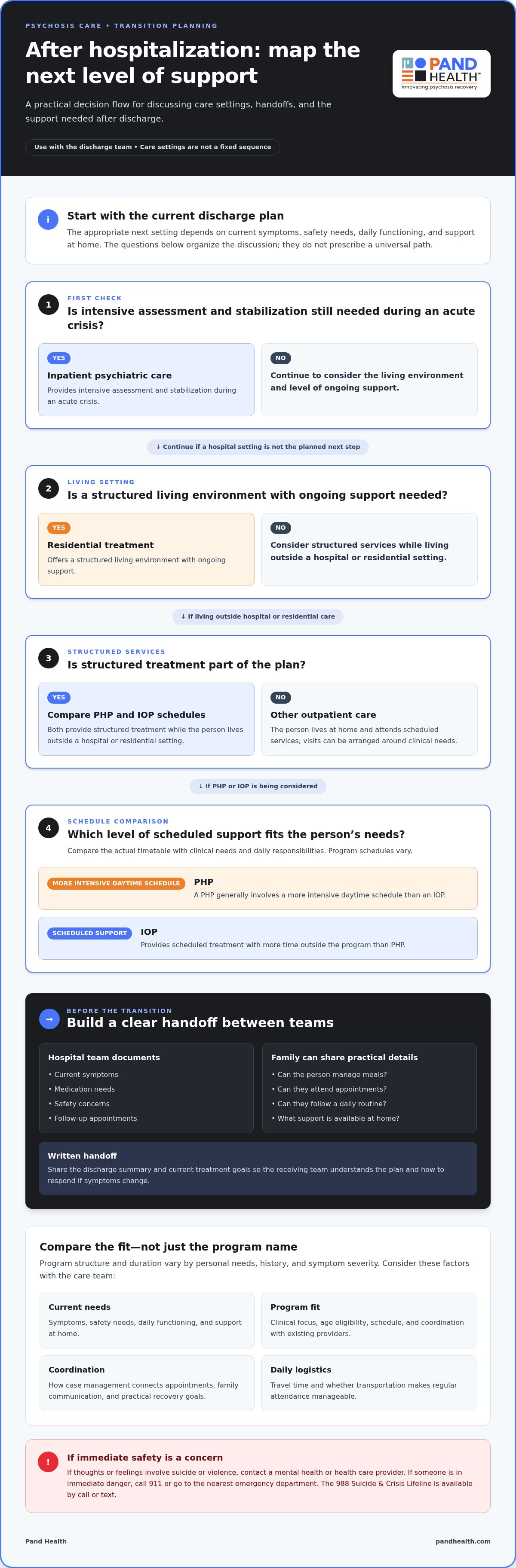
Yes. A person can move from psychiatric hospitalization to another care setting when the discharge plan identifies it as an appropriate next step. Hospitalization provides intensive assessment and stabilization during an acute crisis. Residential treatment offers a structured living environment with ongoing support, while outpatient care lets a person live at home and attend scheduled services. These settings differ in supervision, daily structure, and the support available between appointments.
Plan the transition before discharge rather than treating it as a simple change of setting. The hospital team can document current symptoms, medication needs, safety concerns, and follow-up appointments. Families can share practical details, such as whether the person can manage meals, attend appointments, and follow a daily routine. A written handoff helps the next team understand what support is needed and how to respond if symptoms change.
After discharge, outpatient early psychosis evaluation and treatment can help assess symptoms and coordinate ongoing clinical support. Early psychosis care may be relevant for adults and young people experiencing changes in thinking, perception, or functioning. In Los Angeles County, the San Fernando Valley Community Mental Health Clinic is located at 14535 Sherman Cir, Van Nuys, California 91405. Listed Los Angeles County clinics are affiliated with the EPI-CAL EPINET I regional hub.
When considering outpatient early psychosis care, clarify how assessment and follow-up fit the person’s discharge plan. Outpatient services can support ongoing care, but they are different from residential treatment: the person returns home after appointments. Share the hospital’s discharge summary and current treatment goals to help the outpatient team understand the transition.
PHP and IOP offer structured treatment while a person lives outside a hospital or residential setting. A PHP generally involves a more intensive daytime schedule than an IOP, which provides scheduled treatment with more time outside the program. Outpatient care can be less intensive, with visits arranged around clinical needs. The appropriate level depends on symptom stability, daily functioning, safety needs, and support at home. These terms describe care settings, not a fixed sequence everyone follows.
If thoughts or feelings involve suicide or violence, contact a mental health or health care provider. If someone is in immediate danger, call 911 or go to the nearest emergency department. The 988 Suicide & Crisis Lifeline is available by call or text, according to the Substance Abuse and Mental Health Services Administration.
Recovery-oriented programs and case management
Recovery-oriented care connects clinical treatment with goals for daily life, relationships, education, and work. Case management can help organize those supports as a person transitions between care settings.
Eligibility by Age and Symptoms
Eligibility depends on a program’s age range, clinical focus, and the support a person needs. Psychosis can affect people at different ages, so age alone doesn’t describe an individual’s needs. Teams may consider current symptoms, daily functioning, diagnosis, and whether substance use is connected to changes in symptoms.
Before an intake, gather the discharge summary, current care plan, and a clear description of symptoms. These details help the program assess whether its approach and age range fit the person’s situation.
Program Intensity and Weekly Hours
PHP provides structured treatment during the day, while IOP offers a different level of scheduled support. Weekly hours and attendance schedules vary by program and care plan, so compare the actual timetable with the person’s clinical needs and responsibilities. Ask how the program handles missed sessions, symptom changes, and medication concerns.
Treatment length in residential, PHP, and IOP settings varies with personal needs, history, and symptom severity. Focus the discussion on progress, functioning, and whether the current level continues to meet treatment goals, rather than assuming a fixed duration.
Comparing Los Angeles Programs
Compare each program’s clinical focus, age eligibility, schedule, and coordination with existing providers. Ask how case management connects appointments, family communication, and practical recovery goals such as returning to school or work. In Los Angeles, also consider travel time and whether transportation makes regular attendance manageable.
Consider how each program responds to changes in symptoms and supports the person’s recovery network. A program is a good fit when its services and structure align with the person’s needs and daily life.
Referrals and Admissions
To begin a referral or admission, contact the program’s intake team and share the hospital discharge plan, current symptoms, and treatment goals. The person’s psychiatrist, hospital team, or outpatient clinician can help provide relevant records and coordinate the handoff. Ask which documents are needed and what the intake process involves.
Before the transition, confirm the first appointment, transportation plan, medication follow-up, and who to contact with questions. These practical steps help the receiving team understand the plan and reduce gaps between care settings.
Case management can turn broad recovery goals into manageable tasks. For example, a coordinator may help organize follow-up appointments, plan family communication, and connect treatment goals with school or work routines. Families can prepare by listing current supports, immediate concerns, and the next practical goal. This gives the intake conversation a clear starting point.
Coordinated Specialty Care for first-episode psychosis
Coordinated Specialty Care brings clinical services into one recovery plan after a first episode of psychosis. Depending on the plan, care may include medication, psychotherapy, group therapy, skills training, family therapy, and vocational rehabilitation.
Multidisciplinary Care
A coordinated team can connect psychiatric care with therapy and practical recovery goals. Each professional brings a different perspective, while a shared plan keeps the person’s needs central. For example, a psychiatrist may review medication, a therapist may address coping skills, and vocational support may focus on education or work.
Families can ask who coordinates these roles and how the team discusses progress. Family support and educational meetings can help relatives understand psychosis and take part in care.
Care Coordination
Care coordination links appointments, treatment goals, and communication among the people involved. A practical first step is to identify a care contact and share the current plan with relevant providers. This can help align therapy, psychiatric follow-up, and daily supports after a first episode.
If someone lives in sober living, coordination can include aligning appointment schedules and discussing recovery goals with the care team. With the person’s permission, clear communication can help staff understand what support is useful and whom to contact about changes.
A care coordinator may assess whether someone is eligible for research studies focused on the early course of psychotic disorders. This assessment is separate from routine care coordination and does not replace a treatment plan.
Therapy, Medication, and Family Support
Psychosis care may combine antipsychotic medication with psychotherapy, group therapy, skills training, family therapy, and vocational rehabilitation. The right combination depends on the person’s symptoms, goals, and ability to participate. Medication decisions should follow an accurate, thorough assessment because medications can have side effects.
Families can contribute by sharing changes they observe, asking how to support the person’s goals, and attending educational meetings when offered. Family therapy can address communication and relationships, while psychoeducation helps relatives understand symptoms and care needs. These supports work best when they fit the person’s treatment plan.
After an episode, early intervention can connect symptom care with everyday functioning. Families can prepare for a care meeting by writing down questions about diagnosis, therapy options, medication monitoring, and who will coordinate follow-up. A shared list helps the team address practical concerns alongside clinical treatment.
Mental health step-down care after hospitalization
Discharge changes the setting of care, not the need for a clear plan. Step-down support connects inpatient treatment with ongoing mental health services, keeping symptoms, medication questions, and daily needs in view. The central task is continuity: the next provider needs the hospital’s assessment, treatment goals, and follow-up recommendations. For families comparing options, “step down psychosis care Los Angeles” means finding a bridge between hospital treatment and ongoing support.
Before leaving the hospital, organize a practical handoff. Gather the discharge summary, medication list, follow-up appointments, and instructions for responding to symptom changes. Identify who will handle each next step, such as scheduling psychiatric follow-up or arranging transportation. A family member can note questions about sleep, distress, or changes in daily functioning for the next appointment. Specific observations give the receiving team useful details to discuss.
After discharge, regular contact with a psychiatrist can support review of symptoms and treatment. Ongoing care may include therapy, medical treatment, and regular psychiatric follow-up. At appointments, discuss how symptoms affect routines, relationships, and everyday responsibilities. With the person’s agreement, family observations can add context and help shape practical treatment goals.
Medication monitoring is one part of ongoing care, not a substitute for assessment. Medication decisions should follow an accurate and thorough evaluation because medications may have side effects. Keep a current medication list and note concerns for psychiatric follow-up. Changes in symptoms, sleep, or ability to complete familiar tasks can also be useful clinical details. For families arranging step-down psychosis care in Los Angeles, a written medication plan helps keep information consistent across appointments.
A useful transition plan connects treatment with concrete routines. Agree on how appointments fit around work, school, meals, and rest. Write down who can answer medication questions and how relatives can support treatment goals. If a mental health or behavioral concern changes, share specific observations with the treating team rather than a vague description. For instance, note which routine has become difficult and when the change began.
Psychosis can occur alongside other disorders or substance-related concerns, so care should reflect the person’s full clinical picture. An evaluation for thought disorders and autism can help clarify diagnostic questions that affect planning. The practical takeaway is to leave the hospital with named follow-up steps, clear responsibilities, and a plan that addresses symptoms and daily functioning together. A thoughtful handoff gives the next team a clearer starting point.
What are the differences between inpatient psychiatric care, residential treatment, PHP, and IOP for psychosis?
These options differ mainly in setting, structure, and how much treatment takes place within the program. Inpatient psychiatric care happens in a hospital. Residential treatment provides a live-in setting outside the hospital. Partial hospitalization programs (PHPs) and intensive outpatient programs (IOPs) provide scheduled treatment while a person lives elsewhere. These are distinct care settings, not automatic steps everyone follows.
Inpatient psychiatric care: Hospital-based care can address acute needs requiring intensive clinical attention. The hospital team assesses symptoms and develops discharge recommendations. Before leaving, ask for a written plan that identifies follow-up appointments, medication instructions, and the recommended next setting. Depending on the person’s needs and circumstances, the plan may name residential care or outpatient treatment.
Residential treatment: This setting combines living arrangements with structured treatment. It differs from hospitalization because it isn’t a hospital stay, and from outpatient care because the person resides at the treatment setting. Families can compare the daily structure, clinical services, and coordination of ongoing care. A clear hospital handoff helps the residential team understand the person’s treatment goals.
PHP: A partial hospitalization program offers structured daytime treatment while the person returns home outside program hours. It can provide more scheduled support than routine outpatient appointments. Ask how the timetable fits with sleep, meals, transportation, and other responsibilities. The person’s ability to attend and manage time outside the program can help determine whether this arrangement suits the transition.
IOP: An intensive outpatient program provides scheduled treatment while the person continues living outside the program. Its structure differs from PHP, with treatment organized around appointments rather than a full daytime schedule. Ask what sessions involve, how they fit around work or school, and how clinical follow-up connects with other providers. Don’t assume a particular weekly schedule, as each program sets its own timetable.
To compare options, write down the person’s current symptoms, daily support needs, and discharge recommendations. Then compare each setting’s treatment structure, living arrangement, and connection to psychiatric follow-up. The decision should reflect the support needed now, not which program sounds most intensive. A written transition plan should identify the next appointment and who will coordinate communication across settings.
For help considering psychosis care and evaluation options, discuss the next step with Pand Health.
Pand Health: Social skills training
Pand Health provides social skills training for people working on confidence in everyday interactions after psychosis-related challenges. Psychological and social rehabilitation can support practical goals, while evaluation for thought disorders and autism can help clarify questions that affect care planning. Family psychoeducation gives relatives tools to better understand symptoms and support communication.
These services may be relevant when someone is ready to work on social connection, daily functioning, or family understanding alongside their clinical care. Contact Pand Health to discuss which support fits your needs.
Choose a Next Step That Supports Everyday Progress
After psychiatric hospitalization, the next decision involves more than choosing a setting. It’s an opportunity to identify what would make daily life more manageable, such as rebuilding confidence in conversations, practicing routines, or helping family members understand how to offer support. These goals can give the transition a personal direction alongside clinical care.
Planning step-down psychosis care in Los Angeles can include considering the skills and relationships a person wants to strengthen. Pand Health offers social skills training, psychological and social rehabilitation, and evaluation for thought disorders and autism. These services may be relevant when a person and their family are considering support for social connection, daily functioning, or diagnostic questions.
A thoughtful next step can begin with one clear conversation about the person’s current goals and the support that feels most useful. Contact Pand Health to discuss care and explore whether its services align with those goals. Recovery can move forward one considered step at a time, with room for the person’s needs and hopes to guide the way.
Frequently Asked Questions
What Is Step-Down Care Mental Health Support?
Step-down care is planned support that continues after hospital treatment in a setting suited to the person’s current needs. It may involve residential services, PHP, IOP, or outpatient appointments. For example, someone returning home might need scheduled clinical visits and help keeping follow-up appointments. The key question is what support will sustain treatment outside the hospital, including who will coordinate care and how changes in symptoms will be communicated.
Does insurance cover step-down care in Los Angeles?
Coverage depends on the plan, service, and provider. Pand Health is an out-of-network provider and partners with most major commercial insurance carriers. It offers superbills, single-case agreements, and help with benefit verification, billing, and appeals; coverage isn’t guaranteed for every plan. Before starting care, review your plan’s behavioral health benefits and ask how out-of-network reimbursement and out-of-pocket costs will be explained.
What is the difference between PHP, IOP, and outpatient care?
PHP generally provides structured daytime treatment, while IOP involves scheduled sessions at a different level of intensity. Outpatient care can consist of appointments arranged around the person’s clinical needs. These labels alone don’t show what a program includes. Compare the weekly schedule, therapy format, psychiatric involvement, and how the program responds when symptoms affect attendance or daily responsibilities.
What should families ask before hospital discharge?
Ask for the written discharge plan, details of the next appointment, and a current medication list. Clarify who will coordinate with the next provider and whom the family should contact with treatment questions. For example, ask whether the discharge summary will be shared with the outpatient clinician and what symptom changes should be reported. With the person’s consent, families can also ask how to participate in ongoing care.
What step-down levels of care are available for psychosis in Los Angeles?
Options can include residential treatment, PHP, IOP, and outpatient services. These settings differ in where the person lives and how treatment is scheduled. In Los Angeles, a care plan may also include Coordinated Specialty Care, which combines clinical and psychosocial support. Compare the services with practical needs such as transportation, support at home, and the ability to attend scheduled sessions.
Which Los Angeles programs specialize in step-down care after a psychosis hospitalization?
In Los Angeles, Pand Health provides intensive treatment for psychosis and California OnTrack programs for teens and adults. Its Coordinated Specialty Care model supplements existing care teams rather than replacing them. Families can discuss how its psychiatric evaluation, case management, family support, and education or employment services may fit alongside ongoing clinical care. Program fit depends on the person’s age, needs, and treatment goals.
What does psychosis step-down treatment cost in Los Angeles, and what insurance plans are accepted?
Costs depend on the program, services, and individual care plan; out-of-pocket costs are outlined before treatment. Pand Health is an out-of-network provider and partners with most major commercial insurance carriers, but coverage isn’t guaranteed for every plan. Superbills or single-case agreements may be offered, along with assistance with verification, billing, and appeals. Review your plan’s behavioral health benefits and the payment information provided before care begins.
What eligibility criteria and medical stability requirements apply to psychosis step-down programs?
Eligibility varies by program and can involve age, symptoms, diagnosis, ability to participate, and the support needed in daily life. Pand Health’s programs target individuals ages 13-35 with thought disorders, including schizophrenia, schizoaffective disorder, bipolar-I, autism, and cannabis-induced psychosis. The person’s current clinical needs and discharge plan help determine whether outpatient support fits. Hospital-level needs require an appropriate hospital setting rather than outpatient care.
Disclaimer
This article is for information and educational purposes only, and can NEVER replace a proper medical evaluation. If you or a loved one may be suffering from psychosis or the prodomal symptoms of psychosis, get evaluated by a professional as soon as possible. Early diagnosis and treatment can be life-saving.