


Signs You Need Immediate Psychosis Care in Los Angeles
A person needs immediate care for psychosis in Los Angeles when symptoms or behavior create a risk of harm to themselves or someone else, or when intense confusion, paranoia, or hallucinations make it difficult to stay safe. If there’s an immediate threat of self-harm, harm to others, or a suicide attempt, call or text 988; for an emergency, call 911 or go to the nearest emergency room. Safety comes first, even when it’s difficult to know what is causing the symptoms.
It’s understandable to feel unsure whether a change in someone’s thoughts or behavior is an emergency. This guide explains warning signs that call for urgent help, what an emergency psychiatric assessment may involve, and how to find crisis support in Los Angeles. You’ll also learn how professional care can clarify what’s happening and help identify next steps, so you can respond with greater confidence and care.
Key Takeaways
- Watch for changes such as intense confusion, paranoia, hallucinations, or difficulty organizing thoughts, especially when they disrupt safety or daily functioning.
- If there’s an immediate risk of self-harm, harm to others, or a suicide attempt, call or text 988. For an emergency, call 911 or go to the nearest emergency room.
- An emergency psychiatric assessment can consider symptoms, medical history, and immediate safety needs to guide crisis care and next steps.
- After immediate danger is addressed, ongoing evaluation, family psychoeducation, and social skills training can support continued care and recovery.
Recognizing psychosis-related symptoms that may need emergency attention
Seek urgent assessment when changes in perception, thinking, or behavior make it difficult to keep someone safe. Consider the severity of the symptoms, how behavior has changed, and whether anyone may be harmed.
Early signs can include increased suspicion, difficulty organizing thoughts or words, and hearing sounds others cannot hear. Someone might also see shadows or flashes in their peripheral vision, or say their thoughts feel out of control. These symptoms can disrupt conversations and routines, and affect a person’s ability to judge what is happening around them. Notice when symptoms began, how they change, and whether the person can meet basic needs.
Psychosis affects how someone interprets reality. Hallucinations involve sensing things others don’t, while delusions are beliefs that remain strong despite conflicting evidence. Confusion, paranoia, or disorganized speech can make it harder to communicate or accept help. A person may feel watched, struggle with a familiar task, or speak in a way that is difficult to follow. These signs call for prompt attention from trained professionals.
Psychosis can occur alongside bipolar disorder, severe depression, neurological disorders, substance use, brain injury, or childbirth. In older adults, Alzheimer’s disease and Parkinson’s disease can increase risk. Stress, trauma, genetics, and existing mental health conditions may also contribute. A professional assessment considers symptoms and possible causes instead of assuming a diagnosis based on one behavior.
Psychosis often develops early in adulthood, but it can occur at other ages. Males with schizophrenia are most likely to receive a diagnosis in their late teens to early twenties; females are most often diagnosed in their late twenties to early thirties. Schizophrenia is rarely diagnosed in people younger than 12 or older than 40. These patterns don’t establish what is causing an individual’s symptoms.
Emergency psychiatric care costs depend on the setting and services involved. Insurance or Medi-Cal coverage depends on the person’s plan, eligibility, and the care received.
Severe Symptoms and Hospitalization
Hospitalization may be needed when severe psychosis symptoms make someone a danger to themselves or others. Look for immediate safety concerns, such as threats, actions that could cause injury, or an inability to stay safe because of intense confusion or paranoia. The goal is to address urgent risk and support stabilization. The symptom label alone doesn’t determine the level of care.
Calling 911 or Going to an Emergency Room
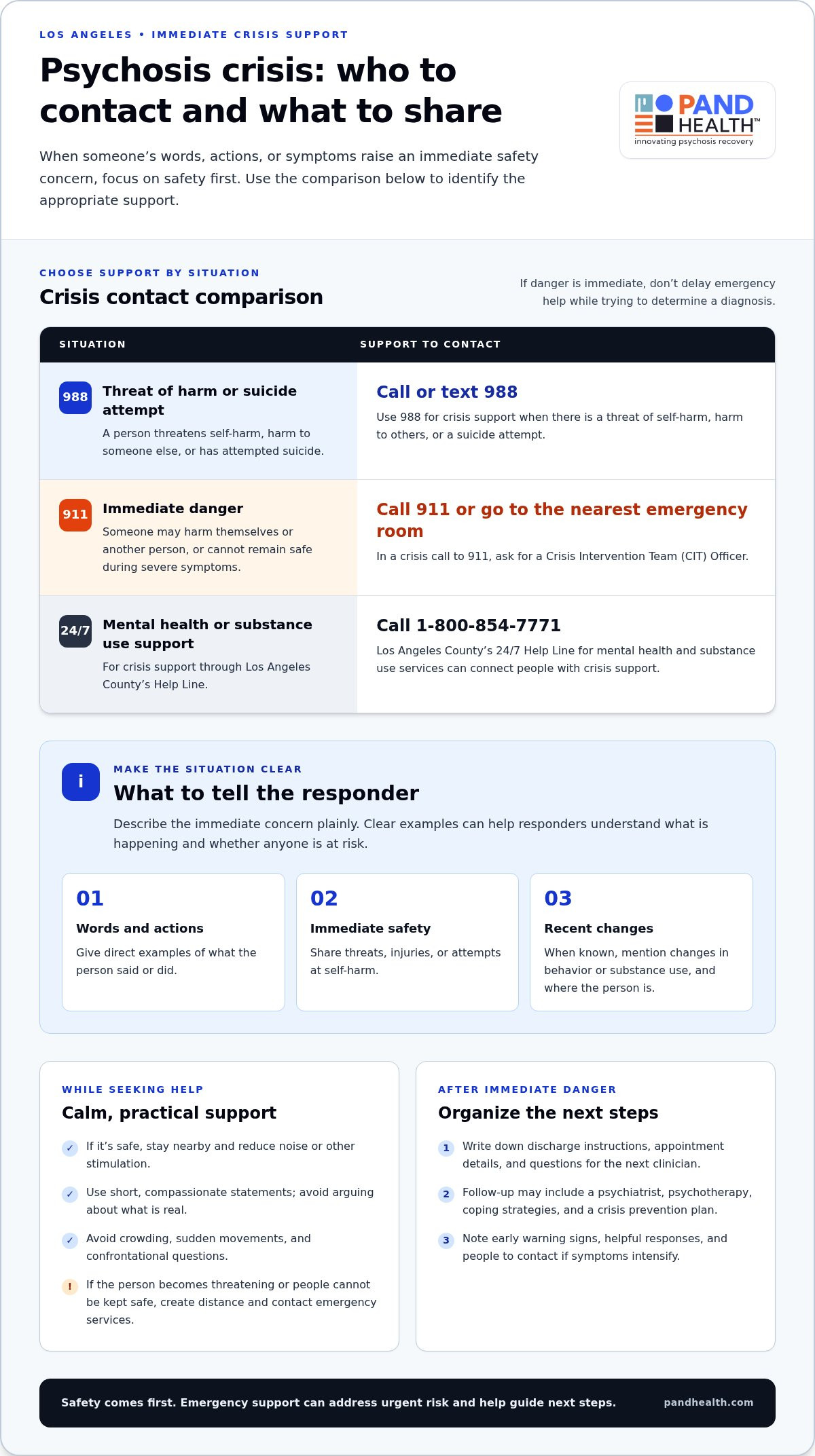
Call 911 or go to the nearest emergency room when someone may harm themselves or another person, has attempted suicide, or cannot remain safe during severe symptoms. If there’s a threat of self-harm, harm to others, or a suicide attempt, call or text 988 for crisis support. Share clear examples of what happened, when symptoms changed, and any immediate danger. Don’t delay emergency help while trying to determine a diagnosis.
Suicidal thoughts and immediate crisis support
Suicidal thoughts alongside psychosis require immediate attention, especially when someone describes a plan, attempts self-harm, or threatens another person. Call or text 988 for threats of self-harm, harm to others, or a suicide attempt. If danger is immediate, call 911 or go to the nearest emergency room. In a crisis call to 911, ask for a Crisis Intervention Team (CIT) Officer.
According to Los Angeles County, 1-800-854-7771 is its 24/7 Help Line for mental health and substance use services. This line can connect people with crisis support. If you’re unsure what to say, describe the immediate concern plainly: the person’s words or actions, whether anyone is at risk, and where they are. Share relevant changes in behavior or substance use when known.
During a psychiatric emergency, family members can offer calm, practical support without arguing about what is real. If it’s safe, stay nearby, reduce noise and other stimulation, and use short, compassionate statements. Avoid crowding, sudden movements, or confrontational questions. If the person becomes threatening or you can’t keep people safe, create distance and contact emergency services.
- Tell the responder what the person said or did, using direct examples.
- Share whether there are immediate threats, injuries, or attempts at self-harm.
- Keep your own safety in view, and follow emergency responders’ instructions.
After emergency care, follow-up can connect crisis stabilization with ongoing support. Next steps may include appointments with a psychiatrist, psychotherapy, coping strategies, and a crisis prevention plan. The plan can note early warning signs, helpful responses, and people to contact if symptoms intensify. Keep it accessible to the individual and family members involved in care.
Families can support the transition by writing down discharge instructions, appointment details, and questions for the next clinician. If symptoms affect communication or concentration, one trusted relative can help organize the details with the individual’s agreement. Support should respect the person’s preferences while keeping immediate safety concerns in view.
Stress and confusion can continue after the immediate crisis has passed. Notice changes in sleep, daily routines, or the person’s ability to manage ordinary tasks, and share those observations at follow-up. Compassionate communication, clear roles among family members, and consistent outpatient appointments can help make the transition from emergency support to ongoing care more organized.
Emergency psychiatric assessment and stabilization
An emergency psychiatric assessment examines symptoms, medical history, and immediate safety concerns. In Los Angeles, the findings can guide crisis intervention and next steps toward care.
In Los Angeles County, urgent help is available through emergency rooms and 911 for emergencies. Call or text 988 for suicide-related crises, or call the County’s 24/7 Help Line at 1-800-854-7771 for mental health and substance use support. Emergency psychiatric clinics may also offer rapid assessment and short-term stabilization, and some operate beyond standard business hours.
The Los Angeles County Psychiatric Mobile Response Team is a mobile crisis resource for mental health emergencies. Call the County Help Line at 1-800-854-7771, describe the person’s location, symptoms, and safety concerns, and ask about mobile crisis response. If someone faces immediate danger, call 911 rather than waiting for a mobile response.
During an assessment, clinicians consider when symptoms began, how they changed, and how they affect daily functioning. Give specific examples, such as a sudden inability to follow a conversation or behavior that creates an immediate safety concern. Share relevant medical history, medications, substance use, and recent changes, if known. These details help the team understand the situation without interpreting one behavior in isolation.
A psychiatrist may assess whether symptoms relate to psychosis, mood disorders, anxiety, or neurodevelopmental conditions such as ADHD. Describe delusions, disorganized speech, or unusual perceptions in plain language. Assessment also considers medical history and immediate risk. A schizophrenia diagnosis should not be assumed from one symptom or crisis presentation.
Emergency clinics can provide crisis intervention and short-term stabilization in a safe, structured environment. The team may first focus on reducing immediate distress and clarifying what support is needed. The setting and next steps depend on the assessment, including symptoms and safety concerns. Stabilization is a bridge to continued care, not a complete picture of someone’s recovery.
After a crisis, clinicians may recommend outpatient therapy or ongoing psychotherapy. A helpful transition includes a clear follow-up plan, relevant assessment information, and practical coping strategies. Family members can record changes they observed, such as difficulty completing familiar tasks. These examples can support later conversations about treatment, behavior changes, and skills for managing daily life.
Hallucinations, delusions, and disorganized speech
Hallucinations, delusions, and disorganized speech can change how a person interprets reality. How urgent they are depends on their effect on safety, communication, and everyday functioning.
Hallucinations involve hearing, seeing, or sensing something others don’t perceive. For example, a person may respond to a voice no one else hears or mistake a shadow for someone nearby. These experiences can feel vivid and frightening. Ask what the person is experiencing without ridicule or confirming the perception as fact.
Delusions are beliefs that persist despite evidence that challenges them. Someone may believe neighbors are monitoring them or that ordinary conversations contain a personal threat. Hallucinations and delusions can occur together, making it difficult to distinguish what is real. Don’t argue about the belief; focus on the person’s fear and immediate needs.
Disorganized speech may be hard to follow because ideas shift abruptly, words seem unrelated, or answers don’t address the question. For instance, asking about lunch might prompt a response about a television message, followed by a different topic. Note specific changes in communication and whether they interfere with basic tasks or meaningful conversation.
Symptoms can affect emotional expression as well as perception. A person may seem frightened, unusually guarded, or unable to explain what feels wrong. These observations don’t establish a particular disorder. A professional assessment considers the pattern, changes over time, medical history, and effects on the individual.
Respond with calm, simple language. Try, “I can see this feels frightening,” then ask what would help the person feel safer. Reduce distractions, give them space, and avoid sudden movements. If conversation becomes difficult, ask short questions and allow time for an answer instead of pressing for explanations.
Consider how symptoms affect safety, not just whether a hallucination or delusion is present. A person who follows a perceived command into danger, cannot care for themselves, or threatens someone needs urgent professional attention. If immediate danger develops, contact emergency services. A crisis may require a different response from distressing symptoms that do not create immediate danger.
For an assessment, record the person’s own words, when the change began, and examples of altered speech or behavior. Include changes in sleep, daily routines, or the ability to complete familiar tasks. These details help clinicians understand the effects of symptoms and identify next steps. Follow-up care may then address ongoing emotional and practical needs.
Family members can support recovery by listening without judgment and communicating consistently. Agree on a calm way to offer help, such as sitting nearby or reducing noise. If symptoms intensify, communication breaks down, or safety becomes uncertain, seek professional guidance promptly rather than waiting for a routine appointment.
Immediate safety risks during a mental health crisis
A mental health emergency occurs when someone’s thoughts, feelings, or behavior put them or others at risk of harm. Focus on what is happening now, not on proving a diagnosis. A direct threat, an attempt to hurt someone, or behavior that makes it impossible to stay safe calls for immediate action.
Look for observable changes: the person may be unable to meet basic needs, act safely, or respond to ordinary directions. For example, severe confusion could lead them into traffic or prevent them from recognizing an immediate hazard. Cognitive changes, agitation, or escalating distress are especially concerning when they create danger, even if the cause is unclear.
Take a practical, safety-first approach. Keep a calm tone, give the person space, and reduce noise or other stimulation if you can do so safely. Move others away from a tense interaction. Don’t block exits, crowd the person, or try to restrain them. If you cannot maintain safety, create distance and call emergency services.
- Call 911 if someone faces immediate risk of harm or cannot be kept safe.
- Call or text 988 for threats of self-harm, harm to others, or a suicide attempt.
- When calling, state the person’s location and describe their actions plainly.
In Los Angeles, callers to 911 can ask for a Crisis Intervention Team (CIT) Officer. Explain specific behaviors, such as threats, an attempt to leave into a dangerous area, or inability to respond safely. Mention any known substance use or recent behavioral changes. Clear details help responders understand the immediate situation.
Don’t assume that refusing help means there is no risk. Consider whether the person’s actions, confusion, or inability to protect themselves create danger now. If the situation is escalating, avoid arguing about beliefs or making promises you can’t keep. Use brief, concrete language and prioritize everyone’s physical safety.
Once immediate danger has passed, write down what happened, including the actions that prompted emergency help. Share these observations during follow-up mental health care. A clear account can help clinicians understand how symptoms affected safety and what support may help. Ongoing care can address underlying concerns, while family members coordinate support without taking on the role of emergency responders.
If there’s no immediate danger but psychosis symptoms need prompt clinical attention, arrange a psychiatric evaluation. For help connecting with care after the crisis, contact the care team about next steps.
Pand Health: Social skills training
Pand Health offers social skills training for people seeking support with communication and social interaction as part of ongoing recovery. Once immediate safety concerns have been addressed, this training can complement psychological and social rehabilitation, helping individuals build practical skills for everyday situations. Evaluation for thought disorders and autism can help clarify care needs, while family psychoeducation can help loved ones better understand and support the person’s experience.
These services are a next step for individuals and families looking for structured support beyond an acute crisis. For immediate danger, use emergency or crisis services rather than waiting for ongoing care. To explore support with Pand Health, contact Pand Health.
Build a Steady Path Forward
Knowing when you need immediate care for psychosis in Los Angeles can help you respond to urgent safety concerns, then focus on what support is needed next. Once immediate danger has been addressed, consider what could make daily life more manageable for the individual and their family. Next steps may include understanding symptoms, strengthening social connections, or supporting ongoing recovery.
Pand Health offers evaluation for thought disorders and autism, psychological and social rehabilitation, and social skills training. Family psychoeducation can help loved ones build understanding and respond with greater confidence. These services support continued care rather than replace emergency help during a crisis.
Taking one step at a time is enough. Contact Pand Health to discuss support that may fit your needs, and keep moving toward greater stability and wellness.
Frequently Asked Questions
What are emergency warning signs of psychosis that require immediate care?
If you’re asking when you need immediate care for psychosis in Los Angeles, seek help when symptoms create danger or make it impossible to stay safe. Warning signs include intense confusion, paranoia, hallucinations linked to dangerous actions, or speech so disorganized that the person cannot communicate urgent needs. For example, someone who cannot recognize a nearby hazard may need emergency assessment. Focus on what they’re doing and whether anyone is at risk, not on deciding a diagnosis.
What should you do if someone experiencing psychosis may harm themselves or others?
Call 911 if someone faces immediate danger, and explain the specific behavior and location. In Los Angeles, you can ask for a Crisis Intervention Team (CIT) Officer. For threats of self-harm, harm to others, or a suicide attempt, call or text 988. If you can do so safely, keep other people at a distance and avoid blocking the person’s path. Don’t attempt to physically restrain them; follow responders’ instructions.
Can you go to a psychiatric urgent care or crisis stabilization center in Los Angeles without an appointment?
For an immediate emergency, call 911 or go to the nearest emergency room rather than delaying care to arrange an appointment. Psychiatric urgent care and crisis stabilization services can provide assessment, but their intake process depends on the specific setting. Call the Los Angeles County Help Line at 1-800-854-7771 for mental health and substance use support and guidance on crisis resources. If someone is in immediate danger, use emergency services.
What happens during an emergency room evaluation for psychosis in California?
An emergency assessment considers symptoms, medical history, and immediate safety concerns. A clinician may ask when changes began, what the person has experienced, and how daily functioning has been affected. Share relevant medication or substance-use information and specific examples, such as trouble following a conversation. Knowing when to seek immediate care for psychosis in Los Angeles can help families act before risk escalates. A psychiatrist may assess possible causes and consider stabilization and follow-up care.
How can family or friends help someone in psychosis safely while waiting for professional care?
Stay calm and keep your approach simple: speak steadily, give the person space, and reduce noise if it’s safe. Acknowledge their distress without arguing about what they perceive. Move children or others away from a tense situation, and don’t block exits or attempt restraint. If risk increases, step back and call emergency services. Be ready to share the person’s location, observed behavior, and relevant history with responders.
Disclaimer
This article is for information and educational purposes only, and can NEVER replace a proper medical evaluation. If you or a loved one may be suffering from psychosis or the prodomal symptoms of psychosis, get evaluated by a professional as soon as possible. Early diagnosis and treatment can be life-saving.