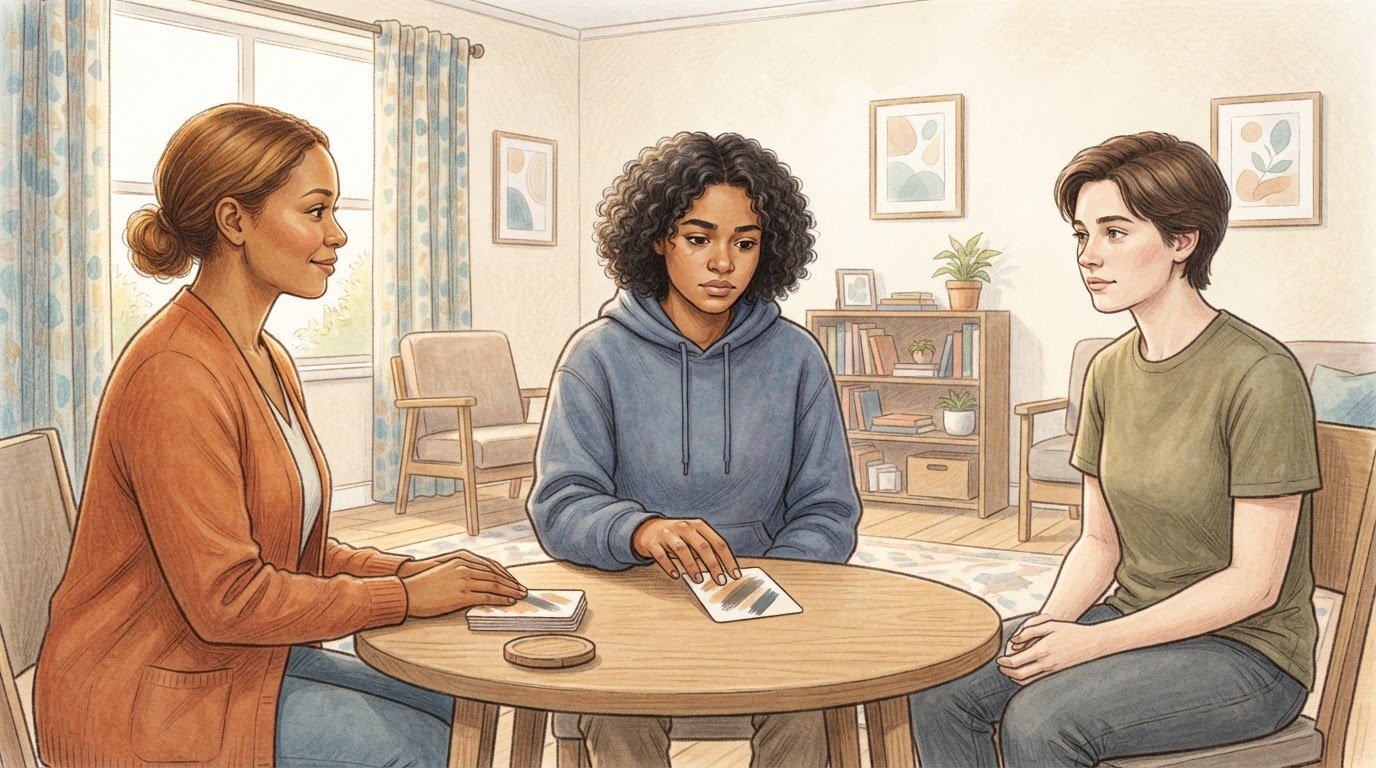

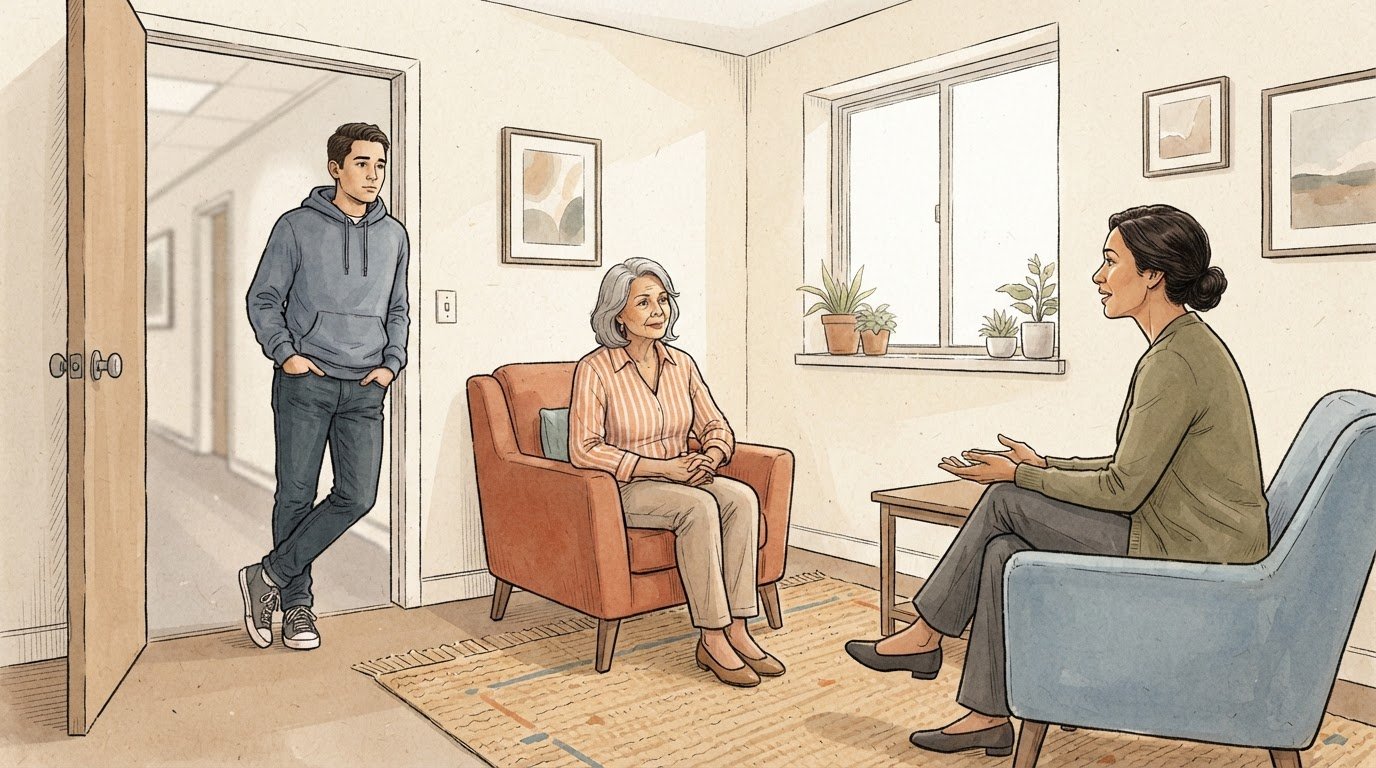
5 Ways to Help Someone Accept Psychosis Treatment
If you’re wondering what to do when someone refuses psychosis treatment, stay calm, listen to what’s behind the refusal, and avoid arguing about experiences that feel real to them. Offer manageable choices, such as who to speak with or who could accompany them, and keep the door open to professional support. If there’s immediate danger, call 911, according to the National 911 Program.
It’s understandable to feel frightened or frustrated when someone you love won’t accept help. A forceful conversation can deepen mistrust, while patience and respect may make it easier to discuss care. This article offers practical ways to approach your loved one, talk about treatment without escalating tension, understand their right to refuse, and encourage professional support. It also explains when to seek urgent help and how families can stay supportive while caring for themselves.
Key Takeaways
- Explore what’s driving the refusal, such as worries about medication or past experiences, before discussing possible next steps.
- Respect your loved one’s right to make treatment decisions, and learn how their stated preferences can guide conversations about care.
- Share caregiving responsibilities and seek support for yourself so you can remain a steady source of help.
- Professional evaluation can help clarify symptoms and identify treatment options suited to the person’s needs.
- If the situation becomes an immediate safety emergency, call 911.
1. How do I help my loved one accept treatment?
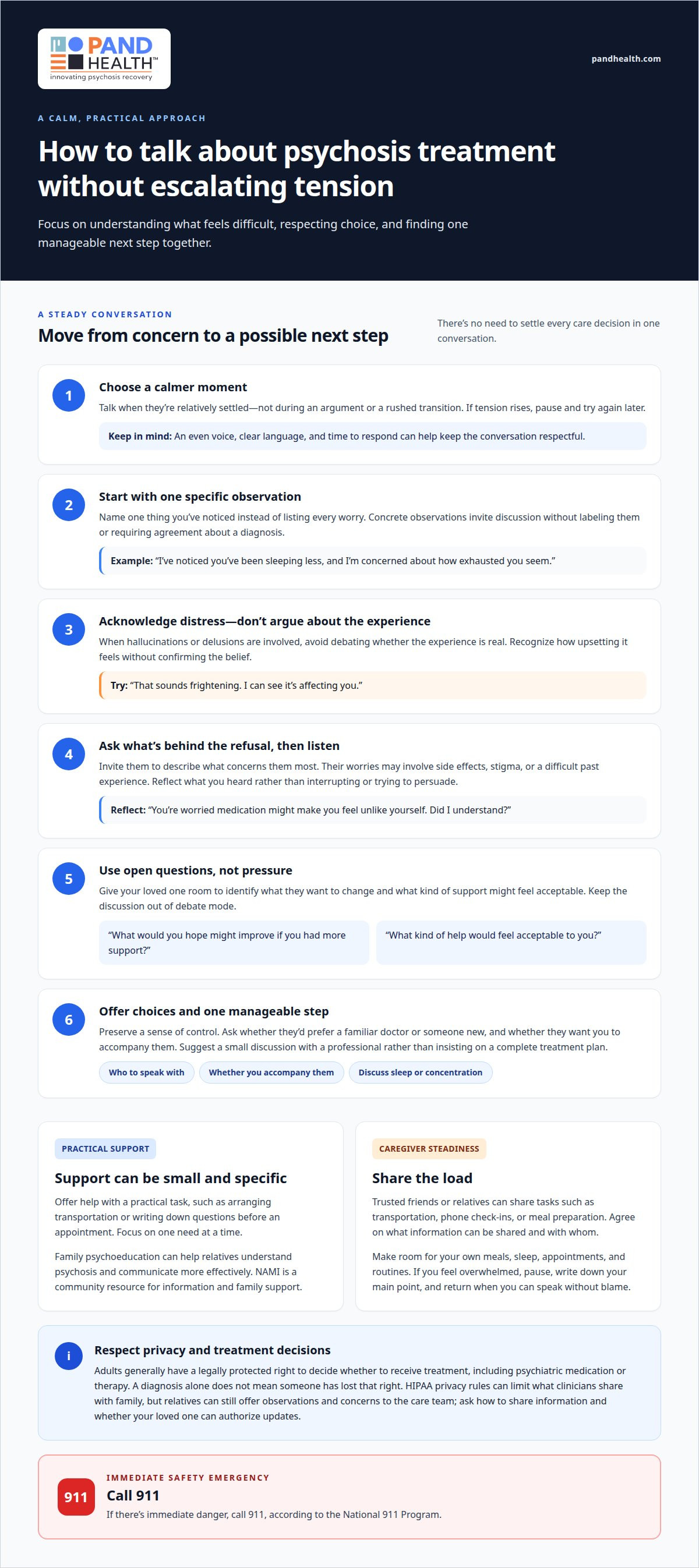
Start with one specific concern, not a list of everything that worries you. Choose a calm moment and say, “I’ve noticed you’ve been sleeping less, and I’m concerned about how exhausted you seem.” A concrete observation invites conversation without labeling your family member or requiring agreement about a diagnosis.
When psychosis involves hallucinations or delusions, don’t argue about whether the experience is real. Acknowledge the distress without confirming the belief: “That sounds frightening. I can see it’s affecting you.” Keep your voice even, use clear language, and give them time to respond. If the conversation becomes tense, pause and try again later.
If someone experiencing psychosis refuses treatment, ask what concerns them most and listen without interrupting. Reflect their answer: “You’re worried medication might make you feel unlike yourself. Did I understand?” This can reduce the feeling of being judged and help you understand whether their concern involves side effects, stigma, or a difficult past experience.
Motivational interviewing can help explore change respectfully, without pressure. Ask open questions such as, “What would you hope might improve if you had more support?” or “What kind of help would feel acceptable to you?” Give your loved one space to identify their own reasons and possible next steps. Avoid turning the discussion into a debate about whether they should accept care.
Offer choices that preserve a sense of control. Ask whether they’d prefer to speak with a doctor they already know or meet someone new, and whether they want you to accompany them. Suggest one manageable step, such as discussing sleep or concentration with a professional, instead of insisting on a complete treatment plan at once.
HIPAA privacy rules can limit what clinicians share with family, but relatives can still give a care team their observations and concerns. Ask the clinician how to share useful information and whether your loved one can authorize updates.
Family support can include practical help, such as arranging transportation or writing down questions before an appointment. Family psychoeducation can also help relatives understand psychosis and communicate more effectively. The National Alliance on Mental Illness (NAMI) is a community resource for information and family support. If there’s immediate danger, call 911, according to the National 911 Program.
2. How should I talk to my family member?
Choose a time when your family member is relatively settled, rather than starting during an argument or a rushed transition. Focus on one need, such as arranging meals, getting to an appointment, or having someone listen. You might say, “I care about you, and I want us to find support that feels manageable.”
Caregiving can bring fear, anger, guilt, and exhaustion, sometimes all in one day. Notice how those feelings affect your tone before raising a difficult subject. If you feel overwhelmed, pause briefly, write down your main point, and return when you can speak without blame. Avoid making promises you can’t keep or taking on every practical task alone.
Build a support circle with relatives or trusted friends who can share specific responsibilities. One person might coordinate transportation while another checks in by phone or helps prepare meals. Agree on what information can be shared and with whom. A clear plan reduces confusion and helps prevent one caregiver from carrying all the responsibility during a crisis.
Make room for your own mental health needs. Keep appointments, meals, sleep, and ordinary routines on the calendar instead of treating them as optional. Choose a trusted person to call after a difficult interaction, and say what would help: a listening ear, a break from caregiving, or help with an errand. Seeking support is a practical part of caring for someone with mental illness.
Caregiver support can help families understand symptoms, communicate consistently, and decide how to respond when plans change. Family members may benefit from a group discussion or individual counseling, especially when they disagree about next steps. Focus on observable needs, such as missed meals or difficulty getting to work, rather than making accusations about motivation.
If your loved one agrees, involve them in deciding who joins conversations and what support feels acceptable. If they don’t want relatives at an appointment, you can still seek guidance for your own coping and communication. A hospital visit may feel stressful, so write down relevant observations beforehand and keep your questions concise. This helps you share useful information without turning the appointment into a confrontation.
When family strain makes communication harder, seek support for your family and the challenges you’re facing. A calmer, better-supported caregiver can offer steadier help while respecting their loved one’s feelings and choices.
3. Is my loved one allowed to refuse treatment?
In general, adults have a legally protected right to decide whether to receive treatment. That includes refusing psychiatric medication or therapy, even when relatives believe care would help. A mental illness diagnosis alone doesn’t mean a person has lost that right.
Involuntary hospitalization in the United States depends on applicable state law and the circumstances. A family member’s concern or a diagnosis by itself doesn’t establish that someone can be hospitalized against their wishes. If there’s immediate danger, call 911, according to the National 911 Program.
Family members can contact a clinician, describe what they’ve observed, and ask about evaluation options. That contact doesn’t by itself authorize an examination without the person’s consent. If your loved one won’t agree, share concrete concerns, such as missed appointments or distressing delusions, and ask what voluntary next steps may be available.
A refusal may have a specific reason. The person might fear medication side effects, feel misunderstood, or prefer to manage symptoms without therapy. Ask what feels unacceptable, then listen without trying to win an argument. You can ask whether they’d consider discussing one concern with a psychiatric professional, without promising a particular outcome.
Medication reminders work best when they support a plan the person has chosen. If they agree, try a phone alarm, a calendar note, or a reminder alongside a daily routine. Don’t hide medication in food or pressure someone to take it. If they report unpleasant effects, encourage them to raise those concerns with the prescriber rather than changing the plan on their own.
Appointments may feel more manageable when the person has a say in the arrangements. Offer to help schedule a visit, arrange transportation, or write down questions together. Ask whether they want you in the room or would rather speak privately. These choices preserve their role in decisions and can make an initial conversation about care less intimidating.
A mental health advance directive records a person’s treatment preferences for a time when they may be unable to communicate decisions. Discussing one during a stable period can give relatives clearer guidance about preferred care and trusted support people. Guardianship or conservatorship may shift decision-making authority, but these are serious last resorts, not shortcuts to treatment.
Respecting a refusal doesn’t mean ignoring risk or ending the conversation. Keep communication open, document changes you observe, and seek professional guidance about voluntary support. If safety becomes urgent, call 911 rather than trying to manage a dangerous situation alone.
4. Approaching a loved one calmly and without judgment
Choose a calm setting before discussing symptoms or treatment. A quiet room may feel less overwhelming than a busy family gathering. Keep your posture relaxed, allow personal space, and speak at an even pace. If your loved one seems distressed, postpone the conversation rather than pressing for an answer. Protecting the relationship can make another discussion possible.
Try a practical “Three A’s” approach: acknowledge, ask, and affirm. Acknowledge the person’s feelings: “I can see this situation is frightening.” Ask an open question: “What concerns you most about speaking with someone?” Affirm their autonomy: “You deserve a say in what happens next.” These steps help keep the conversation collaborative rather than turning it into a contest over who is right.
Respond to the emotion beneath a statement instead of correcting every detail. If your family member says neighbors are watching them, you might say, “That sounds unsettling. Are you feeling safe at home right now?” This recognizes distress without agreeing with the belief. Avoid sarcasm, threats, or labels such as “irrational,” which can increase defensiveness and damage trust.
Change your approach if the same conversation repeatedly ends in conflict. If mentioning medication leads to an argument, focus on a concern your loved one has raised, such as difficulty sleeping or feeling isolated. Ask whether they’d discuss that concern with a professional. A smaller, shared goal may feel less threatening than a demand to accept a complete treatment plan.
Use short statements and ask one question at a time. For example: “I’m worried because you haven’t been eating regularly.” Then allow space for a response. Don’t pile several concerns together or insist on an immediate decision. If voices rise, suggest a pause without blame: “We’re both upset. Let’s stop and talk again when it feels easier.”
Before speaking, identify your purpose: to express concern, understand a refusal, or offer one practical form of help. This focus can prevent the conversation from becoming a lecture. If your loved one declines an appointment, ask what would make an initial conversation feel more manageable. A different time, a trusted companion, or a chance to speak privately may address a specific barrier.
After the conversation, consider what helped and what increased tension. If your loved one responded more openly when you listened without interrupting, use that approach again. If they became distressed when several relatives joined in, speak privately next time. These small adjustments respect their experience and keep communication open while concerns about symptoms remain part of the conversation.
5. Encouraging a family member to seek professional support
A refusal doesn’t always mean your family member will reject every kind of help. Ask what feels most difficult about care, then offer one step connected to their concern. If they fear being judged, suggest a conversation focused on sleep, stress, or concentration rather than a diagnosis. If appointments feel overwhelming, offer to help plan the first call.
To find mental health support for someone who refuses care, contact a qualified professional and describe specific changes you’ve observed. Ask what voluntary evaluation or support options may fit the situation, and whether you can share information even if your family member won’t attend. A clinician can explain possible next steps without promising that your relative will agree to treatment.
Make the invitation specific and low-pressure. Instead of saying, “You need treatment,” try, “Would you speak with someone about how hard it’s been to sleep?” Offer choices about timing, who joins, and which questions they want answered. If they say no, ask whether they’d consider revisiting the conversation later. Respect their answer while remaining available.
Use examples to explain why you’re concerned. You might say, “You’ve stopped going to work, and you told me you feel watched. I’m worried this is making daily life harder.” Focus on what you’ve noticed and its effect on them, not on proving a disorder or demanding that they accept your interpretation.
Refusal may allow symptoms to worsen and contribute to a crisis, so pay attention to meaningful changes. Note shifts in sleep, eating, daily responsibilities, or statements about safety. Share this information with a professional when seeking guidance. Friends and caregivers can coordinate support, but agree on a calm approach rather than confronting the person as a group.
If your family member may be at risk of suicide, in danger, or a threat to others, the 988 Lifeline is available 24/7, 365 days a year. For immediate danger, use emergency services. Keep the number accessible and explain its purpose plainly, without presenting it as a threat or punishment.
Professional support can include an evaluation to better understand what’s happening and discuss possible care. If you’re ready to explore a path toward support, consider the next steps for your family. The goal is to preserve connection while making a route to help easier to consider.
Pand Health: Intensive treatment for psychosis
Pand Health provides intensive treatment for psychosis for individuals and families seeking professional support. When a loved one is willing to discuss care, an evaluation for thought disorders and autism can help clarify their needs and inform next steps. Support may also include social skills training and psychological and social rehabilitation, with care shaped around the person’s circumstances.
If your family member is unsure, you can still ask questions and learn how professional support may fit. A respectful conversation can focus on concerns, symptoms, and what the person feels ready to consider. Intensive treatment is not an emergency service; call 911 if someone faces immediate danger.
Contact Pand Health to discuss support for your loved one.
Keep the next step possible
Progress may begin with a conversation, not an immediate agreement to treatment. For families wondering what to do when someone refuses psychosis treatment, keep the relationship open while making professional support easier to consider. A calm invitation to discuss one concern gives your loved one room to take part in decisions at their own pace.
Pand Health offers evaluation for thought disorders and autism, social skills training, and psychological and social rehabilitation. These services can support a clearer understanding of a person’s needs and the practical work of recovery. Families can also seek guidance as they consider how to approach care together.
Choose a next step that feels manageable, whether that means discussing an evaluation or asking about support for your family. Contact Pand Health for support to talk about possible next steps for your loved one. A thoughtful, respectful approach can keep connection and the possibility of care within reach.
Frequently Asked Questions
How do I help my loved one accept treatment?
Connect support to something your loved one already wants to improve. If returning to classes or work matters to them, ask whether they’d discuss obstacles with a professional. Keep the first step focused on that goal rather than asking them to agree with a diagnosis. If they decline, ask what kind of support they might consider, then leave room to revisit the subject.
How do I prepare for a crisis?
Make a simple plan together during a calmer period. Write down signs that suggest distress is increasing, trusted people to contact, and what has helped the person feel safer before. In the United States, call 911 for an emergency or immediate danger, according to the National 911 Program. The 988 Lifeline is available 24/7, 365 days a year when someone may be at risk of suicide, in danger, or a threat to others.
How should I talk to my family member?
Keep the conversation brief and focused on one concern. For example, say, “I want to understand what feels hardest about getting support,” then give your family member time to answer. Avoid asking several questions in a row or involving multiple relatives without their agreement. If they don’t want to talk, say you’re available later without demanding a response.
Is my loved one allowed to refuse treatment?
People have a legally protected right to decide whether to receive treatment. A loved one’s disagreement with your concerns doesn’t, by itself, remove that right. You can still share observations with a mental health professional and ask about voluntary ways to offer support. If immediate safety becomes a concern, treat it as urgent and use emergency resources rather than trying to force treatment yourself.
What can I do?
Choose one useful action today: write down a recent change, offer practical help with an appointment, or ask your loved one what support would feel acceptable. If you’re deciding what to do when someone refuses psychosis treatment, focus on keeping communication open while seeking professional guidance for your own concerns. A clear, specific offer is easier to consider than pressure to accept every form of care.
What if this doesn't work?
A declined invitation doesn’t mean every future conversation will end the same way. Step back from repeated requests, note changes that concern you, and consider a different support option or timing. You can also speak with a professional about what you’re observing, even if your family member isn’t ready to attend. If there’s immediate danger, call 911 rather than waiting for another discussion.
What is anosognosia?
Anosognosia is a lack of awareness of having a mental health condition, rather than simply refusing to discuss it. About half of people diagnosed with schizophrenia have anosognosia. A person experiencing it may not recognize that their thoughts, perceptions, or behavior relate to illness. Understanding this can help families respond to the person’s experience without treating disagreement as deliberate defiance.
Why doesn't my loved one think they are sick?
Your loved one may experience their thoughts or perceptions as real and may not see them as signs of illness. Anosognosia can affect awareness in some people with schizophrenia. This doesn’t mean the person is choosing to upset you or ignore your concerns. Focus on how the situation affects daily life, such as feeling unsafe or struggling with ordinary responsibilities, rather than insisting they accept a label.
Disclaimer
This article is for information and educational purposes only, and can NEVER replace a proper medical evaluation. If you or a loved one may be suffering from psychosis or the prodomal symptoms of psychosis, get evaluated by a professional as soon as possible. Early diagnosis and treatment can be life-saving.