
What to Do When a Loved One Refuses Treatment in LA
What if the person you love isn't actually being stubborn, but is biologically unable to recognize they are ill? Watching a family member deteriorate while they are refusing treatment is an agonizing experience that leaves you feeling helpless and afraid for your future together. You likely worry that "forcing" help will shatter your relationship forever, yet the confusion surrounding California's complex mental health laws makes it difficult to know where to turn for a specialized lifeline.
We understand the profound weight of this crisis. It's a heavy burden to carry, but you don't have to navigate this storm alone. This article provides the clinical insight and legal clarity you need to move forward with confidence. You'll discover how to lower conflict using evidence-based communication techniques and gain a clear understanding of your legal options in Los Angeles, including the 2026 implementation of SB 43 and the CARE Court system. We will explore how to find a specialized program that shifts the focus from mere stabilization to true, lasting recovery, ensuring your loved one has the best possible chance to reclaim their life and their dignity.
Key Takeaways
- Recognize that treatment refusal is often driven by anosognosia, a neurological deficit that prevents an individual from perceiving their own illness.
- Master the LEAP method to de-escalate conflict and form a collaborative partnership with a loved one currently refusing treatment.
- Gain clarity on California’s evolving mental health landscape, including the LPS Act and the 2026 implementation of expanded "grave disability" criteria in Los Angeles.
- Learn to distinguish between manageable symptoms and acute psychiatric crises that require immediate clinical intervention or specialized evaluation.
- Explore the Coordinated Specialty Care (CSC) model, which prioritizes functional recovery and personal autonomy over simple symptom stabilization.
Why Someone with Psychosis Might Be Refusing Treatment
When a loved one is refusing treatment, it's natural to feel like they're being stubborn or difficult. You might think they're simply in denial. However, for many individuals experiencing psychosis, the refusal isn't a choice or a personality trait. It's a direct result of how their brain is currently processing information. Understanding the root cause of this resistance is the first step toward finding a path that leads to recovery.
Anosognosia: When the Brain Cannot See the Illness
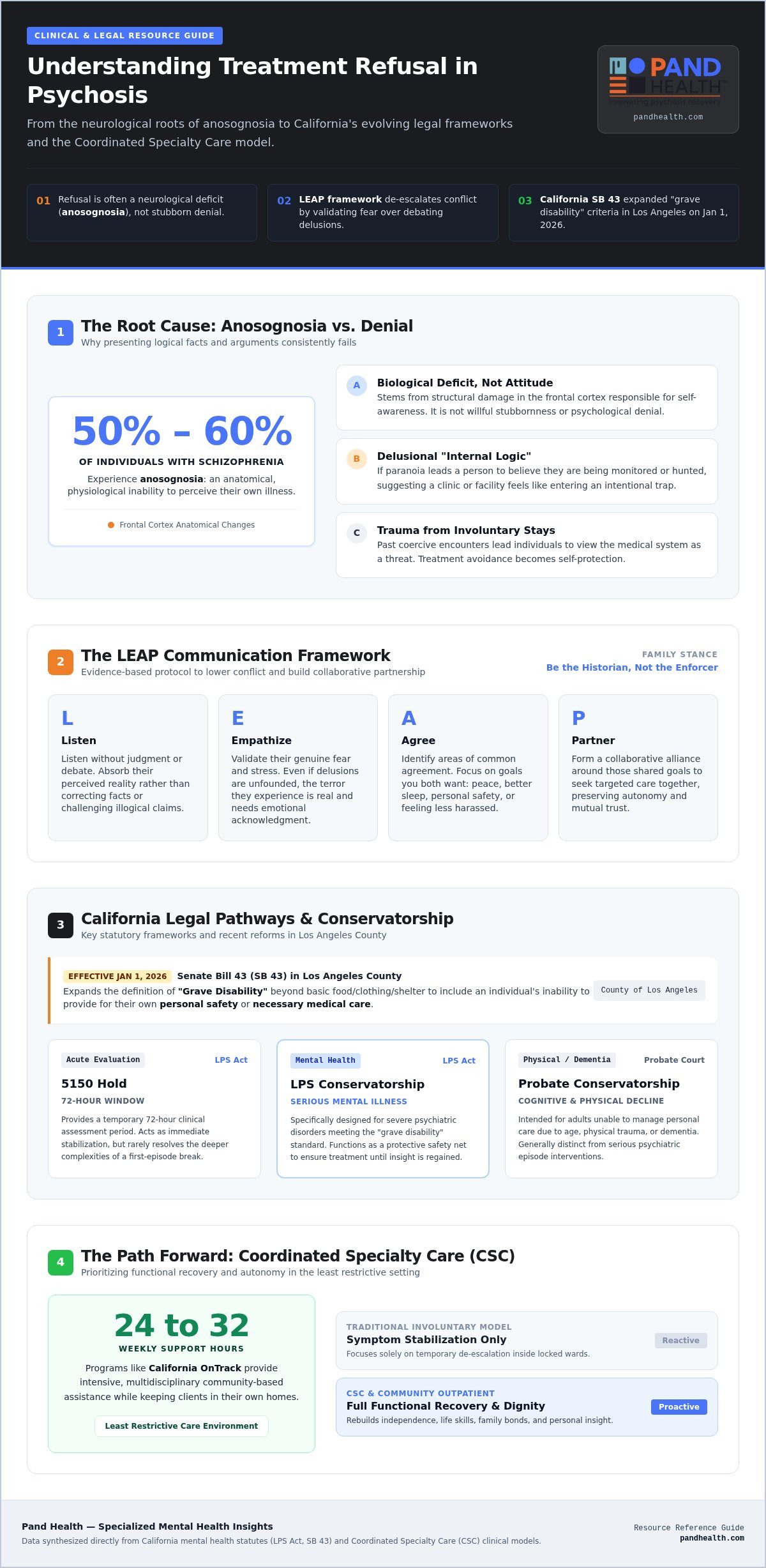
Approximately 50% to 60% of individuals with schizophrenia experience anosognosia. This condition isn't just a psychological defense mechanism like denial; it's a physiological inability to recognize one's own mental health condition. Research indicates this stems from anatomical changes in the frontal cortex, which is the area responsible for self-awareness and insight. Anosognosia is a biological deficit in brain function rather than a willful psychological choice to ignore the truth. Because of this, using logic or presenting "facts" about their behavior often fails. Their brain simply cannot integrate that information into their reality.
The Impact of Delusional Thinking on Help-Seeking
Paranoia frequently transforms the concept of "help" into a perceived threat. If a loved one believes they're being monitored or targeted, a suggestion to visit a clinic can feel like a trap. Their "internal logic" is consistent with their delusions. If you believed your life was in danger, you'd likely resist being taken to a secure facility too. This fear drives the act of refusing treatment even when the need for care is obvious to everyone else.
Past experiences also play a significant role in this dynamic. If a person has previously undergone a traumatic involuntary hospitalization, they may view the healthcare system as a source of harm rather than healing. To them, avoidance is a form of self-protection. When we approach them, we must validate the very real fear they're feeling, even if the delusions causing that fear aren't based in shared reality. Helping them requires us to look past the symptoms and see the person trying to stay safe in a world that feels increasingly hostile.
- Biological Deficit: It's a matter of brain anatomy, not attitude.
- Internal Logic: Their actions make sense based on their perceived reality.
- Trauma History: Past negative clinical encounters can fuel current resistance.
Navigating the Ethics and Laws of Treatment Refusal in California
Balancing the right to self-determination with the ethical mandate to prevent harm is a profound challenge for any family. In California, the Lanterman-Petris-Short (LPS) Act governs this tension. When a loved one is refusing treatment, the law may shift from protecting autonomy to ensuring safety through involuntary intervention. As of January 1, 2026, Los Angeles County implemented the expanded definition of "grave disability" under Senate Bill 43. This update means that if an individual cannot provide for their personal safety or necessary medical care due to a mental health disorder, intervention is no longer just a hope; it's a legal reality. Families can participate in this process by providing detailed histories to clinicians, acting as the "historian" rather than the "enforcer."
LPS vs. Probate Conservatorship: What LA Families Need to Know
A 5150 hold provides a 72-hour window for evaluation, but it rarely solves the underlying crisis of a first-episode break. Families need to distinguish between LPS and Probate conservatorships. Probate is generally for those with dementia or physical disabilities, whereas LPS is specifically for those with serious mental illness who meet the grave disability criteria. Understanding the Los Angeles County LPS conservatorship process is vital for long-term planning. It acts as a safety net, ensuring that those who lack clinical insight receive the care they need to eventually regain their autonomy.
The Concept of 'Least Restrictive Care'
Both the courts and clinicians prioritize the "least restrictive" care environment. This philosophy is why intensive outpatient models are gaining traction over repeated, traumatic hospitalizations. Programs like California OnTrack focus on keeping individuals in their homes and communities while providing 24 to 32 hours of weekly support. You can frame this to your loved one as a way to *keep* their independence rather than losing it to a locked ward. Recovery is the expectation here, not just a distant possibility. If you're unsure where to start, getting a specialized psychiatric evaluation can clarify the legal and clinical options available to you right now.
By focusing on partnership and the least restrictive path, you can help your loved one navigate the crisis without damaging the foundational trust of your relationship. It's about finding the balance between safety today and a healthy, independent life tomorrow.
Talking to Someone Refusing Mental Health Care
When you see a loved one struggling, your instinct is to correct their misconceptions. This "righting reflex" is a natural response born of love, but it often backfires when someone is in the midst of a psychotic episode. Attempting to argue against delusions or using clinical evidence to prove they are ill usually increases their defensiveness. Instead of winning an argument, the goal must shift toward building a bridge of trust. By changing how you communicate, you can move from being a perceived adversary to a trusted partner in their journey toward wellness.
Step-by-Step: The LEAP Method in Action
Dr. Xavier Amador developed the LEAP method specifically for families dealing with anosognosia. This framework helps you connect with someone refusing treatment by focusing on their experience rather than their diagnosis. It involves four critical stages:
- Listen: Practice reflective listening. Your goal is to understand their perspective without judging or contradicting their reality.
- Empathize: Acknowledge the emotions behind their statements. You don't have to agree with a delusion to empathize with the fear or frustration it causes.
- Agree: Find common ground. You might not agree they are being followed, but you can both agree that they deserve to feel safe and less stressed.
- Partner: Once trust is established, collaborate on a plan. Frame specialized care as a tool to help them achieve their personal goals, such as returning to school or finding a quiet place to live.
Communication Strategies for Families
Effective communication requires a shift in language. Using "I" statements helps you express concern without making the other person feel accused. For example, saying "I feel worried when I see you haven't slept" is often more effective than "You aren't sleeping because you're sick." It's also helpful to avoid "why" questions, as these often sound like interrogations and lead to further withdrawal. Learning these nuances takes time and practice.
Engaging in family psychoeducation provides you with the specific scripts and emotional tools needed for these high-stakes conversations. While you are maintaining a supportive connection, it's equally important to set healthy boundaries. You can be a compassionate ally without sacrificing your own well-being. By focusing on your loved one’s self-defined goals, you create an opening for them to accept help on their own terms, which is often the most sustainable path away from refusing treatment and toward long-term stability.
When Refusal Becomes a Crisis: When to Seek Urgent Help
Crisis doesn't always look like a sudden outburst. Sometimes, it's the quiet, steady decline of a loved one who is refusing treatment until they can no longer maintain the basic requirements of life. When symptoms escalate beyond the reach of family scripts or talk therapy, you must recognize the red flags that signal a need for immediate clinical intervention. Waiting for a person to reach a breaking point is a dangerous strategy; early intervention is always the safer, more effective path for long-term brain health.
Recognizing Immediate Danger Signs
Immediate danger signs include command hallucinations, where internal voices instruct the individual to harm themselves or others, or a total withdrawal from reality that prevents basic self-care. When a loved one stops eating, sleeping, or maintaining hygiene, they may cross the threshold into "Grave Disability" under the expanded California SB 43 standards. In California, a 5150 evaluation is legally triggered when an individual, due to a mental health disorder, presents a danger to themselves or others, or meets the criteria for grave disability by being unable to provide for their personal safety or necessary medical care.
Alternatives to the Emergency Room in Los Angeles
For someone experiencing a psychotic break, the emergency room is often a source of intense trauma. The bright lights, loud noises, and long wait times can exacerbate paranoia and fear. Instead of a traditional ER visit, families in Los Angeles can contact the LACDMH 24/7 Help Line at (800) 854-7771 to request a Psychiatric Mobile Response Team (PMRT). These teams consist of licensed clinicians who can assess the situation in the community, often de-escalating the crisis without the need for law enforcement involvement.
If the situation is urgent but not life-threatening, seeking a specialized outpatient assessment is the most effective way to break the "revolving door" cycle of repeated hospitalizations. These evaluations provide a comprehensive look at the individual’s needs, moving beyond simple stabilization to create a recovery-oriented plan. If you're currently struggling with a loved one refusing treatment, you can access same-day or next-day psychosis evaluation services to determine the safest next step for your family. The first 30 days after a crisis are the most critical for preventing a relapse, and having a specialized team in place ensures your loved one has a bridge to lasting stability rather than just a temporary hold.
A Path Forward: Coordinated Specialty Care (CSC)
When a loved one is refusing treatment, the traditional medical model often feels like a dead end. Coordinated Specialty Care (CSC) offers a different path. It's the gold standard for psychosis because it moves beyond mere stabilization. Instead of focusing solely on symptom suppression, CSC utilizes a multidisciplinary team to address every aspect of an individual's life. This model addresses treatment refusal by shifting the power dynamic. We don't just tell patients what to do; we involve them in defining their own recovery goals. By prioritizing what matters to them, whether that's returning to a job or finishing a degree, we build the internal motivation necessary for long-term engagement.
The California OnTrack Difference
At Pand Health, our California OnTrack program takes the CSC framework even further. We've created an augmented model that combines intensive psychotherapy with physical fitness and APA-recommended cognitive remediation. We are the only outpatient CSC program in Southern California providing this level of specialized cognitive training. One of the most effective tools for reaching those who are refusing treatment is our Work-Study Program. By providing concrete support for career and academic aspirations, we give patients a tangible reason to stay committed to their care. Our data shows the success of this approach: 85% of our participants are actively engaged in employment or education after just six months of treatment.
Starting the Journey to Recovery
Introducing the idea of help to someone who lacks insight requires a delicate touch. It's often more effective to frame the conversation around a specialized program for high performance or coaching for life goals rather than mental health treatment. Our team includes certified instructors in Metacognitive Training (MCT) and Social Cognition and Interaction Training (SCIT). These are sophisticated tools designed to help individuals navigate social complexities and cognitive hurdles. They aren't just clinical exercises; they're skills for life. We believe that recovery is the expectation, not the exception. Families in Los Angeles deserve to know that even after a crisis, a return to normalcy and a fulfilling, independent life is entirely possible.
Reclaiming a Future of Stability and Hope
Navigating the complexities of a loved one refusing treatment is one of the most difficult journeys a family can undertake. By understanding that refusal is often a biological symptom rather than a choice, you can shift your approach from confrontation to partnership. Utilizing evidence-based communication and understanding the evolving legal landscape in Los Angeles allows you to act as a steady guide during a time of profound uncertainty. Recovery is the expectation, and with the right specialized support, your loved one can return to a life of purpose and independence.
Our expert Los Angeles-based team specializes in early psychosis intervention through the California OnTrack program. We offer the only outpatient Coordinated Specialty Care in Southern California that includes APA-recommended cognitive remediation. This comprehensive approach produces measurable results. While the industry average for rehospitalization is 10%, our program maintains a 6% rehospitalization rate. Don't navigate this alone. Contact Pand Health today for a specialized evaluation and discover a path toward recovery.
Frequently Asked Questions
What do I do if my adult child refuses to go to the hospital?
If your adult child is experiencing a psychiatric crisis and refuses to go to the hospital, you should contact the Los Angeles County Department of Mental Health 24/7 Help Line at (800) 854-7771. You can request a Psychiatric Mobile Response Team (PMRT) to conduct an evaluation at your home. These clinicians are trained to assess for a 5150 hold and can facilitate transportation to a facility if the individual meets legal safety criteria.
Can I force someone in California to take psychiatric medication?
In California, you generally cannot force an individual to take medication at home against their will. Legal mechanisms like a Riese hearing or an LPS conservatorship are required to compel medication. During an involuntary hold, a facility may petition the court if the patient lacks the capacity to give informed consent. A court-appointed conservator may eventually be granted the specific legal authority to oversee a loved one's psychiatric medication regimen for long-term stability.
What is the LEAP method for mental health?
The LEAP method is a specialized communication framework designed by Dr. Xavier Amador to build trust with individuals who lack insight into their illness. It stands for Listen, Empathize, Agree, and Partner. By using these steps, you can lower the tension when a loved one is refusing treatment. The goal is to form a partnership around their own self-defined goals, such as finding a job or living independently, rather than arguing about a medical diagnosis.
What is the difference between a 5150 and a 5250 hold in Los Angeles?
A 5150 hold is an initial 72-hour involuntary stay for evaluation and treatment in a designated psychiatric facility. If the clinical team determines that the individual remains a danger to themselves, others, or is gravely disabled at the end of those three days, they may file a 5250. This legal certification allows for an additional 14 days of intensive treatment. Both holds require a specific legal threshold and are monitored by the Los Angeles County court system.
How can I help someone who thinks their hallucinations are real?
Avoid arguing about the reality of the hallucinations, as the individual's brain is processing these experiences as authentic facts. Instead, focus on validating the emotions they are feeling. You might say, "I don't hear what you hear, but I can see that you are very distressed." This empathetic approach preserves your relationship and makes them more likely to consider a professional psychiatric evaluation at a specialized center like Pand Health in West Los Angeles.
Is there a way to get a psychiatric evaluation for someone who refuses to leave the house?
Yes, Los Angeles County provides mobile resources like PMRT for crisis situations, but for non-emergencies, you can access specialized services. Pand Health offers same or next day psychosis evaluation services that can help determine the best path forward for someone refusing treatment. These evaluations are essential for identifying if an intensive outpatient program like California OnTrack is a safer and less restrictive alternative to a traumatic, involuntary hospital visit for your loved one.
What happens if a person is 'gravely disabled' but not violent?
Under the expanded definition of California's SB 43 implemented in 2026, "grave disability" includes an individual's inability to provide for their own personal safety or necessary medical care. A person does not need to be violent to qualify for an involuntary hold or conservatorship in Los Angeles. If a mental health disorder prevents them from meeting basic needs like food, clothing, and shelter, authorities can intervene to ensure they receive life-saving stabilization and long-term support.
How does the California OnTrack program help with treatment resistance?
California OnTrack addresses treatment resistance by shifting the focus from symptom suppression to personal empowerment and functional recovery. By utilizing the Coordinated Specialty Care model, we involve the individual in setting their own goals through our Work-Study Program. This collaborative approach builds genuine motivation, resulting in an 85% engagement rate after six months. We treat recovery as the expectation, helping young adults see treatment as a valuable tool for reclaiming their education, careers, and independent lives.
Disclaimer
This article is for information and educational purposes only, and can NEVER replace a proper medical evaluation. If you or a loved one may be suffering from psychosis or the prodomal symptoms of psychosis, get evaluated by a professional as soon as possible. Early diagnosis and treatment can be life-saving.