
Social Skills Training (SST) in Los Angeles: Build Confidence
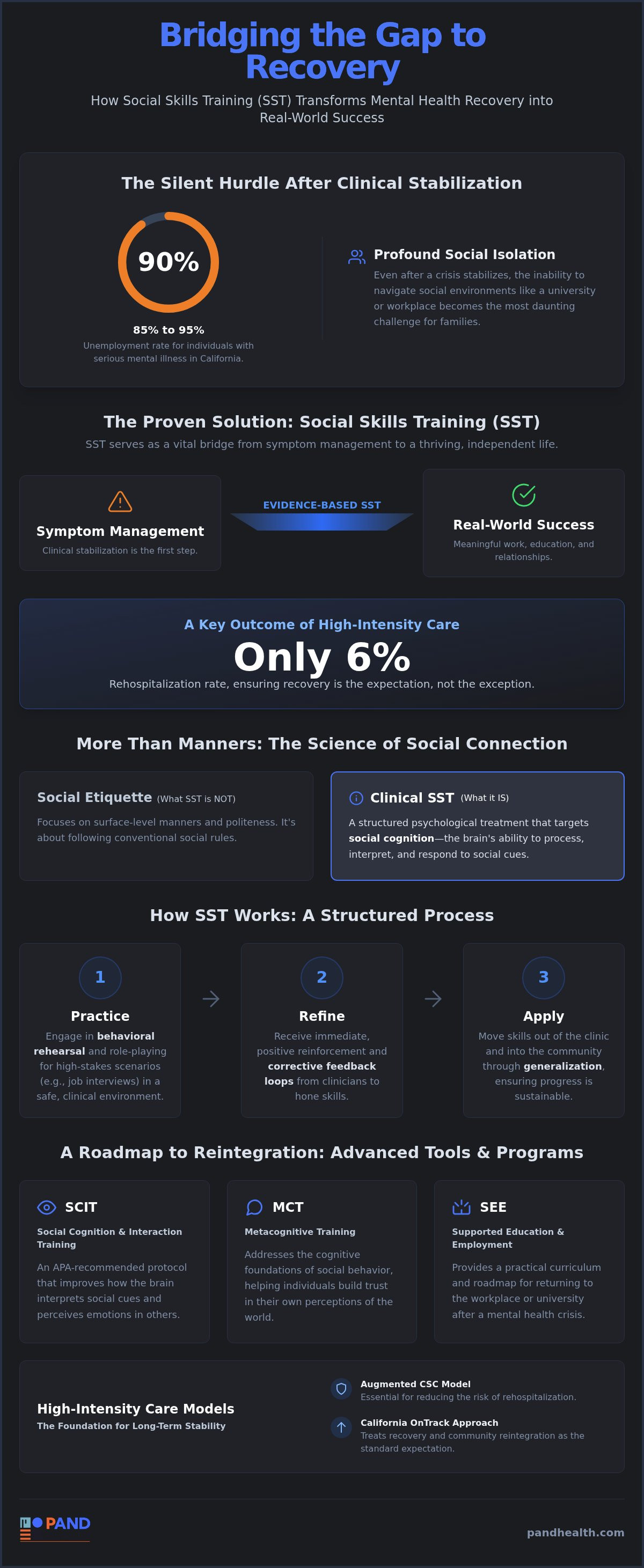
Between 85% and 95% of individuals living with a serious mental illness in California are currently unemployed. For many families in Los Angeles, the most daunting hurdle isn't just managing clinical symptoms; it's the profound social isolation that persists long after a crisis. You've likely felt the frustration of seeing a loved one stabilize medically, only to struggle with the Social Skills training (SST) required to navigate a university lecture or a workplace environment. It's heartbreaking when clinical progress doesn't immediately translate into a meaningful, independent life.
This article explores how evidence-based Social Skills training (SST) serves as the vital bridge between symptom management and real-world success. We'll show you how our Augmented CSC model and the California OnTrack program help individuals build the confidence to form lasting friendships and return to their careers. By focusing on specialized intervention that has achieved a 6% rehospitalization rate, we ensure that recovery is the expectation, not the exception. Discover how these proven methods provide the tools for a sustainable, thriving future in our local community.
Key Takeaways
- Understand the critical distinction between social etiquette and clinical Social Skills training (SST), which targets the cognitive foundations of interpersonal success.
- Learn how specialized tools like SCIT and MCT reduce paranoia and improve social interaction by addressing how the brain processes social cues.
- Discover how the Supported Education & Employment (SEE) curriculum provides a practical roadmap for returning to the workplace or university after a mental health crisis.
- Recognize why high-intensity care, such as the Augmented CSC model, is essential for reducing the risk of rehospitalization and ensuring long-term stability.
- Gain insights into the California OnTrack approach, where recovery and community reintegration are treated as the standard expectation for every individual.
What is Social Skills Training (SST) in Clinical Mental Health?
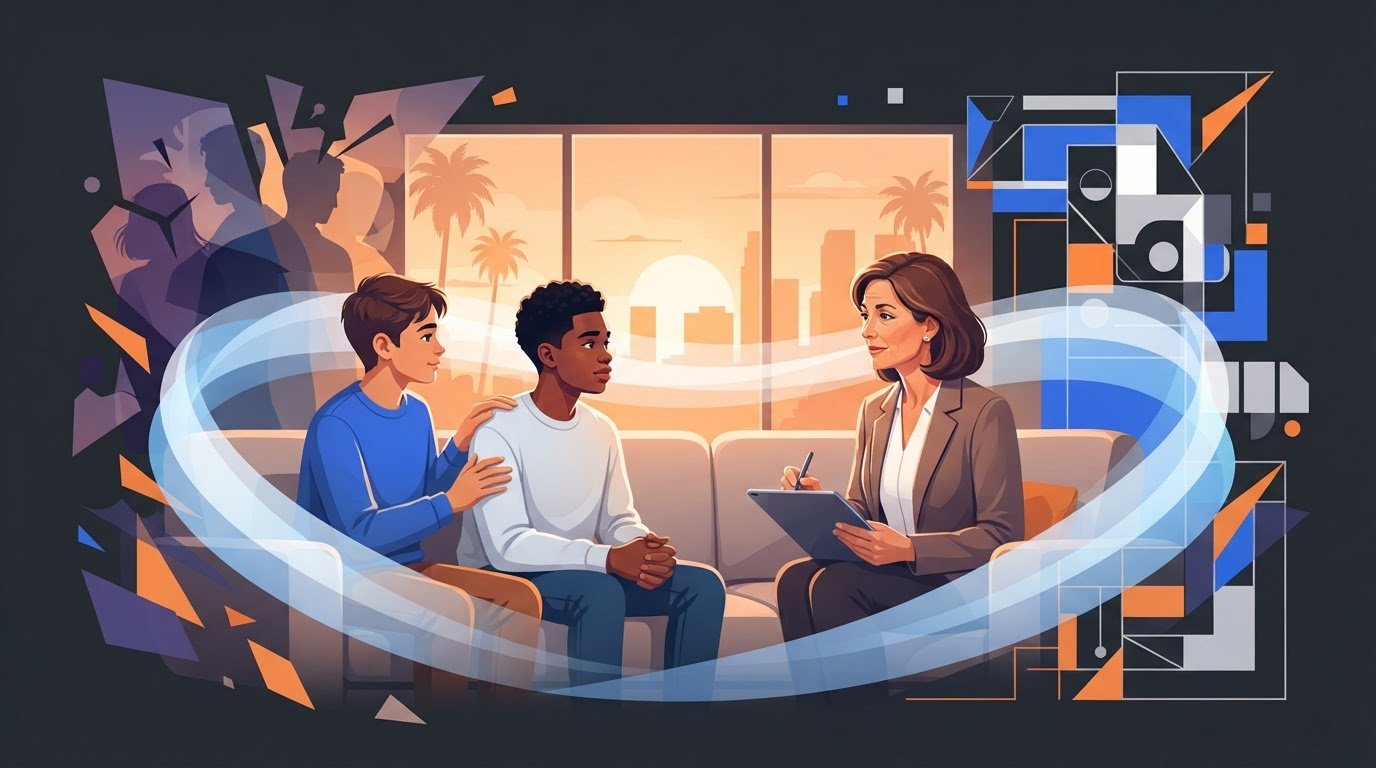
Clinical Social Skills training (SST) is a structured, evidence-based intervention designed to help individuals improve their interpersonal functioning. Unlike casual coaching, it's a rigorous psychological treatment that breaks down complex human interactions into manageable, learnable steps. At its core, SST isn't about teaching someone to be "polite." It's about restoring the ability to connect with others, which is often the first thing lost during a mental health crisis. For families in Los Angeles, this training represents a vital shift from merely managing symptoms to actively rebuilding a life.
It's essential to distinguish between simple social etiquette and the deeper concept of social cognition. While etiquette covers surface-level manners, social cognition involves the brain's ability to process, interpret, and respond to social cues. In complex mental health conditions, the "social brain" often struggles to read a friend's facial expression or understand the subtext of a workplace conversation. Social skills are the foundation of all human exchange, and when these foundations are weakened by illness, specialized clinical intervention is required to repair them.
This approach is particularly transformative for teens and young adults experiencing first-episode psychosis or those navigating the complexities of autism. Our philosophy is rooted in a recovery-oriented model. We don't view social withdrawal as a permanent state; instead, we treat social reconnection as a primary clinical goal. Recovery isn't just the absence of hallucinations or anxiety. It's the presence of a meaningful social life and the confidence to engage with the world again.
The Core Components of SST
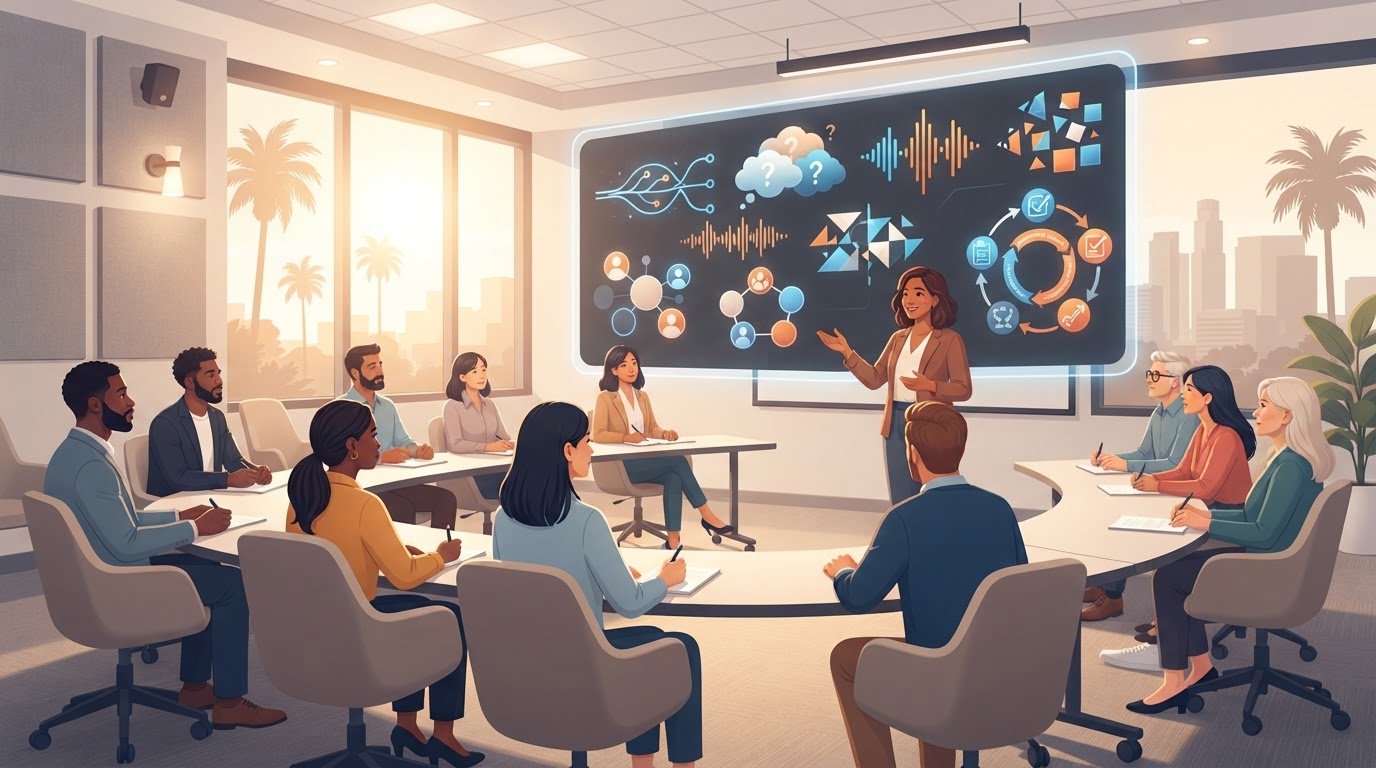
Effective Social Skills training (SST) relies on active learning rather than passive discussion. In a safe, clinical environment, individuals engage in behavioral rehearsal and role-playing. This allows them to practice high-stakes scenarios, such as a job interview or a first date, without the fear of real-world rejection. Clinicians provide immediate, positive reinforcement and corrective feedback loops to refine these behaviors. The final, most critical stage is generalization. This involves moving these skills out of the clinic and into the local Los Angeles community, ensuring the progress made in therapy holds up at a coffee shop in Santa Monica or a lecture hall at UCLA.
SST for Psychosis vs. Autism
The application of SST varies significantly depending on the individual's needs. For those with schizophrenia-spectrum disorders, the focus often lies on overcoming "negative symptoms" like social withdrawal or a flattened emotional response. For neurodivergent individuals, the goal is often to provide tools for navigating neurotypical social expectations while honoring their unique perspective. Because the interventions for these conditions differ, a precise differential diagnosis is mandatory. If you're unsure which path is right for your family, you can contact our specialists at our Olympic Blvd location to discuss a comprehensive evaluation.
The Science of Social Cognition: SCIT and MCT Explained
Clinical recovery from complex mental health conditions requires more than just medication; it demands a restoration of the brain's social processing. While traditional Social Skills training (SST) focuses on the "how" of interaction, specialized interventions like Social Cognition and Interaction Training (SCIT) and Metacognitive Training (MCT) address the underlying "why." These protocols are specifically designed to bridge the gap between clinical stabilization and the social confidence needed to thrive in a metropolitan environment like Los Angeles.
At Pand Health, we utilize these advanced methods because they are the only APA-recommended protocols for addressing the cognitive foundations of social behavior. It's not enough to practice a handshake or a greeting. To truly rejoin a university or a workplace, an individual must be able to trust their own perceptions of the world around them.
How SCIT Improves Daily Interactions
Social Cognition and Interaction Training (SCIT) is a specialized group intervention that targets the way individuals interpret social cues. One of its primary goals is improving emotion perception, which is the ability to accurately identify feelings in others. In early psychosis, it's common for the brain to misread a stranger's neutral expression as hostile, a bias that often leads to unnecessary social withdrawal. By reducing the "jump to conclusions" bias, SCIT helps individuals pause and re-evaluate their initial impressions. SCIT is a comprehensive three-phase program focusing on emotion perception, social situational analysis, and the integration of these skills into daily life. This methodical approach ensures that participants don't just learn a script, but actually change how they perceive their surroundings.
MCT: Mastering Your Own Thought Processes
Metacognitive Training (MCT) takes a different but complementary path by focusing on "thinking about thinking." It directly targets the cognitive biases that lead to social anxiety, paranoia, and delusional thoughts. Research into Recent Advances in Social Skills Training highlights that when individuals learn to monitor their own thought patterns, they gain a powerful tool for maintaining stability. MCT uses data-driven feedback to help participants recognize when their brain is taking a "mental shortcut" toward suspicion. Instead of feeling trapped by a frightening thought, they learn to adjust their social interpretations in real-time. This level of mastery is most effective when guided by certified MCT therapists who understand the nuances of the evidence-based model. If you're looking for this level of specialized care, you can reach out to our clinical team to see how these protocols fit into a personalized recovery plan.
Using these sophisticated tools requires a high degree of specialization. Our instructors are certified in these specific modalities, ensuring every session maintains clinical fidelity. This expertise provides a steady hand for families navigating the storm of a first-episode psychosis, offering a clear path toward social reconnection and long-term wellness.
Beyond Conversation: SST as a Bridge to Employment and Education
For many individuals recovering from a psychotic episode, the greatest challenge isn't the management of clinical symptoms, but the complex social demands of a professional or academic environment. Social competence is the silent currency of the modern workplace. Without it, even the most technically gifted professional can struggle to maintain long-term employment. This is where Social Skills training (SST) transforms from a clinical exercise into a vocational lifeline. By integrating social cognition into resume building and job advocacy, we help clients navigate the nuances of professional life with renewed confidence.
Our approach utilizes the Supported Education & Employment (SEE) curriculum. This framework doesn't just help you find a position; it provides the interpersonal tools required to keep it. We focus on high-stakes interactions, such as explaining a gap in employment during an interview or advocating for necessary workplace accommodations. When Social Skills training (SST) is paired with vocational support, the transition from patient to professional becomes a structured, manageable journey.
SST for the Modern Workplace
Navigating office dynamics requires a sophisticated understanding of professional communication. It's about knowing how to read the room during a team meeting or learning to handle constructive criticism without feeling overwhelmed. A critical part of this journey is self-advocacy. We guide clients on when and how to discuss their mental health needs with employers, ensuring they feel empowered rather than exposed. For a deeper look at these specific strategies, we recommend our LA Work-Study Guide for Mental Health Recovery.
Returning to Higher Education in Los Angeles
The transition back to a university campus like UCLA or USC can be intimidating. Large lecture halls and intense social environments often trigger social anxiety for those who have taken academic leave. Through the California OnTrack program, we provide ongoing support to help students build peer networks and manage the unique pressures of academia. This program doesn't serve as a temporary fix; it supports educational goals indefinitely, ensuring that recovery and degree completion go hand in hand.
The results of this integrated approach speak for themselves. At Pand Health, we've achieved an 85% employment and education participation rate among our clients after just six months of engagement. This success proves that when clinical care meets targeted vocational support, thriving in the community is the expectation, not the exception.
Choosing an SST Program in Los Angeles: A Checklist for Families
Selecting a clinical provider for a loved one during a mental health crisis is a high-stakes decision that requires more than a simple search for local clinics. For families navigating the aftermath of a psychotic episode or a complex autism diagnosis, the quality of Social Skills training (SST) can be the deciding factor in long-term stability. You deserve a program that doesn't just offer support, but provides a rigorous, evidence-based framework designed for real-world recovery. Recovery is the expectation, not the exception, and your choice of provider should reflect that standard.
The gold standard for early intervention is the NIMH NAVIGATE framework. When evaluating a program, ensure they offer an Augmented CSC model. This approach is characterized by high intensity, typically requiring 20 to 32 hours of engagement per week. Standard outpatient care, which may only provide one or two hours of therapy weekly, often fails to provide the immersion necessary for lasting cognitive change. Additionally, verify that the clinical team holds specific certifications in MCT and SCIT. These protocols require specialized training to ensure they're delivered with the clinical fidelity needed to reduce symptoms effectively.
Questions to Ask a Potential Provider
As you interview potential centers, look for transparency and data-driven results. A reputable program will be able to answer these questions directly:
- What is your rehospitalization rate for clients? At Pand Health, our rate is 6%, significantly lower than the industry average of 10%.
- Do you offer integrated job coaching and educational support? True social rehabilitation must include the SEE curriculum to bridge the gap back to school or work.
- How do you involve the family in the process? Family psychoeducation is a core component of successful recovery, not an optional add-on.
The Importance of Local, Southern California Expertise
The Los Angeles mental health system is complex, and having a provider who understands local resources is invaluable. For families seeking premium outpatient care, a West Olympic Blvd location offers an accessible hub for intensive treatment without the need for residential placement. This allows your loved one to practice their Social Skills training (SST) in the same community where they live, work, and study. If you're ready to move beyond standard care, you can contact Pand Health for a specialized evaluation to determine the right level of intensity for your family's needs.
Choosing the right path is about finding a steady hand in the storm. By prioritizing high-intensity programs that value family involvement and clinical specialization, you're not just choosing a service; you're investing in a lifeline that leads back to a full, independent life.
The Pand Health Approach: Augmented Social Skills Training
At Pand Health, we believe that recovery is the expectation, not the exception! While standard treatment often focuses solely on suppressing symptoms, our Augmented CSC model is designed to restore the whole person. We recognize that true wellness requires a seamless integration of clinical stability and social vitality. Through the California OnTrack program, we provide a level of care that moves far beyond traditional outpatient therapy, offering a comprehensive lifeline for families across Southern California.
Our methodology combines evidence-based Social Skills training (SST) with APA-recommended cognitive remediation and physical fitness protocols. This holistic approach addresses the "negative symptoms" of psychosis, such as social withdrawal and cognitive fog, which medication alone cannot fully resolve. By documenting progress through improved PANSS (Positive and Negative Syndrome Scale) scores, we provide families with tangible proof of their loved one’s transformation and community reintegration.
Why Intensity Matters in Social Rehabilitation
The transition from a clinical setting to a thriving, independent life requires more than a single weekly appointment. Standard care often lacks the immersion needed to rewire the brain's social pathways. Our program provides 24 to 32 hours of intensive support per week, creating a structured environment where social gains are reinforced daily. We utilize computerized brain training and cognitive remediation to accelerate these improvements, ensuring that the brain is physically prepared for the demands of Social Skills training (SST). Pand Health's rehospitalization rate is nearly 50% lower than the industry average.
Starting Your Recovery Journey in Los Angeles
Timing is critical when dealing with a first-episode psychosis or a complex diagnostic crossover. We understand the urgency that families feel, which is why we offer same-day or next-day psychosis evaluation services at our Olympic Blvd location. To support families throughout this process, we also produce The Mind Exposed Podcast, which provides expert insights into the science of recovery and the lived experience of rehabilitation. For a comprehensive look at our methodology, you can learn more in our Social Skills Training in Los Angeles: A Clinical Guide.
By choosing a program that values high-intensity intervention and specialized expertise, you aren't just managing an illness; you're investing in a future. Our commitment to the Los Angeles community is rooted in the belief that every individual deserves the opportunity to return to university, maintain a career, and build lasting, meaningful friendships. We're here to provide the steady hand and the proven methods required to make that future a reality.
Reclaiming a Life of Connection and Purpose
Social Skills training (SST) is the clinical foundation for a successful return to the community. By addressing the cognitive roots of interaction through certified MCT instructors and the SEE curriculum, individuals can move beyond symptom management toward true independence. Our Augmented CSC model has demonstrated that specialized, high-intensity care works. With an 85% success rate in employment or education participation and a rehospitalization rate of just 6%, we've proven that recovery is the expectation for every family we serve.
You don't have to navigate this complex journey alone. Expert guidance and evidence-based protocols provide the steady hand needed to bridge the gap between stabilization and a thriving life. If you're ready to take the next step toward reconnection, we invite you to request a same-day psychosis evaluation at our Los Angeles clinic. Your future isn't defined by a diagnosis, and with the right support, a life of meaningful friendship and professional success is within reach.
Frequently Asked Questions
What is the difference between Social Skills Training and standard talk therapy?
Social Skills training (SST) is a structured behavioral intervention, not just a space for emotional processing. While talk therapy explores feelings and past experiences, SST uses active role-playing and rehearsal to build specific interpersonal competence. It targets the cognitive foundations of interaction, helping individuals practice real-world scenarios. This practical approach ensures that clients can navigate complex environments, such as a university campus or a workplace in Los Angeles, with genuine confidence.
Can SST help someone with schizophrenia return to work?
Yes, it's a primary component of vocational success. Our Supported Education & Employment (SEE) curriculum integrates social training to help clients master job interviews and professional communication. Data shows that 85% of our participants are engaged in work or school after six months. This success is achieved by teaching self-advocacy and social cognition, allowing individuals to maintain stability while pursuing their career goals in competitive Southern California environments.
Is Social Skills Training effective for adults with autism in Los Angeles?
It's highly effective for neurodivergent adults seeking to navigate neurotypical social structures. We provide specialized assessments for autism and thought disorders to ensure the training is tailored to each person's unique cognitive profile. By focusing on social cognition and emotion perception, adults can build meaningful friendships and improve their workplace interactions. Our Olympic Blvd clinic serves as a specialized hub for this intensive outpatient care, facilitating better community reintegration.
How long does a typical SST program like California OnTrack last?
Program length is flexible because we offer indefinite enrollment for continuous support. While standard models might have a fixed end date, our Augmented CSC model prioritizes sustained recovery and long-term stability. Many clients see significant functional gains, such as returning to school or work, within the first six months. We continue to monitor progress through monthly interviews even after the high-intensity phase of 24 to 32 hours weekly concludes.
Does insurance cover Social Skills Training for psychosis?
Many private insurance plans cover these services under mental health parity regulations. While we are a specialized provider, families often receive partial reimbursement by submitting superbills for out-of-network benefits. It's important to check your plan's coverage for intensive outpatient services or Coordinated Specialty Care. You can contact our administrative team to discuss how to navigate insurance verification for your loved one's recovery journey in the Los Angeles area.
What is Metacognitive Training (MCT) and how does it relate to social skills?
MCT is a specialized intervention that focuses on "thinking about thinking." It helps individuals recognize cognitive biases, such as jumping to conclusions, which can lead to paranoia or social anxiety. By mastering these thought processes, clients can interpret social cues more accurately. At Pand Health, our certified MCT instructors use this data-driven approach to reduce suspicion and build the confidence necessary for healthy, stable social interactions in the community.
How can families participate in the social skills training process?
Family involvement is a core component of our recovery-oriented philosophy. We offer behavioral family therapy and multi-family group sessions to ensure that skills learned in the clinic are reinforced at home. Family psychoeducation provides you with the tools to support your loved one's social rehabilitation effectively. This collaborative approach is essential for maintaining our 6% rehospitalization rate and ensuring long-term stability for every individual we treat.
What should I do if my teen is refusing to participate in social groups?
Resistance is common, especially after a crisis or during early psychosis. We use motivational interviewing and a clubhouse-style environment to help teens feel safe. Our same-day or next-day evaluation services can help determine if individual therapy should come first. Building trust through one-on-one sessions often serves as a bridge to the more intensive Social Skills training (SST) groups. We focus on meeting every teen exactly where they are currently.
Disclaimer
This article is for information and educational purposes only, and can NEVER replace a proper medical evaluation. If you or a loved one may be suffering from psychosis or the prodomal symptoms of psychosis, get evaluated by a professional as soon as possible. Early diagnosis and treatment can be life-saving.