

LPS vs. Probate Conservatorship: Los Angeles Guide
Imagine standing in your living room, watching your son or daughter argue with voices you can't hear, yet they refuse the very medical care that could save them. It's a heartbreaking reality for many families in Los Angeles who feel trapped between a loved one's crisis and California's complex legal system. When traditional interventions fail, understanding the nuances of Conservatorships: LPS vs Probate becomes more than just a legal necessity; it's a lifeline. You aren't alone in feeling overwhelmed by the terminology or the fear that your family member might never find stability again.
We understand that the weight of these decisions is immense, especially with recent legislative shifts like Senate Bill 43 expanding the definition of "grave disability" to include personal safety and medical care. This guide provides the clarity you need to move from a state of crisis toward a structured plan for recovery. We'll explore the specific requirements for both LPS and probate options, the role of the public guardian, and how these legal tools serve as a bridge to intensive psychiatric support. By the end of this article, you'll have a clear roadmap to help your loved one regain their health and independence.
Key Takeaways
- Distinguish between legal protections designed for acute mental health crises and those intended for long-term cognitive or physical decline.
- Evaluate the critical differences between Conservatorships: LPS vs Probate, including who can initiate the petition and the specific duration of each legal arrangement.
- Understand how the expanded "grave disability" standard under Senate Bill 43 affects your ability to secure necessary medical care for a family member.
- Identify the distinct procedural steps required by Los Angeles courts to ensure a balance between safety and an individual’s civil liberties.
- Explore how recovery-oriented clinical programs bridge the gap between court oversight and a successful return to daily life.
What is a Conservatorship in California? A Protective Lifeline
A conservatorship is a legal arrangement where the court appoints a responsible person or organization to care for an adult who can't care for themselves or manage their own finances. It's often described as a "protective lifeline" because it intervenes when an individual's safety is at risk due to severe cognitive or mental health impairments. For many families in Southern California, this journey begins when a loved one experiences a psychiatric crisis that exceeds the capacity of standard outpatient support. While the process involves a significant shift in legal rights, its ultimate goal is the restoration of stability and safety. Understanding the nuances of Conservatorship in California is the first step in determining which legal path serves your family member's unique needs.
In Los Angeles, families usually encounter two distinct legal avenues. Choosing between Conservatorships: LPS vs Probate depends entirely on the underlying cause of the person's inability to function independently. While one focuses on acute mental health disorders, the other typically addresses long-term physical or cognitive decline. The choice is critical. It determines the level of medical authority a conservator holds and how often the court reviews the case.
The Core Purpose of Legal Intervention
The law seeks to provide a safety net for those who are unable to meet their basic requirements for survival. This intervention ensures that an individual has consistent access to food, clothing, and secure housing. Beyond basic needs, a conservator may be granted the authority to manage psychiatric medications and coordinate placement in specialized care facilities that offer a higher level of supervision than a family home can provide. Additionally, legal oversight protects an individual's assets and income from fraud or impulsive mismanagement during active periods of psychosis or cognitive confusion. This structure provides a foundation for long-term wellness.
When to Consider Professional Guidance
You might realize that traditional outpatient care is no longer sufficient when your loved one repeatedly refuses medication, experiences frequent hospitalizations, or becomes unable to maintain their personal safety. Clinical evaluations play a vital role here; they provide the medical evidence required by the court to establish that a person is "gravely disabled." As of 2026, California law defines incapacity as a documented inability to provide for one's own personal safety or necessary medical care due to a severe mental health or substance use disorder. If you find yourself at this difficult junction, reaching out for professional guidance can help you navigate the clinical requirements of the court system.
LPS Conservatorship: Specialized Care for Severe Mental Illness
The Lanterman-Petris-Short (LPS) Act, found within California's Welfare and Institutions Code, serves as the rigorous legal framework for individuals struggling with the most severe mental health disorders. Unlike other legal arrangements, an LPS conservatorship is specifically tailored to provide intensive intervention for those experiencing schizophrenia-spectrum or schizoaffective disorders. This path is unique because it grants a conservator the authority to consent to involuntary psychiatric treatment, including psychotropic medications and placement in secure facilities. When evaluating Conservatorships: LPS vs Probate, it's vital to recognize that LPS is designed for clinical crises where a person's safety is compromised by their own mind.
For families in Los Angeles, the LPS process represents a profound clinical intervention. It is not merely about managing finances or general care; it's about stabilizing a person during their most vulnerable moments of psychosis. Because the powers granted under LPS are so significant, including the ability to restrict an individual's movement for their own protection, the court maintains a high level of scrutiny. This ensure that civil liberties are respected while the individual receives the specialized care required for recovery.
Understanding the 'Grave Disability' Standard
The threshold for an LPS conservatorship centers on the legal concept of "grave disability." Traditionally, this meant a person was unable to provide for their own food, clothing, or shelter. However, as of January 1, 2026, Senate Bill 43 has significantly modernized this standard. The definition now includes individuals who cannot provide for their personal safety or necessary medical care due to a severe mental health or substance use disorder. Courts require recent, tangible evidence that the individual cannot function safely in the community without oversight. This shift ensures that those in the depths of psychosis receive protection before they suffer irreparable harm.
The Role of the Public Guardian in Los Angeles
A distinct feature of the LPS process in Los Angeles is its initiation. Unlike a probate matter, a family member cannot directly petition the court for an LPS conservatorship. The process usually begins with a 72-hour involuntary hold, known as a 5150, initiated by law enforcement or a designated psychiatric facility. If the facility determines that the patient remains gravely disabled after subsequent holds, they may refer the case to the Office of the Public Guardian. The Public Guardian then conducts an investigation to decide if a conservatorship petition is necessary. This rigorous vetting process protects civil liberties while ensuring that a "steady hand" is available during a storm.
During these high-stress transitions, families often feel sidelined by the clinical and legal machinery. Engaging in family psychoeducation is a critical step to bridge this gap. It helps families understand the clinical nature of their loved one's symptoms and the legal requirements of the court. Recovery is the expectation, and having the right clinical partner can make the difference between a cycle of crisis and a path toward stability. If your family is navigating this complex system, reaching out to a specialized clinical team can provide the direction you need.
Probate Conservatorship: Protection for General Incapacity
While the LPS process addresses acute psychiatric emergencies, a probate conservatorship is rooted in the California Probate Code. It serves as a protective shield for adults who can't care for themselves or manage their finances due to long-term cognitive decline, physical limitations, or developmental disorders. In Los Angeles County, the current filing fee for a new probate conservatorship petition is $435 as of January 1, 2026. This path allows family members or close friends to directly petition the court, providing a level of agency that the LPS process doesn't offer. When families weigh Conservatorships: LPS vs Probate, they often find that probate is the more accessible route for non-psychiatric needs.
The court typically divides responsibilities into two categories. A "Conservator of the Person" manages daily needs like housing, nutrition, and general healthcare. A "Conservator of the Estate" handles financial assets and protects the individual from financial elder abuse or mismanagement. In many cases, the court appoints one person to fill both roles to ensure a holistic approach to the individual's wellness and security.
Who Benefits from Probate Conservatorship?
Seniors living with advanced Alzheimer's or other forms of dementia often require this level of oversight to ensure their safety and dignity. It's also the standard for adults with developmental disabilities who need ongoing support to navigate daily life. If an individual is "substantially unable" to manage their own financial resources or resist undue influence, the court intervenes to preserve their assets. This legal structure is about providing a steady hand for those whose capacity has diminished over time, rather than those in the middle of a sudden mental health crisis.
Limitations Regarding Mental Health Treatment
It's vital to understand the constraints of this legal tool. A general probate conservator doesn't have the authority to consent to involuntary psychiatric medications or placement in a locked mental health facility. This is a primary reason why families comparing Conservatorships: LPS vs Probate for a loved one experiencing active psychosis often find probate insufficient. Probate is designed for cooperation, not for the resistance often seen during a psychiatric break.
There are specific exceptions, such as "dementia powers," which the court can grant if a medical professional confirms a neurocognitive disorder. These powers allow for specialized placement and medications, but they're legally distinct from the powers granted under an LPS order. For adults with developmental disabilities, the court may establish a "Limited Conservatorship." This arrangement aims to preserve as much independence as possible while providing support in specific, court-defined areas of life. If you're unsure which path fits your family's situation, a clinical evaluation can provide the clarity needed to move forward.
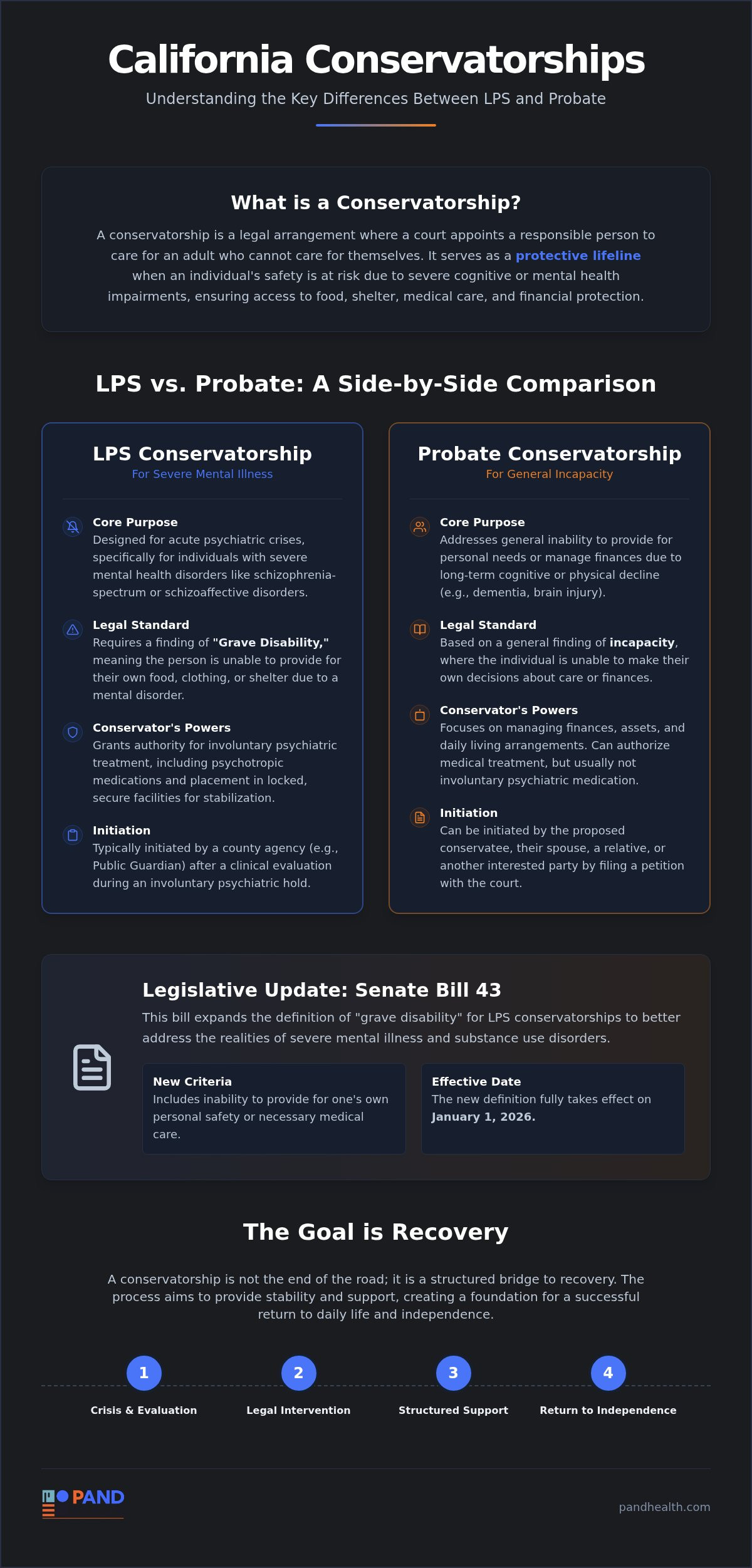
LPS vs. Probate Conservatorship: Key Differences and Decision Factors
Deciding between Conservatorships: LPS vs Probate requires a clear understanding of the legal mechanics and the specific needs of your loved one. The most striking difference lies in duration and control. An LPS conservatorship is temporary, lasting exactly one year, and requires a rigorous annual renewal process including a potential jury trial. In contrast, a probate conservatorship is typically permanent, remaining in place until the conservatee passes away or a court finds that they have regained full capacity. Because LPS involves a significant restriction of civil liberties, it can only be initiated by public officials, such as the Los Angeles County Public Guardian. Probate matters are more accessible to families, allowing private individuals to petition the court directly to protect a vulnerable relative.
The authority to direct medical care also varies significantly between these two paths. An LPS conservator possesses the unique power to authorize placement in "locked" psychiatric facilities and mandate the administration of antipsychotic medications, even if the individual objects. A probate conservator generally lacks this authority. To manage psychiatric needs under a probate order, a conservator must often petition for separate "medication powers" or prove the existence of a neurocognitive disorder like dementia. This makes the LPS path the primary clinical tool for families dealing with active, treatment-resistant psychosis.
Which Path is Right for Your Family?
Choosing the correct legal avenue depends on the root cause of the individual's impairment. If the barrier to safety is a treatable schizophrenia-spectrum disorder, the LPS process provides the necessary clinical leverage to ensure stabilization. If the challenge is a permanent cognitive decline, such as Alzheimer's or a developmental disability, probate is usually the appropriate long-term solution. In Los Angeles probate cases, a Court Investigator will visit the proposed conservatee to conduct an interview and report back to the judge regarding the necessity of the arrangement. While an LPS conservatorship requires evidence of a "grave disability" as defined by psychiatric criteria, a probate conservatorship rests on a broader "inability to provide properly" for one's physical health or financial management.
Navigating the Legal Hurdles in Southern California
The timeline for these proceedings in the Los Angeles Superior Court system can be demanding. Probate petitions often take three to five months to reach a final hearing, though temporary "emergency" conservatorships can sometimes be established in a matter of days. Throughout this process, the law requires that the proposed conservatee has their own legal counsel to protect their due process rights. For the family, the emotional toll is often as high as the legal one. It is vital to focus on setting boundaries while the legal proceedings move forward to prevent caregiver burnout. If you are struggling to determine which path offers the best hope for your loved one, a specialized clinical evaluation can provide the professional direction your family needs during this crisis.
Recovery is the Expectation: How Pand Health Supports the Transition
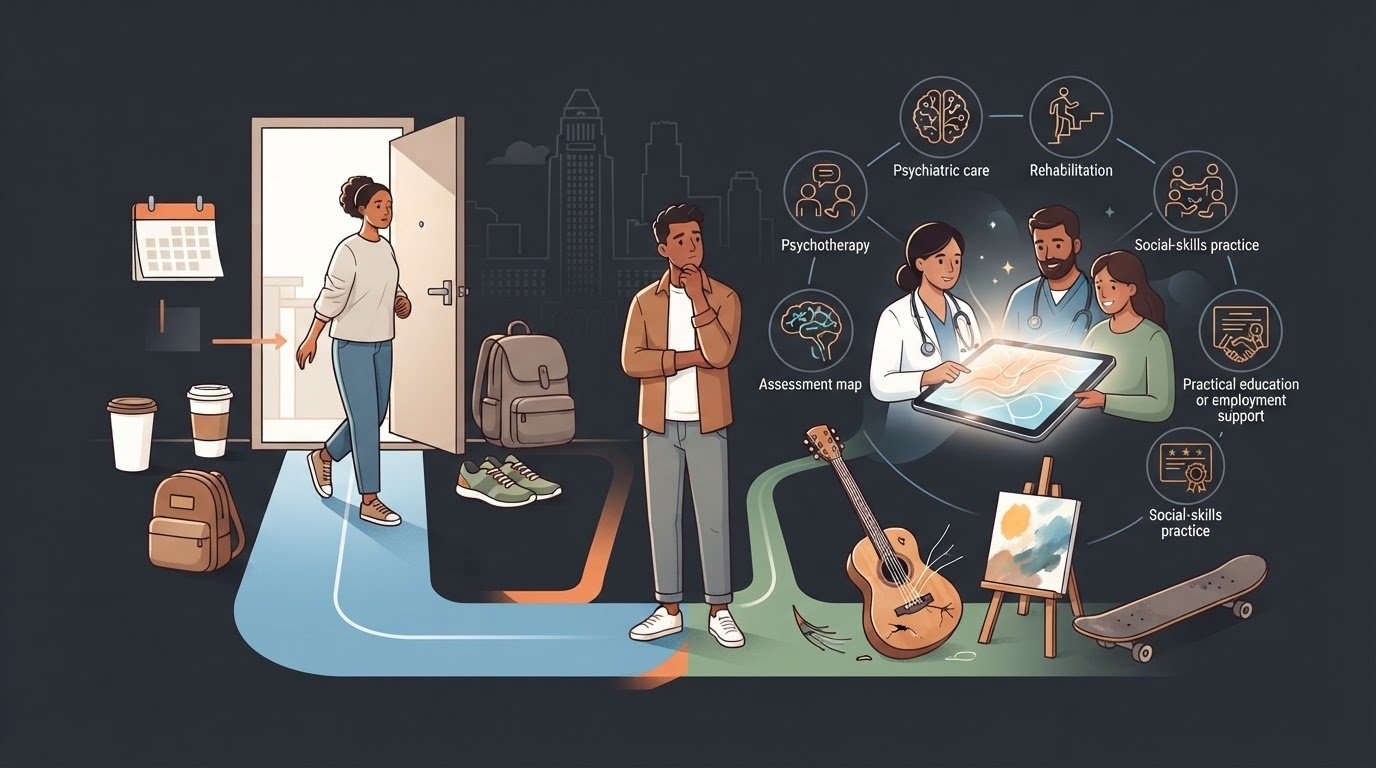
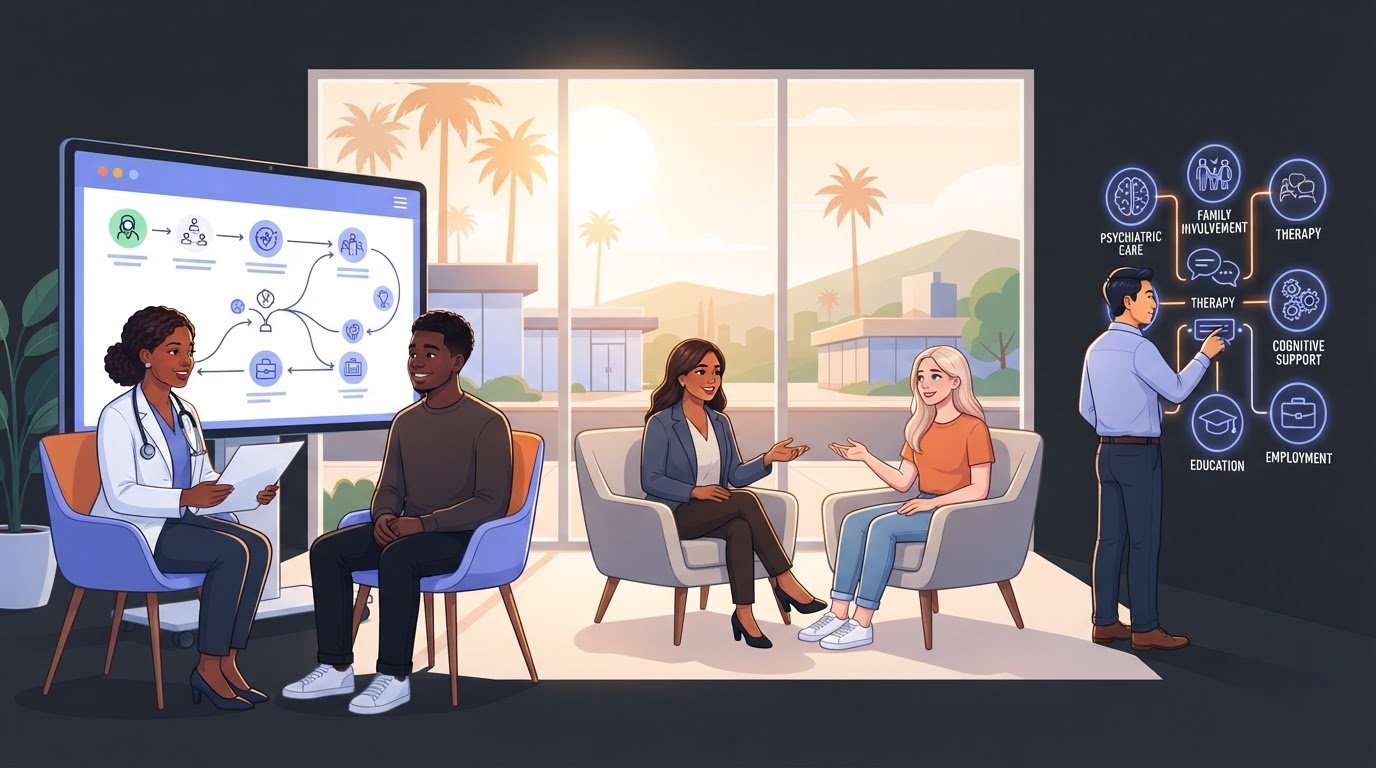
Legal intervention provides essential safety, but clinical care drives the journey toward a meaningful life. At Pand Health, we view the period of court oversight as a vital window of opportunity to build the skills necessary for long-term independence. Whether a family is navigating the acute requirements of an LPS order or the protective structure of probate, our California OnTrack program serves as the clinical bridge to a stable future. We don't just manage symptoms; we focus on functional outcomes like employment and education through our Supported Education & Employment (SEE) curriculum. By prioritizing these real-world successes, we help individuals move toward a life where the legal distinctions of Conservatorships: LPS vs Probate eventually become a part of their past rather than their present.
Our approach is rooted in the unwavering belief that recovery is expected, not just hoped for. To achieve this, we maintain a commitment to intensive, data-driven care that yields tangible results for families in Los Angeles. Currently, our program participants maintain a 6% rehospitalization rate, which is a marked improvement over the 10% industry average. This stability allows families to find relief, knowing that the "revolving door" of psychiatric crisis has finally slowed. We offer a "lifeline" through our policy of indefinite enrollment, supporting the individual with specialized care until legal oversight is no longer required for their safety.
The Augmented Coordinated Specialty Care (CSC) Model
Pand Health provides the only outpatient CSC program in Southern California that incorporates APA-recommended cognitive remediation. This specialized training focuses on restoring executive function, such as memory and attention, which are often impaired during prolonged periods of psychosis. Alongside this, we utilize Metacognitive Training (MCT) to help individuals recognize and reduce the cognitive biases that lead to delusional thinking. These evidence-based interventions are designed to help patients "graduate" from their conservatorship status by demonstrating the cognitive and social stability required for independent living in the community.
A Partner for Families in Crisis
Navigating the complexities of Conservatorships: LPS vs Probate is exhausting for any family. We act as a dedicated clinical partner, providing the precise psychiatric evaluations and clinical documentation needed for LPS renewals or transitions to less restrictive care. Our mission includes healing the entire family unit through family therapy and psychoeducation, ensuring that everyone has the tools to support a successful recovery journey. If you are navigating a mental health crisis in Los Angeles, reach out to Pand Health for a comprehensive evaluation to begin the path toward stability and wellness.
Moving Beyond the Legal Crisis Toward Lasting Stability
Navigating the complex differences between Conservatorships: LPS vs Probate is a significant first step in protecting your family's future. While an LPS order provides the clinical leverage needed during a psychiatric emergency, probate offers a protective shield for those facing long-term cognitive decline. Both legal tools serve as a vital safety net, but they are most effective when paired with a clear, recovery-oriented clinical plan. Legal oversight ensures safety today, but specialized treatment builds the foundation for tomorrow's independence.
Pand Health serves as Southern California's only augmented Coordinated Specialty Care program, providing intensive, recovery-oriented care for teens and adults. Our data-driven approach has achieved an industry-leading 6% rehospitalization rate, helping families break the cycle of crisis. We are here to act as your clinical guide, offering the expertise needed to transition from court oversight back to a life of autonomy and purpose. Secure a specialized evaluation for your loved one today. There is a path forward, and your family doesn't have to walk it alone.
Frequently Asked Questions
Can a family member initiate an LPS conservatorship in Los Angeles?
No, a family member cannot directly file for an LPS conservatorship in Los Angeles. This specific legal process must be initiated by a designated mental health facility or the Los Angeles County Public Guardian. It usually follows a series of involuntary psychiatric holds, such as a 5150 or 5250. While families cannot petition the court themselves, they can provide critical history and evidence to the clinical team and the Public Guardian during the investigation.
How long does a Probate conservatorship last compared to an LPS one?
An LPS conservatorship automatically expires after exactly one year. If the individual still requires oversight, the Public Guardian must file for a renewal and prove the need in a new court hearing. A probate conservatorship, however, is generally permanent. It remains in effect until the court formally terminates it or the conservatee passes away. Understanding these timelines is essential when comparing Conservatorships: LPS vs Probate for a loved one's long-term stability.
What is 'Grave Disability' under California's 2026 mental health laws?
Effective January 1, 2026, California's Senate Bill 43 significantly expanded the definition of "grave disability." It now includes individuals who are unable to provide for their own personal safety or necessary medical care due to a severe mental health or substance use disorder. Previously, the standard was limited to an inability to provide for food, clothing, or shelter. This update allows for earlier intervention for those in Los Angeles experiencing acute psychiatric crises.
Can a conservator force a loved one to take psychiatric medication?
An LPS conservator has the specific legal authority to consent to involuntary psychiatric treatment, including the administration of psychotropic medications. In contrast, a general probate conservator does not have this power unless the court grants specific "medication powers" or "dementia powers" through a separate order. This distinction is a primary reason families choose the LPS path when a loved one is experiencing treatment-resistant psychosis and refuses life-saving care.
What happens if a conservatee recovers their mental health during the year?
If a conservatee regains their stability, they or their legal counsel can petition the Los Angeles Superior Court to terminate the conservatorship. For those under an LPS order, the individual has the right to a jury trial to challenge the conservatorship or its renewal. At Pand Health, our goal is to support this transition through intensive rehabilitation. We help individuals build the executive function and social skills needed to graduate from legal oversight back to independent living.
Does a Probate conservatorship cover psychiatric hospitalizations?
No, a standard probate conservatorship does not grant the authority to place someone in a locked psychiatric facility or authorize involuntary mental health hospitalizations. Probate is designed for individuals who are cooperative but incapacitated due to cognitive decline or physical disability. When families evaluate Conservatorships: LPS vs Probate for psychiatric crises, they find that only the LPS path provides the authority to ensure a loved one receives secure, high-level clinical care.
How do I know if my son needs an LPS conservatorship or just intensive outpatient care?
This decision requires a professional psychiatric evaluation to determine if your son meets the legal threshold of "grave disability." If he can safely participate in treatment, intensive outpatient care like the California OnTrack program is often the preferred first step. Our recovery-oriented model has achieved a 6% rehospitalization rate for participants. We focus on stabilizing symptoms and restoring functional outcomes, such as education and employment, to avoid the need for restrictive legal measures.
What is the role of the Public Guardian in the LPS process?
The Public Guardian serves as the official petitioner and investigator for all LPS cases in Los Angeles County. They conduct a thorough investigation to determine if a conservatorship is the least restrictive alternative available for the individual. If the court grants the petition and no qualified family member is available to serve, the Public Guardian may be appointed to manage the individual's care and placement. They act as a steady hand during the legal process.
Disclaimer
This article is for information and educational purposes only, and can NEVER replace a proper medical evaluation. If you or a loved one may be suffering from psychosis or the prodomal symptoms of psychosis, get evaluated by a professional as soon as possible. Early diagnosis and treatment can be life-saving.