

Family Psychoeducation for Psychosis in Los Angeles
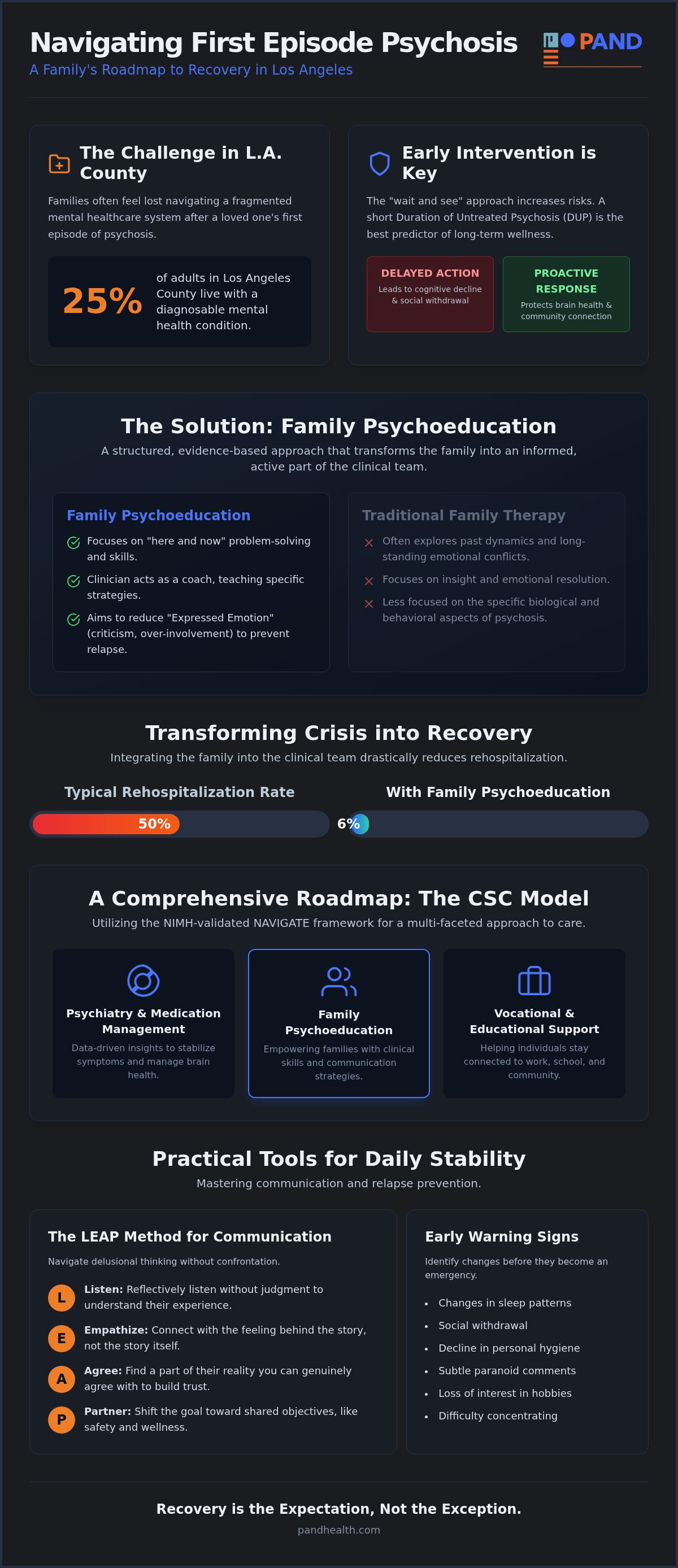
In Los Angeles County, approximately 25% of adults live with a diagnosable mental health condition, yet many families feel entirely alone when a loved one faces a first episode of psychosis. If you're seeking family psychoeducation for psychosis Los Angeles providers offer, you're likely exhausted from navigating a fragmented healthcare system and terrified that this diagnosis marks the beginning of a lifelong disability. It's difficult to distinguish between clinical symptoms and behavioral issues when you're simply trying to keep your head above water. We know the weight of this uncertainty is heavy, and you deserve a steady hand to guide you through the storm.
Evidence-based intervention transforms this period of crisis into a structured, manageable path toward recovery. By integrating the family as a core part of the clinical team, we can reduce rehospitalization rates from a typical 50% down to just 6%. This article provides a clear roadmap for your journey. You'll learn how to lower risks and restore a sense of normalcy to your home. At our specialized center on W. Olympic Blvd, we believe that recovery is the expectation, not the exception, and we're here to help you move toward long-term wellness.
Key Takeaways
- Learn why an immediate, proactive response is essential for long-term recovery and why the "wait and see" strategy often leads to avoidable complications.
- Understand how family psychoeducation for psychosis Los Angeles programs provide the specific clinical skills needed to support a loved one more effectively than traditional family therapy.
- Discover the Coordinated Specialty Care model, which combines psychiatry and vocational support to build a comprehensive roadmap for stability.
- Master practical communication tools like the LEAP method to navigate delusional thinking and identify early warning signs before they become emergencies.
- Explore how specialized outpatient care can significantly lower rehospitalization risks, reinforcing the belief that recovery is the expectation, not the exception.
Navigating the Psychosis Diagnosis in Los Angeles
The moment a loved one experiences a first episode of psychosis, the world as you knew it shifts. It's common to feel a profound sense of shock, as if you're navigating a crisis without a map. In Los Angeles, where approximately 25% of adults live with a diagnosable mental health condition, the mental health system often feels fragmented and overwhelming. You might be tempted to adopt a "wait and see" approach, hoping the symptoms are a one-time occurrence or a temporary phase. However, clinical data suggests that delay only deepens the crisis and complicates the path to wellness. Shifting your perspective from immediate damage control to a recovery-oriented future is the first step toward long-term stability.
The Critical Window for Early Intervention
The time between the onset of symptoms and the start of treatment is known as the Duration of Untreated Psychosis (DUP). A longer DUP is associated with greater risks of cognitive decline and social withdrawal. In a fast-paced environment like Los Angeles, these delays can have lasting impacts on a young person's ability to maintain employment or finish school. Early intervention is the most effective predictor of long-term wellness. By engaging with specialized care early, we can protect brain health and ensure the individual remains connected to their community. When families ask, What is Family Psychoeducation for Psychosis? they're looking for ways to translate clinical data into a daily plan for stability.
Moving Beyond the Emergency Room
For many families, the journey begins with a 5150 hold or an emergency room visit. While these interventions ensure immediate safety, they're only the beginning of the journey, not the final solution. There's often a dangerous gap between hospital discharge and successful community reintegration. Without a structured plan, the risk of a "revolving door" of hospitalizations increases significantly. When searching for family psychoeducation for psychosis Los Angeles families often struggle to find programs that offer the intensity required for long-term success.
Accessing the family psychoeducation for psychosis Los Angeles residents need means looking for a specialized outpatient lifeline. At our center on W. Olympic Blvd, we focus on bridging the gap between clinical crisis and everyday life. We provide a steady hand for families who find themselves lost in the local mental health landscape. Our mission is to ensure you have the tools to move forward because recovery is the expectation, not the exception.
What is Family Psychoeducation for Psychosis?
Family psychoeducation is a structured clinical intervention that empowers families with the technical knowledge and practical skills required to support a loved one's recovery. It's an active, goal-oriented process that moves beyond simple empathy. This approach turns the family unit into an informed partner in the clinical process. By focusing on illness management and collaborative problem-solving, the family becomes a protective factor rather than a bystander. Educating the family is just as important as treating the individual because the home environment is where the majority of recovery actually happens.
Psychoeducation vs. Traditional Family Therapy
Traditional family therapy often focuses on exploring childhood dynamics or resolving long-standing emotional conflicts. In contrast, family psychoeducation for psychosis Los Angeles models prioritize "here and now" solutions. The clinician acts as a coach, providing direct feedback and teaching specific behavioral strategies. One primary goal is the reduction of "Expressed Emotion" (EE). High levels of criticism or emotional over-involvement are known predictors of relapse. By learning to communicate more neutrally and effectively, families can lower the emotional temperature of the household. This shift significantly reduces the physiological stress on the individual, which is essential for maintaining stability.
The Science of the NAVIGATE Framework
Our California OnTrack programs utilize the NIMH-validated NAVIGATE framework, which is the gold standard for early psychosis intervention. This model uses structured learning modules to help families understand brain health and the biology of their loved one's symptoms. It removes the mystery from the diagnosis and replaces it with data-driven insights. These modules cover everything from medication management to cognitive remediation. When families understand the "why" behind certain behaviors, they can respond with precision rather than frustration. If you're ready to move from crisis to a structured path, our specialists can help you build a personalized recovery plan.
The California OnTrack Coordinated Specialty Care (CSC) Model
Coordinated Specialty Care (CSC) represents a clinical paradigm shift in treating early-onset psychosis. It's recognized as the gold standard because it moves away from isolated, fragmented treatments. Instead, it utilizes a "team-delivered" approach where psychiatry, specialized therapy, and vocational support work in total unison. This level of integration is the primary key to preventing rehospitalization in Los Angeles. By ensuring every member of the clinical team communicates daily, we close the gaps where patients often fall through the cracks during the critical first years of a diagnosis.
A vital component of this model is the Supported Education and Employment (SEE) curriculum. True recovery involves more than just symptom management; it requires a return to a life of meaning and purpose. The SEE program helps young adults stay in school or secure meaningful work, which directly improves self-esteem and social stability. When combined with family psychoeducation for psychosis Los Angeles services, the entire support system is aligned toward the singular goal of individual independence.
Augmented Outpatient Care in Southern California
Pand Health extends the standard CSC model by incorporating physical fitness and intensive brain training into the daily routine. These "augmented" features address the cognitive and physical health challenges that frequently accompany a psychosis diagnosis. We utilize Metacognitive Training (MCT) to help individuals recognize and correct the cognitive biases that fuel delusional thinking. Additionally, our clubhouse model provides a safe space for Social Skills Training in Los Angeles, allowing for real-world practice in a supportive, peer-led environment.
Measurable Outcomes for LA Families
Data-driven care provides families with the confidence they need during a time of immense uncertainty. High-quality programs using the CSC framework see significant measurable improvements, including an average 19-point improvement on the PANSS (Positive and Negative Syndrome Scale) after consistent enrollment. More importantly, rehospitalization rates for those in comprehensive programs drop from a pre-enrollment average of 50% to just 6%. These results prove that with the right level of specialized intervention, recovery is the expectation, not the exception. We believe every family deserves this level of transparency and clinical success.
Communication and Relapse Prevention Strategies
Effective relapse prevention begins with the recognition that families are the most sensitive monitors of clinical change. Long before a full psychiatric crisis occurs, subtle shifts in behavior act as early warning signs. These might include disrupted sleep patterns, sudden social withdrawal, or a decline in personal hygiene. Identifying these signals early allows you to activate your support team before symptoms escalate. A core component of family psychoeducation for psychosis Los Angeles is developing a formal crisis plan. This document outlines specific steps to take, prioritizing clinical intervention over law enforcement. In Los Angeles, utilizing mobile crisis teams or psychiatric urgent cares can prevent the trauma often associated with police involvement during a mental health emergency.
Communicating with someone experiencing delusional thinking requires a specialized approach known as the LEAP method: Listen, Empathize, Agree, Partner. Rather than arguing against a delusion, which often increases agitation, you listen to understand the emotional experience. You empathize with the fear or frustration the individual feels. You find common ground to agree on, such as a desire for better sleep or less stress. Finally, you partner on a solution that addresses those shared goals. This method preserves the relationship and builds the trust necessary for long-term treatment adherence. Setting realistic boundaries is also vital. While support is necessary, families must encourage the independence required for vocational goals, gradually shifting responsibilities back to the individual as they stabilize.
Reducing Stress in the Home Environment
A high-intensity home environment can inadvertently trigger a return of symptoms. Reducing "expressed emotion" involves maintaining a calm, neutral tone and avoiding high-conflict debates. During periods of "brain fog" or negative symptoms, individuals may struggle to process complex information. Families can support recovery by simplifying communication. Use clear, direct sentences and offer one instruction at a time. This reduces the cognitive load on the individual, allowing their brain the space it needs to heal and process information more effectively.
Supporting the Work-Study Transition
Recovery is not just about the absence of symptoms; it's about the presence of a meaningful life. Families play a critical role in supporting the LA Work-Study Guide for Mental Health Recovery. This involves advocating for accommodations in California schools and workplaces, such as flexible deadlines or quiet workspaces. It's a delicate balance between pushing for progress and practicing patience. If you're concerned about your loved one's ability to return to school or work, contact our vocational specialists to discuss a tailored support plan today.
Why Pand Health is the Lifeline for LA Families
Choosing the right clinical partner is the most consequential decision a family makes following a psychosis diagnosis. At our specialized center on W. Olympic Blvd, we provide a high-end, data-driven alternative to standard county services. We're proud to offer the only outpatient Coordinated Specialty Care (CSC) program in Southern California featuring certified Metacognitive Training (MCT) instructors. This specialized expertise allows us to address the root of delusional thinking with a level of precision that general practitioners simply can't match. We don't just treat symptoms; we build a foundation for a meaningful life. In our program, recovery is the expectation, not the exception.
Our commitment to excellence is reflected in our measurable outcomes. While many families fear that a diagnosis means a permanent withdrawal from society, our data tells a different story. After six months in our program, 85% of our participants are actively engaged in employment or education. This success is rooted in our belief that family psychoeducation for psychosis Los Angeles services must be integrated into every aspect of care. By providing families with the same high-level training we give our clinicians, we ensure that the progress made in our office continues at home. We're here to offer a steady hand and a clear direction when the path forward feels uncertain.
The Mind Exposed: Ongoing Support and Education
Education shouldn't end when a session is over. We provide continuous resources through The Mind Exposed Podcast, which serves as a vital learning tool for families navigating the complexities of brain health. Our clinicians also benefit from a rigorous professional training curriculum that keeps them at the forefront of neuropsychological research. Unlike many programs that have strict time limits, we offer the benefit of indefinite enrollment. This ensures that your family has access to a consistent lifeline of support for as long as it's needed to maintain long-term stability and wellness.
Getting Started with a Comprehensive Evaluation
We understand that when a crisis hits, you can't afford to wait weeks for an appointment. That's why we offer same or next-day psychosis evaluation services to provide immediate clarity and direction. During this initial phase, we match your loved one to the most appropriate care pathway, whether it's our California OnTrack for Teens, California OnTrack for Adults, or specialized support for neurodivergent individuals. Each path is tailored to the specific developmental needs of the person, ensuring the intervention is both age-appropriate and clinically rigorous. If you're ready to move toward a manageable path of recovery, you can schedule a psychiatric evaluation at our Los Angeles office today.
Reclaiming Stability Through Specialized Support
A psychosis diagnosis doesn't have to mean a lifelong retreat from the world. By embracing the structured frameworks of the Coordinated Specialty Care model, you can transform a period of intense crisis into a manageable path toward long-term recovery. You've learned how specialized communication tools and early intervention protect cognitive health and restore the family unit's stability. These methods provide the clarity needed to move forward with confidence.
As the only provider in Southern California offering an augmented CSC model, we combine clinical rigor with deep empathy. Our team includes certified MCT and SCIT instructors who are dedicated to delivering measurable results. Programs at our center have seen rehospitalization rates drop to just 6%, compared to the 50% baseline typically seen pre-enrollment. If you're ready to secure the high-standard family psychoeducation for psychosis Los Angeles families need to thrive, we're here to serve as your dedicated guide.
Don't face this journey alone. You can contact Pand Health for a specialized family consultation and begin building a roadmap for your loved one's future. We believe that with the right support, recovery is the expectation, not the exception.
Frequently Asked Questions
What is the difference between family therapy and family psychoeducation?
Family psychoeducation is a skill-building clinical intervention. It provides families with the technical knowledge to manage illness, whereas traditional family therapy often explores relationship dynamics. In our family psychoeducation for psychosis Los Angeles sessions, we focus on practical problem-solving and communication training. This structured approach empowers you to act as a co-clinician, which is more effective for preventing relapses than open-ended talk therapy.
How long does the California OnTrack program typically last?
Our California OnTrack programs don't have a rigid expiration date because recovery is a unique journey. We offer indefinite program enrollment to ensure continuous support as long as it's needed for stability. Most clients see significant functional gains within the first six to twelve months. However, we stay by your side to manage transitions, such as returning to university or starting a career, to prevent setbacks.
Does Pand Health accept insurance for psychosis treatment in Los Angeles?
Pand Health operates as a private, out-of-network provider to maintain the highest standard of specialized care. While we don't contract directly with insurance panels, many families utilize out-of-network benefits to cover a portion of the costs. This model allows us to deliver intensive, one-on-one interventions that aren't typically available through standard in-network clinics. We recommend checking your PPO plan's specific coverage for outpatient mental health services.
What age groups are eligible for the family psychoeducation program?
Our programs are specifically designed for adolescents and young adults between the ages of 13 and 40. This age range is critical because it's when the first signs of a psychosis diagnosis typically emerge. By focusing on this demographic, we can provide age-appropriate social skills training and vocational support. Our specialized tracks for teens and adults ensure that every participant receives care tailored to their specific developmental stage.
Can family psychoeducation help if my child has cannabis-induced psychosis?
Yes, we offer specialized cannabis-induced psychosis rehab for individuals whose symptoms were triggered or exacerbated by substance use. This type of psychosis requires a specific clinical approach that addresses both the neurobiological impact of the drug and the underlying symptoms. Our comprehensive family psychoeducation for psychosis Los Angeles services include teaching families how to navigate the unique challenges of substance-related episodes while fostering a drug-free path toward wellness.
What are the first signs that my teen might need a psychiatric evaluation?
You should look for subtle shifts in behavior that persist for more than a few days. Common early warning signs include sudden social withdrawal, a decline in personal hygiene, or disrupted sleep patterns. Your teen might also experience "brain fog" or express unusual thoughts that seem out of character. If you notice these changes, our same or next-day psychosis evaluation services provide the immediate clarity needed for recovery.
How does the Work-Study Program integrate with clinical treatment?
The Supported Education and Employment (SEE) curriculum is directly linked to clinical care to ensure a holistic recovery. We don't treat vocational goals as separate from mental health; instead, we use motivational interviewing and workplace advocacy to help clients succeed in real-world settings. This integration is why 85% of our participants are back in school or working after six months. We bridge the gap between stability and independence.
Is rehospitalization common during the recovery process?
While the industry average for rehospitalization is approximately 50%, it's not an inevitable part of the process. In our high-intensity program, the rehospitalization rate is just 6%. This significant reduction is achieved through proactive relapse prevention plans and intensive family involvement. We teach you to identify early warning signs before they become emergencies, ensuring that recovery remains the expectation rather than the exception for your loved one.
Disclaimer
This article is for information and educational purposes only, and can NEVER replace a proper medical evaluation. If you or a loved one may be suffering from psychosis or the prodomal symptoms of psychosis, get evaluated by a professional as soon as possible. Early diagnosis and treatment can be life-saving.