

Vocational Rehabilitation Services in Los Angeles: A Guide to Career Recovery After Psychosis
Imagine your child standing at the threshold of their first job interview after a year of recovery, feeling the weight of a resume gap but the quiet strength of new skills. It is a moment of profound hope, yet it's often shadowed by the fear that workplace stress could lead to a setback. You want more for them than just a job; you want a sustainable career and the confidence that comes with it. Many families find that generic state programs, currently facing an "Order of Selection" that limits immediate access, don't always provide the specialized support needed for someone recovering from psychosis. Finding the right vocational rehabilitation services Los Angeles provides is about more than just employment; it's about restoring a sense of self.
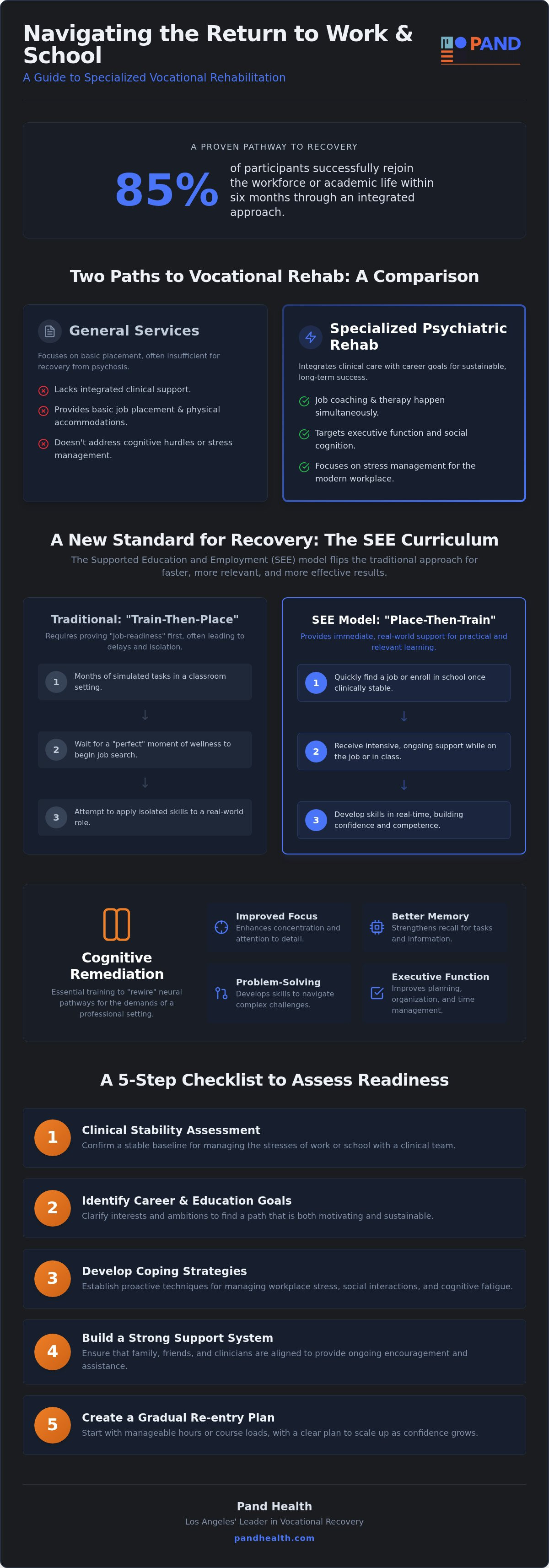
We understand the anxiety that comes with balancing professional goals and mental wellness. This article will show you how integrating clinical care with career support can transform the recovery journey, helping young adults return to school or work with lasting stability. We'll preview the specific strategies used in high-success programs, including cognitive remediation and supported education, which have helped 85% of participants successfully rejoin the workforce or academic life within six months. Discover how a tailored approach can turn the dream of independence into a lived reality for your loved one.
Key Takeaways
- Learn how specialized vocational rehabilitation services Los Angeles provides go beyond basic job placement to address the unique clinical needs of psychosis recovery.
- Understand why the "place-then-train" model of the SEE curriculum is more effective for long-term career stability than traditional training methods.
- Discover how cognitive remediation "rewires" neural pathways to improve the focus, memory, and problem-solving skills required in a professional setting.
- Follow a structured 5-step checklist to assess readiness for work or school, ensuring a safe and sustainable return to daily life.
- Explore how specialized programs achieve an 85% success rate for employment and education participation through a holistic, integrated approach.
What Are Specialized Vocational Rehabilitation Services in Los Angeles?
Vocational rehabilitation is more than a simple job search. It's a clinical intervention designed to bridge the gap between psychiatric stability and professional success. In a fast-paced environment like Los Angeles, returning to work or school after a psychotic episode requires a strategy that respects both the individual's ambition and their current mental health needs. These services are often grounded in federal protections like the Rehabilitation Act of 1973, which ensures that individuals with disabilities have access to the tools necessary for gainful employment. By viewing work as a vital part of the healing process rather than a final destination, these programs help young adults reclaim their sense of purpose.
Within the city, families often encounter a wide spectrum of care. State-funded programs provide essential general guidance, but psychiatric vocational rehabilitation offers a deeper, more nuanced level of support. This specialized approach utilizes "Supported Employment," a model where job coaching and education support happen simultaneously with active clinical therapy. Instead of waiting for a "perfect" moment of wellness that may never feel certain, the goal is to integrate the individual back into their community as soon as they're clinically stable. This ensures that the transition is managed by experts who understand the delicate balance of professional stress and psychological health.
The Difference Between General and Psychiatric Vocational Rehab
General vocational services often focus on physical workplace accommodations or basic job placement. While helpful, they may lack the specialized knowledge required to navigate the cognitive hurdles of psychosis. Psychiatric vocational rehabilitation specifically targets executive function, social cognition, and stress management. In the competitive Los Angeles job market, these skills are non-negotiable. A young professional needs to know how to manage workplace social cues and cognitive fatigue just as much as they need a polished resume. Specialized vocational rehabilitation services Los Angeles providers focus on these internal mechanics to ensure long-term career retention.
Who Qualifies for These Services in Southern California?
Eligibility for most vocational rehabilitation services Los Angeles offers is based on a documented disability that creates a barrier to employment. At Pand Health, our focus is specifically on teens and young adults between the ages of 13 and 40 who are navigating early psychosis. Early intervention is the cornerstone of our philosophy. By providing vocational support during the initial stages of recovery, we can prevent the long-term disability and social isolation that often follow a first episode. If you're ready to explore how these programs can help your family, you can reach out to our team for a consultation.
The ultimate objective isn't merely landing a job. It's about career growth and the restoration of a life that feels meaningful and independent. When clinical care and professional development move in tandem, the expectation shifts from simple survival to genuine thriving. This holistic approach ensures that a diagnosis doesn't define a career path, but rather becomes a manageable part of a successful life.
The SEE Curriculum: A New Standard for Vocational Recovery
The Supported Education and Employment (SEE) curriculum represents a fundamental shift in how we approach career recovery. It is a cornerstone of the OnTrack model, moving away from the traditional "train-then-place" approach that often leaves individuals feeling isolated in a classroom for too long. Historically, vocational programs required participants to prove they were "job-ready" through months of simulated tasks before ever applying for a role. SEE flips this script. It utilizes a "place-then-train" philosophy. This means we help individuals find a position or enroll in school quickly, then provide intensive, ongoing support while they are actually in that environment. This real-time training ensures that learning is practical, immediate, and relevant to their specific goals. It's a vital component of the specialized vocational rehabilitation services Los Angeles families rely on to rebuild a sense of normalcy.
This model integrates clinical health outcomes directly with functional real-world gains. By using techniques like motivational interviewing and social skills training tailored for professional settings, we address the specific anxieties that arise in the office or classroom. While the California Department of Rehabilitation (DOR) provides a broad foundation for many individuals with disabilities, the SEE curriculum offers a level of clinical integration specifically designed for the nuances of psychosis recovery. It acknowledges that a paycheck or a passing grade is a form of medicine, fostering the independence and long-term stability needed for a successful life.
Bridging the Gap Between Therapy and the Workplace
In a coordinated care environment, job coaches and therapists do not work in silos. They collaborate daily to support a single client's journey. If a participant experiences social anxiety during a staff meeting, the therapist addresses the cognitive hurdle in a clinical setting while the job coach provides practical communication strategies for the next day. This unified front helps clients navigate complex decisions, such as workplace advocacy or the personal choice of whether to disclose a diagnosis to an employer. For more details on this specialized approach, you can read about our Job Coaching for Adults with Psychosis & Autism.
Supported Education for Los Angeles Students
For many young adults in Southern California, the path to recovery leads back to campus. Whether a student is returning to UCLA, USC, or a local community college after a medical leave, the transition can feel overwhelming. Supported education provides a structured roadmap for this return. We assist students in navigating disability service offices to secure necessary academic accommodations, ensuring they have the flexibility needed to succeed in a rigorous academic environment. Our guide on Educational Support for Students with Psychosis offers deeper insights into academic success. If you have questions about how these vocational rehabilitation services Los Angeles can support your educational goals, please contact our specialists today for a confidential discussion.
Why Cognitive Remediation is Essential for Career Success
Psychosis does not just affect mood or perception; it fundamentally alters the cognitive toolkit we use to navigate a professional environment. Many individuals find that even after their primary symptoms stabilize, they struggle with "invisible" hurdles like memory gaps, shortened attention spans, and difficulty solving complex problems. These aren't character flaws or a lack of motivation. They're clinical challenges that require a specific type of intervention. In the context of vocational rehabilitation services Los Angeles, cognitive remediation serves as the engine for long-term career success. By using computer-assisted training, we can literally "rewire" neural pathways, helping the brain regain the processing speed and executive function necessary for a demanding workplace.
At Pand Health, we take this a step further by pairing cognitive exercises with high-intensity fitness coaching. This combination accelerates brain health by increasing the production of brain-derived neurotrophic factor (BDNF), a protein that supports the growth and survival of neurons. Research consistently shows that when cognition improves, employment outcomes follow. This specialized care is a key reason why programs like the Los Angeles County early psychosis programs emphasize the importance of supportive services during the first years of recovery. When the brain is physically prepared for the stress of a career, the transition back to work becomes a source of empowerment rather than a risk for relapse.
Addressing the 'Invisible' Barriers to Employment
When an employee struggles to remember a multi-step instruction or misinterprets a colleague's tone, "trying harder" isn't the solution. For those navigating schizophrenia-spectrum disorders, these moments can be incredibly frustrating. Metacognitive Training (MCT) provides a framework to manage these challenges, teaching individuals to recognize and correct the cognitive biases that can lead to workplace paranoia or suspicion. To see how these clinical tools translate into social confidence, you can explore our guide on Social Skills Training in Los Angeles. This training ensures that the "invisible" barriers don't become permanent roadblocks to professional growth.
Certified MCT and SCIT in Southern California
Pand Health is currently the only regional provider offering both certified MCT and Social Cognition and Interaction Training (SCIT). These interventions are vital for anyone navigating the complex social landscape of a modern office. SCIT specifically focuses on helping clients read social cues and understand the perspectives of others. This training reduces workplace friction for individuals on the autism spectrum or those with psychosis by providing a clear map for social interactions. By mastering these social-cognitive skills, a professional can move from simply having a job to truly integrating into their team. If you're looking for this level of specialized support, please reach out to us to learn more about how we can help.
How to Prepare for the Return to Work: A 5-Step Checklist
The transition from clinical stability to professional reintegration is a path paved with deliberate, thoughtful steps. Success in a career after a psychotic episode isn't a matter of luck; it's a result of careful preparation and the right support system. To ensure a smooth transition, we recommend following a structured checklist as part of the vocational rehabilitation services Los Angeles families utilize to rebuild their futures.
- Step 1: Clinical Stabilization – It's vital that symptoms are consistently managed before increasing environmental stress. Pushing for employment too early can lead to unnecessary setbacks.
- Step 2: Functional Assessment – Professional evaluations identify specific cognitive strengths and gaps. This step builds on the cognitive remediation work discussed earlier, ensuring the job match aligns with the individual's current processing speed and memory capacity.
- Step 3: Resume and Portfolio Building – We focus on addressing employment gaps with transparency and confidence. Resumes are crafted to highlight skills, recent training, and the unique perspectives the individual brings to a team.
- Step 4: Mock Interviewing – Practicing social interactions in a safe, clinical environment allows clients to refine their communication. This includes developing strategies for if and how to disclose a diagnosis.
- Step 5: Gradual Re-entry – We often recommend starting with part-time work or a single class. This approach builds the necessary stamina and confidence without overwhelming the individual's nervous system.
Navigating Disclosure and Accommodations
Understanding your rights under the Americans with Disabilities Act (ADA) provides a layer of legal protection that many families find reassuring. You have the right to request reasonable accommodations, such as a flexible schedule or a quiet workspace, to support your success. A vocational coach acts as a bridge, facilitating conversations with HR departments when necessary. We help clients develop concise, professional ways to explain a resume gap without oversharing medical details, keeping the focus on their readiness to contribute to the Los Angeles workforce.
Managing Stress and Preventing Relapse
The first 90 days of a new job are often the most demanding. We help clients develop a "Workplace Wellness Plan" to identify early warning signs of stress before they escalate into a crisis. Continued medication management and regular therapy sessions are essential during this period of high change. For a deeper look at this process, see our full article on Vocational Rehabilitation for Psychosis in Los Angeles. If you're ready to begin this structured path back to work or school, contact our Los Angeles team to schedule a functional assessment and see how our vocational rehabilitation services Los Angeles can support your family's goals.
Pand Health: Los Angeles' Leader in Vocational Recovery
Pand Health stands as a specialized beacon for families seeking vocational rehabilitation services Los Angeles. While general state services provide a broad safety net, our California OnTrack program offers an augmented Coordinated Specialty Care (CSC) model that addresses the specific complexities of first-episode psychosis. Located on Olympic Blvd, we provide a centralized hub for accessible, high-intensity care across the entire metro area. We are currently the only outpatient program in Southern California to fully integrate APA-recommended cognitive remediation and fitness with a dedicated Work-Study curriculum. This holistic approach ensures that every aspect of a young adult's health contributes to their professional success.
Our philosophy is built on the belief that work and school are not just goals to be reached after recovery, but are active components of the recovery process itself. By providing a "lifeline" of expertise, we guide families through the often-confusing landscape of mental health care. We don't just offer job placement; we offer a clinical bridge to a sustainable future. Our program is designed for teens and young adults who refuse to let a diagnosis dictate their potential, providing them with the cognitive and social tools necessary to compete in the local job market.
Real Results: Our 2022-2024 Cohort Outcomes
The efficacy of this integrated approach is reflected in our clinical data. For the 2022-2024 cohort, employment and education participation rose from just 6% at the time of enrollment to 85% after six months in the program. This transformation is rooted in significant clinical improvement. For instance, our participants saw a 19-point average improvement in PANSS scores, which served as a primary driver for their vocational success by reducing the interference of active symptoms. Additionally, our rehospitalization rate remains at 6%, which is significantly lower than the 10% industry average. These numbers represent more than just statistics; they represent lives reclaimed and futures restored.
Take the First Step Toward Career Recovery
Recovery is the expectation at Pand Health, not the exception. We understand the weight of the challenges your family is facing, and we're here to provide the steady hand you need. Our team offers comprehensive evaluations to determine the best path forward for your loved one, ensuring they receive a level of care that is both rigorous and deeply human. We invite you to explore how our specialized vocational rehabilitation services Los Angeles can turn a period of crisis into a journey of professional and personal growth. Ready to see your child thrive again? Contact Pand Health today to learn about our Work-Study Program and take the first step toward long-term independence.
Reclaiming a Future of Professional Success
The journey back to school or a career after a psychotic episode is a path toward reclaiming identity and independence. We've seen how the SEE curriculum and targeted cognitive remediation build the mental stamina required for professional life. By addressing both clinical health and workplace skills, young adults can navigate the competitive Los Angeles market with a renewed sense of security. This integrated approach ensures that the transition is not just a return to work, but a step toward a sustainable career.
Pand Health provides the only augmented CSC model in Southern California, featuring certified MCT instructors on staff to bridge the gap between therapy and the office. Our clinical data reflects this commitment to excellence, showing an 85% employment success rate after just six months of participation. When you access the specialized vocational rehabilitation services Los Angeles families trust, you're investing in a future where a diagnosis doesn't define a person's potential. We focus on the strengths of the individual to ensure they thrive in every environment.
If you're ready to see your loved one return to their ambitions with the support of a dedicated team, we're here to guide every step. Schedule a Consultation for the California OnTrack Program today to discover how specialized care makes recovery the expectation. Hope and professional success are within reach.
Frequently Asked Questions
What is the difference between vocational rehab and job coaching?
Vocational rehabilitation is a comprehensive, clinically integrated process aimed at restoring an individual's general capacity to work or study, while job coaching is a specific service focused on mastering tasks within a particular role. Rehab addresses the underlying cognitive and psychological barriers to employment. Job coaching provides the hands-on support needed once a position is secured. Both are essential components of the vocational rehabilitation services Los Angeles providers use to ensure long-term stability.
How do I know if my child is ready for vocational rehabilitation after psychosis?
Readiness is typically marked by clinical stabilization and an expressed desire to return to a productive routine. It's not about being symptom-free, but rather having the foundational focus to engage with a vocational coach. Our team uses functional assessments to identify if a young adult is prepared to handle the social and cognitive demands of a professional environment without compromising their mental health.
Does insurance cover vocational rehabilitation services in Los Angeles?
Insurance coverage for these services varies significantly depending on your specific plan and the provider you choose. While the California Department of Rehabilitation offers state-funded services at no cost, private specialized programs often require confirmed financial arrangements. We recommend contacting your insurance carrier to discuss out-of-network benefits for psychiatric rehabilitation and coordinated specialty care to understand your family's options for vocational rehabilitation services Los Angeles.
Can Pand Health help with returning to college as well as finding a job?
Yes, our program is designed to support academic goals just as rigorously as employment pursuits. We help students navigate the transition back to Los Angeles universities by assisting with academic accommodations and disability service office coordination. Whether your child is returning to a community college or a major university like UCLA or USC, we provide the cognitive and social tools necessary for academic success.
What is the California OnTrack Work-Study Program?
The California OnTrack Work-Study Program is a specialized curriculum at Pand Health that integrates psychiatric care with supported education and employment. It focuses on teens and adults aged 13 to 40 who are navigating first-episode psychosis. This program utilizes the "place-then-train" model, helping participants quickly re-enter the workforce or classroom while receiving intensive clinical support. Our data shows an 85% success rate for participation after six months.
How long does the vocational rehabilitation process typically take?
The duration of the process is highly individualized, reflecting the unique recovery pace of each participant. However, many individuals in our program achieve significant milestones, such as securing a job or enrolling in classes, within the first six months. Career recovery is a marathon, not a sprint. We focus on building the stamina and skills needed for long-term independence rather than rushing the initial placement.
Do I have to disclose my diagnosis to a potential employer in California?
You aren't legally required to disclose a psychiatric diagnosis to a potential employer in California. The Americans with Disabilities Act protects your privacy while ensuring you can request reasonable accommodations. Our vocational coaches work with clients to develop disclosure strategies that feel safe and professional. This allows individuals to secure the support they need without oversharing sensitive medical history during the interview process.
What if my child has a relapse while they are in the program?
If a relapse occurs, our coordinated care team immediately adjusts the intensity of clinical support to prioritize stabilization. Because our vocational services are integrated with psychiatric care, we can quickly modify workplace or school schedules to reduce stress. Our rehospitalization rate is just 6%, which is lower than the 10% industry average. This safety net ensures that a setback doesn't mean the end of a career path.
Disclaimer
This article is for information and educational purposes only, and can NEVER replace a proper medical evaluation. If you or a loved one may be suffering from psychosis or the prodomal symptoms of psychosis, get evaluated by a professional as soon as possible. Early diagnosis and treatment can be life-saving.