

Vocational Rehabilitation for Psychosis in Los Angeles: How to Find a Job After Recovery (2026)
Most people think a long gap on a resume is a career-ending obstacle, but for those recovering from psychosis in Los Angeles, that gap often represents the most intense period of personal and cognitive development they've ever undergone. It's common to feel that the city's high-pressure job market is out of reach while you're still managing the lingering effects of cognitive fog or worrying about how to disclose your history to an employer. You deserve a professional life that accommodates your health while honoring your ambitions.
This guide offers a comprehensive roadmap to navigating vocational rehabilitation for psychosis Los Angeles, moving beyond simple job searches to address the cognitive foundations of work. You'll learn how specialized programs, such as the California OnTrack Work-Study Program, achieve an 85% employment and education participation rate by combining clinical support with real-world placement. We'll examine how to leverage Department of Rehabilitation resources, bridge resume gaps with confidence, and utilize cognitive remediation to ensure your mind is as sharp as your professional skills. By the end, you'll have the tools to secure a supportive workplace and regain the financial independence you've worked so hard to restore.
Key Takeaways
- Understand why employment is a clinical necessity rather than just a financial goal, acting as a powerful tool for psychological and social rehabilitation.
- Compare standard state resources with specialized vocational rehabilitation for psychosis Los Angeles, discovering why an augmented clinical approach is essential for long-term career stability.
- Learn how cognitive remediation addresses the cognitive fog that often hinders workplace performance and retention by strengthening essential memory and focus skills.
- Follow a clear, step-by-step framework for assessing job readiness and crafting a professional resume that explains employment gaps with integrity.
- Explore the California OnTrack Work-Study Program, which maintains an 85% success rate in helping participants return to education or the workforce within six months.
The Journey Back to Work: Understanding Vocational Rehabilitation for Psychosis
Vocational rehabilitation for psychosis Los Angeles is far more than a standard job placement service. It's a specialized clinical intervention tailored for individuals navigating the aftermath of first-episode psychosis (FEP). Unlike traditional career coaching, this model views employment as a primary vehicle for healing rather than a final destination. In the high-pressure environment of Los Angeles, where the professional landscape is notoriously fast-paced and competitive, a specialized approach is essential. The "Recovery is the Expectation" mindset, a cornerstone of the California OnTrack programs, rejects the idea that a diagnosis should permanently sideline your career. Instead, it positions professional success as a natural and expected outcome of high-quality care.
Why Employment is Critical for Psychosis Recovery
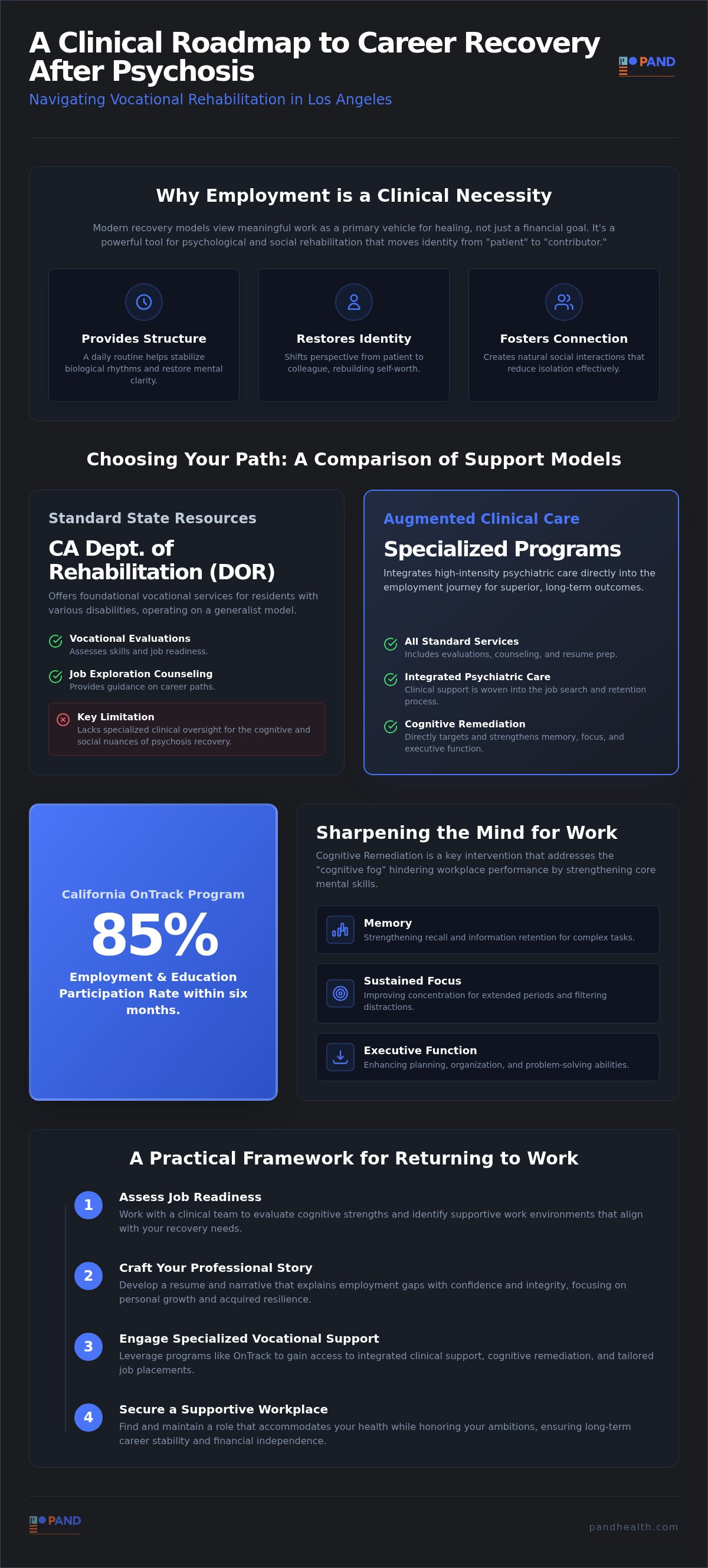
Modern recovery models emphasize "work as therapy" because it provides a vital sense of structure. A predictable daily routine helps stabilize biological rhythms and mental clarity, which are often disrupted during a crisis. Beyond the schedule, employment facilitates a profound shift in identity. It allows you to move from the role of a "patient" to that of a colleague and contributor. This restoration of self-worth is a powerful tool for psychological and social rehabilitation. Reintegrating into the workforce also provides natural opportunities for social interaction. These community connections are often more effective at reducing isolation than clinical settings alone. When you find a role that fits your skills, you aren't just earning a paycheck; you're rebuilding the foundation of your life.
Common Barriers to Working After a Psychotic Episode
While the goal is clear, the path involves navigating specific clinical and logistical hurdles. Many individuals experience "cognitive fog," which can impact memory, sustained focus, and the executive function required to manage complex assignments. There's also the challenge of social cognition, which refers to the ability to interpret social cues and "read the room" in a professional setting. Anxiety about how to handle workplace interactions or potential disclosure can feel overwhelming. Logistically, managing the side effects of medications, such as fatigue, requires a strategic approach to scheduling. While state resources like the California Department of Rehabilitation offer foundational support, overcoming these nuanced clinical barriers often requires the intensive, integrated expertise found in vocational rehabilitation for psychosis Los Angeles. Addressing these challenges directly is the first step toward long-term workplace stability.
Vocational Support Models in Los Angeles: DOR vs. Specialized Clinical Care
Choosing the right framework for vocational rehabilitation for psychosis Los Angeles is a pivotal decision that impacts not just immediate job placement, but long-term career satisfaction. While several avenues exist, they differ significantly in their clinical depth and demonstrated success rates. Understanding these differences allows families to select a path that offers the highest level of stability and professional growth.
The Role of the California Department of Rehabilitation (DOR)
The DOR serves as a foundational resource, offering vocational services to residents with various disabilities through its Los Angeles field offices. It provides essential tools like vocational evaluations and job exploration counseling. However, state-only programs often operate on a generalist model. They may lack the specialized expertise required to manage the specific cognitive and social nuances of a thought disorder. This can leave individuals feeling unsupported when complex symptoms arise in the workplace, as these programs aren't always equipped to provide the high-intensity clinical oversight needed for psychosis recovery.
This gap is where the "Augmented" model becomes essential. Standard vocational rehab typically focuses on the mechanics of the job search, such as resume building and interview prep. In contrast, an augmented clinical model integrates psychiatric care directly into the employment process. It recognizes that finding a job is only half the battle. Sustaining that job requires the ongoing management of the clinical factors we discussed previously, ensuring that the workplace environment supports, rather than hinders, your wellness.
The California OnTrack Difference: Integrated SEE Curriculum
Pand Health elevates this process through the Supported Education and Employment (SEE) curriculum. This evidence-based framework doesn't treat career goals as separate from clinical recovery. Instead, it weaves them together. Our California OnTrack Work-Study Program utilizes an indefinite enrollment model, ensuring that support doesn't vanish once a contract is signed. This commitment to long-term stability contributed to an 85% employment and education participation rate for our 2022-2024 cohort. It’s a model built on the belief that consistent, specialized guidance is the key to thriving in LA's competitive market.
A critical component of this success is the presence of a dedicated job coach who understands the intricacies of psychosis. This isn't a general recruiter. It's a specialist who knows how to navigate disclosure, request reasonable accommodations, and manage workplace stress without triggering a relapse. They act as a steady hand, providing a lifeline through their niche expertise. If you're ready to explore how this integrated approach can work for you, you can explore our programs at pandhealth.com to learn more about our specialized support.
Cognitive Remediation: The Secret to Sustaining Employment
Traditional job placement often overlooks a fundamental reality of recovery. While securing an interview is a significant milestone, the cognitive demands of a modern workplace require more than just a polished resume. Many individuals find that "cognitive fog" persists even after their primary symptoms have stabilized. This is why vocational rehabilitation for psychosis Los Angeles must include cognitive remediation. Often described as "brain training" for professional performance, this intervention targets the biological foundations of work. It strengthens the mental "muscles" required for attention, memory, and problem solving, ensuring that the transition back to the workforce is sustainable rather than a source of overwhelming stress.
At Pand Health, we recognize that professional stamina is deeply rooted in physical wellness. We integrate high-intensity fitness with brain training because physical activity increases the production of neuroprotective proteins that support cognitive health. This holistic approach builds the endurance needed for a full work day. Additionally, we utilize Metacognitive Training (MCT) to help participants manage cognitive biases. For those who may experience paranoia or social anxiety under pressure, MCT provides a toolkit for reality-testing and managing workplace stress. As the only program in Southern California with certified MCT instructors, we offer a level of niche expertise that acts as a steady hand during the complexities of professional reintegration.
Improving Executive Function for the Modern Workplace
Modern offices demand high levels of executive function, which involves the ability to plan, focus, and multitask. We utilize computer-assisted training programs that provide immediate feedback, allowing participants to sharpen their processing speed and organizational skills in a controlled environment. Cognitive remediation serves as the essential bridge between clinical stability and long-term job retention by ensuring the brain can meet the processing demands of a professional environment. For those seeking even more specialized guidance, our team also provides job coaching for adults with psychosis and autism to address intersecting needs.
Social Cognition and Interaction Training (SCIT)
Success in the workplace is rarely about technical skills alone. It's often determined by how well you navigate "office politics," interpret client feedback, and interact with colleagues. Social Cognition and Interaction Training (SCIT) is an evidence-based approach that helps individuals decode social cues and respond appropriately to interpersonal challenges. This training is invaluable during the interview process, where reducing social anxiety can make the difference between a missed opportunity and a job offer. Pand Health is currently the only outpatient provider in Southern California offering APA-recommended SCIT. By addressing social cognition directly, we empower our participants to build authentic, professional relationships that form the foundation of a successful career in the competitive Los Angeles market.
How to Find a Job After Psychosis Recovery: A Step-by-Step Guide
Returning to the workforce in a city as competitive as Los Angeles requires more than just persistence. It requires a clinical and professional strategy. When you engage in vocational rehabilitation for psychosis Los Angeles, you are not just looking for a job; you are building a sustainable career path. The process begins with a careful assessment of your current readiness. This involves setting realistic goals that honor your recovery timeline while challenging your professional potential. You don't have to navigate this transition alone, as specialized support can bridge the gap between clinical stability and workplace success.
The journey follows a structured path. First, we focus on assessing your stamina and setting clear career objectives. Next, we craft a resume that highlights your strengths. Third, we address the complex decision of disclosure, ensuring you understand your legal rights under the Americans with Disabilities Act (ADA). Fourth, we utilize mock interviews and social skills coaching to build your confidence. Finally, we work to secure workplace accommodations that allow you to thrive. Each step is designed to provide a steady hand as you move toward financial independence.
Explaining Employment Gaps on Your Resume
A common source of anxiety is the presence of an employment gap. However, these periods can be framed effectively by focusing on a functional resume style that emphasizes skills over a strict chronological history. You can frame time away as "medical leave," which is a professional and legally protected term. It's not necessary to share specific clinical details with a recruiter. If you've participated in volunteer work or the California OnTrack Work-Study Program during your recovery, these experiences should be highlighted as active professional development. They demonstrate your commitment to growth and your ability to maintain a routine.
Navigating Disclosure and Accommodations in Los Angeles
The decision to disclose a diagnosis to a Los Angeles employer is deeply personal. Disclosure is not a legal requirement, but it is often the key to accessing reasonable accommodations. These might include flexible scheduling to attend therapy appointments or a quieter workspace to help with focus. California law, alongside the ADA, provides robust protections against discrimination. Understanding how to communicate these needs without oversharing is a skill we prioritize. For those who need help navigating these conversations, the Pand Health contact page offers access to personalized advocacy support to ensure your rights are protected.
Securing a supportive workplace is a fundamental part of long-term wellness. If you are ready to take the next step in your professional journey, you can explore our vocational support programs to find a path that fits your unique needs and ambitions.
Next Steps: Accessing the California OnTrack Work-Study Program
Accessing specialized vocational rehabilitation for psychosis Los Angeles is the final, vital piece of the recovery puzzle. At our clinic located on W. Olympic Blvd, we've designed the California OnTrack Work-Study Program to serve a broad range of needs for teens and adults aged 13 to 40. This program doesn't just focus on the immediate goal of employment. It aims for a total restoration of normalcy. By bridging the gap between educational support and professional placement, we ensure that your transition is seamless, whether you're returning to a university campus or entering the Los Angeles corporate landscape.
Families play a pivotal role in this vocational journey. We view parents and partners as essential allies in the rehabilitation process, providing them with the clinical psychoeducation needed to support their loved one's career ambitions. This collaborative approach ensures that the home environment remains a stable foundation for professional growth. When the family and clinical team move in tandem, the individual feels a profound sense of safety and direction. Our dedicated guides are here to provide that steady hand, offering a lifeline of expertise when other avenues have failed to produce results.
Measurable Results: What to Expect from Pand Health
The success of our model is reflected in the tangible outcomes of our participants. Beyond the high rates of employment mentioned earlier, our program participants experience a documented reduction in hospitalization rates. This stability is fostered by our "Clubhouse Model," which emphasizes community support and social reintegration. By providing a space where individuals can connect with peers who share similar professional goals, we reduce the isolation that often follows a clinical crisis. Pand Health sets the new standard for early intervention by proving that with the right cognitive and vocational tools, individuals can thrive in even the most competitive environments.
How to Get Started with Vocational Rehab Today
Taking the first step toward professional reintegration is a straightforward process designed to minimize stress for families. It begins with contacting our intake team to schedule a comprehensive psychiatric evaluation. This assessment is not just a clinical check-up; it's a deep dive into vocational readiness. We evaluate your current cognitive strengths and professional interests to build a customized roadmap for your success. You can initiate this journey by visiting our contact page to speak with a specialist. We believe that your diagnosis does not define your future potential. In our clinic, recovery is the expectation, not the exception.
Reclaiming Your Professional Future
Success in the workplace is not just a possibility after psychosis; it's a fundamental part of the recovery process. We've explored how the right support model can transform a daunting job search into a structured path toward independence. By choosing vocational rehabilitation for psychosis Los Angeles that incorporates cognitive remediation and certified Metacognitive Training (MCT), you address the biological foundations of work performance. This specialized approach ensures you aren't just finding a job, but building the stamina to keep it.
Our Augmented Coordinated Specialty Care model provides the clinical depth that standard state services often lack. With an 85% employment and education success rate, our results prove that specialized guidance acts as a lifeline during career transitions. You don't have to navigate the complexities of disclosure or workplace accommodations alone. Our team acts as a steady hand, ensuring your professional ambitions are met with expert care and dedicated advocacy.
Start your journey back to work—contact Pand Health for a vocational evaluation today. Your potential for a meaningful career remains intact. We're ready to help you realize it. Recovery is the expectation, and your next professional chapter begins now.
Frequently Asked Questions
What is vocational rehabilitation for psychosis?
Vocational rehabilitation for psychosis is a specialized clinical intervention designed to help individuals return to the workforce or education after a mental health crisis. Unlike standard career coaching, this model integrates psychiatric care with job placement and cognitive training. It focuses on rebuilding the mental foundations required for professional success while providing a steady hand during the transition back to a structured daily routine.
Can I get a job in Los Angeles if I have a history of schizophrenia?
Yes, you can absolutely secure meaningful employment in Los Angeles with a history of schizophrenia. Many individuals successfully enter diverse professional fields by utilizing specialized support programs that focus on workplace readiness and long-term retention. Success depends on finding an environment that honors your recovery journey while providing the necessary clinical tools to manage your professional responsibilities effectively.
Do I have to tell my employer that I have psychosis?
You are not legally required to disclose your diagnosis to an employer under the Americans with Disabilities Act (ADA). Disclosure is a personal choice and is typically only necessary if you are requesting specific reasonable accommodations to perform your job duties. Many people choose to keep their clinical history private while focusing on their skills and contributions during the interview process.
How does the California Department of Rehabilitation (DOR) help with mental health?
The DOR provides foundational vocational services, including vocational evaluations and funding for job training or equipment. They often collaborate with local mental health agencies in Los Angeles to connect individuals with community rehabilitation programs. While the DOR offers essential logistical support, many find that combining state resources with specialized clinical care provides the most stable path toward long-term career growth.
What are 'reasonable accommodations' for someone recovering from psychosis?
Reasonable accommodations are adjustments to a job or work environment that allow an individual with a disability to perform their duties. Common examples include flexible scheduling to attend therapy appointments, a quiet workspace to minimize sensory distractions, or receiving instructions in writing to assist with memory and focus. These tools are designed to ensure you can thrive in your role without compromising your wellness.
How long does it take to find a job after a psychotic episode?
The timeline for returning to work varies significantly based on your individual recovery and readiness. While some people may feel prepared to start a job search within a few months, others may require a longer period of cognitive remediation and stabilization. Specialized programs often see participants achieve significant educational or employment milestones within six months of starting their vocational journey.
What if I can't handle a full-time job yet?
It's very common to start with part-time or transitional employment as you rebuild your professional stamina. Specialized vocational rehabilitation for psychosis Los Angeles emphasizes a gradual return to work, allowing you to build confidence and routine without becoming overwhelmed. This "staircase" approach ensures that you don't rush the process, which helps prevent burnout and supports long-term psychological stability.
Does Pand Health help with college and university support too?
Yes, our California OnTrack Work-Study Program provides comprehensive support for students navigating higher education alongside their recovery. We assist with the enrollment process, help secure academic accommodations, and provide ongoing coaching to manage the unique stresses of campus life. Whether your goal is a degree or a career, we provide the niche expertise needed to bridge the gap between clinical care and academic success.
Disclaimer
This article is for information and educational purposes only, and can NEVER replace a proper medical evaluation. If you or a loved one may be suffering from psychosis or the prodomal symptoms of psychosis, get evaluated by a professional as soon as possible. Early diagnosis and treatment can be life-saving.