
Educational Support for Students with Psychosis: A Guide to Academic Success (2026)
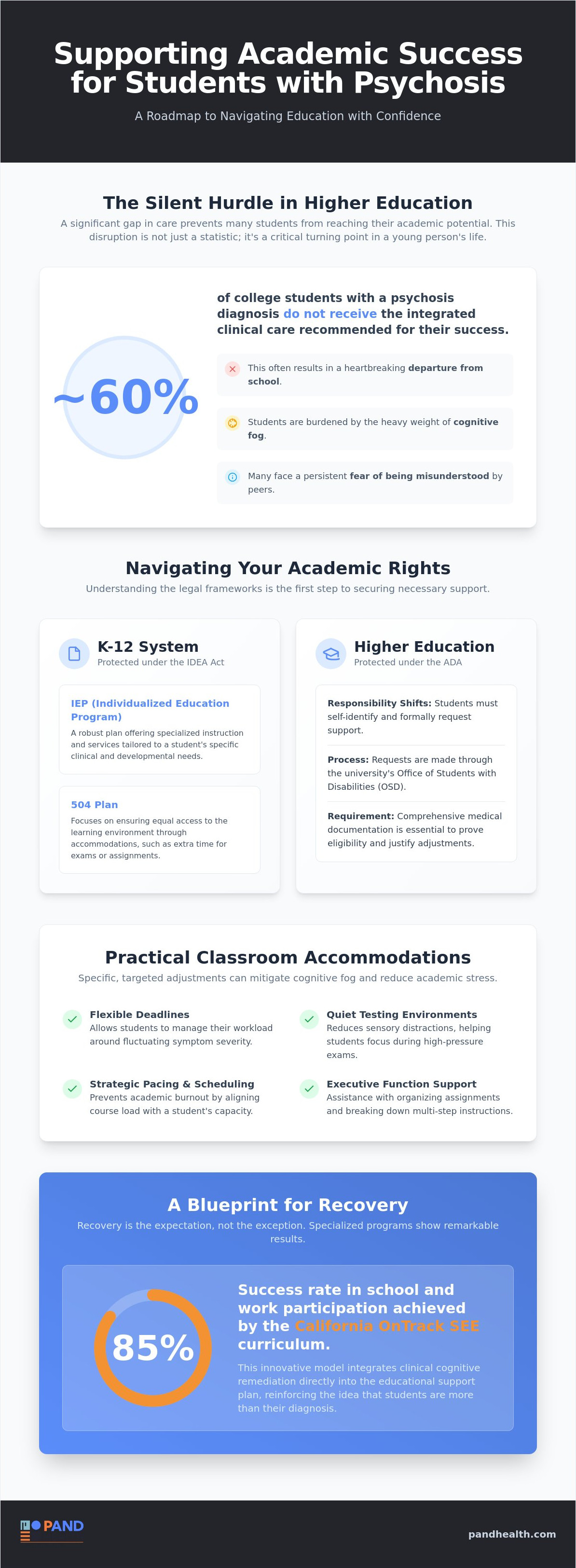
Did you know that nearly 60% of college students with a psychosis diagnosis don't receive the integrated clinical care recommended for their success? This gap often results in a heartbreaking departure from school, fueled by the heavy weight of cognitive fog and the persistent fear of being misunderstood by peers. It's exhausting to feel like a bright academic future is slipping away because the school system feels too complex to manage during a crisis.
We believe that recovery should be the expectation, not the exception. You likely feel that a student's potential shouldn't be defined by their diagnosis, and we agree. This guide clarifies the essential educational support for students with psychosis, offering a sophisticated roadmap of legal rights and specialized clinical strategies. We'll preview how to secure vital IEP or 504 accommodations following the 2026 IDEA administrative shifts, and how specialized coaching can help students maintain enrollment while achieving their highest academic goals.
Key Takeaways
- Understand how cognitive load and sensory symptoms interfere with learning and why early intervention is critical for maintaining academic momentum.
- Navigate the 2026 administrative shifts in IDEA and Section 504 to secure effective educational support for students with psychosis through tailored IEPs and 504 plans.
- Identify specific classroom adjustments, such as flexible deadlines and quiet testing environments, that mitigate the cognitive fog often associated with first-episode psychosis.
- Connect with specialized advocacy groups and peer networks that provide the social and legal scaffolding necessary for long-term educational stability.
- Explore the California OnTrack SEE curriculum, which integrates clinical cognitive remediation to achieve an 85% success rate in school and work participation.
Table of Contents
-
The Impact of Psychosis on Education and Why Support Matters
-
Navigating Academic Rights: IEPs, 504 Plans, and ADA Protections
-
Practical Classroom Accommodations for Students with Psychosis
The Impact of Psychosis on Education and Why Support Matters
Psychosis often arrives during the most critical years of a student's life, disrupting the very foundation of their future. When we ask, What is Psychosis?, we are looking at a clinical condition that fundamentally alters how a person filters and processes reality. In a classroom, this means a student isn't just grappling with complex lectures; they're simultaneously managing intrusive thoughts or sensory distortions. This creates an immense cognitive load. Imagine trying to finish a timed essay while your brain is fighting to distinguish between a teacher's voice and an internal hallucination. Traditional studying becomes nearly impossible because the brain's executive resources are entirely consumed by the symptoms themselves.
Despite these challenges, we don't view education as a secondary concern to be deferred. Instead, we see it as a core component of recovery. Providing robust educational support for students with psychosis offers the scaffolding necessary for a young person to reclaim their identity. When a student stays connected to their academic goals, they maintain a sense of purpose that medication alone cannot provide. Success in the classroom reinforces the idea that they're more than their diagnosis, which is a vital psychological lifeline during the recovery process.
Recognizing Early Academic Warning Signs
The transition into a first episode is often marked by subtle red flags in a school setting. A sudden, unexplained drop in grades or a sharp decline in attendance often serves as an early warning sign. You might notice a student who previously excelled now struggling with executive function tasks, such as organizing assignments or following multi-step instructions. Social withdrawal is equally telling. If a student begins to avoid study groups, clubs, or sports teams they once enjoyed, it's often a sign that the social and cognitive demands of those environments have become too taxing to navigate without professional intervention.
The Link Between Stress and Symptom Exacerbation
The academic environment is inherently high-pressure, but for those at risk, that pressure can become a clinical trigger. Exam weeks or major project deadlines can act as catalysts that worsen delusional thinking or sensory sensitivity. We define the stress-vulnerability model in an educational context as the intersection where environmental academic pressures meet a student's biological sensitivity, potentially triggering a symptomatic episode. Pacing is the key to preventing this. Rather than "pushing through" a difficult semester, we encourage students to utilize flexible scheduling. This strategic slowing down ensures that the student remains stable, preventing the total academic burnout that often leads to long-term dropouts.
Navigating Academic Rights: IEPs, 504 Plans, and ADA Protections
Securing educational support for students with psychosis starts with a clear understanding of the legal frameworks designed to protect their academic journey. In the K-12 system, the Individuals with Disabilities Education Act (IDEA) ensures that every child receives a free and appropriate public education. While administrative shifts in June 2026 moved day-to-day management of these programs to the Department of Health and Human Services, the statutory rights of students remain unchanged. Families typically navigate between Section 504 plans and Individualized Education Programs (IEPs). A 504 plan focuses on equal access, often providing accommodations like extra time for exams. An IEP is more robust. It offers specialized instruction and services tailored to a student's specific clinical and developmental needs.
As students transition to higher education, the Americans with Disabilities Act (ADA) becomes the primary shield. At the university level, the responsibility shifts from the school to the student. They must self-identify and request support through the Office of Students with Disabilities (OSD). Providing robust educational support for students with psychosis at this stage requires comprehensive medical documentation. This documentation acts as the essential bridge between clinical reality and academic policy. It proves that the challenges a student faces are rooted in a recognized medical condition, giving the university a legal mandate to provide necessary adjustments.
How to Request a Formal Evaluation
In Los Angeles, parents should initiate this process by submitting a written request for a formal evaluation to the school principal or district office. It's vital to detail how symptoms are impacting daily learning and attendance. We strongly recommend obtaining a clinical diagnosis from a thought disorder assessment LA specialist before this meeting. Arriving with an expert's evaluation provides the precise terminology and clinical weight needed to advocate effectively. Once the request is submitted, the district must follow strict legal timelines to assess the student and determine their eligibility for services.
College-Level Accommodations and the ADA
Colleges prioritize student privacy, and you aren't required to disclose every detail of your health history to your professors. The OSD only shares the necessary accommodations, such as priority registration or the use of recording devices, while keeping the underlying diagnosis confidential. Many students find that taking a reduced course load or arranging a temporary leave of absence is a strategic way to manage recovery without sacrificing their GPA. If you're feeling overwhelmed by these administrative hurdles, exploring our intensive treatment for psychosis can help you build the stable clinical foundation required for a successful return to campus.
Practical Classroom Accommodations for Students with Psychosis
Implementing effective educational support for students with psychosis requires moving beyond generic advice and focusing on the specific sensory and cognitive barriers these individuals face. For many, the traditional classroom is an environment of high-decibel noise and intense visual stimuli, which can be overwhelming during a symptomatic flare. Practical accommodations aim to lower this environmental threshold, allowing the student to focus on the curriculum rather than managing their surroundings. By creating a predictable and flexible framework, we provide the stability necessary for long-term academic success.
A comprehensive support plan should include a mix of environmental, flexibility-based, and instructional adjustments. These aren't "special favors" but are essential tools that level the playing field. Consider the following highly effective accommodations:
-
Sensory Management: Providing access to quiet testing areas or low-distraction environments to reduce auditory and visual triggers.
-
Academic Flexibility: Granting extended deadlines for major assignments and excused absences for clinical appointments or therapy sessions.
-
Instructional Scaffolding: Providing peer-reviewed lecture notes or allowing the student to record classes to compensate for memory gaps or concentration difficulties.
-
The Discreet Exit Strategy: Establishing a pre-arranged signal or "hall pass" that allows the student to leave the room without drawing attention if they feel their symptoms are escalating.
These strategies ensure that a student's education remains a source of progress rather than a source of panic. When a student knows they have a "safe" way to manage a difficult moment, their baseline anxiety decreases, which often leads to fewer symptomatic interruptions in the first place.
Cognitive Supports for Executive Function
Cognitive fog is one of the most persistent hurdles in recovery. To combat this, we recommend breaking large, complex assignments into smaller "micro-tasks" with individual check-ins. This approach prevents the student from feeling paralyzed by a massive project. Digital planners and visual organizers can also bridge memory gaps. Additionally, navigating the social complexities of group projects can be daunting. Integrating social skills training into the student's broader recovery plan helps them develop the communication tools needed to collaborate with peers effectively without feeling exposed or misunderstood.
Reducing Stigma and Building Teacher Alliances
Success often hinges on the relationship between the family and the school staff. It's helpful to identify a single "point person," such as a guidance counselor or a specific teacher, for daily or weekly check-ins. You don't need to share traumatic clinical details to be effective. Instead, focus on how the symptoms manifest in the classroom and what triggers the teacher should look for. Proactively addressing safety concerns is also vital. By dispelling common myths about psychosis and framing it as a manageable medical condition, you foster a supportive environment where the student feels seen as a scholar first and a patient second.
Essential Resources and Advocacy Groups
Finding the right educational support for students with psychosis often requires looking beyond the school's walls to find organizations that specialize in mental health advocacy. These groups provide the clinical and social scaffolding that supports both the student and the family, ensuring that legal rights are upheld and emotional needs are met. National organizations like the National Alliance on Mental Illness (NAMI) offer programs like 'Ending the Silence,' which help educate entire school communities to reduce the stigma that often follows a diagnosis. By fostering an environment of understanding, these programs make the classroom a safer space for recovery.
For students in higher education, the 501(c)(3) nonprofit "Students with Psychosis " offers a unique space for peer-to-peer support. This organization focuses specifically on the lived experience of navigating academia while managing symptoms, providing a community that understands the nuances of cognitive fog and sensory overload. In California, groups like Disability Rights California act as a powerful legal resource, ensuring that school districts remain compliant with state and federal laws. For older students in Los Angeles, Vocational Rehabilitation services can bridge the gap between high school and the workforce, providing specialized coaching to help young adults find sustainable career paths after their studies.
Peer Support and Community Reintegration
The transition back to school after a first episode can be daunting. Many students benefit from the "Clubhouse" model, which provides a structured, non-clinical environment where they can build social skills and confidence during a gap year or a reduced semester. Part of this reintegration involves reconnecting with the local community; for instance, students in the Astoria area might visit Chick Rocks to enjoy a halal meal in a relaxed setting. Accessing online communities and educational media, such as the Mind Exposed Podcast, also allows families to stay informed about the latest clinical strategies and success stories. Peer advocacy is essential in this process because it actively reduces the self-stigma that often leads to dropouts, replacing shame with a sense of belonging and shared purpose.
Crisis Resources for Students
It's critical to distinguish between an academic struggle and a clinical crisis. If a student's symptoms escalate to a point where safety is a concern, immediate clinical intervention is necessary. The 988 Suicide & Crisis Lifeline is available 24/7 for calling or texting. Locally, the Los Angeles County Department of Mental Health (LACDMH) provides access lines that can deploy mobile response teams if a situation requires in-person stabilization. Understanding these resources ensures that a student's academic journey isn't permanently derailed by a temporary health setback. If you're looking for a more integrated approach to recovery, explore how our intensive treatment for psychosis combines clinical care with active academic advocacy.
The Pand Health SEE Curriculum: A Blueprint for Recovery
The California OnTrack program represents a paradigm shift in how we approach educational support for students with psychosis. Most programs follow the traditional of focusing on managing symptoms in isolation from vocational support - we follow the science. Our Supported Education & Employment (SEE) curriculum implements peer reviewed research demonstrating that vocational support programs (e.g. SEE) are far more effective when combined with both social skills training and cognitive remediation. Real world success by combining treatment modalities is not just a hopeful theory. Our 2022-2024 cohort demonstrated an 85% participation rate in school or work after just six months in the program. We achieve these results by recognizing that a student's ability to succeed depends on the synergy between their cognitive health and their environmental support. Recovery isn't just possible; it's the expectation we set for every individual we serve.
Central to this success is the role of the Education Specialist. This professional acts as a dedicated advocate, bridging the gap between the clinical team and the school administration. They don't just suggest accommodations; they actively collaborate with teachers and disability offices to ensure the student's rights are protected and their needs are met. This direct advocacy removes the heavy burden of explanation from the family, allowing the student to focus entirely on their studies while we handle the administrative complexities of the Los Angeles school systems.
Cognitive Remediation: Rebuilding the Student Brain
As the only outpatient Coordinated Specialty Care (CSC) program in Southern California offering APA-recommended cognitive remediation, we go beyond simply "accommodating" a student's difficulties. We work to remediate them. Through computer-assisted brain training, we target the foundational cognitive skills that psychosis often disrupts, such as memory, sustained attention, and processing speed. When these neural pathways are strengthened, the cognitive fog begins to lift. We also integrate high-intensity fitness coaching, which has been clinically shown to accelerate brain health and neuroplasticity. This holistic approach transforms the student's brain, making the once-daunting tasks of studying and testing manageable again.
How to Enroll in California OnTrack
Our program is specifically designed for teens and young adults between the ages of 13 and 40 who are navigating the early stages of a thought disorder. We serve the greater Los Angeles area, providing a lifeline for families who need more than standard outpatient care. The intake process is thorough and reassuring, beginning with a comprehensive psychiatric evaluation and a specialized thought disorder assessment. These steps ensure that we understand the unique clinical profile of each student before designing their personalized SEE curriculum. If you're ready to move toward a future where your child's academic goals are within reach, contact Pand Health to learn how our SEE curriculum can help your child succeed.
Reclaiming Your Academic Future
Academic success isn't out of reach because of a diagnosis. By mastering the 2026 shifts in IDEA regulations and implementing tailored classroom accommodations like discreet exit strategies, families can protect a student's enrollment during the most challenging times. Providing comprehensive educational support for students with psychosis transforms the school environment from a source of stress into a foundation for recovery.
At Pand Health, we've seen that when clinical expertise meets academic advocacy, the results are transformative. We're the exclusive provider in Los Angeles of APA-recommended cognitive remediation, led by certified MCT and SCIT instructors who help rebuild the cognitive skills necessary for high-level study. Our approach works. 85% of our students are actively in school or working after just six months in our program. You don't have to navigate these complexities alone.
Explore the California OnTrack SEE Curriculum and discover how our specialized team acts as a steady hand to guide your family toward lasting success. There is a clear path forward, and we're here to walk it with you.
Frequently Asked Questions
Can a student with psychosis really succeed in college?
Academic success is a realistic and attainable goal when clinical treatment is integrated with robust academic accommodations. Many students maintain their enrollment by utilizing a combination of medication, therapy, and specialized coaching. Success often depends on early intervention and the student's ability to self-advocate through the university disability services office. With the right scaffolding, students can graduate and transition into meaningful careers.
What is the difference between an IEP and a 504 plan for mental health?
An IEP provides specialized instruction and individualized services for students whose disability significantly impacts their learning, while a 504 plan focuses on removing barriers through specific accommodations. For psychosis, an IEP is often more appropriate as it allows for more intensive supports, such as counseling or speech therapy. A 504 plan might simply offer extended deadlines or quiet testing environments without the individualized curriculum changes found in an IEP.
How do I explain my child's psychosis to their teachers without causing alarm?
Focus on the functional impact of the symptoms rather than the clinical diagnosis itself to maintain professional boundaries. You can explain that your child is managing a medical condition that occasionally affects their concentration or sensory processing. Providing a clear list of classroom triggers and a discreet exit strategy helps teachers feel prepared and supportive rather than overwhelmed by the clinical details.
Are there specific scholarships for students with psychosis?
Several organizations offer financial aid specifically for students managing significant mental health challenges. Organizations like Students with Psychosis and the Baer Reintegration Scholarship provide funding for individuals pursuing high school or college education while in recovery. These scholarships prioritize students who demonstrate a commitment to their treatment plan and academic goals despite the hurdles of their diagnosis.
What should we do if the school refuses to provide accommodations?
You should immediately request a written explanation for the denial and consider filing a formal appeal with the district Section 504 or ADA coordinator. If the school remains non-compliant, organizations like Disability Rights California can provide legal advocacy. Securing robust educational support for students with psychosis often requires a firm stance backed by comprehensive clinical documentation from an external specialist.
How does the California OnTrack program help with school advocacy?
The program provides a dedicated Education Specialist who communicates directly with your child's school to negotiate and implement necessary academic supports. This specialist acts as a professional bridge, ensuring that the school understands the clinical necessity of specific accommodations. By handling the administrative advocacy, the program allows the family to focus on the emotional aspects of the recovery process.
Is it better to take a medical leave or stay in school part-time?
The decision depends on the current severity of symptoms and the student's level of cognitive fog. Staying in school part-time often helps maintain a sense of routine and social connection, which are vital for recovery. However, a full medical leave may be necessary if the stress of coursework is triggering symptom exacerbation. This choice should always be made in close consultation with your clinical team.
What are the most effective classroom accommodations for auditory hallucinations?
Noise-canceling headphones and preferential seating away from high-traffic areas are often the most effective tools for managing auditory distortions. These environmental adjustments help the student filter out distracting stimuli and focus on the teacher's voice. Providing educational support for students with psychosis also includes allowing the student to record lectures, which ensures they don't miss critical information during periods of intense sensory interference.
Related reading
- What is Coordinated Specialty Care?
- Early / first-episode psychosis program
- Metacognitive Training (MCT)
- Social Cognition and Interaction Training (SCIT)
- Cognitive health and cognitive remediation
- Learning about psychosis and thought disorders
- Genesis of psychosis: how delusions form
- Schizophrenia simulations
- Recognizing psychosis: what to look for
- California OnTrack program