Clinical Research Foundations of California OnTrack
An overview of the clinical models, therapies, and evidence base that inform California OnTrack's coordinated specialty care program for thought disorders.
Specialized Therapy
Specialized therapy is an essential component of the treatment process. Individual and group sessions offer the ability to address a variety of issues in a safe space while receiving support, feedback, and challenges from peers.
Coordinated Specialty Care
California OnTrack is a coordinated specialty care program solely for thought disorders. It is designed to achieve functional recovery and resiliency, and not just reduce the severity or persistence of psychiatric symptoms. Our care model is all about helping you regain a satisfying life that is filled with meaning, purpose, and enjoyment, while managing or coping with existing symptoms.
Our multidisciplinary team delivers six key interventions: Family Education & Therapy, Medication Management, Supported Education & Employment, Peer Socialization & Support, Cognitive Health Remediation, and Individual Resiliency Training (IRT). IRT is an umbrella term for a set of overlapping recovery and relapse prevention strategies that includes agency development, social skills training, psychotherapy to improve distress tolerance and social cognition, trauma processing, substance abuse prevention (especially cannabis), and techniques to advance resiliency by expanding one's repertoire of positive experiences—such as the broaden-and-build theory of positive emotions (Fredrickson, 2004).
Individual Resiliency Training (IRT)
IRT is based on the stress-vulnerability model, which holds that psychotic symptoms and dysfunction arise out of the interactions between one's innate biological vulnerability and variable environmental stressors. Key to treatment is recognizing that most of the factors that predispose more severe symptoms and worse functioning are changeable (e.g., drug use). With effort and guidance, we can enhance those factors that reduce impairment and predict better lives (e.g., skills for coping with residual symptoms, expanded social support networks). This is the process of building resilience.
California OnTrack's Individual Resiliency Training, like other CSC programs, is founded on learning techniques for managing stress, monitoring symptom severity and resulting impairment, preventing or minimizing functional relapses, coping with residual symptoms, using social skills to garner outside support, and fostering an increased experiencing of positive emotions (e.g., building gratitude, prolonging pleasure through savoring, enhancing positive relationships, increasing kindness, and improving well-being). Experiencing positive emotions broadens a person's mindset, promoting discovery of novel and creative actions, ideas, and social bonds, which in turn build that individual's personal resources, ranging from physical and intellectual resources to social and psychological resources. Resiliency within the individual is created because these “social reserves” can be drawn on later to improve the odds of successful coping and survival.
Our curriculum was developed from the clinically validated NAVIGATE modules but adapted to serve a wider spectrum of those living with psychosis. In creating this curriculum, we have incorporated a number of innovations, including the use of Metacognitive Training (MCT) (Moritz et al., 2014a; Penney et al., 2022) to improve residual positive symptoms, Dialectical Behavior Therapy (DBT) to enhance distress tolerance, and, as part of our cognitive health program, Compensatory Cognitive Training (CCT)—which may be combined with real-world problem solving training modules from CBSST—and Social Cognition and Interaction Training (SCIT) to help clients compensate for social cognition deficits (Granholm et al., 2022; Mahmood, Clark, & Twamley, 2019; Twamley et al., 2012).
Treatment Management
Medications are rarely sufficient for achieving a full functional recovery from an episode of psychosis, but they are usually an essential part of treatment. Arriving at the best choice of medication and dose is a process built around the principles of collaborative treatment planning and shared decision-making (Deegan & Drake, 2006; Heinssen, Levendusky, & Hunter, 1995).
We understand that taking medications regularly can be very hard. We offer substantial education about the benefits of specific medications, track medication levels, and provide counseling about how to best manage side effects (in concert with one's primary care doctor). The ultimate goal is to prescribe the lowest dosage of medication(s) that is maximally beneficial at supporting recovery.
Since medication can only work if it is used properly, we do everything we can to ensure that this process is as easy as possible. When first starting Clozapine, a potentially life-saving drug (Meltzer et al., 2003), individuals often complain about the need to go to a laboratory each week to have their blood drawn. To reduce this burden, we offer on-site finger-stick (one drop) blood testing. For those who struggle to take medications daily or simply prefer the security and simplicity of long-acting injectable medications (given at 1–3 month intervals), these can be administered during programming. The prescribing psychiatrist works closely with primary care providers to assure optimal medical treatment for cardiovascular risk factors (e.g., high cholesterol, hypertension, diabetes, obesity, smoking). We also offer case management services that ensure any other necessary lab work is set up in a timely manner and that results are sent to the appropriate professionals.
Cognitive Health
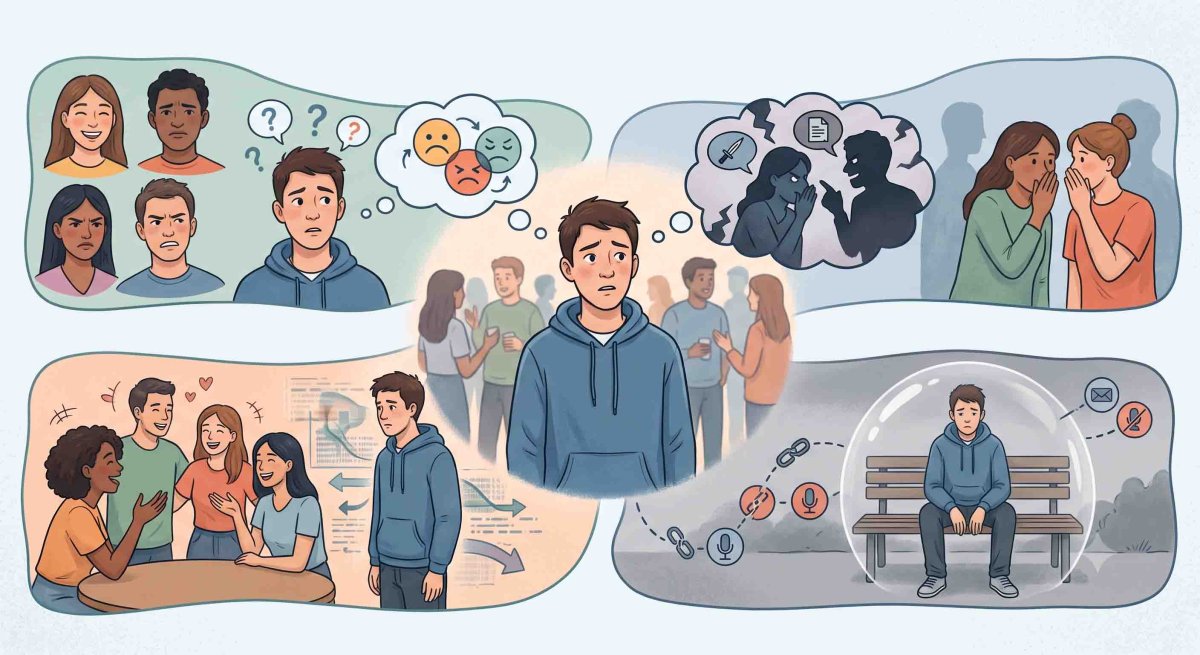
Among individuals living with psychosis, combined neurocognitive and social cognitive deficits are responsible for causing more functional disability than better-recognized symptoms like hallucinations or delusions. The impaired domains include perception, working memory, attention, executive functions, long-term memory, and social cognition (Twamley et al., 2012). Social cognitive deficits include impairments in facial affect recognition, perceiving and interpreting social cues, the ability to make appropriate causal attributions for events, and theory of mind — the capacity to understand other people by surmising what is happening in their minds.
California OnTrack's cognitive health program is comprised of four parts that collectively seek to help clients improve neurocognition and compensate for residual deficits:
- Restorative cognitive remediation implements a well-validated, directed, but self-paced computer-based program that targets multiple cognitive domains (Ventura et al., 2019).
- Compensatory Cognitive Training (CCT), developed through the San Diego VA, teaches clients how to compensate for impairments in attention, memory, recall, and organizational skills by practicing techniques that offset identified deficiencies (Mahmood, Clark, & Twamley, 2019; Twamley et al., 2012).
- Social cognitive remediation implements Social Cognition & Interaction Training (SCIT) in concert with the closely related metacognitive training modules that are part of IRT (Combs et al., 2007; Roberts, Penn, & Combs, 2015).
Supported Employment & Education
We provide resources and coaching for achieving educational and employment goals. Instead of focusing on complex vocational testing and training, clients are encouraged to apply for meaningful work (e.g., volunteering, competitive employment, or schooling), fully integrated with all other California OnTrack programs. We help clients overcome the practical and psychological barriers to work or school through a combination of life coaching, assisted searching, practicing interviewing skills, and situational role play. These complement the social skills training delivered elsewhere in our program.
Family Systems Therapy
The whole family is impacted when one member develops a thought disorder, as each struggles to adjust to changed circumstances and new demands. Using a combination of multi-family (Breitborde, Woods, & Srihari, 2009; Fjell et al., 2007; McFarlane, 2002) and single-family sessions, California OnTrack's family program addresses the dysfunction of the family support system for the benefit of the individual experiencing psychosis. Our goal is to strengthen the capacity of family members or other supporting individuals to aid in the client's recovery by combining psychoeducation (teaching about the signs and treatment of psychosis) and readily learned techniques for improving communication and removing distress, also known as behavioral family therapy (Mueser & Glynn, 1999). Loved ones of current or past clients at California OnTrack are also eligible to participate in a bi-monthly multi-family education group led by our therapists.
Clubhouse
We have taken a unique approach to our space, borrowing from the successful clubhouse model of psychosocial rehabilitation. We do not simply provide a waiting room for clients to hover around until their next appointment. California OnTrack's Clubhouse – Life and Wellness program runs in parallel to the core clinical curricula and emphasizes socialization and wellness.
The clubhouse offers opportunities for clients to engage in peer mentorship opportunities (National Association of State Mental Health Program Directors [NASMHPD], n.d.), game therapy, health maintenance skills, physical exercise, and independent socialization. This helps our clients develop the level of social competence and functioning needed to pursue their education and employment goals. It also provides an ongoing opportunity to utilize the skills taught and practice them, not just with one another, but within the community through trips to grab a boba, pick up groceries, or simply take a stroll through Sawtelle Japantown. Clients may choose to participate in any of the scheduled activities or choose to hang out with peers and new friends, making deep connections over time through shared experiences. The Clubhouse hours are 10:00 am to 6:00 pm every Monday, Wednesday, and Friday. Although the Clubhouse is voluntary, social skills are a critical part of recovery and participation is strongly encouraged.
Agency & Self-Expression
Agency is the innate sense that we have control over our body and minds; our intentions produce actions, and through those actions we control our lives (and destiny). Without this sense of agency, anything can seem futile, and the prospect of recovery can seem hopeless. Psychosis erodes one's sense of agency. In some instances, psychosis directly reduces the sense of agency (e.g., delusions of mind control), while in other cases reduced agency is all too real (e.g., following an arrest or involuntary hospitalization). Those experiencing an episode of psychosis will often find it very difficult to assess and articulate their internal emotional state (known as alexithymia), and similarly struggle to communicate their needs and desires. This only exacerbates an already building sense of confusion, futility, and loss of control.
Recovery from psychosis is possible; that is why we are here. However, no one can recover until they can communicate what is going on inside their mind, believe they have control of their actions, and believe that those actions will produce positive change. We target these fundamentals through three conceptual (clinical) components:
- Agency Building: Rebuilding that sense of agency so clients can summon the motivation necessary to actively direct their own recovery is an initial focus of treatment. The first step is to rebuild an understanding of cause and effect, because without it events in our lives will appear beyond our control. We begin by introducing music and visual arts. Creating art and music reinforces motor agency, the simplest form, before moving on to building a more abstract sense of control.
- Expressivity Training (Finding My Voice): Individuals with a thought disorder, especially early in recovery, often struggle to coherently describe their thoughts and feelings with words – their internal state is often confused and complicated. Even so, they retain the ability to communicate meaningfully through music and visual art, which are less constrained than spoken language. It is about establishing an uninhibited conduit from inside the mind to the external world that will be free from judgment – the start of honest communication (artistic talent is not necessary). We use art in therapy to get clients to willingly and enthusiastically engage with others, a necessary early step of actively participating in therapy and skills acquisition.
- Communication Skills Training: Once clients have learned how to effectively reveal their own internal state, they can learn how to interact with others in a give-and-take manner. This is accomplished through a combination of didactic groups that teach conversational skills and observed social engagements (e.g., group games, outings, through the clubhouse).
Cognitive-Behavioral Psychotherapies
Metacognitive Training in Conjunction with Cognitive Behavior Therapy for Psychosis
Metacognitive training (MCT) (Moritz et al., 2014b) and Cognitive Behavior Therapy for Psychosis (CBTp) (Kingdon & Turkington, 2005; Kingdon, Turkington, & John, 1994) are complementary cognitive-behavioral therapies that have been proven effective for treating psychosis. In brief, CBTp conveys some “metacognitive knowledge” (e.g., thoughts are not facts) but is mainly concerned with individual beliefs, rather than processes of thought (Landa, 2017).
MCT focuses on learning to avoid or compensate for cognitive biases that reinforce delusional beliefs or hallucinations. Unlike classical CBT, MCT does not seek to change clients' delusional beliefs. It avoids in-depth discussions of delusional contents in order to engage patients who are not willing to talk about their psychotic experiences, often due to suspiciousness, ambivalence, and shame. Rather, MCT brings distorted cognitive biases to the awareness of patients so they can learn new approaches to the meaning of those thoughts. Research has consistently shown that learning to be aware of one's thoughts in this way can reduce current psychotic symptoms and make one more resilient to thoughts or situations that may trigger future psychotic processes (Moritz et al., 2014a; Penney et al., 2022). At California OnTrack, MCT serves as a core therapy that is supplemented with CBTp. The goal of these psychotherapies is to avoid functional decline by interrupting the train of thought that promotes delusional thinking or reinforces hallucinations.
Social Cognition Interaction Training (SCIT)
SCIT is a metacognitive therapy that improves social cognition by focusing on deficits and biases in emotion perception, attributional style, and theory of mind abilities for persons with schizophrenia (Combs et al., 2007; Roberts, Penn, & Combs, 2015). Deficits are targeted using established learning principles, such as drill-and-repeat practice, graded difficulty, and shaping applied to social stimuli. Biases are approached by helping patients generate alternatives to distorted social judgments using cognitive and meta-cognitive techniques that are less about correcting distortions and more toward the goal of appreciating how various judgments have different social and emotional consequences. SCIT and MCT use overlapping debiasing techniques. However, SCIT differs from MCT in that it also targets social cognitive deficits in domains like emotion perception and theory of mind.
Dialectical Behavior Therapy Plus (DBT+)
Dialectical Behavior Therapy Plus (DBT+) is offered as a toolkit for building clients' distress tolerance and reducing the anger and emotional dysregulation that often come from feeling a lack of control over one's life, mind, and body. Through the use of in-session practice and discussion, we teach clients how to use a combination of DBT, mindfulness, ACT, and exposure skills. This is also effective for helping clients' traumas that are often associated with new onset psychosis. We allow clients the opportunity to create a sensory toolbox, role-play situations that increase distress, learn how to detach from and challenge thoughts, and reach a place of acceptance of their current reality. In the end, clients will learn how to deploy these skills outside of the program under real-life conditions.
Mindfulness Group
The mindfulness group is structured with the understanding that mindfulness itself is a practice. Mindfulness is not solely meditation, but a collection of skills that can increase understanding about the self and environment, and how symptoms impact our thoughts and actions in ways that may lead to increased dysregulation, urgency, and suffering. In this group, we focus on tending to cognitive biases and negative mental filters that impact an individual's ability to adapt and engage in the present moment.
Classic CBT (Cognitive Behavior Therapy)
For negative emotions (anxiety and depression).
Social Skills Training (SST)
Effective social skills are absolutely critical to recovery from psychosis and building the life each client wants. Social skills training emerged as a core component of psychiatric rehabilitation, which was pioneered in the 1970s by the late Robert Liberman, M.D., of UCLA, then refined and developed by his many trainees and collaborators.
The resulting SST programs have been clinically proven to improve real-world social and occupational functioning (Bellack et al., 2013). These programs are grounded in social learning theory, which posits that we acquire social behaviors through a combination of observing the actions of others and the naturally occurring positive and negative consequences of our actions.
Our program adheres to this model by teaching social skills through five established principles:
- Modeling: learning by observing.
- Reinforcement: either positive (providing a valued outcome) or negative (reducing an unpleasant stimulus like criticism or anxiety following a behavior).
- Shaping: reinforcement of successive steps toward a desired goal that is too complex to learn in a single step.
- Overlearning: practicing a skill repeatedly to the point at which it becomes automatic.
- Generalization: transfer of skills acquired in one setting to another, novel setting.
Using group and individual therapy sessions, we conduct ongoing assessments of social skills. We teach clients social skills and an understanding of social cues through role play (Bellack et al., 2004). We combine this with peer support mentoring and monitored social interactions (adapted from the PEERS model).
References
- Bellack, A. S., Mueser, K. T., Gingerich, S., & Agresta, J. (2004). Social skills training for schizophrenia (2nd ed.). Guilford Press.
- Bellack, A. S., Mueser, K. T., Gingerich, S., & Agresta, J. (2013). Social skills training for schizophrenia (2nd ed.). Guilford Publications.
- Breitborde, N. J., Woods, S. W., & Srihari, V. H. (2009). Multifamily psychoeducation for first-episode psychosis: A cost-effectiveness analysis. Psychiatric Services, 60(11), 1477–1483.
- Combs, D. R., Adams, S. D., Penn, D. L., Roberts, D., Tiegreen, J., & Stem, P. (2007). Social Cognition and Interaction Training (SCIT) for inpatients with schizophrenia spectrum disorders: Preliminary findings. Schizophrenia Research, 91(1–3), 112–116.
- Deegan, P. E., & Drake, R. E. (2006). Shared decision making and medication management in the recovery process. Psychiatric Services, 57, 1636–1639.
- Fjell, A., Bloch Thorsen, G. R., Friis, S., et al. (2007). Multifamily group treatment in a program for patients with first-episode psychosis: Experiences from the TIPS project. Psychiatric Services, 58(2), 171–173.
- Fredrickson, B. L. (2004). The broaden-and-build theory of positive emotions. Philosophical Transactions of the Royal Society of London. Series B, Biological Sciences, 359(1449), 1367–1378.
- Granholm, E., Twamley, E. W., Mahmood, Z., et al. (2022). Integrated Cognitive-Behavioral Social Skills Training and Compensatory Cognitive Training for Negative Symptoms of Psychosis: Effects in a Pilot Randomized Controlled Trial. Schizophrenia Bulletin, 48(2), 359–370.
- Heinssen, R. K., Levendusky, P. G., & Hunter, R. H. (1995). Client as colleague: Therapeutic contracting with the seriously mentally ill. American Psychologist, 50, 522–532.
- Kingdon, D., Turkington, D., & John, C. (1994). Cognitive behaviour therapy of schizophrenia: The amenability of delusions and hallucinations to reasoning. British Journal of Psychiatry, 164(5), 581–587.
- Kingdon, D. G., & Turkington, D. (2005). Cognitive therapy of schizophrenia. Guilford Press.
- Landa, Y. (2017). Cognitive Behavioral Therapy for Psychosis (CBTp): An Introductory Manual for Clinicians. Mental Illness Research, Education and Clinical Center.
- Mahmood, Z., Clark, J., & Twamley, E. W. (2019). Compensatory Cognitive Training for psychosis: Effects on negative symptom subdomains. Schizophrenia Research, 204, 397–400.
- McFarlane, W. R. (2002). Multifamily groups in the treatment of severe psychiatric disorders. Guilford Press.
- Meltzer, H. Y., Alphs, L., Green, A. I., et al. (2003). Clozapine Treatment for Suicidality in Schizophrenia: International Suicide Prevention Trial (InterSePT). Archives of General Psychiatry, 60(1), 82–91.
- Moritz, S., Andreou, C., Schneider, B. C., et al. (2014b). Sowing the seeds of doubt: A narrative review on metacognitive training in schizophrenia. Clinical Psychology Review, 34(4), 358–366.
- Moritz, S., Veckenstedt, R., Andreou, C., et al. (2014a). Sustained and “sleeper” effects of group metacognitive training for schizophrenia: A randomized clinical trial. JAMA Psychiatry, 71(10), 1103–1111.
- Mueser, K. T., & Glynn, S. M. (1999). Behavioral family therapy for Psychiatric Disorders. New Harbinger.
- National Association of State Mental Health Program Directors [NASMHPD]. (n.d.). Peer Involvement and Leadership in Early Intervention in Psychosis Services: From Planning to Peer Support and Evaluation.
- Penney, D., Sauvé, G., Mendelson, D., et al. (2022). Immediate and Sustained Outcomes and Moderators Associated With Metacognitive Training for Psychosis: A Systematic Review and Meta-analysis. JAMA Psychiatry, 79(5), 417–429.
- Roberts, D., Penn, D., & Combs, D. (2015). Social Cognition and Interaction Training (SCIT): Group Psychotherapy for Schizophrenia and Other Psychotic Disorders, Clinician Guide. Oxford University Press.
- Twamley, E. W., Vella, L., Burton, C. Z., Heaton, R. K., & Jeste, D. V. (2012). Compensatory cognitive training for psychosis: Effects in a randomized controlled trial. The Journal of Clinical Psychiatry, 73(9), 1212–1219.
- Ventura, J., Subotnik, K. L., Gretchen-Doorly, D., et al. (2019). Cognitive remediation can improve negative symptoms and social functioning in first-episode schizophrenia: A randomized controlled trial. Schizophrenia Research, 203, 24–31.