
Social Rehabilitation for Young Adults in LA: A Guide to Recovery-Oriented Care
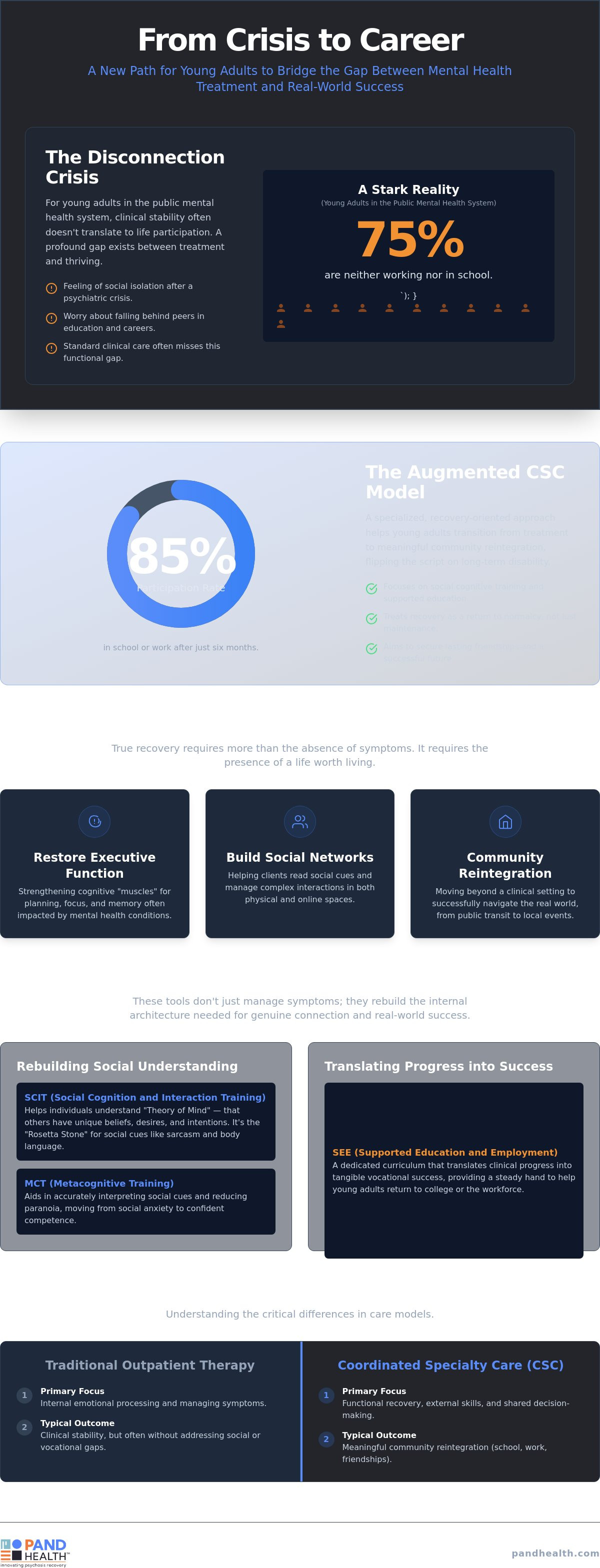
While 75% of young adults in the public mental health system are neither working nor in school, a specialized approach can flip that script entirely. It's common to feel a profound sense of social isolation after a psychiatric crisis or to worry that you're falling behind your peers while they finish degrees and start careers. If the thought of navigating a college campus or a job interview feels overwhelming, you're experiencing a gap that standard clinical care often misses. Finding effective social rehabilitation for young adults LA is about more than just managing symptoms; it's about rebuilding the confidence to participate in life again.
You shouldn't have to choose between clinical stability and your personal goals. This guide explores how recovery-oriented care helps young adults transition from treatment to meaningful community reintegration. We'll examine how augmented Coordinated Specialty Care models help individuals return to school and work, boasting an 85% participation rate after just six months. By focusing on social cognitive training and supported education, these programs provide a steady hand to help you secure lasting friendships and a successful future.
Key Takeaways
- Learn why specialized social rehabilitation for young adults LA is essential for those aged 18 to 30 to bridge the gap between clinical stability and real-world functioning.
- Understand how evidence-based tools like Social Cognition and Interaction Training (SCIT) and Metacognitive Training (MCT) help individuals accurately interpret social cues and reduce paranoia.
- Discover how the Supported Education and Employment (SEE) curriculum translates clinical progress into vocational success, helping young adults return to college or the workforce.
- Identify the critical differences between traditional outpatient therapy and the Coordinated Specialty Care (CSC) model when choosing a recovery program.
- Explore the benefits of an augmented CSC model, which offers intensive support and has documented an 85% success rate in school and job participation.
What is Social Rehabilitation for Young Adults in LA?
Social rehabilitation is a specialized set of clinical and psychosocial interventions designed to restore the social and vocational functioning that often erodes during a mental health crisis. Unlike traditional therapy that might focus solely on internal emotional processing, this approach targets the external skills required to thrive in a community. It draws its foundation from Rehabilitation psychology, which focuses on maximizing an individual's independence and social participation. In a high-pressure environment like Los Angeles, where social hierarchies and professional competition are intense, these programs provide a necessary bridge between clinical stability and a meaningful life.
The focus on Transition Age Youth (TAY), specifically those aged 18 to 30, is intentional. This developmental window is when most people establish their identities, finish their education, and enter the workforce. When a psychotic episode or severe mental health challenge occurs during these years, the risk of "falling behind" is not just a fear; it's a statistical reality. In 2021, data showed that 13.9% of young people in Los Angeles were disconnected, meaning they were neither in school nor working. Social rehabilitation for young adults LA aims to reverse this trend by treating recovery as a return to normalcy rather than a perpetual state of "maintenance."
The Core Goals of Social Rehabilitation
True recovery requires more than the absence of symptoms. It requires the presence of a life worth living. The primary goals include:
- Restoring Executive Function: Strengthening the cognitive "muscles" needed for planning, focus, and memory, which are often impacted by mental health conditions.
- Building Social Networks: Navigating a digital-first world requires nuanced social cognition. Programs help clients read social cues and manage complex interactions in both physical and online spaces.
- Community Reintegration: Moving beyond the safety of a clinical setting to successfully navigate Los Angeles’ unique landscape, from using public transit to attending local mixers.
- Creative Expression: Engaging in artistic pursuits using high-quality materials from PoscART can serve as a therapeutic outlet, helping individuals build focus and share their experiences with others in a supportive environment.
Why Early Intervention Matters in 2026
The "first episode" window is the most critical period for intervention. Research indicates that the sooner a young adult receives specialized care after their first psychotic break, the lower their risk of long-term disability. In alignment with the NIMH NAVIGATE framework, social rehabilitation for young adults LA serves as a coordinated specialty care model that prioritizes functional recovery through shared decision-making and vocational support. By addressing social withdrawal early, we can reduce the 75% unemployment rate typically seen in young adults within the public mental health system. We don't just want clients to stay out of the hospital; we want them to thrive in the classroom and the workplace.
Evidence-Based Modalities: SCIT and MCT for Social Reconnection
Re-establishing a social life after a mental health crisis is rarely as simple as "getting back out there." It requires a sophisticated re-tuning of how the brain processes human interaction. Current reports on California's behavioral health infrastructure highlight a significant gap in specialized services that move beyond basic stabilization. To bridge this gap, effective social rehabilitation for young adults LA must utilize evidence-based modalities that target the mechanics of social cognition. These tools don't just manage symptoms; they rebuild the internal architecture needed for genuine connection.
SCIT: Mastering the Nuances of Human Interaction
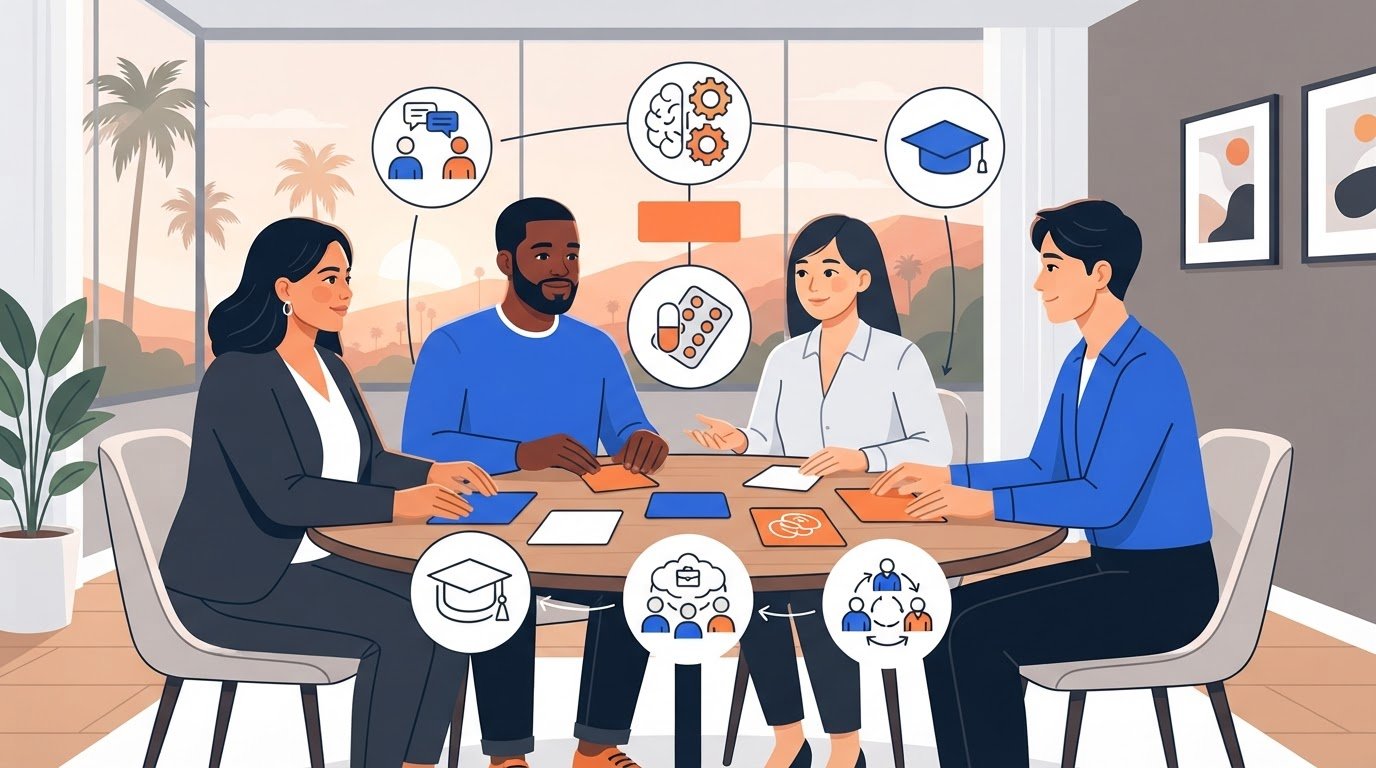
Social Cognition and Interaction Training (SCIT) is a structured intervention that helps individuals navigate the complexities of interpersonal relationships. At its core, SCIT focuses on "Theory of Mind," which is the ability to understand that other people have their own unique beliefs, desires, and intentions. When this ability is impaired, social cues like sarcasm, subtle facial expressions, or body language can feel like a foreign language. SCIT provides the "Rosetta Stone" for these interactions. It's particularly effective because it applies to a broad range of needs, helping those recovering from psychosis or navigating autism to move from social anxiety to a state of confident competence.
Metacognitive Training: Thinking About Thinking
While SCIT focuses on external cues, Metacognitive Training (MCT) looks inward. MCT helps individuals identify and correct "thinking errors," such as the tendency to jump to conclusions or attribute negative intentions to others without evidence. These cognitive biases often lead to social paranoia, making it difficult to maintain friendships or hold a job. By working with certified MCT instructors, young adults learn to slow down their thought processes and consider alternative explanations for social events. This builds a powerful layer of resilience against delusional thinking, allowing clients to engage in social settings without the constant weight of suspicion.
To support these social skills, many programs now incorporate computer-assisted cognitive remediation. Think of this as a "gym" for the brain. These digital exercises improve memory, processing speed, and attention span. When the brain is faster and more focused, it becomes much easier to apply the social lessons learned in SCIT and MCT to real-world scenarios. If you're ready to see how these advanced tools can accelerate recovery, exploring the specialized social skills training at Pand Health is a vital next step toward community reintegration.
Integrating Supported Education and Employment (SEE)
Clinical stability is a vital foundation, but it isn't the final destination for recovery. For many, the true measure of success is the ability to return to a career or a classroom. The Supported Education and Employment (SEE) curriculum bridges this gap by linking clinical progress directly to real-world functional goals. In traditional settings, vocational support is often treated as an afterthought. However, in effective social rehabilitation for young adults LA, career development is woven into the therapeutic process from day one. This integrated approach is why we see participation in school and work jump from a 6% baseline in the public mental health system to 85% within our specialized framework.
Navigating professional environments after a mental health break requires specific strategies. SEE provides tailored resume building and interview preparation that addresses gaps in employment history with transparency and confidence. Since physical health is a key component of self-assurance, individuals often find that expert oral care makes a significant difference; for those interested in personalized wellness, you can visit Colony Dental Care to see how comprehensive dental services support a professional appearance. Beyond the paperwork, this model includes robust advocacy. We help young adults navigate ADA accommodations in the Los Angeles workforce, ensuring they have the necessary support to perform their roles without sacrificing their well-being. By aligning treatment with vocational aspirations, we transform the recovery journey into a path toward independence.
Returning to the LA Workforce
The Los Angeles job market is famously competitive, which can be daunting for someone emerging from a clinical episode. Our job coaching strategies focus on placement in roles that match a client's professional background and current capacity. Through the California OnTrack Work-Study Program, individuals receive hands-on support to manage symptoms while maintaining employment. This isn't just about finding a job; it's about developing the stamina and social competence to keep it. We provide a steady hand, helping young professionals navigate office politics and workplace stress while building long-term career stability.
Educational Support for College Students
For many young adults, a mental health crisis interrupts their time at UCLA, USC, or one of our local community colleges. Re-enrolling after a break requires more than just an application; it requires a plan for academic success. Our educational support includes intensive study skills and executive function coaching to help students manage heavy course loads. We focus on the organizational skills that often suffer during a crisis, such as time management and task prioritization. Pand Health's 2022-2024 cohort documented an 85% employment and education participation rate, proving that with the right support, academic dreams remain entirely within reach.
How to Evaluate Social Rehabilitation Programs in Los Angeles
Selecting the right program for a loved one is a high-stakes decision that requires more than just a gut feeling. In a city as vast as Los Angeles, the options can feel overwhelming, yet the quality of care varies significantly. When searching for social rehabilitation for young adults LA, it's vital to look beyond generic "community support" and focus on clinical excellence. The gold standard in this field is Coordinated Specialty Care (CSC), a multidisciplinary approach that far exceeds the scope of traditional outpatient therapy. While a weekly therapy session might offer emotional support, it rarely provides the intensive, skill-based training necessary for functional recovery.
A truly effective program must utilize interventions recommended by the American Psychological Association (APA). This includes Social Cognition and Interaction Training (SCIT) and Metacognitive Training (MCT), which we discussed in previous sections. These aren't just buzzwords; they are evidence-based tools that directly improve how a young adult interacts with the world. Beyond these modalities, look for programs that prioritize family psychoeducation and multi-family group therapy. Recovery doesn't happen in a vacuum. Providing families with the tools to support their loved one is essential for long-term stability. Additionally, you should evaluate a program's success through its data. High-quality programs often demonstrate a rehospitalization rate as low as 6%, compared to the 50% baseline typically seen in standard care models. If a provider can't produce functional outcome data, they may not be equipped to handle the complexities of early psychosis.
Questions to Ask Potential Providers
When you interview a facility, don't be afraid to ask technical questions. You're looking for a partner in recovery, and transparency is the first sign of a reliable guide. Consider asking the following:
- "Do you offer certified Metacognitive Training led by trained instructors?"
- "How do you integrate vocational support and education planning with psychiatric care?"
- "What is your program's average rehospitalization rate over a 12-month period?"
The Clubhouse Model: Community as Therapy
Social recovery thrives in a structured, peer-to-peer environment. This is often referred to as the Clubhouse Model, where community itself becomes a therapeutic tool. It provides a "lifeline" for young adults who've felt isolated by their diagnosis, offering a safe space to practice the skills learned in clinical sessions. This environment fosters natural friendships and professional networking, serving as a dress rehearsal for life in the broader community. To understand how these social environments are professionally managed, you can explore our Social Skills Training in Los Angeles guide. If you need a steady hand to help navigate these choices, we invite you to consult with our clinical team to find the right path forward.
California OnTrack: A New Standard for Social Rehab in LA
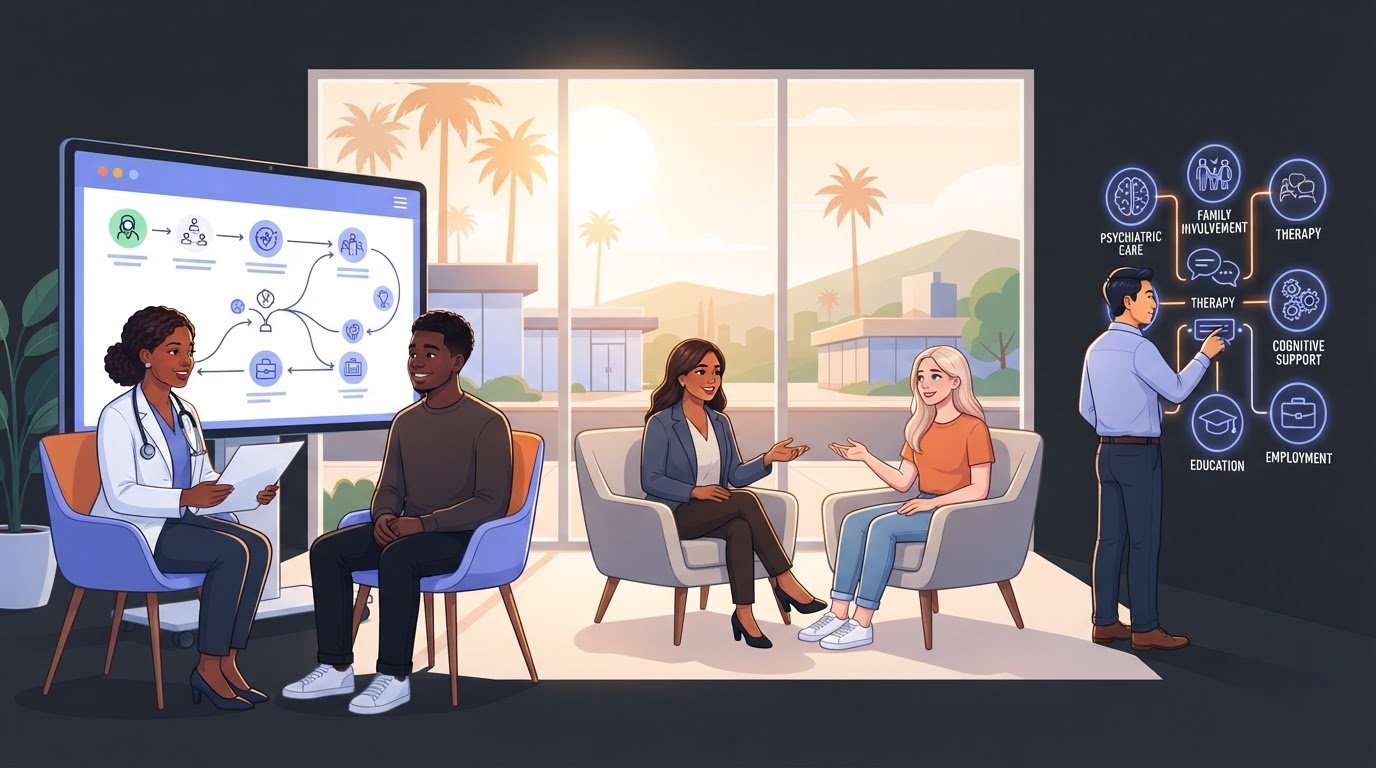
California OnTrack represents the pinnacle of social rehabilitation for young adults LA. It's more than just a sequence of appointments; it's a specialized environment built for those who require a higher standard of care than traditional models provide. While the NIMH NAVIGATE framework offers a solid foundation for early psychosis intervention, Pand Health utilizes an augmented Coordinated Specialty Care (CSC) model. This enhanced approach provides between 24 and 32 hours of intensive outpatient support per client. This level of engagement is specifically designed to accelerate functional recovery and ensure that no individual is left to navigate their transition alone.
Our Olympic Blvd location in West Los Angeles serves as a dedicated sanctuary for young adult recovery. We've cultivated a culture where recovery is the baseline expectation, not a rare exception. By blending clinical authority with profound empathy, we provide a steady hand during the most turbulent times. This commitment to the local community ensures that high-end, specialized intervention remains deeply personal and human-centric, focusing intensely on the success of the individual.
Maintaining a safe and professional environment is a priority for any successful transition. Just as our facility offers a sanctuary for growth, many businesses across Southern California rely on Security Guard Pros to provide the security and peace of mind necessary for a thriving community.
Personalized Treatment Tracks
We recognize that a teenager's needs differ vastly from those of a young professional. To address this, we offer tailored programs including California OnTrack for Teens, serving ages 13 to 17, and California OnTrack for Adults, serving ages 18 to 40. Our clinical team also manages specialized tracks for cannabis-induced psychosis and complex thought disorders, providing niche expertise where other avenues may have failed. To support total wellness, we integrate physical fitness and health coaching into the curriculum, recognizing that psychological stability is deeply intertwined with physical health and metabolic wellbeing, which is often supported by specialists such as ד"ר אסנת רזיאל.
Getting Started at Pand Health
The journey toward community reintegration begins with a thorough evaluation process. This starts with a comprehensive psychiatric assessment and moves toward a customized social rehab plan that targets your specific vocational or educational goals. Our intake team is here to help Southern California families navigate insurance and logistics, providing a "lifeline" of expertise from the very first phone call. If you're ready to bridge the gap between clinical treatment and a meaningful life, you can experience industry-leading social rehabilitation at Pand Health and begin your transition today.
Reclaiming a Future of Social Connection and Success
The transition from clinical stabilization to a thriving social life requires a deliberate, evidence-based strategy. As we've explored, effective social rehabilitation for young adults LA isn't just about managing symptoms; it's about restoring the cognitive and social skills needed to navigate the complexities of adulthood. By integrating specialized training like SCIT and MCT with vocational support, young adults can move past the isolation of a mental health crisis and back into the classrooms and workplaces of Southern California.
Pand Health stands as a leader in this field, offering the only outpatient Coordinated Specialty Care program in the region featuring APA-recommended cognitive remediation. Our methodology produces tangible results, including an industry-leading 6% rehospitalization rate. More importantly, we help our clients achieve an 85% employment or education participation rate within six months of starting the program. You don't have to navigate this storm alone. We invite you to Schedule a Comprehensive Evaluation at Pand Health to begin building a roadmap toward lasting recovery. Your future is waiting, and we're here to help you reach it.
Frequently Asked Questions
What is the difference between social skills training and social rehabilitation?
Social skills training focuses on specific interpersonal behaviors, while social rehabilitation for young adults LA is a comprehensive clinical framework. It integrates vocational support, cognitive remediation, and community reintegration to restore overall functioning. While skills training might teach you how to start a conversation, rehabilitation provides the infrastructure to build a career and maintain long-term independence.
How long does a social rehabilitation program for young adults in LA typically last?
The duration depends on your specific recovery goals and the intensity of support required. For instance, the core adult curriculum is often designed around 72 group therapy hours. Most clients see significant functional progress within the first six months, though some continue with less intensive maintenance support as they transition fully back into the Los Angeles workforce or a college environment.
Is social rehabilitation covered by insurance in California?
Coverage depends on the age of the participant and their specific insurance plan. All services for eligible teens aged 13 to 17 are fully funded through California’s Early Psychosis Intervention Initiative and are cost-free. For adults, costs vary based on the services sought. It's essential to confirm financial arrangements and insurance compatibility with your provider before starting the program.
Can young adults with autism benefit from social rehabilitation for psychosis?
Yes, individuals with autism often find significant value in the same evidence-based modalities used for psychosis recovery. Tools like Social Cognition and Interaction Training (SCIT) are specifically designed to help people read social cues and understand the intentions of others. This makes social rehabilitation for young adults LA an effective choice for navigating the social complexities of both autism and thought disorders.
What is the success rate of the California OnTrack program?
The California OnTrack program has documented exceptional outcomes for its participants. Data shows an 85% employment and education participation rate after just six months in the program. Additionally, the rehospitalization rate for participants is only 6%. This is a dramatic reduction from the 50% baseline typically seen in standard public mental health systems.
Does Pand Health provide support for returning to college?
Pand Health provides extensive support for students re-enrolling in local institutions like UCLA, USC, or community colleges. Through the Supported Education and Employment (SEE) model, we offer executive function coaching and study skills training. This ensures that the transition back to a demanding academic environment is managed with the necessary accommodations and psychological support to prevent burnout.
How does social rehabilitation help with cannabis-induced psychosis?
Social rehabilitation addresses the specific cognitive and social impairments that often follow a cannabis-induced psychotic episode. By utilizing Metacognitive Training (MCT), we help individuals identify the cognitive biases and "thinking errors" that can lead to paranoia or social withdrawal. This specialized track focuses on restoring the mental clarity and social confidence needed to return to a productive lifestyle.
Are families involved in the social rehabilitation process?
Families are a cornerstone of the recovery process and are encouraged to participate actively. We offer family psychoeducation and family therapy to help loved ones understand the clinical nature of the condition and how to provide a supportive home environment. This collaborative approach reduces stress for the entire family unit and significantly improves the long-term success of the individual in rehabilitation.
Related reading
- What is Coordinated Specialty Care?
- Early / first-episode psychosis program
- Metacognitive Training (MCT)
- Social Cognition and Interaction Training (SCIT)
- Cognitive health and cognitive remediation
- Cannabis-induced psychosis
- Neurodivergent care
- Genesis of psychosis: how delusions form
- Family materials and psychoeducation
- California OnTrack program