Social Cognition and Interaction Training (SCIT): A Guide to Evidence-Based Recovery
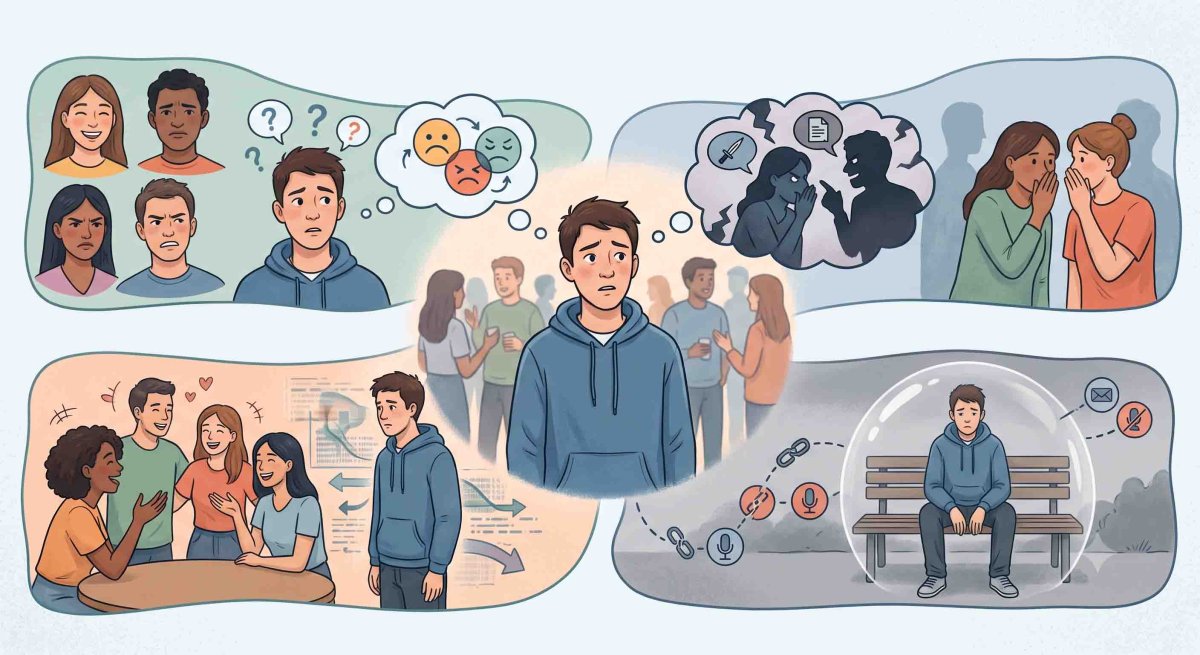
What if the barrier to connecting with others isn't a lack of manners, but a fundamental mismatch in how your mind interprets social signals? For many people navigating the aftermath of a psychotic episode or living with autism, traditional social skills classes often feel like learning a script for a play you didn't audition for. You might feel out of sync, misinterpreting a neutral glance as a threat or feeling isolated by a cloud of suspicion. This is why social cognition and interaction training (SCIT) is so vital. It moves beyond basic etiquette to help you master the internal processing of social cues.
We understand that true recovery requires more than just rehearsing conversations; it requires healing the way you perceive the world. This guide will show you how SCIT helps you decode complex emotions and correct the cognitive biases that fuel social anxiety. By utilizing this evidence-based framework, individuals often see a documented 19-point improvement on clinical scales. We'll explore how this specialized approach empowers you to build genuine friendships and join the 85% of participants who successfully return to school or work. Let's look at how you can reclaim your community life with confidence and clarity.
Key Takeaways
- Understand how targeting the social brain allows you to process and use information more effectively than traditional social skills classes.
- Explore the structured 20-24 week curriculum designed to move participants from social confusion toward mastery in a supportive, non-judgmental environment.
- Learn how social cognition and interaction training serves as a vital bridge for those with autism or psychosis by strengthening their Theory of Mind.
- Discover the essential markers of a high-quality program, including certified facilitators and strict adherence to evidence-based clinical manuals.
- See how integrating social training with supported education and employment can help you or your loved one reclaim a productive, independent life.
Table of Contents
-
SCIT for Schizophrenia, Psychosis, and Autism Spectrum Disorders
-
Pand Health: Leading SCIT and Early Psychosis Care in Los Angeles
What is Social Cognition and Interaction Training (SCIT)?
Social Cognition and Interaction Training (SCIT) is a highly structured, evidence-based group intervention specifically designed to improve social brain functioning. Unlike standard therapies that might focus on general coping mechanisms, Social Cognition and Interaction Training (SCIT) targets the specific mental pathways used to navigate the complexities of human connection. It provides a methodical framework for individuals to understand how they process, interpret, and use social information in their daily lives. By focusing on the internal mechanisms of the mind, it offers a path toward stability for those who find the social world overwhelming or confusing.
To understand why this approach is so effective, we must first define its foundation. Social cognition refers to the mental operations underlying social interactions. It's the internal "software" that allows us to perceive others' emotions, understand their intentions, and make sense of the subtle cues that govern our relationships. When these operations are disrupted, as is often the case during a psychotic episode or within the autism spectrum, the world can feel like a series of unsolvable puzzles. SCIT provides the tools to solve these puzzles by emphasizing "thinking" over "acting."
Social Cognition vs. Social Skills: The Crucial Difference
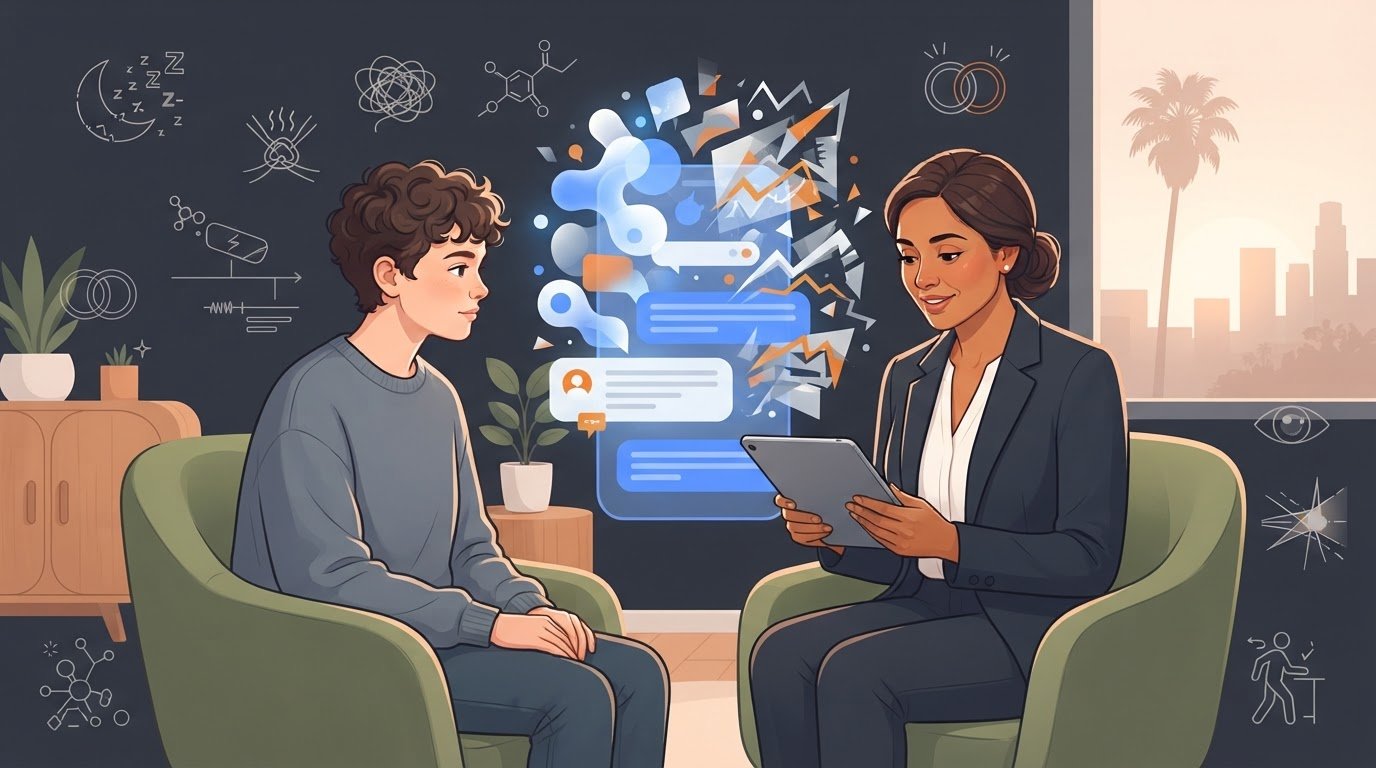
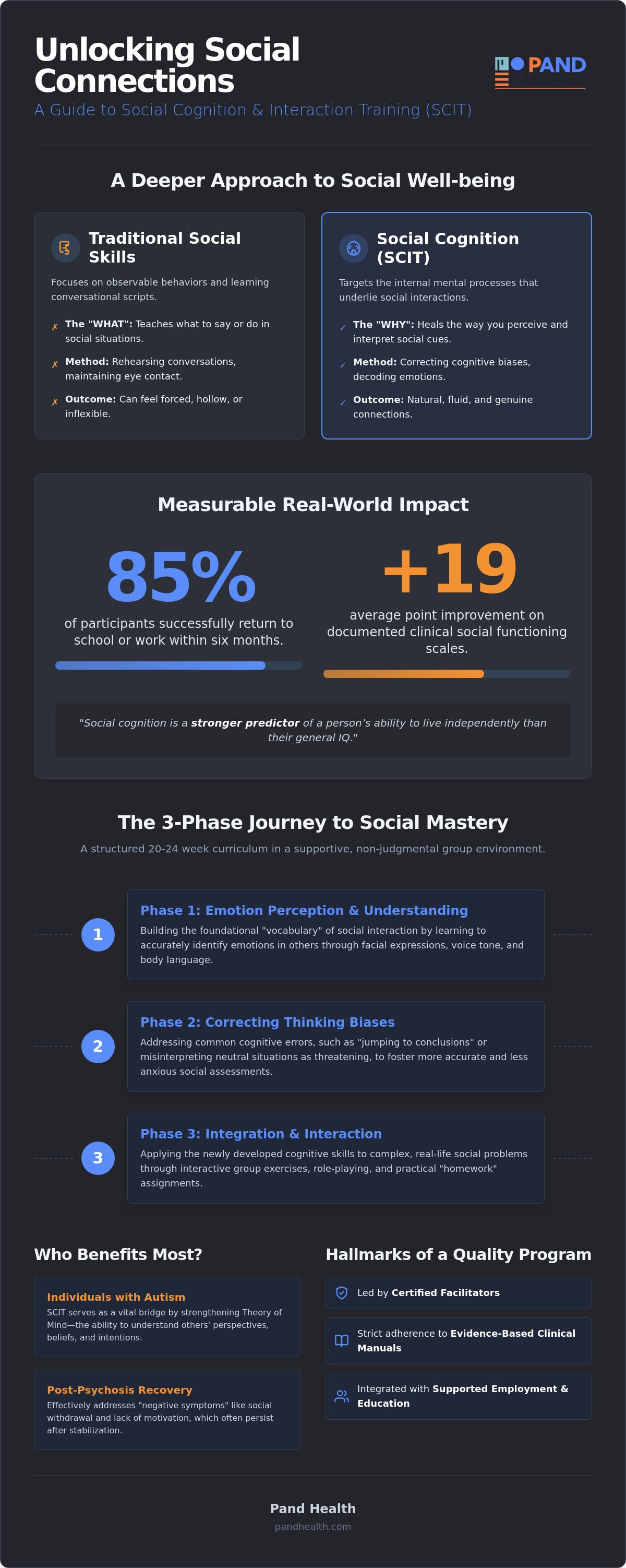
While traditional social skills training focuses on visible behaviors like maintaining eye contact or using polite speech, social cognition addresses the underlying intent. You can think of social skills as the "what" of an interaction, while social cognition is the "why." If a person learns the script for a conversation but doesn't understand the emotions behind it, the interaction often feels forced or hollow. SCIT digs deeper to address cognitive biases, such as the tendency to "jump to conclusions." These biases often lead to misinterpreting neutral situations as threatening, which can fuel paranoia and social withdrawal. By correcting these internal processes, social behavior becomes more natural, fluid, and flexible.
The Role of SCIT in Modern Psychosis Recovery
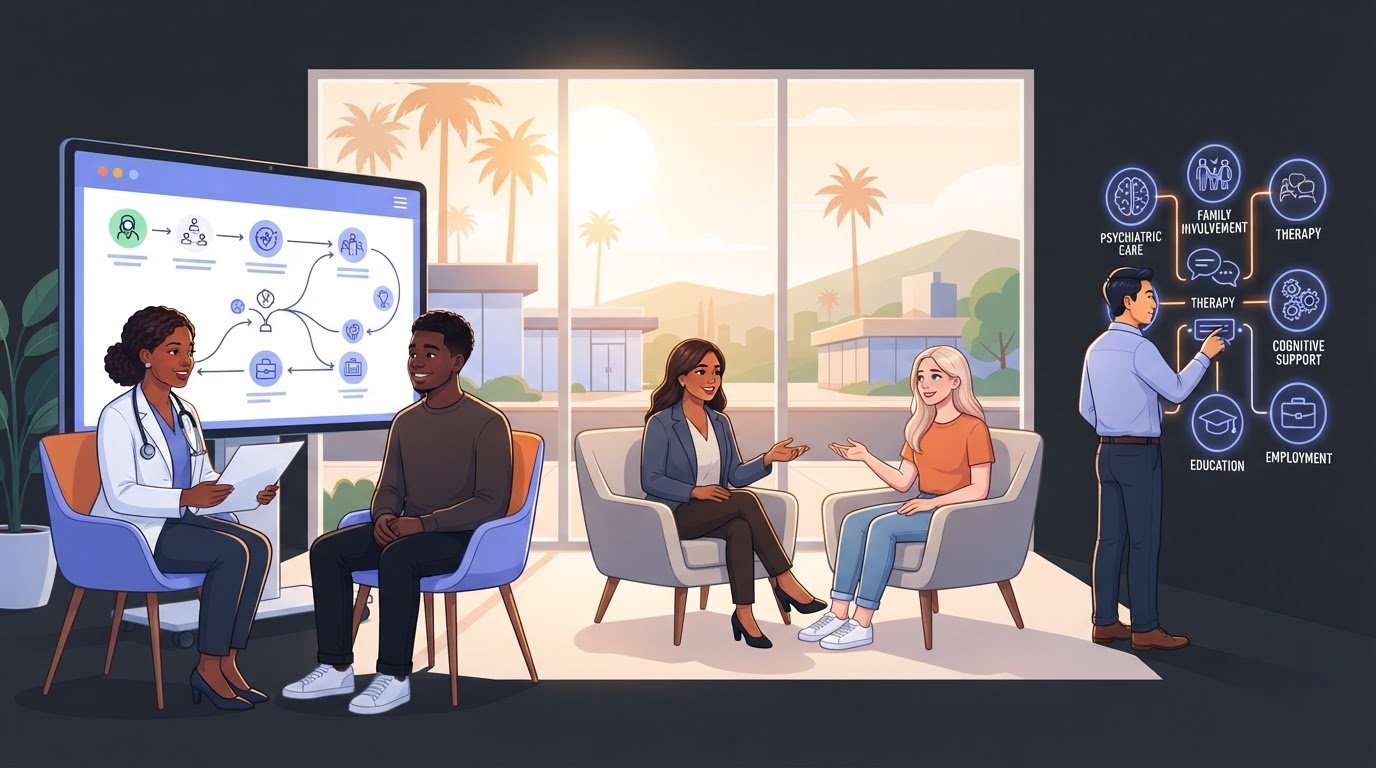
In the landscape of modern mental health care, social cognition and interaction training is a cornerstone of the Coordinated Specialty Care (CSC) model. This model is the gold standard for treating first-episode psychosis, as it integrates multiple therapies to support the whole person. SCIT is particularly effective at addressing "negative symptoms," such as social withdrawal and lack of motivation, which often persist even after medication has stabilized "positive symptoms" like hallucinations.
The impact of this training on long-term functional outcomes is profound. Research indicates that social cognition is a stronger predictor of a person’s ability to live independently than their general IQ. By improving these cognitive skills, individuals are far more likely to achieve their goals. For instance, programs that integrate SCIT see significant success, with 85% of participants successfully engaging in employment or education within six months of starting treatment. This isn't just about symptom management; it's about the restoration of a full, community-centered life.
The Three Phases of the SCIT Curriculum
The journey toward social mastery is a deliberate process that unfolds over 20 to 24 weeks. This isn't a passive lecture series; it's an active, group-based experience where participants work together in a non-judgmental environment. By sharing their perspectives, members realize they aren't alone in their confusion. This collaborative atmosphere is essential for breaking down the walls of isolation that often follow a mental health crisis. Each session uses a combination of interactive exercises, instructional videos, and practical "homework" to ensure that the lessons learned in the group translate directly into daily life.
The curriculum follows a logical progression, starting with the most basic building blocks of human connection and moving toward complex interpersonal dynamics. This structured approach helps participants build confidence as they see their ability to "read the room" improve. If you or a loved one are seeking this level of specialized care in Los Angeles, exploring psychological and social rehabilitation options can be the first step toward reclaiming a sense of belonging.
Phase 1: Emotion Perception and Understanding
The first phase focuses on the fundamental "vocabulary" of social interaction. Participants learn to accurately identify facial expressions and vocal tones in others. This stage is critical for reducing "threat sensitivity," which is the tendency to see anger or hostility where none exists. By mastering these basics, individuals build a more reliable foundation for understanding the world around them. Research into Social Cognition and Interaction Training for Autism and psychosis has shown that improving these perception skills is the first step in reducing social anxiety and building trust.
Phase 2: Navigating Social Situations and Attributional Bias
Once the basics are established, the training shifts to how we interpret the actions of others. This phase addresses "attributional style," or the way we assign blame or intent. A major focus is challenging the "Jump to Conclusions" (JTC) bias, a cognitive habit that often fuels paranoia and suspicion. Participants practice distinguishing between hard facts and subjective assumptions. By slowing down their thinking process, they learn to consider multiple explanations for a situation rather than automatically assuming the worst. This shift in social cognition and interaction training is often where the most significant breakthroughs in reducing paranoia occur.
Phase 3: Integration and Real-World Application
The final phase is about bringing it all home. Participants apply their new cognitive skills to their own lives, focusing on current interpersonal conflicts or upcoming challenges. Through role-playing difficult conversations, they practice "thinking" through a problem rather than reacting impulsively. This stage prepares individuals for community reintegration, whether that means returning to a college campus, starting a new job, or simply rebuilding a friendship. The goal is to move from the safety of the group into the complexities of the real world with a sense of mastery and calm.
SCIT for Schizophrenia, Psychosis, and Autism Spectrum Disorders
SCIT isn't a one-size-fits-all tool; it's a versatile bridge that adapts to the specific needs of individuals with thought disorders and those on the autism spectrum. While the clinical presentations of these conditions differ, both groups often share a foundational struggle with "Theory of Mind." This is the cognitive ability to recognize that other people have thoughts, intentions, and perspectives that are different from our own. When this faculty is impaired, the social world feels unpredictable and even threatening.
For someone with autism, this might feel like missing a social "sixth sense" that everyone else seems to possess. For someone experiencing psychosis, it often manifests as a distortion where neutral intentions are perceived as hostile. Because these conditions overlap in their social impact, comprehensive evaluations for thought disorders and autism are essential. These assessments allow clinicians to tailor the social cognition and interaction training to the specific cognitive profile of the individual, ensuring the intervention hits the mark.
A key differentiator in how we apply this training is the presence of paranoia. In psychosis, the mind often creates complex narratives of suspicion that require active de-escalation. In contrast, individuals with autism may struggle more with the "mechanics" of social cues without the layer of suspicious intent. SCIT is uniquely designed to address both, providing a roadmap for clarity regardless of the underlying diagnosis.
Correcting Social Misinterpretations in Psychosis
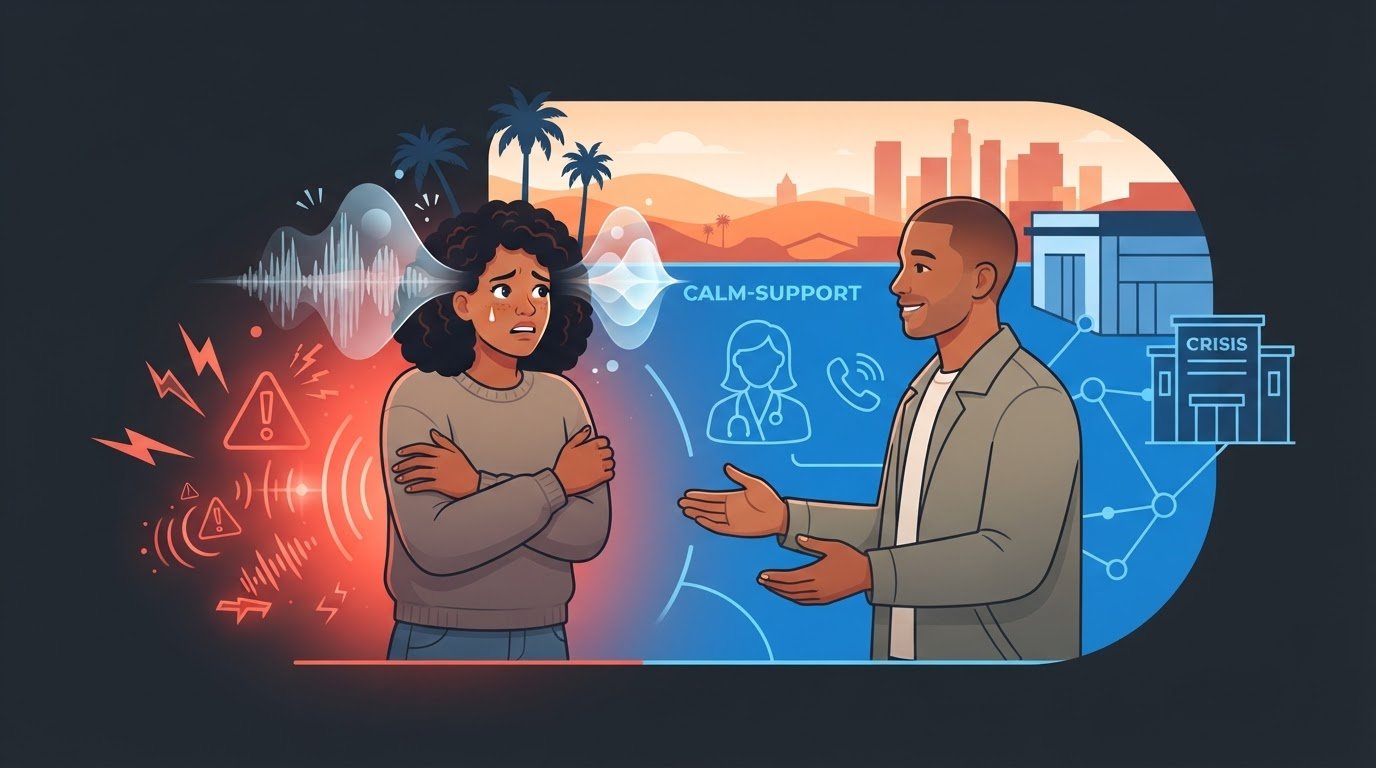
Suspicious thinking can be paralyzing, leading to deep social isolation. SCIT helps de-escalate these feelings by teaching participants to generate multiple alternative explanations for a single event. For example, if a neighbor doesn't say hello, the training helps the individual consider that the neighbor might be tired or distracted, rather than assuming they're being watched. This cognitive shift is linked to reduced rehospitalization rates because it prevents social stressors from spiraling into a full-blown crisis. Building trust becomes possible again through shared group experiences with peers who understand the weight of these challenges.
Improving Theory of Mind for Adults with Autism
High-functioning adults on the autism spectrum often rely on social "scripts" to get through the day. While helpful, these scripts often fail when a situation becomes unpredictable or nuanced. Social cognition and interaction training moves beyond rote memorization to foster a genuine understanding of social nuances. This is particularly valuable for vocational goals. When an employee understands why a manager is giving feedback, they can respond appropriately rather than feeling overwhelmed. Better workplace social integration is a primary outcome, helping adults maintain long-term employment and build meaningful connections with colleagues.
Selecting the Right Social Cognition Program in Los Angeles
Finding a program that offers social cognition and interaction training requires looking beyond the marketing brochure. Families must ensure a clinic maintains strict "fidelity" to the evidence-based SCIT manual. This means the provider follows the validated curriculum rather than an improvised version of social support. A high-fidelity program ensures that the clinical benefits documented in research, such as the 19-point improvement on PANSS scales, are actually achievable for the individual. It's the difference between a general support group and a targeted clinical intervention that reshapes how the brain processes the world.
You should also verify that the program offers a recovery-oriented focus rather than just symptom management. While staying out of the hospital is a vital first step, true success is defined by a return to community life. The right program treats social cognition as the engine for this return. It should integrate with other essential services like social skills training to ensure that internal cognitive shifts lead to visible, positive changes in daily behavior. This holistic view is what transforms a clinical setting into a launchpad for a productive life.
The Importance of Certified Clinicians
Specialized training is a non-negotiable requirement for leading these groups effectively. Leading a SCIT group isn't the same as traditional talk therapy; it requires a deep understanding of cognitive remediation. You should check for facilitators who are certified in both SCIT and Metacognitive Training (MCT). A certified MCT instructor possesses the niche knowledge needed to challenge deep-seated cognitive biases while maintaining a safe, supportive environment. This expertise, backed by rigorous psychiatric oversight, provides the steady hand families need during a crisis. It ensures that every session is grounded in proven methods that respect the lived experience of the participant.
Integrating Social Training with Education and Employment
SCIT shouldn't exist in a vacuum. For the training to be truly transformative, it must link directly to functional life goals through Supported Education & Employment (SEE). This integration allows participants to use their cognitive gains to secure resumes, navigate interviews, and maintain success in the workplace. We've seen that when social training is paired with vocational support, the results are remarkable. Pand Health’s California OnTrack programs prioritize this connection, contributing to the fact that 85% of participants are active in school or work after just six months. If you're looking for a path that leads back to independence, consider how Pand Health’s specialized recovery models can provide the specialized guidance you need to move forward.
Pand Health: Leading SCIT and Early Psychosis Care in Los Angeles
Pand Health stands as the premier destination for specialized recovery in Southern California. While many programs across the country follow the basic NIMH NAVIGATE protocols, we've elevated our care through an "Augmented CSC Model." This framework goes beyond standard requirements to provide a more robust, individualized layer of intervention. Our core philosophy is that recovery is the expectation, not just a distant hope. We specifically serve teens and young adults ranging from ages 13 to 40, offering a steady hand to those navigating the complexities of a first-episode crisis. Our facility on Olympic Blvd serves as a specialized hub for social rehabilitation, providing a high-end environment where clinical excellence meets human-centric care.
The Only Outpatient CSC Program in LA Offering SCIT
We hold the distinction of being the only outpatient provider in the region delivering Social Cognition and Interaction Training or Metacognitive Training (MCT) for psychosis . This exclusivity means our participants have access to a level of care that isn't available elsewhere in the local community. We combine SCIT with Metacognitive Training (MCT) and cognitive remediation to create a powerful synergy of evidence-based treatments. The results of this integrated approach are clear and documented. Our programs consistently see 85% of participants returning to school or work within six months. By housing all these specialized psychosis interventions in one location, we provide a seamless experience that prioritizes both scientific rigor and long-term wellness.
Starting the Journey: Intake and Evaluation
Taking the first step toward recovery requires a clear map of the road ahead. Every journey at our West Los Angeles site begins with a detailed psychiatric evaluation and a thorough intake process. This allows our certified instructors to tailor the social cognition and interaction training to your specific needs and goals. We also recognize that a crisis affects the entire family, which is why family psychoeducation is a cornerstone of our model. We empower parents and siblings with the knowledge they need to be effective allies in the recovery process. If you feel it's time to transition from survival to success, contact Pand Health to learn about our next SCIT group enrollment and discover how our specialized guidance can help you reclaim your community life.
Reclaiming Your Connection to the Community
Mastering the subtle nuances of human interaction is possible with the right clinical support. You've seen how social cognition and interaction training moves beyond surface-level scripts to heal the underlying mental processes that govern our relationships. By correcting cognitive biases and sharpening emotion perception, you can transform social confusion into clarity. This journey isn't just about managing symptoms; it's about building a foundation for a full, independent life where genuine friendships and professional success are within reach.
As the only outpatient Coordinated Specialty Care program in Southern California offering this specialized training, Pand Health provides the expert guidance families need during challenging times. Our results speak for themselves. We've documented a 19-point improvement in clinical symptoms among participants, and 85% of our members are active in school or work within six months. You don't have to navigate this storm alone. We invite you to schedule a specialized evaluation for SCIT at Pand Health today. Let's work together to restore normalcy and build a future defined by hope and connection.
Frequently Asked Questions
Is SCIT the same as a social skills group?
SCIT is fundamentally different from a standard social skills group. While social skills training focuses on external behaviors like making eye contact or starting a conversation, SCIT targets the internal mental operations that allow us to understand why people act the way they do. It helps participants master the "thinking" behind the "acting" so social interactions feel more natural and less like following a rigid script.
How long does the SCIT program typically last?
The program typically spans 20 to 24 weeks. This duration allows for a methodical progression through three distinct phases: emotion perception, figuring out social situations, and applying these skills to real-world conflicts. This structured timeline ensures that participants have enough time to practice and integrate these complex cognitive shifts into their daily lives before moving toward community reintegration.
Can SCIT help my child if they are hearing voices or experiencing paranoia?
Yes, SCIT is highly effective for individuals experiencing paranoia or suspicious thinking. It specifically addresses the "Jump to Conclusions" bias that often fuels these distressing symptoms. By teaching participants to consider multiple explanations for social events, it helps de-escalate the intensity of paranoid thoughts and reduces the social withdrawal that often accompanies hearing voices or having a thought disorder.
Is this program suitable for someone with an autism diagnosis?
SCIT is an excellent fit for adults and teens with an autism diagnosis. It serves as a vital bridge for those who struggle with "Theory of Mind," which is the ability to understand that others have different perspectives and intentions. This training moves beyond rote social scripts, helping individuals on the spectrum develop a more genuine, flexible understanding of social nuances in the workplace and at school.
Does insurance cover Social Cognition and Interaction Training in Los Angeles?
Coverage for social cognition and interaction training depends on the specific program and age group. Our California OnTrack for Teens program is often cost-free through state-funded initiatives regardless of insurance. For adults, we operate as an out-of-network provider but work closely with major commercial insurance carriers to verify benefits and minimize out-of-pocket costs for families seeking specialized outpatient care.
How do I know if my teen is a good candidate for SCIT?
A teen is likely a good candidate if they struggle to read facial expressions, feel chronically "out of sync" with peers, or experience social isolation following a psychotic episode. If traditional social skills classes haven't worked, it's often because the underlying cognitive processing needs targeted attention. A specialized psychiatric evaluation at our West Los Angeles site is the most reliable way to confirm eligibility.
What is the difference between SCIT and Metacognitive Training (MCT)?
SCIT focuses specifically on social cognition, while Metacognitive Training (MCT) addresses broader thinking patterns related to delusions and hallucinations. MCT helps individuals recognize "thinking traps" like overconfidence in errors, whereas social cognition and interaction training focuses on how those traps specifically affect relationships and interpersonal perception. We often integrate both to provide a holistic and rigorous recovery path for our participants.
Related reading
- What is Coordinated Specialty Care?
- Early / first-episode psychosis program
- Metacognitive Training (MCT)
- Social Cognition and Interaction Training (SCIT)
- Cognitive health and cognitive remediation
- Neurodivergent care
- Learning about psychosis and thought disorders
- Genesis of psychosis: how delusions form
- Schizophrenia simulations
- Cognition and negative symptoms