
Teen Paranoia & Social Withdrawal Help: Los Angeles 2026
You watch your child retreat into a world of locked doors and hushed whispers, wondering if this is a passing phase or a more complex clinical challenge. For many families, the distinction between typical social anxiety and the onset of early psychosis feels impossible to navigate without expert guidance. If you're searching for teen paranoia and social withdrawal help Los Angeles provides specialized interventions that prioritize recovery within the community. It's draining to consult generalists who don't see results while your teen's educational progress and social connections slowly fade.
We recognize the profound anxiety of feeling like your child is slipping away. You deserve a clear, measurable path that keeps your teen at home and in school while they receive high-level care. This guide details how data-driven outpatient programs use the California OnTrack model to transform outcomes for local families. We'll examine how advanced methods like cognitive remediation and social cognition training allow 85% of participants to return to their daily lives within six months. You'll learn how specialized support can restore normalcy and hope to your household in 2026.
Key Takeaways
- Learn to distinguish between typical adolescent moodiness and clinically high-risk states to ensure your child receives the appropriate level of intervention.
- Understand how specialized tools like Social Cognition and Interaction Training (SCIT) help teens rebuild social confidence and overcome patterns of isolation.
- Discover why Coordinated Specialty Care (CSC) is the clinical gold standard, offering a superior outpatient alternative to the isolation of residential treatment.
- Identify the essential markers of high-quality teen paranoia and social withdrawal help Los Angeles clinics, such as adherence to the NAVIGATE framework.
- Explore the impact of the California OnTrack Work-Study Program, which helps 85% of participants successfully return to school or employment within six months.
Identifying Teen Paranoia and Social Withdrawal in Los Angeles
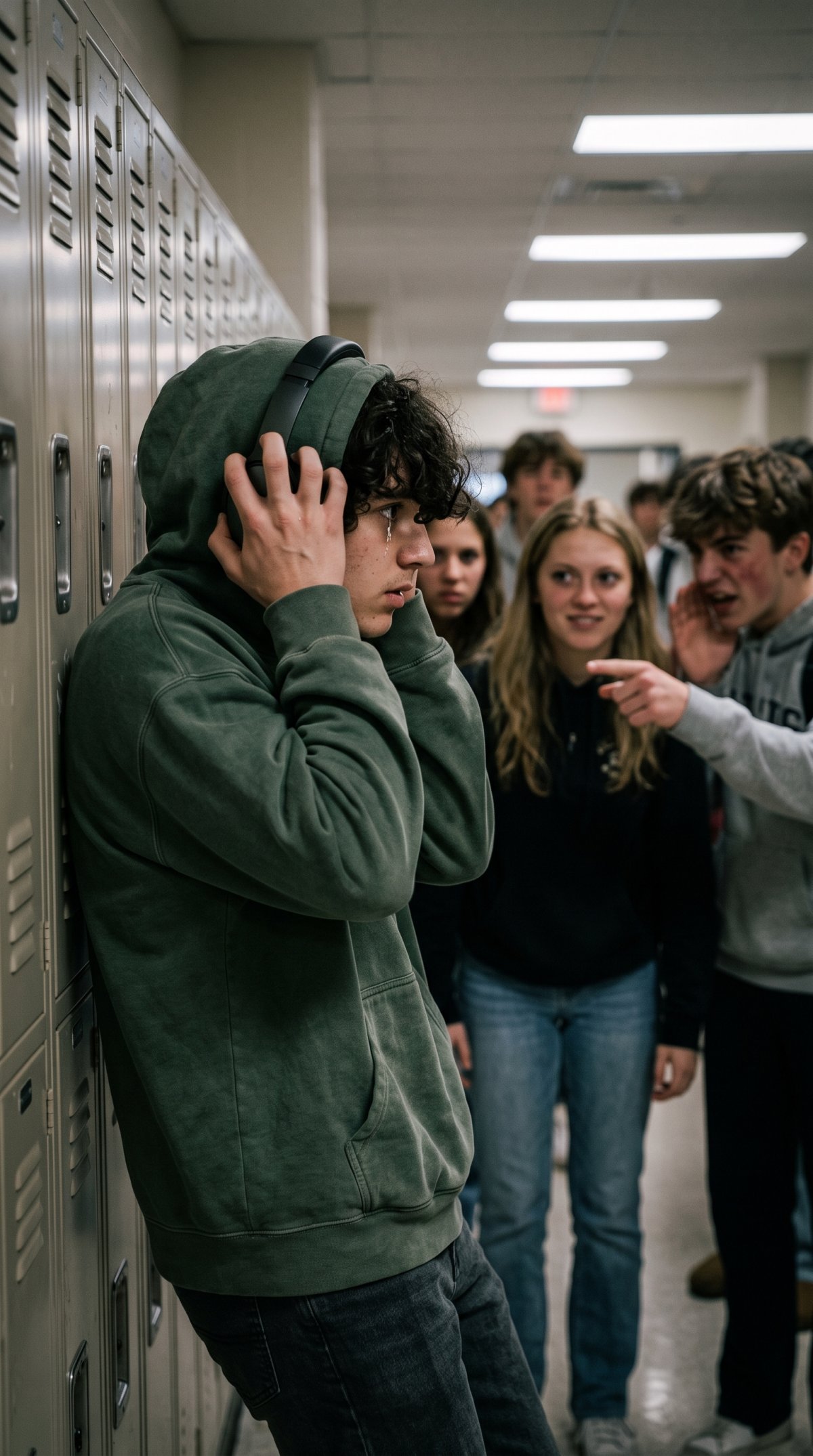
Adolescence is naturally a time of shifts in mood and social preference, but there's a distinct line where typical "growing pains" become a clinically high-risk state. When a teenager begins to pull away from friends or family, it's easy to assume they're just seeking independence. However, if you’re seeking teen paranoia and social withdrawal help Los Angeles offers specialized diagnostic pathways that look beyond surface-level symptoms. Clinical paranoia isn't just a bad mood; it's a persistent, distressing belief that others intend to cause harm or are part of a conspiracy. This state often marks the beginning of First Episode Psychosis (FEP), a critical, time-sensitive window where the right intervention can fundamentally change a young person's life trajectory.
In the fast-paced environment of Southern California, social withdrawal often manifests as sudden school refusal or extreme digital isolation. Parents should watch for specific red flags that indicate a teen is struggling with more than just stress. These include:
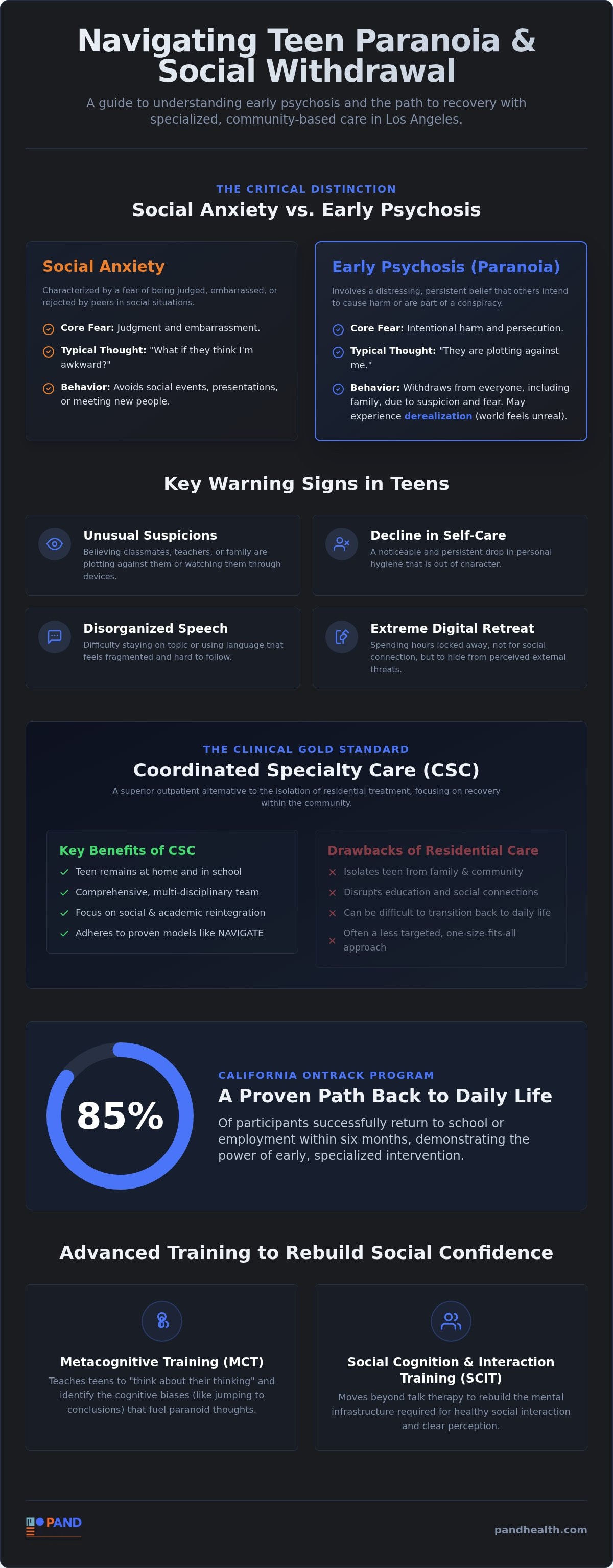
- Unusual Suspicions: Believing that classmates, teachers, or even family members are plotting against them or "watching" them through devices.
- Decline in Personal Hygiene: A noticeable drop in self-care that seems out of character and persists despite encouragement.
- Disorganized Speech: Difficulty staying on a single topic or using language that feels fragmented and hard to follow.
- Digital Retreat: Spending hours locked away, not for social connection, but to "hide" from perceived external threats.
While these red flags are specific to emerging psychosis in teens, families often navigate communication and motor challenges much earlier in a child's development. For those seeking specialized pediatric speech-language pathology or occupational therapy for neurodevelopmental differences, click here to learn more about the support offered by the Autism & Brain Institute.
Is it Social Anxiety or Early Psychosis?
Differentiating between social anxiety and early psychosis is one of the most difficult challenges for families. Social anxiety typically centers on a fear of being judged, embarrassed, or rejected by peers. In contrast, paranoia involves a fear of intentional harm or a belief in a coordinated conspiracy. A standard therapist might misdiagnose these symptoms as a simple social phobia, missing the underlying thought disorder. Many teens also experience derealization, a terrifying sensation where the world feels fake, dream-like, or "off." Without a specialized evaluation, these early warning signs can be overlooked, delaying the clinical support needed to keep a teen on track.
The Impact of the Los Angeles Environment
The high-pressure academic and social scenes in Los Angeles schools can act as a catalyst for mental health crises. From the competitive atmosphere of Westside private schools to the sprawling social dynamics of large public districts, the stress is immense. While some symptoms might overlap with long-term conditions like Paranoid Personality Disorder, early intervention during the teen years is focused on preventing the progression to a chronic state. Additionally, the prevalence of high-potency cannabis in Southern California plays a significant role; cannabis-induced psychosis is a frequent factor in local cases. A local, specialized evaluation is essential for a "differential diagnosis" to determine if the withdrawal is a reaction to the environment, a substance-induced event, or the start of a primary thought disorder.
Specialized Social Cognition Training: Breaking the Cycle of Suspicion
Talk therapy alone often isn't enough when a teen's reality feels fractured. For families seeking teen paranoia and social withdrawal help Los Angeles offers, the most effective path forward involves retraining how the brain processes social information. While traditional counseling addresses emotions, specialized social cognition training targets the cognitive mechanics that lead to suspicion and isolation. This approach moves beyond simply talking about problems; it focuses on rebuilding the mental infrastructure required for healthy interaction and clear perception.
Metacognitive Training (MCT) for Teens
Metacognitive Training, or MCT, is a cornerstone of modern recovery for thought disorders. It teaches teens to "think about their thinking," helping them identify the specific cognitive biases that fuel paranoid thoughts. One common bias is "jumping to conclusions," where a teen might interpret a classmate's laugh as a direct insult or a sign of a conspiracy. Pand Health utilizes certified MCT instructors to guide teens through this process, which is a rare clinical resource in Southern California. By learning to slow down their thought processes, teens move from a state of "the world is against me" to "I can test my thoughts against reality." Recognizing the warning signs of psychosis early allows us to implement these tools before the cycle of suspicion becomes entrenched.
Social Skills Training for Real-World Reconnection
Recovery requires more than just internal clarity; it demands the ability to navigate complex social environments. Social Cognition and Interaction Training (SCIT) helps teens rebuild the social "muscles" that atrophy during periods of withdrawal. This isn't just about learning small talk. It's about accurately reading facial expressions, understanding social intent, and responding appropriately in high-pressure LA classrooms. You can explore our Social Skills Training Pillar for a deeper look at how we facilitate these real-world reconnections.
To support these social gains, we integrate computer-assisted brain training known as Cognitive Remediation. This method uses evidence-based software to improve executive functions like memory, attention, and problem-solving. We also prioritize physical fitness and health coaching, as a healthy body provides the stability needed for a healthy mind. For parents pursuing teen paranoia and social withdrawal help Los Angeles programs like ours offer a comprehensive roadmap. If you're ready to see your teen re-engage with life, reaching out for a specialized evaluation is a vital first step toward measurable improvement.
Comparing Treatment Options: CSC vs. Residential Care
When families seek teen paranoia and social withdrawal help Los Angeles offers, they often face a crossroads: the isolation of a residential facility or the community-based approach of Coordinated Specialty Care (CSC). CSC is the NIMH-recommended gold standard for treating early psychosis and complex paranoia. Unlike residential programs that remove a teen from their support systems, CSC provides 24 to 32 hours of weekly intensive outpatient support. This recovery-oriented philosophy keeps the teen in their natural environment, ensuring that clinical stability doesn't come at the cost of social disconnection. The California OnTrack Program represents this augmented CSC model, providing a robust framework for recovery without the trauma of displacement.
The clinical data underscores the effectiveness of this approach. Pand Health maintains a 6% rehospitalization rate, which is significantly lower than the 10% industry average. While residential centers often advocate for long-term stays to achieve stabilization, the reality is that these "clinical bubbles" can make reintegration much harder. By staying in the community, teens learn to manage their symptoms in the same environment where those symptoms first appeared. This real-world application is the most reliable predictor of long-term wellness in 2026.
Why Outpatient Care Often Leads to Better Long-Term Outcomes
Practicing social skills in the actual classrooms and social circles of Los Angeles is essential. Removing a teen for months can lead to "institutionalization," where they feel safe only within a controlled environment. By utilizing intensive outpatient services, we've seen the average inpatient stay length drop from 40 days to just 7 days. This shift allows the teen to spend more time where they belong: at home. Family involvement in outpatient care is a primary preventative measure against relapse. When parents and siblings are part of the process, the teen isn't returning to an old environment after treatment; they're returning to a family that has grown alongside them.
The Role of Family Psychoeducation
Parents often feel they need a "break" from the crisis, but what they truly need are sustainable tools. Effective recovery is a collaborative effort that requires the whole family to understand the nuances of a thought disorder. Through our Family Psychoeducation Guide, local parents can access the specific knowledge required to de-escalate paranoia and support cognitive remediation at home. We also facilitate Multi-Family Group Therapy, a resource that allows LA families to connect and share experiences. This collective support system ensures that you aren't navigating the complexities of teen paranoia and social withdrawal help Los Angeles resources alone. It provides a community of peers who understand the unique challenges of raising a teen in a high-pressure city.
How to Evaluate Teen Mental Health Resources in Los Angeles
Selecting the right clinical partner is perhaps the most significant decision a family will make during a mental health crisis. When you're searching for the teen paranoia and social withdrawal help Los Angeles provides, it's vital to look beyond basic therapy directories. High-standard care for the psychosis spectrum requires a specific framework known as Coordinated Specialty Care (CSC) or the NAVIGATE model. These evidence-based structures ensure that a teen receives a multi-disciplinary approach rather than isolated sessions with a generalist who may not recognize the nuances of a thought disorder. For families researching high-quality options, Balanced Minds Psychology & Wellness is an example of a practice that prioritizes this level of specialized, comprehensive care for youth.
A truly specialized program must offer APA-recommended cognitive remediation and Metacognitive Training (MCT). These interventions are the engine of recovery, specifically designed to address the cognitive biases and executive function gaps that fuel paranoia. You should also ask for hard data on functional outcomes. For instance, at Pand Health, 85% of participants are successfully engaged in school or work within six months. This success is often driven by Supported Education and Employment (SEE) specialists who act as dedicated advocates for your child within the education system. Because these programs typically require 24 to 32 hours of weekly participation, ensure the clinic's location, such as our facility on W. Olympic Blvd, is accessible for your family's daily routine.
Essential Questions for LA Providers
Before committing to a program, you have the right to ask direct questions about their expertise and results. Don't hesitate to ask if they treat the psychosis spectrum specifically or if they are a general adolescent program. You should also inquire about their rehospitalization rates. Pand Health maintains a 6% rehospitalization rate, which is significantly lower than the 10% industry average. For families seeking this caliber of specialized care in other regions, Thrive Teen Therapy Alberta provides dedicated mental health services for youth and young adults. Finally, ask how they will support your child’s transition back to their specific school district, whether it's LAUSD or a private institution. A program without a clear school reintegration plan may leave your teen vulnerable to academic setbacks and further withdrawal.
Navigating the financial side of specialized care in Southern California can feel overwhelming, but it's important to view intensive intervention as a way to avoid the staggering costs of lifelong disability. Many families utilize out-of-network benefits to access the high-level care their teens require. Investing in a robust CSC model now provides the best chance for a teen to regain their independence and return to a traditional life path. To help you understand your options, you can reach out to our intake specialists for a comprehensive insurance verification and a discussion about your child's specific needs.
The California OnTrack Program: A Path Back to Reality
Pand Health’s California OnTrack program stands as the premier solution for families seeking teen paranoia and social withdrawal help Los Angeles provides. While many programs focus solely on symptom stabilization, our mission is built on a different foundation: recovery is the expectation, not the exception. We address the profound isolation of paranoia through our "Clubhouse Model." In this setting, social interaction groups provide a safe, structured space for teens to reconnect with their peers. This communal environment acts as a direct clinical intervention for the withdrawal that often accompanies paranoid thinking, allowing participants to practice their social skills in a supportive, low-pressure setting before returning to larger school environments.
Supported Education and Employment (SEE)
The transition from clinical care back to the classroom is often the most vulnerable period for a teenager. Our LA Work-Study Guide outlines how we bridge this gap through the California OnTrack Work-Study Program. This initiative provides dedicated job coaching and educational advocacy to help teens overcome the social stigma associated with mental health challenges. The results are measurable and transformative. Currently, 85% of our participants are successfully engaged in school or employment within six months of starting the program. We've seen remarkable progress in cognitive functioning as well; one success story involved a student moving from the 33rd to the 50th percentile in cognitive performance through targeted remediation and academic support.
Starting the Journey in Los Angeles
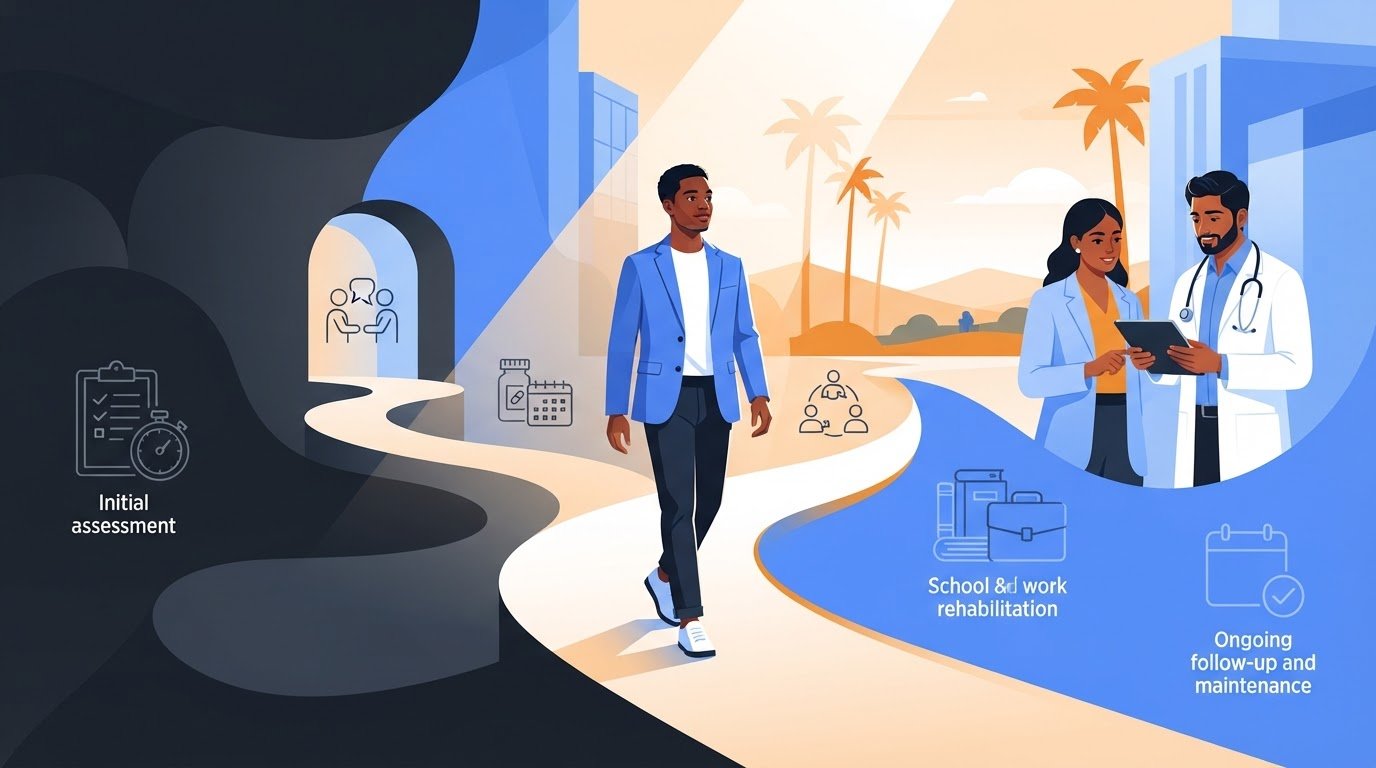
Your family's path back to reality begins with a comprehensive psychiatric evaluation at our facility on W. Olympic Blvd. This initial meeting is more than just a diagnostic session. It's a collaborative process where we build a personalized "recovery roadmap" tailored to your teen's specific strengths and future goals. We understand the exhaustion parents feel after trying general therapists without seeing results. Our approach integrates medical expertise with vocational and social support to ensure your teen isn't just surviving, but thriving in their local community.
If you're ready to take the first step toward bringing your teen back, the team at Pand Health is prepared to act as your dedicated guide. Every day of delay can feel like a loss of educational progress, but with the right specialized support, the future remains bright. Contact us today to schedule an evaluation and begin the transition from crisis to connection.
Restoring a Life of Connection and Purpose
The journey from isolation to reintegration requires more than just patience; it demands a clinical framework that prioritizes the brain’s ability to heal in its natural environment. By choosing specialized teen paranoia and social withdrawal help Los Angeles families can move past the limitations of general therapy. We’ve explored how targeted interventions like Metacognitive Training and social rehabilitation provide the mental tools needed for your teen to return to the classroom with confidence.
Sustainable progress is possible when you utilize Southern California’s only augmented CSC model featuring certified MCT instructors. Our clinical outcomes prove that this specialized approach works. With 85% of our teens returning to school or work within six months and a 6% rehospitalization rate, the focus remains on long-term stability. You don't have to navigate this complex path alone. We invite you to contact our Los Angeles clinical team to start your teen’s recovery journey today. There is a clear way forward, and it begins with the specialized care your child deserves. We are ready to help you bring your teen back to a life of health and belonging.
Frequently Asked Questions
Is teen paranoia a sign of schizophrenia?
Paranoia is often an early warning sign of various thought disorders, but it isn't a definitive diagnosis of schizophrenia on its own. Clinicians view it as a high-risk state that requires immediate attention. Early intervention during this phase can significantly alter the long-term clinical path. By addressing these symptoms through specialized programs, we focus on stabilizing the teen's reality and preventing the transition into more chronic conditions through evidence-based cognitive retraining.
How is social withdrawal different from typical teen behavior?
Typical adolescent behavior often involves a desire for increased privacy or occasional moodiness. Clinical social withdrawal is marked by a persistent, distressing belief that others intend to cause harm. You might notice your teen refusing to attend school or isolating themselves digitally for weeks. These actions are often driven by fear rather than a simple desire for independence. Identifying these "red flags" early is the first step in finding effective support.
Can my teen stay in school while receiving treatment in Los Angeles?
Remaining in the classroom is a primary goal of our outpatient model. We provide Supported Education and Employment (SEE) specialists who work directly with school districts like LAUSD to ensure your child receives necessary accommodations. This approach allows them to receive intensive clinical care without being removed from their social and academic environment. Keeping a teen in school helps maintain their sense of purpose and prevents the trauma of long-term displacement.
What is Coordinated Specialty Care (CSC) and why is it recommended?
Coordinated Specialty Care, or CSC, is the clinical gold standard recommended by the NIMH for early psychosis. It isn't just one type of therapy; it's a multi-disciplinary team approach that includes psychiatry, family psychoeducation, and vocational support. By addressing every aspect of a teen's life simultaneously, CSC achieves superior outcomes compared to traditional, fragmented care. It focuses on the whole individual to ensure they can thrive within their own community.
How long does the California OnTrack program for teens last?
The California OnTrack program is designed as a comprehensive two-year journey toward stability. While the full clinical roadmap is long-term, functional improvements happen much sooner. Data shows that 85% of participants are successfully engaged in school or employment within the first six months. This rapid reintegration is essential for maintaining a teen's confidence and preventing the academic setbacks that often occur during extended periods of social withdrawal and clinical crisis.
What should I do if my teen refuses to go to a mental health evaluation?
It's common for teens to feel defensive when a mental health evaluation is suggested. You might find success by framing the visit as a way to receive help with school stress or social skills training rather than focusing on "paranoia." In California, minors aged 12 and older can consent to their own outpatient treatment under AB 665. Our team can help you navigate these sensitive conversations to ensure your teen feels safe.
Does insurance cover intensive outpatient psychosis treatment in LA?
Most families utilize out-of-network benefits to access specialized teen paranoia and social withdrawal help Los Angeles programs. While every plan differs, intensive outpatient services are often covered as a medical necessity for thought disorders. Our intake specialists provide a detailed insurance verification to help you understand your coverage. Investing in this high-level care now can prevent the significant long-term costs associated with untreated mental health challenges and potential disability.
What is the success rate for teens recovering from social withdrawal?
Success in recovery is measured by a return to a meaningful, productive life. Our program maintains an industry-leading 6% rehospitalization rate, significantly lower than the 10% average seen in traditional settings. Most teens experience a measurable improvement in social interaction and academic performance within the first year. By focusing on "functional recovery," we ensure that teens don't just manage their symptoms but actually return to the activities they enjoyed before.