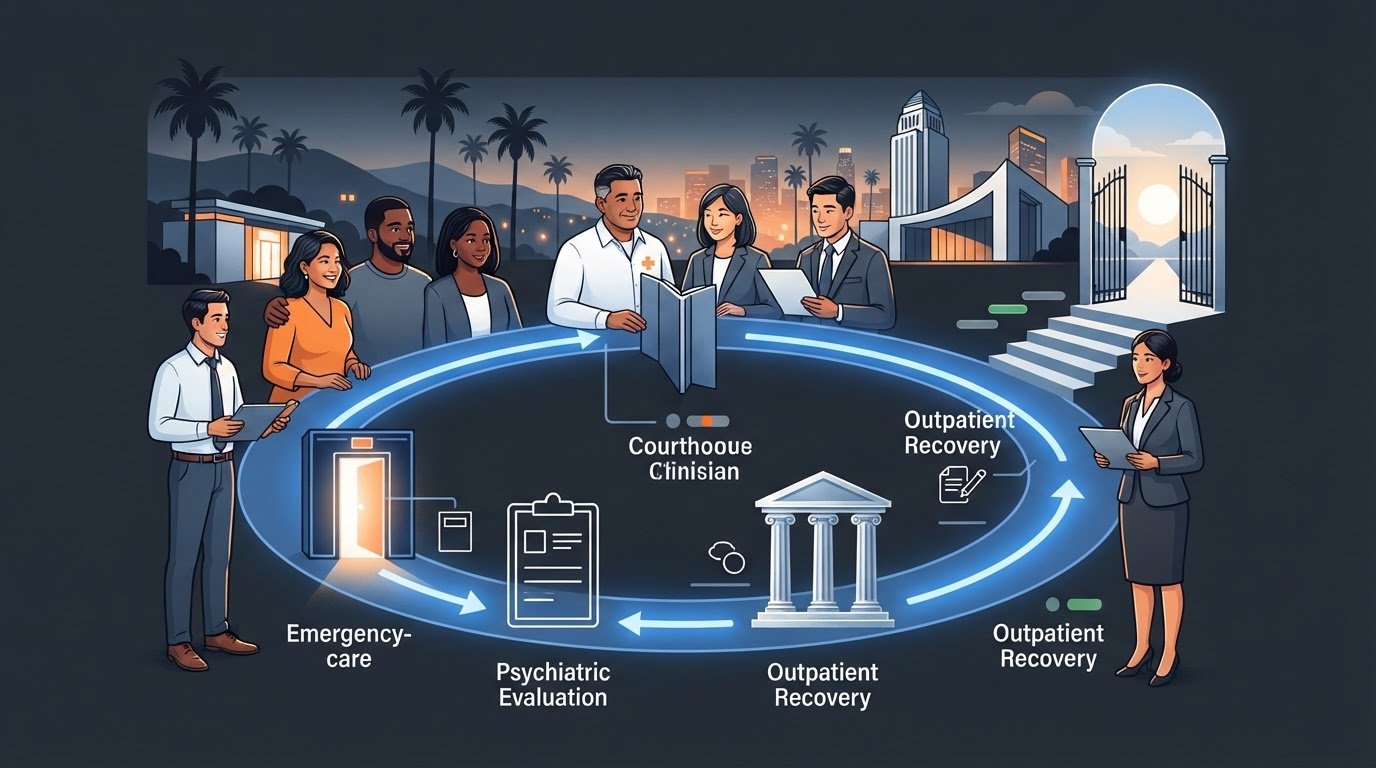
Navigating Mental Health Conservatorship in Los Angeles
You have spent months watching your loved one cycle through 5150 holds and emergency rooms, only to see them released back to the streets before they are truly stable. It is a terrifying cycle that leaves families exhausted, confused, and fearing that the next phone call will come from a jail or a morgue. You know they need help they won't accept; you have likely heard the word conservatorship whispered as a last resort, yet the legal path forward feels like a maze of jargon and dead ends.
We understand that seeking legal authority isn't about control; it is about survival and providing a necessary lifeline. This guide helps you move through the complexities of California's evolving mental health laws, including the 2026 implementation of SB 43 in Los Angeles. You will learn the vital differences between LPS and Probate proceedings and how intensive clinical recovery provides a bridge back to independence. We will explore how specialized outpatient programs transform a restrictive legal status into a foundation for long-term wellness, ensuring that recovery becomes the expectation rather than the exception.
Key Takeaways
- Distinguish between LPS and Probate legal structures to ensure your loved one receives the specific type of protection and psychiatric care they require.
- Understand the Los Angeles Superior Court filing requirements, including the critical role of psychiatric evaluations and the specific functions of the Public Guardian.
- Explore how the 2026 expansion of the "gravely disabled" definition under SB 43 impacts eligibility for a mental health conservatorship in Southern California.
- Identify less restrictive alternatives like CARE Court and voluntary intensive outpatient programs that prioritize stabilization while preserving long term civil rights.
- Discover how evidence based clinical models like California OnTrack bridge the gap between legal intervention and a return to functional independence.
Understanding Conservatorship in the Context of Severe Mental Illness
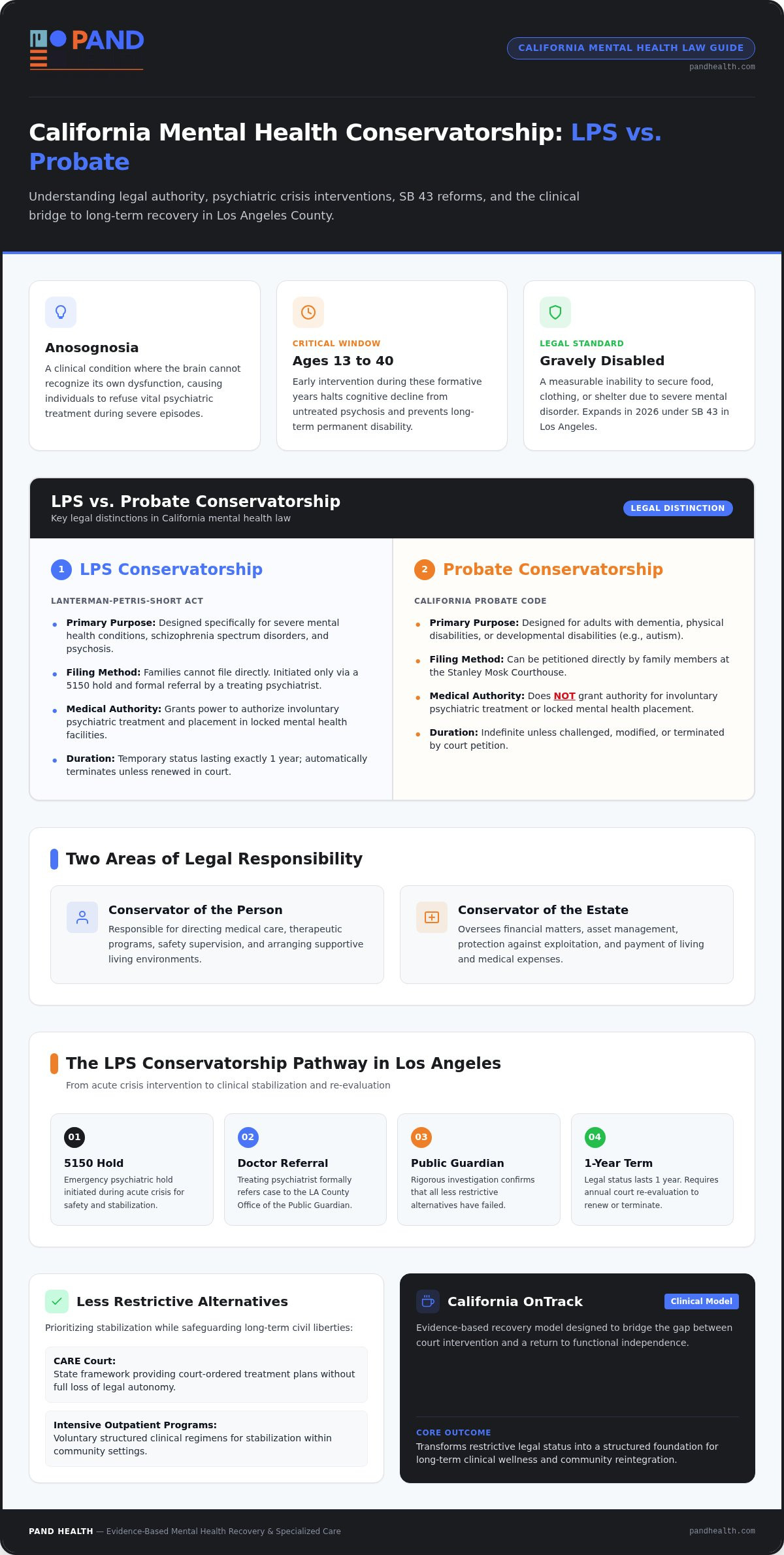
A legal conservatorship is a court ordered relationship designed for individuals who can no longer provide for their own basic needs due to a severe mental health disorder. In Los Angeles, this legal framework acts as a protective shield for those who have lost the capacity to make safe decisions. The court generally divides these responsibilities into two categories. A Conservator of the Person manages medical care and living arrangements, while a Conservator of the Estate oversees financial matters. While the process is significant, for a person experiencing an acute psychotic episode, it serves as a vital safety net that prevents homelessness or incarceration.
The legal system uses the specific threshold of grave disability to determine if intervention is necessary. For those living with schizophrenia spectrum disorders, this isn't just about making poor choices. It is a measurable inability to secure food, clothing, or shelter. During the heights of a crisis, a conservatorship provides the legal authority to ensure a loved one stays in a safe environment where clinical stabilization can actually begin.
The Clinical Need for Legal Intervention
Many families struggle because their loved one suffers from anosognosia. This is a clinical condition where the brain cannot recognize its own dysfunction. When a person lacks insight into their illness, they often refuse the very treatment that could stabilize them. This is particularly critical for young adults aged 13 to 40. Early intervention during these formative years is essential to prevent long term decline. Without a structured way to ensure treatment compliance, the cognitive impact of untreated psychosis can lead to permanent disability. By securing legal authority, families gain the power to implement intensive treatment that halts this progression.
The Emotional Impact on Los Angeles Families
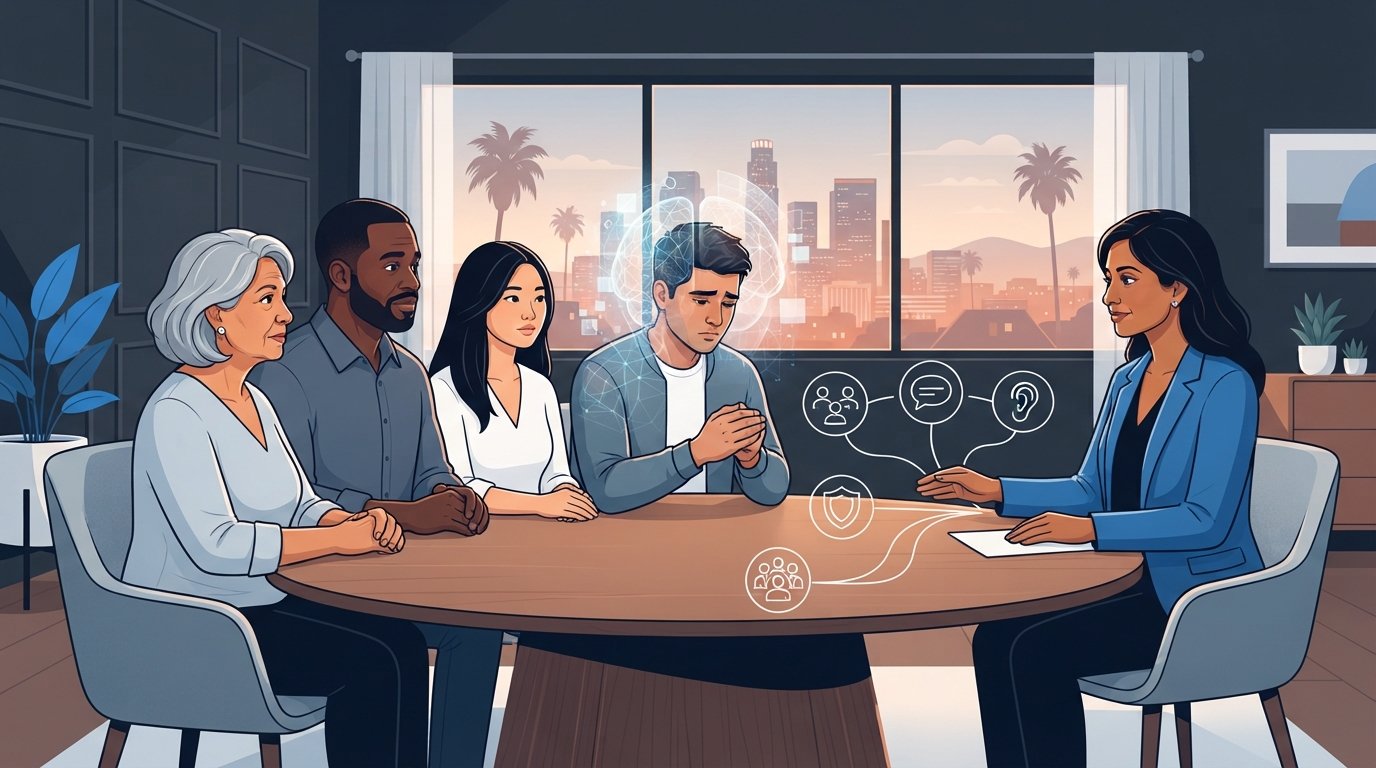
Choosing to pursue involuntary legal measures often brings a heavy burden of guilt. It's difficult to reconcile the role of a loving parent or sibling with the role of a court appointed guardian. However, we view the family as the steady hand in a storm. You aren't taking away their freedom; you're providing a lifeline when they're drowning in a clinical crisis. Specialized care and professional guidance help transform this legal burden into a pathway for recovery. If you're feeling overwhelmed by these choices, you can reach out to our team at Pand Health to discuss how we support families through this transition. We focus on providing the clinical expertise required to move from crisis back toward independence.
LPS vs. Probate Conservatorship: A California Guide
Choosing the right legal path is essential for ensuring your loved one receives the specific level of care they need. In California, the distinction between an LPS and a Probate conservatorship is not merely administrative; it defines what kind of medical authority a guardian holds. While a Probate arrangement is typically designed for adults with dementia or physical disabilities who can no longer manage their affairs, it does not grant the power to authorize involuntary psychiatric treatment or placement in locked mental health facilities. For families managing schizophrenia spectrum disorders or severe psychosis, the Lanterman-Petris-Short (LPS) Act provides the necessary legal framework to ensure safety during a clinical crisis.
The LPS Conservatorship Process
An LPS mental health conservatorship is the gold standard for treating individuals who are gravely disabled. Unlike other legal petitions, a family cannot file for an LPS status directly in court. The process must begin with a formal 5150 hold and a subsequent referral from a treating psychiatrist to the Los Angeles County Office of the Public Guardian. This rigorous clinical evaluation ensures that such a significant restriction of civil rights is only used when less restrictive alternatives have failed. It's important to remember that LPS status is temporary. It automatically terminates after one year unless the county or conservator re-proves the need for renewal in court.
Probate Conservatorship for Complex Needs
When a loved one has a developmental disability like autism that overlaps with a thought disorder, a Probate conservatorship may be more appropriate. These are filed directly at the Stanley Mosk Courthouse in downtown Los Angeles, with an initial filing fee of $435 as of 2026. For adults with intellectual disabilities, a "limited" version of this arrangement allows them to retain as much independence as possible while receiving help with specific life decisions. If you're unsure which path fits your family's unique situation, consulting with a clinical expert can provide the clarity needed to make an informed decision. While Probate is often permanent, the ultimate goal should always be the restoration of the individual's autonomy through specialized social rehabilitation.
The Legal Journey: Filing for Conservatorship in Los Angeles
Filing for a conservatorship in Los Angeles is a structured legal process that prioritizes individual safety while protecting fundamental rights. Under California law, a judge will only grant a petition if they are convinced that no "least restrictive alternative" exists. This mandate means the court looks for evidence that voluntary outpatient programs, supported decision-making, or power of attorney have been tried and found insufficient. For a comprehensive look at these legal requirements, you can refer to the California Courts guide on conservatorships. The journey often begins at the Stanley Mosk Courthouse for Probate matters, while LPS cases follow the clinical referral path through the Public Guardian as previously described.
The heart of any petition is the clinical evidence. A judge relies heavily on a formal psychiatric evaluation to determine if the individual meets the "gravely disabled" or "incapacity" criteria. This isn't just a simple doctor's note. It's a detailed medical assessment that documents how a mental health disorder prevents the person from providing for their basic needs. The court must see a clear link between the diagnosis and the inability to function safely in the community.
Gathering Clinical Evidence
To build a strong case, families must present a clear and documented history of the illness. A specialized thought disorder assessment LA can provide the clinical clarity judges need to understand the nuances of a complex diagnosis. Useful evidence often includes:
- Documented rehospitalization history showing a pattern of instability.
- Expert testimony from psychosis specialists who can explain the impact of anosognosia.
- Evidence of failed voluntary treatment attempts.
- Reports from social workers or mobile crisis teams that have intervened in past emergencies.
Rights of the Conservatee
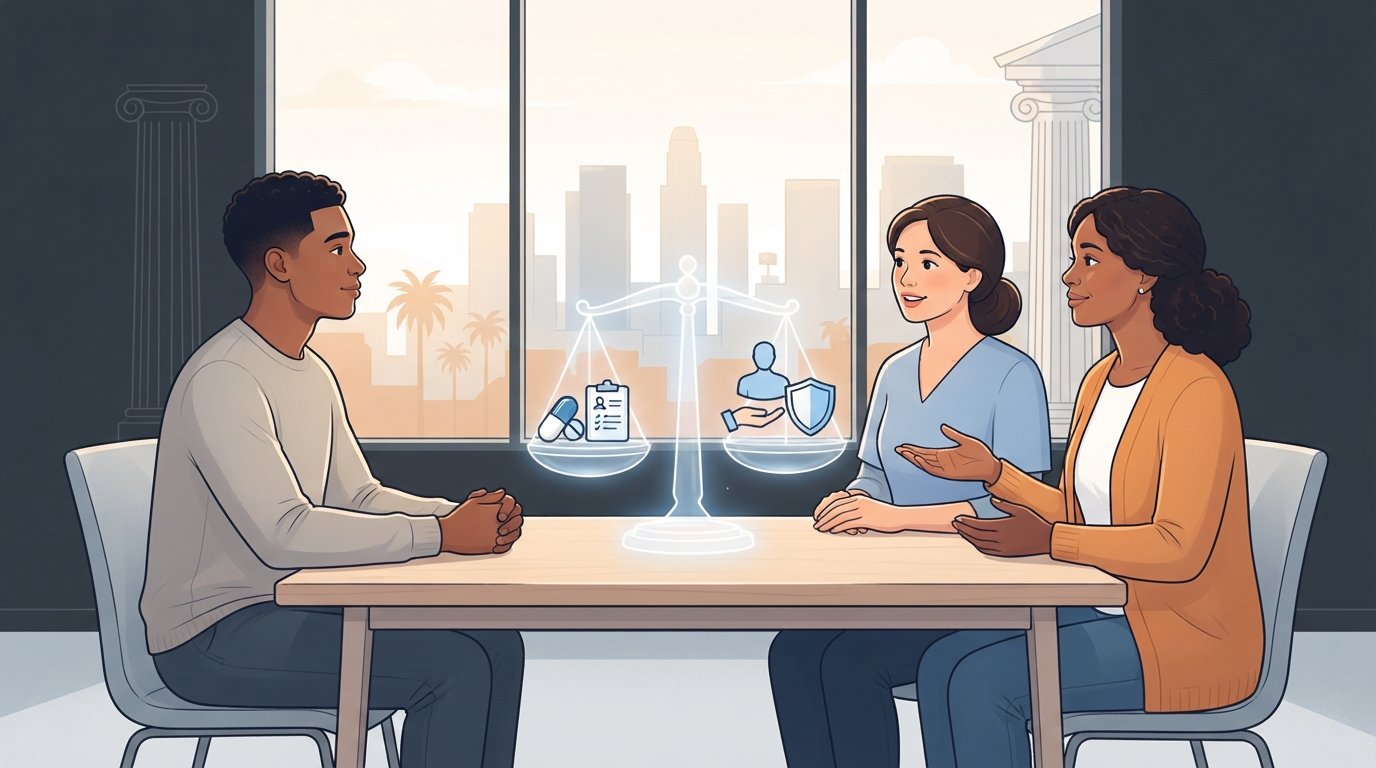
The legal system includes several safeguards to prevent the abuse of authority. Every prospective conservatee has the right to legal counsel. If they can't afford an attorney, the court will appoint a public defender to represent them. In LPS cases, the individual even has the right to a jury trial to contest the finding of grave disability. A court-appointed investigator also plays a crucial role. They interview the individual and their family to ensure that the conservatorship is truly necessary and that the proposed guardian is fit for the role. This investigative process ensures that civil liberties remain a priority even when intensive care is mandatory.
Alternatives and Transitions: Moving Toward Independence
While a conservatorship provides immediate safety, it's rarely the final goal for a family in crisis. California's legal landscape has evolved to prioritize less restrictive alternatives like Assisted Outpatient Treatment (AOT) and the CARE Act. These programs offer court-supervised pathways to stabilization that don't always require the full transfer of rights seen in traditional legal arrangements. By focusing on voluntary engagement, these frameworks aim to catch individuals before they reach the clinical threshold of grave disability. The goal is always to provide the minimum level of intervention necessary to ensure safety while maximizing the person's civil liberties.
Voluntary Coordinated Specialty Care (CSC)
For young adults navigating a first episode of psychosis, the NIMH NAVIGATE framework offers a proven route to recovery that can often bypass the need for court-ordered care. This model isn't just about medication management. It integrates family psychoeducation and intensive social rehabilitation into a cohesive plan. A vital pillar of this approach is social skills training, which helps restore the interpersonal connections that often fracture during a mental health crisis. When a person regains their ability to navigate social environments and interpret social cues, their functional capacity increases significantly. This clinical progress is often the most effective way to avoid the long-term legal complexities of a conservatorship.
Supported Education and Employment
Restoring independence means helping a loved one return to the life they had before the onset of illness. Our work-study program for mental health recovery LA is designed to bridge the gap between clinical stabilization and functional autonomy. We don't just treat symptoms; we build the skills required for the workforce and the classroom. At Pand Health, we've documented that 85% of our participants are actively engaged in employment or education after six months of treatment. This is a significant rise from the 6% participation rate typically seen at enrollment. This shift from "care" to "recovery" is essential. It provides the tangible evidence of success that the Los Angeles Superior Court requires when transitioning someone away from legal restrictions. We believe that recovery is the expectation, and our programs are built to prove it.
If you're ready to explore a clinical plan that prioritizes a return to independence, contact our specialized team to discuss our intensive outpatient options.
Recovery-Oriented Care with Pand Health’s California OnTrack
Pand Health approaches recovery with a philosophy that transcends legal labels. Whether an individual is currently under a conservatorship or is seeking voluntary stabilization to avoid one, we operate under the firm belief that recovery is the expectation, not the exception. Our California OnTrack program for teens and adults provides an augmented Coordinated Specialty Care (CSC) model that bridges the gap between acute crisis and community reintegration. By combining intensive psychiatric oversight with evidence based psychosocial support, we address the root causes of instability for individuals aged 13 to 40.
Our methodology is built on the NIMH NAVIGATE framework but enhanced with specialized tools designed to restore cognitive and social function. We've seen these methods yield transformative results. For instance, our patients maintain a 6% rehospitalization rate after enrollment. This stands in stark contrast to the 10% industry average. We don't just aim for the absence of symptoms; we strive for the presence of a meaningful life where the individual can once again steer their own course.
Advanced Psychosocial Interventions
We provide specialized therapies that aren't commonly found in standard outpatient settings. Pand Health is the only outpatient CSC program in Southern California offering APA recommended cognitive remediation. This computer assisted brain training is paired with high intensity fitness coaching to stimulate neuroplasticity and improve functional outcomes. Additionally, our certified instructors deliver Metacognitive Training (MCT) and Social Cognition and Interaction Training (SCIT). These interventions help individuals identify thought distortions and navigate complex social interactions, which are often the primary barriers to ending a conservatorship and returning to a self-sufficient life.
A Lifeline for Families
A mental health crisis affects the entire household, not just the individual. We prioritize a family psychoeducation Los Angeles residents can rely on to reduce caregiver burnout and build a supportive home environment. We know that families often feel like they're in a race against time. Understanding the urgency of these situations, we offer same or next day psychosis evaluation services to ensure no one is left waiting when they're at their most vulnerable. It's about providing a steady hand when the storm feels most intense.
Stability is possible, and the path back to independence starts with a precise clinical roadmap. We invite you to contact our team to schedule a clinical evaluation and discover how our specialized care can serve as your family's lifeline. By focusing on long term wellness and community reintegration, we help individuals move past the legal system and back into the lives they deserve.
Building a Bridge Toward Lasting Independence
Securing a conservatorship is often the most difficult decision a family will ever make, yet it serves as a critical protective bridge during a loved one's most vulnerable moments. By understanding the distinction between LPS and Probate laws, you've taken the first step toward ensuring their safety. However, legal protection is only half of the equation; true transformation requires a clinical plan designed to restore cognitive function and social autonomy.
At Pand Health, we specialize in this transition. As the only outpatient Coordinated Specialty Care program in Southern California offering APA-recommended cognitive remediation, we don't just manage symptoms. Our team of certified MCT instructors and psychosis specialists works to maintain the 6% rehospitalization rate our California OnTrack participants experience. We believe that clinical intervention should always point toward the restoration of normalcy and the eventual return of civil rights. You don't have to navigate this storm alone. We're here to provide the steady hand and specialized expertise your family needs to move from crisis to community reintegration. Recovery isn't just a possibility; it's the expectation.
Schedule a Clinical Evaluation for Psychosis Recovery today to begin the journey back to independence.
Frequently Asked Questions
What is the difference between LPS and Probate conservatorship in California?
An LPS conservatorship is specifically for individuals who are gravely disabled due to a mental health or substance use disorder. It allows for involuntary psychiatric treatment and placement in locked facilities. Probate arrangements are used for general incapacity, such as dementia or developmental disabilities, and don't automatically grant the authority to mandate psychiatric medications. While LPS is temporary and requires annual renewal, Probate can be a permanent legal arrangement depending on the individual's clinical needs.
How long does a mental health conservatorship typically last?
An LPS conservatorship in Los Angeles lasts for exactly one year. It automatically terminates at the end of that period unless the conservator or the Public Guardian files a petition for renewal. To renew, they must prove in court that the individual remains gravely disabled. Probate conservatorships don't have a set expiration date. They remain in place until a judge determines the conservatee has regained capacity or that a less restrictive alternative is appropriate for their care.
Can a conservatorship be avoided through intensive outpatient treatment?
Yes, intensive outpatient programs like California OnTrack are designed to serve as effective alternatives to court ordered care. By addressing symptoms early through Coordinated Specialty Care, many individuals can stabilize and regain independence without legal intervention. Pand Health has documented a 6% rehospitalization rate for participants, illustrating that high standard clinical care can often prevent the need for a conservatorship by restoring functional capacity and community reintegration through evidence based therapy.
What is "grave disability" and how is it proven in a Los Angeles court?
Under the 2026 implementation of SB 43 in Los Angeles, grave disability means an individual cannot provide for their food, clothing, shelter, personal safety, or necessary medical care. This incapacity must result from a mental health or substance use disorder. It is proven through a formal psychiatric evaluation and expert testimony. The court requires clear evidence that the person's condition puts them at risk and that they are currently unable to accept voluntary clinical assistance.
Who can serve as a conservator for someone with a thought disorder?
In LPS cases, the Los Angeles County Public Guardian is often appointed to manage the individual's care, though the court can appoint a family member if they are deemed suitable. For Probate matters, family members are the primary choice. The court prioritizes guardians who can ensure the individual receives specialized support, such as family psychoeducation and social skills training, to help them move toward a more independent life and eventually exit the legal system altogether.
Does a conservatorship mean my loved one will be institutionalized permanently?
No, a conservatorship is a protective measure intended to be temporary. The primary goal is to stabilize the individual in the least restrictive environment possible. Many people transition from inpatient settings into intensive outpatient programs like California OnTrack. These programs use cognitive remediation and social rehabilitation to help individuals reintegrate into the Los Angeles community. The ultimate objective is to restore the person's autonomy so they no longer require mandatory court oversight to remain safe.
How much does it cost to file for conservatorship in Los Angeles?
For a Probate petition at the Stanley Mosk Courthouse, the initial filing fee is $435 as of 2026. There is no direct filing fee for families to initiate an LPS conservatorship, as that process begins with a referral from a psychiatric facility to the Public Guardian. Families should still prepare for costs related to private legal counsel and independent psychiatric evaluations, which are often used to provide the court with detailed clinical evidence of the individual's needs.
What rights does an individual retain while under a conservatorship?
Individuals retain all civil liberties not specifically removed by a judge. They generally keep the right to receive mail, have visitors, and be treated with dignity and respect. In California, every prospective conservatee has the right to be represented by an attorney and can request a jury trial to contest an LPS finding. The court's "least restrictive alternative" mandate ensures that their freedom is only limited to the extent absolutely necessary for their safety and clinical stabilization.
Disclaimer
This article is for information and educational purposes only, and can NEVER replace a proper medical evaluation. If you or a loved one may be suffering from psychosis or the prodomal symptoms of psychosis, get evaluated by a professional as soon as possible. Early diagnosis and treatment can be life-saving.