
Understanding Forced Medication Rights in Los Angeles
What if the moment you feel most powerless is actually when your legal rights are most clearly defined? For many families in Los Angeles, watching a loved one refuse psychiatric care feels like a slow-motion tragedy. You want to protect them, yet the prospect of forced medication creates a heavy, silent barrier between safety and autonomy. It's natural to feel overwhelmed by the complexity of the Lanterman-Petris-Short Act or the recent 2026 expansions under SB 43.
We understand that you're looking for a lifeline, not just a legal definition. This article will help you understand the clinical and ethical realities of involuntary treatment while providing a clear roadmap through the Riese hearing process. You'll discover how specialized, recovery-oriented care can prevent the cycle of crisis and preserve a person's dignity. We'll explore the latest California mental health standards and identify proactive strategies that help families move from a state of helplessness to one of sustainable, long-term wellness. By understanding these legal safeguards, you can better advocate for a path that prioritizes both safety and personal choice.
Key Takeaways
- Decode the legal framework of the Lanterman-Petris-Short (LPS) Act to understand how California balances public safety with individual liberty.
- Learn the specific legal standards of a Riese hearing and how courts determine whether a person has the capacity to provide informed consent.
- Explore how early intervention through Coordinated Specialty Care (CSC) can stabilize symptoms before they escalate into a psychiatric emergency.
- Discover a recovery-oriented path that emphasizes collaborative care to help families avoid the trauma often associated with forced medication.
- Identify how specialized outpatient programs like California OnTrack empower young adults to regain autonomy while significantly reducing the risk of rehospitalization.
What is Forced Medication? Legal Definitions and the LPS Act
At its core, forced medication refers to the administration of psychotropic drugs without a patient's consent. This usually occurs in high-stress clinical environments where medical professionals believe a person lacks the capacity to make a safe decision for themselves. In California, this process is strictly governed by the Lanterman-Petris-Short (LPS) Act. This legal framework attempts to balance the individual's right to liberty with the state's interest in protecting those who cannot protect themselves. It's a delicate equilibrium that governs all forms of involuntary treatment within the state's mental health system.
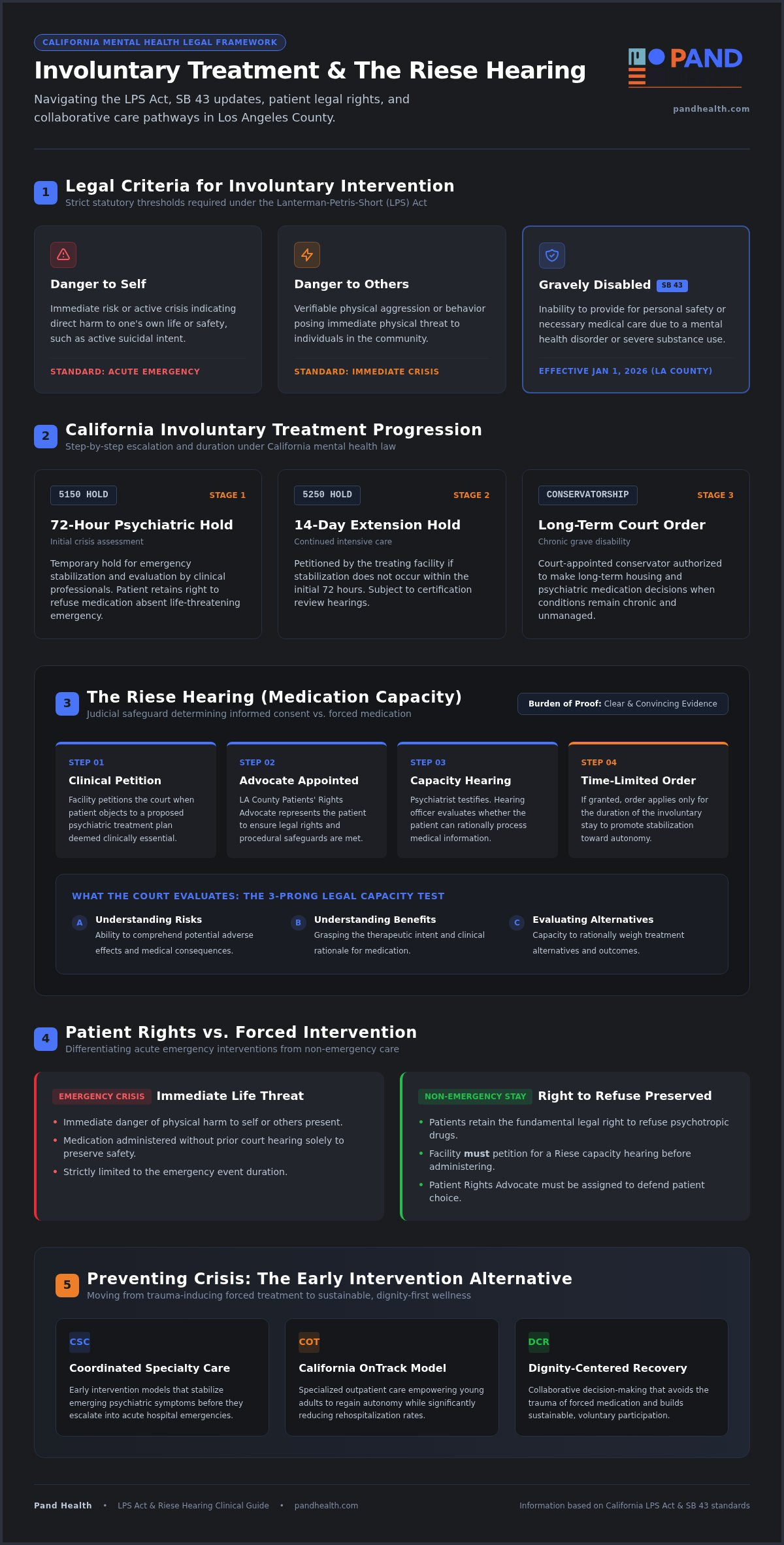
The criteria for involuntary intervention are specific and narrow. A person must be deemed a danger to themselves, a danger to others, or "gravely disabled." While these terms sound straightforward, their legal application is rigorous. Emergency stabilization is meant to address an immediate crisis, such as active suicidal intent or physical aggression. It's distinct from long-term medication management. The latter usually requires a higher legal threshold, such as a court-ordered conservatorship, to ensure the patient's civil rights aren't unnecessarily restricted.
The Lanterman-Petris-Short Act in California
The LPS Act established the standard 72-hour psychiatric hold, commonly known as a 5150. If stabilization doesn't occur within those three days, a facility may petition for an additional 14-day hold, or a 5250. As of January 1, 2026, Los Angeles County officially implemented the expanded definitions under SB 43. This update clarifies that being "gravely disabled" now includes an inability to provide for one's own personal safety or necessary medical care due to a mental health disorder or severe substance use. When these conditions are chronic, a court may appoint a conservator to make long-term decisions about psychiatric medication and housing.
Patient Rights During Involuntary Holds
Being on an involuntary hold doesn't mean a person loses all their autonomy. Patients generally retain the right to refuse psychotropic drugs unless a specific, immediate life-threatening emergency exists. In non-emergency situations, a hospital cannot use forced medication without a separate capacity hearing. Patients have the statutory right to be represented by a Patient Rights Advocate. These professionals ensure that the individual's voice is heard and that the facility follows all legal safeguards. It's a vital check against the misuse of clinical authority. This ensures every person is treated with the dignity they deserve even during their most vulnerable moments.
The Riese Hearing: When Courts Decide on Medication
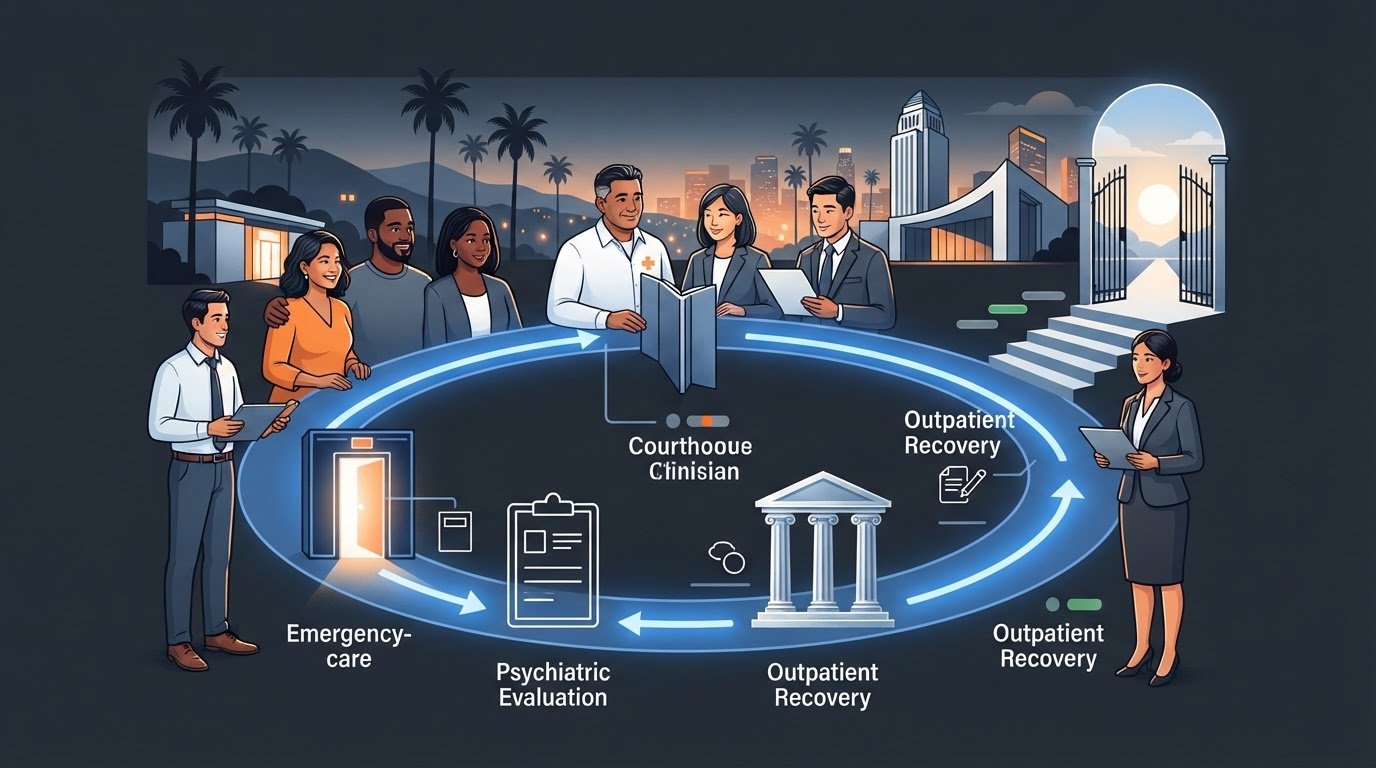
A Riese hearing, legally known as a medication capacity hearing, is the specific judicial process used to determine if a patient has the legal right to refuse psychiatric drugs. While an LPS hold allows a hospital to detain an individual for safety, it does not grant clinicians a blanket right to administer treatment against that person's will. When a patient objects to a proposed treatment plan, the facility must petition the court to prove that the individual lacks the capacity to make an informed medical decision. This hearing serves as a vital safeguard, ensuring that forced medication is only used as a last resort when the patient cannot grasp the gravity of their clinical situation.
The burden of proof rests entirely on the treating facility. A psychiatrist must testify and provide clear and convincing evidence that the patient is unable to understand the risks, benefits, and alternatives of the medication being offered. If a judge or hearing officer grants the Riese order, it typically remains in effect for the duration of the patient's involuntary stay. However, these orders are not permanent; they are designed to stabilize the individual so they can eventually participate in their own recovery journey. For families navigating this stressful legal terrain, the Los Angeles County Patients' Rights Office provides advocates who represent the patient's interests and ensure all statutory requirements are met.
The Process of a Riese Hearing
Clinicians trigger the hearing when they believe medication is essential for stabilization but the patient refuses to cooperate. These proceedings usually take place within the hospital setting to minimize trauma and maintain clinical continuity. The legal definition of "capacity" is narrow; it does not ask if the patient is mentally ill, but rather if they can process medical information rationally. A judge evaluates whether the patient can weigh the consequences of refusing treatment. If the court finds the patient lacks this specific capacity, it may authorize the medical team to proceed with the treatment plan in the patient's best interest.
Informed Consent vs. Involuntary Treatment
Informed consent remains the gold standard of ethical psychiatric care. It represents a collaborative partnership where the patient and provider agree on a path forward. In California, informed consent is defined as the voluntary acceptance of a medical intervention after a clinician has fully explained the procedure, its risks, and any available alternatives. There is a profound clinical difference between "forced" and "persuaded" approaches. While forced medication involves legal mandates, persuasive care relies on building trust and helping the patient see the value of treatment. If you are struggling to help a loved one engage with care before a crisis occurs, you can reach out to our team for guidance on recovery-oriented alternatives.
The Ethics and Trauma of Involuntary Intervention
The decision to pursue involuntary care is rarely easy for a family. It often feels like a choice between the immediate safety of a loved one and the long-term preservation of their trust. This ethical tension lies at the heart of the landmark case Riese v. St. Mary's Hospital & Medical Center, which established that even those in crisis deserve a voice in their treatment. When forced medication is utilized, the clinical goal is stabilization, but the psychological cost can be a fractured therapeutic bond. For many, the experience of being medicated against their will becomes a source of lasting trauma that complicates future attempts at help.
Many individuals caught in the "revolving door" of psychiatric hospitalization find themselves there because the initial intervention felt like an assault rather than assistance. Short-term stabilization does not equate to long-term wellness. If the treatment experience is perceived as coercive, the individual may avoid medical care in the future. This leads to the very crises the system aims to prevent. Families often carry a heavy burden of guilt, wondering if they've permanently damaged their relationship by seeking legal intervention. Acknowledging this emotional toll is a vital step in moving toward a more sustainable, recovery-oriented path.
The Trauma of Forced Treatment
Forced treatment can create a legacy of medical mistrust. For a young adult experiencing their first psychotic episode, being physically restrained or medicated without consent is often terrifying. Trauma-informed care is essential in the weeks following a discharge. This approach focuses on validating the person's experience rather than dismissing their fear as a symptom of their diagnosis. Families can begin rebuilding trust by engaging in family psychoeducation. This service provides a neutral, supportive space to process the crisis and develop a shared plan for the future. You can contact our team to learn more about how family-centered support helps mend these vital connections.
A Recovery-Oriented Perspective
Modern psychiatry is shifting away from a focus on mere compliance. The new standard is collaboration. When a patient feels they have a choice, they're significantly more likely to stay engaged with their treatment plan. This autonomy-focused care is why recovery should always be the expectation. Data shows that high-intensity outpatient models, which prioritize shared decision-making, can achieve an 85% employment or education participation rate after just six months. By prioritizing the individual's personal goals and dignity, providers can move beyond the cycle of crisis and toward a path of genuine, self-directed stability.
Preventing Crisis: Early Intervention as an Alternative
While the legal nuances of a Riese hearing are critical for protection, the most effective way to preserve personal autonomy is to prevent the crisis entirely. Forced medication often becomes the only clinical option when a system waits too long to intervene. Coordinated Specialty Care (CSC) represents a paradigm shift in mental health. It acts as a high-intensity outpatient safety net that prioritizes the individual's voice. By providing comprehensive support during the early stages of First Episode Psychosis (FEP), clinicians can stabilize symptoms before they reach the legal threshold of a 5150 hold. This proactive approach keeps individuals in their homes and communities rather than in institutional settings.
Coordinated Specialty Care (CSC) Explained
CSC is built on the NIMH NAVIGATE framework, an evidence-based model that treats psychosis through a multidisciplinary lens. It's not just about medication management; it's about holistic recovery. A dedicated team provides individual therapy, supported employment and education (SEE), and peer support. This team-based approach addresses the biological, psychological, and social facets of health simultaneously. A cornerstone of this model is Family Psychoeducation in LA. This service empowers families to identify early warning signs and environmental triggers. By recognizing these patterns, families can collaborate with providers to make clinical adjustments long before a legal intervention is required.
Data-Driven Prevention
The results of intensive, recovery-oriented care are both measurable and profound. For many individuals, entering a CSC program like California OnTrack changes the entire trajectory of their illness. Client data shows that this level of intervention can reduce the average length of inpatient stays from 40 days at baseline to just 7 days post-enrollment. Beyond mere stabilization, programs utilize Social Skills Training to help patients navigate the complexities of community life. This includes everything from maintaining friendships to succeeding in high-pressure work environments. Programs achieving a 6% rehospitalization rate post-enrollment serve as a vital benchmark for success, demonstrating that consistent outpatient support can effectively break the cycle of crisis. If you are ready to explore a path that prioritizes long-term stability and personal choice, contact our Los Angeles team today to learn about our specialized evaluation services.
Collaborative Care at Pand Health: Preserving Choice
Pand Health operates on the conviction that recovery isn't just a possibility; it's the expectation. For families who have navigated the clinical and legal intensity of a Riese hearing, our approach offers a profound sense of relief. We specialize in the high-intensity outpatient care required to break the cycle of crisis and forced medication. By prioritizing the California OnTrack program for individuals aged 13 to 40, we provide a structured path back to normalcy. This model integrates psychiatric expertise with deep psychosocial support, ensuring that every medical decision is a collaborative step toward autonomy rather than a move toward coercion.
Our philosophy extends beyond symptom management. We believe that a diagnosis shouldn't define a person's future. Through our Supported Education and Employment (SEE) services, we help individuals return to school or the workforce with confidence. After six months in our program, 85% of participants are actively engaged in employment or education. This success is rooted in our commitment to treating the whole person, providing the tools they need to navigate community life with dignity and purpose. We focus on transformation, moving away from the trauma of the past and toward a stable, self-directed future.
The California OnTrack Difference
We are the only outpatient CSC program in Southern California providing APA-recommended cognitive remediation. This involves computer-based brain training paired with fitness coaching to accelerate clinical recovery. Our curriculum includes Metacognitive Training and Social Cognition and Interaction Training (SCIT), which help individuals process information and social cues more effectively. These specialized interventions are essential for long-term stability and psychological resilience. For those looking to bridge the gap between clinical care and community life, our guide on Social Skills Training in Los Angeles offers practical strategies for successful reintegration and reconnection.
Next Steps for Families in Los Angeles
Transitioning from a hospital discharge to a recovery-oriented program requires a steady hand. We understand that time is of the essence when a loved one is in a vulnerable state. That's why we offer same or next-day psychosis evaluation services to ensure families get the answers they need without delay. Our team acts as a dedicated guide, helping you navigate the complexities of the mental health system while maintaining a focus on individual choice. We invite you to Contact Pand Health to schedule a comprehensive clinical evaluation. With a 6% rehospitalization rate compared to the 10% industry average, our results prove that specialized, recovery-oriented care works.
Advancing from Crisis to Collaborative Recovery
Understanding the legal framework of California mental health laws is a vital step in protecting a loved one's rights. While the Riese hearing process provides essential oversight, the ultimate goal is to move beyond the fear of forced medication and toward a life of self-directed wellness. Specialized early intervention through Coordinated Specialty Care (CSC) offers this alternative, replacing the trauma of involuntary holds with a collaborative, team-based approach. This shift in care prioritizes personal choice and long-term stability over short-term compliance.
Pand Health is the only outpatient CSC in Southern California offering APA-recommended cognitive remediation, a tool that helps bridge the clinical gap between crisis and stability. Our results illustrate the power of this approach. We maintain a 6% rehospitalization rate compared to the 10% industry average and see a remarkable 85% employment or education rate after just six months of care. If you are ready to move your family from a state of crisis to one of hope, schedule a clinical evaluation for early psychosis care in Los Angeles. There is a way forward that preserves both safety and dignity; you don't have to navigate this journey alone.
Frequently Asked Questions
Can a doctor force medication in an outpatient setting in California?
Clinicians generally cannot administer psychiatric drugs without consent in an outpatient setting. The legal process of forced medication is almost exclusively reserved for involuntary inpatient holds where a court or hearing referee has determined the patient lacks medical capacity. Outpatient programs in Los Angeles, such as California OnTrack, prioritize shared decision-making. We focus on building a therapeutic alliance that encourages voluntary participation, ensuring that treatment remains a collaborative effort rather than a legal mandate.
What is the difference between a 5150 hold and a Riese hearing?
A 5150 hold is a 72-hour involuntary detention for safety, while a Riese hearing is a specific legal proceeding to determine medication capacity. Being hospitalized on a hold doesn't automatically give doctors the right to medicate you against your will. The hearing is a separate safeguard where a judge decides if a patient can rationally weigh the risks and benefits of treatment. This ensures that legal detention and medical treatment are handled with distinct layers of protection.
How long does a court order for involuntary medication last?
A Riese order generally lasts for the duration of the current involuntary hospitalization, such as a 14-day 5250 hold. It isn't a permanent mandate for care. If the patient is discharged or if their clinical status changes so they regain capacity, the order no longer applies. In Los Angeles, these orders are reviewed regularly to ensure that the individual's right to personal autonomy is restored as soon as they can safely participate in their own medical decisions.
Can a family member authorize forced medication for an adult child?
A family member cannot unilaterally authorize medication for an adult child in California. Even if you believe treatment is life-saving, legal authority rests with the patient unless they are under a court-ordered LPS conservatorship. In Los Angeles, families often feel helpless when a loved one refuses care. We recommend family psychoeducation to learn how to navigate these boundaries and build communication strategies that might lead to voluntary treatment before a legal crisis occurs.
What are the alternatives to forced medication during a psychotic episode?
The primary alternative is a high-intensity, recovery-oriented outpatient model known as Coordinated Specialty Care. By engaging in programs that offer social skills training and cognitive remediation, individuals can manage symptoms before they reach a crisis level. These methods focus on de-escalation and building a safety net through a multidisciplinary team. This approach reduces the need for forced medication by addressing the social and psychological roots of the episode alongside expert medication management.
Does Pand Health provide involuntary inpatient treatment?
Pand Health does not provide involuntary inpatient treatment or emergency crisis services. We are a specialized outpatient center in Los Angeles focusing on the California OnTrack model for early psychosis. Our mission is to provide the intensive support necessary to prevent the need for hospitalization. By offering specialized evaluations and psychosocial rehabilitation, we help individuals stay in their communities while receiving a level of care that significantly outperforms standard industry rehospitalization benchmarks.
How can early psychosis intervention prevent future involuntary hospitalizations?
Early intervention identifies thought disorders during the first episode phase, allowing for stabilization before a crisis triggers a 5150 hold. Pand Health’s data shows that participants in our intensive outpatient program experience a 6% rehospitalization rate, which is lower than the 10% industry average. By providing daily cognitive remediation and fitness coaching, we strengthen the individual's functional abilities. This proactive care reduces the average inpatient stay from 40 days down to just 7 days.
What should I do if my loved one is currently under a Riese order?
If a loved one is under a Riese order, your first step should be to contact a Patient Rights Advocate through the Los Angeles County Department of Mental Health. They ensure all legal protocols are followed. Simultaneously, you should begin planning for a robust discharge. Transitioning into a specialized program like California OnTrack can provide the intensive outpatient support needed to prevent future legal interventions. We offer same or next-day evaluations to help families bridge the gap between hospital discharge and recovery.
Disclaimer
This article is for information and educational purposes only, and can NEVER replace a proper medical evaluation. If you or a loved one may be suffering from psychosis or the prodomal symptoms of psychosis, get evaluated by a professional as soon as possible. Early diagnosis and treatment can be life-saving.