Better Communication: Skills Training in Los Angeles
What if the traditional "soft skills" workshops you've tried feel ineffective because they ignore the neurological barriers to connection? For many individuals managing neurodevelopmental or thought disorders, the challenge isn't a lack of desire to engage, but a difficulty in processing social cues and managing cognitive biases. You might feel isolated or anxious about returning to school, wondering if you'll ever truly belong in a professional or social setting. Specialized communication skills training must go deeper than conversational etiquette; it needs to address the way the brain interprets the world.
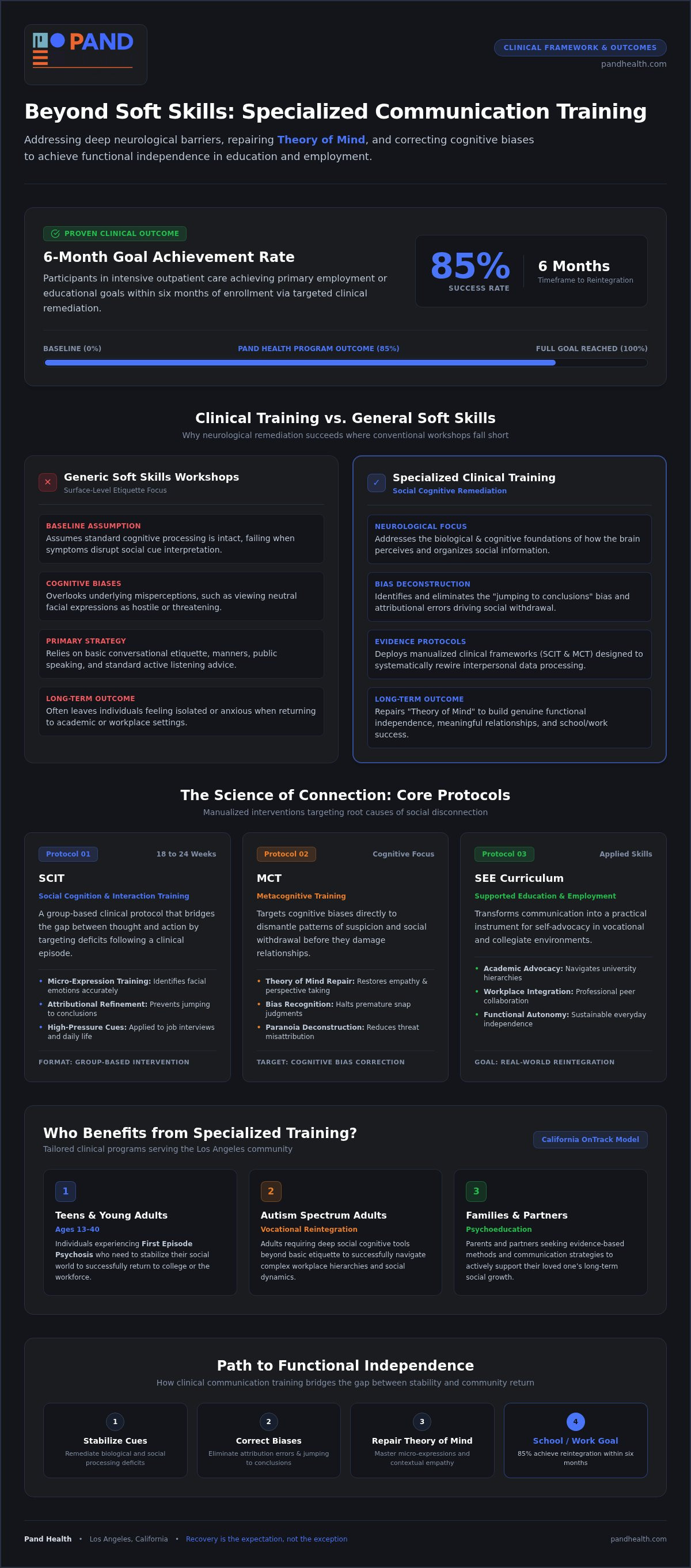
At Pand Health, we believe recovery is the expectation, not the exception. We use evidence-based protocols like Metacognitive Training (MCT) and Social Cognition and Interaction Training (SCIT) to bridge the gap between clinical stability and functional independence. Our data shows this approach works. Specifically, 85% of our participants achieve employment or educational goals within six months of enrollment. This article explores how targeted clinical training repairs "Theory of Mind" and eliminates cognitive biases. You'll discover how our California OnTrack model provides a lifeline for those ready to build meaningful relationships and reclaim their place in the Los Angeles community.
Key Takeaways
- Distinguish between surface-level social etiquette and the clinical remediation needed to address deep-seated neurocognitive barriers to connection.
- Explore how evidence-based protocols like SCIT and MCT work to repair "Theory of Mind" and correct the cognitive biases that often lead to social withdrawal.
- Learn why specialized communication skills training within a clinical framework provides more sustainable outcomes than generic interpersonal workshops.
- Understand how the Supported Education & Employment (SEE) curriculum transforms communication into a practical tool for academic and workplace advocacy.
- Discover how intensive outpatient care in Los Angeles achieves an 85% success rate for school and work reintegration within just six months.
Beyond Soft Skills: What is Specialized Communication Skills Training?
Many people view communication as a simple set of manners or public speaking techniques. For those navigating neurodevelopmental conditions or thought disorders, the challenge goes much deeper than learning to make eye contact. Traditional "soft skills" courses often fail because they assume a baseline level of social cognitive processing that may be disrupted by clinical symptoms. Specialized Communication skills training is different; it focuses on social cognitive remediation, which addresses the biological and cognitive foundations of how we perceive others.
When a person experiences paranoia or intense social anxiety, their brain may misinterpret a neutral expression as a threat. A standard workshop on "effective listening" cannot fix this underlying misperception. Clinical training uses evidence-based protocols like Metacognitive Training (MCT) to help individuals recognize these cognitive biases. By identifying the "jumping to conclusions" bias or attributional errors, clients can begin to deconstruct the suspicion that leads to social withdrawal. This shift is essential for a recovery-oriented care model where functional independence is the primary goal.
The Clinical Foundation of Social Interaction
Thought disorders often impact the executive functions required for real-time social exchange. Processing verbal information while simultaneously reading non-verbal cues requires significant mental bandwidth. For someone in recovery, this can feel overwhelming. At Pand Health, we believe that recovery is the expectation, not the exception. This starts with repairing the clinical foundation of interaction. We focus on how the brain organizes information, ensuring that communication becomes a reliable tool rather than a source of stress. When we address the way thought disorders impact cues, we provide a stable path back to the community.
Who Benefits from Specialized Training in Los Angeles?
Our programs are specifically designed for the diverse needs of the Los Angeles community. We provide a steady hand for those who have found that generic courses don't meet their complex needs. This includes:
- Teens and Young Adults (13-40): Individuals experiencing First Episode Psychosis who need to stabilize their social world to return to college or the workforce.
- Individuals on the Autism Spectrum: Adults seeking vocational reintegration who require more than basic etiquette to navigate complex workplace hierarchies.
- Families: Parents and partners who need evidence-based tools to support their loved one's social growth through family psychoeducation.
This specialized communication skills training provides the intensive, high-standard care necessary to move beyond a clinical episode and toward a life defined by meaningful personal relationships and professional success.
The Science of Connection: SCIT and Metacognitive Training (MCT)
While many organizations offer advice on general communication skills, clinical recovery requires a more rigorous, evidence-based approach. We utilize Social Cognition and Interaction Training (SCIT) and Metacognitive Training (MCT) to address the root causes of social disconnection. These aren't just workshops; they're manualized protocols designed to rewire how the brain processes interpersonal data. By targeting the "why" behind social mistakes, we help individuals move past the frustration of generic advice and into a space of genuine understanding.
SCIT: Bridging the Gap Between Thought and Action
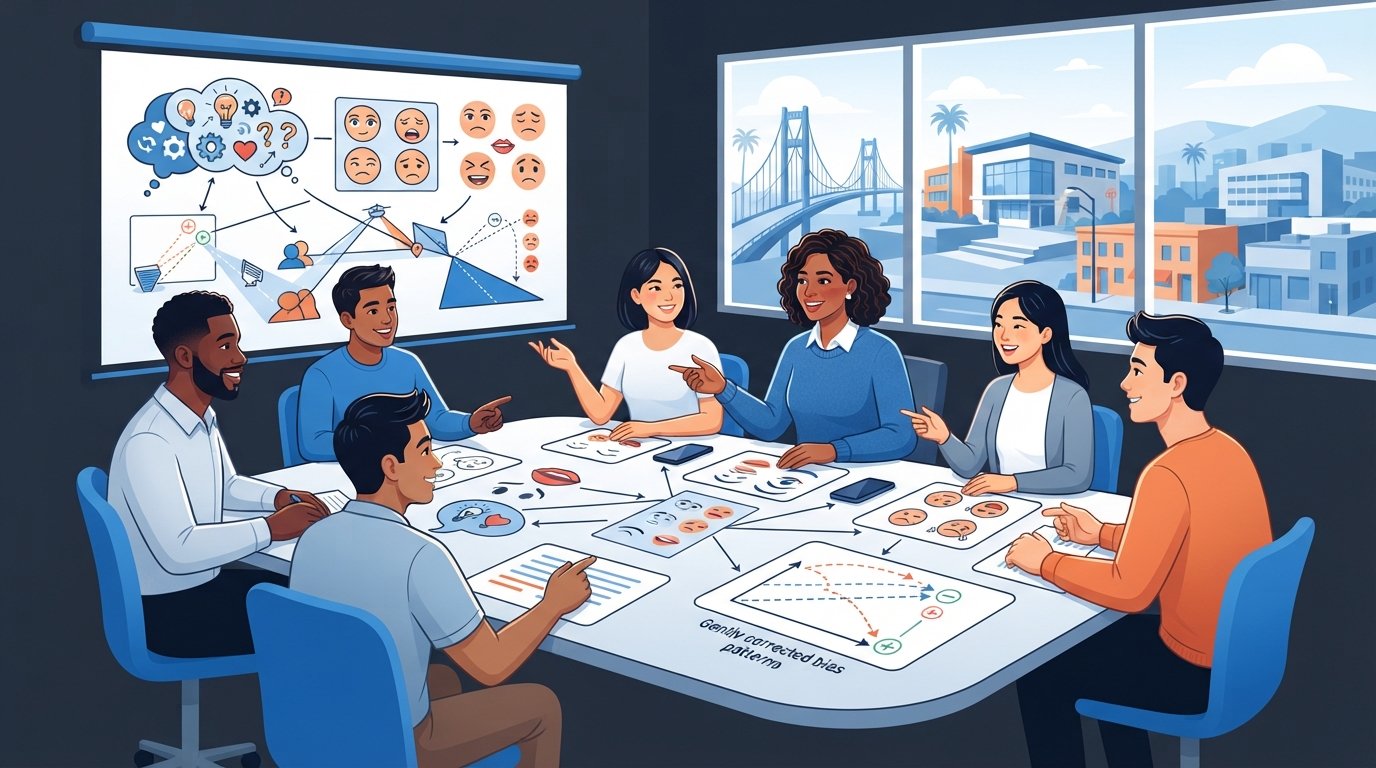
SCIT is an 18 to 24 week group based protocol that targets the specific deficits often following a clinical episode. It moves beyond basic conversation by teaching participants to identify emotions through micro expression training. This helps bridge the gap between perceiving a face and understanding a feeling. By refining one's attributional style, individuals learn to stop "jumping to conclusions," a common cognitive habit that can damage new friendships or professional relationships. Practical applications include:
- Learning to accurately read social cues in high pressure environments like job interviews.
- Developing the ability to pause and evaluate a situation before reacting impulsively.
- Building the confidence to initiate and maintain friendships after a period of isolation.
MCT: Mastering Your Own Thought Processes
Mastering your own thought processes is the core of successful communication skills training. MCT focuses on "thinking about thinking," helping individuals distinguish between reality and the distorted perceptions that lead to paranoia or social withdrawal. By reducing the weight of these biases, clients can engage more freely in workplace and school settings. Metacognitive Training is a therapeutic intervention designed to enhance cognitive flexibility by helping individuals recognize and correct systematic errors in their thinking. This flexibility is vital for navigating the nuances of human interaction without falling back into patterns of suspicion or fear.
To ensure the best outcomes, Pand Health employs certified MCT instructors who maintain strict adherence to clinical protocols. We accelerate this learning through daily computer assisted brain training. This intensive approach ensures that social learning is reinforced through repetition and immediate feedback. It's this level of specialized care that allows our clients to move from isolation to functional independence. If you're ready to explore how these evidence based methods can help you or a loved one, you can reach out to our team for a clinical consultation.
Clinical Training vs. General Soft Skills: A Comparison
Standard professional advice often treats communication as a set of networking tactics or influence strategies. For someone recovering from a clinical episode, these surface-level tips assume a baseline of neurotypical functioning that isn't always present. Clinical communication skills training goes far beyond simply "learning to talk." It involves the complex process of remapping social cognition. While a corporate workshop might teach you how to dominate a meeting, Coordinated Specialty Care (CSC) teaches you how to accurately interpret the intentions of those around you.
Some families worry that this level of intervention might feel too clinical for daily life. They wonder if a medical approach will make their loved one feel like a patient rather than a person. However, the opposite is true. By using precise, evidence-based methods, we give individuals the tools to navigate a trip to the grocery store or a complex college lecture with genuine confidence. Precision in the clinic creates freedom in the community. Local Los Angeles support is vital for this transition. It allows for real-world practice in the very neighborhoods and professional environments where our clients live and work.
Why General Online Courses Fall Short
Digital webinars and self-paced courses lack the critical element of real-time feedback and nuanced peer interaction. You can't effectively master social communication and pragmatic language in a digital vacuum. Most online platforms don't account for co-occurring symptoms like social anxiety or the cognitive fog that often follows a psychotic episode. Pand Health’s 24-32 hour intensive model provides the deliberate repetition and peer-group interaction necessary for true neuroplasticity. A two-hour webinar simply cannot replicate the clinical depth of a manualized protocol.
The Value of a Multi-Disciplinary Team
True progress happens when every aspect of care is aligned toward a single goal. We integrate medication management with intensive psychosocial training so that biological stability directly supports social growth. This holistic approach includes the people closest to the client. Through Family Psychoeducation in LA, we ensure that the progress made in our facility is reinforced at home. When families understand the science of communication, they become powerful partners in the recovery process. This multi-disciplinary strategy is why our clients achieve an 85% success rate in work or school reintegration. If you're ready to move beyond generic advice, contact our Los Angeles team to learn more about our specialized approach.
Communication for Functional Independence: The SEE Curriculum
Functional independence represents the ultimate metric of clinical success. While previous sections focused on the cognitive foundations of interaction, the Supported Education & Employment (SEE) curriculum focuses on operationalizing those skills. This model transforms communication skills training from a therapeutic exercise into a practical vocational tool. We don't just teach individuals how to socialize; we teach them how to navigate the specific interpersonal demands of a Los Angeles workplace or a high-pressure university environment.
Success in these professional settings requires more than just technical ability. It requires the capacity to advocate for one's needs while maintaining clear boundaries. For the neurodiverse candidate, this often involves specialized resume building and interview preparation. We help clients explain gaps in their history or articulate their unique strengths with clarity and confidence. This targeted approach is a primary reason why 85% of our participants achieve employment or educational engagement within six months of enrollment.
Navigating the Workplace After a Clinical Episode
Returning to work after a period of clinical recovery can be daunting. The stress of deadlines and office politics can sometimes trigger symptoms if not managed correctly. Our coaching focuses on communication strategies for managing workplace stress and identifying early warning signs. We teach clients how to communicate with supervisors about necessary adjustments without compromising their privacy. If you're looking for a path forward, our LA Work-Study Guide offers a comprehensive look at how we support vocational goals. Finding a job after psychosis recovery is possible when you have a multi-disciplinary team guiding your interpersonal strategy.
Educational Advocacy for College Students
College life presents a unique set of social and cognitive challenges. High-pressure academic environments require peer-to-peer communication that can be exhausting for those in recovery. Our educational advocacy program helps students maintain their academic momentum by facilitating communication with campus disability services. Securing necessary accommodations ensures that a student is judged on their intellect rather than the temporary hurdles of their recovery. This specialized communication skills training ensures that social barriers don't stand in the way of academic excellence. If you're ready to bridge the gap between recovery and independence, schedule a consultation with our team today to discuss our California OnTrack Work-Study Program.
Pand Health: Los Angeles’ Leader in Evidence-Based Communication
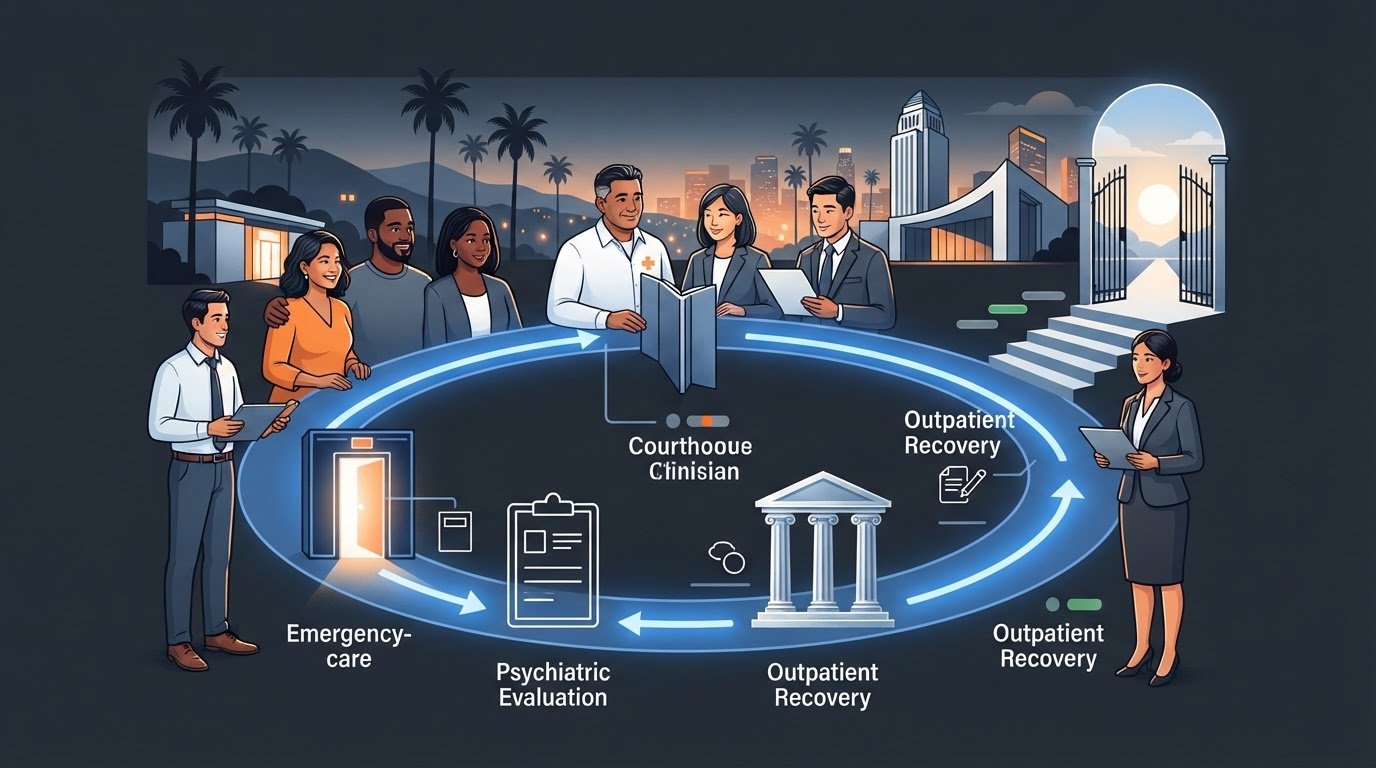
Pand Health stands as a specialized institution dedicated to bridging the gap between clinical recovery and real-world independence. Located at 11500 W. Olympic Blvd. in Los Angeles, we provide the only outpatient Coordinated Specialty Care (CSC) program in Southern California that integrates APA-recommended Social Cognition and Interaction Training (SCIT) with certified Metacognitive Training (MCT). Our approach isn't about general advice; it's about providing a lifeline through clinical expertise. By delivering 24 to 32 hours of intensive care per client, we ensure that every individual receives the depth of intervention necessary to reclaim their life.
This high standard of Communication skills training is a core component of our California OnTrack model. We've moved beyond the traditional silos of mental health care to create a holistic, forward-thinking environment. Our team acts as a steady hand in the storm, guiding teens and adults through the complex process of social cognitive remediation. We don't just treat symptoms; we restore normalcy. This commitment to excellence is why families across Southern California trust us to lead the way in neurodevelopmental and thought disorder recovery.
Why Recovery is the Expectation at Pand Health
We believe that recovery should be the standard outcome, not a rare exception. Our data-driven results prove that this philosophy works. Within six months of enrollment, 85% of our clients are actively engaged in work or school. This success is built on a foundation of long-term monitoring and sustained functional gains. By equipping our clients with superior social and cognitive skills, we significantly reduce the risk of relapse. Our program maintains a 6% rehospitalization rate, which is significantly lower than the 10% industry average. This focus on long-term stability ensures that the progress made in our facility translates into a meaningful, independent life.
Starting Your Journey in Los Angeles
Finding the right path forward after a clinical episode shouldn't be a source of further stress. We offer same or next day evaluation services to provide immediate direction when it's needed most. Whether you're a young adult facing First Episode Psychosis or a family member seeking evidence-based support, the California OnTrack program offers a clear route toward long-term wellness. Our communication skills training and intensive outpatient services are designed to meet you exactly where you are. We invite you to contact our Los Angeles experts to schedule a comprehensive evaluation and begin the process of restoration today.
Reclaiming Independence and Connection in Los Angeles
True connection is not a luxury; it's a fundamental component of a stable and fulfilling life. We have explored how evidence-based Communication skills training repairs social cognition and removes the cognitive biases that often lead to isolation. By choosing a specialized clinical path over generic soft skills workshops, you are investing in a methodology that addresses the neurological roots of interaction. This shift from patient to participant is the cornerstone of lasting functional independence.
Pand Health remains the only provider in Southern California delivering the potent combination of APA-recommended SCIT and MCT protocols through California OnTrack™ Certified Specialists. Our data-driven approach ensures that recovery is the expectation, as evidenced by our 85% employment and education success rate for clients within six months of enrollment. You don't have to navigate the complexities of social reintegration alone. A life defined by meaningful relationships and professional achievement is well within your reach.
Take the first step toward recovery-Contact Pand Health in Los Angeles today. Our team is ready to provide the steady hand and expert guidance you need to move forward with confidence.
Frequently Asked Questions
What is the difference between social skills training and communication skills training?
Social skills training typically focuses on behavioral etiquette and manners, whereas communication skills training within our clinical framework addresses underlying social cognition. We target neurocognitive barriers like "Theory of Mind" and emotion perception. Instead of just teaching surface-level tips, we focus on remapping how the brain processes interpersonal data. This distinction is vital for individuals in Los Angeles who require deep remediation to overcome the biological challenges of thought disorders.
Is this training effective for individuals with both autism and psychosis?
Yes, our programs are specifically designed to address the overlapping challenges of autism and psychosis. We offer specialized evaluations for both conditions to ensure a precise treatment plan. By using APA-recommended protocols like SCIT and MCT, we help individuals navigate the unique sensory and cognitive barriers inherent in neurodiversity. Our goal is to provide a stable path toward community reintegration for teens and adults throughout Southern California.
How long does the communication skills training program take?
Every recovery journey is unique, but our California OnTrack model provides an intensive outpatient structure of 24 to 32 hours per client. This high intensity allows for rapid skill acquisition and cognitive remediation. Unlike standard programs that may cap care, we offer indefinite enrollment to ensure long-term stability. Most participants see significant functional gains, such as returning to school or work, within the first six months of the program.
Can communication training help reduce the symptoms of paranoia?
This specialized communication skills training directly addresses paranoia by targeting the cognitive biases that fuel it. Specifically, Metacognitive Training (MCT) helps individuals identify "jumping to conclusions" and attributional errors. By learning to "think about their thinking," clients can distinguish between realistic social cues and distorted perceptions. This clinical approach reduces the weight of suspicious thoughts, allowing individuals to engage more freely in their daily lives and professional environments.
Do you offer communication support for families in Los Angeles?
We provide robust support for families through behavioral family therapy and multi-family group sessions. Our family psychoeducation program gives loved ones the tools needed to reinforce clinical progress at home. By educating families on the science of social cognition, we create a supportive environment that fosters long-term recovery. Families can also access "The Mind Exposed" podcast for additional resources on navigating the complexities of mental health recovery in Los Angeles.
What results can I expect for my teen returning to school?
Teens returning to school can expect significant improvements in their ability to manage academic and social pressures. Data from our 2022-2024 cohort shows that 85% of participants are successfully engaged in education or employment after six months. We provide school advocacy to ensure necessary accommodations are in place. This support helps maintain academic momentum and reduces the anxiety associated with re-entering a high-pressure campus environment after a clinical episode.
Is the training covered by insurance or integrated into the OnTrack program?
Our training is a core component of the California OnTrack program, which follows the Coordinated Specialty Care (CSC) model. This integration ensures that psychosocial training is paired with medication management and vocational support. While we recommend contacting our West Olympic Blvd office for specific insurance verification, our model is designed to be a comprehensive solution for early psychosis intervention. We prioritize providing high-standard care that is accessible to families in crisis.
How do I know if my loved one is high-risk for psychosis and needs this training?
Identifying if a loved one is clinically high-risk involves looking for subtle changes in their social engagement or thought patterns. Common signs include sudden social withdrawal, unusual suspicions, or a decline in school performance. We offer same or next-day evaluation services in Los Angeles to provide immediate clarity. A professional psychiatric evaluation is the most reliable way to determine if intensive intervention and specialized training are necessary to prevent further clinical decline.
Disclaimer
This article is for information and educational purposes only, and can NEVER replace a proper medical evaluation. If you or a loved one may be suffering from psychosis or the prodomal symptoms of psychosis, get evaluated by a professional as soon as possible. Early diagnosis and treatment can be life-saving.