

Medication Adherence in Psychosis: A Comprehensive Guide to Long-Term Recovery
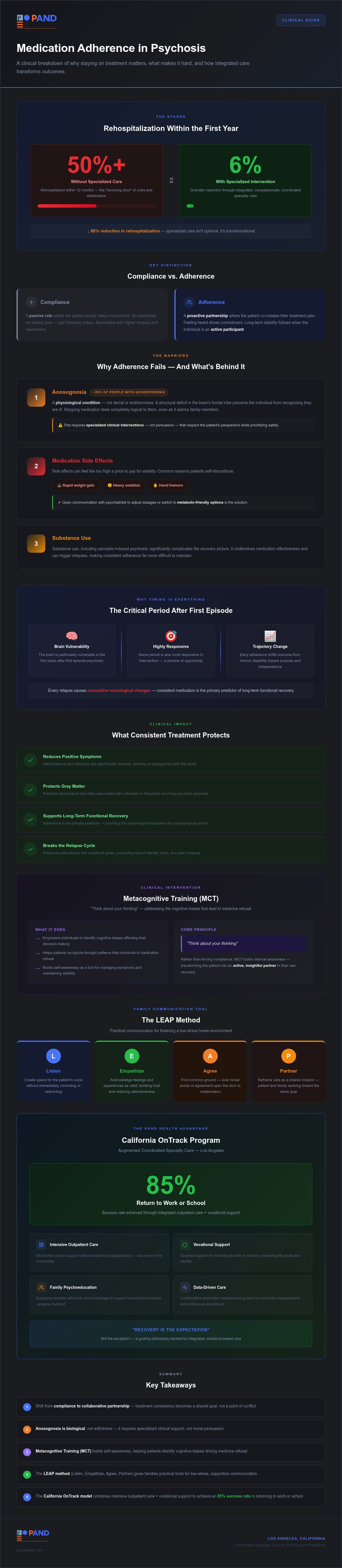
Did you know that while more than 50% of individuals experiencing psychosis are typically rehospitalized within a year, specialized intervention can reduce that rate to just 6%? It's a staggering difference that highlights a vital truth: staying on track isn't about willpower. We understand the deep frustration of managing medication side effects and the heartache of anosognosia, where a loved one lacks insight into their own condition. You aren't alone in fearing the next relapse or wondering if a return to school or work is even possible. Achieving consistent medication adherence in psychosis is the cornerstone of long-term stability, but it requires a specialized, compassionate approach.
In this guide, you'll discover how integrated support systems and family psychoeducation transform the recovery journey from a cycle of crisis into a path of progress. We'll explore the clinical strategies used at our Los Angeles center, including the California OnTrack program, to help families regain a sense of normalcy. By the end of this article, you'll have a clear understanding of how data-driven care and collaborative psychiatric relationships make "Recovery is the Expectation" a reality for your family.
Key Takeaways
- Shift your perspective from simple compliance to a collaborative partnership, ensuring treatment consistency becomes a shared goal rather than a point of conflict.
- Understand that medication adherence in psychosis is often hindered by anosognosia, a biological lack of insight that requires specialized clinical support rather than just willpower.
- Discover how Metacognitive Training (MCT) empowers individuals to "think about their thinking," helping them identify and manage the cognitive biases that often lead to medicine refusal.
- Learn practical communication tools like the LEAP method to foster a low-stress home environment that supports long-term stability and reduces the risk of relapse.
- Explore the California OnTrack model, which combines intensive outpatient care with vocational support to achieve an 85% success rate in returning to work or school.
What is Medication Adherence in Psychosis and Why Does It Matter?
Recovery begins with a shift in perspective. Many people view treatment as a set of rules to follow, but we define medication adherence in psychosis as a collaborative bond between a patient and their psychiatric team. It isn't just about following orders; it's about active participation in a shared journey toward wellness.
There is a significant difference between compliance and adherence. Compliance suggests a passive role where one simply obeys a doctor’s instructions. Adherence, however, implies a proactive commitment to a treatment plan that the individual helps create. When a person feels heard and understood, they're far more likely to stay consistent with their care. This consistency is vital because the stakes are incredibly high. Without a structured support system, more than 50% of individuals experiencing psychosis face rehospitalization within the first year. This "revolving door" of crisis and stabilization prevents true healing and creates a cycle of instability that's difficult to break.
The first few years following a first episode are known as the "critical period." During this time, the brain is particularly vulnerable, but it's also highly responsive to intervention. Establishing medication adherence in psychosis early on can fundamentally change the trajectory of the condition, moving it away from chronic disability and toward a life of purpose and independence.
The Clinical Impact of Consistent Treatment
Consistency does more than just manage symptoms; it protects the brain. When treatment remains steady, positive symptoms like hallucinations and delusions are significantly reduced, allowing the individual to engage with the world again. Consistent medication helps prevent the loss of "gray matter" often associated with untreated or frequent psychotic episodes. Clinical data indicates that every relapse can lead to cumulative neurological changes. Adherence serves as the primary predictor of long-term functional recovery, providing the physiological foundation necessary for psychological growth.
The Economic and Personal Cost of Relapse
In Los Angeles, the financial burden of emergency room visits and inpatient stays can be overwhelming for families. Beyond the bills, the personal costs are even higher. Relapses often disrupt educational and vocational goals, causing young adults to fall behind their peers. This disruption can lead to a loss of identity and hope. For families, the emotional toll is profound; caregiver burnout is a real risk when the cycle of relapse feels endless. Breaking this cycle requires a steady hand and a specialized approach that values both the science of medicine and the dignity of the individual.
Key Factors Influencing Treatment Consistency
Treatment consistency is rarely a matter of simple choice. It's a complex interplay of biological, environmental, and psychological forces. For families in Southern California, understanding these drivers is the first step toward creating a sustainable recovery plan. When medication adherence in psychosis falters, it's often due to barriers that are invisible to the naked eye. Maintaining medication adherence in psychosis requires addressing both the biological symptoms and the lived environment of the individual.
Understanding Anosognosia and Insight
Anosognosia is perhaps the most challenging barrier to overcome. Roughly 50% of people with schizophrenia experience this physiological condition, which prevents them from recognizing they're ill. It's not "denial" or stubbornness; it's a structural deficit in the brain's frontal lobe. This lack of insight directly affects executive function, making it difficult for an individual to track their schedule or understand why they need treatment. Without this awareness, the decision to stop medication feels logical to the patient, even as it alarms their loved ones. We focus on bridging this gap through specialized clinical interventions that respect the patient's perspective while prioritizing safety.
Managing Side Effects and Substance Use
Medication-related factors play a significant role in how a person views their treatment. Side effects like rapid weight gain, heavy sedation, or hand tremors can feel like a high price to pay for stability. We encourage open communication with psychiatrists to adjust dosages or switch to metabolic-friendly options. Additionally, substance use often complicates the recovery picture. Cannabis-induced psychosis, for instance, can significantly reduce medication efficacy and increase the risk of relapse. Balancing clinical symptom control with a high quality of life is essential for long-term success. If your family is navigating these complex hurdles, reaching out for specialized psychiatric guidance can provide the steady hand you need.
Environmental and systemic factors are equally influential. In the Los Angeles area, the availability of stable housing and a strong family support network can be the difference between a successful recovery and a cycle of rehospitalization. Access to specialized clinics like Pand Health provides the intensive, coordinated care necessary to navigate these hurdles. Finally, we must address the psychological weight of internalized stigma. The "stigma of being a patient" can lead individuals to stop their medication as a way to distance themselves from their diagnosis. Overcoming this requires a compassionate environment where recovery is the expectation rather than a distant hope.
Improving Insight Through Metacognitive Training (MCT)
Metacognitive Training, or MCT, is a specialized intervention often described as "thinking about thinking." While traditional therapy focuses on the content of thoughts, MCT examines the process of how we reach conclusions. This distinction is vital for achieving long-term medication adherence in psychosis. Many individuals struggle with treatment because their brain processes information in ways that create a sense of threat or mistrust. By working with certified MCT instructors, patients learn to slow down their thinking and question the automatic assumptions that might lead to paranoia or medicine-refusal.
At Pand Health, we use MCT to bridge the gap between simply "taking pills" and truly "owning recovery." It's about shifting the narrative from being a passive recipient of care to being an active manager of one's own cognitive health. This internal motivation is the strongest safeguard against relapse. It provides a steady hand when symptoms feel overwhelming. Patients begin to see their treatment as a partner in their success rather than a burden imposed by others.
Correcting Cognitive Biases
One of the primary focuses of MCT is addressing the "jumping to conclusions" bias. In psychosis, this bias can make a routine doctor’s visit feel like a conspiracy, leading to a breakdown in communication. When patients learn to recognize these patterns, they regain a sense of agency. Research indicates that improving metacognition can lead to a 25% reduction in psychiatric rating scales, such as the PANSS. This improvement isn't just about fewer symptoms; it’s about reducing the stigma of the diagnosis. When an individual understands how their mind works, they're less likely to feel defined by their condition. They feel empowered.
The Synergy of MCT and Social Cognition
MCT does not exist in a vacuum. We often pair it with Social Cognition and Interaction Training (SCIT) to create a holistic recovery environment. While MCT helps an individual manage their internal world, SCIT provides the tools to navigate the external social world. This synergy is powerful. Social skills training reinforces the value of staying stable because it allows the individual to reconnect with friends, family, and coworkers. By building a "recovery identity," medication is no longer seen as a symbol of illness. Instead, it becomes a tool for success. Improving medication adherence in psychosis is ultimately about giving people the cognitive clarity they need to pursue their dreams. Recovery is the expectation.
Practical Strategies for Los Angeles Families
Supporting a loved one through recovery is a journey that requires patience and a specific set of clinical tools. One of the most effective ways to stabilize medication adherence in psychosis is by focusing on the home environment. Research suggests that a "low expressed emotion" atmosphere significantly reduces the risk of relapse. This means minimizing high-stress interactions, such as frequent criticism or over-involved questioning, which can act as triggers. When the home feels like a sanctuary rather than a place of constant monitoring, the individual is more likely to engage with their treatment plan.
Families can use the LEAP method to move from conflict to collaboration. LEAP stands for Listen, Empathize, Agree, and Partner. Instead of arguing about the reality of symptoms, listen to your loved one’s experience. Empathize with how frustrating it feels to deal with side effects like fatigue or tremors. By finding common ground, such as a desire to return to a social life, you can partner on a medication schedule that supports those goals. This partnership is often the deciding factor in maintaining medication adherence in psychosis over the long term. Simple routine-based triggers, like taking meds during a morning ritual, help make treatment a seamless part of the day. Many families find that participating in family psychoeducation provides the community support needed to master these skills.
Effective Communication Techniques
It's easy to fall into the "medication police" trap, but constant surveillance often breeds resentment and secrecy. To avoid this, focus on asking questions without accusing. Use "I" statements to express your concern rather than "you" statements that feel like an attack. For example, saying "I feel anxious when I see you're struggling because I want you to feel your best" is more effective than asking "Did you take your pills yet?" Validating their frustration is equally important. Acknowledge that staying consistent is hard work, and reinforce the idea that medication is a tool for their independence, not a sign of weakness.
Leveraging Professional Support
There are times when the family dynamic needs external reinforcement. Involving a vocational coach from the OnTrack Work-Study Program can shift the focus from being sick to getting back to life. These professionals help connect medication consistency with the tangible reward of succeeding in school or a career. Regular psychiatric evaluations are also a vital part of the process. They provide an opportunity to adjust dosages and optimize the treatment plan based on real-world feedback. We recommend documenting daily symptoms and mood changes to help your doctor make informed decisions. If you're looking for a dedicated team to guide your family through these challenges, you can contact our Los Angeles specialists to discuss a personalized support plan.
The Pand Health Advantage: Augmented Coordinated Specialty Care
Pand Health provides a higher standard of intervention through California OnTrack, the only program in Southern California offering APA-recommended cognitive remediation. While traditional outpatient services often lack the intensity required for complex cases, our "Augmented" model delivers 24 to 32 hours of intensive outpatient care per client every month. This robust framework ensures that every individual receives the dedicated attention they need to succeed. Our results speak for themselves. We've seen rehospitalization rates drop from an industry standard of over 50% pre-enrollment to just 6% post-enrollment. By integrating Supported Education & Employment (SEE), we provide a framework where medication adherence in psychosis isn't just a clinical requirement; it's the engine that drives a person's return to their career or studies.
Our approach is built on the belief that a multidisciplinary team is essential for long-term stability. This team includes psychiatrists, case managers, and vocational coaches who work in unison to support the individual. We don't just focus on the absence of symptoms. We focus on the presence of a meaningful life. When a young adult realizes that staying consistent with their treatment is what allows them to succeed in a competitive Los Angeles job market, their perspective on medication adherence in psychosis shifts from compliance to empowerment. This internal motivation is the most powerful tool for preventing future relapses.
Technology-Enhanced Recovery
We utilize daily computer-assisted brain training to address the cognitive deficits that often accompany psychosis. These tools sharpen memory, attention, and problem-solving skills, making it easier for patients to manage the logistics of their own care. We also pair these digital interventions with high-intensity fitness coaching to stimulate neuroplasticity and improve mood regulation. This combination of mental and physical training creates a foundation for profound clinical growth. Graduates of our program typically achieve a 17-point improvement on PANSS scales, representing a significant reduction in symptom severity and a return to clearer thinking.
Recovery is the Expectation
Our philosophy moves beyond mere stabilization. We've adopted the mantra that "Recovery is the Expectation," focusing on full reintegration into the community. With 85% of our participants engaged in employment or education after just six months, the path to normalcy is well-documented. We also recognize that recovery isn't always linear. That’s why our indefinite program enrollment serves as a permanent safety net, providing a level of security that other programs cannot match. This long-term commitment ensures that the transition back to work or school is supported at every step. If you're looking for a steady hand in the storm, contact Pand Health in Los Angeles to start a comprehensive evaluation and reclaim your family’s future.
Building a Future Beyond the Diagnosis
Long-term stability is not a matter of chance; it's the result of a deliberate, integrated approach to care. We've explored how medication adherence in psychosis transforms from a clinical requirement into a personal tool for empowerment when supported by the right framework. By addressing cognitive biases through Metacognitive Training and fostering a supportive home environment, families can break the cycle of crisis. As the only clinic in Southern California providing APA-recommended MCT and SCIT, Pand Health offers a specialized path forward that prioritizes the restoration of a full, independent life.
Our data reflects the power of this model: a 6% rehospitalization rate and an 85% success rate in returning to work or school. These aren't just numbers; they represent lives reclaimed and futures restored. You don't have to face this storm alone. With a steady hand and proven clinical methods, a return to normalcy is more than a hope; it's a realistic goal. Begin your journey toward sustained recovery; contact Pand Health today to learn how our specialized team can support your family's unique needs. Recovery is the expectation, and we're here to help you reach it.
Frequently Asked Questions
What are the main reasons for medication non-adherence in psychosis?
The primary barriers to consistency include distressing side effects like weight gain, the biological impact of anosognosia, and cognitive deficits that make tracking daily pills difficult. Environmental factors, such as a lack of stable housing or social support in Los Angeles, also play a significant role. Additionally, substance use, particularly cannabis, can interfere with treatment efficacy and personal motivation. Addressing these factors requires a coordinated approach that combines medical oversight with robust psychosocial support.
How does anosognosia affect a person’s willingness to take antipsychotics?
Anosognosia is a physiological condition that prevents approximately 50% of individuals with schizophrenia from recognizing they have a mental health condition. This lack of insight isn't "denial" or stubbornness; it's a structural brain deficit. Because the individual truly believes they're healthy, they view medication as unnecessary or even harmful. This is why specialized interventions like Metacognitive Training are essential to help patients process information differently and improve their willingness to participate in care.
Can therapy alone treat psychosis without medication?
While psychotherapy is a vital component of recovery, it isn't a substitute for medication in treating the biological roots of psychosis. Evidence-based guidelines suggest that an integrated approach is the gold standard for care. Medication stabilizes the brain’s neurochemistry, while therapies like CBT-P or social skills training address functional and psychological goals. Combining these elements provides the foundation for long-term stability and helps prevent the structural brain changes associated with untreated episodes.
What should I do if my loved one refuses to take their medication?
If a loved one refuses medication, shifting from confrontation to collaboration is the most effective strategy. Use the LEAP method (Listen, Empathize, Agree, Partner) to validate their feelings about side effects or their desire for independence. Focus on shared goals, such as returning to work or school, rather than the diagnosis itself. In Los Angeles, involving a coordinated specialty care team can provide the external support and professional guidance needed to navigate these high-stress situations safely.
How long does someone usually need to stay on antipsychotics after a first episode?
Clinical guidelines generally recommend staying on antipsychotic medication for at least one to two years following a first episode of psychosis to minimize the risk of relapse. However, the exact duration depends on the individual’s unique symptoms and recovery progress. Stopping medication too early can lead to a "revolving door" of rehospitalization. Our Los Angeles team emphasizes indefinite program enrollment to provide a permanent safety net, ensuring any adjustments to treatment are made carefully under expert psychiatric supervision.
Are there long-acting injectable options for people who struggle with daily pills?
Long-acting injectables (LAIs) are an excellent option for individuals who struggle with the burden of daily pills. These medications are administered every few weeks or months by a healthcare professional, ensuring a steady level of treatment in the bloodstream. LAIs can significantly improve medication adherence in psychosis by removing the need for daily decision-making. This approach often reduces family stress and allows the individual to focus more fully on their educational or vocational goals.
How does Pand Health’s California OnTrack program help with adherence?
The California OnTrack program at Pand Health improves medication adherence in psychosis by giving treatment a clear purpose through Supported Education & Employment (SEE). We provide 24 to 32 hours of intensive outpatient care monthly, including APA-recommended cognitive remediation and Metacognitive Training. This high-intensity support helps patients understand their condition and see medication as a tool for success. Our data shows this model reduces rehospitalization rates to just 6%, compared to the industry standard of over 50% pre-enrollment.
What are the most common side effects of antipsychotics and how are they managed?
Common side effects of antipsychotics include weight gain, sedation, and tremors. At our Los Angeles center, we manage these through expert psychiatric oversight and lifestyle interventions. We pair medication management with high-intensity fitness coaching and nutritional guidance to mitigate metabolic changes. Open communication with your psychiatrist is essential; often, adjusting the dosage or switching to a different medication can balance symptom control with a high quality of life, making long-term consistency much easier to maintain.
Disclaimer
This article is for information and educational purposes only, and can NEVER replace a proper medical evaluation. If you or a loved one may be suffering from psychosis or the prodomal symptoms of psychosis, get evaluated by a professional as soon as possible. Early diagnosis and treatment can be life-saving.