
Managing Psychosis in Bipolar Disorder: A Recovery-Oriented Guide (2026)
What if a psychotic break wasn't the end of your career or your family life, but rather the starting point for a more resilient version of yourself? It’s natural to feel a sense of profound grief or fear after a diagnosis of Bipolar 1 with psychotic features. You might worry that the cognitive fog will never lift or that the distance between you and your loved ones has become an unbridgeable gap. Managing psychosis in bipolar disorder often feels like a desperate attempt to simply stay out of the hospital, but clinical stability is only the first step.
In 2026, recovery is the expectation, not the exception. This guide introduces an evidence-based framework designed to move you beyond mere symptom suppression toward full community reintegration and professional success. We’ll examine the specialized interventions that clarify the distinction between these conditions and bridge the gap between clinical care and daily life, offering a clear roadmap to help you return to college, stabilize your mood, and find your footing in the Southern California community once again.
Key Takeaways
- Understand why recovery is the standard expectation, moving beyond the fear of permanent disability toward a life of purpose and community participation.
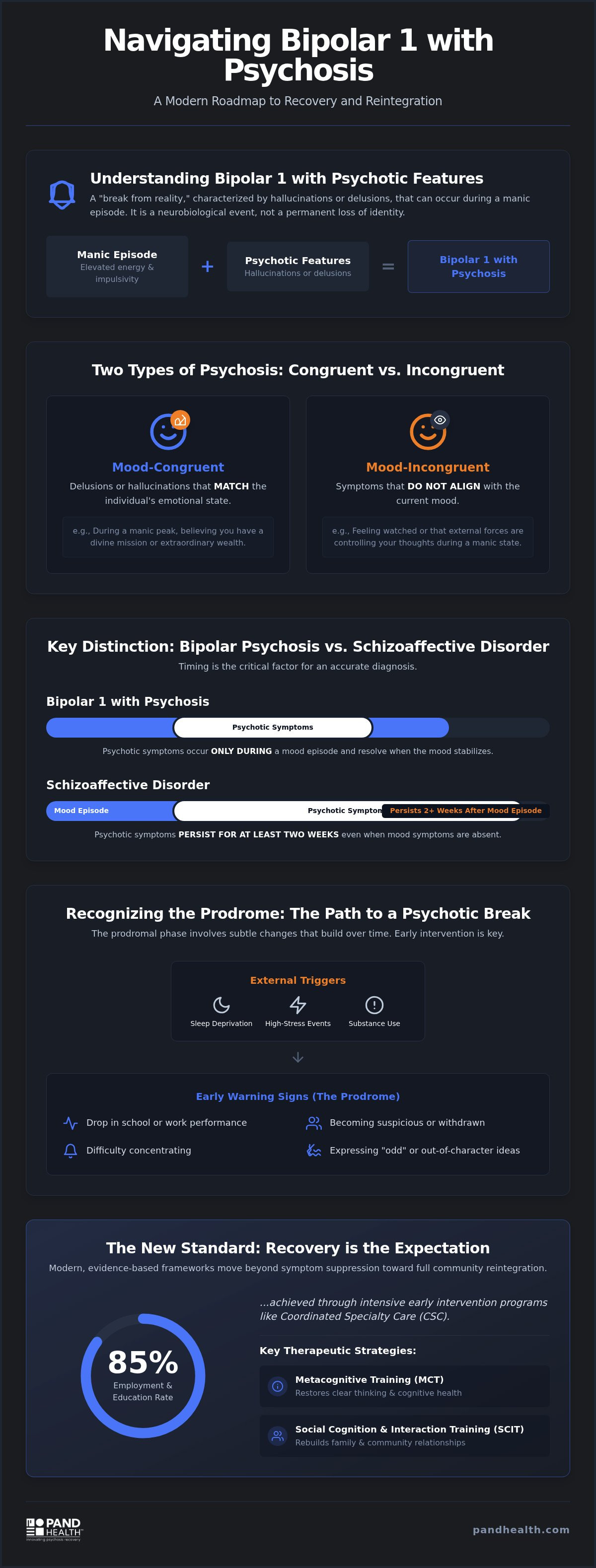
- Explore the evidence-based framework for managing psychosis in bipolar disorder that achieves an 85% employment and education rate through intensive early intervention.
- Learn how to recognize early warning signs and the prodromal phase to prevent rehospitalization and protect cognitive health.
- Discover how specialized therapies like MCT and SCIT work to restore clear thinking and rebuild the family relationships affected by a psychotic break.
- Access a practical guide for implementing a recovery plan in Southern California, featuring high-intensity programs like California OnTrack.
Understanding Bipolar 1 with Psychotic Features
Bipolar 1 is a complex mood disorder defined by the occurrence of at least one manic episode. While mania is often associated with elevated energy and impulsivity, it can escalate into a state where the brain’s processing of reality becomes fractured. This is known as Bipolar I disorder with psychotic features. In this state, the individual experiences a "break from reality" that typically manifests as hallucinations or delusions. Managing psychosis in bipolar disorder requires a deep understanding that these symptoms are part of a neurobiological storm, rather than a permanent loss of identity or a sign of lifelong disability.
Mood-Congruent vs. Incongruent Psychosis
Clinicians categorize psychotic symptoms into two groups based on how they align with the individual's mood. Distinguishing between these two helps specialized teams in Southern California tailor a psychiatric evaluation to the specific needs of the patient:
- Mood-congruent features: These are delusions or hallucinations that match the emotional state. During a manic peak, a person might believe they have been chosen for a divine mission or possess extraordinary wealth.
- Mood-incongruent features: These symptoms are more complex because they don't align with the current mood. This might include feelings of being watched or believing that external forces are controlling one's thoughts.
Identifying these nuances is essential because incongruent features sometimes suggest a more complex clinical path that requires higher-intensity cognitive intervention to ensure long-term stability.
Psychosis vs. Schizoaffective Disorder
One of the most frequent questions families ask is whether psychosis means their loved one has Schizophrenia. It’s a vital distinction to make early in the treatment process. In Bipolar 1, psychotic symptoms are traditionally tied to the mood episode itself. Once the mania or depression stabilizes, the psychosis usually recedes. Schizoaffective disorder, however, involves psychotic symptoms that persist for at least two weeks even when mood symptoms are absent. The timing of these symptoms is the key factor in determining the most effective long-term care strategy.
Because these diagnoses share overlapping symptoms, a specialized thought disorder assessment in LA is critical for long-term success. Pand Health provides these comprehensive evaluations to help families move past the confusion of conflicting labels. By establishing an accurate diagnosis early, we ensure that managing psychosis in bipolar disorder focuses on the right underlying mechanism. This diagnostic precision is the first step in a recovery-oriented plan that prioritizes a return to work or school. If you are seeking this level of clarity, you can contact our team to schedule a specialized evaluation.
The Mechanism and Warning Signs of Bipolar Psychosis
Bipolar psychosis isn't a random event. It's the result of a neurobiological storm where the brain's neurotransmitter systems, particularly dopamine, become severely dysregulated during a manic or depressive peak. When this happens, the brain loses its ability to filter and process sensory information correctly. Managing psychosis in bipolar disorder involves recognizing that this storm often builds slowly. Understanding the mechanics of this escalation allows families to intervene before a full crisis occurs, preserving the individual's cognitive health and social standing.
External triggers often act as catalysts for this biological shift. Chronic sleep deprivation, high-stress life events, and certain substances can push a vulnerable system over the edge. For families trying to navigate these complexities, the Mind Exposed Podcast offers a wealth of lived experience and expert insight into recognizing these shifts in real time. Hearing how others identified the transition from "typical mania" to a psychotic break can provide the validation needed to seek professional help early.
Early Warning Signs (The Prodrome)
The period leading up to a psychotic break is known as the prodromal phase. It's characterized by subtle, often confusing changes in behavior that may persist for weeks or months. You might notice a significant drop in school or work performance as the person struggles to concentrate. They may become increasingly suspicious of friends or express "odd" ideas that seem out of character. The critical period for intervention is the window immediately following these first signs, as rapid support significantly reduces the risk of long-term cognitive "fog." If you're noticing these shifts, obtaining a specialized psychiatric evaluation can provide the necessary roadmap for stability.
The Cannabis Connection
In Southern California, the prevalence of high-potency THC products has created a specific challenge for those managing bipolar disorder. Research consistently shows that high-potency cannabis can act as a powerful trigger for psychotic episodes, often leading to a more severe clinical course. For many in the Los Angeles area, what starts as self-medication for anxiety or sleep can quickly spiral into cannabis-induced psychosis. This requires a specialized approach to rehab that addresses both the substance use and the underlying mood disorder simultaneously. Early intervention models, such as Coordinated Specialty Care, are designed to manage these dual challenges by providing a comprehensive team that understands the intersection of biology and environment.
Beyond Medication: The Augmented CSC Model
Traditional treatment for Bipolar I disorder with psychosis often focuses exclusively on pharmacological intervention. While medication can quiet the symptoms, it doesn't necessarily restore a person’s ability to hold a job or maintain a relationship. Coordinated Specialty Care (CSC) represents a paradigm shift. It’s a team-based approach that addresses the whole person, not just the diagnosis. At Pand Health, we use an Augmented CSC model because we believe managing psychosis in bipolar disorder requires more than just clinical stability. It requires a path back to a meaningful life.
The results of this comprehensive approach are measurable. While the industry average for rehospitalization sits around 10%, our California OnTrack program achieves a 6% rate. This isn't a coincidence. It’s the result of a clinical methodology where recovery is the expectation, not the exception. We move beyond simple "maintenance" to prioritize full community reintegration. By treating the individual as a student, professional, or family member first, we foster the resilience needed for long-term health.
The NAVIGATE Framework
We utilize the NIMH NAVIGATE model, which is specifically designed for first-episode psychosis. This framework integrates medication management with high-intensity psychosocial care. In our intensive outpatient program, clients may receive 24 to 32 hours of specialized support. This rigorous schedule isn't about restriction. It’s about accelerating the healing process through family education, individual resiliency training, and supported employment. By integrating these services, we ensure that every aspect of the individual’s environment supports their progress.
Data-Driven Recovery Outcomes
Success in managing psychosis in bipolar disorder is tracked through objective data. Our cohorts have shown a 19-point improvement in PANSS (Positive and Negative Syndrome Scale) scores. This reflects a significant reduction in both active symptoms and cognitive withdrawal. We've found that shorter, focused inpatient stays of approximately 7 days, followed by immediate transition into Augmented CSC, lead to better long-term stability than traditional 40-day hospitalizations. This model keeps individuals connected to their community while they heal. To see how these clinical results translate into daily life, you can learn more about social skills training and its role in rebuilding personal networks.
Advanced Strategies: MCT, SCIT, and Cognitive Remediation
Medication is often the necessary foundation for stability, but managing psychosis in bipolar disorder requires rebuilding the cognitive and social architecture that the illness can disrupt. Many traditional programs stop once the most acute symptoms are suppressed. True recovery, however, involves restoring the sharp thinking and social ease that allow a person to thrive in their professional and personal life. Pand Health stands as the only outpatient provider in Southern California offering the specific suite of APA-recommended cognitive remediation tools necessary for this level of transformation.
Social Cognition and Interaction Training (SCIT) is a cornerstone of this effort. It provides a structured environment to practice social skills that may have been eroded by periods of isolation or illness. By learning to accurately read social cues and manage interpersonal conflict, individuals can rebuild the friendships and professional networks essential for long-term wellness. This intensive focus on social rehabilitation ensures that clinical stability translates into real-world connection.
Metacognitive Training (MCT) for Paranoia
Metacognitive Training is a specialized intervention that focuses on "thinking about thinking." It helps individuals recognize the cognitive biases, such as "jumping to conclusions," that often fuel paranoid delusions during a manic or depressive episode. While standard CBT for psychosis focuses on the content of a specific thought, MCT targets the underlying process of how those thoughts are formed. For this intervention to be effective, treatment fidelity is paramount. All MCT therapists at our clinic are certified instructors, ensuring that these high-level strategies are delivered with the clinical precision required for lasting change.
Cognitive Remediation and Physical Fitness
One of the most distressing aspects of a psychotic break is the lingering "brain fog" that affects memory and executive function. Cognitive remediation uses daily, computer-assisted training to strengthen these mental pathways. The goal is a tangible shift in life outcomes. Moving a composite cognitive score from the 33rd percentile to the 50th can be the difference between struggling in a work environment and excelling in a new career. We've found that this training is most effective when paired with high-intensity fitness, creating a neuroplastic environment where the brain can truly rewire itself.
Supporting a loved one through this recovery process is a collaborative effort. You can learn how to facilitate this progress at home by reviewing our Family Psychoeducation guide. If you're ready to access these advanced tools for managing psychosis in bipolar disorder, contact our Los Angeles team to discuss our specialized rehabilitation programs.
Implementing a Recovery Plan in Los Angeles
Transitioning from the crisis of a psychotic break to a stable, productive life requires more than hope. It requires a structured, multi-phase roadmap. For those managing psychosis in bipolar disorder, the path to wellness in 2026 is defined by high-intensity support that begins the moment a concern is identified. A successful recovery plan doesn't just aim for the absence of hallucinations; it aims for the presence of a career, a degree, and healthy relationships. This journey begins with a specialized psychiatric evaluation for psychosis in Los Angeles to ensure the initial diagnosis is precise and actionable, providing the clarity needed for managing psychosis in bipolar disorder over the long term.
Once a clear clinical picture is established, the focus shifts to intensive early intervention. Engaging in the California OnTrack program provides a comprehensive team including therapists, peer specialists, and vocational experts. This team-based approach is supported by the SEE (Supported Education and Employment) curriculum, which treats the individual as a student or professional rather than a patient. Finally, incorporating family psychoeducation ensures that the progress made in the clinic is reinforced and sustained at home, creating a lifelong foundation for stability.
The OnTrack Work-Study Program
One of the most significant barriers to recovery is the fear that a diagnosis means a permanent exit from the workforce or academia. Our data proves otherwise. Through the California OnTrack Work-Study Program, we provide dedicated job coaching and school advocacy that addresses the specific cognitive challenges of bipolar disorder. This focused support leads to an 85% employment and education participation rate within six months of enrollment. We help individuals move from a state of perceived disability to active professional engagement. You can find detailed strategies for this transition in our LA Work-Study Guide.
Accessing Care in Southern California
Time is a critical factor in preserving cognitive function after a psychotic episode. Families in the Los Angeles area need a steady hand that can move quickly. We offer same or next-day psychosis evaluation services to ensure that treatment begins during the critical window for intervention. Local support in Southern California is vital because recovery is a marathon that requires consistent, long-term monitoring and community-based resources. If you or a loved one are experiencing early warning signs, we encourage you to contact Pand Health for an immediate, specialized evaluation.
Your Path to Lasting Recovery and Reintegration
Managing psychosis in bipolar disorder requires a transition from crisis management to long-term functional success. By utilizing Southern California's only augmented CSC model, you can move beyond symptom suppression and toward a life of meaningful participation. Our approach prioritizes your return to the community, achieving an 85% employment or education rate after just six months of enrollment. With a 6% rehospitalization rate compared to the 10% industry average, we provide the clinical stability needed to rebuild your world with confidence and clarity.
You don't have to navigate this complex journey alone. Our team acts as a dedicated guide, offering specialized interventions like cognitive remediation and MCT that are designed to restore executive function and social ease. We invite you to schedule a same-day psychosis evaluation in Los Angeles and take the first step toward reclaiming your career and your relationships. You possess the resilience to thrive, and we're here to ensure you have the expert support to make that recovery a reality.
Frequently Asked Questions
Can Bipolar 1 with psychotic features be cured?
While Bipolar 1 is a chronic condition without a traditional cure, full clinical and functional recovery is the standard expectation at our Los Angeles clinic. Most individuals achieve long-term stability where symptoms no longer interfere with their daily goals. Through augmented specialty care, we focus on restoring normalcy rather than just managing illness. Our data indicates that the vast majority of participants are actively engaged in school or work within six months of starting treatment.
What is the difference between Bipolar 1 psychosis and Schizophrenia?
The primary distinction lies in the timing and duration of the psychotic symptoms relative to mood episodes. In Bipolar 1, psychosis typically occurs during a peak manic or depressive state and recedes as the mood stabilizes. Schizophrenia involves persistent psychotic symptoms that occur independently of mood fluctuations. A specialized evaluation in Los Angeles is essential to distinguish between these conditions and ensure the most effective long-term strategy for managing psychosis in bipolar disorder is implemented.
Is hospitalization always necessary for a psychotic episode in Bipolar disorder?
Hospitalization isn't always required, especially when a high-intensity outpatient program is available. Our California OnTrack model provides 24 to 32 hours of weekly support, which often prevents the need for inpatient care entirely. When hospitalization is necessary for safety, our integrated approach typically results in much shorter stays than the industry average. This allows individuals to remain connected to their community and support systems in Southern California while they stabilize.
How does the California OnTrack program help with school or work?
The California OnTrack program utilizes a Supported Education and Employment (SEE) curriculum to bridge the gap between clinical care and daily productivity. We provide dedicated job coaching, resume building, and direct advocacy within Los Angeles schools and workplaces. This proactive support helps individuals overcome the cognitive fog that often follows a break. As a result, our participants see remarkable functional gains in their ability to maintain professional and academic roles.
What is Metacognitive Training (MCT) and how does it work?
Metacognitive Training is an evidence-based intervention that focuses on "thinking about thinking" to reduce the impact of psychotic symptoms. It helps individuals identify and correct cognitive biases, such as jumping to conclusions, which can fuel paranoia. Pand Health is the only outpatient provider in Southern California where all MCT therapists are certified instructors. This ensures the highest level of clinical precision when managing psychosis in bipolar disorder through specialized cognitive remediation.
Can cannabis use cause permanent psychosis in people with Bipolar disorder?
Cannabis use significantly increases the risk of triggering or prolonging psychotic episodes in individuals with Bipolar disorder. While "permanent" is a complex term, high-potency THC products common in Los Angeles can lead to more frequent hospitalizations and a more severe clinical course. Our specialized cannabis-induced psychosis rehab addresses this by combining substance use counseling with intensive mood stabilization. Early intervention is the most effective way to protect long-term cognitive health and prevent recurring psychotic breaks.
How can families support a loved one with Bipolar 1 psychosis?
Families provide the most critical support system through active participation in family psychoeducation and behavioral therapy. Learning to recognize the prodromal phase, such as subtle changes in sleep or social withdrawal, allows for early intervention before a crisis occurs. We also recommend resources like the Mind Exposed Podcast to help families understand the lived experience of recovery. Providing a stable, low-stress environment in the home is essential for maintaining the progress achieved during treatment.
What are the long-term success rates for early intervention in Los Angeles?
Long-term success rates for early intervention at Pand Health are among the highest in the industry, as evidenced by our 2022 to 2024 data. Our cohort demonstrated a 6% rehospitalization rate, which is lower than the 10% industry average. Additionally, 85% of our clients are successfully participating in work or school after six months. These outcomes are sustained through structured monthly monitoring after discharge, ensuring that individuals in Los Angeles maintain their cognitive gains.
Disclaimer
This article is for information and educational purposes only, and can NEVER replace a proper medical evaluation. If you or a loved one may be suffering from psychosis or the prodomal symptoms of psychosis, get evaluated by a professional as soon as possible. Early diagnosis and treatment can be life-saving.