

Involuntary Holds in Los Angeles: A Guide for Families
What if the most frightening moment of your life was actually the turning point toward lasting recovery? When a loved one is placed on an involuntary hold in Los Angeles, the immediate reaction is often a paralyzing mix of fear, confusion, and exhaustion. You're likely tired of the "revolving door" of hospitalizations that seem to provide only temporary relief without addressing the root cause of the crisis. It's natural to feel like a spectator in a complex legal system that moves forward without your input.
We understand the weight of this moment and the need for a steady hand to guide you through the storm. This guide will help you manage the legal intricacies of the 5150 and 5250 process in California, ensuring you have the knowledge to protect your loved one's rights. You'll discover how to move beyond emergency intervention and toward a sophisticated, coordinated care model. By identifying the path from crisis to community reintegration, you can help your family transition from a state of constant emergency to one of predictable, long-term stability.
Key Takeaways
- Understand the legal framework of an involuntary hold under the Lanterman-Petris-Short (LPS) Act to navigate the 72-hour evaluation period with confidence.
- Learn how to protect your loved one’s rights during a crisis, including the right to informed consent and the specific legal processes surrounding medication.
- Identify why the first 30 days following hospital discharge are the most critical window for preventing a return to the psychiatric emergency room.
- Discover how specialized intervention models like California OnTrack can reduce rehospitalization rates to just 6% through intensive, coordinated specialty care.
- Shift your family's focus from short-term crisis management to a comprehensive recovery plan that prioritizes long-term psychological stability and community reintegration.
What is an Involuntary Hold? Definition and Criteria
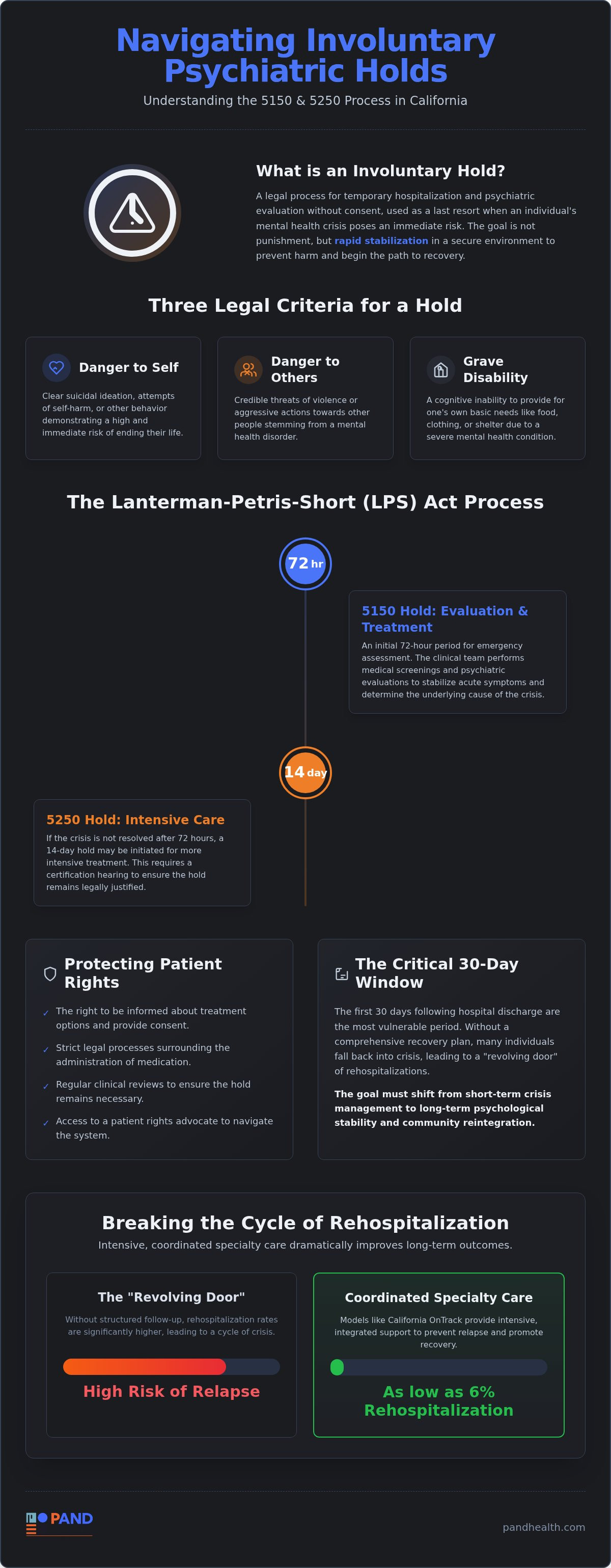
An involuntary hold is a legal process that allows for the temporary hospitalization and psychiatric evaluation of an individual without their consent. In Los Angeles and throughout California, this measure is never taken lightly; it's considered a "last resort" intervention. This process is reserved for moments when a person's mental health has reached a point where their safety, or the safety of the community, is at immediate risk. It's a protective safety net designed to catch those in the midst of a psychological crisis.
The primary objective isn't long-term confinement or punishment. Instead, the focus is on rapid stabilization. By providing a secure environment, medical professionals can conduct a thorough psychiatric evaluation, manage acute symptoms, and ensure the individual remains safe during their most vulnerable moments. It's the beginning of a transition from crisis back to stability. While the experience can feel overwhelming for families, it's often the necessary first step toward a more structured recovery journey.
The Three Primary Criteria for a Hold
To initiate an involuntary hold, a designated professional, such as a peace officer or a member of a mobile crisis team, must determine that the individual meets at least one of three specific legal thresholds under the Lanterman-Petris-Short (LPS) Act:
- Danger to Self: This applies when an individual expresses clear suicidal ideation, attempts self-harm, or demonstrates a high risk of ending their life. It's a clinical assessment of immediate lethality.
- Danger to Others: This criterion is met when a person makes credible threats of violence or acts aggressively toward others because of a mental health disorder. It prioritizes community safety while addressing the underlying illness.
- Grave Disability: This is often the most misunderstood criterion. It occurs when a person is unable to provide for their own basic needs, such as food, clothing, or shelter, due to a severe mental health condition. It's not about a lack of resources, but a cognitive inability to manage the essentials of survival.
Psychosis and Involuntary Commitment
Acute psychosis is a frequent trigger for emergency admissions. When a person experiences hallucinations or deep-seated delusions, their perception of reality becomes fractured. This often leads to unpredictable behavior that necessitates immediate clinical intervention to prevent harm. We also see a growing number of cases involving cannabis induced psychosis, where high-potency THC triggers severe, albeit sometimes temporary, psychotic breaks that require professional stabilization.
Professional evaluations serve as a critical diagnostic tool during these periods. Clinical evaluations during a hold are designed to determine whether an individual is experiencing a temporary, situational crisis or the emergence of a primary thought disorder that requires long-term, specialized support. Once the immediate danger has passed, the focus shifts to creating a sustainable plan that prevents the need for future emergency interventions.
The 5150 and 5250 Process in California
California's approach to psychiatric crisis is governed by the Lanterman-Petris-Short (LPS) Act. This landmark legislation was designed to end the era of inappropriate, indefinite commitment by balancing public safety with the protection of individual civil liberties. It ensures that any involuntary hold is subject to strict timelines and regular clinical review. The most common entry point into this system is the 5150, a 72-hour period for evaluation and treatment. If the clinical team determines that this initial window is insufficient to resolve the crisis, they may petition for a 5250, which extends the hold for up to 14 days of intensive care.
Only specific individuals have the authority to initiate this process. In Los Angeles, this typically includes peace officers, members of county-designated mobile crisis teams, or authorized psychiatric staff at a licensed facility. Their primary goal is to move the individual from a state of acute risk toward clinical safety. It's a rigorous process that prioritizes the patient's immediate stabilization while preparing them for the next stage of recovery.
What Happens During the First 72 Hours?
The intake process at a designated facility in Los Angeles is thorough and methodical. Upon arrival, the individual undergoes a medical screening to rule out physical complications, followed by a comprehensive psychiatric evaluation. This isn't just a period of observation. It's a time for active stabilization, often involving medication management to address acute symptoms such as hallucinations or severe mania. The clinical team works quickly to establish a baseline and determine the most effective path forward.
Patients retain fundamental rights even during an involuntary hold. They're entitled to make at least two phone calls and have the right to see a patient advocate who ensures their legal protections are upheld. This period serves as a critical diagnostic window. If you're feeling overwhelmed by the complexity of the system, reaching out for family psychoeducation and support can provide the clarity you need to advocate for your loved one effectively.
The Probable Cause Hearing
If the facility determines that a 14-day extension is necessary, a Probable Cause Hearing must be held. This legal proceeding usually occurs within the hospital itself. A hearing officer reviews the clinical evidence to determine if the criteria for the hold still exist. The patient has a right to legal representation, often provided by a public defender, and the right to contest the hold by presenting evidence or witnesses. It's a formal check on the system's power, ensuring that no one is held longer than clinically necessary.
Families play a vital role during this phase. While you may not have the final word on a release, you can provide the treatment team with essential history that the patient might be unable to share during a crisis. Your insights into their baseline behavior, previous triggers, and past treatment successes are invaluable. This collaborative approach helps the clinical team build a more precise and effective recovery plan for the days following the hearing.
Navigating Patient Rights and Family Involvement
While an involuntary hold limits physical freedom, it doesn't dissolve an individual's legal or civil rights. Patients in Los Angeles facilities retain the right to informed consent for most medical procedures. This means doctors must explain the benefits and risks of treatments clearly. However, psychiatric medication is a complex area. In California, if a patient refuses medication, the facility may petition for a "Riese Hearing." During this legal proceeding, a judge determines if the patient lacks the capacity to make their own treatment decisions. It's a critical safeguard that ensures medication isn't administered against someone's will without judicial oversight.
Confidentiality often creates a barrier for families. Federal HIPAA laws and California state statutes strictly limit what a treatment team can share without the patient's written consent. This can be heartbreaking when you're desperate for updates. To prepare for the future, families should discuss a Psychiatric Advance Directive (PAD) once the individual is stable. A PAD allows a person to document their treatment preferences and designate a decision-maker before a crisis occurs; it provides a clear roadmap for providers that honors the patient's wishes even during a relapse.
How Families Can Support a Loved One on a Hold
You are the expert on your loved one’s history. Even if doctors cannot give you information due to privacy laws, they can always receive it. Providing "collateral information" about the person's baseline behavior, past traumas, or recent triggers helps the psychiatrist form a more accurate diagnosis. Navigating this period is emotionally taxing for everyone involved. Engaging in family psychoeducation can help you process the trauma of the crisis and learn the clinical language needed to advocate effectively. As discharge approaches, ask the team about specific follow-up appointments, potential medication side effects, and the warning signs of a potential relapse.
Protecting Rights in Los Angeles Facilities
If you feel your loved one’s rights are being violated, the Los Angeles County Patient Rights Advocate office is your primary resource. They investigate complaints regarding facility conditions or treatment disputes. For those seeking an immediate legal challenge to their detention, a Writ of Habeas Corpus can be filed. This is a formal request for a judge to review the legality of the involuntary hold and determine if the person should be released. Additionally, ensure the facility allows the patient access to personal belongings that meet safety standards, such as comfortable clothing, to maintain their dignity during the stabilization process. Protecting these rights is a fundamental part of ensuring the hospital remains a place of healing rather than just confinement.
Transitioning to Recovery: Life After the Hold
The release from an involuntary hold is often met with a sense of relief, but it also marks the beginning of a high-risk transition. Statistics indicate that without intensive, specialized support, 50% of patients find themselves rehospitalized within a short period. This "revolving door" phenomenon highlights the limitations of treating acute crises without a long-term strategy for clinical stability. The first 30 days following discharge represent a critical window where the right intervention can change the entire trajectory of a person's life, moving them from mere crisis management toward true functional recovery.
Coordinated Specialty Care (CSC): The Gold Standard
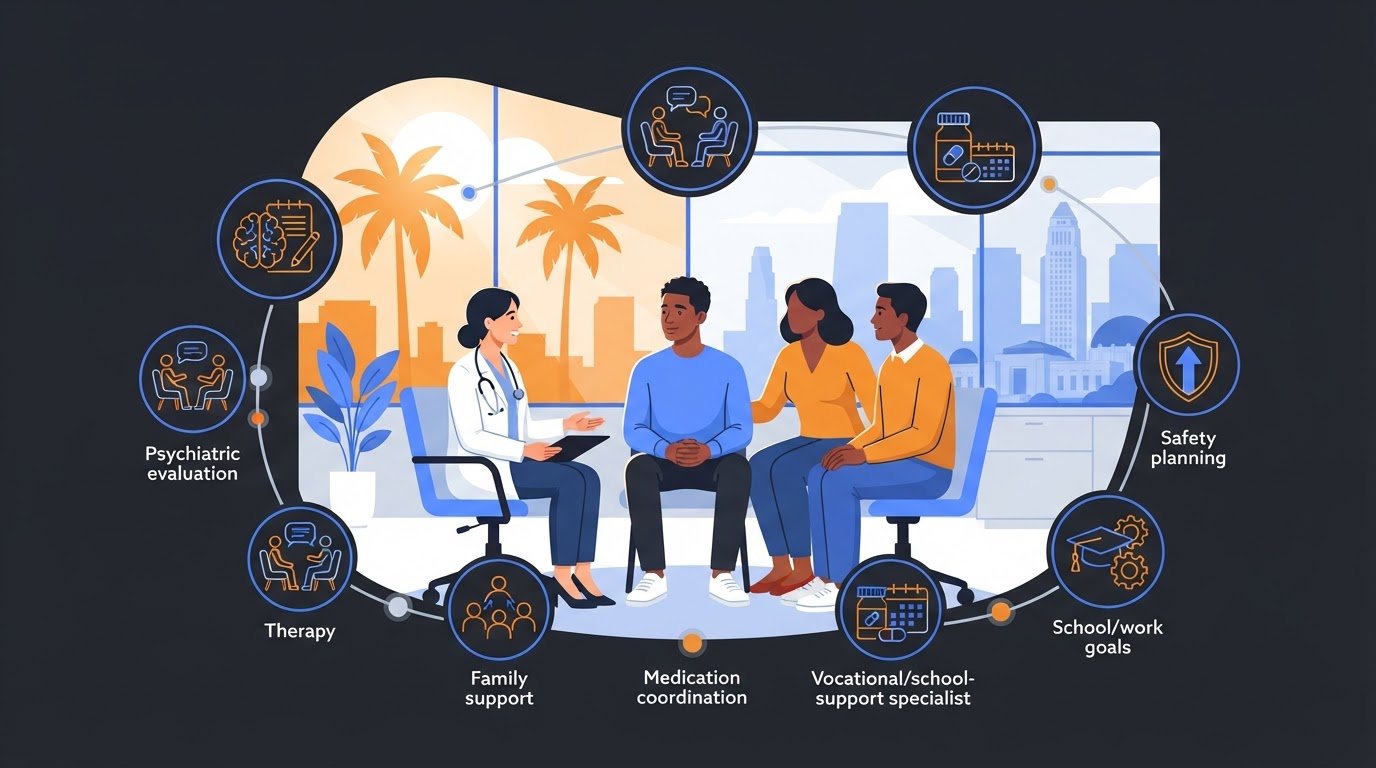
Coordinated Specialty Care (CSC) represents the clinical gold standard for early psychosis intervention. It isn't a single therapy session; it's a comprehensive team-based approach that surrounds the individual with a network of experts. This team typically includes a primary therapist, a psychiatric prescriber, and a dedicated family advocate who works closely with the support system. This model moves beyond mere symptom management to focus on functional recovery. A key component of this success is supported education and employment, which helps individuals return to their career or academic goals. By maintaining these vital social roles, patients avoid the profound isolation that frequently triggers a relapse.
Building a Relapse Prevention Plan
A robust recovery plan requires identifying prodromal symptoms, which are the subtle early warning signs that appear before a crisis becomes unmanageable. This safety plan should involve the entire support system, from family members to clinical providers, ensuring everyone knows how to respond when these signs emerge. High-fidelity outpatient programs have demonstrated a significant 19-point improvement in PANSS scores, reflecting a profound reduction in symptom severity. By proactively managing these markers, families can prevent the escalation that leads back to the emergency room.
Reclaiming a life after a psychiatric crisis requires more than just the absence of hallucinations or delusions. It requires the restoration of a person's ability to navigate complex social environments with confidence. Integrating social skills training allows individuals to rebuild the interpersonal tools needed for community reintegration. Specialized programs like California OnTrack prioritize these developmental milestones to ensure the individual doesn't just survive the aftermath of a hold, but actively thrives in their community.
If you're ready to break the cycle of repeated hospitalizations, contact our team to learn how our augmented care model achieves a 6% rehospitalization rate.
The Pand Health Approach: Breaking the Cycle
Pand Health provides a specialized intervention that fundamentally changes the outcome for families who've experienced the trauma of a psychiatric crisis. Standard outpatient care often lacks the intensity needed to prevent a return to the psychiatric emergency room. Our California OnTrack program is built on an augmented Coordinated Specialty Care (CSC) model. While many programs offer minimal weekly contact, we provide 24 to 32 hours of intensive, personalized treatment per client. This level of engagement is what allows us to transform the recovery experience and build a foundation for lasting health.
The results of this intensive model are clear and measurable. While the industry average for rehospitalization after a first episode of psychosis is 50% or higher, our program maintains a 6% rehospitalization rate. This isn't just a marginal improvement; it's a complete shift in the standard of care for those who've recently faced an involuntary hold. We don't view recovery as a distant hope or a lucky outcome. At Pand Health, recovery is the expectation for every individual we serve.
Augmented Care in Southern California
We're proud to be the only program in Southern California offering a specific combination of APA-recommended cognitive remediation, Metacognitive Training (MCT), and Social Cognition and Interaction Training (SCIT). Our certified MCT instructors help patients manage delusional thinking by teaching them to recognize and correct cognitive biases. This isn't just talk therapy. It's a rigorous, evidence-based method of retraining the brain. We also integrate high-intensity fitness and cognitive remediation into our daily schedules, ensuring that the body and mind are supported simultaneously in the pursuit of wellness.
Taking the Next Step
The California OnTrack program is designed for adolescents and adults between the ages of 13 and 40. We specialize in helping families transition a loved one directly from a hospital setting into our care, bridging the gap that often leads to relapse. This proactive approach ensures that the stability achieved during an involuntary hold is maintained and built upon in a community-based environment. If you're ready to move beyond crisis management and toward a future of functional independence, contact our Los Angeles team to schedule an evaluation today. We're here to act as your steady hand in the storm, offering a lifeline through expertise and deeply human care.
Building a Future Beyond the Crisis
The experience of an involuntary hold is often a family's most challenging chapter, but it doesn't have to be a recurring one. By understanding the legal protections of the LPS Act and recognizing the critical window immediately following hospital discharge, you can move from reactive crisis management to a proactive recovery strategy. Since 2022, we've served the Los Angeles community by offering an augmented care model that prioritizes long-term stability over temporary safety. We believe that every family deserves a clear roadmap out of the revolving door of emergency admissions.
Our team of experts, including certified Metacognitive Training (MCT) instructors, is dedicated to helping individuals between ages 13 and 40 reclaim their functional independence. While the standard care system often struggles with high relapse rates, our California OnTrack program achieves a 6% rehospitalization rate through intensive, coordinated support. This data-driven approach ensures that recovery is not just a hope, but a realistic expectation for your loved one. You don't have to navigate this complex path alone. We're here to provide the clinical expertise and compassionate guidance your family needs to find a way forward.
Break the cycle of hospitalization—contact Pand Health for a recovery-oriented evaluation today.
Frequently Asked Questions
How long can a hospital hold you involuntarily in California?
Under the Lanterman-Petris-Short Act, the initial 5150 hold lasts up to 72 hours. If the clinical team determines that the individual remains a danger to themselves or others, or is gravely disabled, they can file a 5250 certification to extend the stay by 14 days. In rare cases involving persistent instability, the court may authorize additional extensions or a temporary conservatorship to ensure the person's safety and continued stabilization.
Can I refuse medication while on a 5150 hold?
Patients generally retain the right to refuse psychiatric medication during an involuntary hold unless an immediate emergency exists. If the treating physician believes medication is essential and the patient lacks the capacity to consent, the facility must hold a Riese hearing. During this legal proceeding, a hearing officer determines if the individual can rationally weigh the risks and benefits of treatment. This process ensures that patient autonomy is respected even during a crisis.
What is the difference between a 5150 and a 5250 hold?
A 5150 is the entry point for emergency psychiatric care, allowing for a 72-hour evaluation period. In contrast, a 5250 is a 14-day extension used when the initial three days are insufficient for stabilization. While a 5150 is initiated by peace officers or designated clinicians, a 5250 requires a certification of intensive treatment and triggers a probable cause hearing where the patient has a right to legal representation to contest the detention.
Will an involuntary hold show up on a background check?
A psychiatric hold is a medical record protected by HIPAA, so it typically won't appear on standard employment background checks. However, it does create a reporting requirement regarding firearm ownership in California. Additionally, high-level federal security clearances or specialized law enforcement applications may require the disclosure of mental health hospitalizations. It's best to consult with a legal professional if you have specific concerns about professional licensing or state-mandated reporting requirements.
Can a family member end an involuntary hold early?
Family members cannot legally terminate a hold, as the decision to discharge rests solely with the attending psychiatrist. The clinician must ensure the individual no longer meets the legal criteria for danger to self, danger to others, or grave disability. While you can't end the hold, you can influence the process by providing the clinical team with a detailed history and a robust plan for supervised outpatient care once the individual is released.
What happens if someone is still unstable after the 14-day 5250 hold?
If stability isn't reached after 14 days, the facility may seek a 5270 hold, which provides an additional 30 days of intensive treatment for those who remain gravely disabled. For individuals who pose a persistent physical threat to others, a 5300 hold can extend the stay for another 180 days. Finally, if long-term care is necessary, the court may initiate a temporary LPS conservatorship to manage the individual's placement and treatment.
How can we prevent another involuntary hold from happening?
Preventing a future involuntary hold requires moving beyond basic outpatient therapy toward an integrated, team-based model. Programs that utilize Coordinated Specialty Care provide the high-intensity support needed to manage early warning signs before they escalate into a crisis. By identifying prodromal symptoms and establishing a comprehensive relapse prevention plan, families can catch subtle shifts in behavior early. This proactive approach builds the necessary skills for long-term stability and community reintegration.
What should I bring to a loved one in a psychiatric unit?
Focus on items that provide comfort while adhering to strict safety protocols. You should bring comfortable, slip-on clothing without drawstrings, belts, or shoelaces, as these are prohibited in most Los Angeles facilities. Soft-cover books, family photographs, and a list of important phone numbers can offer significant emotional support. Avoid bringing anything with glass, metal, or sharp edges. It's always a good idea to call the facility first to verify their specific restricted items list.
Disclaimer
This article is for information and educational purposes only, and can NEVER replace a proper medical evaluation. If you or a loved one may be suffering from psychosis or the prodomal symptoms of psychosis, get evaluated by a professional as soon as possible. Early diagnosis and treatment can be life-saving.