
Outpatient Psychosis Treatment Near Me: A Los Angeles Guide
What makes an outpatient program a good fit: how often someone attends, or how well clinical care connects with everyday goals? If you’re searching for outpatient psychosis treatment near me in Los Angeles, it’s reasonable to ask whether a general mental health program provides the structure and specialized support psychosis care can require.
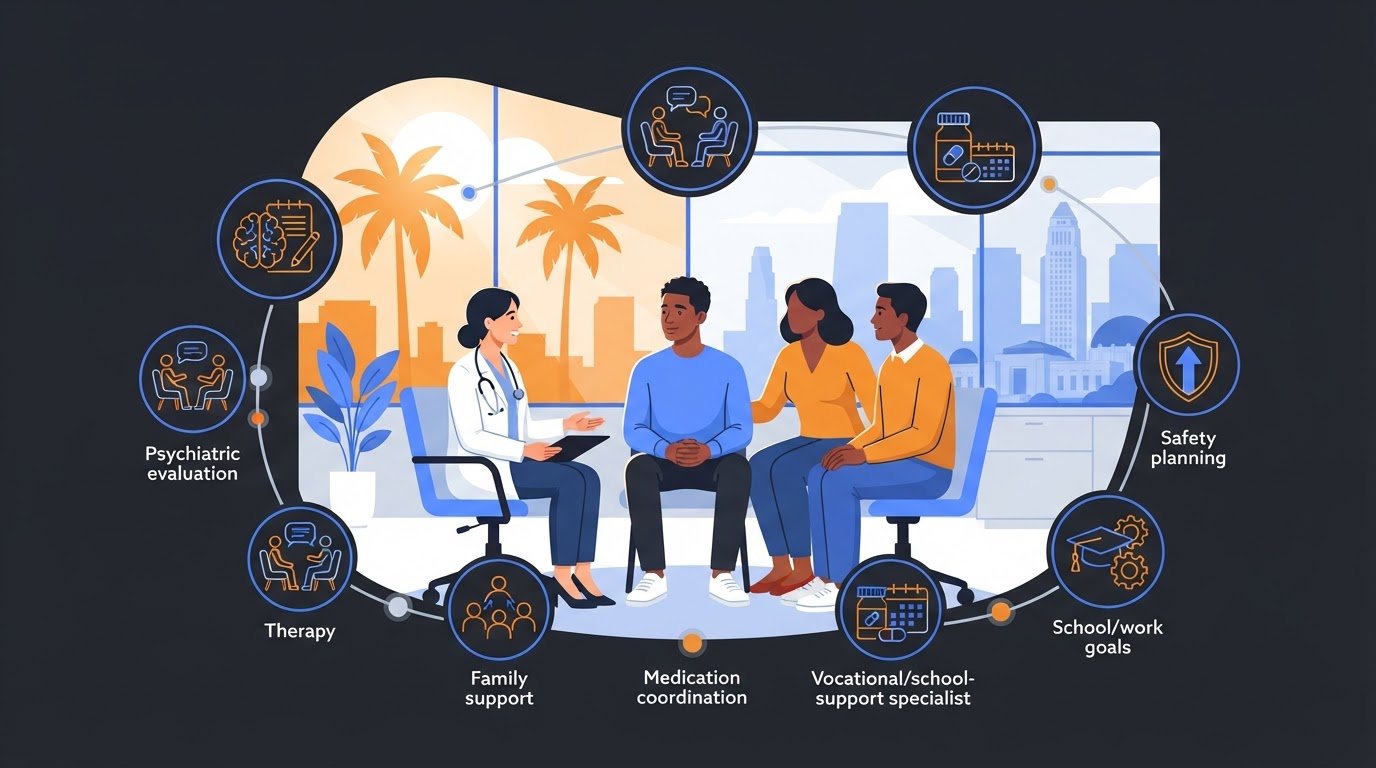
This guide compares outpatient care options and explains what coordinated specialty care can include, from psychiatric evaluation and therapy to family support and help with school or work. Pand Health’s California OnTrack program serves teens and adults ages 13-40 experiencing first-episode psychosis, schizophrenia-spectrum disorders, or clinically high risk for psychosis. You’ll find practical points to consider before an evaluation, what treatment and family participation can involve, and how to take a next step through Pand Health’s same- or next-day psychosis evaluation services. Outpatient care provides planned support, not emergency treatment. If someone faces immediate danger, seek emergency help.
Key Takeaways
- Searching for outpatient psychosis treatment near me? Compare how programs coordinate psychiatric care, therapy, family support, and rehabilitation.
- California OnTrack is Pand Health’s intensive outpatient Coordinated Specialty Care program, based on the NIMH NAVIGATE framework.
- A qualified clinical evaluation helps determine whether outpatient care fits a person’s needs, safety, and daily functioning.
- Prepare for an evaluation with a brief timeline of observed changes, information about current care, and questions about next steps.
- Ask how family services and support for school or work can connect treatment with everyday recovery goals.
Outpatient psychosis treatment near me: what Los Angeles families should look for
Outpatient psychosis treatment is scheduled clinical care for someone who continues living outside a residential setting. The right level of support depends on the person’s symptoms, safety, daily functioning, and clinical evaluation, not simply on what appears in a local search. If you’re looking for outpatient psychosis treatment near me, start by distinguishing programs designed to address psychosis from broader outpatient mental health services.
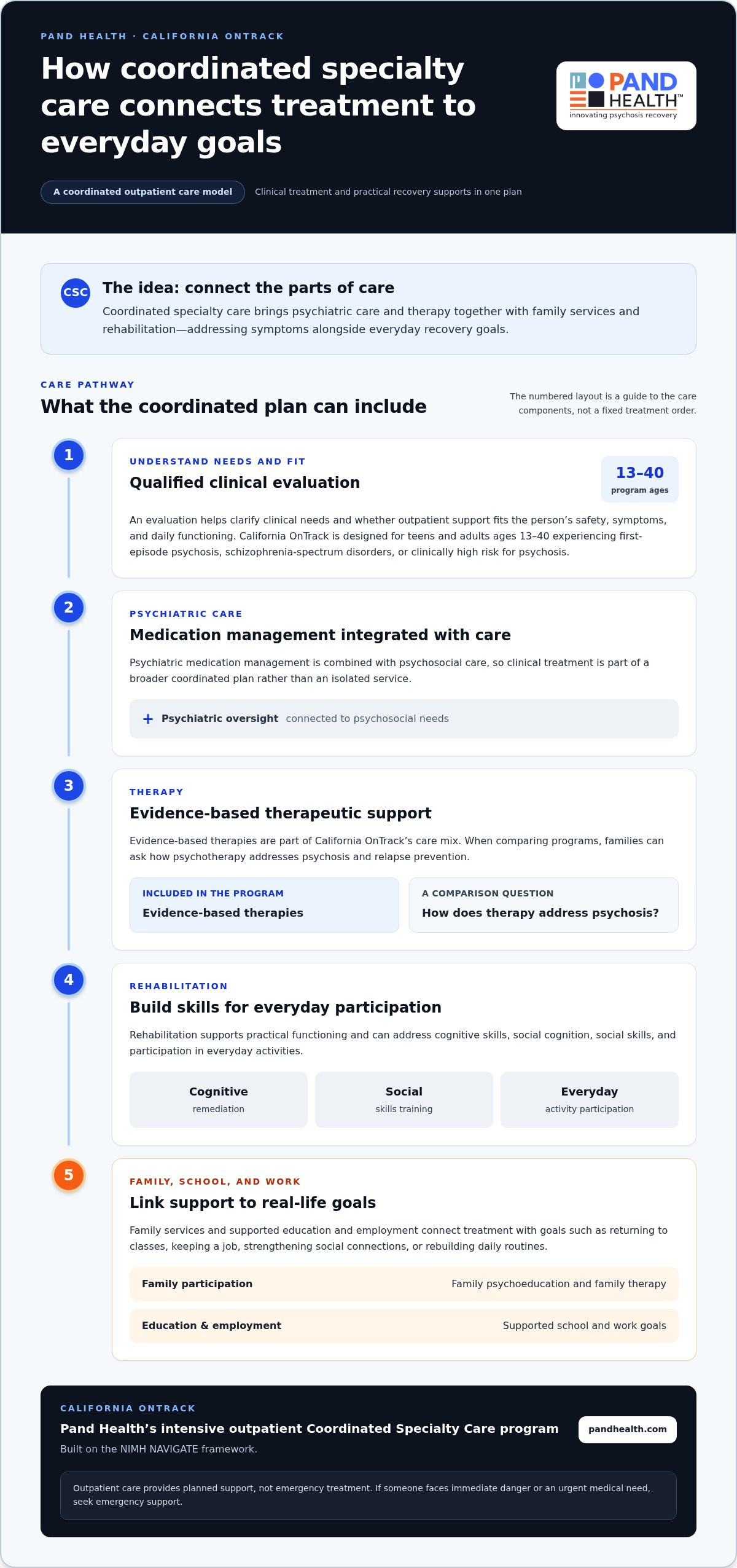
Coordinated specialty care brings clinical and rehabilitation supports together to address symptoms and everyday recovery goals. It can connect psychiatric care and therapy with family services, social skills training, and support for school or work. This is one form of early intervention in psychosis, which emphasizes timely, specialized support rather than treating psychosis as a general outpatient concern.
When might specialized outpatient psychosis care be a fit?
A specialized evaluation may be appropriate for someone experiencing a first episode of psychosis, a schizophrenia-spectrum disorder, or signs of clinically high risk for psychosis. These experiences differ from person to person, so an online description can’t determine a diagnosis or the right level of care. California OnTrack is designed for teens and adults ages 13-40. A qualified evaluation helps clarify clinical needs and what combination and intensity of support may be appropriate.
What does “near me” mean for care in Los Angeles?
Pand Health’s Los Angeles site is at 11500 W. Olympic Blvd., Suite 399. Same- or next-day psychosis evaluation services offer a practical starting point for discussing concerns and possible next steps. When planning ongoing care, consider travel time and how appointments may fit with school, work, and family routines. A manageable route can make it easier to stay connected with treatment over time.
Know when outpatient care is not the right first step
Outpatient care involves planned appointments and is not emergency treatment. If someone is in immediate danger or has an urgent medical need, seek emergency support rather than waiting for a routine outpatient intake. For other situations, an evaluation can help determine whether coordinated outpatient care fits the person’s needs and what support may be appropriate.
How to compare Los Angeles outpatient psychosis treatment programs
A local directory can provide names, but it won’t show whether care is coordinated around psychosis. Compare the treatment model, how its services connect, and whether evaluation considers both clinical needs and daily-life goals. Coordinated specialty care is integrated, multidisciplinary support that brings clinical treatment and practical recovery services together for people experiencing psychosis.
Which treatment components should families compare?
Use these areas to understand what a program includes. Outpatient services can differ in how they address psychosis and connect treatment with daily functioning:
- Psychiatric oversight: Is medication management integrated with care for psychosocial needs?
- Psychotherapy: Does the model include evidence-based therapy, and how does it address psychosis and relapse prevention?
- Family support: Are family therapy or family psychoeducation part of care?
- Rehabilitation: Does the program address cognitive skills, social cognition, social skills, and participation in everyday activities?
At Pand Health, California OnTrack combines psychiatric medication management and evidence-based therapies with cognitive remediation, family services, social skills training, and supported education and employment. The UCLA Health Psychosis Clinic is another Los Angeles example of a psychosis-focused service offering psychiatric evaluation, medication management, and psychosocial interventions. Comparing specific services, rather than relying on program labels, can help you understand how each model approaches care.
How can families assess support for school, work, and daily life?
Clinical treatment is central, but recovery goals can also include returning to classes, keeping a job, strengthening social connections, or rebuilding daily routines. Supported education and employment connect care with school and work goals. Consider how rehabilitation and family participation fit into the care plan, and whether support extends beyond individual appointments. At Pand Health, family psychoeducation and family therapy complement social skills training and rehabilitation. The family guide on family psychoeducation for psychosis can help relatives understand this part of care.
California OnTrack is an intensive outpatient Coordinated Specialty Care program, not simply a general outpatient listing. A qualified evaluation helps shape recommendations around the individual. Insurance arrangements and other practical details can vary by person, so discuss your circumstances with Pand Health as you consider the next step.
What California OnTrack outpatient psychosis treatment includes
California OnTrack is Pand Health’s augmented Coordinated Specialty Care program, built on the NIMH NAVIGATE framework. It brings psychiatric care, therapy, family services, and rehabilitation into a coordinated plan instead of treating each need in isolation. For someone searching for outpatient psychosis treatment near me, the program provides a concrete example of how specialized care can connect clinical support with personal goals.
The program involves 24-32 hours per client. Treatment is tailored to the individual and combines medication management with psychosocial and practical supports.
How treatment combines clinical and cognitive support
Therapeutic interventions may include cognitive behavioral therapy for psychosis (CBT-P), DBT-based interventions, Social Cognition and Interaction Training (SCIT), and Metacognitive Training (MCT). All Metacognitive Training therapists are certified MCT instructors. Psychiatric medication management is integrated with these therapies, connecting clinical care with cognitive, social, and recovery goals.
Computer-assisted cognitive remediation is another part of the model, paired with fitness coaching. These supports address different areas of functioning; they do not promise a particular result. Families can also learn about social skills training in Los Angeles as one component of psychosocial rehabilitation.
How care supports family, school, work, and community goals
Family services can include family therapy and multi-family group therapy. Supported education and employment connect treatment with real-world aims through counseling, resume building, and advocacy. Depending on the person’s goals, this may involve working toward a return to classes, exploring employment, or building confidence with everyday interactions. For more on this approach, read about work-study support during mental health recovery.
Program outcomes provide context, not a forecast for an individual. In Pand Health’s 2022-2024 cohort of 41 patients, education or employment participation was reported at 6% at enrollment, 40% after three months, and 85% after six months. These figures describe that cohort and are not guaranteed individual outcomes. They show how a coordinated program can track participation in everyday goals alongside clinical treatment.
Is outpatient psychosis care enough? Assessing fit, safety, and progress
A search for outpatient psychosis treatment near me can help identify options, but it can’t determine whether outpatient care is appropriate. That requires a qualified clinical evaluation of the person’s symptoms, safety, daily functioning, and support needs. If someone is in immediate danger or has an urgent medical need, seek emergency help rather than waiting for an outpatient appointment. Outpatient programs provide planned care, not emergency services.
What questions help clarify clinical fit?
During an evaluation, share what you’ve noticed and what has changed. Useful topics include symptoms, daily routines, school or work, current care and supports, and the person’s treatment goals. The clinical team uses this information to assess needs and recommend an appropriate level and mix of care. California OnTrack’s stated age range is 13-40; an evaluation helps determine whether the program fits within that range.
How should families interpret program outcomes?
Outcomes can provide context about a program’s experience, but they don’t predict what will happen for one person or prove that treatment caused a change. In Pand Health’s 2022-2024 cohort of 41 patients, education or employment participation was reported as 6% at enrollment, 40% after three months, and 85% after six months.
The same cohort information reports rehospitalization of 6% after enrollment, compared with over 50% before enrollment. It also reports an average inpatient stay of 40 days before enrollment and seven days after enrollment. These are cohort comparisons, not guarantees that outpatient treatment will prevent hospitalization or produce the same results for another person.
Progress is also more than a single percentage. Families and clinicians can consider whether the care plan addresses the person’s clinical needs and whether meaningful goals, such as participation in school, work, or daily activities, are reviewed over time.
To discuss an evaluation and possible next steps, contact Pand Health about psychosis care.
How to take the next step with outpatient psychosis treatment in Los Angeles
Starting a conversation can feel difficult, especially when changes are confusing or worrying. You don’t need to have a diagnosis or know which treatment is right before reaching out. A clear account of what you’ve noticed can help the team understand the concern and guide the evaluation.
What should someone prepare before contacting a program?
A few brief notes can make the first conversation more focused. You might include:
- Observed changes: What has changed, when you first noticed it, and how it has shifted over time.
- Daily impact: How the changes affect sleep, routines, relationships, school, or work.
- Current care information: Relevant medications, clinicians, and supports, if available and appropriate to share.
- Questions and goals: What you want to understand about evaluation, treatment components, family support, or education and employment goals.
If you’re supporting a loved one, describe what you’ve observed without assuming what they’re thinking or feeling. Family participation can provide context, but involvement is shaped by the person’s consent and clinical circumstances. The individual’s perspective and goals remain important parts of the discussion.
What happens after the first conversation?
The next step is an evaluation. The team can use the conversation to better understand the person’s needs and discuss appropriate care recommendations. Pand Health offers same- or next-day psychosis evaluation services as a starting point. An evaluation does not predetermine a treatment outcome; it helps clarify what support may fit.
If you’re searching online for outpatient psychosis treatment near me, moving from browsing to a direct conversation with a psychosis-focused care team can help. Share the concern, arrange an evaluation, and bring your notes and questions. If the person is comfortable, they can explain what matters most to them, whether that’s feeling more stable, reconnecting with family, or returning to school or work.
One step is enough to begin. Contact Pand Health about an evaluation to discuss your concern and possible next steps.
Take a clear next step toward specialized care
Finding the right outpatient support means looking beyond a nearby listing. A qualified evaluation can help clarify fit, while coordinated specialty care connects clinical treatment with family support and everyday goals. California OnTrack is Pand Health’s augmented Coordinated Specialty Care model, built on the NIMH NAVIGATE framework.
Reported outcomes provide context, not a promise of an individual result. Pand Health’s 2022-2024 cohort included 41 patients. Its reported changes in education and employment participation, rehospitalization, and inpatient stay length describe that group, not what will happen for any one person.
Pand Health’s Los Angeles site is at 11500 W. Olympic Blvd., Suite 399. If you’re searching for outpatient psychosis treatment near me, a conversation about an evaluation can turn uncertainty into a practical next step. Explore Pand Health’s psychosis care and evaluation options. Start the conversation to discuss support tailored to the person and their goals.
Frequently Asked Questions
Is outpatient treatment effective for psychosis?
Outpatient treatment can provide structured support, but its suitability and outcomes depend on the individual’s needs and clinical situation. Pand Health’s California OnTrack program combines psychiatric care with therapy, family services, and rehabilitation. In its 2022-2024 cohort of 41 patients, education or employment participation was reported as 6% at enrollment, 40% after three months, and 85% after six months. These group observations don’t guarantee an individual result.
What is the difference between general outpatient care and coordinated specialty care for psychosis?
General outpatient care may provide therapy or psychiatric appointments, while coordinated specialty care brings multiple supports together in a connected treatment model designed for psychosis. California OnTrack is an augmented Coordinated Specialty Care program based on the NIMH NAVIGATE framework. Its components include medication management, evidence-based therapies, cognitive remediation, family services, social skills training, and supported education and employment. This integrated approach addresses clinical needs alongside everyday recovery goals.
How quickly can someone get an outpatient psychosis evaluation in Los Angeles?
Pand Health offers same- or next-day psychosis evaluation services in Los Angeles. This describes the evaluation service and does not guarantee a particular treatment start date or outcome. An evaluation helps the team understand the concerns and discuss possible next steps. To prepare, note what changes you’ve observed, when they began, and how they affect daily life. If there’s immediate danger or an urgent medical need, seek emergency help instead.
Can family members participate in outpatient psychosis treatment?
Yes. Family participation may be part of care through services such as family psychoeducation, family therapy, or multi-family group therapy. These supports can help relatives better understand psychosis and contribute constructively to recovery. How and when family members are involved depends on the person’s consent and clinical circumstances. The individual’s perspective, preferences, and treatment goals should remain central to discussions about family involvement.
What ages can California OnTrack serve?
California OnTrack is designed for teens and adults ages 13-40 who are experiencing first-episode psychosis, schizophrenia-spectrum disorders, or clinically high risk for psychosis. A qualified evaluation helps clarify whether the program’s approach fits a person’s circumstances and support needs. The age range describes the program’s intended population; it doesn’t replace assessment of symptoms, safety, daily functioning, or the appropriate level of care.
Does outpatient psychosis treatment provide emergency or inpatient care?
No. Outpatient treatment consists of planned clinical care while a person lives outside a residential setting. It is not emergency or inpatient care. If someone is in immediate danger or needs urgent medical attention, contact emergency services or go to an emergency department. For non-emergency concerns, an outpatient evaluation can help clarify appropriate next steps.
How much does outpatient psychosis treatment cost, and does insurance cover it?
Costs and insurance coverage depend on individual circumstances, so a general estimate shouldn’t be treated as Pand Health’s pricing or a promise of coverage. Plan benefits, eligibility, and the services recommended can affect what a person pays. Discuss your individual arrangements with Pand Health before beginning care. A clinical evaluation focuses on understanding needs and possible care recommendations; it doesn’t guarantee insurance approval or a particular treatment outcome.
Disclaimer
This article is for information and educational purposes only, and can NEVER replace a proper medical evaluation. If you or a loved one may be suffering from psychosis or the prodomal symptoms of psychosis, get evaluated by a professional as soon as possible. Early diagnosis and treatment can be life-saving.