How to Get a Social Skills Evaluation in Los Angeles: A 2026 Clinical Guide
What if the social isolation you or your loved one is experiencing isn't a personality trait or simple anxiety, but a measurable cognitive deficit that can actually be treated? For many families in Southern California, the inability to maintain a conversation or read social cues feels like a permanent barrier to a normal life. You might feel a growing sense of dread that this disconnect will lead to lifelong isolation, or you may be frustrated by the lack of adult-specific resources in a system that often prioritizes children.
We understand that navigating the clinical landscape can be overwhelming, especially when you're searching for a specialized social skills evaluation in Los Angeles that addresses complex thought disorders. It's vital to have a guide that offers both clinical authority and a genuine sense of hope. This article promises to simplify that journey, providing you with the expertise needed to identify specific deficits and choose the right specialists for a recovery-oriented assessment.
We'll examine the critical differences between social anxiety and cognitive challenges, detail what to expect during a professional evaluation, and show how a clear diagnostic report leads to transformative programs like California OnTrack. By the end of this guide, you'll have a roadmap toward improved functional outcomes and a return to meaningful community participation.
Key Takeaways
- Distinguish between social anxiety and cognitive processing deficits to ensure your diagnostic journey addresses the root cause of isolation.
- Identify the specific criteria for choosing a social skills evaluation in Los Angeles, focusing on multidisciplinary teams and the Coordinated Specialty Care model.
- Understand how clinical assessments measure social perception and "theory of mind" to create a personalized roadmap for community reintegration.
- Learn practical steps to prepare for your evaluation, from gathering medical history to framing the conversation with your loved one in a supportive way.
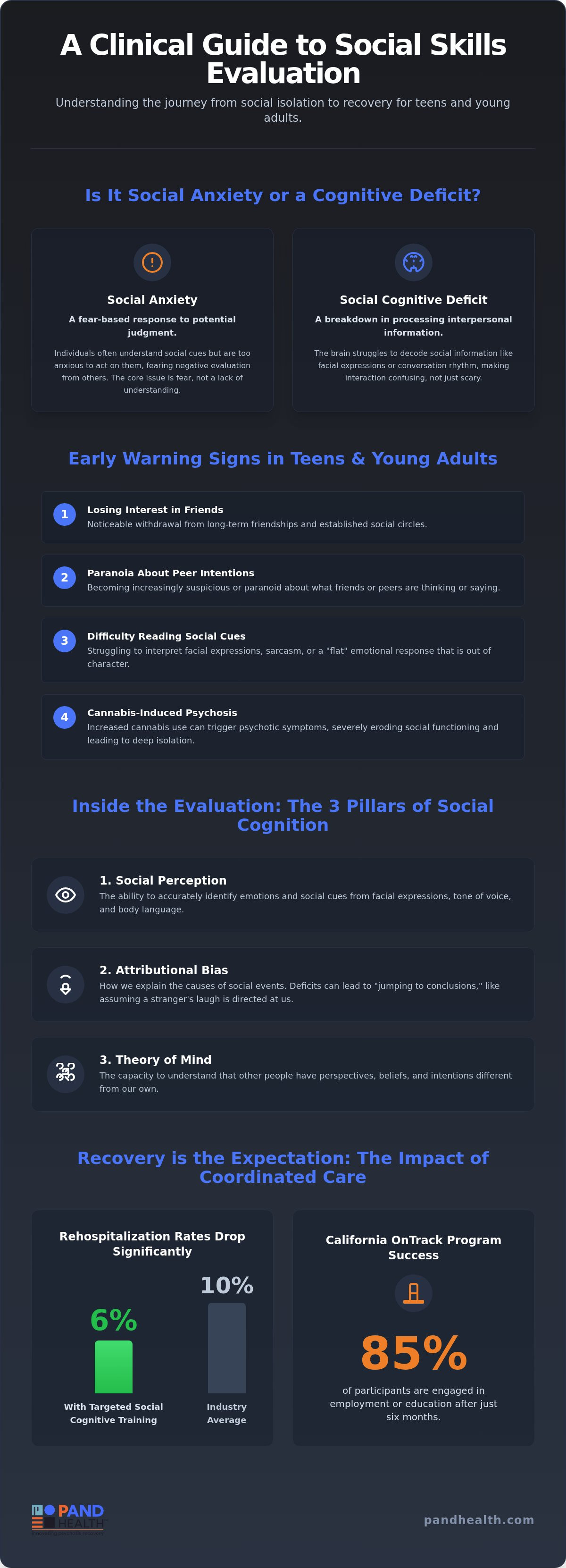
- Explore the transition from diagnosis to recovery programs like California OnTrack, which boast an 85% rate of employment or education participation after six months.
Why a Clinical Social Skills Evaluation is Essential for Recovery
Recovery begins with understanding the "why" behind social struggles. A social skills evaluation is more than a casual observation; it's a rigorous diagnostic assessment of social cognition and interaction patterns. For many, social withdrawal is the first visible sign of a developing clinical condition. By identifying these deficits early, we can move beyond the surface level of behavior and address the underlying cognitive mechanics that make social life possible.
It's vital to distinguish between social anxiety and social cognitive deficits. Social anxiety is a fear-based response to the possibility of judgment. In contrast, cognitive deficits involve a breakdown in how the brain processes interpersonal information. The Science of Social Cognition explains how we perceive, interpret, and respond to the actions of others. When these processing centers fail, an individual doesn't just feel "nervous" in groups; they may literally lose the ability to decode a smile or follow a conversation's rhythm. A specialized social skills evaluation los angeles provides the clarity needed to tell these two experiences apart.
Identifying the Warning Signs in Teens and Young Adults
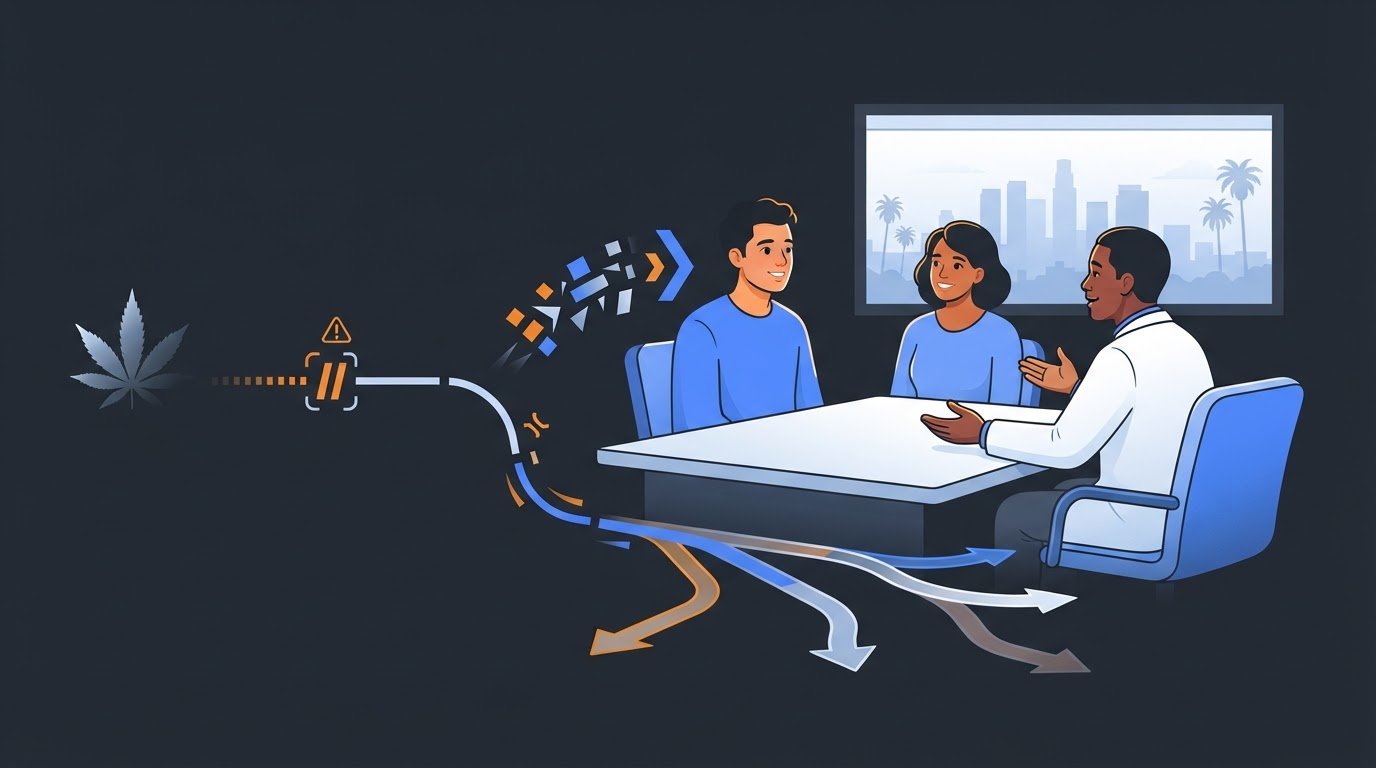
In our work with individuals aged 13 to 40, we've identified a "high-risk" clinical profile where social withdrawal often precedes a First Episode Psychosis (FEP). You might notice your loved one losing interest in long-term friends or becoming increasingly paranoid about peer intentions. They may struggle to read facial expressions or show a "flat" emotional response that wasn't there before. Additionally, we've seen a rise in cannabis-induced psychosis, which can severely erode social functioning and lead to deep isolation if left unaddressed. Recognizing these signs early is the first step toward a coordinated intervention.
The Link Between Social Competence and Hospitalization
Data shows that social competence is one of the strongest predictors of long-term stability. At Pand Health, we operate with the firm belief that recovery is the expectation, not an exception. Our augmented Coordinated Specialty Care (CSC) model focuses on improving social cognition to dramatically reduce the risk of clinical relapse. In fact, individuals who engage in targeted social cognitive training see their rehospitalization rates drop to just 6%, compared to an industry average of 10%. By prioritizing a social skills evaluation los angeles, families can secure a lifeline that prevents long-term disability and restores a sense of normalcy to the individual's life.
The Science of Social Cognition: How the Evaluation Works
A clinical social skills evaluation los angeles goes far beyond observing behavior; it deconstructs the three pillars of social interaction: social perception, attributional bias, and theory of mind. Social perception involves how we identify emotions and cues in others. Attributional bias describes how we explain the causes of social events, such as assuming a stranger's laugh is directed at us. Theory of mind is the capacity to understand that other people have perspectives, beliefs, and intentions different from our own. When these processes are impaired, the world can feel unpredictable and threatening.
We utilize Social Cognition and Interaction Training (SCIT) as a foundational assessment pillar to identify exactly where the processing chain is broken. To dig deeper, our clinicians employ Metacognitive Training (MCT) to pinpoint "jumping to conclusions" biases. These cognitive shortcuts often fuel paranoid thoughts or lead to premature social withdrawal. We also incorporate the Brief Psychiatric Rating Scale (BPRS) to provide a standardized measurement of symptom severity. Utilizing innovative assessment approaches ensures that every evaluation is rooted in the latest neuropsychological research, providing a clear path toward stability.
Assessment Tools for Autism and Thought Disorders
Distinguishing between autism and thought disorders is a complex clinical task that requires specialized expertise. Our thought disorder assessment LA process provides the necessary differential diagnosis to ensure the treatment matches the underlying condition. We use computer-assisted brain training to measure social processing speed and accuracy. This data helps us understand if a young person is struggling with a lifelong developmental delay or the early onset of a psychotic-spectrum disorder. Clarity in diagnosis is the first step toward a successful recovery.
Measuring Functional Outcomes
An evaluation is only as useful as the real-world change it facilitates. We look at functional outcomes that impact daily life, such as resume building and workplace advocacy. Through the Supported Education and Employment (SEE) curriculum, we assess how cognitive deficits specifically interfere with school or professional performance. Having certified MCT instructors is essential during this phase; they identify the specific mental hurdles preventing an individual from succeeding in high-pressure environments. If you're ready to see how these clinical insights can change your family's trajectory, you can reach out for a consultation to discuss your specific needs.
Choosing the Right Evaluation Clinic in Los Angeles
Selecting the right clinical setting for a social skills evaluation los angeles is a pivotal step in securing a stable future. While many local directories list general therapists or social clubs, families dealing with complex thought disorders require a higher standard of care. You should prioritize clinics that utilize the Coordinated Specialty Care (CSC) model. Unlike stand-alone therapy, CSC provides a multidisciplinary team that includes psychiatrists, job coaches, and peer specialists working in unison. This integrated approach ensures that every aspect of an individual's social and professional life is addressed simultaneously.
Institutions like the UCLA PEERS® Clinic have set a high bar for evidence-based social interventions in our region. When evaluating a provider, look for those who offer "Augmented Coordinated Specialty Care," which combines traditional CSC with advanced cognitive remediation. Always verify the clinic's data regarding functional outcomes. A high-standard program should be transparent about its success, such as achieving an 85% employment or education participation rate after six months of treatment. These metrics are the clearest indicators of a program's ability to deliver on the promise of recovery.
Questions to Ask a Potential Evaluator
When you interview a clinical director, be direct about their methodology. Ask if they use the NIMH NAVIGATE framework, which is the gold standard for treating first-episode psychosis. Inquire whether their therapists are certified in Metacognitive Training (MCT) to address specific cognitive biases. Finally, ask for their rehospitalization rate. For example, Pand Health maintains a 6% rehospitalization rate, significantly lower than the 10% industry average. Knowing these numbers helps you distinguish between a general mental health provider and a specialized lifeline.
The Pand Health Difference in Southern California
Pand Health stands as the only outpatient CSC in Southern California to offer APA-recommended cognitive remediation alongside MCT and SCIT. We don't believe in time-limited care; our "indefinite program enrollment" ensures that support continues as long as it's needed for true community reintegration. After your initial assessment, we provide specialized social skills training that bridges the gap between clinical diagnosis and real-world success. If you're ready to find a steady hand in this journey, contact our team today to discuss how our specialized model can serve your family.
How to Prepare for Your Social Skills Evaluation
Preparing for a clinical assessment is a vital step in transforming family anxiety into a structured plan for recovery. A thorough social skills evaluation los angeles relies on a clear historical context to differentiate between temporary symptoms and long-term cognitive patterns. By organizing your records beforehand, you provide the clinical team with the data necessary to build a precise diagnostic profile and a customized roadmap for community reintegration.
Step 1: Documentation and History
Gathering the right information is the most impactful way to support the diagnostic process. We recommend compiling the following items to bring to your appointment:
- IEP records or school performance reports that highlight social or behavioral changes.
- Previous psychiatric evaluations and a comprehensive list of current and past medications.
- A brief timeline of social withdrawal or specific instances of paranoia.
- Documentation of cannabis use history, as this often impacts social processing speed.
Try to write a single sentence defining the patient's primary social goal. Whether it's "attending a college lecture without fear" or "maintaining a job for six months," this focus helps the evaluator align the assessment with your family's specific hopes for the future.
Step 2: Managing the Day of the Assessment
Our office on West Olympic Blvd is designed to be a calm, professional space that prioritizes the comfort of the individual. We recommend arriving early to complete the family psychoeducation intake forms. You should expect a 2 to 4 hour comprehensive session that includes psychiatric oversight and specialized cognitive testing. For families currently in an active crisis, we offer same or next day psychosis evaluation services to provide immediate direction. When talking to your loved one about the day, frame the evaluation as a "baseline for progress" rather than a test they can fail.
Step 3: Post-Evaluation Review
The journey doesn't end when the testing is over. We schedule a dedicated family therapy session to review the results and translate clinical data into actionable life changes. This is the ideal time to identify immediate vocational or educational goals that can be supported through the California OnTrack Work-Study program. You'll also learn how to integrate family psychoeducation Los Angeles services into your daily routine to support long-term stability. If you're ready to take this first step toward a clearer future, contact our Los Angeles team to schedule your clinical evaluation.
From Evaluation to Integration: The Path Forward
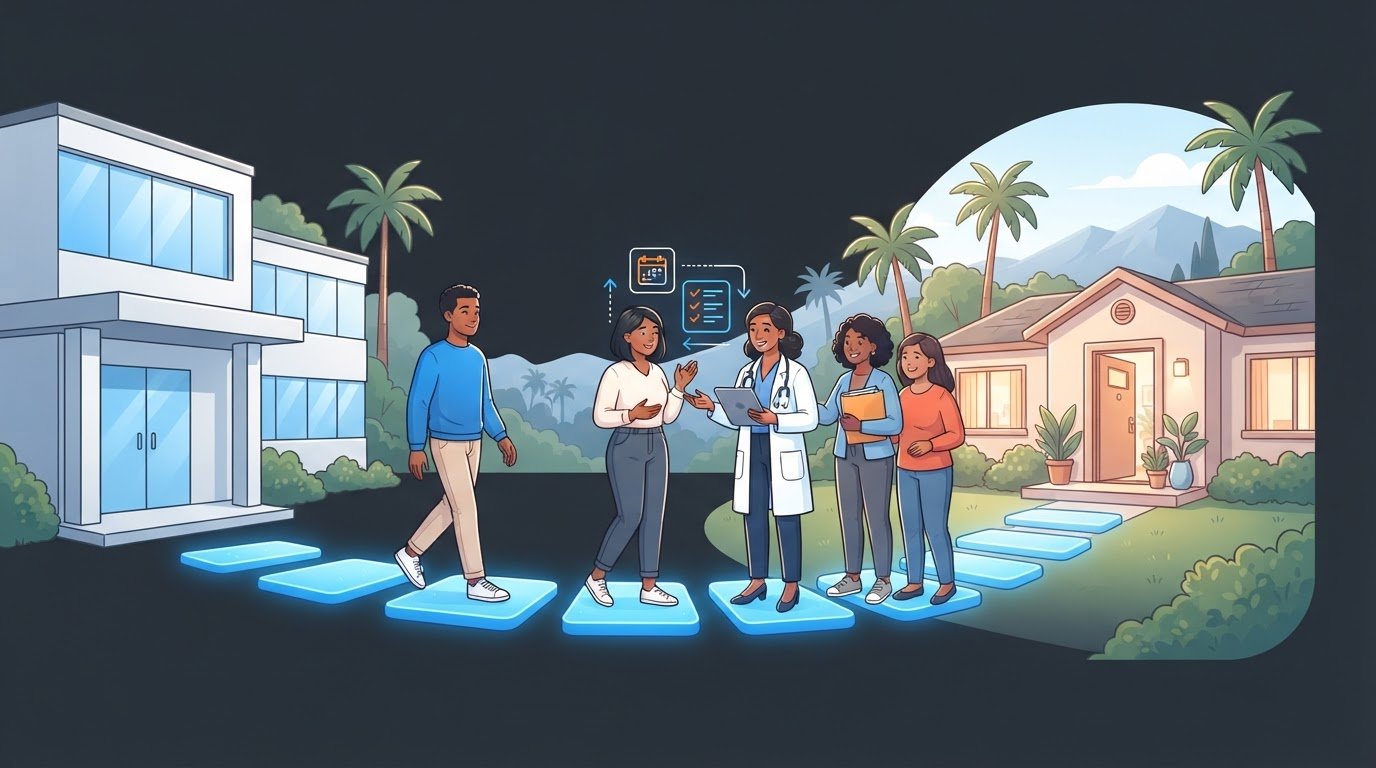
The completion of a social skills evaluation los angeles marks the end of uncertainty and the beginning of a structured, high-intensity recovery path. At Pand Health, we don't leave families with a report and no direction. Instead, we transition individuals directly into the California OnTrack program. This model is designed to move beyond symptom management toward true community reintegration. By integrating social skills training with APA-recommended cognitive remediation and high-intensity fitness, we target the brain's neuroplasticity. This holistic approach ensures that the "social brain" isn't just learning rules; it's physically becoming more efficient at processing the world.
This integration is why our outcomes differ so sharply from traditional outpatient care. When social cognition is treated as a core clinical deficit rather than a personality trait, the risk of relapse plummets. Strengthening these interpersonal foundations is what allows our participants to maintain a 6% rehospitalization rate, significantly outperforming the 10% industry average. We view sustained recovery as a measurable outcome, not a vague hope. It's about moving from a state of crisis to a state of stable, long-term wellness.
The OnTrack Work-Study Program
Success in a clinical setting must translate to success in the real world. Our OnTrack Work-Study program directly links improved social cognition to job placement and school advocacy. We understand that the workplace is the ultimate test of social perception and attributional bias. By using the LA work-study guide, families can see how we navigate the complexities of school reintegration and professional longevity. The result is clear: after six months in our program, 85% of participants are actively engaged in employment or education. This milestone is a testament to the power of specialized social rehabilitation.
Taking the First Step Toward Recovery
Recovery is the expectation, not the exception. If you've noticed the early warning signs of social withdrawal or cognitive disconnect in a loved one, the time for intervention is now. Early action is the most effective way to prevent long-term disability and restore a sense of normalcy. Our team provides the specialized expertise and steady hand needed to navigate this storm. You don't have to face the fear of permanent isolation alone. We invite you to contact the Los Angeles clinical team today to schedule your evaluation and begin the journey toward a meaningful, integrated life.
Securing a Future of Social Connection and Stability
Choosing to pursue a social skills evaluation los angeles is the first step toward reclaiming a life defined by connection rather than isolation. You've learned that social cognitive deficits are treatable barriers, not permanent traits. By transitioning from a rigorous clinical assessment into an augmented Coordinated Specialty Care model, individuals can bridge the gap between diagnosis and meaningful community reintegration. Our approach ensures that every participant has access to certified MCT instructors and a team dedicated to long-term wellness.
The path forward is grounded in proven results. With a 6% rehospitalization rate and the availability of same-day psychosis evaluations, we provide a steady hand when your family needs it most. Recovery isn't just a possibility; it's our standard expectation for every teen and adult we serve. Don't let the fear of tomorrow prevent you from taking action today.
Schedule Your Clinical Social Skills Evaluation in Los Angeles Today
We're here to offer the specialized expertise and profound empathy required to navigate this journey. There is a way back to normalcy, and it starts with a single, guided step toward professional care.
Frequently Asked Questions
What is included in a clinical social skills evaluation?
A clinical social skills evaluation los angeles includes a multi-dimensional assessment of social cognition, focusing on social perception, attributional bias, and theory of mind. At our West Olympic Blvd site, this process involves psychiatric oversight and computer-assisted brain training to measure processing speed. We examine how cognitive deficits interfere with daily life, using standardized tools like the Brief Psychiatric Rating Scale (BPRS) to establish a baseline for recovery.
How long does a social skills assessment take in Los Angeles?
A comprehensive social skills assessment typically takes between two and four hours to complete. This duration allows our multidisciplinary team to conduct thorough psychiatric oversight and specialized cognitive testing without rushing the individual. We prioritize a methodical pace to ensure accuracy while maintaining a supportive environment. For families in urgent situations, we offer same or next day psychosis evaluation services to provide immediate clinical direction and relief.
Can a social skills evaluation distinguish between autism and psychosis?
Yes, our clinicians specialize in differential diagnosis to distinguish between autism-spectrum disorders and early-onset psychosis. While both can involve social withdrawal, the underlying cognitive mechanics differ significantly. We use Social Cognition and Interaction Training (SCIT) and Metacognitive Training (MCT) frameworks to identify specific processing biases. This precise evaluation ensures that the treatment plan directly addresses the root cause of the social deficit rather than applying a generic intervention.
Will my insurance cover the cost of a specialized social evaluation?
While many specialized clinics in Los Angeles operate on a private-pay basis, California’s Mental Health Parity Act requires insurers to provide benefits for medically necessary mental health treatments. We provide a detailed Superbill for patients with PPO insurance plans to seek reimbursement. Our team can help you navigate these regulations to ensure your loved one receives the high-standard intervention required for long-term stability and functional success.
What is the age range for Pand Health’s social skills programs?
Pand Health specializes in serving teens and young adults between the ages of 13 and 40. This specific demographic is most frequently affected by First Episode Psychosis (FEP) and schizophrenia-spectrum disorders. Our California OnTrack programs are tailored to the unique developmental needs of this group, focusing on community reintegration and education advocacy. We ensure that our social skills training is age-appropriate and functionally relevant for workplace or school environments.
How soon can we get an appointment for a social skills evaluation?
We understand that mental health challenges often require urgent attention. For families experiencing an active crisis or early warning signs of a thought disorder, we offer same or next day psychosis evaluation services at our Los Angeles office. Providing a lifeline through rapid expertise is central to our mission. For non-emergency assessments, we strive to schedule your social skills evaluation los angeles within a timeframe that prevents further social isolation.
What happens if the evaluation shows my teen is at high risk for psychosis?
If an evaluation identifies a high risk for psychosis, we immediately transition the individual into our California OnTrack program. This augmented Coordinated Specialty Care (CSC) model is designed to prevent long-term disability. Participants engage in intensive treatment, including cognitive remediation and work-study support. Our data shows that after six months of this integrated care, 85% of our participants successfully participate in employment or education, significantly improving their functional outcomes.
Is family involvement required during the social skills evaluation?
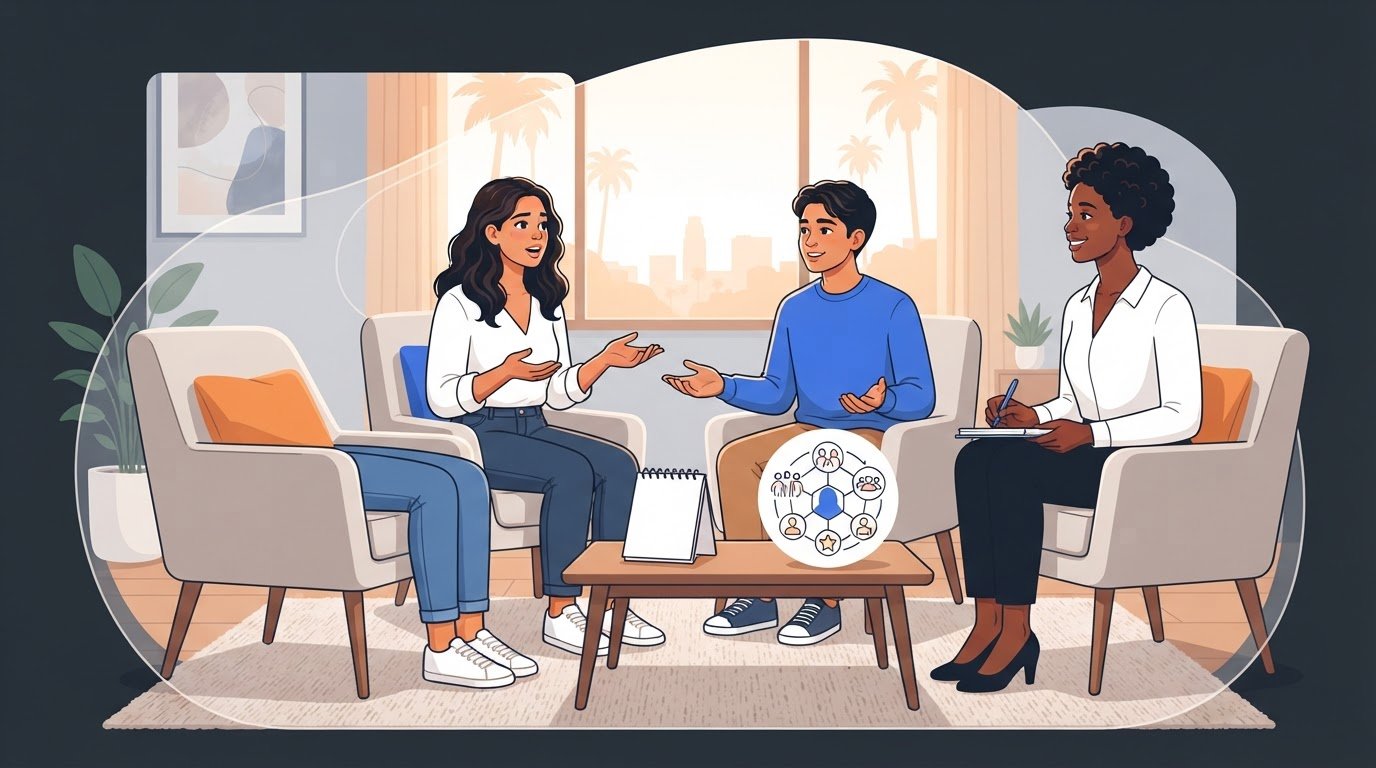
Family involvement is a cornerstone of our recovery-oriented approach. During the initial evaluation, we conduct a family psychoeducation intake to gather a complete history and understand the family's primary goals. Post-evaluation, we provide behavioral family therapy and multi-family group therapy to ensure a supportive home environment. Empowering families with clinical tools reduces the rehospitalization rate to just 6%, compared to the industry average of 10%, fostering sustained long-term recovery.
Disclaimer
This article is for information and educational purposes only, and can NEVER replace a proper medical evaluation. If you or a loved one may be suffering from psychosis or the prodomal symptoms of psychosis, get evaluated by a professional as soon as possible. Early diagnosis and treatment can be life-saving.