
Family Therapy for Psychosis in Los Angeles: A Clinical Guide to Recovery
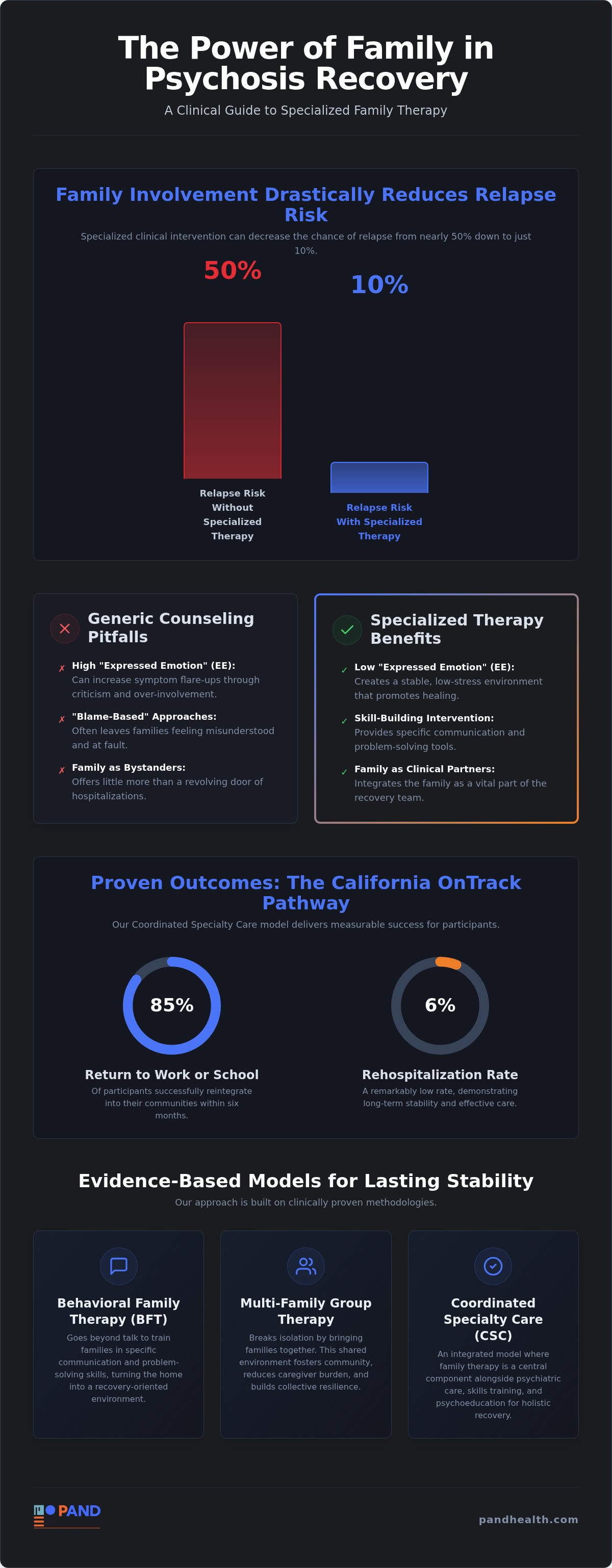
Did you know that involving the family in treatment can reduce a loved one's risk of relapse from nearly 50% down to just 10%? Despite this, many households searching for family therapy for psychosis Los Angeles find themselves feeling excluded by traditional clinical models or exhausted by a system that offers little more than a revolving door of hospitalizations. You deserve a specialized partner who understands that recovery isn't just a hope; it's the expectation.
We understand the fear that your loved one's future might be permanently sidelined and the frustration of being treated like a bystander in their care. It's time to shift from crisis management to a sustainable path forward. This clinical guide explores how specialized family therapy, integrated within a Coordinated Specialty Care model, provides the communication tools and psychological stability needed to restore normalcy.
You'll discover how Pand Health’s California OnTrack programs achieve a 6% rehospitalization rate and help 85% of participants return to work or school within six months. We'll detail the specific methodologies that empower families to become the most effective advocates for a loved one’s long-term wellness and community reintegration.
Key Takeaways
- Discover how shifting from general support to specialized clinical intervention lowers "expressed emotion" and builds a more resilient home environment.
- Learn about the structured benefits of Behavioral Family Therapy (BFT) and how Multi-Family Group Therapy reduces the isolation often felt by caregivers.
- Understand why choosing specialized family therapy for psychosis Los Angeles is essential to avoid the common pitfalls and "blame-based" approaches of traditional counseling.
- Explore the California OnTrack pathway, which integrates the SEE curriculum and specialized psychiatric evaluations to create a sustainable recovery plan.
What is Family Therapy for Psychosis and Why is it Essential?
Family therapy for psychosis Los Angeles isn't just a support group; it's a precise clinical intervention designed to reduce "expressed emotion" (EE). High levels of EE, characterized by criticism or emotional over-involvement, are known to increase the risk of symptom flare-ups. By shifting from basic family support to clinical family therapy, households learn to create a stable, low-stress environment that actively promotes healing. This specialized approach addresses the biological and psychological nuances of thought disorders, ensuring everyone in the home feels heard and supported during the recovery journey.
Research highlights that the first five years after symptoms emerge represent a "critical period" for intervention. During this time, the family's response can either stabilize the individual or contribute to a cycle of hospitalizations. Early involvement prevents the solidification of negative patterns and builds a foundation for long-term independence.
In 2026, evidence-based family therapy acts as the most reliable protective factor against relapse, providing a clinical foundation that traditional talk therapy simply cannot match.
The Role of Family in Coordinated Specialty Care (CSC)
Modern recovery utilizes the Coordinated Specialty Care (CSC) model, where family therapy is a central component alongside psychiatric care and social skills training. Our team utilizes the NIMH NAVIGATE framework, a gold-standard blueprint for psychosis recovery. By incorporating Psychoeducation in Family Therapy, we empower relatives with technical knowledge about the illness and treatment pathways. Pand Health’s augmented model ensures the family unit is a vital clinical partner, not just a secondary observer. This integration provides a seamless transition between individual clinical progress and the daily reality of the home environment.
Addressing First Episode Psychosis (FEP) in Los Angeles
Finding specialized family therapy for psychosis Los Angeles can be the turning point for a family in crisis. Families in the city deal with unique stressors, such as navigating competitive school systems or managing high social pressures. For individuals aged 13 to 40 experiencing First Episode Psychosis (FEP), these pressures can feel overwhelming. Our California OnTrack programs at our Olympic Blvd location focus on early intervention to prevent long-term disability. We maintain a 6% rehospitalization rate, and 85% of our participants return to work or school within six months. If your family is navigating these challenges, contact us today to discuss how our specialized team can help.
Evidence-Based Models: BFT and Multi-Family Group Therapy
When selecting family therapy for psychosis Los Angeles, it's vital to distinguish between general psychoeducation and clinical therapeutic intervention. While psychoeducation provides necessary information about the diagnosis, evidence-based models like Behavioral Family Therapy (BFT) go further by training the household in specific communication and problem-solving skills. These models align with the NICE guidelines on family intervention, which recommend a structured approach lasting at least several months to ensure lasting stability. BFT transforms the home into a recovery-oriented environment where stressors are managed systematically rather than reactively. It's not just talking; it's skill-building.
Multi-Family Group Therapy offers another layer of clinical power. By bringing multiple families together, we break the intense isolation that often accompanies a psychosis diagnosis. This shared learning environment allows families to observe how others navigate similar challenges, fostering a sense of community and collective resilience that individual sessions alone cannot provide. It reduces the caregiver burden and provides a safe space to practice new interaction strategies before applying them in the high-stakes environment of the home.
Certified Metacognitive Training (MCT) for Families
To help manage the daily demands that contribute to caregiver burden, Elite Caregivers United LLC offers professional personal care services, providing families with the extra support needed to maintain a stable and restorative home environment.
Pand Health features certified MCT instructors who help families recognize the cognitive biases that often fuel domestic conflict. Psychosis can lead to "jumping to conclusions" or an over-reliance on certain beliefs, and these patterns can inadvertently be mirrored by stressed caregivers. Our specialized family therapy for psychosis Los Angeles incorporates MCT to help everyone in the household pause, reflect, and correct these biases in real-time. This leads to clearer communication and reduces the emotional volatility that can trigger a relapse. Applying these techniques daily ensures that the home remains a sanctuary of logic and support.
Social Cognition and Interaction Training (SCIT)
We also focus on the "social brain" through SCIT. This training helps families understand why a loved one might struggle to read social cues or misinterpret intentions during a conversation. Bridging this gap is essential for successful community reintegration and long-term wellness. If you're interested in how these techniques work alongside individual care, you can read more about Social Skills Training in Los Angeles. Understanding the mechanics of social interaction helps the family support their loved one’s return to work or school with confidence. To learn how these models can be tailored to your family's needs, reach out to our clinical team today.
Generic Counseling vs. Specialized Psychosis Family Therapy
Families often start their journey with general talk therapy, but it frequently fails because it isn't designed for the physiological and cognitive complexities of thought disorders. Specialized family therapy for psychosis Los Angeles moves past simple conversation. It targets the neurological underpinnings of symptoms and the specific communication patterns that help or hinder recovery. Traditional models can sometimes lean into "blame-based" theories, leaving parents feeling responsible for the illness. We reject this. Our approach treats the family as a vital clinical ally, focusing on practical skills rather than past grievances.
Finding specialized family therapy for psychosis Los Angeles is particularly important for complex presentations like cannabis-induced psychosis and cases involving co-occurring autism. These situations require a nuanced understanding of how substance use or neurodivergence interacts with psychotic symptoms. A general counselor often lacks the niche expertise to navigate these intersections safely or effectively, which can lead to misdiagnosis or stalled progress. For those seeking specialized care for other physiological challenges, resources like sunridgemedical.com offer advanced alternative treatments for cancer and complex chronic diseases.
A "wait and see" approach is dangerous when dealing with a first episode of psychosis. It's a medical emergency that requires high-intensity, data-driven intervention. Many families come to us saying, "We’ve tried therapy before and it didn’t work." Usually, they tried generic support that didn't include the specialized tools found in a Coordinated Specialty Care (CSC) model. In Southern California's fast-paced environment, delaying specialized care can lead to unnecessary hospitalizations and lost educational opportunities for young adults.
Pand Health’s Data-Driven Advantage
Our results speak to the power of specialization. While the industry average for rehospitalization sits at 10%, Pand Health maintains a 6% rate. This difference is largely due to our augmented CSC model, which includes daily cognitive remediation. By improving the individual's cognitive processing, we reduce the friction and misunderstanding that often lead to family tension. When the brain can process information more efficiently, the entire household experiences a sense of relief.
The impact is clear. In our 2022-2024 cohort, 85% of participants were actively engaged in employment or education after just six months of treatment. This level of success is the gold standard for LA families seeking a return to normalcy. If you've felt excluded by traditional models, reach out to us to see how a data-driven approach changes the recovery trajectory for your loved one.
What to Expect: Your Journey Through California OnTrack
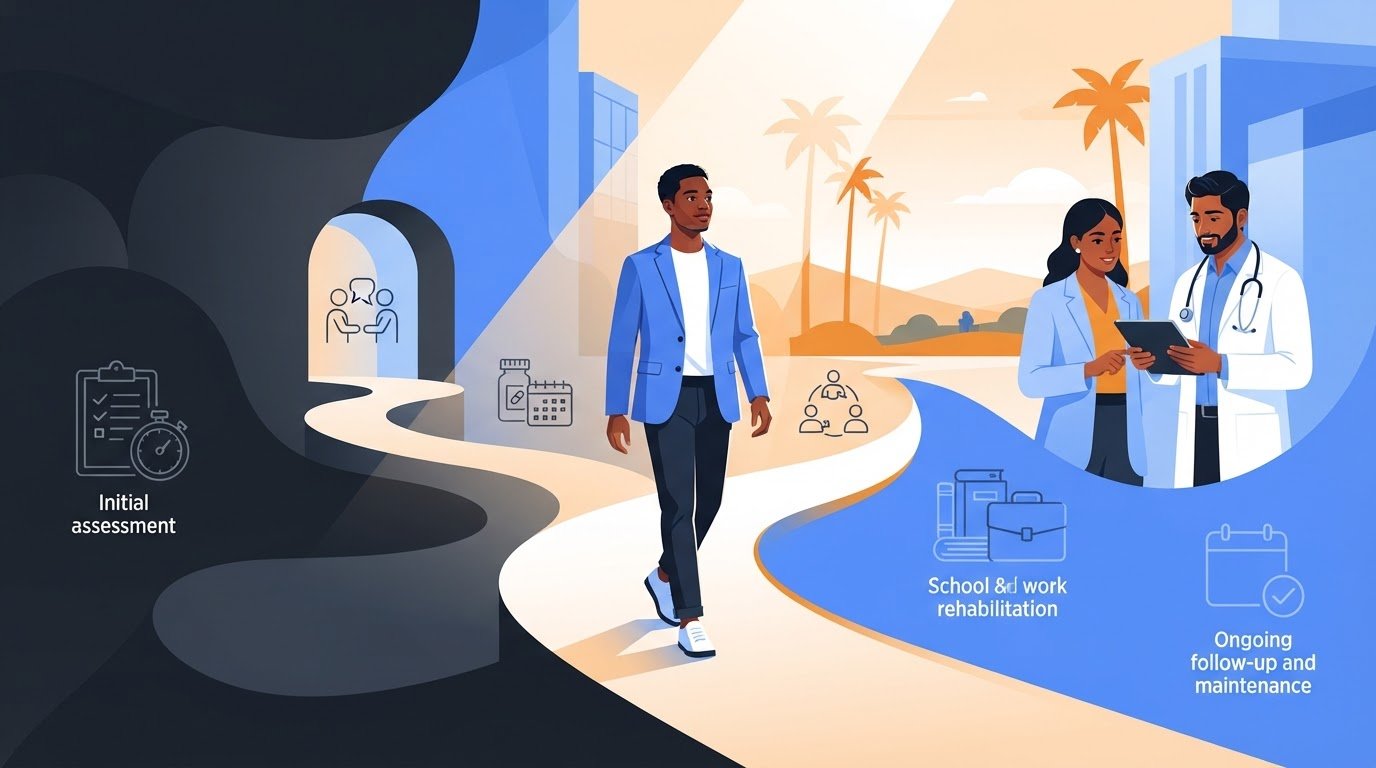
Entering a specialized clinical program often feels overwhelming, but clarity is the first step toward relief. At our Olympic Blvd site, your journey begins with a comprehensive psychiatric and family evaluation. This process isn't just about documenting symptoms; it's about understanding how your household functions as a unit and identifying the specific strengths we can build upon. Following this, we develop an integrated care plan that utilizes the SEE curriculum to align clinical treatment with your loved one’s personal and professional ambitions.
Weekly sessions of Behavioral Family Therapy provide the practical structure needed to implement these plans. As progress stabilizes, families often transition into Multi-Family Groups, where shared experiences build a long-term community of support. This methodical pathway is why family therapy for psychosis Los Angeles at Pand Health is so effective at restoring a sense of future and purpose for individuals aged 13 to 40.
Integrating Supported Education and Employment (SEE)
Vocational success is a core pillar of our California OnTrack programs. Family therapy sessions often focus on advocacy, helping you navigate the complexities of school or workplace accommodations. By aligning the household's expectations with the individual's capabilities, we see 85% of our participants return to work or school within six months. This success isn't accidental; it's the result of a coordinated effort to bridge the gap between clinical recovery and real-world participation. To understand the specifics of this process, see our LA Work-Study Guide for Mental Health Recovery.
Managing Crisis and Relapse Prevention
Stability is maintained through a proactive Relapse Prevention Plan that every family member understands and can execute. We teach you to recognize the "Psychosis Prodrome", those subtle, early warning signs that appear before a crisis occurs. This vigilance, combined with collaborative medication management within the family context, is what allows us to maintain a 6% rehospitalization rate compared to the 10% industry average. We prioritize your family's safety and peace of mind by giving you the tools to intervene long before an emergency arises. If you're ready to move toward a more stable future, schedule your family evaluation with our specialized team today.
Choosing the Right Psychosis Specialist in Los Angeles
Choosing the right provider for family therapy for psychosis Los Angeles is a decision that defines the long-term trajectory of your loved one’s life. Specialization matters. Proximity to expert care, specifically our Olympic Blvd site in West Los Angeles, is vital for families engaged in intensive outpatient programs. Frequent, consistent attendance is easier when the clinic is accessible, which reduces the logistical stress that often leads to treatment fatigue. When a crisis occurs, knowing your clinical team is nearby provides a profound sense of security.
When vetting specialists, you must look beyond general counseling credentials. Verify that the clinical team includes certified instructors in evidence-based protocols like Metacognitive Training (MCT), Social Cognition and Interaction Training (SCIT), and Cognitive Behavioral Therapy for Psychosis (CBT-P). These specific modalities address the unique cognitive and social challenges of thought disorders. Additionally, prioritize programs that offer indefinite enrollment. Recovery is not a linear process with a fixed expiration date; having access to continuous support ensures that the family remains resilient through every transition. At Pand Health, we operate with the firm belief that recovery is the expectation, not the exception. For families seeking a broader range of mental health support alongside specialized treatment, Hope Therapy Center provides comprehensive counseling services across various California locations.
Pand Health stands as the only outpatient Coordinated Specialty Care (CSC) program in the region to deliver APA-recommended cognitive remediation alongside MCT and SCIT. Our team of certified Metacognitive Training therapists provides a level of niche expertise that is rare in the local landscape. This clinical rigor translates directly into outcomes that set the standard for 2026. While the industry average for rehospitalization is 10%, our augmented CSC model achieves a 6% rate. For families who want to complement clinical care with specialized, private case management, you can visit The Recovery Coach NY to learn about their customized support options. By focusing on the biological and social mechanics of the brain, we create a path to stability that is both measurable and sustainable.
The first step toward restoring your family’s future is a comprehensive evaluation for thought disorders. This diagnostic process goes deeper than standard assessments, looking at cognitive function, social skills, and the family’s interaction patterns. Finding the right family therapy for psychosis Los Angeles involves more than just a search; it requires a commitment to a clinical model that works. We understand that navigating insurance and out-of-network benefits can be daunting, and our team is here to assist you in understanding your options for specialized care.
For more information on how we empower households through clinical knowledge, read our Family Psychoeducation in LA: Psychosis Recovery Guide. If you are ready to move from exhaustion to a clear plan of action, contact us today to begin the evaluation process and secure the specialized support your family deserves.
Restoring Your Household’s Future
Specialized family therapy for psychosis Los Angeles transforms the home from a place of crisis into a foundation for long-term stability. By moving beyond generic support and embracing clinical models like Behavioral Family Therapy and Metacognitive Training, your household gains the precise tools needed to navigate thought disorders with confidence. Our staff of certified MCT instructors is dedicated to ensuring every family member feels empowered, informed, and included in the clinical journey.
The data reflects our commitment to this high standard of care. We maintain a 6% rehospitalization rate, which is a significant improvement over the 10% industry average. Additionally, 85% of our participants return to work or school within six months of starting treatment. You don't have to navigate this path alone or settle for a model that treats you like a bystander in your loved one’s recovery.
Schedule a Comprehensive Family Evaluation today to begin building a more stable tomorrow. Recovery is the expectation, and we're here to help your loved one reclaim their future.
Frequently Asked Questions
How is family therapy for psychosis different from regular family counseling?
Family therapy for psychosis Los Angeles is a structured clinical intervention that targets the biological and social drivers of thought disorders, whereas regular counseling often focuses on general relationship dynamics. We prioritize reducing "expressed emotion" and high-stress communication patterns that can trigger symptoms. While we focus on the specific needs of psychosis recovery, families may also benefit from identifying general relationship stressors; Katy Teen & Family Counseling provides insights into spotting broader signs of trouble in family and marriage dynamics. Our approach uses evidence-based protocols like Behavioral Family Therapy (BFT) to train the household in specific problem-solving skills, transforming the home into a sanctuary that actively supports neurological recovery and long-term stability.
Our California OnTrack programs, which include specialized family therapy, are designed for individuals between the ages of 13 and 40. This range covers the "critical period" of early psychosis when intervention is most effective at preventing long-term disability. By focusing on teens and young adults, we address unique developmental milestones like finishing high school or starting a career, ensuring that treatment supports the individual’s transition into a healthy and independent adult life. While our focus is on these age groups, early detection of developmental delays in younger children is equally vital; you can learn more about Stars Assessment Program to access specialized screenings for infants and toddlers.
Many insurance plans provide coverage for the specialized services included in our Coordinated Specialty Care model. We recommend contacting our administrative team to discuss your specific plan and any out-of-network benefits that may apply to our intensive outpatient services. Our goal is to ensure that families in crisis can access the high-standard, data-driven care they need without unnecessary administrative delays. We provide a clear breakdown of how our clinical services align with standard behavioral health coverage.
How often do we need to attend family therapy sessions?
Families typically participate in weekly sessions during the initial phases of the California OnTrack program. This frequency allows for the rapid development of communication skills and the implementation of a robust relapse prevention plan. As the household stabilizes and the individual progresses toward their vocational or educational goals, the frequency may be adjusted. Consistency is vital in the early stages to ensure that the "social brain" is supported and that household stressors remain at a manageable level.
Can family therapy help if my child is also diagnosed with autism?
Yes, our clinical team is specifically trained to evaluate and treat individuals with co-occurring thought disorders and autism. We understand that neurodivergence influences how psychosis presents and how a family interacts. By tailoring family therapy for psychosis Los Angeles to account for sensory sensitivities and social communication differences, we create a more effective recovery environment. This dual focus ensures that both the psychotic symptoms and the underlying autistic traits are addressed with empathy and clinical precision.
What happens if my loved one refuses to participate in family therapy?
If a loved one is hesitant to participate, family therapy can still be an invaluable resource for the household. We provide psychoeducation and communication training to parents and siblings even if the individual is not yet ready to join sessions. By changing the home environment and reducing tension, families often find that their loved one becomes more open to engagement over time. We focus on empowering the family unit to remain a steady, supportive presence during the recovery process.
How does family therapy reduce the risk of rehospitalization?
Family therapy reduces rehospitalization by training the household to recognize the "psychosis prodrome," or early warning signs, before a crisis occurs. This proactive approach, combined with a 6% rehospitalization rate compared to the 10% industry average, ensures that interventions happen early. By fostering a low-stress environment and clear communication, we prevent the emotional volatility that often leads to relapse. Our data-driven model prioritizes long-term wellness and community reintegration over repetitive, short-term crisis management.
Is there a support group for parents of children with psychosis in LA?
We offer Multi-Family Group Therapy at our West Los Angeles location on Olympic Blvd. These groups serve as a clinical support network where families can share experiences and learn from one another in a professionally moderated setting. This model reduces the intense isolation that many caregivers feel and provides a safe space to practice new interaction strategies. It’s an essential part of our holistic approach, connecting you with a community that understands the nuances of psychosis recovery.
Disclaimer
This article is for information and educational purposes only, and can NEVER replace a proper medical evaluation. If you or a loved one may be suffering from psychosis or the prodomal symptoms of psychosis, get evaluated by a professional as soon as possible. Early diagnosis and treatment can be life-saving.