

Experiencing hallucinations: Is the ER necessary?
The local emergency room is often the first place families turn during a psychiatric emergency, yet for many, it becomes a revolving door rather than a bridge to lasting healing. It's exhausting to watch a loved one cycle through short-term stabilization only to face the same symptoms a few weeks later. You likely feel that traditional emergency interventions are merely a band-aid, leaving you worried about academic derailment or the loss of your loved one's personality. Finding effective psychosis crisis care means looking beyond the immediate moment of crisis toward a model that treats the brain and the social self simultaneously.
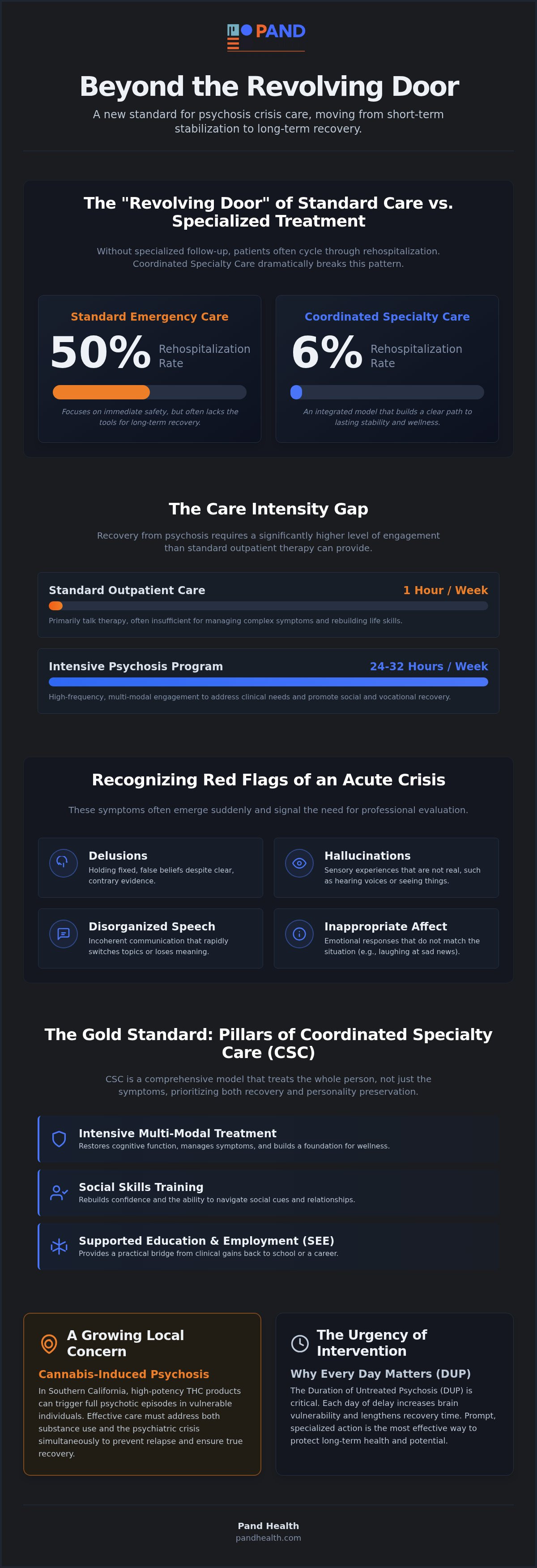
You'll discover how to move beyond temporary fixes to a comprehensive, recovery-oriented care model that has been shown to reduce rehospitalization rates to just 6% from a pre-enrollment average of 50%. We'll explore how this specialized approach provides a clear path to long-term stability, helping your loved one return to school or work without losing their unique sense of self. This transition from crisis management to a dedicated recovery program is the essential step in reclaiming a future that feels both stable and hopeful.
Key Takeaways
- Distinguish between the immediate need for safety and the specialized, long-term support required for lasting psychiatric recovery.
- Understand why standard emergency stabilization often leads to a cycle of rehospitalization and how to break the "revolving door" effect.
- Explore the pillars of Coordinated Specialty Care, the clinical gold standard that prioritizes both symptom reduction and personality preservation.
- Learn how integrated work-study programs bridge the gap between clinical gains and a successful return to school or professional life.
- Discover how specialized psychosis crisis care in Los Angeles utilizes intensive, multi-modal treatment to restore long-term wellness and independence.
Recognizing a Psychosis Crisis: When Immediate Care is Essential
A psychosis crisis isn't just a moment of confusion; it's a profound disruption where the mind loses its grip on shared reality. To understand what is psychosis, one must look at the trio of disrupted perceptions, disorganized thinking, and a loss of contact with the external world. While early warning signs, known as the prodromal phase, might look like social withdrawal or subtle changes in academic performance, First Episode Psychosis (FEP) is an acute medical event. In a high-stress urban environment like Los Angeles, these symptoms can escalate quickly, making specialized psychosis crisis care a necessity rather than an option.
Choosing to "wait and see" is a common reaction for frightened families, but research shows this delay can be damaging. Each day a person remains in an untreated psychotic state increases brain-tissue vulnerability and extends the eventual recovery time. Early intervention isn't just about stopping a crisis. It's about protecting the brain's long-term health and preventing the vocational derailment that often follows untreated episodes. Prompt action is the most effective way to ensure a return to normalcy.
The Red Flags of Acute Psychosis
Identifying an acute break requires looking for specific "red flags" that signal the need for professional evaluation. These symptoms often emerge suddenly and can be deeply distressing for both the individual and their family:
- Delusions: Fixed, false beliefs that remain unchanged even when presented with clear, contrary evidence.
- Hallucinations: Sensory experiences that aren't real, most commonly hearing voices, though visual or tactile sensations occur too.
- Disorganized Speech: Communication that becomes incoherent or switches topics so rapidly it loses meaning.
- Inappropriate Affect: Emotional responses that don't match the situation, such as laughing during a somber moment or expressing intense fear without a clear trigger.
Cannabis-Induced Psychosis: A Growing Local Concern
In Southern California, the prevalence of high-potency THC products has led to a rise in substance-triggered breaks. For vulnerable young adults, these products don't just cause temporary impairment; they can jumpstart a full psychotic episode. It's vital to distinguish between a temporary drug state and an underlying thought disorder. Effective recovery requires a specialized cannabis induced psychosis rehab that addresses both the substance use and the psychiatric crisis. Without this dual-focus, the risk of relapse remains high, and the path to stability stays out of reach. Comprehensive psychosis crisis care must account for these environmental factors to be truly effective.
The Limits of Emergency Rooms and Standard Crisis Stabilization
The emergency room is designed to manage immediate physical danger; it is not a rehabilitation center. While an ER can provide a necessary 72-hour hold (5150) to ensure safety, it often lacks the specialized resources to address the underlying cognitive and social challenges of a psychotic episode. This gap in care creates a "revolving door" phenomenon. Without specialized follow-up, approximately 50% of patients find themselves rehospitalized within a short period. This cycle is more than just frustrating. It's clinically detrimental.
Every visit to the ER that doesn't lead to intensive psychosis crisis care extends the Duration of Untreated Psychosis (DUP). A longer DUP is directly linked to poorer long-term outcomes and increased brain-tissue vulnerability. Transitioning from a 5150 hold directly into an intensive outpatient framework is the most effective way to break this cycle and protect the individual's future. It ensures the focus shifts from mere survival to actual clinical progress.
Why Standard Outpatient Care Often Fails in Psychosis
Standard mental health services often rely on once-a-week talk therapy, which is insufficient for schizophrenia-spectrum disorders. Recovery requires a high-intensity frequency, often between 24 and 32 hours of engagement per week. Medication can manage some symptoms, but it can't teach a young adult how to navigate social cues or return to a classroom. This is why specialized social skills training is a critical pillar of rehabilitation. A medication-only approach ignores the social and psychological layers of the person, often leading to a plateau in progress rather than a return to wellness.
Stabilization vs. Recovery: Setting a New Standard
True success shouldn't be measured by the absence of a crisis. It should be measured by a person's ability to thrive in their community. While standard crisis stabilization aims to get a patient "not in crisis," our focus is on comprehensive restoration. By moving beyond the "band-aid" approach of the ER, Pand Health has successfully reduced rehospitalization rates to just 6%. This shift in focus ensures that the individual doesn't just survive their diagnosis but learns to lead a meaningful, productive life. Within the California OnTrack program, recovery is the expectation, not the exception. If you are looking for a way to bridge the gap between emergency stabilization and long-term wellness, you can reach out to our clinical team for guidance.
Coordinated Specialty Care (CSC): The Gold Standard for Psychosis
When a family moves beyond the immediate stabilization of an ER, they need a framework that addresses the complexities of a developing thought disorder. Coordinated Specialty Care (CSC) represents the clinical gold standard for this transition. Unlike the fragmented care often found in general psychiatric settings, CSC utilizes the NAVIGATE framework; it's a team-based approach specifically designed for First Episode Psychosis. This model integrates psychotherapy, low-dose medication management, and vocational support into a single, cohesive plan. It's a proactive strategy that treats the individual as a whole person, not just a set of symptoms.
Central to this success is the inclusion of the family. Utilizing family psychoeducation Los Angeles programs allows relatives to move from a state of fear to one of informed advocacy. This builds a permanent support structure that sustains recovery long after the initial crisis. Timing is equally critical. Intervening within the first two to three years of symptom onset takes advantage of brain plasticity, allowing for significantly better functional recovery and cognitive preservation than delayed intervention can offer.
Metacognitive Training (MCT) and SCIT
Specialized psychosis crisis care must include tools that help patients regain control over their cognitive processes. Metacognitive Training (MCT) teaches individuals to "think about their thinking," which is essential for reducing paranoia and the conviction of delusions. Complementing this is Social Cognition and Interaction Training (SCIT). SCIT focuses on the social cues and intentions that often become blurred during a psychotic break. Because these interventions require high clinical fidelity, they must be led by certified instructors to ensure the best possible outcomes for the individual.
Augmented CSC: The Pand Health Difference
While standard CSC is effective, Pand Health provides an augmented model that goes beyond the basic NAVIGATE framework. We integrate 24 to 32 hours of intensive treatment each week, including high-intensity fitness and evidence-based cognitive remediation. Computer-assisted brain training is used to target and accelerate the restoration of executive functions like memory and attention. This is paired with the Clubhouse Model, which fosters a sense of belonging and community reintegration. By combining rigorous science with a human-centric community, we ensure that recovery is not just a clinical goal but a lived reality.
The Bridge to Normalcy: Supported Education and Employment (SEE)
A psychiatric crisis often halts a person's life trajectory. At the time of enrollment in specialized programs, a staggering 94% of patients are disengaged from school or work. This vocational derailment can be as devastating as the clinical symptoms themselves, leading to a loss of identity and purpose. Effective psychosis crisis care must address this gap by integrating clinical treatment with real-world goals. It's not enough to simply stabilize a crisis; we must ensure the individual has a path back to their community and their future.
The work-study program for mental health recovery LA families rely on creates a direct link between psychological stability and functional success. Within six months of enrollment, the results are measurable. Vocational engagement typically rises from an initial 6% at intake to 85% after six months of participation. This transformation is supported by dedicated advocacy in both the classroom and the workplace, helping institutions understand how to properly support the recovery process without compromising the individual's privacy or personality.
The SEE Curriculum Components
Recovery is built on practical milestones. The SEE curriculum utilizes motivational interviewing to help individuals identify their own professional or academic aspirations rather than imposing a generic plan. It includes tailored resume building and interview preparation that accounts for gaps in history caused by the illness. Additionally, social skills training focuses specifically on the nuances of professional environments, ensuring the individual feels confident and capable in their new roles. These tools empower patients to navigate social cues and workplace expectations with renewed clarity.
Restoring Executive Function
Returning to complex coursework or high-stakes employment requires more than just symptom management. Cognitive remediation is essential for students who need to regain their ability to process complex information and solve problems. We use compensatory cognitive training to provide practical tools for memory and focus in the workplace. There is also a powerful synergy between physical fitness and cognitive performance. High-intensity exercise has been shown to support the neuroplasticity needed for executive function, making it a core part of our psychosis crisis care strategy. By strengthening the brain and the body, we help our clients reclaim their place in the world.
If you're ready to move beyond crisis management toward a future of productivity and purpose, contact our Los Angeles team today to learn about our vocational support programs.
Choosing Psychosis Crisis Care in Los Angeles: Pand Health
Selecting the right environment for recovery is a pivotal decision for families across Southern California. Located on Olympic Blvd, our West Los Angeles facility offers a unique regional advantage, providing an accessible hub for intensive, specialized treatment within the local community. While the emergency room focuses on the immediate 72 hours of safety, our approach is built on long-term, data-driven results that go far beyond basic stabilization. We've documented a 19-point improvement on the Positive and Negative Syndrome Scale (PANSS), which serves as a clear indicator of our program's ability to reduce distressing symptoms and restore cognitive clarity. We don't just aim for a lack of crisis; we treat recovery as the standard expectation for every individual who walks through our doors.
California OnTrack for Teens and Adults
The journey through psychosis looks different for a high school student than it does for a working professional in their thirties. Our California OnTrack programs offer tailored tracks for individuals aged 13 to 40, ensuring that the treatment framework aligns with their specific developmental milestones and life goals. Age-appropriate peer groups play a vital role in this process, as social rehabilitation is most effective when shared with others facing similar academic or career transitions. To ensure the home environment is equally supportive, we integrate intensive family therapy to heal the family unit, giving parents and siblings the necessary tools to facilitate sustained wellness and prevent future relapses.
How to Get Started
The transition from a hospital discharge or a general psychiatric evaluation to full enrollment is designed to be methodical and reassuring. It begins with a comprehensive psychiatric and social evaluation that looks at the whole person, identifying specific strengths and areas for growth. Our intake team works closely with families to navigate the logistics of insurance coverage and the requirements for intensive outpatient care, ensuring that administrative hurdles don't stand in the way of vital psychosis crisis care. Pand Health serves as a dedicated lifeline for Los Angeles families, offering the niche expertise and steady hand needed to navigate the storm of a psychiatric crisis and reach the shore of long-term stability.
Reclaiming the Path to Stability and Wellness
Navigating a psychiatric emergency requires more than just temporary stabilization. While the emergency room provides immediate safety, long-term recovery depends on a transition to intensive, specialized psychosis crisis care. By choosing a model that integrates clinical therapy with vocational support, families can break the cycle of rehospitalization. Our documented outcomes include a 6% rehospitalization rate, which stands in contrast to the 10% industry benchmark, and an 85% participation rate in employment or education within six months of enrollment.
As the only Southern California program offering APA-recommended cognitive remediation alongside the NAVIGATE framework, we provide the precise tools necessary to restore executive function and personal identity. You don't have to navigate this journey alone. We act as a steady hand, guiding your loved one back to a life of purpose and independence. Contact Pand Health for a Specialized Psychosis Evaluation in Los Angeles and take the first step toward sustained healing. Recovery is the expectation, and a brighter future is within reach.
Frequently Asked Questions
Is a psychosis crisis always a medical emergency requiring the ER?
An emergency room visit is necessary only if there's an immediate risk of harm to self or others. If your loved one is stable but experiencing hallucinations or delusions, intensive outpatient psychosis crisis care is often a more effective choice. ERs focus on physical safety rather than the specialized cognitive and social rehabilitation needed for recovery. Seeking specialized care early can prevent the trauma of unnecessary hospitalization and lead to better long-term outcomes.
What is the difference between autism and early signs of psychosis?
Autism is a developmental condition present from early childhood, whereas psychosis involves the onset of new, disorganized thinking or false beliefs. While both can involve social withdrawal and sensory sensitivities, the core difference lies in the nature of the perceptions. A professional evaluation for thought disorders and autism is critical because misdiagnosis can lead to inappropriate treatment. Specialized assessment ensures the individual receives the correct therapeutic framework for their specific developmental or psychiatric needs.
How long does the California OnTrack program typically last?
Participation in the California OnTrack program is tailored to individual progress, typically spanning two years of intensive support. This duration allows for the stabilization of symptoms and the full integration of social and vocational skills. The program moves through phases of acute treatment to long-term maintenance, ensuring the individual is fully prepared to return to school or work. This sustained approach is why our rehospitalization rate is just 6%, compared to higher industry averages.
Can cannabis-induced psychosis become permanent schizophrenia?
High-potency THC can trigger a psychotic break that may evolve into a chronic condition like schizophrenia in vulnerable individuals. It's vital to treat these episodes immediately through specialized cannabis induced psychosis rehab. Distinguishing between a temporary drug-induced state and the start of a long-term thought disorder requires expert clinical evaluation. Early intervention during this critical window is the best way to protect brain health and prevent permanent functional decline or academic derailment.
Does Pand Health accept insurance for intensive psychosis treatment?
Yes, the California Mental Health Parity Act requires commercial health plans to cover medically necessary treatment for mental health disorders, including intensive outpatient care. We work with families to navigate their specific insurance benefits for our specialized psychosis crisis care programs. This ensures that the cost of care isn't a barrier to accessing high-standard, evidence-based interventions. Our team provides guidance on the logistics of insurance to ensure the focus remains on recovery.
What is Coordinated Specialty Care (CSC) and why is it recommended?
Coordinated Specialty Care is a team-based treatment model that the American Psychiatric Association considers the standard of care for early psychosis. It integrates psychotherapy, medication, and family support into a unified plan. CSC is recommended because it focuses on functional recovery rather than just symptom management. By addressing the psychological and social aspects of the illness simultaneously, it significantly improves the chances of a successful return to a productive life in the community.
How does cognitive remediation help with psychosis recovery?
Cognitive remediation uses computer-assisted brain training to target executive functions like memory, attention, and problem-solving. Psychosis often impacts these areas, making it difficult to perform academic or professional tasks. As the only Southern California program offering this APA-recommended intervention, we help patients rebuild the mental capacity needed for daily life. This training is essential for the 85% of our clients who return to work or school within six months of starting treatment.
What should I do if my loved one refuses treatment during a crisis?
If there's no immediate danger, focus on building an alliance through empathy rather than confronting their delusions. Avoid arguing about the reality of their hallucinations. Instead, suggest a psychiatric evaluation to address secondary symptoms like sleep issues or anxiety. Family psychoeducation can provide you with specific communication tools to help motivate your loved one toward accepting help. In cases of immediate danger, contact local mobile crisis teams or emergency services for immediate safety intervention.
Disclaimer
This article is for information and educational purposes only, and can NEVER replace a proper medical evaluation. If you or a loved one may be suffering from psychosis or the prodomal symptoms of psychosis, get evaluated by a professional as soon as possible. Early diagnosis and treatment can be life-saving.