
Antipsychotics: Clozapine a life saving drug
What if the medication you feared would take away your loved one's personality was actually the tool that could bring it back? It's natural to feel anxious when a doctor suggests antipsychotics, especially with common concerns about a "zombie effect" or significant weight gain. You want your child or partner to be present and engaged, not just sedated. We understand that this transition feels like a high-stakes crossroads, and the fear of losing the person you know to a prescription is a heavy burden to carry.
We believe that medication isn't a life sentence, but a biological stabilizer that creates a vital window for profound healing. In this article, you'll learn how modern treatments like Clozapine, which saw its restrictive REMS program end in February 2025, offer a specialized lifeline for those who haven't found relief elsewhere. We'll explore how these tools quiet the noise of hallucinations and delusions so individuals can return to school, work, and community life. This guide provides a clear path through the different drug generations, offering a roadmap toward medication optimization and the restoration of a functional, vibrant life.
Key Takeaways
- Discover how antipsychotics act as biological stabilizers by managing dopamine pathways to reduce symptoms without the "zombie effect" of the past.
- Compare the differences between typical and atypical medication generations to understand how modern psychiatry prioritizes both mental clarity and physical wellness.
- Explore the "Start Low, Go Slow" philosophy for managing long-term side effects like weight gain while maintaining psychological stability.
- Learn how medical stabilization creates a "cognitive window" that allows individuals to successfully engage in psychological and social rehabilitation.
- Understand how the Coordinated Specialty Care model helps 85% of participants return to work or school through integrated medical and functional support.
What Are Antipsychotics? Defining the Biological Stabilizers
When a family first hears the term, it often carries a heavy weight of historical stigma. However, to understand What Are Antipsychotics? in a modern context, we must view them as precision instruments. Rather than simply sedating a patient, these medications function as biological stabilizers. They manage complex dopamine pathways to reduce the overwhelming sensory noise that characterizes a psychotic episode. This shift in focus from sedation to stabilization represents a major milestone in psychiatric care. We don't want to cloud the mind. We want to clear the path for recovery.
The zombie myth is largely a relic of an era when high-dose, first-generation medications were the only option. Today, clinical experts prioritize clarity. Modern dosing aims to find the therapeutic window where symptoms subside while the individual’s personality remains intact. For those experiencing First Episode Psychosis (FEP), this stabilization is the essential first step toward reclaiming their future and returning to their community. It provides the quiet needed to begin the real work of social and psychological healing.
How Antipsychotics Work in the Brain
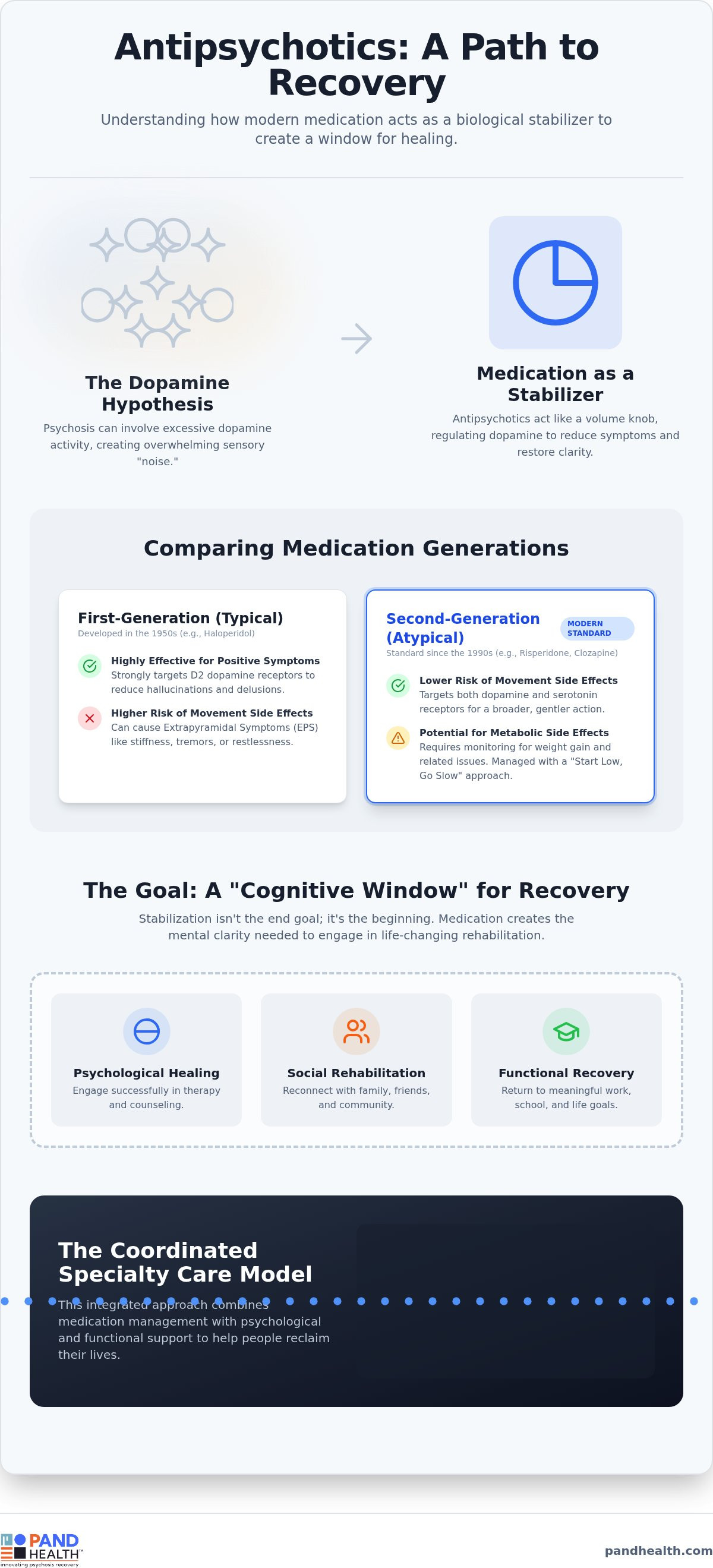
Dopamine Hypothesis suggests that certain areas of the brain are in overdrive during psychosis. High levels of dopamine activity can lead to hallucinations and delusions, making the world feel chaotic. These medications act like a volume knob for these sensory inputs. By binding to specific receptors, they dial down the intensity of chemical signals, helping the brain filter information more effectively.
It's helpful to distinguish between the symptoms addressed:
- Positive Symptoms: Additions to reality, such as hearing voices or paranoia.
- Negative Symptoms: Loss of function, such as social withdrawal or lack of motivation.
While medications effectively quiet positive symptoms, they also provide the stability needed to address negative symptoms through rehabilitation.
Psychosis vs. The Person: Preserving Identity
Maintaining the distinction between the person and the illness is vital. Psychosis can temporarily mask character, but it doesn't erase it. Early intervention for those aged 13 to 40 takes advantage of heightened brain plasticity. By intervening quickly, we protect the person's identity. Families seeking care can reach out to our team for an evaluation. Antipsychotics are tools for cognitive restoration. This foundation allows the individual to return to the goals that define their life.
Typical vs. Atypical: Comparing Generations of Medication
The history of antipsychotics is a journey from broad intervention to refined precision. Choosing a medication isn't just about picking the newest option. It's about matching the drug's biological mechanism to the specific needs of the individual. Doctors generally categorize these treatments into "typical" and "atypical" generations, each with distinct benefits and risk profiles. Understanding these differences helps families move past the fear of the unknown and toward a more informed treatment plan.
First-Generation Antipsychotics (FGAs)
Developed in the 1950s, first-generation medications like Chlorpromazine (Thorazine) and Haloperidol (Haldol) revolutionized mental health care. These drugs primarily target D2 dopamine receptors with high intensity. While they're highly effective at silencing hallucinations and delusions, their narrow focus often leads to movement-related side effects. These are known as Extrapyramidal Symptoms (EPS), which can include muscle stiffness, tremors, or restlessness. Because of these risks, clinicians often reserve FGAs for specific cases where other treatments haven't been successful.
Second-Generation Antipsychotics (SGAs)
Second-generation medications, or "atypical" antipsychotics, became the clinical standard in the 1990s. Drugs such as Risperidone, Zyprexa, and Seroquel represent a shift toward broader biological action. By targeting both dopamine and serotonin receptors, these medications often provide symptom relief with a lower risk of movement disorders. This generation includes Clozapine for treatment-resistant schizophrenia, which remains the gold standard when other medications fail to provide stability.
While SGAs reduced movement risks, they introduced a different set of challenges. Clinicians now focus heavily on metabolic monitoring, as some of these drugs can impact weight, cholesterol, and blood sugar levels. This shift highlights why modern treatment is a partnership between the patient and a specialized care team. We prioritize regular health screenings to ensure that physical wellness keeps pace with psychological progress.
The Third Generation and Beyond
The evolution continues with newer options like Aripiprazole (Abilify) and Brexpiprazole (Rexulti). These are often called partial agonists. Instead of completely blocking dopamine receptors, they act like a dimmer switch. They increase dopamine activity where it's too low and decrease it where it's too high. This nuanced approach aims to maximize clarity while minimizing the "cloudy" feeling patients often fear. Every brain is unique, and finding the right biological stabilizer requires expertise. If you're navigating these choices for a loved one, a professional psychiatric evaluation is the best way to determine which generation offers the clearest path to recovery.
Managing Side Effects: Balancing Stability and Quality of Life
Fear of side effects is the most common reason people stop taking antipsychotics. Acknowledging this anxiety is the first step toward building a successful, long-term treatment plan. Whether it's the frustration of weight gain, persistent drowsiness, or the physical restlessness known as akathisia, these experiences are valid and deserve clinical attention. Modern psychiatry has moved away from a "one size fits all" mentality. Instead, we view the initial phase of treatment as a period of careful trial and adjustment. The goal is always to find the lowest effective dose that provides stability without compromising the individual's daily experience.
The "Start Low, Go Slow" philosophy is vital, particularly for those experiencing First Episode Psychosis. By gradually introducing the medication, we allow the brain and body to adapt, which significantly reduces the risk of overwhelming side effects. This methodical approach ensures that the individual remains engaged in their recovery rather than feeling defeated by their prescription. Side effects are manageable hurdles, not permanent roadblocks to recovery.
Common Physical Side Effects
Metabolic health is a primary focus when using second-generation medications. We monitor blood sugar and cholesterol levels closely to stay ahead of any changes that could lead to long-term health issues. Movement disorders, such as Tardive Dyskinesia, are also a priority. While these are less common with modern drugs, early identification and proactive dose adjustment remain the best tools for prevention. We also track hormonal impacts, specifically prolactin levels, as these shifts can affect everything from mood to physical development in younger patients.
The Emotional and Cognitive Impact
Individuals sometimes describe a sense of "emotional blunting," where they feel less connected to their joy or creativity. This is often a signal that the dosage needs fine-tuning to better suit the person's unique biology. It's also essential to distinguish between the cognitive fog caused by the illness itself and the effects of the medication. As the brain stabilizes, many find that the clarity returning to their thoughts far outweighs the initial grogginess of starting a new regimen.
Proactive health coaching is a cornerstone of our augmented care model. By integrating fitness and nutrition guidance into the recovery process, we help patients mitigate metabolic risks before they become significant problems. This holistic view ensures that physical vitality supports psychological progress. Families seeking a specialized approach to medication management can contact our clinical team to discuss a personalized evaluation.
The Cognitive Window: Why Meds Are Not the Whole Story
Stabilization isn't the final destination of recovery. It's the starting line. While antipsychotics are essential for quieting the chaos of a psychotic episode, they don't teach a young person how to navigate a college campus or manage a workplace conflict. We view medication as a way to open a "Cognitive Window." This is a period where the brain is finally calm enough to process new information, learn coping strategies, and rebuild lost skills. Without this window, therapy often feels like shouting into a storm. With it, real transformation begins.
Metacognitive Training (MCT) is a cornerstone of this process. It invites patients to "think about their thinking," helping them identify the cognitive biases that can lead to paranoid thoughts or delusions. When a person is biologically stabilized, they can finally engage with these concepts in a meaningful way. This work is reinforced by Family Psychoeducation, which provides the home support system necessary to maintain progress and significantly reduce the risk of relapse. When the entire family understands the recovery roadmap, the path forward becomes much smoother.
Beyond Symptom Suppression
Suppressing symptoms is a medical success, but functional recovery requires more than just a lack of hallucinations. Pills don't provide job readiness or social confidence. That's why we emphasize the synergy between medication and Social Skills Training. We also utilize Social Cognition and Interaction Training (SCIT) and cognitive remediation. Think of these as a specialized gym for the brain. They strengthen the neural pathways needed for focus, memory, and social intuition, allowing the individual to reconnect with the world around them.
Achieving Functional Recovery
The ultimate goal of our care model is to move beyond "not hearing voices" and toward "holding a career." We integrate the LA Work-Study Guide directly into the treatment plan to ensure that every clinical milestone translates into a real-world achievement. Our results demonstrate the power of this approach. By combining antipsychotics with intensive social and psychological support, we see 85% of our participants actively engaged in work or school after just six months of treatment. This isn't just about managing an illness; it's about restoring a life.
If you're ready to move beyond symptom management and toward a functional, vibrant life, contact us today to learn more about our California OnTrack programs.
The California OnTrack Model: Integrated Care in Los Angeles
Biological stability through antipsychotics is a vital foundation, but the delivery of that care is what determines long-term success. In Los Angeles, we utilize the Coordinated Specialty Care (CSC) model to ensure that medical intervention never happens in isolation. This isn't a fragmented approach where families navigate a maze of disconnected providers. Instead, it's a high-intensity, team-based framework designed specifically for young adults aged 13 to 40 who are navigating First Episode Psychosis. At Pand Health, we take this a step further by augmenting the evidence-based NAVIGATE framework with fitness coaching and technology to ensure recovery isn't just a hope, it's the expectation for every family we serve.
A Team-Based Approach to Medication
The psychiatrist in our model doesn't work in a vacuum. They function as a core member of the CSC team, collaborating daily with therapists, education specialists, and peer advocates. We prioritize shared decision-making, which gives the patient a genuine voice in their treatment plan. When a young person feels like a partner in their care rather than a passive recipient of medicine, their engagement and long-term outcomes improve. We also offer indefinite enrollment because we recognize that the journey toward psychological stability doesn't follow a rigid or predictable expiration date. This steady presence provides a safety net that allows the individual to take bold steps toward their future.
Data-Driven Success in LA
Our results in Southern California demonstrate the power of this integrated philosophy. While the industry average for rehospitalization is currently 10%, our augmented model has reduced that figure to just 6%. This success is built on more than just the effective use of antipsychotics; it's the result of daily cognitive remediation and personalized fitness coaching that strengthens both the brain and the body. These specialized interventions help our participants achieve an 85% engagement rate in work or school within six months of starting the program.
We understand that families in crisis cannot afford to wait weeks for answers. For those in the Los Angeles area, we offer same or next-day psychosis evaluation services to provide an immediate lifeline. Recovery begins with a comprehensive psychiatric evaluation to establish a clear baseline and build a personalized roadmap. We're here to provide the steady hand and niche expertise required to navigate this storm and restore a sense of normalcy and purpose to your loved one's life.
Restoring Your Future Through Integrated Care
Recovery from psychosis isn't just about the absence of symptoms; it's about the presence of a meaningful life. We've seen how modern antipsychotics act as biological stabilizers, quieting the storm so the brain can begin to learn and grow again. By pairing these treatments with specialized tools like Metacognitive Training and social rehabilitation, we move beyond simple stabilization toward true functional independence. This integrated approach ensures that medication serves its true purpose: opening a window for long-term healing and community reintegration.
As the only program in Southern California offering certified MCT and SCIT, we're dedicated to helping individuals aged 13 to 40 reclaim their identity. Our data reflects this commitment to excellence. 85% of our clients return to work or school within six months, and our 6% rehospitalization rate is significantly lower than the 10% industry average. You don't have to navigate this journey alone. Schedule a same-day psychiatric evaluation in Los Angeles today to start building a clear path toward long-term wellness. Recovery is the expectation, and your future is waiting.
Frequently Asked Questions
What is the most common antipsychotic prescribed for first-episode psychosis?
Second-generation or atypical antipsychotics are usually the first choice for treating first-episode psychosis in Los Angeles. Medications like Risperidone, Aripiprazole, or Quetiapine are preferred because they generally have a lower risk of movement-related side effects compared to older drugs. Our psychiatrists at Pand Health work closely with families to find the lowest effective dose. This ensures that the medication provides necessary stability while allowing the young person to remain active in school or work.
Can you ever stop taking antipsychotics once you start?
Discontinuing medication is a possibility for some individuals, but it must be a gradual process managed by a specialist. Stopping abruptly often leads to a high risk of relapse. At our Los Angeles center, we prioritize a "Start Low, Go Slow" approach and offer indefinite enrollment. This allows us to monitor brain health over time and adjust treatment as the individual achieves functional milestones in our Work-Study Program. Safety and long-term stability are always the primary goals.
How long does it take for antipsychotic medication to start working?
You might notice a calming effect or improved sleep within the first few days of treatment. However, it typically takes four to six weeks for antipsychotics to reach their full therapeutic potential in reducing hallucinations or delusions. Patience is essential during this initial window. We use this time to integrate cognitive remediation and fitness coaching, which helps support the brain's natural plasticity as the medication begins to create a stable foundation for social rehabilitation.
Is there a difference between antipsychotics and mood stabilizers?
These medications serve different biological purposes. Antipsychotics primarily manage dopamine pathways to treat thought disorders and sensory distortions. Mood stabilizers, such as Lithium or Valproate, are designed to regulate the intense emotional highs and lows associated with bipolar disorder. While some individuals may be prescribed both, our team in Southern California provides comprehensive evaluations to ensure each person receives the specific biological stabilizers needed for their unique diagnosis and recovery path.
What happens if someone with cannabis-induced psychosis takes antipsychotics?
For those in Los Angeles dealing with cannabis-induced psychosis, medication acts as a vital reset for the brain's chemical signaling. It helps quiet the acute paranoia or confusion caused by high-potency THC. At Pand Health, we combine this medical stabilization with specialized cannabis induced psychosis rehab. This dual approach addresses the biological symptoms while providing the psychological tools needed to maintain sobriety and prevent future episodes, helping young adults return to their educational goals.
Will antipsychotics change my personality or make me a 'zombie'?
Modern psychiatric care focuses on preserving identity, not suppressing it. The "zombie" effect was often a result of over-medication with older drug generations. Today, our goal is to find a therapeutic window that clears away the "noise" of the illness so your true personality can re-emerge. By using shared decision-making, we ensure that patients have a voice in their treatment. This helps us avoid emotional blunting while maximizing the individual's ability to engage in social skills training.
Are there natural alternatives to antipsychotics for schizophrenia?
There are currently no "natural" supplements that can replace the biological stabilization provided by evidence-based medicine for schizophrenia. However, we believe medication is only one piece of the puzzle. Our California OnTrack model integrates medical care with APA-recommended cognitive remediation, Metacognitive Training (MCT), and fitness. This holistic combination is what drives our 85% success rate for employment and education engagement. True recovery requires a synergy between biological support and intensive psychological and social rehabilitation.
How do I know if the medication dose is too high?
Signs that a dose may be too high include extreme daytime drowsiness, a total lack of emotional expression, or significant physical restlessness. If a young person feels "foggy" or disconnected, it's a signal to review the treatment plan. Our CSC team in Los Angeles uses regular assessments and monthly interviews to track progress. We prioritize adjusting the dosage to ensure the individual can fully participate in our intensive outpatient programs without feeling weighed down by their medication.
Disclaimer
This article is for information and educational purposes only, and can NEVER replace a proper medical evaluation. If you or a loved one may be suffering from psychosis or the prodomal symptoms of psychosis, get evaluated by a professional as soon as possible. Early diagnosis and treatment can be life-saving.