
How to Manage Delusional Thinking: A Guide to Therapy and Recovery in Los Angeles
Recovery from delusional thinking doesn't begin by winning an argument about what is real; it starts by retraining how the brain processes information. It's incredibly isolating to feel like the world is tilted on its axis while others around you remain unaffected. If you're searching for therapy for delusional thinking Los Angeles, you likely want more than just a clinical diagnosis. You want a way to quiet the noise of suspicious thoughts and return to your life without the constant fear of judgment or the anxiety of potential hospitalization.
We understand that this journey requires a sophisticated blend of clinical expertise and profound empathy. In this guide, you'll discover how evidence-based strategies like Metacognitive Training (MCT) and Social Cognition and Interaction Training (SCIT) help individuals reclaim their sense of reality. We'll preview specialized programs on Olympic Blvd that focus on community reintegration, helping 85% of participants return to school or work within six months. By moving beyond traditional talk therapy and toward data-driven cognitive remediation, you can find the steady hand you need to navigate this storm and restore a sense of normalcy to your daily life.
Key Takeaways
- Learn why direct confrontation often backfires and how the LEAP method builds a foundation of trust and partnership during recovery.
- Explore specialized therapy for delusional thinking Los Angeles that uses Metacognitive Training to help individuals recognize and correct underlying cognitive biases.
- Understand the role of Social Cognition and Interaction Training (SCIT) and cognitive remediation in restoring social confidence and executive function.
- Discover the California OnTrack program's success in helping individuals aged 13 to 40 return to school or work while maintaining long-term stability.
- Gain a roadmap for accessing comprehensive psychiatric evaluations and specialized care that move beyond standard clinical intervention toward true community reintegration.
Understanding Delusional Thinking: What It Is and Why It Happens
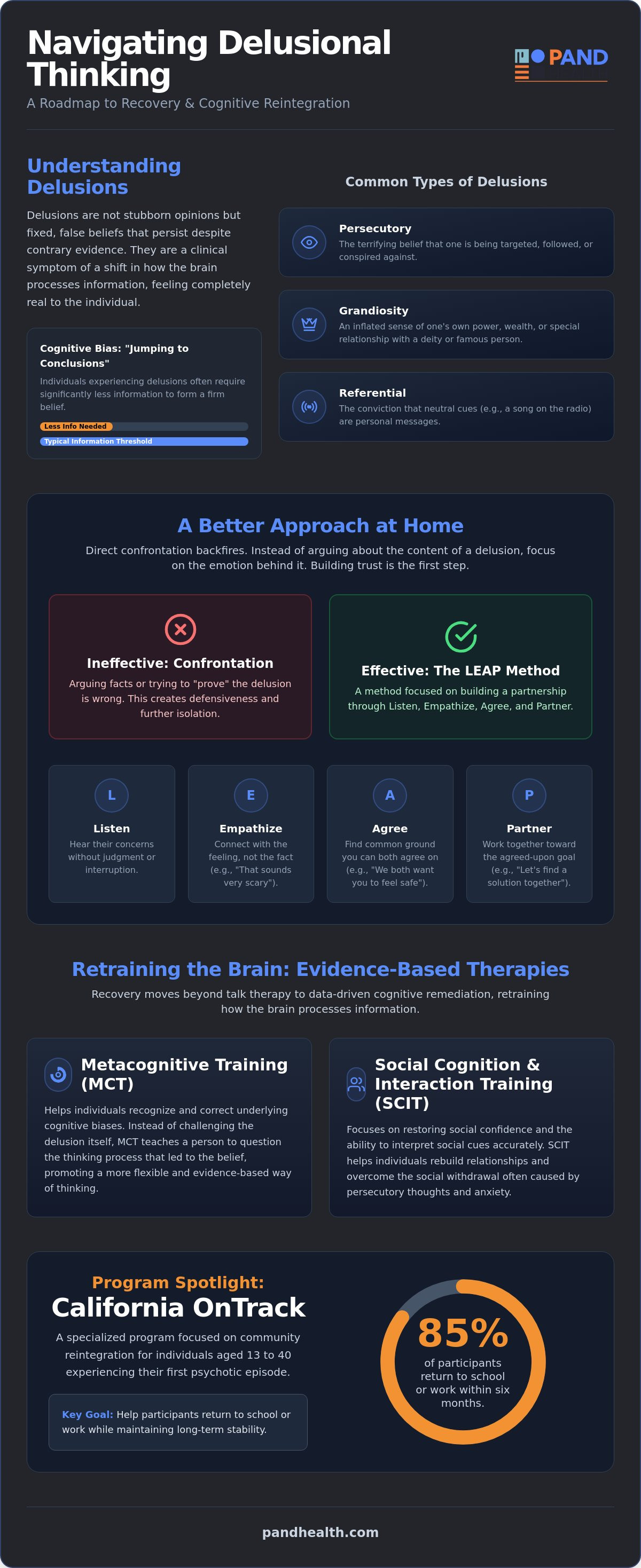
Delusions are not merely misunderstandings or stubborn opinions. They are fixed, false beliefs that persist even when a person is faced with undeniable, contradictory evidence. To begin the process of recovery, Understanding Delusional Thinking requires us to view these beliefs as a clinical symptom rather than a character flaw. It's a complex shift in how the brain filters the world around it, often leaving the individual feeling as though they are the only ones who see the "truth."
Clinicians often categorize these beliefs as either bizarre or non-bizarre. Non-bizarre delusions involve situations that could technically happen in real life, such as being followed by the police or being cheated on by a spouse. Bizarre delusions are clearly implausible and do not derive from ordinary life experiences. For example, a person might believe an alien has replaced their internal organs without leaving a scar. Regardless of the type, these thoughts feel entirely real to the person experiencing them.
A significant factor in the development of these thoughts is the "jumping to conclusions" bias. Research indicates that individuals experiencing delusions often require much less information to form a firm belief than others do. This cognitive shortcut makes it difficult to weigh alternative explanations; it leads to a rigid conviction that feels logical to the individual but remains disconnected from shared reality. Identifying the early signs of psychosis, often called Clinical High Risk, is vital for young adults. Early indicators might include a sudden drop in grades, social withdrawal, or "odd" ideas that haven't yet become fixed. Because 1 in 20 California adults lives with a serious mental illness, recognizing these subtle shifts early can prevent a full psychotic episode.
Common Types of Delusions Seen in Clinical Practice
In our practice, we frequently encounter several specific themes that shape a person's perceived reality:
- Persecutory delusions: The pervasive and often terrifying sense that one is being targeted, followed, or conspired against by outside forces.
- Grandiosity: An inflated belief in one's own power, wealth, or special relationship with a famous figure or deity.
- Referential delusions: The conviction that neutral environmental cues, such as a song on the radio or a news anchor's gestures, are personal messages intended only for them.
The Role of Stress and Cannabis in Los Angeles
The fast paced, high pressure environment of Los Angeles can act as a catalyst for thought disorders. Stress is a known trigger for vulnerability; the local culture often prioritizes high achievement at the cost of sleep and mental stability. Additionally, the prevalence of high potency cannabis in California presents a unique challenge. There is a documented link between heavy cannabis use and induced delusional thinking, especially in those with a genetic predisposition. Seeking specialized therapy for delusional thinking Los Angeles is a critical step in protecting long term brain health and ensuring that recovery is the expectation, not the exception.
Immediate Strategies for Managing Delusional Thinking at Home
Managing a loved one's fixed beliefs within the home environment is often the most taxing part of the recovery journey. It requires a fundamental shift from trying to "fix" the person's thoughts to providing a sense of safety and connection. When a family member is convinced of a reality that you don't share, the natural instinct is to present facts or argue the logic of the situation. However, direct confrontation almost always backfires. It creates a defensive wall and can lead to further social isolation. Instead of debating the content of the delusion, focus entirely on the emotion behind it. If a loved one believes they are being watched, saying "I can see that you feel very unsafe right now" is far more effective than trying to prove no one is there.
A cornerstone of de-escalation is the LEAP Method: Listen, Empathize, Agree, and Partner. You listen to their concerns without judgment, empathize with the distress they are feeling, and find common ground on things you can agree on, such as the desire to feel secure. This approach is central to Evidence-Based Therapy for Delusional Thinking, as it prioritizes the therapeutic alliance over factual accuracy. Finding specialized therapy for delusional thinking Los Angeles is a vital long term goal, but your immediate role is to be a steady hand during the storm. Establishing a "safety first" protocol for high stress moments is essential. This includes knowing when to disengage from a circular argument and having a clear plan for when professional intervention becomes necessary.
Communication Techniques for Families
To reduce defensiveness, use "I" statements that focus on your own observations and feelings. For example, "I feel worried when I see you're not sleeping," rather than "You're acting paranoid again." It's possible to validate a person's distress without validating the false belief itself. Additionally, pay close attention to environmental triggers. In a high stimulus city like Los Angeles, external noise or a chaotic news cycle can easily spark suspicious thoughts. Identifying these patterns helps you intervene before the anxiety peaks.
Creating a Grounding Environment
A predictable, low sensory environment is a powerful tool for cognitive stability. Reducing sensory overload, such as dimming bright lights or turning off background television, helps the brain process information more clearly. Maintaining a strict routine for meals and sleep provides a much needed sense of order. If these at home strategies are not enough to maintain stability, it may be time for a comprehensive psychiatric evaluation for psychosis Los Angeles. Our team at Pand Health is here to act as a dedicated guide when you need more intensive support to navigate these complexities.
Evidence-Based Therapy for Delusional Thinking in Los Angeles
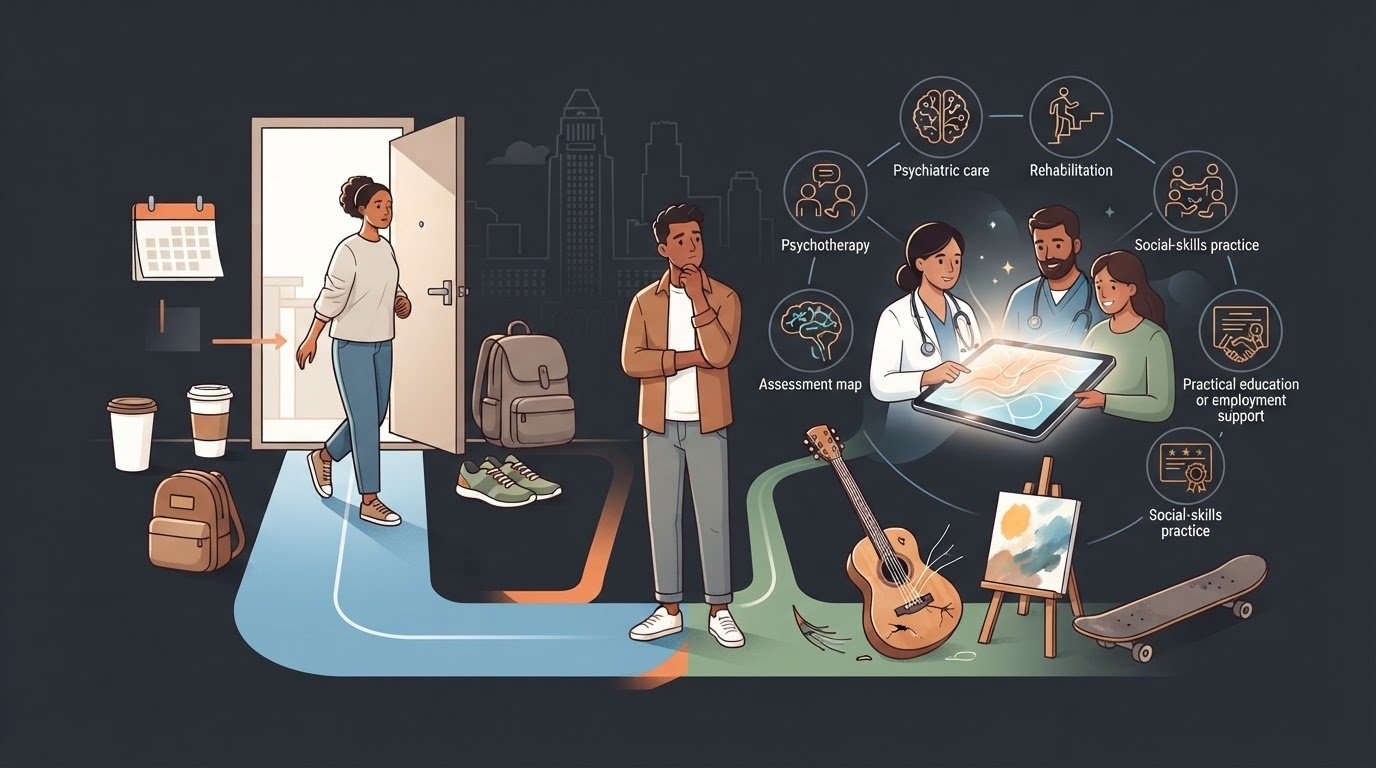
Traditional talk therapy often falls short when addressing fixed beliefs because it rarely targets the underlying cognitive biases that sustain them. For those seeking therapy for delusional thinking Los Angeles, the Coordinated Specialty Care (CSC) model represents the gold standard of modern intervention. This team-based approach does not just treat isolated symptoms. It integrates psychiatric care, family psychoeducation, and specialized psychological interventions to provide a comprehensive lifeline. By coordinating these various disciplines, we move beyond simple symptom management toward the total restoration of an individual's life and social functioning.
At Pand Health, we utilize the CSC model because the data proves its efficacy. While the industry average for rehospitalization remains around 10%, our coordinated approach has achieved a 6% rehospitalization rate. This level of stability is crucial for long term wellness. It allows individuals to move past the cycle of crisis and instead focus on community reintegration. When treatment is synchronized, the individual feels supported by a "steady hand in the storm," which is essential for navigating the complexities of a thought disorder.
Metacognitive Training (MCT) Explained
MCT is a groundbreaking approach that focuses on the process of "thinking about thinking." It specifically helps patients recognize the "jumping to conclusions" bias, which is a primary driver of delusional conviction. By gently challenging these cognitive blind spots in a supportive setting, individuals learn to pause and consider alternative explanations for their experiences. Metacognitive Training is a group-based intervention that targets the cognitive "blind spots" fueling delusions. Our staff includes certified MCT instructors who ensure this high-fidelity care is delivered with both clinical precision and profound empathy, helping clients regain a sense of agency over their own thoughts.
Addressing Cannabis-Induced Delusions
In a city where high-potency cannabis is widely available, substance-induced thought disorders have become a frequent challenge for local families. These cases require specialized cannabis induced psychosis rehab strategies that address both the chemical impact on the brain and the resulting psychological distress. Effective therapy for delusional thinking Los Angeles must include dual-diagnosis capabilities to manage the transition from substance-induced states to long-term stability. Pand Health provides a dedicated bridge through this transition, focusing on psychological and social rehabilitation. We ensure that a temporary drug-induced state does not become a permanent barrier to a person's future, helping them return to the school or work environments they value.
Retraining the Brain: Cognitive Remediation and Social Skills
Effective therapy for delusional thinking Los Angeles must address the underlying cognitive architecture of the brain. Delusions are often sustained by deficits in executive function, memory, and attention, which make it difficult for an individual to filter out irrelevant information or weigh evidence correctly. Computer-assisted brain training serves as a rigorous clinical intervention to sharpen these skills. By engaging in structured exercises, individuals can rebuild the neural pathways responsible for processing complex data. This cognitive foundation is what allows a person to move from a state of confusion to one of clarity and stability.
Physical fitness is another critical component of neuroplasticity that we integrate into our recovery model. High intensity fitness coaching isn't just about physical health; it's about driving the biological processes that support brain repair. When combined with the California OnTrack Work-Study Program, these interventions provide a powerful real world anchor. This program helps individuals maintain their roles in society while managing their symptoms. The data reflects the success of this holistic approach, with 85% of our participants successfully engaging in employment or education within six months of starting treatment. This demonstrates that recovery isn't just about the absence of symptoms, but the presence of a meaningful life.
The Power of SCIT in Los Angeles
Social Cognition and Interaction Training (SCIT) is designed to correct "hostile attribution bias," which is the tendency to perceive neutral social cues as threatening or conspiratorial. In a densely populated and fast paced city like Los Angeles, misreading a stranger's glance or a colleague's tone can quickly fuel suspicious thoughts. SCIT provides a safe, clinical setting where individuals can practice reading social cues correctly before navigating the city's complex social environments. This training is essential for building and maintaining friendships after a psychotic episode. It helps individuals move past social isolation and toward genuine reconnection with their community.
Augmented Coordinated Specialty Care (CSC)
Our augmented CSC model at Pand Health goes beyond standard outpatient care by providing 24 to 32 hours of intensive support. This high intensity approach allows for a more rapid and sustained improvement in cognitive performance. On average, our clients see their cognitive functioning move from the 33rd percentile to the 50th percentile, effectively returning them to a normal range of processing power. This level of specialized care ensures that every aspect of the individual’s wellness is addressed simultaneously. To begin this transformative journey, you can explore our intensive treatment for psychosis and see how we act as a steady hand during your recovery.
Navigating Recovery: How to Access Specialized Care in Los Angeles
Finding the right path forward in a city as large as Los Angeles requires more than just a general practitioner. It demands a specialist who understands that delusional thinking is a complex neurological event, not a permanent personality trait. The journey toward clarity begins with a comprehensive psychiatric evaluation for thought disorders. This diagnostic process is the bedrock of effective treatment; it ensures that the intervention is tailored to the individual's specific cognitive profile and life circumstances. When searching for therapy for delusional thinking Los Angeles, families should prioritize providers who offer a Coordinated Specialty Care (CSC) model, as this integrated approach is the only one proven to significantly reduce long term disability.
At Pand Health, we operate with the firm belief that recovery is the expectation, not the exception. A true psychosis specialist doesn't just manage symptoms; they act as a dedicated guide toward community reintegration. This means looking for a program that balances clinical authority with profound empathy, ensuring the individual feels safe and understood throughout the process. By focusing on the restoration of normalcy, we help families move from a state of crisis to one of stability and hope.
Pand Health’s California OnTrack Program
Our California OnTrack program serves as a specialized lifeline for teens and young adults between the ages of 13 and 40. We utilize the NAVIGATE-based framework, which is the nationally recognized standard for early psychosis intervention. This program is unique because it doesn't pause a person's life to provide treatment. Instead, we support education and employment goals simultaneously, ensuring that the individual stays connected to their future. For those seeking local accessibility, our center is located at 11500 W. Olympic Blvd, Los Angeles, providing a centralized hub for specialized care in Southern California.
Taking the First Step Toward Clarity
Taking the first step is often the hardest part for families in crisis. We've streamlined our referral and intake process to be as supportive and transparent as possible, acknowledging the gravity of the challenges you face. We understand the anxiety that comes with a new diagnosis; this is why our 6% rehospitalization rate, which is significantly lower than the 10% industry average, provides such profound peace of mind. Our team is ready to provide the steady hand you need to navigate this storm. We invite you to request a specialized evaluation for delusional thinking today to begin the process of reclaiming your reality and your life.
Reclaiming Your Future with Specialized Care
Restoring a sense of reality is a journey that requires both scientific precision and a compassionate support system. We've explored how understanding cognitive biases and implementing at-home de-escalation can stabilize a crisis; however, long term wellness depends on specialized intervention. By choosing therapy for delusional thinking Los Angeles that integrates Metacognitive Training and social skills development, you're choosing a path where recovery is the expectation, not the exception.
Pand Health stands as the only program in Southern California offering the APA-recommended combination of cognitive remediation, MCT, and SCIT. The results of this rigorous approach are clear. Our programs boast an 85% employment or education participation rate after just six months and a 6% rehospitalization rate. You don't have to navigate this complexity alone. With the right tools and a dedicated team acting as a steady hand, returning to a life of purpose and connection is entirely possible.
Begin your journey toward clarity with Pand Health’s specialized psychosis programs in Los Angeles.
There is hope for a stable and fulfilling future, and it begins with the first step toward specialized care.
Frequently Asked Questions
Is delusional thinking the same thing as schizophrenia?
Delusional thinking is a clinical symptom rather than a diagnosis itself, though it is a hallmark of schizophrenia. It can also occur in delusional disorder, bipolar disorder, or as a result of severe depression and substance use. While schizophrenia involves a broader range of symptoms like hallucinations and disorganized speech, delusional disorder is characterized primarily by the presence of one or more fixed beliefs without those other impairments.
Can therapy alone help manage delusions, or is medication required?
Most clinical guidelines recommend a combination of medication and specialized therapy for delusional thinking Los Angeles to achieve the best outcomes. While antipsychotic medications help reduce the intensity and frequency of the thoughts, therapy is essential for retraining the brain's cognitive processes. Our Coordinated Specialty Care model integrates both to ensure the individual doesn't just manage symptoms but also rebuilds their social and professional life.
What should I do if my loved one refuses to believe their thoughts aren’t real?
When a loved one lacks insight into their condition, a phenomenon known as anosognosia, you should avoid arguing about the facts of their belief. Instead, acknowledge the distress the belief causes them and focus on shared goals, such as reducing their anxiety or improving their sleep. Using the LEAP method helps maintain the relationship, which is vital for eventually guiding them toward a professional psychiatric evaluation and support.
How long does therapy for delusional thinking typically take to show results?
Many individuals begin to see a reduction in distress and thought intensity within the first 3 to 6 months of intensive treatment. However, cognitive remediation and social skills training are long term processes that typically span 12 to 24 months. At Pand Health, we see 85% of our participants return to work or school within six months, illustrating that functional recovery often precedes the total disappearance of clinical symptoms.
Are there specialized programs for young adults with delusions in Los Angeles?
Yes, the California OnTrack program is specifically designed for individuals aged 13 to 40 who are experiencing their first episode of psychosis. This model provides a comprehensive team of specialists who work together to support the young adult's education and career goals while managing clinical symptoms. Accessing this specialized therapy for delusional thinking Los Angeles early is the most effective way to protect long term brain health and prevent future hospitalizations.
What is the difference between a delusion and a strong political or religious belief?
A delusion is a private belief that is not shared by a person's culture or subculture and remains fixed even when proven false. In contrast, strong political or religious beliefs are supported by a community of others and are rooted in shared values. Clinicians look for idiosyncratic elements or a level of preoccupation that interferes with daily functioning to distinguish a clinical symptom from a deeply held personal conviction.
Can cannabis use cause permanent delusional thinking?
High potency cannabis use can trigger a psychotic episode that may lead to a chronic thought disorder in individuals with a genetic predisposition. While some substance induced states resolve once the substance leaves the system, others act as the catalyst for long term conditions like schizophrenia. Early intervention is critical in these cases to distinguish between a temporary substance reaction and the need for ongoing psychological and social rehabilitation.
How does Metacognitive Training (MCT) specifically help with paranoia?
MCT helps individuals with paranoia by teaching them to recognize the cognitive shortcuts, such as the jumping to conclusions bias, that lead to suspicious thoughts. Instead of accepting a threatening thought as an absolute fact, participants learn to look for more information and consider alternative explanations. This process reduces the conviction behind the paranoia, making the thoughts feel less powerful and allowing the person to engage more confidently in social situations.
Related reading
- What is Coordinated Specialty Care?
- Early / first-episode psychosis program
- At-risk mental state and early intervention
- Metacognitive Training (MCT)
- Social Cognition and Interaction Training (SCIT)
- Cognitive health and cognitive remediation
- Jumping to conclusions bias
- Cannabis-induced psychosis
- Learning about psychosis and thought disorders
- Autistic speech vs disorganized speech