
Treating Impaired Theory of Mind in Los Angeles
What if the painful social isolation and constant misunderstandings your loved one experiences aren't permanent fixtures of their life, but rather a treatable cognitive challenge? It's natural to feel a deep sense of fear when a family member struggles to navigate social cues, leading to frequent conflicts or the worry that they'll never sustain a career or meaningful friendships. You're likely searching for a way to bridge that gap and bring them back into the fold of the community.
At Pand Health, located at 11500 W. Olympic Blvd, we understand that treating impaired theory of mind is the vital link to restoring these lost connections. In this guide, you'll discover the most effective, research-backed therapies designed for rebuilding social cognition and fostering successful community reintegration. We'll preview how our California OnTrack program utilizes specialized tools like Metacognitive Training and Social Cognition and Interaction Training to reduce paranoid misinterpretations. By focusing on these high-standard interventions, we move beyond simple symptom management toward a future where your loved one can thrive in their social and professional lives.
Key Takeaways
- Learn how Theory of Mind serves as the foundational skill for interpreting social nuances and why its disruption can lead to profound isolation.
- Explore evidence-based interventions like Metacognitive Training (MCT) and SCIT that empower individuals to recognize and correct cognitive biases.
- Discover how family psychoeducation can transform the home environment by fostering clear communication and reducing social anxiety for your loved one.
- Understand the unique impact of the California OnTrack program in bridging the gap between clinical treatment and real-world vocational success.
- Gain clarity on the sophisticated, research-backed therapies for treating impaired theory of mind that offer a lifeline for those struggling with social disconnection.
What is Impaired Theory of Mind (ToM)?
Theory of Mind is the sophisticated psychological capacity to attribute mental states, including beliefs, intents, and desires, to oneself and to others. It's the mechanism that allows us to recognize that someone else might have a perspective, knowledge base, or emotional state that differs from our own. When this system functions correctly, we navigate the world with an intuitive sense of how others think and feel. Theory of Mind is the social glue required for navigating complex human interactions.
When we discuss "impaired" Theory of Mind, we're referring to a breakdown in this essential cognitive process. It isn't a simple lack of kindness; rather, it's a structural difficulty in perspective-taking. While these deficits in autism are typically developmental and present from an early age, in psychosis-spectrum disorders, they often emerge as a state-based disruption or a form of cognitive decline. Differentiating between these origins is crucial for treating imapired theory of mind, as the path to recovery depends on whether we're building new skills or restoring lost ones.
Signs of Impaired Theory of Mind in Daily Life
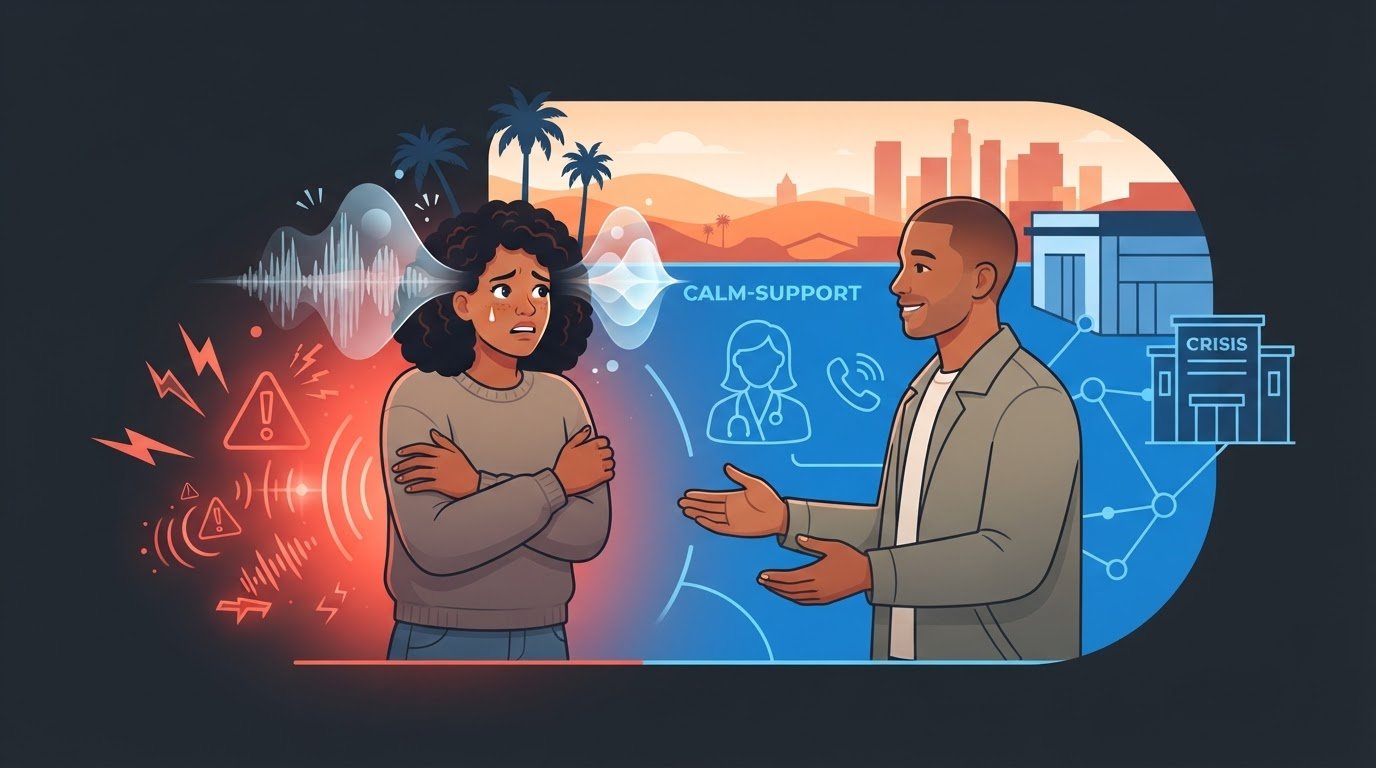
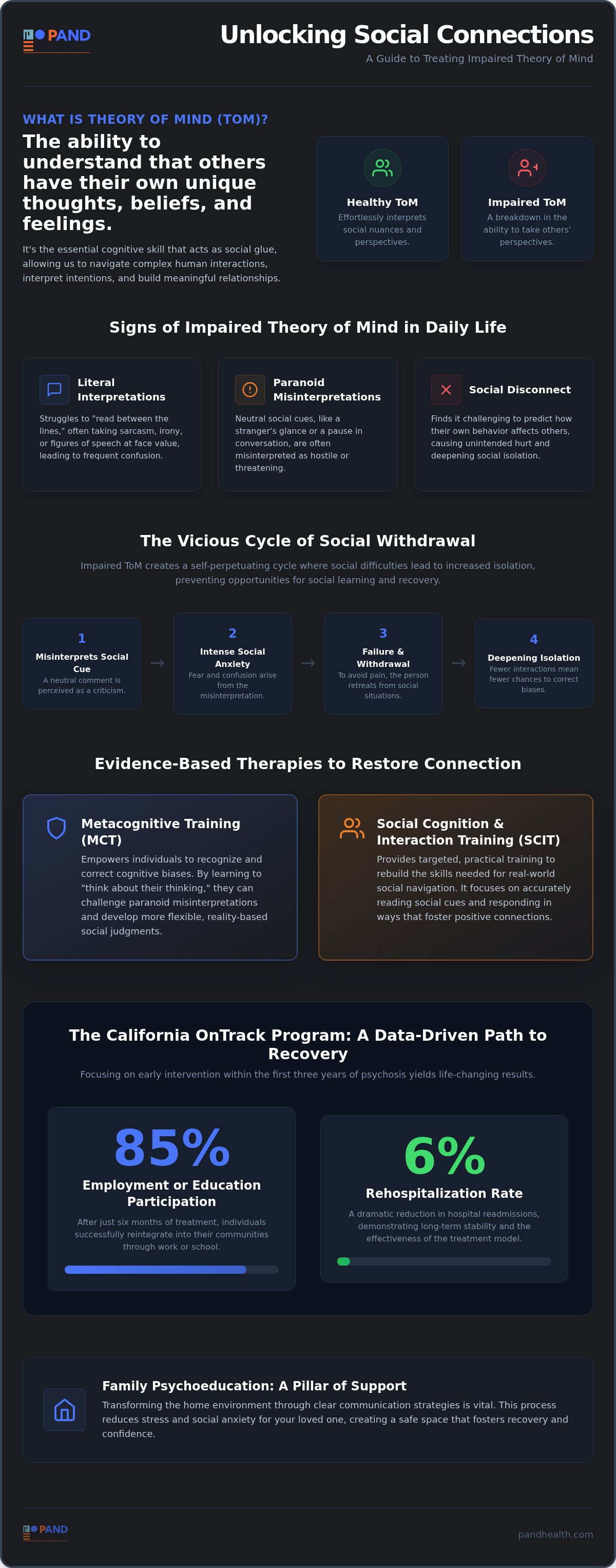
Living with a Theory of Mind deficit often feels like trying to solve a puzzle with missing pieces. Individuals may struggle to "read between the lines," often taking sarcasm or irony at face value, which leads to confusion and social friction. In many cases, neutral social cues, like a stranger's glance or a brief pause in conversation, are misinterpreted as hostile or threatening. This bias is a significant driver of paranoid thinking. Additionally, the individual may find it challenging to predict how their own behavior affects others, causing unintended hurt and deepening their sense of social isolation.
Why ToM Impairment Happens in Psychosis and Autism
The neurological basis for social cognition involves a delicate network, primarily centered in the prefrontal cortex and the temporal-parietal junction. These regions are responsible for processing complex social data and filtering out irrelevant stimuli. In the case of First Episode Psychosis, these established pathways are often disrupted by an influx of cognitive "noise." This noise makes it difficult for the brain to filter social information accurately, leading to the misattributions common in the early stages of the illness. At our 11500 W. Olympic Blvd location, we recognize that treating imapired theory of mind requires addressing these underlying biological disruptions to help the brain refocus on the social world.
The Impact of ToM Deficits on Social and Vocational Success
The breakdown of social cognition often leads to profound social withdrawal and what clinicians refer to as "negative symptoms" in schizophrenia-spectrum disorders. These aren't just a lack of motivation; they're the result of a person losing the ability to map the mental states of those around them. When a loved one can't interpret a friend's intent or a partner's emotional state, they often retreat into isolation to avoid the confusion. This creates a "vicious cycle" where misinterpretation leads to intense social anxiety, which then results in failure and further withdrawal. Related research on ToM and moral judgment suggests that these deficits also impact how individuals perceive fairness and social responsibility, complicating their relationships even further.
Success in the workplace depends heavily on navigating office politics and teamwork, both of which require high-level social cognition. It's often the case that technical skills remain intact while the ability to "read the room" vanishes. If an employee can't discern a supervisor's subtle feedback or understand the unwritten rules of a team, they're likely to struggle with job retention. Evidence shows that cognitive performance is a much stronger predictor of long-term recovery and community reintegration than the reduction of hallucinations or delusions alone. This is why treating imapired theory of mind is central to our mission at Pand Health.
Theory of Mind and First Episode Psychosis
Beyond cognitive readiness, navigating the health requirements of new employment is an essential part of the transition. For individuals and families looking for examples of how occupational health is managed, Persona Health provides a thorough guide to pre-employment medicals, showcasing the standards used to ensure employees are supported in their professional environments.
Early intervention is vital to prevent the "crystallization" of social cognitive deficits. The first three years following the onset of psychosis represent a critical period where the brain is most receptive to rehabilitation. At our 11500 W. Olympic Blvd location, the California OnTrack program focuses on this window to restore functioning. Our data-driven approach has yielded an 85% employment or education participation rate after just six months of treatment. More importantly, our model has helped reduce the rehospitalization rate to 6%, compared to a 50% baseline, by prioritizing social recovery alongside clinical stability.
ToM Challenges in Young Adult Autism
When young adults with autism transition from structured school environments to independent living, Theory of Mind often becomes a significant bottleneck. There's frequently a wide gap between their high intellectual ability and their social execution in real-world scenarios. Navigating this transition requires a precise differential diagnosis to determine if the challenges stem from autism, a developing thought disorder, or a combination of both. If your family is struggling to understand these complex social barriers, a professional assessment can provide the roadmap needed for treating imapired theory of mind and bridging the gap to independence.
Clinical Interventions: SCIT, MCT, and Cognitive Remediation
Traditional social skills training often focuses on the surface of interaction, such as rehearsing polite phrases or maintaining eye contact. While these are useful, they don't address the core cognitive machinery required for treating imapired theory of mind. Advanced interventions go deeper, targeting the way the brain processes social data and makes inferences about others. Pand Health remains the only provider in Southern California offering both Social Cognition and Interaction Training (SCIT) and Metacognitive Training (MCT), both of which are recommended by the American Psychological Association (APA). By addressing the underlying deficits rather than just the symptoms, we provide a more robust path toward social recovery.
Metacognitive Training (MCT) for Paranoia
Metacognitive Training is a specialized approach that encourages individuals to "think about their thinking." It helps patients recognize the cognitive traps that often fuel paranoid misinterpretations, such as the tendency to jump to conclusions based on limited information. By making these biases conscious, individuals can learn to pause and evaluate alternative explanations for social events. Our staff includes certified MCT instructors who ensure the treatment is delivered with the highest level of clinical fidelity. To understand how this differs from other approaches, you can read more about Metacognitive Training vs CBT for Psychosis.
Social Cognition and Interaction Training (SCIT)
SCIT is a group-based protocol that moves through three distinct phases: Emotion Perception, Attributional Style, and Integration. In the first phase, participants learn to accurately identify facial expressions and vocal tones. The second phase helps them understand why they attribute certain motives to others, while the final phase integrates these skills into real-world scenarios. Our SCIT groups in Los Angeles provide a safe environment for teens and adults to practice these complex interactions. Ultimately, SCIT serves as a vital bridge that moves individuals from the safety of clinical therapy toward successful, long-term community reintegration.
Computer-Assisted Cognitive Remediation
There's a powerful synergy between "brain training" software and social cognitive exercises. At our 11500 W. Olympic Blvd location, we utilize a twice-daily training protocol that's uniquely paired with physical fitness coaching to maximize neuroplasticity. This holistic approach addresses foundational deficits in attention and memory that can otherwise hinder social progress. The results are measurable and significant; our participants frequently move from the 33rd to the 50th percentile in cognitive performance. This improvement in basic processing speed and executive function provides the necessary foundation for treating imapired theory of mind effectively.
How Families Can Support Theory of Mind Development
The home environment is the primary classroom for social recovery. While clinical sessions provide the tools, the daily interactions between family members determine how effectively those tools are applied. Family psychoeducation plays a vital role in this process by helping caregivers create a "ToM-friendly" environment where social cues are explicit rather than implied. This supportive framework reduces the cognitive load on the individual, allowing them to practice perspective-taking without the pressure of high-stakes social situations. For a deeper look at these dynamics, you can explore our Family Psychoeducation in LA: Psychosis Recovery Guide.
One of the most effective ways to support a loved one is by "mentalizing" together. This involves asking open-ended questions about the intentions of others in a non-judgmental way. Instead of correcting a misinterpretation immediately, a parent might ask, "What do you think their reason was for saying that?" This gentle inquiry encourages the individual to consider multiple perspectives, which is a cornerstone of treating imapired theory of mind. By making the invisible visible, families help rebuild the bridge between their loved one and the social world.
Communication Strategies for Parents
Clear, non-ambiguous communication is essential for reducing the risk of misinterpretation. Parents can model internal mental states by using "I" statements, such as "I feel frustrated because the bus was late," which helps the loved one link external events to internal emotions. It's also helpful to break down complex social situations into logical, step-by-step observations. Avoiding sarcasm, irony, or high "expressed emotion" (EE) is critical. High-stress or emotionally charged environments often cause the brain to shut down its social processing centers, making it nearly impossible for the individual to accurately read others.
The California OnTrack Family Support Model
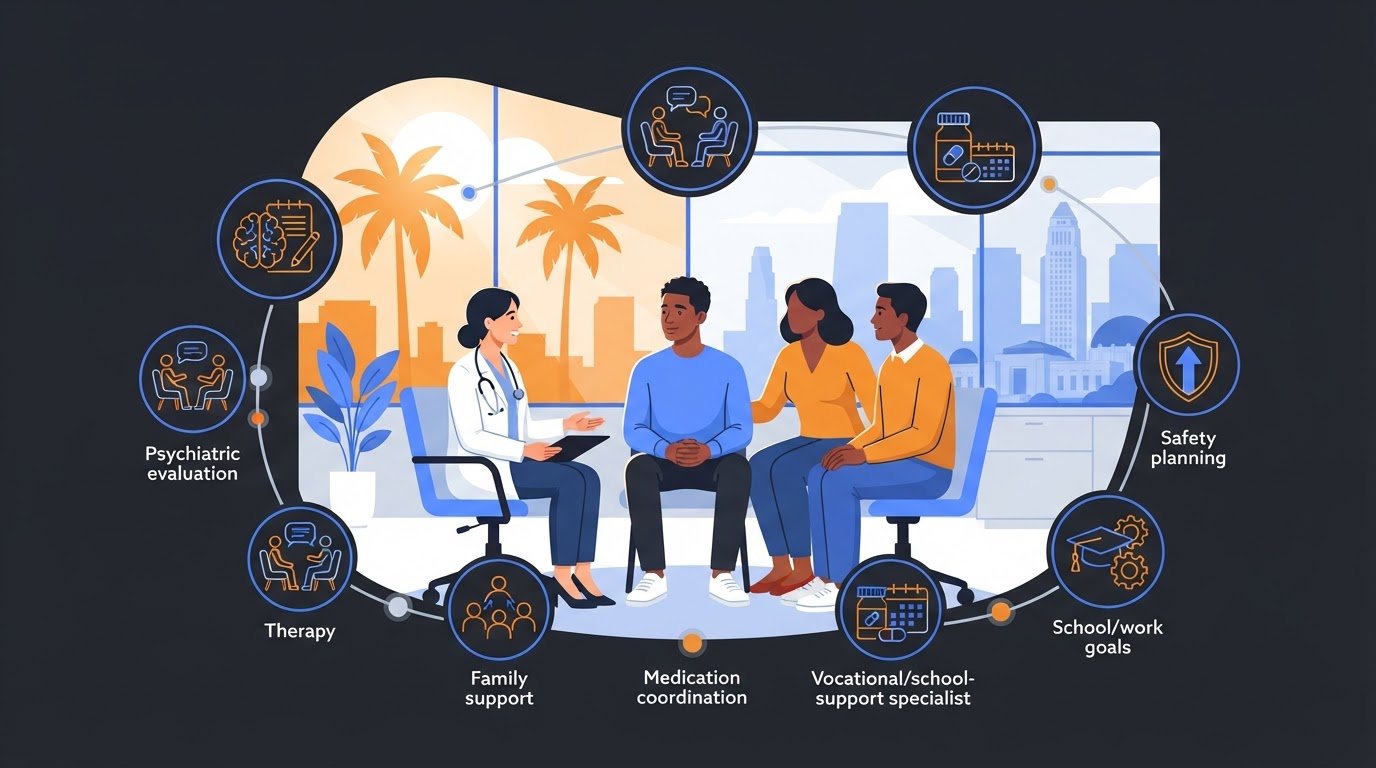
At our 11500 W. Olympic Blvd location, we integrate Behavioral Family Therapy directly into our California OnTrack coordinated specialty care framework. This model recognizes that the family's wellness is inextricably linked to the individual's success. We offer multi-family group therapy, providing a safe space where families can practice social cognition exercises together and share their lived experiences. This collaborative approach extends to the transition back to work or school. By utilizing our SEE curriculum, we ensure that the progress made in treating imapired theory of mind translates into real-world vocational achievements. If you're ready to build a stronger support system, you can schedule a family consultation today.
Pand Health: Specialized ToM Treatment in Los Angeles
Pand Health stands as a specialized leader in the Southern California mental health landscape, offering a lifeline to families navigating the complexities of social cognitive recovery. Our approach to treating imapired theory of mind is centered on the California OnTrack program, an augmented Coordinated Specialty Care (CSC) model. This program is uniquely designed to integrate APA-recommended protocols like Metacognitive Training (MCT) and Social Cognition and Interaction Training (SCIT) with our Supported Education and Employment (SEE) curriculum. By combining clinical rigor with real-world application, we bridge the gap between symptom management and a return to a meaningful life.
The results of our integrated approach speak for themselves. Individuals enrolled in our California OnTrack program achieve an 85% employment or education participation rate after just six months. Additionally, our focus on social cognitive remediation helps maintain a rehospitalization rate of only 6%, which is a stark contrast to the 50% baseline often seen in traditional care models. These outcomes underscore the transformative power of treating imapired theory of mind through a structured, evidence-based framework that prioritizes the success of the individual.
The Only CSC Program of Its Kind in Southern California
Located at 11500 W. Olympic Blvd, our site serves as a beacon for early-psychosis intervention and specialized autism evaluations. We operate under a singular mission: "Where recovery is the expectation, not the exception!" This philosophy drives our high-standard care, ensuring every individual receives the niche knowledge and personalized direction they need. For families seeking further understanding of these challenges, we invite you to listen to The Mind Exposed Podcast, where we explore the lived experiences of recovery and offer practical resources for the journey ahead.
Getting Started with a Social Cognitive Evaluation
The path to restoration begins with a comprehensive psychiatric or thought disorder evaluation. Our specialized team is equipped to assess individuals between the ages of 13 and 40, identifying the specific social cognitive bottlenecks that hinder their progress. Whether you're navigating the first signs of psychosis or looking for specialized support for a young adult with autism, our evaluation process provides the clarity needed to move forward. Taking the first step can feel overwhelming, but you don't have to navigate this storm alone. Contact Pand Health for a Consultation to learn how our specialized interventions can help your loved one reclaim their social world and achieve long-term wellness.
Reclaiming Social Connection and Independence
Social cognitive recovery is not just a clinical goal; it's a pathway back to a life filled with connection and purpose. We've explored how specialized interventions like Metacognitive Training and SCIT move beyond simple symptom management to address the foundational social deficits that lead to isolation. By focusing on treating imapired theory of mind, individuals can learn to navigate the nuances of human interaction with newfound confidence. Our data shows that this specialized approach works. With an 85% success rate in school and work reintegration, our California OnTrack program provides a proven roadmap for young adults in Los Angeles.
As the only outpatient coordinated specialty care model in Southern California delivering these APA-recommended protocols, Pand Health offers a unique combination of clinical expertise and human-centric care. Our certified instructors are dedicated to guiding your family through the complexities of recovery with a steady hand. You don't have to face the fear of social withdrawal alone. There is a path forward that leads to restoration and long-term stability. Begin your recovery journey at Pand Health in Los Angeles today. Your loved one's future is waiting.
Frequently Asked Questions
Can Theory of Mind be improved in adults with schizophrenia?
Theory of Mind can absolutely be improved in adults through targeted social cognitive remediation. While traditional medication manages hallucinations, it doesn't address the structural cognitive deficits that hinder social life. Programs like SCIT and MCT use structured exercises to rebuild these neural pathways. At our 11500 W. Olympic Blvd location, we've seen significant progress in adults who previously struggled with isolation, helping them regain the ability to interpret social nuances and maintain stable relationships.
What is the difference between social skills training and SCIT?
Social skills training focuses on external behaviors like eye contact, whereas SCIT targets the internal cognitive processes required for social interaction. SCIT moves through phases of emotion perception and attributional style to help individuals understand the "why" behind social cues. This deeper level of intervention is essential for treating imapired theory of mind effectively. By addressing the root cause of social confusion, SCIT provides a more sustainable foundation for community reintegration than simple behavioral rehearsal.
How does Metacognitive Training (MCT) help with paranoia?
Metacognitive Training helps reduce paranoia by making individuals aware of the cognitive biases that fuel delusional thinking. It specifically targets the "jumping to conclusions" bias, where a person makes a definitive judgment based on minimal evidence. Our certified MCT instructors guide participants through rigorous exercises that challenge these automatic thoughts. This process allows the individual to consider alternative, non-threatening explanations for the behavior of others, significantly reducing social anxiety and improving interpersonal trust.
Is impaired Theory of Mind the same as a lack of empathy?
Impaired Theory of Mind is distinct from a lack of empathy, though they are often confused. Theory of Mind is the cognitive ability to understand that others have different perspectives and beliefs. Empathy is the emotional capacity to feel what another person feels. Someone may have deep empathy but still struggle with ToM, leading them to misinterpret a friend's intent despite caring about their feelings. Specialized therapy focuses on bridging this cognitive gap to improve social accuracy.
How long does it take to see results in social cognitive therapy?
Many individuals begin to see measurable improvements in social functioning within six months of consistent therapy. Our California OnTrack program reports an 85% success rate in school or work participation after this period. While subtle cognitive shifts happen earlier, the integration of these skills into daily life requires time and practice. The goal is long-term stability, which is why we emphasize a comprehensive approach that combines group sessions with real-world vocational support.
Does Pand Health offer autism evaluations for young adults in Los Angeles?
Pand Health provides comprehensive autism evaluations for teens and young adults between the ages of 13 and 40. These evaluations are critical for differentiating between developmental autism and the onset of a thought disorder, as the treatment paths differ. Our specialized team in Los Angeles uses gold-standard assessment tools to provide families with a clear diagnosis. This clarity is the first step toward creating a personalized plan for treating imapired theory of mind and fostering independence.
What role does physical fitness play in cognitive remediation?
Physical fitness is a core component of our cognitive remediation protocol because it significantly boosts neuroplasticity. We pair twice-daily "brain training" software sessions with physical fitness coaching to prepare the brain for learning. Aerobic exercise increases brain-derived neurotrophic factor, which acts like fertilizer for new neural connections. This holistic synergy helps our participants move from the 33rd to the 50th percentile in cognitive performance, providing the foundational energy needed for treating imapired theory of mind.
Can cannabis-induced psychosis cause permanent ToM deficits?
Cannabis-induced psychosis can cause significant social cognitive disruptions, but these deficits are often modifiable with early, intensive intervention. Research indicates that the earlier a person receives coordinated specialty care, the better their long-term functional outcome. Our California OnTrack program specializes in these cases, helping young adults navigate the aftermath of a cannabis-induced episode. By focusing on social rehabilitation and cognitive training, we work to prevent these temporary disruptions from becoming permanent barriers to professional and personal success.
Disclaimer
This article is for information and educational purposes only, and can NEVER replace a proper medical evaluation. If you or a loved one may be suffering from psychosis or the prodomal symptoms of psychosis, get evaluated by a professional as soon as possible. Early diagnosis and treatment can be life-saving.