
Recovery from weed psychosis: How long symptoms may last
A frightening episode may ease quickly, but recovery can take longer. Acute cannabis-induced psychosis symptoms may last from a few hours to a week, while some episodes continue for weeks or months. The recovery from weed psychosis timeline varies with symptom severity, personal vulnerabilities, and the support a person receives.
When you’re trying to understand what comes next, it’s natural to want to know when life may feel settled again. Symptoms easing is an important step, but ongoing care and follow-up can also matter as a person regains stability.
This article explains cannabis-induced psychosis, why recovery timelines differ, and what recovery may involve. You’ll learn how avoiding cannabis, recognizing warning signs, planning for relapse prevention, and getting continued mental health support can contribute to recovery, and when a professional evaluation may be important.
Key Takeaways
- Understand why the duration and intensity of psychotic symptoms can differ from person to person.
- Learn what clinicians consider when assessing cannabis-related psychosis and whether other conditions may be involved.
- Recognize how ongoing symptoms, daily functioning, and treatment needs shape the recovery process.
- See how avoiding cannabis and noticing early warning signs can support relapse prevention.
- Explore how follow-up care and family psychoeducation can help sustain stability over time.
Recovery timelines for mild, moderate, and prolonged symptoms
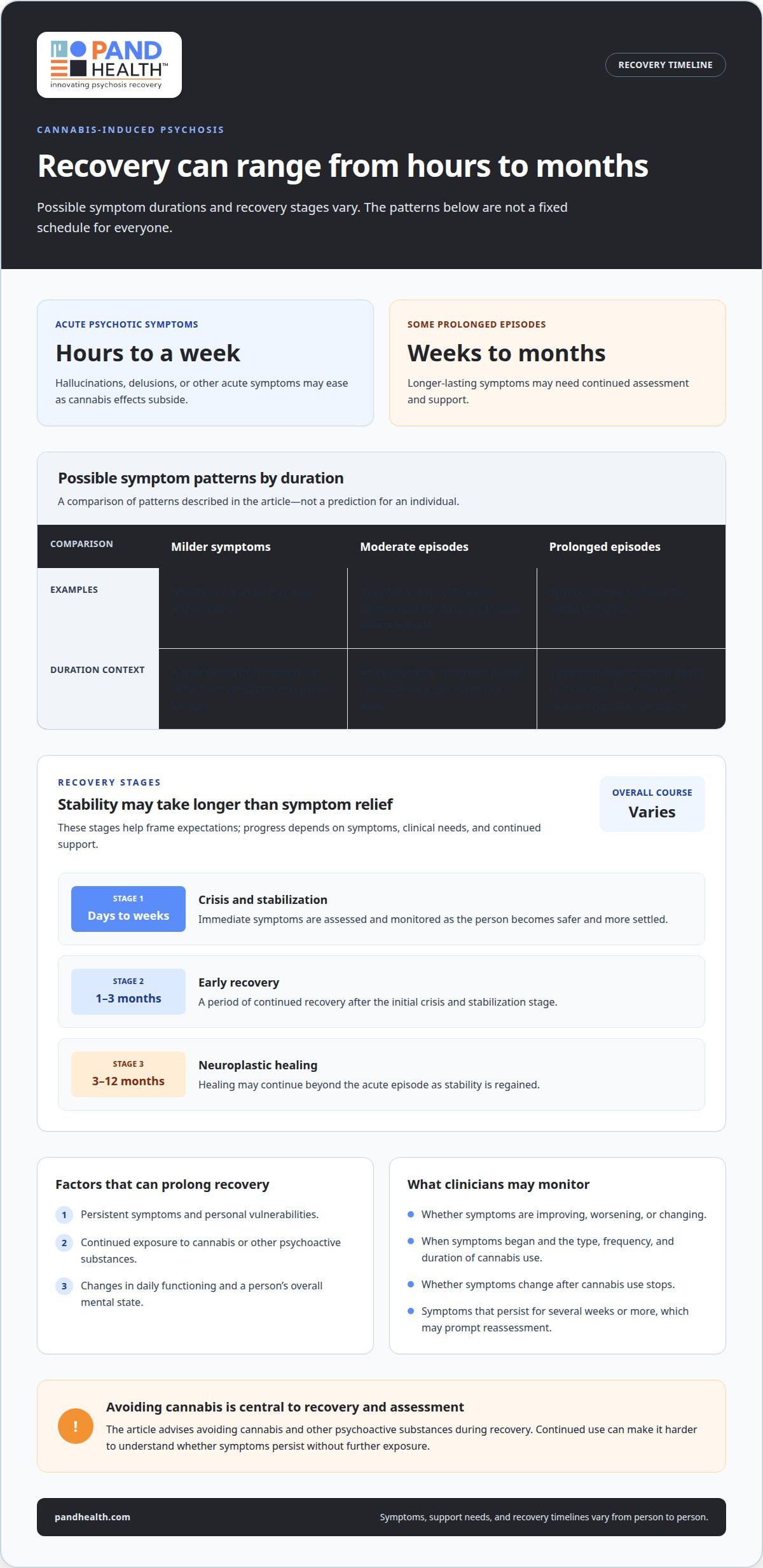
The recovery from weed psychosis timeline can range from hours to months. The course depends on symptom severity, cannabis exposure, personal vulnerabilities, and the support needed to regain stability. The stages below describe possible patterns, not a fixed schedule for everyone.
Symptom Duration and Severity
Symptom duration describes how long changes such as paranoia, hallucinations, or delusions continue. Mild anxiety or paranoia may last for hours, while acute psychotic symptoms can last from a few hours to a week. In some moderate episodes, symptoms continue for several hours or days as cannabis effects subside. Prolonged episodes may last weeks to months.
These ranges help distinguish a brief episode from symptoms that need continued assessment. For example, paranoia easing within hours differs from hallucinations persisting for days. Symptoms lasting several weeks or more may lead clinicians to reassess for a primary psychotic disorder or a co-occurring condition. Duration is one part of the picture, alongside changes in daily functioning and a person’s overall mental state.
Acute Symptom Stabilization
Acute stabilization means reducing immediate psychotic symptoms and monitoring changes as the person becomes safer and more settled. Close monitoring may be needed, especially when hallucinations, delusions, or severe confusion affect daily functioning. The first priority is assessing current symptoms and whether they are improving, worsening, or changing.
Medical professionals may prescribe antipsychotic medication to reduce hallucinations or delusions, with treatment managed under medical supervision. They can also observe how symptoms change after cannabis use stops. This information supports assessment and care planning. A calmer period is meaningful, but it doesn’t by itself explain why psychosis occurred or determine what support may be needed next.
Factors That Prolong Recovery
Factors that may prolong recovery include persistent symptoms, personal vulnerabilities, and continued exposure to cannabis or other psychoactive substances. For people with predisposing factors, symptoms may take weeks to ease or require medical intervention. Higher-potency cannabis products are also identified as a risk factor for later long-term psychotic disorders after THC-induced psychosis.
THC can trigger psychotic symptoms, including paranoia or hallucinations, in some people. Symptoms often emerge within hours of consuming cannabis and may fade as THC is metabolized and excreted, which can take a few days to a week. If symptoms outlast the immediate effects, clinical attention can help assess their course. Understanding the recovery from weed psychosis timeline means considering both acute symptoms and the longer process of regaining stability.
Recovery can extend beyond the acute episode. The crisis and stabilization stage may last days to weeks, while early recovery is described as lasting 1-3 months. Neuroplastic healing may continue for 3-12 months. These stages can help frame expectations, but a person’s progress depends on changing symptoms, clinical needs, and continued support.
What Is Cannabis-Induced Psychosis?
Cannabis-induced psychosis involves psychotic symptoms linked to cannabis use. Understanding the symptoms, duration, and clinical assessment can help distinguish a brief episode from concerns that need ongoing attention.
Signs of Cannabis-Induced Psychosis
Cannabis-induced psychosis describes symptoms such as hallucinations or delusions that arise in connection with cannabis use. Someone may hear or see things others don’t, or hold beliefs that feel real but aren’t shared by others.
These changes can affect judgment, communication, and a person’s sense of safety. Symptoms often develop within hours of consuming cannabis. Noting when they began, what was used, and how they change after stopping can help clinicians assess the situation.
Typical Acute Episode Duration
An acute episode is the initial period of pronounced psychotic symptoms after cannabis use. Hallucinations and delusions may last from a day to 48 hours, while acute symptoms overall can last from a few hours to a week.
Some people start feeling better within several hours to a few days after cannabis effects subside. Others experience symptoms for several days or weeks, and prolonged episodes can last weeks to months. Duration alone doesn’t establish whether cannabis caused the episode or whether another condition is involved.
Clinical assessment helps examine that distinction. A clinician may review medical history and conduct a psychological evaluation while considering other possible causes, including schizophrenia and bipolar disorder. There is no specific test that directly diagnoses cannabis-induced psychosis. Tests can help rule out medical causes or other substance-related explanations.
The pattern of cannabis use also matters. Clinicians consider the type, frequency, and duration of use, alongside when symptoms began. They may monitor whether symptoms change after cannabis use stops. Improvement after stopping can inform assessment, while symptoms that persist for several weeks or more can prompt reassessment for a primary psychotic disorder or a co-occurring condition.
Stopping cannabis is central to recovery and assessment. People recovering from cannabis-induced psychosis are advised to avoid cannabis and other psychoactive substances. Continued use can complicate observation because clinicians need to understand whether symptoms persist without further exposure.
Risk-reduction choices include avoiding high-THC products, using cannabis less often, or delaying use. For young people, delaying cannabis use until age 25 is recommended in the research guidance. These measures don’t replace clinical care after psychotic symptoms appear. A person experiencing hallucinations or delusions needs a timely assessment, especially if symptoms continue after stopping cannabis.
What Does Recovery Look Like?
Recovery can mean more than the end of hallucinations or delusions. It also includes rebuilding daily stability, addressing mental health needs, and responding to lingering effects with appropriate care.
Professional Treatment and Emergency Care
Professional treatment begins with assessing symptoms, safety, and possible causes. A clinical evaluation may include a psychological assessment and review of medical history. Clinicians also consider whether another condition, such as a mood disorder, contributes to the experience. This matters because cannabis-related psychosis and a primary psychotic disorder can require different ongoing care.
During acute treatment, clinicians may use antipsychotic medication to reduce hallucinations or delusions. Medication should be taken under medical supervision. The care team can also monitor changes and adjust treatment as symptoms evolve. Hospital-based care may be considered when psychosis is severe enough to require emergency treatment or close observation.
When Emergency Treatment May Be Needed
Fewer than 0.5% of people who use cannabis experience psychosis severe enough to need emergency treatment. That figure does not make an individual episode less serious. Severe hallucinations, delusions, or confusion can disrupt a person’s ability to stay safe and manage basic needs. In such circumstances, urgent clinical assessment can help determine the level of care required.
Emergency treatment focuses first on immediate safety and stabilization. A hospital setting can provide close observation while clinicians assess symptoms and consider medical or substance-related causes. Next steps depend on the person’s response, mental state, and support needs. Families can share what changed, when symptoms began, and any known substance use.
Recovery and Ongoing Treatment
As acute symptoms improve, recovery may shift toward understanding and managing their effects. Cognitive behavioral therapy can help a person examine thought patterns and develop ways to respond to distress. It can complement clinical care, rather than replace assessment or medication when those are needed.
Recovery planning may also address co-occurring mental health conditions and vulnerabilities such as trauma or mood disorders. For example, persistent low mood or anxiety may need attention alongside psychotic symptoms. Identifying these needs helps shape care around the whole person, not only the cannabis-related episode.
A favorable course is more likely when treatment begins early, although some people have residual symptoms. Progress can include steadier thinking, improved daily functioning, and fewer disruptions from symptoms. Clinicians use these changes, along with ongoing mental health needs, to guide follow-up. Returning to ordinary routines can happen gradually, with care adjusted to the person’s recovery and support needs.
Abstinence and relapse prevention
After cannabis-induced psychosis, continued abstinence is central to protecting recovery. Relapse prevention adds a plan for recognizing warning signs, responding to triggers, and getting support before symptoms disrupt daily life.
Why Abstinence Matters
People recovering from cannabis-induced psychosis are advised to avoid further cannabis use. Avoiding other psychoactive substances also supports a clearer picture of mental health changes. If symptoms return, clinicians can assess them without new substance exposure complicating the situation.
Abstinence involves more than deciding not to use cannabis. It can mean identifying situations associated with use and planning how to respond. For example, if social pressure is a trigger, a person can discuss it with a counselor and plan a safer response. The aim is to reduce exposure to circumstances that could undermine recovery.
Recognizing Triggers and Early Signs
Relapse-prevention care includes educating patients and families about triggers and early signs of psychosis or substance-use relapse. Changes in sleep, rising distress, or renewed suspiciousness may be worth discussing with a mental health professional, particularly when they resemble earlier symptoms.
Families can help by noticing changes without arguing over the person’s beliefs. They can describe specific observations, such as someone becoming increasingly withdrawn or expressing new fears, and share them during follow-up care. This keeps communication focused on changes clinicians can assess, rather than blame or confrontation.
Some triggers may be linked to stress, relationships, or trauma. Discussing these connections with a qualified professional can help shape relapse-prevention support. A plan can identify personal warning signs, supportive people, and the next step if symptoms reappear. It should reflect the person’s circumstances rather than assume every trigger affects everyone in the same way.
Building Support Around Recovery
Treatment for cannabis addiction may form part of care when substance use is difficult to stop or abstinence is hard to maintain. Support can include substance-use programs, counseling, or support groups. These options address different needs: counseling can help explore patterns associated with use, while a group can provide shared support.
Family education can also strengthen the recovery environment. According to the National Institute of Mental Health, family support and education programs teach relatives about psychosis and build coping, communication, and problem-solving skills. Those skills can help families respond consistently when early signs appear.
Relapse prevention works best as ongoing support, not a one-time conversation. During follow-up, the person and care team can revisit emerging triggers, whether abstinence is holding, and what mental health needs remain. If cannabis use resumes or psychotic symptoms return, prompt clinical reassessment can help determine what support is needed next.
Long-term follow-up and recovery support
Long-term care helps track changes after acute symptoms ease and identify underlying needs. Recovery and resilience may continue for 1-3 or more years, making follow-up relevant beyond the first signs of improvement.
How can family or friends support someone recovering from cannabis psychosis? Offer calm, practical support, encourage follow-up appointments, and share specific changes with the care team. The National Institute of Mental Health (NIMH) explains that family support and education programs can build relatives’ coping, communication, and problem-solving skills.
Why Continued Follow-Up Matters
Follow-up appointments give mental health professionals a chance to review symptoms, daily functioning, and treatment needs over time. This matters especially when symptoms recur or a person has multiple risk factors. Someone may feel more settled while still having difficulty concentrating, managing stress, or returning to usual routines.
Long-term recovery focuses on preventing relapse and managing ongoing symptoms. Depending on clinical needs, care may include continued therapy, medication management, and other support. Regular contact also gives clinicians a way to reassess the diagnosis if symptoms persist or new concerns emerge. Keeping a record of changes between appointments can help describe patterns, such as recurring suspiciousness or a return of hallucinations.
Understanding Longer-Term Risks
One research estimate says 25-50% of people with THC-induced psychosis later develop schizophrenia-spectrum disorders. This is a population-level estimate, not an individual prediction. It reinforces why follow-up matters: a clinician can monitor the course and assess whether symptoms suggest an underlying condition requiring ongoing care.
Recurrent symptoms, co-occurring mental health concerns, or several risk factors can make longer-term monitoring particularly important. Follow-up can also address substance use and support continued abstinence. If psychotic symptoms return, prompt reassessment helps clarify what has changed and whether the care plan needs adjustment.
Making Support Part of Daily Life
Support between appointments can make recovery more manageable. Family members can help maintain a steady routine, listen without judgment, and communicate concerns clearly. For example, they might note a meaningful change in sleep or social withdrawal and bring that observation to the next appointment.
Family therapy can help relatives understand psychosis, improve communication, and create a more informed home environment. Community resources and support groups can also reduce isolation. Healthy routines, including adequate sleep, exercise, balanced meals, and stress reduction, can complement clinical care without replacing it.
Long-term support should reflect the person’s needs, not a fixed schedule. As stability improves, care can address relationships, work, or study goals alongside symptom management. If you’re seeking guidance about ongoing psychosis support, discuss follow-up care.
Pand Health
Pand Health supports people and families as they make sense of next steps when psychosis symptoms affect recovery. Its services include comprehensive evaluation for thought disorders and autism, psychological and social rehabilitation, social skills training, and family psychoeducation.
These services address different needs: an evaluation can clarify concerns, rehabilitation can support daily functioning, and family psychoeducation can help relatives understand psychosis and communicate more effectively. The right focus depends on the person’s symptoms and goals.
If you’re seeking support for recovery, contact Pand Health to discuss the next step.
Take the Next Step Toward Steady Recovery
Understanding the recovery from weed psychosis timeline can help with planning, but the next step is building support around the person’s needs today. A care plan can evolve as symptoms change, routines return, and new concerns become clearer. Progress may not be perfectly linear, so a setback is a reason to seek guidance, not a reason for blame.
For families, steady communication can make it easier to notice changes and support follow-up. For someone recovering, practical goals such as reconnecting with daily activities can make progress feel manageable. The right focus depends on current symptoms, personal goals, and clinical assessment.
If you’re ready to discuss support for recovery, contact Pand Health. A thoughtful next step can help bring greater clarity and direction.
Frequently Asked Questions
Can it be treated?
Yes, cannabis-induced psychosis can be treated with clinical assessment and support tailored to the person’s symptoms. Care may include monitoring, medication under medical supervision, and psychological treatment. Because psychosis can have causes beyond cannabis, clinicians also assess other possible conditions. For example, a person with continuing symptoms may need further evaluation rather than assuming the episode has ended simply because cannabis use stopped.
How long does cannabis-induced psychosis usually last?
Acute symptoms can last from a few hours to a week, while some episodes continue longer. Hallucinations or delusions may persist for a day to 48 hours, but duration varies. The key practical point is to track whether symptoms are easing, staying the same, or intensifying. If they continue or interfere with everyday safety and functioning, seek clinical assessment rather than waiting for a predicted end date.
What affects recovery time from weed-induced psychosis?
Recovery time is influenced by symptom severity, cannabis exposure, personal vulnerabilities, and co-occurring mental health conditions. The type, frequency, and duration of cannabis use also help clinicians understand the episode. For instance, ongoing symptoms alongside mood concerns may require assessment beyond the initial psychosis episode. Continued use of cannabis or other psychoactive substances can complicate recovery and make changes harder to interpret.
Can cannabis psychosis symptoms persist after stopping cannabis?
Yes, psychotic symptoms can persist after cannabis use stops. In some cases, symptoms continue for days or weeks, and prolonged episodes can last longer. Stopping use is important, but it doesn’t by itself establish the cause or rule out another condition. If hallucinations, delusions, or marked confusion remain, clinical reassessment can help evaluate ongoing symptoms and guide appropriate support.
What are the signs that cannabis psychosis is improving or getting worse?
Improvement may show as fewer hallucinations or delusions, clearer communication, and a gradual return to familiar daily activities. Worsening can involve stronger paranoia, increasing confusion, or symptoms that disrupt a person’s ability to stay safe. Look at changes over time, not just one calm conversation. A family member can share specific observations, such as new difficulty managing ordinary routines, with the care team.
What treatments help recovery from cannabis-induced psychosis?
Treatment can include clinical monitoring, antipsychotic medication prescribed under medical supervision, and psychological support. Clinicians may also assess possible co-occurring conditions and adapt care as symptoms change. Avoiding cannabis and other psychoactive substances is part of recovery planning. Family support can help with communication and follow-up, while therapy can address distress and support a return to meaningful routines.
When should someone with weed psychosis go to the emergency room?
Seek emergency care when severe hallucinations, agitation, or distress make it difficult to maintain immediate safety. Emergency assessment is also appropriate when confusion or psychotic symptoms prevent someone from managing essential needs. Stay with the person if it’s safe to do so, speak calmly, and explain the observed changes to emergency staff. Don’t delay urgent help because cannabis may have contributed to the symptoms.
What is the risk of psychosis returning after recovery from cannabis use?
Using cannabis again can expose someone to a trigger associated with an earlier psychotic episode, so continued abstinence is advised after recovery. Avoiding other psychoactive substances also supports ongoing stability. If symptoms return, note what changed and seek clinical assessment promptly. A clinician can evaluate the new symptoms, review substance exposure, and consider whether further care is needed.
Disclaimer
This article is for information and educational purposes only, and can NEVER replace a proper medical evaluation. If you or a loved one may be suffering from psychosis or the prodomal symptoms of psychosis, get evaluated by a professional as soon as possible. Early diagnosis and treatment can be life-saving.