

Teen Derealization Treatment in Los Angeles: A Guide to Recovery and Reality
Imagine watching your child drift away into a world that feels like a movie set or a foggy dream. This sense of detachment, known as derealization, can make you feel like they're losing their mind, but it's often a protective response to intense stress. Finding specialized teen derealization treatment Los Angeles families can trust is the first step toward bringing them back to reality. You aren't alone in your frustration with general therapists who don't understand dissociation or the deep anxiety you feel about your teen's ability to finish school and maintain a social life.
We understand that you want your child back, and you need a solution that works without the disruption of long-term hospitalization. Discover how specialized, data-driven treatment in Los Angeles can help your teen overcome derealization and reconnect with the world around them. This guide provides a clear path toward a precise diagnosis and introduces evidence-based programs like California OnTrack. These methods are designed to restore normalcy, helping 85% of participants return to school or work within six months. We'll explore how clinical expertise and compassionate care combine to restore your teen's future and your family's peace of mind.
Key Takeaways
- Recognize that derealization is a persistent "dream-like" state that requires a specialized psychiatric evaluation to distinguish it from general anxiety or other thought disorders.
- Learn why evidence-based interventions like Metacognitive Training (MCT) and CBT-P are more effective than standard talk therapy for addressing dissociation and thinking traps.
- Discover the California OnTrack model, a specialized teen derealization treatment Los Angeles families can access to receive Coordinated Specialty Care that integrates cognitive remediation.
- Understand how data-driven programs achieve an 85% rate of return to school or work, proving that recovery and social reintegration are the expected outcomes of treatment.
- Identify the essential criteria for selecting a recovery center, including expertise in First Episode Psychosis and APA-recommended cognitive remediation techniques.
What is Teen Derealization? Recognizing the 'Dream-Like' State
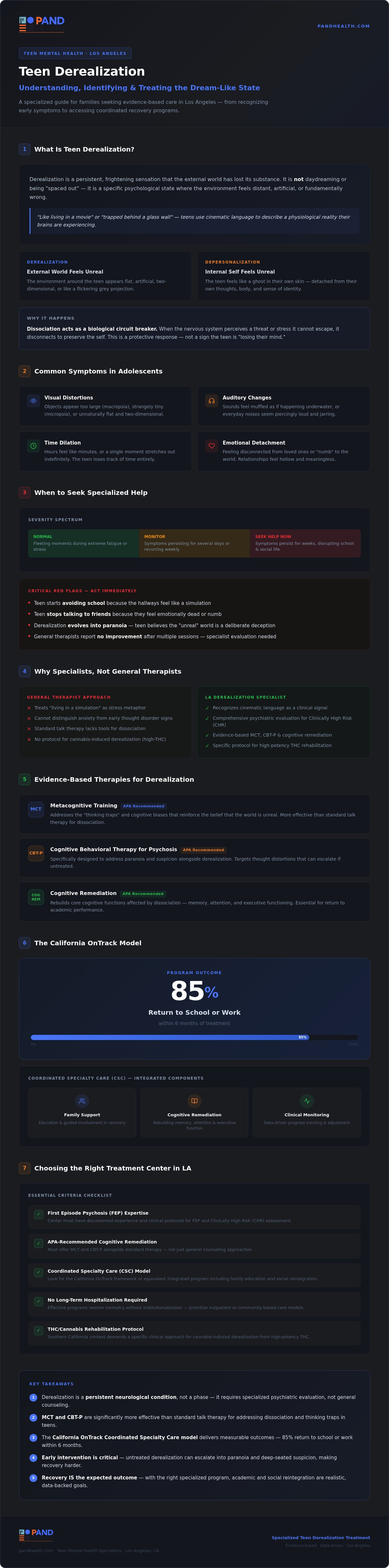
Derealization is more than a passing moment of daydreaming or being "spaced out." It's a persistent, often frightening sensation that the environment around you has lost its substance. For a teenager, the world may suddenly feel two-dimensional, artificial, or fundamentally "wrong." This isn't a lack of imagination; it's a specific psychological state where the external world feels distant or distorted. It's as if the vivid colors of life have been replaced by a grey, flickering projection.
Adolescents often use cinematic language to describe their distress. They might say they're "living in a movie" or "trapped behind a glass wall." These descriptions aren't exaggerations; they're attempts to articulate a physiological reality. Dissociation acts as a biological circuit breaker. When the nervous system perceives a threat or stress it cannot escape, it disconnects to preserve the self. While derealization targets the external environment, it's often paired with depersonalization, a state where the teen feels like a ghost in their own skin, detached from their own thoughts and body.
Common Symptoms of Derealization in Adolescents
Symptoms often manifest through profound sensory distortions that make the world feel unpredictable. These experiences can include:
- Visual distortions: Objects appearing too large (macropsia), strangely tiny (micropsia), or unnaturally flat.
- Auditory changes: Sounds that seem muffled as if happening underwater, or everyday noises that feel piercingly loud.
- Time dilation: A distorted sense of time where hours feel like minutes, or a single moment stretches out indefinitely.
- Emotional detachment: A perceived lack of connection to loved ones or a feeling of being "numb" to surroundings.
When 'Feeling Off' Becomes a Clinical Concern
Distinguishing between a "bad day" and a clinical condition is essential for long-term health. Fleeting moments of detachment are common during periods of extreme fatigue, but symptoms that persist for weeks require a professional evaluation. This is where seeking specialized teen derealization treatment Los Angeles families trust becomes a lifeline. When a teen starts avoiding school because the hallways feel like a simulation, or when they stop talking to friends because they feel emotionally dead, the condition has reached a critical stage.
This period of detachment represents a critical window for intervention. If left unaddressed, persistent derealization can evolve into paranoia or deep-seated suspicion, where the teen begins to believe the "unreal" world is a deliberate deception. Recognizing these red flags early is the best way to ensure a return to normal academic and social functioning. If you've noticed these patterns in your child, you can reach out for a specialized evaluation at Pand Health to begin the process of reconnecting them with reality.
Teen Derealization: Specialized Evaluation in Los Angeles
Many parents first seek help from school counselors or general talk therapists, only to find that their teen's symptoms remain unchanged or even intensify. While these professionals are vital for general wellness, they often lack the specific training to distinguish between typical adolescent anxiety and the early signs of a thought disorder. When a teen describes the world as a "simulation," a generalist might treat it as a metaphor for stress. A specialist in teen derealization treatment Los Angeles families rely on knows that these descriptions often signal a profound shift in how the brain processes external stimuli.
A comprehensive psychiatric evaluation is the only way to move past guesswork. This process involves a deep dive into the teen's cognitive functioning to identify if they are "Clinically High Risk" (CHR) for psychosis. Identifying this risk early isn't about labeling a child; it's about opening a window for preventative care. In Southern California, we also must account for the prevalence of high-potency THC. Cannabis-induced derealization is a distinct clinical challenge that requires a specific rehabilitation approach to clear the "fog" and protect the developing brain from long-term neurological shifts.
The Link Between Derealization and Early Psychosis
Derealization often serves as a prodromal, or early warning, sign of a potential psychotic break. It's the brain's way of signaling that its connection to reality is fraying. By intervening during this early phase, we can often prevent the progression into more severe symptoms. Specialized thought disorder assessments provide families with the precise data they need to understand what's happening. This clarity replaces the fear of "losing one's mind" with a structured, evidence-based roadmap for recovery and stability.
Pand Health's Evaluation Process in Los Angeles
Our evaluation process at Pand Health is built on clinical rigor and deep empathy. We utilize evidence-based tools specifically designed for the evaluation of thought disorders and autism, ensuring that we capture the nuances of each teen's experience. We don't just assess the individual in a vacuum. Our team integrates family history and psychosocial history to understand the full context of the symptoms. This thoroughness is a cornerstone of our teen derealization treatment Los Angeles program, helping us achieve a 6% rehospitalization rate compared to the 10% industry average. If you're ready to gain a clear understanding of your teen's symptoms, you can schedule a psychiatric evaluation at our West Olympic Blvd location to start the process of reconnection.
Evidence-Based Therapy for Paranoia and Suspicion in Los Angeles
Standard talk therapy is often the first stop for families, but for complex dissociation, it can be insufficient. While general therapy explores emotional roots, it doesn't always provide the tools to navigate a fractured reality. This is where specialized teen derealization treatment Los Angeles programs excel by utilizing Cognitive Behavioral Therapy for Psychosis (CBT-P). Unlike traditional methods, CBT-P focuses directly on the teen's perceptions, helping them evaluate the evidence for their "dream-like" state rather than just discussing the feelings it causes. This shift from exploration to evidence-based reality-testing is vital for stabilization.
Beyond CBT-P, we integrate Social Cognition and Interaction Training (SCIT). This is a group-based intervention that helps teens improve their social reality-testing. When a teen feels detached, they often misinterpret facial expressions or social cues as threatening or unreal. SCIT provides a structured environment to practice these skills, reducing the isolation that often accompanies derealization. By learning to distinguish between internal fears and external facts, teens can begin to trust their surroundings once again. This method builds a bridge back to the social world they've felt excluded from for so long.
Metacognitive Training (MCT): Correcting Cognitive Biases
MCT is a specialized approach that addresses the "thinking traps" common in dissociative states. One of the most frequent traps is "jumping to conclusions," where a teen quickly forms a belief based on minimal or distorted information. This cognitive bias can fuel paranoia and suspicion, making the world feel like a hostile place. By recognizing these biases, teens can lower their anxiety and regain a sense of mastery over their own thought processes. Our program features certified MCT instructors who ensure this high-fidelity care is delivered with precision, providing a steady hand as the teen learns to challenge their own distorted perceptions.
Cognitive Remediation and Brain Training
Recovering from derealization requires more than just conversation; it requires re-training the brain's hardware. We employ computer-assisted cognitive remediation twice daily to sharpen attention, memory, and executive function. This isn't just screen time. It's a rigorous clinical exercise that works in synergy with high-intensity fitness coaching. Physical activity increases brain-derived neurotrophic factor (BDNF), which makes the brain more receptive to the cognitive gains from training. This multi-modal approach has a documented impact, often helping participants move from the 33rd to the 50th percentile in cognitive performance within a few months. This improvement isn't just a number; it represents a teen's ability to focus in class and engage fully with their environment again.
The California OnTrack Model: A New Standard for Teen Recovery
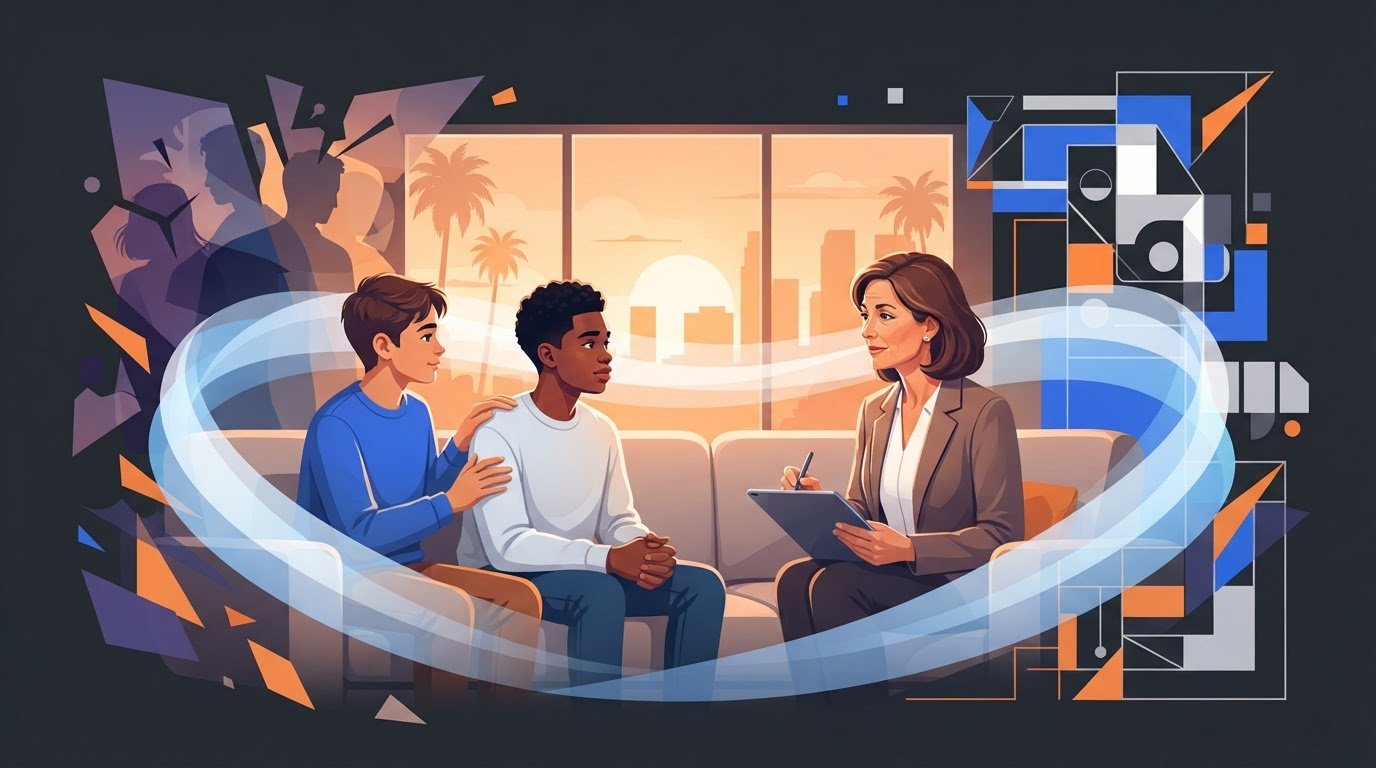
Traditional treatment models often rely on isolation, but the gold standard for modern recovery is Coordinated Specialty Care (CSC). This approach doesn't just treat symptoms in a vacuum; it treats the teen as a whole person within their community. At Pand Health, the California OnTrack for Teens program represents a significant evolution of the standard NIMH NAVIGATE framework. While the standard model provides a strong foundation, we augment it with specialized interventions like cognitive remediation and Metacognitive Training (MCT). This level of integration makes our teen derealization treatment Los Angeles program a leader in the field, moving beyond stabilization toward true restoration.
Our philosophy is simple: Recovery is the expectation. We don't settle for "managing" a condition. Instead, we focus on the restoration of a teen's life. This commitment to excellence is reflected in our outcomes. We maintain a 6% rehospitalization rate, which is significantly lower than the 10% industry average. By providing high-fidelity care in an outpatient setting, we allow teens to stay connected to their families and their lives, which is often the most powerful catalyst for healing. If you're seeking a program that prioritizes your child's long-term success, you can contact our Los Angeles team to learn more about current enrollment.
Supported Education and Employment (SEE)
One of the greatest fears parents face is that their teen will fall behind in school or lose their chance at a career. The California OnTrack model addresses this directly through Supported Education and Employment (SEE). We provide vocational rehabilitation services that include school advocacy, resume building, and interview preparation. Our goal is clear: 85% of our participants are active in education or employment after just six months in the program. We believe that staying engaged with academic and professional goals is not just a result of recovery; it's a vital part of the recovery process itself.
Family Psychoeducation and Support
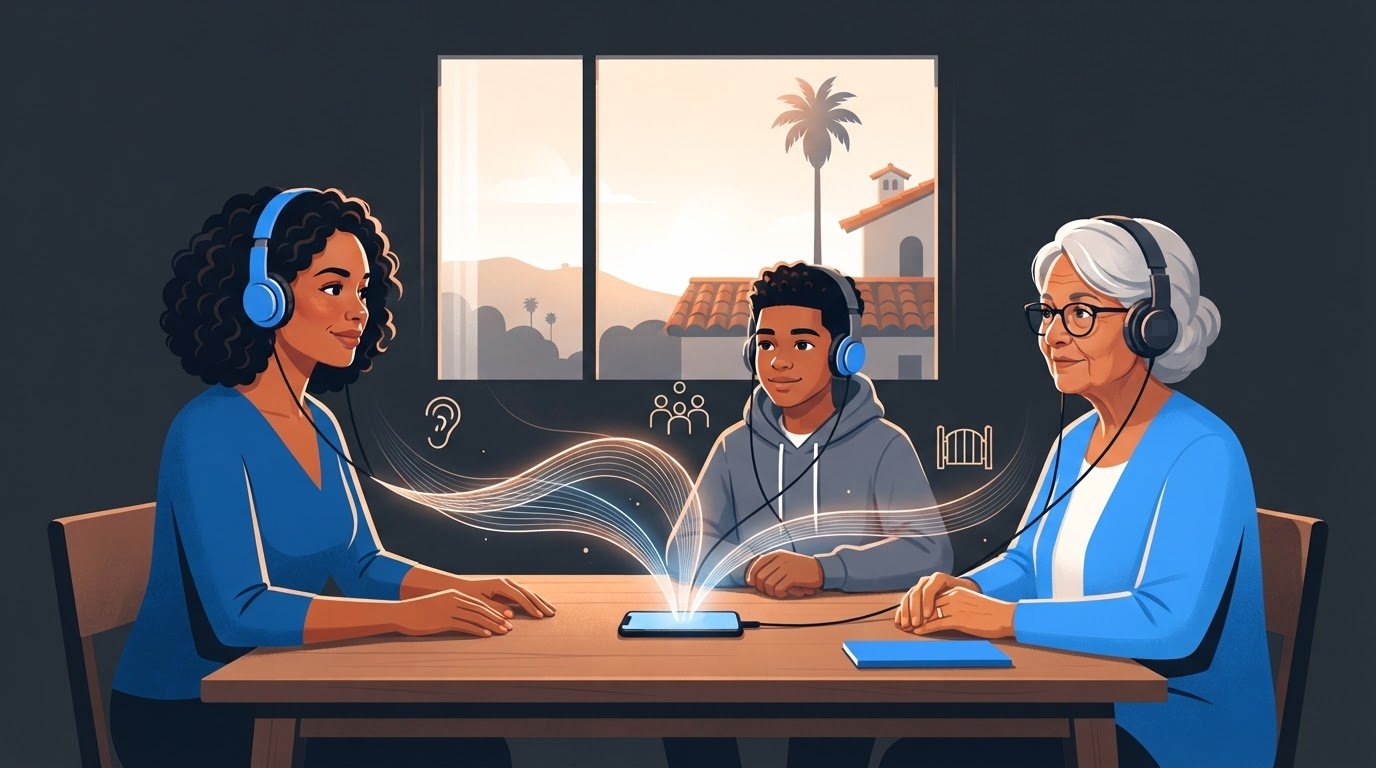
A teen doesn't recover in isolation; the health of the family unit is a critical factor in long-term stability. Our program includes intensive family therapy and psychoeducation to help parents understand the nuances of dissociation and thought disorders. By reducing stress within the home and improving communication, we create a supportive environment that prevents relapse. For parents who want to learn more between sessions, we offer The Mind Exposed Podcast. This resource provides expert insights and stories of hope, ensuring that families have the knowledge they need to be effective allies in their teen's journey back to reality.
Choosing the Right Teen Derealization Treatment Center in Los Angeles
Selecting a provider for your child is a decision that shapes their future trajectory. When evaluating options for teen derealization treatment Los Angeles offers, it's essential to look beyond the surface of general counseling. High-quality care is defined by specific clinical markers that ensure your teen isn't just "getting by" but is actively recovering. You should prioritize centers that provide APA-recommended cognitive remediation. This isn't a luxury; it's the clinical standard for addressing the underlying neurocognitive shifts that occur when a teen feels detached from reality.
A reputable facility must also demonstrate deep experience with First Episode Psychosis (FEP) and individuals at Clinically High Risk (CHR). This specialization allows for a more nuanced understanding of derealization as a potential precursor to more severe thought disorders. A multidisciplinary team is another non-negotiable requirement. Your teen's care should be managed by a collaborative group that includes board-certified psychiatrists, vocational coaches, and peer specialists. Finally, prioritize outpatient models that emphasize community reintegration. These programs allow for real-world social rehabilitation, ensuring your teen practices their new skills in the environment where they actually live and learn.
Why Pand Health is the Lifeline for LA Families
Pand Health stands as a unique lifeline because it's the only outpatient Coordinated Specialty Care (CSC) program in Southern California that fully integrates cognitive remediation and Metacognitive Training (MCT). Our location on West Olympic Blvd serves as a hub for families who have often felt lost in a fragmented mental health system. One of our most impactful achievements is our ability to reduce the average length of inpatient hospital stays from 40 days down to just 7 days. By providing intensive, high-fidelity care in a familiar setting, we help teens return to their lives faster, which is where true recovery happens. This model is why we maintain a 6% rehospitalization rate, significantly outperforming the 10% industry average.
Taking the First Step Toward Reality
Preparing for an initial psychiatric evaluation can feel overwhelming, but it's the most important step you'll take to bring your child back to the present. Gather any previous school reports or medical records that might show a shift in performance or personality. Most importantly, trust your intuition. If something feels "off" in your child's behavior, it usually is. You don't need to wait for a crisis to seek help; early intervention is the most effective way to protect your teen's cognitive health and social future. We're here to provide the clinical expertise and steady guidance your family needs during this time. If you're ready to move toward a clear diagnosis and a proven path to recovery, you can schedule a consultation with Pand Health today.
Restoring Your Teen's Connection to Reality
Reclaiming a sense of reality is a deliberate process that requires more than just time; it requires specialized intervention. You've learned that derealization isn't a permanent state but a signal from the brain that needs a precise, data-driven response. By choosing teen derealization treatment Los Angeles families can trust, you move beyond general support and toward a model that prioritizes long-term social and academic success. This approach ensures that your child isn't just managed, but is actively restored to their community.
Our team at Pand Health provides the only Coordinated Specialty Care program in Southern California featuring APA-recommended cognitive remediation and certified MCT instructors. These advanced clinical tools are the reason 85% of our participants return to school or work within just six months of starting treatment. You don't have to navigate this storm alone. We act as your steady guide, offering the clinical expertise necessary to turn a period of crisis into a story of resilience. Start Your Teen's Journey to Recovery. Contact Pand Health Today.
There is a clear path back to the vibrant life your teen deserves. We are ready to help them find it and reconnect with the world around them.
Frequently Asked Questions
What is the difference between derealization and a psychotic break?
Derealization is a dissociative symptom where the world feels unreal, but the individual typically maintains "insight," meaning they know their perception is distorted. In contrast, a psychotic break involves a more profound detachment from reality where a person may experience hallucinations or delusions they believe are absolutely real. While derealization can be a precursor to psychosis, it doesn't always lead to a full break if addressed early with specialized care.
Can teen derealization be cured without long-term hospitalization?
Yes, recovery is entirely possible through intensive outpatient models that don't require long-term hospitalization. Specialized teen derealization treatment Los Angeles programs, like California OnTrack, focus on "real-world" rehabilitation. These evidence-based approaches allow teens to remain in their homes while receiving high-fidelity care, which has contributed to our 6% rehospitalization rate compared to the 10% industry average.
How does cannabis use affect derealization in teenagers?
Cannabis use, particularly high-potency THC, can significantly worsen or even trigger persistent derealization in adolescents. The drug interferes with the brain's filtering systems, often leading to a "fog" that mimics or intensifies dissociative symptoms. In some cases, this can evolve into cannabis-induced psychosis, requiring a specific rehabilitation approach to clear the symptoms and protect the developing teenage brain from long-term shifts.
What is the California OnTrack program for teens in Los Angeles?
The California OnTrack program is a Coordinated Specialty Care (CSC) model designed specifically for teens and young adults facing early psychosis or high-risk symptoms. It integrates multiple services, including psychotherapy, family support, and cognitive remediation, into one unified plan. This program augments the standard NIMH NAVIGATE framework with specialized tools like Metacognitive Training to ensure a more comprehensive and personalized recovery process.
How long does teen derealization treatment usually take?
The duration of treatment varies based on the individual's needs, but many families see significant progress within the first few months. Our data shows that 85% of participants in our specialized program are back in school or working within six months. While the initial stabilization phase is intensive, the long-term goal is a gradual transition back to full independence and normal social functioning.
Will my teen be able to stay in school while receiving treatment?
Staying in school is a primary goal of our treatment philosophy. Through the Supported Education and Employment (SEE) component of our teen derealization treatment Los Angeles program, we provide school advocacy and vocational coaching. This ensures that your teen doesn't fall behind academically while they are learning the tools to manage their symptoms and reconnect with reality in their natural environment.
Does insurance cover specialized therapy for paranoia and suspicion in LA?
Many insurance plans do cover components of specialized therapy, though the level of coverage depends on your specific provider and policy. Since these are evidence-based psychiatric interventions for thought disorders, they are often recognized as medical necessities. We recommend contacting your insurance carrier or our office directly to verify benefits for intensive outpatient services and specialized psychiatric evaluations.
What should I do if my teen refuses to go to therapy?
It's common for teens to feel hesitant or fearful about starting treatment when they feel disconnected from reality. We suggest focusing on the "recovery is the expectation" philosophy rather than focusing solely on the illness. Parents can also listen to the "Mind Exposed" podcast to learn strategies for engaging their children and reducing the stigma surrounding specialized psychiatric care, making the first step feel less like a confrontation and more like a lifeline.
Related reading
- What is Coordinated Specialty Care?
- Early / first-episode psychosis program
- Metacognitive Training (MCT)
- Social Cognition and Interaction Training (SCIT)
- Cognitive health and cognitive remediation
- Jumping to conclusions bias
- Cannabis-induced psychosis
- The architecture of cannabis-induced psychosis
- Neurodivergent care
- Learning about psychosis and thought disorders