


Schizotypal Personality Disorder Evaluation in LA
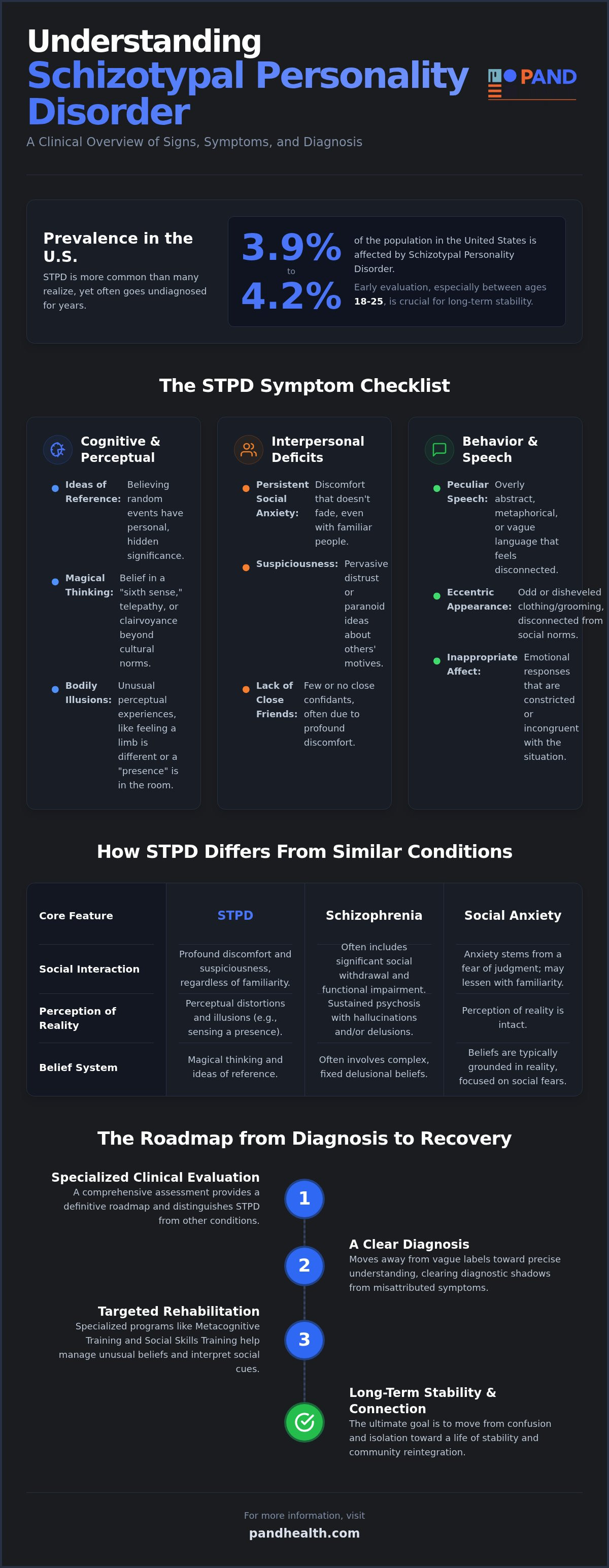
What if the social isolation and unusual perceptions you've experienced aren't just personality quirks or standard social anxiety? Research indicates that schizotypal personality disorder affects between 3.9% and 4.2% of people in the United States, yet many struggle for years without an accurate name for their experience. If you've been searching for answers, a professional evaluation for schizotypal personality disorder LA can finally offer the clinical clarity you deserve. It's common to worry that these experiences signal a schizophrenia diagnosis, but STPD is a distinct condition that requires a specialized, empathetic approach to care.
We understand that finding a specialist in Los Angeles who truly grasps the nuances of thought disorders can feel like a daunting task. You shouldn't have to navigate this journey alone. In the following sections, you'll discover the specific signs of STPD and learn how a comprehensive clinical assessment at our Olympic Blvd location provides a roadmap for recovery. We'll outline the evaluation process and show you how this diagnostic step leads directly to social skills training and specialized rehabilitation, helping you move from confusion toward a life of stability and connection.
Key Takeaways
- Learn to distinguish Schizotypal Personality Disorder from social anxiety and schizophrenia to ensure you receive the most effective, targeted care.
- Identify the subtle signs of perceptual distortions and social deficits that often go misunderstood without a professional clinical lens.
- Understand the steps involved in a specialized evaluation for schizotypal personality disorder LA and how it provides a definitive roadmap for your future.
- Discover how the California OnTrack model uses Metacognitive Training to help individuals manage unusual beliefs and restore daily stability.
- See how a clear diagnosis opens doors to specialized social skills training and community-focused rehabilitation designed for long-term success.
Understanding Schizotypal Personality Disorder (STPD)
Schizotypal Personality Disorder (STPD) is frequently dismissed by the public as mere social awkwardness or a quirky personality. However, from a clinical perspective, it represents a distinct and often distressing pattern of inner experience and behavior. It exists on a spectrum of thought disorders, bridging the gap between severe social anxiety and the more pronounced symptoms of schizophrenia. While someone with social anxiety primarily fears judgment, a person with Schizotypal Personality Disorder often experiences deeper perceptual distortions and a profound sense of being fundamentally different from the rest of the world.
Identifying these traits early is critical for long term stability. The window between ages 18 and 25 is often when symptoms become most disruptive. This is the stage where academic, professional, and social demands increase, making it harder to mask underlying challenges. Seeking a specialized evaluation for schizotypal personality disorder LA during this period can change the trajectory of a young adult's life. It moves the conversation away from vague labels and toward a precise clinical roadmap that prioritizes recovery and community reintegration.
The Core Features of Schizotypal Personality
Individuals with STPD often display peculiar speech patterns. They might use language that is overly abstract, metaphorical, or detailed in a way that makes communication feel slightly disconnected to others. Unlike standard anxiety, the intense social discomfort associated with STPD doesn't fade with familiarity. Even with close family, a sense of suspiciousness or magical thinking may persist. This might include believing they have a sixth sense or interpreting random events as having personal, hidden significance, often referred to as ideas of reference.
Why Early Evaluation is a Lifeline
Early intervention acts as a protective barrier. It helps prevent the potential transition from personality traits into full psychosis. By identifying these needs early, clinicians can introduce specialized social cognition training that focuses on how to interpret social cues accurately. An evaluation also clears the diagnostic shadow. This occurs when symptoms are incorrectly blamed on depression or general anxiety, leaving the root cause untreated. If you or a loved one are experiencing these challenges, reaching out to a professional through our contact page is the first step toward clarity and specialized care.
The STPD Symptom Checklist: Common Signs and Behaviors
Identifying the symptoms of Schizotypal Personality Disorder requires a nuanced clinical perspective because many behaviors can mimic other conditions. It's not simply about being a "loner" or having niche interests. Instead, clinicians look for a persistent pattern of social and interpersonal deficits marked by acute discomfort in close relationships. When families seek an evaluation for schizotypal personality disorder LA, they often describe a loved one who seems to live in a world of their own, shaped by unusual perceptions that others don't share.
Perceptual distortions are a hallmark of this condition. This might manifest as feeling a "presence" in an empty room or experiencing bodily illusions, such as sensing a limb is heavier or different than it actually is. In a city as diverse as Los Angeles, eccentricities in clothing or grooming are common, but for those with STPD, these choices often feel disconnected from any specific subculture or fashion trend. They may appear noticeably disheveled or wear clothing that is entirely inappropriate for the weather or setting, often accompanied by a deep-seated suspiciousness regarding the motives of strangers.
Cognitive and Perceptual Warning Signs
Many individuals struggle with "magical thinking," which involves a belief in telepathy, clairvoyance, or a "sixth sense" that goes beyond cultural or religious norms. Ideas of reference represent a core cognitive symptom, defined as the belief that coincidental events or external occurrences have a strong and direct personal significance. You can find a detailed breakdown of these diagnostic markers in the STPD Symptom Checklist provided by the NIH. Beyond these beliefs, many people with STPD face metacognitive challenges, meaning they find it difficult to "think about their own thinking" or objectively question whether their perceptions are accurate.
Interpersonal and Emotional Indicators
Social anxiety in STPD is unique because it's rarely rooted in a fear of being judged for one's flaws. Instead, it's driven by paranoid ideation and the belief that others have malevolent intentions. This often leads to a lack of close friends outside of the immediate family. During social interactions, the person may display a constricted affect, showing very little emotional range or responding with inappropriate laughter or anger. If these patterns feel familiar, scheduling a professional evaluation for schizotypal personality disorder LA is a vital step toward understanding these experiences and finding a path to relief. Professional guidance can help distinguish these symptoms from temporary stress and provide a clear framework for long term wellness.
Differential Diagnosis: Distinguishing STPD from Autism and Schizophrenia
Correctly identifying Schizotypal Personality Disorder (STPD) is a complex clinical task because its symptoms frequently intersect with other neurodivergent profiles. Families often arrive at our clinic wondering if they are seeing signs of high-functioning autism or perhaps the early stages of a more severe thought disorder. A precise evaluation for schizotypal personality disorder LA is the only way to disentangle these overlapping threads. For example, while both Schizoid and Schizotypal personalities involve social withdrawal, the driver is entirely different. A person with Schizoid traits typically has a genuine lack of interest in social connection. In contrast, someone with STPD often wants connection but is held back by paranoid fears or unusual beliefs that make interaction feel unsafe.
In some cases, STPD-like symptoms occur during the "prodromal" phase. This is the period leading up to a first episode of schizophrenia. Distinguishing between a stable personality style and a developing psychotic disorder requires high-level diagnostic tools and clinical experience. Our specialists utilize standardized assessments such as the Positive and Negative Syndrome Scale (PANSS) or the Scale for the Assessment of Negative Symptoms (SANS). These tools allow us to measure the severity of these experiences objectively and determine if the individual is at a clinically high risk for transitioning into psychosis.
The Overlap with Autism Spectrum Disorder (ASD)
Distinguishing between ASD and STPD requires looking beyond social awkwardness. In autism, social challenges usually stem from a lack of "know-how" regarding social cues and a preference for repetitive routines. In STPD, social interaction is disrupted by "magical thinking" or the feeling that others have hidden agendas. Despite these different drivers, both profiles benefit significantly from targeted clinical intervention. Specialized Social Skills Training helps individuals in both groups learn to interpret social environments more accurately. This reduces the isolation that often accompanies these diagnoses and fosters a sense of community belonging.
Avoiding Misdiagnosis in Young Adults
Los Angeles is a diverse metropolis where cultural norms vary widely. It's essential for a clinician to understand what is truly "odd" versus what is culturally specific to the individual. Additionally, the prevalence of cannabis use in Southern California can cloud the diagnostic picture. Cannabis-induced symptoms can sometimes mimic the perceptual distortions of STPD, leading to confusion for both the patient and their family. A thorough evaluation for STPD must account for these external factors while also examining family history. This history often reveals a genetic link to the broader schizophrenia spectrum. By taking this holistic view, we ensure that every young adult receives a diagnosis that reflects their true needs.
What to Expect During an Evaluation for STPD in Los Angeles
Starting the journey for an evaluation for schizotypal personality disorder LA is a brave step toward reclaiming stability. It's natural to feel a mix of apprehension and hope when seeking specialized care. We prioritize building a sense of safety from the very first meeting. An initial psychiatric consultation isn't just about ticking boxes. It's about establishing a relationship where you feel heard and understood. This phase is crucial for distinguishing between temporary crises and long standing personality patterns that require a more nuanced approach.
A thorough assessment is not a single afternoon appointment. It's a methodical process that typically involves 15 to 25 hours of clinical work. This time is dedicated to interviews, standardized testing, and a deep review of your medical and developmental history. We also integrate family psychoeducation early in the process. By involving your support system, we ensure that everyone understands the clinical findings and the specific roadmap for recovery. This collaborative atmosphere helps reduce the fear often associated with a new diagnosis.
Navigating the LA Healthcare Landscape
Los Angeles offers many mental health resources, but finding a specialist who truly understands thought disorders is essential. Many families in West Los Angeles or near our Olympic Blvd location start with general therapists. They often find that their needs require a more specialized touch. A psychosis specialist has the niche knowledge to identify subtle perceptual shifts that others might miss. Before your first appointment, ask your provider about their specific experience with the schizophrenia spectrum. Understanding their methodology will help you feel more confident in the results.
The Comprehensive Assessment Components
A professional evaluation for schizotypal personality disorder LA is data driven and precise. We use structured interviews, such as the SCID-5, to identify personality patterns with clinical authority. This is often paired with cognitive testing to measure executive function and social cognition. These tests help us understand how your brain processes information and interprets social environments. Based on these results, we can discuss specialized paths like the California OnTrack program. This early intervention model is designed to move you quickly from assessment to active recovery.
If you're ready to move past the confusion and find a clear path forward, our team is here to guide you through every step of the process. You can schedule your clinical evaluation today to begin your journey toward lasting clarity and specialized support.
From Diagnosis to Recovery: Specialized Care at Pand Health
An accurate diagnosis is a starting point, not a destination. Once you've completed an evaluation for schizotypal personality disorder LA, the focus shifts toward building a life defined by meaning rather than symptoms. At Pand Health, we utilize the California OnTrack model. This Coordinated Specialty Care (CSC) approach is data driven and designed for early intervention. We believe that recovery isn't just a possibility; it's the expectation. Our programs are built to move individuals beyond their diagnosis and back into the vibrant life of Los Angeles.
A cornerstone of our intervention is Metacognitive Training (MCT). We're the only CSC program in Southern California with certified MCT instructors. This specialized training helps individuals manage the odd beliefs or perceptual distortions that often accompany STPD. By teaching patients to "think about their thinking," we've documented a 19 point improvement on PANSS scales. This progress translates to real world stability. It reduces the likelihood of hospitalization and empowers individuals to pursue their goals with confidence. Social Skills Training (SST) then acts as the bridge back to the community, providing the tools to navigate social environments that once felt overwhelming.
The Only Augmented CSC Program in Southern California
Our methodology pairs clinical rigor with a holistic view of wellness. We integrate high intensity fitness and computerized brain training to ensure the mind and body are supported simultaneously. This "augmented" approach sets a new standard for care in the region. We also provide Supported Education and Employment (SEE). This ensures that students can return to their studies and workers can maintain their careers while receiving treatment. We don't just treat symptoms; we support the restoration of a normal, productive life.
Taking the Next Step
If you're ready to find clarity, the first step is scheduling a comprehensive psychiatric evaluation at our Olympic Blvd location. This process is thorough, empathetic, and designed to provide a definitive path forward. We also emphasize the role of family therapy in long term wellness. When a family understands the clinical nuances of STPD, they become a powerful part of the recovery team. You don't have to navigate this journey in isolation. Expert guidance is available to help you or your loved one achieve lasting stability and community reintegration.
Contact Pand Health for a confidential assessment in Los Angeles and begin the transition from confusion to a structured, hopeful recovery plan.
Reclaiming Your Future with Specialized Care
Living with the uncertainty of unusual perceptions or social isolation can feel like navigating a storm without a compass. A specialized evaluation for schizotypal personality disorder LA is the vital first step in transforming that confusion into a clear roadmap for recovery. By distinguishing personality traits from clinical pathology, you gain access to interventions like Metacognitive Training that are specifically designed to restore stability and confidence in your daily life.
At Pand Health, located at 11500 W. Olympic Blvd, we're the only Coordinated Specialty Care program in Southern California with certified MCT instructors. Our results speak for themselves; 85% of our participants successfully engage in employment or education after just six months of treatment. We're dedicated to acting as your steady guide, offering the niche expertise and profound empathy required to help you reconnect with your community and your personal goals.
Schedule a specialized evaluation for Schizotypal Personality Disorder at our West LA clinic today. There is a path toward lasting wellness, and we're ready to walk it with you.
Frequently Asked Questions
Is Schizotypal Personality Disorder the same as Schizophrenia?
Schizotypal Personality Disorder is distinct from schizophrenia, though they share a genetic and clinical relationship. While schizophrenia involves prolonged periods of full psychosis, STPD is characterized by "magical thinking" and unusual perceptions without the same level of detachment from reality. A clinical evaluation helps determine where an individual falls on this spectrum, ensuring they receive the specific level of care required for their unique symptoms.
Can STPD be treated without medication?
Treatment without medication is possible, especially when focusing on psychotherapy and social rehabilitation. Our approach emphasizes Metacognitive Training (MCT) and Social Skills Training to help individuals question their perceptions and improve social interactions. While low-dose antipsychotics or antidepressants are sometimes used to manage anxiety or illogical thoughts, many people find significant relief through these specialized behavioral interventions alone.
How do I know if my child needs an evaluation for STPD or is just eccentric?
The primary differentiator between eccentricity and a disorder is the level of distress and functional impairment. If a young adult's unusual interests are paired with intense social anxiety, paranoid fears, or a lack of close relationships, a professional evaluation for schizotypal personality disorder LA is recommended. This clinical step provides a clear distinction between a unique personality and a condition that requires specialized support to prevent future crises.
Does insurance cover an evaluation for schizotypal personality disorder in LA?
Most insurance plans in California are required to cover mental health evaluations under state parity laws. While many specialized clinics operate as out-of-network providers, they often provide a "superbill" that you can submit to your insurance company for reimbursement. Under SB 855, California insurers must cover medically necessary treatment for all mental health conditions on the same terms as physical health services.
What is the difference between social anxiety and STPD?
Social anxiety typically stems from a fear of being judged or embarrassed by others. In contrast, the anxiety associated with STPD is often rooted in paranoid ideation and a deep-seated suspicion of others' motives. While someone with social anxiety usually feels more comfortable as they get to know people, an individual with STPD remains anxious even around familiar faces because their fears are driven by perceived threats rather than self-judgment.
Can a person with STPD lead a normal life and hold a job?
Individuals with STPD can lead fulfilling lives and maintain stable employment with the right clinical support. Specialized rehabilitation focuses on improving social cognition and workplace communication. Programs like California OnTrack are specifically designed to help young adults navigate these professional challenges; for example, 85% of our participants successfully engage in education or employment after six months of intensive, coordinated care.
What are 'ideas of reference' in Schizotypal Personality Disorder?
Ideas of reference involve interpreting random occurrences as having a significant, personal meaning. A person might believe that a specific sequence of numbers on a license plate or a casual comment from a news anchor is a private message meant just for them. These beliefs are less fixed than the delusions seen in schizophrenia but can still cause significant distress and social disconnection if they aren't addressed by a specialist.
How does Pand Health's California OnTrack program help with STPD?
The California OnTrack program at Pand Health offers a Coordinated Specialty Care (CSC) model that bridges the gap between diagnosis and recovery. By integrating Metacognitive Training, family psychoeducation, and supported employment, the program addresses the root causes of social isolation. This comprehensive approach ensures that an evaluation for schizotypal personality disorder LA leads directly to a structured plan for long-term stability and community reintegration.
Disclaimer
This article is for information and educational purposes only, and can NEVER replace a proper medical evaluation. If you or a loved one may be suffering from psychosis or the prodomal symptoms of psychosis, get evaluated by a professional as soon as possible. Early diagnosis and treatment can be life-saving.